

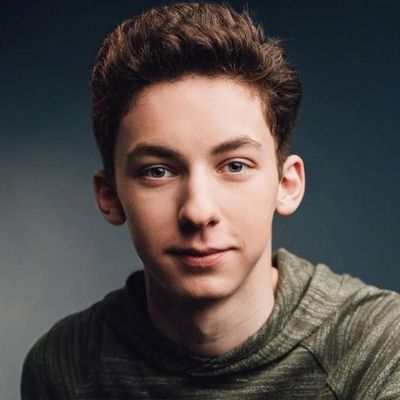
This week on Take A Bow, the uber-talented Andrew Barth Feldman stops by! On this episode you will hear all about Andrew’s journey to Broadway and his experience playing the title role in Dear Evan Hansen... Read More
From the show: Take A Bow
Guests

Featured Shows
About
This week on Take A Bow, the uber-talented Andrew Barth Feldman stops by! On this episode you will hear all about Andrew’s journey to Broadway and his experience playing the title role in Dear Evan Hansen. Andrew gives everyone an in depth story of what truly goes into playing one of the most famous roles on Broadway. On top of this, Andrew talks about how he, as a 16-18 year old, managed school, being a teen, voice change, and more while gearing up to play Evan and much more!
Transcript
This transcript was automatically generated and might contain errors.
[0:00] Eli Tokash: Hey everyone and welcome back to episode six of Take A Bow Podcast.
[0:04] Sydney Lucas: I'm Sydney Lucas.
[0:06] Eli Tokash: Wow, episode six?
[0:09] Sydney Lucas: Yeah.
[0:10] Eli Tokash: Crazy.
[0:11] Sydney Lucas: I know.
[0:12] Eli Tokash: It feels like we just are like I don't know.
[0:15] Sydney Lucas: I feel like we were I don't know what I'm trying to say.
[0:19] Eli Tokash: What are you trying to say, Eli?
[0:23] Sydney Lucas: I don't know what you're trying to say either.
[0:25] Eli Tokash: It's crazy that it's episode six because it feels like we've just like started releasing, and now that we're almost two months in, basically, to release an episode.
[0:38] Sydney Lucas: Yeah.
[0:39] Eli Tokash: Because eight will be two months of releasing episodes, right?
[0:42] Sydney Lucas: Every week.
[0:43] Eli Tokash: Yeah, it will be.
[0:45] Sydney Lucas: And we paused for two weeks.
[0:47] Eli Tokash: We're a month.
[0:48] Sydney Lucas: We are a month and a half into releasing.
[0:50] Eli Tokash: This is crazy.
[0:52] Sydney Lucas: It's going way too fast.
[0:53] Eli Tokash: And we still have like so many cool episodes to release.
[0:57] Sydney Lucas: Oh, you don't even know.
[0:58] Eli Tokash: Like, seriously, keep your eye out.
[1:01] Sydney Lucas: We have some great episodes coming up.
[1:04] Eli Tokash: Anyway, today we have a super special guest.
[1:09] Eli Tokash: He was the first teenager to play Evan Hansen in Dear Evan Hansen on Broadway. He is one of the most talented, most brilliant, most charismatic, most kind human beings on the planet. Today, Andrew Barth Feldman gave us an hour of his time to talk about his experience in Dear Evan Hansen as well as some projects he has coming up. So without further ado, take it away, Andrew.
[1:57] Sydney Lucas: Welcome back to another episode, everyone. We are so thrilled to have this guest on today. He is captivating, talented, and kind, and he is a Jimmy Award winner. Everyone, please welcome former lead in Dear Evan Hansen on Broadway and the first teenager to play Evan on Broadway, Andrew Barth Feldman.
[2:17] Andrew Barth Feldman: What a lovely intro. I'm so happy to be here. Thank you guys for having me.
[2:24] Eli Tokash: We are so happy. Thank you for doing this.
[2:27] Andrew Barth Feldman: Yeah, thank you guys so much.
[2:29] Eli Tokash: Okay, so like I said, you are a Jimmy Award winner. Congratulations. That's huge.
[2:34] Andrew Barth Feldman: It's crazy. What a crazy experience. It was bananas. It's boot camp is actually for real what it is. It was 14-hour days.
[2:42] Andrew Barth Feldman: That's insane.
[2:43] Andrew Barth Feldman: Every day for a week. It was bananas, but it was the best.
[2:47] Eli Tokash: That's bananas.
[2:48] Andrew Barth Feldman: Yeah. I couldn't imagine. It was amazing. You met so many great people along the way of that as well, right?
[2:54] Andrew Barth Feldman: Yeah, I mean, you know, my one of my closest friends, Emily Escobar, who is a finalist, is now like we collaborate all the time on stuff, and Renee Rapp, obviously, who won with me is also one of my closest friends, and that's sort of how I met Antonio as well, who's in Jagged Little Pill, and tons more. So there's so many amazing people in that circuit that I was so lucky to get to meet from that.
[3:15] Eli Tokash: Yeah, that's awesome. So I read somewhere that at the Jimmy Awards, one of the lead producers of Dear Evan Hansen happened to be in the audience.
[3:24] Andrew Barth Feldman: Yeah.
[3:25] Eli Tokash: What transpired after that that made you go from a super talented high school actor performing in school theater to a super talented high school actor as the lead in a heart-wrenching, beautiful award-winning Broadway musical?
[3:40] Andrew Barth Feldman: Whoa. That's a great question. Um, okay, so the way it all kind of happened is, yeah, so it just happened to be sponsored by Dear Evan Hansen. That week that we were doing the Jimmies, we all went to see Dear Evan Hansen. Like, I know. They'd see a show every year, and now it's Dear Evan Hansen every year because Dear Evan Hansen sponsors the Jimmy Awards every year. And so we all went to see Taylor in Dear Evan Hansen, and it was unreal. It was my third time seeing it, I think. I've always loved the show. But yeah, Stacey Mindich, the lead producer, was in the audience. Tara Rubin, the casting director, was a judge, and the legend that she tells to me, I've never heard anything otherwise, is that she texted Tara at intermission and said we need to get him in the room, that's our next guy.
And it was like two weeks later that they'd called me back for it was actually the male swing. So it was Evan, Jared, and Connor. I'm pretty sure they'd only do that not to scare me because I am not a Connor, like that should not and will not ever happen. But it was pretty much I realized pretty quickly that the callback that I had was like most people's final callback was the equivalent to like I was in front of Michael Greif, Benj Pasek, Justin Paul, Steven Levenson, Alex Lacamoire, Stacey, the whole team. I was freaking the heck out. But oh my god. It was so wonderful and that was when it all kinda happened. It was like two days later that I found out that I was cast, and then that was in July of 2018, and it wasn't announced till November.
So I signed all sorts of NDAs because they really wanted it to be like a big New York Times thing. So it was actually going to be announced in January of 2019, but it started to sort of creep, the news sort of started to creep out, so they made it earlier so that they could get the jump on it, thank God.
[5:30] Eli Tokash: Wow. That's a tough secret to keep.
[5:33] Andrew Barth Feldman: It really was. And that was sort of the big thing that everyone latched on to in the stories was like, you actually didn't tell anyone? I was like, I didn't, I didn't tell anyone because they told me not to. I signed legal documents saying that I couldn't.
[5:41] Eli Tokash: Exactly.
[5:44] Andrew Barth Feldman: So it was crazy. And it was taking all kinds of voice lessons. There were like truly in just I started taking voice lessons with Liz Kaplan, the vocal consultant in September, October. She's amazing. It was like September, October. There were placements and things that I didn't find until the week before. So if I had started a week later, it would have been a completely different experience, and I could have been, it could have been a lot less healthy in the first couple weeks and months. It's crazy how every little thing, every caution that was taken added so much to my being able to do it successfully. It was the craziest thing that ever happened.
[6:21] Eli Tokash: Yeah, this the show itself is such a vocally demanding and emotionally demanding role. Did you have any tips or tricks to preserve your voice?
[6:33] Andrew Barth Feldman: Yeah, um, I mean, I think this is kind of the expectation for all Evans that I definitely followed is I completely changed my diet. I didn't talk or go out really at all. It was a constant battle of that sort of staying mentally healthy and like going out a little bit, but like not talking when I do and not eating dairy or by the end of it, I was pretty much eating the same thing every day, which was crazy. But that was kind of it, and then it was also just allowing yourself to not be 100%. I started doing five shows a week rather than the typical six of it, Evan because I was in school, because I was building up all this stamina. I didn't start doing six until I was out of school over the summer, and then I stayed that when I went back to school.
I was being tutored. I wasn't actually like going to school, going to school, but still it was like another part-time job and so it was, I started doing five shows a week. There were some keys that were lowered, some placements that were changed. By the end of my run everything was back up in the original keys. Every placement was back where it was originally, you know, meant to be. So it was such a gradual process. So I think give yourself time is really my biggest piece of advice.
[7:42] Eli Tokash: Wow. Yeah, you mentioned that you had to completely change your diet. I was reading some place that you were, you know, when you left the show, while it was bittersweet, you were excited to eat pizza again.
[7:52] Andrew Barth Feldman: Oh yeah. I had preserving the voice. Yeah, I couldn't, I didn't have dairy at all. I had, well, I did have a slice of cheesecake every Sunday 'cause I had enough time between Sunday and Tuesday. But cheesecake every Sunday. But I just like so all of a sudden really just wanted my dairy fix 'cause but anyway, I had I think it was six slices of pizza at the party after my last show. I was hungry from the whole year.
[8:20] Eli Tokash: That's amazing.
[8:21] Andrew Barth Feldman: Yeah, it was exciting to kind of go back to normal life and see my friends who I hadn't really gotten to see all year. It's been nice, you know, now they're sort of taken away from me again, but we've all been zooming every day to stay in contact. So it's nice.
[8:38] Eli Tokash: Can I ask, so I was actually there when Sydney saw your last performance. I was with that like group. There was like a whole bunch of us. Um, and it was absolutely like incredible. Um, and the fact that you said that, you know, at the beginning some things were different. It's, it was interesting to hear that 'cause I mean obviously it was towards the end of your run, so we didn't notice. Um, can you talk a little bit about, by the way, you were incredible.
[9:00] Andrew Barth Feldman: Yeah.
[9:00] Eli Tokash: Thank you guys.
[9:00] Andrew Barth Feldman: Absolutely.
[9:00] Eli Tokash: Talk a little bit about like how, so you said the keys and stuff changed, but talk about how you as like the character also changed throughout the process.
[9:19] Andrew Barth Feldman: Yeah. Um, I think I, I still felt all this pressure up to the very last day. But the pressure, there was sort of I felt a pressure to do to prove myself. To keep just work so hard for the tears and the ticks and all these things and over time the biggest change was that it just got so much simpler. It just became so much more in my body and smaller and all these just more, you could latch onto it so much more just from, you know, little things actually connecting to what the anxiety was rather than showing it. You know, if I'm connected to it it's there. So that was a challenge for me because that wasn't really something I ever imagined it being, what was I never imagined it being described as simple, but it was, that's sort of where it got to and I think what was at the core of Evan though never changed.
I think the biggest thing was at the beginning I was really trying to blur the lines for myself between me and him and really trying to like get into his shoes and go really be really method about it, which was just unhelpful and unhealthy and all these things and by the end it felt more like I just knew him as a person so well as another person. Like he was like my best friend. I really, I still don't really know how it happened, how I connected with him so much from the start, but I think what was at the core never really changed. It was just how I showed it that changed.
[10:45] Eli Tokash: It's so beautiful.
[10:46] Andrew Barth Feldman: Yeah.
[10:47] Eli Tokash: You just got to know him more and more.
[10:49] Andrew Barth Feldman: Yeah, it was so special. It was, he's a special, special person.
[10:53] Eli Tokash: Yeah, that's awesome.
[10:55] Andrew Barth Feldman: Yeah, it was the best year. It was terrifying and exhausting and stressful but it was the best. It was so wonderful.
[11:02] Eli Tokash: Did you actually like go to a school or were you doing like online school?
[11:06] Andrew Barth Feldman: Yeah, so I was being tutored while all this was happening. I was getting tutored 15 hours a week and that was it but I was taking all AP courses my senior year. So it was, it was real school. It was, you know, there was no slacking. It was a lot but I, you know, I think everyone sort of had an understanding of the limits of everything and that I couldn't do, I couldn't do like homework and stuff because when am I gonna do that? I go to, I do school, I get in the car, I go to the theater. So I think we all sort of got on the same page about what it had to be and how much I could actually do. But I in terms of sitting there actually doing it, it was hard work. It was real work.
[11:44] Eli Tokash: Yeah, along with giving your all in theater, you doing all AP courses, you gave your all in school and it paid off because you're going to Harvard.
[11:54] Andrew Barth Feldman: Yes, I'm really, really, really excited for, you know, just that experience. I can't wait. It's gonna be really...
[12:04] Andrew Barth Feldman: Has that been like a dream school of yours?
[12:08] Andrew Barth Feldman: You know, I was never, it's funny when I was younger I was always like dead set on going to a conservatory. I was like, this is my path. And my mom was like, no, because my mom was a college admissions counselor. So she was like, no, you have to go to liberal arts school and like have a fallback plan. And I never agreed with her until I did Dear Evan Hansen and I was like, okay, I'm in conservatory right now. I don't need to go to another one to learn the things that I'm learning now. Not that I know everything, but just that it's like I'm in a conservatory now, essentially. So then I started looking at the schools that she'd wanted me to be looking at, all the Ivies and the liberal arts schools.
And Harvard was the one where they have a program, a concentration called Theater Dance and Media is the name of it. And you can take classes in directing, writing, dramaturgy, performing, puppeteering, improv, everything. So that was it. That was like, okay, that's what I have to do because that's what I already do is I do everything. So I wanna learn how to do everything equally, rather than focusing on performing or composition or anything. I want to learn everything. So I'm really excited about it.
[13:17] Eli Tokash: That's very interesting, also because you basically like had a kind of master class or almost a college course as a Dear Evan Hansen.
[13:24] Andrew Barth Feldman: Yeah, I was, it was Michael Greif. You know, I had the best, there's no better professor than that. It was Michael Greif school of being Evan Hansen.
[13:33] Andrew Barth Feldman: And he's so passionate about the show, which is amazing how like he is so involved with the show still, Michael, and he's a legend.
[13:41] Andrew Barth Feldman: So it's it's it was incredible to get to really, really work with him and and get to know him. I'm I'm still so thankful for that.
[13:48] Eli Tokash: Oh, all right. So you kind of acted as like a bit of a mentor.
[13:51] Andrew Barth Feldman: Absolutely. I mean, I mean they they all kind of were, you know. I I being able to sort of track their respect for me was really special. Of you know, I think everyone had respect for me from the beginning. It w I never felt disrespected by anyone, but I think everyone was wary at first and worried about is this actually gonna work, casting a kid. It was an experiment almost, and it worked, and and see having their respect meant the world and and their pride and and they are always, you know, e everything that that I needed to hear from them in my last couple weeks, I heard. Everything that was like we are so thankful that you were part of this. Everything that I really needed to to get closure on the whole thing was was there and that was that's a measurable.
[14:32] Eli Tokash: Well, to anyone who anyone who had any possible slight doubt would prove them wrong and you absolutely blew it out of the park.
[14:39] Andrew Barth Feldman: Thank you very, very much. That means a lot. Yeah, I mean, and especially like working with that creative team, I mean there there really isn't anyone better to like learn from There isn't. And they w they're all still they come to the show all the time and built London and as soon as they were done with London they came back and watched it here and noted it here like a lot, you know, it's that was they're always Michael's really, really meticulous and so he's not he's not giving up on that. It's the same thing with with rent even. You i you look at the people who are in rent, the final cast, he was giving them all sorts of notes and being there every single you know, not every day, but really often. So he's he's amazing. He's he's wonderful and he's just so right. He everything he says is so right.
[15:21] Eli Tokash: Yeah. Yeah, and now you're gonna go to Harvard and I I believe the artistic director there is Diane Polish.
[15:27] Andrew Barth Feldman: That's right, who's another like an incredible director. I was able to work with her on Pippin and Funny Neverland, and she is like you said about Michael, she's such a mentor to me that I consistently look up to.
[15:41] Eli Tokash: Yeah, I can't wait to to learn from her. She she's been teaching a a class I actually don't remember what it is, but it was so fascinating when I was reading about it. So I'm very much looking forward to that.
[15:50] Andrew Barth Feldman: Yeah, book of knowledge, Victoria. I c I can't wait for that whole experience. It must be so exciting.
[15:57] Eli Tokash: So another thing that some of the the Evan Hansons have been kind of open about is uh and it's something that we kind of touched on earlier is that Darwin Hanson it's it's a very emotionally demanding role and he's someone who struggles with anxiety and stuff like that. As an actor sometimes it can be once you get like super super super invested in the role it can be sometimes hard to kind of like you know back away from all that and really protect your own mental health. Was there anything that you did to to kind of make sure that you were staying along with you know being physically healthy and all those precautions mentally healthy as well.
[16:35] Andrew Barth Feldman: Yeah, you know um the cast taught all ha be when I was coming in always talked a lot about how we goof around backstage to to sort of lighten the mood. Evan doesn't get to go backstage all that much. So it was and I also just kind of had like at the beginning I had a bit of a distaste for that because I was like no I have to do this right. I have to do this perfectly and then there were nights where I'd get home and not super be sure which one I was you know it was which was scary. So it was pretty quickly that I started goofing around with everyone else and then that was when I was able to really open up to the whole thing and say it's okay if I'm not like crying in my dressing room before show.
You know what I mean? Like like I'm allowed to to go out and do it and learn as I'm doing it and that's okay so that I can do it tomorrow. You know, it it was that kind of thing. Uh just talking to people I I you know I did start going to therapy not because of Evan but that helped so much. Oh, in the fall I started going toward the end of my run, and that was so helpful in terms of like, okay, I this is enough. Like I don't need to I think the the biggest challenge for me was being okay with my performance. I was always trying to make it better, which which is totally you know normal that's what you should be doing, but I was always just sort of insecure about it. So so once I started going to therapy it was okay what I'm doing is enough. What I'm doing is okay and that was really crucial to to finishing out my run. For sure.
[18:01] Eli Tokash: And it's so easy to beat yourself up.
[18:03] Andrew Barth Feldman: Yeah.
[18:04] Eli Tokash: Whereas like even if everyone around you is going like, oh my gosh, you're doing amazing you're doing amazing you're doing amazing it's this kind of self-doubt and like oh no I'm not doing enough. They really get to you. Do you have any I guess advice for for when you first started the run. Do you have any advice for for your younger self?
[18:23] Andrew Barth Feldman: Oh yeah. I mean I I I would say like it's enough. You know, you don't need to keep putting on and on you are you know this person so well better than you think you do. What you're doing is enough you don't need to add and add an ad. Keep it to yourself. Keep it all within yourself and that that was an important lesson to learn.
[18:44] Eli Tokash: Yeah.
[18:44] Andrew Barth Feldman: Yeah. I know I couldn't I applaud you because I'm sixteen gonna be seventeen, you know, like I'm still dealing with my voice change and it's just crazy that you were able to just like jump in.
[18:56] Andrew Barth Feldman: I was too I I was too that was where a lot of the lower stuff came in because my larynx hadn't I mean it's still not fully dropped in, but it hadn't dropped in like at all until a month or two into my run. So it was constantly just learning and and following what my body was wanting to do and okay this day I can't do this placement let me try this. You know, and and being okay with giving a hundred percent of whatever percent you have. That was difficult to learn because this isn't a role you can do below like seventy percent. So so trying to trying to really amp up whatever I could do and also knowing when to say, okay, I can't do the show today, which thankfully didn't happen too much to me, but there were days where I'd be sick and still be trying to do it, and I'm like, No, I d I just can't. This isn't gonna work.
It it it was a question of am I the most qualified person to tell this story today? That was really the question I would ask myself and s there were days when when the answer was no and that was okay.
[19:53] Eli Tokash: Yeah, that makes total sense. And also something that Deer of Enhanc Dear of Enhanson built a really big fan base and the show really impacted a lot of people and and I I'm not sure if you went to the autograph line or not, but did you have any memorable and impactful fan encounters, whether they be d from DMs or whether someone stopped you on the street and just told you how impactful Dear Evan Hansen was to you was to them?
[20:20] Andrew Barth Feldman: Yeah, I I'd hear at least like twice a week this show saved my life, or you changed my life, or the my favorite one was when a parent would say, like, you nailed my son or something like that. That was always really, really, really special to me. Um, one of the ones I'll never forget was there was someone who came to the stage door and said, Can you sign my gut arm? And it was an arm that was covered in scars. And I was like, Yes, of course, and I signed it and I just think about that all the time because that was someone who clearly this show means something to them and they didn't let go from the tree. You know, they they they came out on the other side and and are listening to the words that Benjamin Justin and Steven wrote, and that's that's you know, I think that was a responsibility that I was really aware of from the beginning and was terrifying, but was so special to deliver every night.
[21:12] Eli Tokash: Wow. That made me wanna cry.
[21:14] Andrew Barth Feldman: Oh my god.
[21:14] Eli Tokash: I know, I have chills.
[21:16] Andrew Barth Feldman: Yeah, it was I was fortunate that there was never anything too there were never any like really scary fan encounters in terms of people who I mean they're always the weird ones, right? Like like for anyone, there's the people who are asking for a little too many hugs or something, you know, there's all sorts of weird stuff. But I think something that I always try to do is just make sure the person who's you know, there might be someone like just pouring their life story out to me at the stage door, and I just do everything I can to make them feel seen and heard and bring them back to to reality and outside of the world of the show. I think that was always sort of my goal for for those kinds of things when someone's like sobbing at the stage door, just making sure they're seen and heard.
[21:53] Eli Tokash: That is so beautiful. And it's it's also that that's you using the platform that you've been given and making a difference to even one person's life, because like you looking at them straight in the eye and listening to them and listening to their story and making them feel heard. I can't even imagine how much that would impact them.
[22:13] Andrew Barth Feldman: Yeah, it was it was um a special, special opportunity to get to give that to to a number of people. That was really, really special. And I also I also think people underestimate how much fans can impact us as performers.
[22:28] Eli Tokash: Oh yeah.
[22:28] Andrew Barth Feldman: Especially the thing that I I think they don't know that the fans don't know is that we aren't like like super we aren't like Chris Evans or something. Like we see the comments, we see what you guys are saying, and and it means a lot when it's nice. I mean when it's not nice, that's another thing. But like at the same time, like we see it, you know, like we we see what is being said, and it it usually i I it means so much to me to see like all these m wonderful comments and things like that.
[22:56] Eli Tokash: Definitely keeps you going, right?
[22:57] Andrew Barth Feldman: Yeah, absolutely.
[22:58] Eli Tokash: So you've been doing some pretty like incredible things during this time in quarantine, and obviously, like this is kind of why Sydney and I are making this podcast, because we you know, we want to give people another source of entertainment, and it seems they're doing a lot of that with your jackbox and your even making songs that you're putting out there, and I have to say your last song that you wrote, Every Pretty Girl, or that you posted, it's so beautiful, and it's gotten out of my head, yeah. It's so good.
[23:26] Andrew Barth Feldman: Thank you very much.
[23:27] Eli Tokash: You're welcome. You're so insanely talented, it's insane. What inspired you to like uh like I don't know, write and create the jackbox and that whole scenario.
[23:39] Andrew Barth Feldman: Yeah, jackbox is something that I've been doing with my friends for years and years and years. I sort of stumbled on it on like the Xbox store when I was fourteen and was that's it's so uh my alley, like a party game. I love just playing hosts. So that kind of thing was really up my alley, and so my friends and I it's like a staple of our friend group is is playing these games, and so I just sort of had this idea one day, like, oh my god, people would love it if we just got a bunch of broader people to play a jackbox. And we did one stream that night, that night that I decided like we should do this. I just sort of tweet like texted everyone that I knew and was like, if you want to do this, come do it.
And a couple people said yes, thankfully. And um the next morning I woke up to a bunch of texts from Alex Bonniello saying, Okay, here's what we're gonna do. We're gonna use this to raise money for the actors fund, I'm gonna handle the finances, you keep doing what you're doing, we'll both work on getting people, let's make this a thing. And then it was, and now it's become this huge thing with like people making like red bubble merch and a solid base of like 500 people that'll watch every episode no matter who's on. It's it's amazing, and we've raised uh now I think it's almost if not over thirty thousand dollars, which is crazy.
[24:50] Eli Tokash: Wow.
[24:51] Andrew Barth Feldman: Yeah for you. Just kind of creating this like joke base of using our silliness for for good. It's been really fun.
[25:03] Eli Tokash: That a ma that must be also like fulfilling too.
[25:06] Andrew Barth Feldman: Yeah, it is.
[25:07] Eli Tokash: Eli's Eli's mom also works on the front lines.
[25:11] Andrew Barth Feldman: Oh so yeah, so you know, we're we're talking and you can you can jump. I'm definitely not gonna speak for you, but uh you were kinda talking about how whenever you see people doing this kind of stuff and and helping people, it you know, it's it hits close to home 'cause it's like a personal thing for you.
[25:29] Eli Tokash: Yeah, for sure. I mean, when I even something little as clapping at seven o'clock at night, uh, when everyone's out there, it's I have a balcony so I can open my door and it's like it it just makes me in my family like tear up almost every night because we're like, wow, like these people are recognizing the hard work that's being done right now and uh they're appreciating those people that deserve the recognition that don't get it.
[25:54] Andrew Barth Feldman: It's amazing.
[25:55] Eli Tokash: It's it's that whole thing the applause 'cause every now 'cause we do jackbox at like six to seven thirty, so around seven from like two people's houses we'll just hear this thunderous applause over the stream.
[26:06] Andrew Barth Feldman: Which is beautiful.
[26:07] Eli Tokash: Amazing.
[26:08] Andrew Barth Feldman: Yeah, it's always so special. And that's another thing about uh joining the the podcast that we do, being with Broadway Podcast Network, we thought they were perfect because they're doing so much stuff for the Broadway Care's Equity Fighting or Digitation and the Actors Fund and all of that. So yeah, it's great to see how this community has come together and really, you know, just try to help each other out. See, everyone is just working their hardest to because the thing is everyone is someone's favorite person. You know what I mean? So s like at least one person is so happy that so and so just put out a new video or like or like organize their friends to sing a song, you know? Like it's amazing. Everyone is doing something for everyone, and that's what's been really, really amazing to watch amidst all this.
[26:53] Andrew Barth Feldman: Absolutely.
[26:55] Eli Tokash: So I and I, we tried this in one of the other things. We're gonna keep trying it and see if it works. Um when we were trying to come up with names for our podcast, we're trying to combine our names, Eli and Sydney.
[27:08] Andrew Barth Feldman: Got it.
[27:08] Eli Tokash: Obviously, our podcast name is now Take A Bow, so you see how that went. Um however, however, um my mom one day was like, if you combine Eli and Sid, it's like Eli Sid, but it kinda looks it's kinda like illicit, which is kinda like illicit a response.
[27:29] Andrew Barth Feldman: So, um, what we did, what Eli and I did was we got on our social medias and we posted on our stories like, hey, we're gonna be doing this podcast and we're gonna have guests on from the business. Any possible questions that you have, please send them and then we'll write them all down, and then as guests come on our show, we will ask them a few questions. So it's not exactly like a speedy thing. It's not exactly like a, what is it called? A speed round or whatever. It doesn't necessarily have to be that. But these are questions from fans. So I thought that was really interesting.
[28:09] Eli Tokash: Cool. Okay. So this is the first one that I have for you. Are there any other areas of the industry that you're especially interested or involved in besides acting?
[28:21] Andrew Barth Feldman: Yeah, um, I do write. Um, I have, uh, there's a play that I'm working on right now that I've written with, uh, with Noah! I can't believe I forgot to mention this. Your Star Wars show.
[28:33] Andrew Barth Feldman: Oh yeah. Oh my god. Yeah, I write music as well. Um, I wrote that Star Wars show with my friend Adrian in eighth grade, and then we did it at Fifth Merlot just for fun. It was so much fun. Uh, yeah, I have this play that I've written with, that's in development right now. I wrote it with Gabrielle Caruba, who's playing Zoe, who I think I'm sure you saw Zoe. Um, she'll be directing it, and, uh, it's really special and exciting. Uh, I also, um, I've run a theater company for the last six years called Sneafrock Productions on Long Island. We raise money for Next for Autism, which is an organization that helps people and families touched by autism with vocational opportunities and homes, and they're amazing.
Uh, and so I have directed and things like that. Uh, so kind of everything is really the answer. I've, I love doing it all. I want to pursue design more just because I feel like if you're gonna direct, you gotta know about design. Uh, and I know absolutely nothing about design. But yeah, writing, I didn't even, I always knew I could write music. I didn't know I could write like plays and things until I tried it this year, and we wrote this play that I'm really, really excited to get out into the world when this is all over.
[29:46] Eli Tokash: Wow. I'm so excited too. Is it, did the quarantine, did this pandemic stop its production? Like were you like in the middle of kind of getting it out?
[29:56] Andrew Barth Feldman: Um, no, we've just kind of been taking each step as we go along. So we did a couple, like two readings and a rehearsal before quarantine. Um, but since we've actually been working more even because I think we all just have more time. So we've done two Zoom readings. We're doing another one in two weeks as well, some rehearsals and sending it to people to get some feedback. So it's really exciting, and the cast we've assembled is bonkers good. So I'm really excited. I'm so proud. Yeah. So proud. It's a special, special project. I'm excited for people to hear more about it. There will be some more info about it soon, but we're not gonna get it out into the world for a little while, obviously. But just to start drumming up some interest.
[30:41] Eli Tokash: You just keep getting more inspiring. You just entertainment for everyone and making a lot of things.
[30:47] Andrew Barth Feldman: Oh, I wrote a play. It's an album. I've, I can't, I don't know, I just have this thing where I can't be idle. I always have to be working on something, and either I'll put it onto the world or I won't, but there's all, I'm always just trying to make things.
[31:01] Eli Tokash: Yeah. Um, another question. I know you're obviously like theater is like your love and one of your passions. Are you ever interested in going kind of into the movie realm or the TV realm?
[31:16] Andrew Barth Feldman: Yeah. Possibly. Yeah, I'm not picky. I think my biggest thing is stories and the story that's being told. Uh, it just has to be a story that I'm passionate about and that I'm passionate about telling and want to tell. Um, that could be movie film or Broadway or like theme park or whatever. I don't care as long as it's a story that means something.
[31:41] Eli Tokash: Sure. Absolutely.
[31:41] Andrew Barth Feldman: And one, yeah, exactly. One that makes a positive difference to the world. Yeah, that's all I care about. And one that I feel I fit in and feels right that I'm telling it and that I have a reason to be telling it. I think that's all I care about.
[31:53] Eli Tokash: That's awesome. I know you're writing and stuff, and I saw this as one of the questions is one of the fans asked, um, do you look up to, or I guess what I'm trying to say is like who are your favorite songwriters or writers in general?
[32:09] Andrew Barth Feldman: Sure. I mean, my favorite composers are, you got Pascal, you got Jason Robert Brown. Those two guys are such huge influences on the music that I write. I mean, naturally because I've just been listening to Pascal for the last year, but I still like, I've just have been listening to Dogfight over the last couple of days, and Jason Robert Brown, I mean, Bridges of Madison County is probably my favorite score. So, uh, but then of course, you know, you got like Sondheim and stuff, but I don't feel like I could ever do that, nor do I really have interest in doing it because it's just not my style. But I mean, all these composers have something to teach and something to be heard. I've just kind of been like absorbing theater for my whole life, so I just have this like, I like everyone in theater, just this memory bank of like what this composer's style is and David Yazbek versus Angel. You know, just like random just like, okay, this person does this, this person does this, maybe I can do this. So yeah, in terms of like writers and stuff, those are my favorites.
[33:11] Eli Tokash: Oh nice, good answer. I'm glad. Yeah, I know, it's cool. I mean, when you take all of those styles of all of those people that you just named, I mean, you'll definitely get something very special in there.
[33:24] Andrew Barth Feldman: Yeah, it's a question of what do you get? What style is right for this? What style's right for that? Like I'm sort of working on a sort of musical right now that like, okay, this song's a little bit more like bluegrass, and then this song's a little bit more like metal. So like what, where do we, which I think every composer experiences of like, okay, well that's how this story needs to be told, and that's how this story needs to be told. Um, but it's still always fascinating.
[33:50] Eli Tokash: Right.
[33:53] Andrew Barth Feldman: You know, they usually kind of come at the same time for me. I will sometimes write the music first. I think recently I've been writing the music first more, and then I'll say like, okay, well, what's a story that I want to tell? Oh, this song is good to tell that story. But, uh, usually they'll sort of like, I'll write a verse and I'll write a verse, I'll write a verse musically, and then I'll write a verse lyrically, and then the rest will sort of come at the same time.
[34:15] Eli Tokash: Wow. Do you sit down to write songs or are you just like, I don't know, maybe cooking in the kitchen or doing your hair and you're like a lyric, lyric idea, gotta write that down.
[34:26] Andrew Barth Feldman: It absolutely varies. Like I, the other night was like, there's a song that I'm trying to write right now that I just finished last night that I was like, I sat down and I was like, I have nothing. And then last night I was just talking to my friends, and I was like, wait, I have to mute myself to finish writing the song. So it'll, it'll sort of vary. It completely varies. Like sometimes I'll be in the shower and be like, Oh wait a second, and then I have to get out of the shower and record it. But, uh, it'll, it'll, it's kind of all over the place. I don't really have a method of doing it.
[34:55] Eli Tokash: Yeah, for sure. I mean, creativity, you can't really bind it, I guess. You can't control it. And you're overflowing with creativity, so it's constantly like your brain. I can't even imagine what it's like in your brain.
[35:07] Andrew Barth Feldman: I'm definitely overflowing with something.
[35:11] Eli Tokash: Okay, I think we're gonna do one more question from a fan. And this one, I, well, maybe one more. This question doesn't even have to do with the business. I'm just curious. It is, I completely lost it. Okay, there it is. It's if you could only eat one food for the rest of your life, what would it be?
[35:32] Andrew Barth Feldman: Oh god. After Dear Evan Hansen, pizza, but now it's, yeah, you know, I mmm, wow. That's tough. I think I kind of learned because one of the things I was eating every day, uh, when I was doing Dear Evan Hansen was sushi. Uh, that was something that I ate every single day because it's so good for like avocado, uh, and I would eat avocado, mango, and shrimp rolls. And like if you get it from the right place, they're always good. Um, so like I never really got tired of it. So I guess that's probably my answer.
[36:04] Eli Tokash: You know what? It would be, that's my answer too. Sushi is my all-time favorite food.
[36:06] Andrew Barth Feldman: Yeah, I favorite type of, I definitely haven't eaten it since doing Dear Evan Hansen because I'm like, I don't think I can ever look at the, but actually like it's very good. So I probably will pursue the sushi route sometime soon again. But truly it was every day I was eating sushi.
[36:25] Eli Tokash: You know what's kind of interesting about being in a show that I never anticipated personally myself was like you said, your diet can be very restricted. You gotta think about so many things because when you're in a show, any possible food for some reason I feel like the sensitivity to all different kinds of foods is really high.
[36:46] Andrew Barth Feldman: Yeah. So you have to make sure you eat enough, otherwise you don't want to feel faint on stage, but you also have to make sure you don't eat too much, otherwise you're gonna feel sick on stage. And you have to make sure the foods that you eat make you feel good. Um, it's just, you know, it's really difficult to like kind of balance that, and also you can't eat dairy because of phlegm. And I always try to stay away from sugar because it would impact my breath control for some reason. I don't know. I remember Liz Kaplan told me like red meat and like heavy meats like steak or whatever, if you eat it before a show, you're digesting it, and that's energy you could be using to be running around and singing.
So it's all, it's everything. I remember James Snyder, who is playing Harry Potter right now, he told me, um, I never eat before part two of Harry Potter because I can't cry unless I have an empty stomach. That's what he said, which is very interesting. Cause he was like, if I'm full then I'm fine, you know, I don't have anything to cry about.
[37:41] Eli Tokash: Wow.
[37:42] Andrew Barth Feldman: Which is very funny. I almost feel like I'm the same way.
[37:45] Eli Tokash: Oh, that's so weird. I never knew that.
[37:46] Andrew Barth Feldman: It makes sense now.
[37:48] Eli Tokash: I don't think I am the same way because if I'm hungry, I'm thinking about how I'm hungry. You know, so I then I get distracted.
[37:55] Andrew Barth Feldman: Yeah. I'll get very distracted.
[37:56] Eli Tokash: Now you have to cry a lot, and you had to cry a lot in Dear Evan Hansen. Did you have any tricks to cry?
[38:03] Andrew Barth Feldman: You know, it was, I think the biggest trick was learning that it's okay if I don't cry. That was the biggest trick, and it was really difficult to learn because I asked every Evan about like how do you cry? What do you do when you can't? What do you do like can you ever not? And almost all of them said you have to forgive yourself for not crying. Because it's also really interesting if you don't, because it's like, why isn't he crying and why am I crying if he's not crying? You know, in the audience. So it's all these things. But the reason why the president of Seth will get to cry so much is because I asked Ben Platt and he said, I don't know, I just can cry. Like I don't really know how it happens.
So it was this major precedent that at the beginning I really wasn't crying. At the beginning of my run, there were no tears being had. But then at the end, I just kind of started sometime in the middle of act two, and then I didn't stop. That was kind of my way of making it happen. And just connecting to the story, but not like thinking about it, like making sure you're invested, but not thinking like, Oh wow, I'm so sad I need to cry, you know? It's, it's you just gotta kind of let it happen. And at some point it became very much muscle memory for me.
[39:14] Eli Tokash: Absolutely. Yeah, and also like taking that pressure off yourself can probably make it easier to cry as well.
[39:19] Andrew Barth Feldman: Yeah, absolutely. That was when every time, like if there was a night where I didn't cry during "Words Fail," I'd be like, Oh man, that sucked, and then I would immediately start bawling during "So Big/So Small" because I would just let it go. And that was, it was always taking the pressure off made such a huge difference, and it was a huge lesson to learn.
[39:36] Eli Tokash: Yeah. What is some advice that like other Evans gave you?
[39:40] Andrew Barth Feldman: Oh, there was so much. It was, well, okay, they didn't really give me advice on how to play the role at all because they know what a personal thing it is. Um, I think it was more advice on handling the fans and handling like the people that I would be meeting in the building and the dietary stuff and things like that. It was a lot more the life that came with it and less actually playing the role because I think now it's just, which is so amazing that every Evan is just so different and that is understood and accepted by all because I think at the ever at the beginning they were really scared about Ben leaving the show, which is why it was so brilliant for them to cast Taylor because he was incredible and the complete opposite of Ben.
So it was being able, giving the permission. I'm so thankful that I went after Taylor and not Ben because if I went after Ben, I would have been trying to be Ben. But because I was after Taylor, I was like, okay, I can do whatever I want to do, which was really, really the best permission to get. So it was a lot more about the world and less about the actual performance.
[40:40] Andrew Barth Feldman: Were you, oh, uh, maybe that's the wrong word, but were you like nervous or overwhelmed by the prospect of taking a role that, you know, someone else started with and then coming in after the fact?
[40:53] Andrew Barth Feldman: Like, you know, there's a balance between making it yourself, but you know, also not completely changing it so people are like, "Whoa."
[40:58] Andrew Barth Feldman: Yeah, no, it's I mean, especially because he's like Ben freaking Platt, you know, like it was like he won a Tony for it. It was this legendary iconic performance that I loved so much. So to go in and I knew I wanted to do something different with it. I just didn't know it was just making it more me was what I learned. But I think, you know, from Ben to Taylor, you have a major shift on what that character was and could be. So I think I landed somewhere in the middle if there is a spectrum, but I don't really think there is. I think it's just completely different.
[41:33] Eli Tokash: Yeah, exactly.
[41:35] Andrew Barth Feldman: So it was yes, but the pressure was there every day, especially because I think the fans really love to rank and play favorites and pick their favorites, and I was really aware of that because I was a fan, and so I sort of was cognizant of that the whole time, which was totally terrifying. But it was the days where I'd let it go and say, like, okay, one person's opinion does not change anything because I got reviewed well. I'm doing this, like everything is going well. I can't let one mean comment on the internet.
[42:06] Eli Tokash: Yeah, I mean you've got the role.
[42:06] Andrew Barth Feldman: Exactly. And that was something that I always would remind myself of, like I'm here for a reason. You know, it was tough, but it was those were the best days when I could just sort of let it go.
[42:16] Eli Tokash: Yeah.
[42:16] Andrew Barth Feldman: It's awesome that you like bring up Taylor because we're actually gonna be interviewing him soon.
[42:22] Eli Tokash: Yeah, so it's cool to know that he had a big impact on you and—
[42:22] Andrew Barth Feldman: Oh my god. He is, he's one of my favorite people on the planet Earth. He is so, so lovely.
[42:30] Eli Tokash: So lovely.
[42:33] Andrew Barth Feldman: I love him so much. Um, what a bromance.
[42:37] Eli Tokash: Yeah.
[42:37] Andrew Barth Feldman: Oh yeah. No, he's amazing. Him and Ben Ross, who he's dating, was Evan on tour. And they like are just amazing and amazing together, and I love them both so much.
[42:51] Eli Tokash: Oh wow.
[42:52] Andrew Barth Feldman: Yeah, they're wonderful, wonderful people. All the Evans are. Speaking of that, you passed the polo on to Jordan Fisher.
[42:59] Eli Tokash: That's right. So, you know how you said that kind of all the Evans before you gave you advice on how to, um, you know, the fans and dietary restrictions and—
[43:00] Andrew Barth Feldman: Yeah, all that stuff. Did you have any memorable conversations with Jordan about the role?
[43:16] Andrew Barth Feldman: So many, but I think Jordan just kinda came in with this idea of what he wanted it to be, and he knew exactly what he wanted because he loved the show so much too. He saw Ben, I don't remember if he saw Noah. I think he did see, you know, I don't think he saw Taylor, and then he saw me, um, like at the very beginning of my run. So he had this idea of what he wanted it to be, and then he did it, and that is amazing. You know, he's phenomenal and he's just lovely and wonderful, and we're close and we've had so many conversations of just us completely loving on each other. He's amazing.
[43:48] Eli Tokash: But yeah, we had lots of conversations about what the role was and what were the tougher parts and what would be the tougher things, but I think more, again, about the world and just kind of being like, okay, well this is part of the routine and this is something that I'd recommend. But he honestly, you know, he did it all. He did so much of it just going in blind and knowing exactly what he wanted to do.
[44:13] Eli Tokash: Yeah.
[44:14] Andrew Barth Feldman: It's so cool what the creatives did with that because, I mean, the people you just named, I mean what a group of Evans that you got you're in this category with, and they're all on top of being insanely talented, they're all incredibly humble and like down to earth people and they seem like the nicest people.
[44:33] Andrew Barth Feldman: What was kind of incredible about Jordan coming in is there was a time where every Evan in the building, Jordan the alternate, every understudy was a person of color. That was incredible. Um, and was like unheard of, unthought of for the show. Um, it was really, really incredible and I'm just so happy that that was a thing. I think there's now an understudy that's white, which is obviously great. You know, that's great for him, but it's just amazing that this story can be told in so many different ways.
[45:04] Eli Tokash: Right.
[45:04] Andrew Barth Feldman: Um, and it shifts the story completely. So I'm excited to see where else that journey goes 'cause this story can be told in so many different ways.
[45:15] Eli Tokash: Yeah. I love that they're really doing their best to, you know, bring in people who will represent a lot of different kind of categories. You know, you were brought in, you were the first teenager to ever do it.
[45:27] Andrew Barth Feldman: Yeah, no, it's really good and important. It sets a standard for other Broadway shows to prioritize representation.
[45:35] Eli Tokash: Yeah.
[45:36] Andrew Barth Feldman: I think that's very important. And also something that, you know, you were talking about was it's very important as Dear Evan Hansen to love the role. And that's something that all of the Evan Hansens have done. I remember I was doing a—I was doing Secret Garden with Ben Platt, and he was in the off-Broadway run of Dear Evan Hansen at this time, and we were rehearsing our Mary and Dickens song together, and he turned to me, he was like, "Hey, I'm doing this show, it's called Dear Evan Hansen." I go on, "Cool," and he goes, "I really love it, the music is amazing, the songs are amazing, and I just really fell in love with the part." I'm like, "Oh cool, I'll check it out sometime." And look at it now.
[46:19] Andrew Barth Feldman: Yeah, that's—he, I mean, he—you know, it's—I think what they knew was that they couldn't replicate Ben, so they cast Taylor, and now you can't replicate Taylor. And you can't replicate Noah, you can't replicate me, you can't replicate Jordan because it is so personal that it has to be, you know, there has to be things that only this actor can do. Um, and that's what's really amazing about the nature of the role.
[46:42] Eli Tokash: Yeah.
[46:42] Andrew Barth Feldman: And the same with the understudies too. Every understudy has their own agency, you know, you can't replicate Rowan Banks, Josh Strobel, Sam Prebeck, all these amazing guys. You can't—nobody else can do what they did, which is what is so amazing about the role and why it's so needless to compare because there is no comparison to be made.
[47:01] Eli Tokash: Shout out to understudies, by the way.
[47:02] Andrew Barth Feldman: Yeah.
[47:12] Eli Tokash: Yeah, seriously.
[47:13] Andrew Barth Feldman: Yeah, it's crazy. I love them. They became such a family to me during all that. They were so supportive and wonderful. 'Cause that's sort of where all the young people are, you know, because in the cast it's you four, you know, kids and four adults, but in the understudy room there were just a bunch of kids. Uh, and we just had such a great time and they—I always thank them for always saying yes to my dumb ideas because we made all these silly dumb videos when I was doing like the Brawlberg.com vlogs and stuff like that that they were just always down to do. Um, and I love them so much.
[47:48] Eli Tokash: Yes.
[47:49] Andrew Barth Feldman: I love people like that.
[47:50] Eli Tokash: Me too.
[47:51] Andrew Barth Feldman: They're very special.
[47:52] Eli Tokash: Yeah.
[47:53] Andrew Barth Feldman: They're the best. Well, thank you so much, Andrew. This has been so informative and a blast. You are an absolute gem.
[48:02] Eli Tokash: And you're brilliant as well.
[48:04] Andrew Barth Feldman: And you know, talking to you.
[48:05] Eli Tokash: Harvard, not a big deal.
[48:07] Andrew Barth Feldman: He's going to Harvard.
[48:50] Eli Tokash: I know he's going to Harvard, like brilliant. I mean beyond that, just the way that you think and just the way that you speak, you're brilliant.
[48:50] Andrew Barth Feldman: Thank you, that all means so much to me.
[48:50] Eli Tokash: Thank you guys so much. It's very cool.
[48:50] Andrew Barth Feldman: We thank you for your time and giving us an hour to talk.
[48:50] Eli Tokash: Yeah, thank you guys so much for having me. This is amazing what you guys are doing here to entertain people. That's awesome.
[48:50] Andrew Barth Feldman: Thank you.
[48:50] Eli Tokash: Thank you so much. Take a bow, Andrew Barth Feldman.
[48:50] Andrew Barth Feldman: Bow.
[48:50] Eli Tokash: He is so smart. Just like, just listening to him speak, he's like so brilliant.
[48:50] Sydney Lucas: Oh, I mean he's going to Harvard for a reason.
[48:53] Eli Tokash: Exactly.
[48:55] Sydney Lucas: If you weren't an Andrew Barth Feldman fan before this podcast, you are now. I can promise you that.
[49:01] Eli Tokash: Um, Sydney and I actually got to see Andrew in Dear Evan Hansen on one of his last performances. How many—were you able to see him more than once?
[49:10] Sydney Lucas: I only got to see him once. I've seen Dear Evan Hansen multiple times, but we only got to see him once.
[49:17] Eli Tokash: And for anyone who didn't get to see him, I can't even like begin to express how wrecked we all were at the end.
[49:28] Sydney Lucas: Oh, he is so talented in every single way. Like his voice is outstanding and his acting was so natural. Like he hit all of the funny marks and he hit all of the marks where he has to tug at your heartstrings, dude.
[49:47] Eli Tokash: It was truly unbelievable.
[49:50] Sydney Lucas: He's just—he's like unbelievable, like truly unbelievably talented.
[49:54] Eli Tokash: Yeah, I like Sydney said, I'm sorry if you didn't see him because his performance was so good. And the fact that like, okay, he's a teen, you guys. Like he's our age. He's sixteen, seventeen years old, and he was able to just recently, like within a span of a couple years, learn his voice and get his voice because obviously he gets a new voice went around like probably thirteen, his voice changed, you know, so then he had to learn a whole voice and prepare for a crazy show like Dear Evan Hansen.
[50:28] Sydney Lucas: Like the hardest possible show that you can not only for your voice, like I mean, they all of the people who have played Evan Hansen are adults because of how challenging that role is. Like and the fact that he was just able to pull it off and pull it off with such grace and what seemed and appeared to be as such ease, like it's truly inspiring and remarkable.
[50:53] Eli Tokash: Yeah, and on top of that, school. He's taking all AP classes.
[50:58] Sydney Lucas: It's insane. I don't know how I did it. I think we have discovered Andrew is Superman.
[51:05] Eli Tokash: Yeah.
[51:06] Sydney Lucas: Seriously. Sorry to expose your secret, Andrew.
[51:10] Eli Tokash: I know, and you guys, like he managed to like pull off the grades during the show and go to Harvard. Like, it's just like mind-bogglingly hard on their own combined. It's like impossible.
[51:29] Sydney Lucas: So Andrew accomplished the impossible.
[51:31] Eli Tokash: Yeah.
[51:32] Sydney Lucas: And he's continuing to be able to do that. He deserves to take a bow.
[51:35] Eli Tokash: He deserves to take—he deserves to take all the bows.
[51:38] Sydney Lucas: Oh yeah, 100%. He's continuing to impress the world in so many different ways.
[51:44] Eli Tokash: He has so many projects coming up. One of which that he just did was, uh, before the pandemic happened, there was supposed to be a concert at his school to raise money for the renaming and, uh, re—I think renovating of the theater facilities at his old school in honor of his mother, Barbara Barth Feldman.
[52:06] Sydney Lucas: And that was, you know, supposed to be an in-person concert, but obviously because of the things that happened in the world, it wasn't able to happen in person.
[52:16] Eli Tokash: So what he did was he made it virtual.
[52:20] Sydney Lucas: He did this—he put together this dude, this hilarious and beautiful and heart-wrenching and truly incredible virtual concert that I hope you got to see. It was truly fantastic.
[52:40] Eli Tokash: You participated in that, right?
[52:43] Sydney Lucas: Yeah, yeah. Um, he—I think it was the associate music director of Dear Evan Hansen. They put together this beautiful arrangement of "Rainbow Connection."
[52:56] Eli Tokash: And he got, you know, a bunch of his friends together from his school and also from various shows, Broadway or TV, and I think it was like hundreds of people, so I don't know how he edited it. By the way, he edited like the entire thing, and it was so beautiful and remarkable, and he just like—he's talented at everything.
[53:22] Eli Tokash: It's really like I don't even have any words to describe how incredible this guy is.
[53:29] Sydney Lucas: But yeah, he got like a bunch of people together to be in this arrangement of "Rainbow Connection." I was so lucky to be a part of that. And he also got, you know, that wasn't the only—obviously that wasn't the only performance. He also had, I think like six other, six or seven or eight or however many other performances or little segments that he had in the show, but the entire thing was truly spectacular.
[53:59] Eli Tokash: Yeah, and I mean if you can't tell by the way we're talking about him, we do really love Andrew Barth Feldman. Um, but and you can tell, like, not only is he this incredibly talented human being, he's genuinely like a good kid and strong, like just he has good morals and everything.
[54:20] Sydney Lucas: Like you said, he—yeah, I mean he's constantly working. He's writing a bunch of musicals and plays and songs and all this. Um, and you can look at—watch those on his social media, and he's also not only did he do that for his mother, but twice a week he also does these things called Broadway Jackbox, and he plays games with fellow Broadway actors and even TV actors.
[54:49] Eli Tokash: Uh and he has them on and they play games for about two hours, and while playing these games, the audience and whoever's watching donates to the actors fund.
[55:02] Eli Tokash: So he's doing so much for all of these great organizations, and it's truly just inspiring.
[55:08] Eli Tokash: He's finding so many ways to use his talents for good.
[55:11] Andrew Barth Feldman: Yeah, and he's definitely not just like sitting around during this quarantine, you know, he's staying busy, so he's getting work, man.
[55:18] Eli Tokash: He's getting the yeah.
[55:20] Andrew Barth Feldman: And the fact that he's able to create all of it is even more just like wow.
[55:25] Eli Tokash: It's just like even more wow.
[55:28] Andrew Barth Feldman: Yeah.
[55:29] Eli Tokash: I mean, it's so cool to see.
[55:32] Eli Tokash: But um, another thing that I wanted to talk about, uh the Jimmy Awards.
[55:37] Eli Tokash: I mean, like, he he met a he met that year was just so crazy because the talent after that, like a bunch of those kids, not just the finalists, have made it on Broadway, and it's so cool to see that.
[55:52] Eli Tokash: So it's truly like becoming like a legit thing, you know, it's becoming a legit season just like the Tony Awards, and it's really cool to see how that's grown because for one of the I it was one of the first five years, Finding Neverland actually went and were like guest judges, but we didn't really like judge, but they were able to real?
[56:15] Andrew Barth Feldman: Yeah, like we were able to sit in the front row and everything.
[56:17] Eli Tokash: It was actually the year that uh Eva Noblazada won.
[56:22] Andrew Barth Feldman: Ooh, whoa, no way.
[56:25] Eli Tokash: And she's done so many things since then.
[56:27] Andrew Barth Feldman: Yeah, she did like Miss Saigon and now she's in Hadestown.
[56:31] Eli Tokash: Yeah.
[56:31] Eli Tokash: So I yeah, it I mean, 'cause and that was like one of the years where it was still like this new thing.
[56:36] Eli Tokash: So like to see where it's grown now in the past like seven years is just super cool.
[56:43] Andrew Barth Feldman: Wow.
[56:44] Eli Tokash: Yeah.
[56:45] Eli Tokash: I wow.
[56:46] Eli Tokash: I wanna go and research now like all of the people who like started out in the Jimmy Awards.
[56:53] Andrew Barth Feldman: Yeah, you're gonna like find a lot of high-end talent there.
[56:57] Eli Tokash: It's crazy.
[56:58] Eli Tokash: And like it's cool because they're not just people from New York, you know, they're giving people a shot from literally every state.
[57:06] Andrew Barth Feldman: So it's just really it's really cool and it's great for high school students to get exposure.
[57:11] Eli Tokash: So it's really cool what they're doing over there.
[57:14] Eli Tokash: I also really like it because it proves that you don't have to be like on Broadway to be like super crazy talented.
[57:24] Eli Tokash: Like these are super talented teenagers who are, you know, they started out performing in high school shows and now they're performing in Broadway shows.
[57:35] Eli Tokash: Like there is no like just because they're performing in like high school shows, that doesn't mean that they're not like Broadway caliber.
[57:42] Eli Tokash: And I really like that about the Jimmy Awards because it proves like, hey, these guys are like the real deal.
[57:47] Andrew Barth Feldman: They're super talented teenagers either way.
[57:50] Eli Tokash: Doesn't matter if they're on Broadway or in high school shows, look at these guys, look at them shine.
[57:57] Andrew Barth Feldman: Exactly.
[57:58] Eli Tokash: And like some people like they're like, oh, I don't want to do my school play, it's just a school play because they've done something professional before or at a regional theater or something, but they're like, I'm not gonna do a high school play, blah blah blah.
[58:13] Eli Tokash: But like if you do, like it's getting you a lot more exposure than you think.
[58:19] Andrew Barth Feldman: So continue to like it is start out in your high school, you know, shows and go audition because you never know where it's gonna take you.
[58:27] Eli Tokash: Oh, that could be like the start of your entire career.
[58:29] Andrew Barth Feldman: You're in and just like Andrew Barth Feldman, I mean it's uh truly, it's it's amazing.
[58:34] Eli Tokash: Yeah.
[58:35] Andrew Barth Feldman: Yeah.
[58:35] Andrew Barth Feldman: Keep doing every little thing that you can, even if you think it's a little high school show, which is definitely not.
[58:42] Eli Tokash: Yeah.
[58:43] Eli Tokash: And one more other thing that I wanted to talk about, uh, and something that I think is actually pretty uh universal in the theater community, but also isn't talked about much, is Andrew said that he had to change his diet while he was in Dear Evan Hansen, and he had to cut out, you know, dairy and he couldn't eat pizza, but he did eat cheesecake.
[59:05] Eli Tokash: Uh but the thing is, like that that is something that happens that a lot of people do.
[59:11] Eli Tokash: They change their diet when they're in a show.
[59:13] Andrew Barth Feldman: Um, and it's just something that's not talked about.
[59:15] Eli Tokash: So, like, for example, um, I remember when I was in Fun Home, I also like pretty much come I didn't like eat dairy for I mean, like, occasionally I would eat dairy, but for the most part I'd cut dairy completely out of my diet because it would kind of cause phlegm in my throat and would make my, you know it would just like make my mucus thick, and if that's really hard to sing through.
[59:40] Eli Tokash: And also, I for the most part cut out sugar from my diet because sugar can make it hard to have good breath control I learned and so like I didn't have ice cream or or candy or like anything and um another thing that's really interesting is when you think about it when you're doing a show especially if you're on a long time you have to make sure that what you're eating is enough to sustain you so you're not gonna feel like lightheaded on stage but also not too much so that you feel nauseous on stage.
[1:00:17] Andrew Barth Feldman: So finding that balance finding that you know just the just the perfect foods and the perfect amount of those foods is difficult.
[1:00:29] Eli Tokash: It's really difficult but it's like a whole journey.
[1:00:32] Eli Tokash: It's this whole process of finding what what works for you and uh I really like that Andrew touched on that because that is isn't something that is talked about but it is something that is very common.
[1:00:42] Andrew Barth Feldman: Yeah I know I they used to tell me that all the time but like when I my voice is higher I never like believed it.
[1:00:51] Andrew Barth Feldman: So like literally every night from a show or something I would come home and eat ice cream or like come home and have a glass of milk and Oreos or something.
[1:00:59] Andrew Barth Feldman: I never like I thought it like I truly believed that it was like a real myth and then it wasn't until I did Trevor in Chicago when my voice was like starting to like it we knew it was coming that like I had to be more cautious about it.
[1:01:17] Andrew Barth Feldman: And I was like let me try this and see if this is like a real thing.
[1:01:21] Andrew Barth Feldman: And I learned that like it really is.
[1:01:24] Eli Tokash: So I I know what you're talking about because I've literally experienced like not trying it at all and then trying it and the difference was just astronomical.
[1:01:33] Eli Tokash: Like it was a huge difference.
[1:01:35] Andrew Barth Feldman: Yeah and also finding the perfect diet for you it is a it is a personal thing.
[1:01:38] Andrew Barth Feldman: It's it's not the same thing like you said, like you're there are some people that are gonna be able to eat dairy just fine.
[1:01:45] Andrew Barth Feldman: And perfectly fine and be able to hit those high notes.
[1:01:49] Eli Tokash: But I envy you if that is you.
[1:01:53] Andrew Barth Feldman: Yeah no and there's also like water was something that I didn't I would like not drink any water whatsoever during the show.
[1:02:04] Andrew Barth Feldman: And you know at first like it was completely fine.
[1:02:07] Andrew Barth Feldman: Like it was fine.
[1:02:08] Andrew Barth Feldman: For the first couple of months I was you know it was fine.
[1:02:12] Andrew Barth Feldman: But uh then you know the m the more and more I did it the more and more kind of dry my voice got and so I would always plan out different places to take like a sip of water to just you know wet those vocal cords.
[1:02:29] Andrew Barth Feldman: Um because there was there was like a performance of Ring of Keys where my my voice just like there was a tickle in my throat and then all of a sudden all I all I could do was cough.
[1:02:44] Andrew Barth Feldman: You know what I mean?
[1:02:45] Andrew Barth Feldman: And I just like it was so dry and and I needed like that moisture in my throat but I didn't have it.
[1:02:50] Eli Tokash: So I said yeah I should probably drink water.
[1:02:54] Andrew Barth Feldman: Yeah I know it's crazy I d I never drank for Pippin but I was like barely on stage.
[1:03:01] Eli Tokash: I'm yeah.
[1:03:02] Andrew Barth Feldman: But so it wasn't like too too much of a big deal.
[1:03:06] Andrew Barth Feldman: But um when it came to Neverland, when it came to Neverland, I mean, I was going through like four or five bottles a show.
[1:03:15] Eli Tokash: What really?
[1:03:16] Andrew Barth Feldman: Yeah.
[1:03:17] Eli Tokash: That's that's crazy.
[1:03:19] Andrew Barth Feldman: It's actually really funny because my Wrangler used to like limit me.
[1:03:23] Andrew Barth Feldman: Like she would cut me off because she was like, you're not off stage enough to go to the bathroom and I don't want you just like running off stage to go to the bathroom mid stage.
[1:03:31] Eli Tokash: Oh yeah, yeah, yeah.
[1:03:32] Andrew Barth Feldman: Like also it's it's difficult because there is, you know, like you're on stage a lot, so you need to make sure your vocal cords are wet, but then there's also like you're on stage a lot.
[1:03:41] Andrew Barth Feldman: You only have one opportunity in this entire show to go to the bathroom.
[1:03:46] Eli Tokash: Did you ever have to go to the bathroom during a show and like have to like run?
[1:03:51] Andrew Barth Feldman: Yeah, a few times.
[1:03:52] Eli Tokash: Really?
[1:03:53] Andrew Barth Feldman: Oh yeah, it always happened during uh Finding Neverland because we did have those like 20 second sections that like we were able to like if we really needed to.
[1:04:04] Andrew Barth Feldman: But during Trevor I was like I was off the stage once in the entire show in the second act and I literally was only off to like change and grab a sip of water.
[1:04:16] Andrew Barth Feldman: Like I never had so like during Trevor I had to like run to the bathroom as soon as the intermission ended and it was crazy because I always had to go because I drank so much water in the beginning of the show because I knew I wasn't gonna be able to in the first act.
[1:04:32] Eli Tokash: So I had to like make sure that's another thing about diet.
[1:04:35] Eli Tokash: That's that's another like you have to like plan out like oh I can't eat this because what if I like need to go to the bathroom I can't because you you have to imagine you are preparing yourself to not be able to go to the bathroom or do anything for like pretty much two hours.
[1:04:54] Andrew Barth Feldman: Yeah.
[1:04:55] Andrew Barth Feldman: Or sometimes three hours.
[1:04:57] Eli Tokash: So if you feel comfortable enough to you know go somewhere and be like, I am not going to be able to go to the bathroom or go off stage to do anything.
[1:05:09] Eli Tokash: I mean, like for to change and stuff and get like a sip of water.
[1:05:12] Eli Tokash: Um, but like it's difficult.
[1:05:14] Andrew Barth Feldman: You're you're literally going into it, being like, okay, there's like no going back from here.
[1:05:20] Andrew Barth Feldman: There was there was I think there was only one one in my 500 performances of the show, there was only one performance where I was like, Oh my gosh, I need to go to the bathroom, but I only have like 45 seconds to do it.
[1:05:35] Eli Tokash: Oh shoot.
[1:05:36] Andrew Barth Feldman: And I almost got locked in the bathroom.
[1:05:38] Andrew Barth Feldman: Like I couldn't know I couldn't open the door for some reason.
[1:05:42] Andrew Barth Feldman: I don't I don't remember why, but I literally couldn't open the door.
[1:05:45] Andrew Barth Feldman: And I kind of like I this is like a movie, but I kinda you know, you know, in the movies when they're trying to open the door, they use their like whole body and punch through the door.
[1:05:54] Andrew Barth Feldman: I kind of had to do that, not as forcefully, but I did that and the door finally opened and I ran on stage.
[1:06:02] Eli Tokash: I like just made it.
[1:06:04] Andrew Barth Feldman: That's amazing.
[1:06:04] Andrew Barth Feldman: But again, the best is that like you have those moments because like it definitely happened to everyone, and the audience has no clue.
[1:06:12] Eli Tokash: It makes it so much better.
[1:06:14] Andrew Barth Feldman: You just like run on and you have to act like nothing happened.
[1:06:17] Eli Tokash: It's okay backstage.
[1:06:19] Andrew Barth Feldman: It's so true, but it's also like another adrenaline rush.
[1:06:23] Eli Tokash: I don't know.
[1:06:23] Andrew Barth Feldman: Is that oh, oh, for sure it's an adrenaline rush here, but and then if you make it, you're like, Yes, I made it.
[1:06:29] Eli Tokash: I know, you're like so bad of yourself.
[1:06:32] Andrew Barth Feldman: Yeah.
[1:06:34] Eli Tokash: Anyway, so thank thank you.
[1:06:36] Eli Tokash: Yeah, we've gone on a little long.
[1:06:37] Andrew Barth Feldman: Yeah, we're we're rambling, but thank you, Andrew, for touching on the diet thing.
[1:06:41] Eli Tokash: Yes, and it's definitely something that should should be talked about, and I'm glad that he was uh the first one to touch on it.
[1:06:47] Andrew Barth Feldman: So yeah.
[1:06:48] Eli Tokash: Yeah.
[1:06:49] Eli Tokash: Okay, anyway.
[1:06:50] Eli Tokash: Thank you so much, everyone, for tuning in to this week's episode of Take A Bow.
[1:06:55] Eli Tokash: Come back next Thursday for our next episode.
[1:06:59] Eli Tokash: And before we go, sorry, I just wanted to say one more thing.
[1:07:01] Eli Tokash: Tomorrow Hamilton comes out on Disney Plus, and I couldn't be more excited.
[1:07:08] Andrew Barth Feldman: Dude, I'm so excited.
[1:07:09] Eli Tokash: So you know I'll definitely be watching that.
[1:07:12] Andrew Barth Feldman: Yes.
[1:07:12] Eli Tokash: And I hope that everyone enjoys it because it's one of the greatest shows ever.
[1:07:17] Andrew Barth Feldman: Mm-hmm.
[1:07:19] Eli Tokash: Okay, thank you.
[1:07:21] Eli Tokash: Thank you for listening to my fangirl.
[1:07:25] Eli Tokash: Sick beat him, alright?
[1:07:26] Eli Tokash: Special shout out to Nikki Torcia and Cormix Colinon for our amazing intro and outro music.
[1:07:33] Eli Tokash: Thank you so much for listening to this week's episode of Take A Bow.
[1:07:36] Eli Tokash: We hope you enjoyed it.
[1:07:38] Eli Tokash: Feel free to subscribe and leave a rating on whatever platform you're listening to us from.
[1:07:42] Eli Tokash: And tune in next week for another episode.
[1:07:44] Eli Tokash: This podcast wouldn't be possible without the help of Dory Barrett Steve, Alex Seals, Brittany Bigelow, and the team at the Broadway Podcast Network.
[1:07:52] Eli Tokash: To learn more about this podcast, visit BPN.fm forward slash take a bow and follow us on Instagram at TakeA Bow Podcast, where you can contact us with any feedback, suggestions, or questions, and keep up with all things take a bow.
[1:08:07] Eli Tokash: See you next week.
[1:08:09] Eli Tokash: Bye everyone.
© Broadway Podcast Network, All Rights Reserved