

Today’s guests are longtime friend of the club Alice Ripley and her frequent collaborator Christopher Schelling. Alice, who has been hailed by The New York Times as “simply astonishing,” is a consummate Broadway star, a versatile film and TV actor, and a distinguished singer-songwriter... Read More
From the show: The 54 Below Podcast
Guests
Featured Shows
About
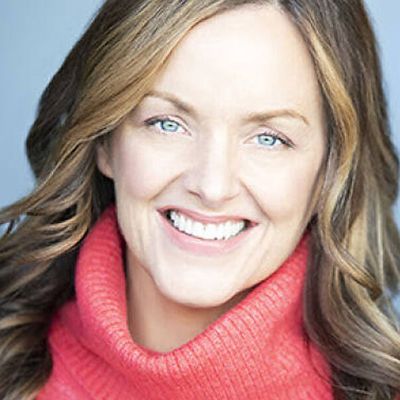
Today’s guests are longtime friend of the club Alice Ripley and her frequent collaborator Christopher Schelling.
Alice, who has been hailed by The New York Times as “simply astonishing,” is a consummate Broadway star, a versatile film and TV actor, and a distinguished singer-songwriter. She earned her first Tony Award nomination in 1997 with her brilliant work in the legendary Side Show, before winning the 2009 Tony Award for “Best Actress in a Musical '' for her performance as Diana Goodman in the Pulitzer Prize-winning Next to Normal. She has also originated roles in such Broadway productions as The Who’s Tommy, Sunset Boulevard, and, most recently, American Psycho.
Alice is joined today by her collaborator of nearly 40 years, Christopher Schelling, who is also a founding member of Ripley, the band formed by Alice in 2001. Christopher has served as musical director and manager for a number of other pop rock/cabaret performers. Additionally, his literary agency represents such bestselling authors as Augusten Burroughs, Rainbow Rowell and Kathy Valentine of the Go-Go's.
Alice and Christopher sat down with our Marketing Associate, Adrian Karnani, to discuss memories from these iconic original casts, revisiting Sunset Boulevard, and creating original music for the last decade.
For tickets and information visit:
https://54below.com/events/alice-ripley-crossovers/
See Alice sing “As If We Never Said Goodbye:”
https://www.youtube.com/watch?v=I7nUF5yeU3A
See Alice sing “I’m Alive:”
https://www.youtube.com/watch?v=YJEX5t0l1Hs
See Alice sing “I Dreamed A Dream:”
https://www.youtube.com/watch?v=wWHpILm5PCI
Credits
This podcast is hosted by Nella Vera and Adrian Karnani and produced by Grace Benigni, with support from the Feinstein’s/54 Below marketing staff.
Artwork by Philip Romano.
Follow Nella on Twitter at @spinstripes and Adrian on Instagram at @adriankarnani.
Transcript
This transcript was automatically generated and might contain errors.
[0:00] Adrian Karnani: Good evening, ladies and gentlemen. Welcome to the fabulous Feinstein's 54 Below. Before we get started this evening, just a polite reminder please take this moment to silence your cell phones. Also, there is no flash photography, please. Thank you, and enjoy the show. Ladies and gentlemen, Alice Ripley.
[0:20] Adrian Karnani: Hi everyone, I'm Adrian Karnani, and welcome back to the Feinstein's 54 Below podcast, where we give you a behind-the-scenes look at artists from Broadway Supper Club. I am thrilled to be sitting down with today's guests, longtime friend of the club, Alice Ripley, and her frequent collaborator, Christopher Schelling. Alice, who has been hailed by The New York Times as simply astonishing, is a consummate Broadway star, a versatile film and TV actor, and a distinguished singer-songwriter. She earned her first Tony Award nomination in 1997 with her brilliant work in the legendary Side Show before winning the 2009 Tony Award for Best Actress in a Musical for her performance as Diana Goodman in the Pulitzer Prize-winning Next to Normal.
She has also originated roles in such Broadway productions as The Who's Tommy, Sunset Boulevard, and most recently, American Psycho. Ripley has won accolades and awards for her work in the feature films Bear With Us and Sugar, and has made guest appearances on such popular TV series as Blue Bloods, Royal Pains, 30 Rock as herself, and the Netflix series Girl Boss. Along with four original Broadway cast recordings, two musical theater duet albums, and countless guest tracks on compilation CDs and demos, Alice is an accomplished singer-songwriter who has released three albums of her own music. Alice is joined today by her collaborator of nearly 40 years, Christopher Schelling, who is also a founding member of Ripley, the band formed by Alice in 2001.
Christopher has served as the musical director and manager for a number of other pop rock cabaret performers, and his literary agency represents such bestselling authors as Augusten Burroughs, Rainbow Rowell, and Kathy Valentine of the Go-Go's. Next, Alice and Christopher are bringing their show Crossovers from Broadway to the radio to Feinstein's 54 Below this March 4th and 5th at 9:30 p.m. Hi, my name's Alice Ripley, and you're listening to the Feinstein's 54 Below podcast. Welcome Alice and Christopher to the Feinstein's 54 Below Podcast. We are so excited to have you two joining us.
[2:29] Alice Ripley: Thanks.
[2:30] Christopher Schelling: Great to be here.
[2:30] Alice Ripley: Thanks for having us.
[2:32] Adrian Karnani: So we'll just jump right in. So you've been a part of the original Broadway casts of Sunset Boulevard, King David, Side Show, James Joyce's The Dead, and of course, Next to Normal. These shows have gone on to become some of the most iconic in Broadway history. Could you share maybe a favorite memory with us from one of those shows?
[2:51] Alice Ripley: You know, most of the shows that you mentioned, we ended up doing the Tony Awards. The bus picks you up at 5 a.m. to go to Radio City. And you know, putting a wig on and a microphone and makeup on your face and head at 5 a.m. on a Sunday morning, you know, it's something that really seems very wrong about that. But doing the Tony Awards, you know, that's something that I've done a few times with the shows that you mentioned. And that's always a real learning experience because we sing with a track, not with a live orchestra. And it's always a roll of the dice. So you always feel like you really hit the bullseye when you can make it through, and you sing along with the track and you make it. That was something that I remember from when we were on the Tonys with Next to Normal.
I just really couldn't hear it, and there's some point where I almost lost control, like I lost control of the horse and then I got back on track. I think when you get to perform with the Tonys, something that's really special about doing a Broadway show.
[3:54] Adrian Karnani: So as your Broadway career progressed, you went on to win a Tony Award in 2009 for the role of Diana Goodman in the Pulitzer Prize-winning musical Next to Normal, and you then took Diana on tour in 2010. Did you feel like audiences reacted to the show differently around the country than they did here on Broadway?
[4:13] Alice Ripley: Well, I think that you can say that in general with any show, the audiences are gonna be different wherever you go. But a show like Next to Normal, I found that that show has a unifying theme that kind of breaks open somebody's heart, breaks open the collective heart that's out there. So in that way, the audience is all the same. In general, depending on where you are, whether it's a different venue or a different city, the audience is gonna be different for sure.
[4:41] Adrian Karnani: And doing that show for you, what was it like just diving into a character like that who was grappling with mental illness? Did the process for you differ than from other roles you've taken on?
[4:51] Alice Ripley: No, not really. I mean, that character lives in that same world that all the other characters I've played live. And that's just my imagination. I recently played Norma Desmond and I'm actually more like Norma Desmond than any other character I've ever played, believe it or not. When it comes to Diana Goodman, I just kinda made stuff up because we don't have that much in common. And it's fun to rely on your director to help you decide where the sweet spot is. It's a live performance, so you just kinda then you just kinda like run through the maze. Honor all of the spots that you've set up ahead of time and you get there. I've always said that that's a show that needs to be available to people so that they can go see it whenever they need it. But something that from what people have told me that it's an honest portrayal of that experience.
[5:38] Adrian Karnani: And you've done it in Buenos Aires too and they love it there.
[5:42] Alice Ripley: We do it in concert over there. It's half Spanish and half English.
[5:45] Adrian Karnani: Oh wow.
[5:46] Alice Ripley: I think they have a production they call it Casinomales and I think that their production is going back up like pretty soon. I think the population there has like three therapists for every person. I think everyone there is so I'm sure it resonates there.
[6:04] Adrian Karnani: That's really interesting to hear. I didn't know any of that about that side of the production.
[6:08] Alice Ripley: Usually what happens is we do a concert that's half Spanish and half English and we sing, you know I'll sing I Miss the Mountains with one of their Argentinian Dianas and we split like we'll split a song like Miss the Mountains and she'll sing Spanish and I'll sing English.
[6:25] Adrian Karnani: Something else you mentioned was that you recently did Sunset Boulevard, this time playing the role of Norma Desmond. What was it like revisiting that show in such a different role in such a different context?
[6:36] Alice Ripley: Oh well I mean I've only done a it's only been a couple times where I've gone back to a show and played a different role. I was in the original Broadway cast I played Betty Schaefer. You know, I used to always look at the role of Norma Desmond and think, wow, maybe someday I could play Norma. And so I'm really glad that I had my chance to finally play her and I'm looking forward to playing her again someday. I think I've just started my Norma years. It was really neat. I feel like I graduated. Norma is more well-suited to me than Betty Schaefer and I feel like I'm more like Norma than almost any character I've played. And it was really a lot of fun. It was so much fun playing her because we're so much alike. I just kind of got to be myself. I mean my crazy wacky self, but yeah.
[7:25] Adrian Karnani: I saw it twice. It was great.
[7:27] Alice Ripley: And you have to tell them about the photographs.
[7:30] Christopher Schelling: Oh.
[7:31] Alice Ripley: Well, the concept for the show was to have a hundred black and white sepia tone photographs of Norma Desmond all over the theater. It's in the round where we did it. You know, there were like three feet by seven feet framed photos and then small all the way down to like a small two by two inch by two inch. But they were all photos of me, of course, because I was playing Norma, so we had a special photo shoot for that, so that was pretty cool. And then we got to take away all the photos at the end of the production.
[8:01] Christopher Schelling: So we did.
[8:02] Alice Ripley: And where are they now?
[8:03] Christopher Schelling: They're all at Chris's house.
[8:04] Alice Ripley: That's right.
[8:05] Christopher Schelling: Inside.
[8:06] Alice Ripley: Wow, that's very fun.
[8:09] Adrian Karnani: So the two of you though, you've been working together for a very, very long time. How did you guys meet and start collaborating?
[8:17] Alice Ripley: Chris was my accompanist in my voice lessons when I started college at DePauw University in Greencastle, Indiana. I was studying four or five different languages and in my music lessons, and Chris was there just pounding away on the keys. And we hit it off. We just became friends, and then you were the accompanist for when we did Brigadoon, correct?
[8:41] Christopher Schelling: Yep.
[8:41] Alice Ripley: Just the first musical line there.
[8:43] Christopher Schelling: Well, I saw her first because you were in Man and Superman.
[8:46] Alice Ripley: Oh, yeah, that was a play.
[8:47] Christopher Schelling: So you watched me and then you thought she's just weird enough for me to love her.
[8:51] Alice Ripley: Completely because you stood like a mannequin for like a half hour at the beginning of the show.
[8:56] Christopher Schelling: Yeah, that was the concept because my character doesn't arrive. Well, the character I played, Anne, doesn't arrive for like 20, 25 minutes into the show, or something like that. And so the director had me stand like a statue for the first one until the entrance.
[9:12] Christopher Schelling: That was my first experience watching something in what I call Alice Vision. I saw Next to Normal probably like 479 times. And there would be so many times where I would I did everything else that was going on, I would just focus on Alice the entire time. And it also turned out later on we found out that we had gone to high school in a budding suburb and had friends in common.
[9:39] Alice Ripley: There was years later.
[9:41] Christopher Schelling: A budding.
[9:42] Alice Ripley: Yeah, I had to.
[9:44] Christopher Schelling: Years later, I realized that at some point one of my friends had said, Oh, do you want to go see my friend Dave and Shelley in The Music Man in West Carrollton? And I remember my response was sort of like by choice, no guy. And then later on I realized if I had gone to that, I would have seen you as Marion in The Music Man.
[10:06] Alice Ripley: That was a near miss when you were in high school. You were probably in 13 or something.
[10:14] Christopher Schelling: Dave was Dave Hackert, he'll be so excited that I mentioned his name. He's always like, Don't forget to mention my name whenever I talk to anybody under a microphone.
[10:22] Alice Ripley: Um and that was Dave Hackert playing Harold Hill and Shelley.
[10:26] Christopher Schelling: Shelley Moore, right?
[10:28] Alice Ripley: So anyway, you can see that we were destined to work together.
[10:32] Christopher Schelling: Oh my gosh, that's so funny.
[10:33] Alice Ripley: Yeah, destined to work together. It was meant to be. And then you have been also writing original music for years, and then of course you formed Ripley, the band, which Christopher has been a part of since the beginning. What would you describe your genre and style of music as?
[10:50] Alice Ripley: Oh my gosh, what does it sound like? Is it emo music?
[10:54] Christopher Schelling: No.
[10:55] Alice Ripley: Is it like folk rock?
[10:57] Christopher Schelling: There's a pop rock element to it.
[11:01] Alice Ripley: Yeah, a little sort of thing. Each album seems to be different. I have one album of covers. That sounds like a loud.
[11:09] Christopher Schelling: Your first one is sort of like a Sarah McLachlan album.
[11:12] Alice Ripley: Yeah, like an introspective songwriter's album. So I guess songwriter would be the sound. And sort of new wave throwback. Probably coming in. Because the first album, Everything's Fine, sounds like a you know, the kind of folksy, but then the album Out of Sight sounds like a real loud band with lots of instruments going on. As does the EP. And then we've got a bunch of songs out there that are just like these songs we like Beautiful Eyes as a single we produced. That's another loud pop music. I don't know what kind of boy, this is a long answer.
[11:49] Christopher Schelling: Yeah, I mean, I had stopped I had stopped playing music. I moved I after college I moved to New York and I got into publishing and I didn't own a piano, I didn't do anything with it, and then Alice and I reconnected, and at some point you said like you need to we need to do this. You need to be a part of this. And I was like, uh, what do I do? And you said practice.
[12:15] Alice Ripley: Okay, oh yeah.
[12:17] Christopher Schelling: So that was really that it was the first band I had ever been in. It was and it was all because of you. It's not like my, you know, desire to go out and play in a ton of bands. It was it was Ripley. It's like a compulsion. You want to go out and I wanna make live music for somebody who's listening, that that's like a strong need. And then you couple that with like maybe they'll listen to this song that I wrote. Sometimes I don't know if anybody else with an earshot writes very nice music, but sometimes you just want somebody to hear it. You don't really even need any kind of feedback or doesn't even have to just just you did know that it was heard somehow. I guess that's where the desire to start a band comes from.
[13:03] Adrian Karnani: Wonderful. So just taking kind of step back towards Broadway, in 1997, you and Emily Skinner originated the roles of the conjoined twins, Daisy and Violet Hilton in the now cult classic Side Show, and became the first performers in a musical ever co-nominated for a Tony Award.
[13:21] Alice Ripley: Um, and since then you guys have continued to perform together, including your show Unattached at 54. For with Emily and with Christopher and with other longtime collaborators, what keeps you working together and what about a person makes you want to continue collaborating with them over such a long period of time?
[13:40] Alice Ripley: Well, you know, this new set that we're doing, it's called Crossovers. It's the first time we've ever done it. We call it crossovers from Broadway to Radio. So it's gonna be mostly covers. We're gonna insert a couple of my own songs because I just like to always include some of those in the set. We love being together and we love the sound that comes out of when we work together. So even though this set's gonna be covers, still it's I think it's gonna be really fun for everybody in the room because we're having fun. And so with somebody like Emily Skinner, we love to get together and give the audience what they want which is, you know, the audience loves to see us rib each other and tease each other and then kind of blow them away, make them cry and laugh and so we get together and do that.
We give them a little shot in the arm. And so it's partly with her, it's partly about giving them what they want and it's partly about the same thing that I mentioned with Christopher, which is sometimes there are people that when you work with them they just elevate what you're doing and they make you better at what you're doing. And so that's one of the big reasons why you want to work with somebody again.
[14:53] Alice Ripley: Even if it's whether you want to come back and do their podcast again or absolutely feel good when you leave you feel like you had a, you know, like the best of you was focused on and all that you felt relaxed and on a similar note, just looking back at your career and all of the, you know, incredible Broadway roles you've taken on, are there any of your collaborators or co-stars that you would love to work again with that you haven't had a chance to?
[14:53] Adrian Karnani: Well, Alice, I've never worked with you.
[15:25] Alice Ripley: I love being here. I can't wait to come back and do this again. You know, it's funny because I tend to think of like venues I want to go back to which is funny. I d when we were with when we did Next to Normal we were in the booth at Schubert Alley. I would love to go back to the booth. I would love to work in the Schubert as well. I would love to do Sunset again. There are certain shows I want to do again. Like I would never get sick of doing Les Miz if somebody decided to revive that on Broadway and wanted me to play Fantine? I just I'd play it until they kicked me out year after year after year until they said you're too old, Alice, you can't do this anymore. It's my favorite show, and you know I'm corny that way.
Um, a show like Cats too. I love that score. I mean, if somebody wanted me to do Cats, I might be. Sure. I could play Grisabella. I'm kind of old-fashioned in that way where like there are roles that I would love to play that are on my bucket list. I always say that the role that I really want to play it hasn't been written yet or hasn't come to me yet. But it would be fun to see Cats from the perspective of being on stage instead of just from being in the audience.
[16:42] Alice Ripley: When I played Norma in Sunset, it was really cool to see that show from, you know, when Betty Schaefer comes on and she has her fight with Joe Gillis, you'd be a great Joe Gillis, by the way. Have you ever played Joe?
[16:53] Adrian Karnani: I am not.
[16:56] Alice Ripley: It was really neat when I played Norma to be able to hide behind the furniture and like I'm watching Betty and Joe have their fight where Norm before it was me on stage fighting with Joe. But then when I played Norma, I was like hiding behind the table. It was really neat to see that perspective of the show.
[17:12] Adrian Karnani: So you kind of preempted me on this question a bit, so we'll see if there's anything new to be said. But in addition to originating a number of incredible roles on Broadway, you have taken on iconic characters like, as you mentioned, Fantine in Les Misérables or Norma Desmond in Sunset Boulevard. Are there other, you know, kind of iconic roles in the musical theater canon? Maybe one dream role that you would love to take on? I know you mentioned Grisabella in Cats. Are there any others?
[17:38] Alice Ripley: Well, I mean, one of the roles that keeps popping up is something that maybe someday I'll do is Mama Rose in Gypsy. And for me personally, I think that that's seems like really a challenge that role and I love the idea of a challenge. I'm not going anywhere out, you know, I can play these roles for a while I guess but yeah I would love to play that role but I'm drawn to roles that are not written yet too which sounds a little bit like I'm avoiding the answer or avoiding the question but not really. It's kind of like, you know, keep in mind that I can play anything you want me to. I'm not just this type of character, this type of character and and I think if writers keep that in mind about the people that are out there that are ready to work for them and bring their music to life it will be better for all of us if you realize that, you know, we're malleable.
[18:35] Adrian Karnani: I would like to see you do is Mrs. Lovett because in college they did Sweeney Todd and 19-year-old Alice was Mrs. Lovett.
[18:45] Alice Ripley: Okay.
[18:46] Adrian Karnani: And you were awesome at the time, but you were nineteen and now I just feel like you would be so good.
[18:53] Alice Ripley: Yeah, that'd be really fun. You'd be a great Sweeney also.
[18:56] Adrian Karnani: No, I would love to put that on the list of, um, yeah I think again with Mrs. Lovett I'm well I've been in Sweeney twice. The second time I played Joanna but you know I always used to joke about playing Mrs. Lovett at the age of nineteen you could get arrested for that. It seems against the law or something to try.
[19:15] Alice Ripley: But I pulled it off.
[19:16] Adrian Karnani: You did basically I d basically because our director, my voice teacher Fitz, he was he was great. He was a great leader that gave us, you know, all the inspiration that we needed to get to where we wanted to go. But yeah, I would love to play Mrs. Lovett and got time to wait for that, I guess. And the idea that I might play Sweeney someday, you know, it's all the rage these days is to switch up the genders. I love that.
[19:43] Adrian Karnani: I love that idea. I was actually about to ask you what role would you want to see Alice play, so I'm glad you jumped in. And so then I guess could you both just speak a little bit more to your inspiration for this upcoming show at 54, Crossovers, and how it's gonna differ from what maybe audiences have seen from you in your past shows?
[20:00] Christopher Schelling: We do have several different sets that we do. The last time we were at 54 Below, we did the Ripley, the band show, which is all Ripley music. For this set we wanted to include, um, we wanted to do some covers, so you know, you always try to think of a set to put together where you could sing some covers. The idea that we came up with is it's called Crossovers from Broadway to the radio. These are songs that started out on Broadway and then they ended up on the radio. So it used to happen a lot more often back in the day, and that's why toward the end of the set we've included some songs that could go. If somebody got a wild hair, you know, a song like Fill in the Blank, like Miss the Mountains, or This Is Not an Exit, which is this song from American Psycho, the Broadway show.
These songs could be hit songs on the radio. But the radio's changed. I think what they have in common, all these songs is that they're good songs that tell a story that move a story forward. There's something irrepressible about that. And so, you know, they pop up, they cross over and they pop up wherever somebody wants to hear good music.
[21:08] Christopher Schelling: Yeah, I think it started, we felt like, oh, there's gonna be this embarrassment of riches. There will be tons and tons of things. And there are actually some from like the American songbook, sort of learning, you know, that became standards, but there actually aren't that many, or aren't that many that then met our standards. We're we've been very picky about the set list on this. And I feel like there's some really cool 60s and 70s things. You know, that that seems to be maybe that was because the guitar bands kind of took over in the late 40s, early 50s, and, you know, it kind of on Broadway with Jesus Christ Superstar and we have a dialects. Um, and what was the other? Hair, right? We're singing a song from Hair. But there's almost seems to be like some kind of we don't have to talk too much about this, but there's almost like a feud or some kind of rivalry between Broadway and radio, and you gotta wonder why it doesn't happen more often.
[22:07] Christopher Schelling: Um, so we do have a kind of a beautiful little list of gems that we found together.
[22:16] Adrian Karnani: I love that. It sounds like you've curated a really wonderful set list. Is there a message that you hope people walk away from the show with, or is it just, you know, all of these beautiful songs that were crossovers or could be crossovers?
[22:31] Alice Ripley: I think it's gonna be people walk away, they're gonna go, man, 54 Below has excellent food. We're gonna say they have excellent food. Did you try the fill in the blank? Yeah, I had the French fries. Yeah, I had the mashed potatoes. Well, I always want the audio I always hope that the audience goes away with something that, you know, having learned something that they didn't know, so maybe some people didn't know that, you know, I don't know how to love him was a hit song on the radio, and maybe some people don't know that I'll never fall in love again was actually from a musical before Deanne Warwick recorded it and made a huge hit. There are some things that you can just learn that way from watching a cabaret. Maybe that'll happen with ours.
[23:18] Adrian Karnani: Absolutely. I think there's a lot to learn there because there was definitely a time when whatever the, you know, the biggest Broadway hit song was was the hit radio song, and you know, we've come a long, long way away from that. And I think there are so many songs, especially in our catalog of standards that people have no idea are from musicals or, you know, the other way around. And so it's I think it'll be very interesting to see, you know, who responds to a song and goes, Oh my gosh, wait, that's from a show?
[23:38] Alice Ripley: That's from a show.
[23:46] Christopher Schelling: Yeah, and we have a lot of fun new arrangements for stuff too. So it doesn't sound like either the pop arrangement or the Broadway arrangement. It's really fun.
[23:56] Adrian Karnani: Just one last question. Is there maybe one song or story that you're most looking forward to sharing with these audiences?
[24:04] Alice Ripley: We didn't go over this one I was gonna mention just now, but Millworker from Working, James Taylor's song that he wrote. Um, it's one of my favorite songs, just as a song, and the audience loves it. And so I'm looking forward to that one for sure. But I think all of them, you know, we just had a rehearsal before we came over here and we cut a bunch of things. You know, it feels great to change your mind about stuff. Feels good to switch stuff up and let stuff go sometimes. So we're still in the process of figuring out exactly what's going to be in the set, but I'm excited about the song from American Psycho because I think that Duncan Sheik's score for that show was overlooked and underrated and it sounds like a Coldplay song.
I mean, it's the kind of thing that it's so easy to take it for granted. I don't really know how I think maybe it's because it serves the story so well that you almost forget that it's and almost forget it's happening, for example, when you're at a wedding and there's a wedding band and it's perfect. You know, nobody really talks about it. You just enjoy the band. But if the wedding's real, the wedding band's really bad everyone's gonna be going, God, this band is so, oh they're awful right so it's that's the kind of thing. I mean the score for American Psycho, I think it served the story so beautifully that it almost people almost forgot it was there. And so I'm really excited to take this song This Is Not an Exit which is the last song in the score.
Put it exactly where we want it to be like usual and present it and say, isn't this a great song? Wouldn't this can you imagine? Like I can imagine a band like Phoenix or Coldplay playing it at Madison Square Garden. It's fun. It's fun to be the one that notices that and then you get to include it in a set like this and talk about Duncan Sheik. I'm a big fan of his but I really kind of miss the Spring Awakening train. I mean I got on it late and then American Psycho is where I kind of had my mind blown by Duncan Sheik. So yeah, I'm excited about that one. But the whole set should be fun.
[26:19] Adrian Karnani: Wonderful. Well, that is so great to hear. I know we are all so, so excited for the shows. Thank you guys so much for coming on the podcast today.
[26:28] Alice Ripley: Thanks for having us.
[26:29] Christopher Schelling: Yeah, thank you.
© Broadway Podcast Network, All Rights Reserved