

Theater legend André De Shields dropped into our podcast ahead of his Feinstein’s/54 Below show for a conversation about coming of age during the age of Aquarius, why he took on the monumental role of King Lear for the second time, and how destiny led him to his Tony-winning role in Hadestown... Read More
From the show: The 54 Below Podcast
Guests
Featured Shows

About
Theater legend André De Shields dropped into our podcast ahead of his Feinstein’s/54 Below show for a conversation about coming of age during the age of Aquarius, why he took on the monumental role of King Lear for the second time, and how destiny led him to his Tony-winning role in Hadestown.
A showstopper at the age of 75, De Shields was the triple-crown winner of the 2019 award season, garnering Tony, Outer Critics Circle, and Drama Desk Awards for his universally praised role as the messenger to the gods, Hermes, in Hadestown. In an illustrious career that has spanned more than half a century, he has distinguished himself as an actor, director, and educator. His notable theatrical appearances include roles in the original Broadway productions of The Full Monty (Tony Award® nomination), Play On! (Tony Award® nomination), Ain’t Misbehavin’ (Emmy Award) and the title role in The Wiz.
In 2020, he received the 2020 Grammy Award for Musical Theater Album for Hadestown, an Honorary Doctor of Arts Degree from Boston Conservatory at Berklee, the 2020 AUDELCO for Lifetime Achievement and the 2020 Red Bull Theater Matador Award for Excellence in Classical Theater. 2019 honors include The Actors’ Equity Foundation Richard Seff Award, which honors veteran stage actors’ best supporting performances of the year, the Project1Voice Lifetime Achievement Award, the 2019 SAGE Joyce Warshow Lifetime Achievement Award, and The York Theatre Company’s 2019 Oscar Hammerstein Award for Lifetime Achievement in Musical Theatre, among others. He was also inducted into the Theater Hall of Fame. Among his other accolades are the 2009 National Black Theatre Festival’s Living Legend Award and the 2007 Village Voice Obie Award for Sustained Excellence of Performance.
For tickets to André's show at Feinstein's/54 Below, visit: https://54below.com/events/andre-de-shields/.
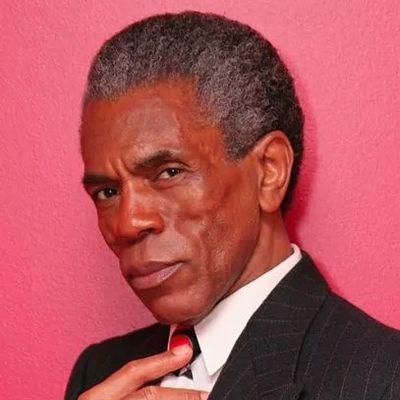
Photo of Mr. De Shields by Lia Chang.
Credits
The Feinstein’s/54 Below podcast is hosted by Nella Vera, Kevin Ferguson, and Grace Benigni and produced by Bailey Everett and Michael Galvez, with support from the Feinstein’s/54 Below marketing staff.
Original artwork design by Philip Romano.
Follow Nella on Twitter and Instagram at @spinstripes.
Transcript
This transcript was automatically generated and might contain errors.
[0:00] Nella Vera: Good evening, everyone, and welcome to Feinstein's/54 Below.
[0:04] Nella Vera: Please welcome to the podcast, Tony Award winner, André De SHIELDS.
[0:17] Nella Vera: Welcome to the Feinstein's/54 Below Podcast, where we bring you behind the scenes at Broadway's Supper Club.
[0:23] Nella Vera: I'm Nella Vera, the director of marketing, and I'm beyond excited about today's episode.
[0:30] Nella Vera: Our guest today is a theatrical legend whose illustrious career spans more than 50 years, beginning with roles in the original landmark productions of Hair and The Wiz, where he played the title role, to his Tony-nominated performance in The Full Monty, to his Tony win in 2019 for his role as the Messenger to the Gods, Hermes, in Hadestown.
[0:53] Nella Vera: André De SHIELDS has distinguished himself not only as a showstopping actor, but also as a director and educator.
[1:00] Nella Vera: This past summer, this Titan of the theater took on perhaps the greatest role written for an actor when he played King Lear for the St. Louis Shakespeare Festival.
[1:08] Nella Vera: And on August 3rd, he opens a solo show right here at Feinstein's/54 Below.
[1:17] Nella Vera: André De SHIELDS, welcome to the Feinstein's/54 Below podcast.
[1:21] ANDRÉ De SHIELDS: Thank you very much. I'm glad to be your guest today on this very fine Sunday.
[1:27] Nella Vera: It's an incredible honor to meet you, and I want to thank you for taking the time to record this podcast, which I know will mean a lot to your fans and to our 54 Below audience.
[1:37] ANDRÉ De SHIELDS: It means a lot to me. What you don't know is that we've actually met before very, very briefly.
[1:42] ANDRÉ De SHIELDS: Robert O'Hara, the Tony-nominated director of Slave Play, and I went to grad school together.
[1:48] ANDRÉ De SHIELDS: And I was in the management program, and he was in the directing program, and we did our thesis together.
[1:53] ANDRÉ De SHIELDS: And Robert had a party one night for all of us in the grad program, and it was just a bunch of students and cheap beer, but you were there.
[2:01] ANDRÉ De SHIELDS: And of course, we were all a little giddy when we saw you, and Robert being Robert, in his very casual tone, at one point said to me, "Oh, Nella, this is André," as though we weren't already aware that there was theater royalty.
[2:14] Nella Vera: So I just want to ask you, how did you meet Robert? Do you even remember?
[2:17] ANDRÉ De SHIELDS: I do. Obviously, we were all here in Manhattan, and Robert was, I think I am expressing this correctly, a protégé of George C. Wolfe, when George was the producing artistic director at the Public Theater.
[2:37] ANDRÉ De SHIELDS: And Robert had just introduced his production of Insurrection.
[2:44] Nella Vera: Yes, that was my thesis.
[2:47] ANDRÉ De SHIELDS: Okay. And just as he introduced us casually, as if we should know one another, that's how I got introduced to Robert.
[3:01] ANDRÉ De SHIELDS: We bonded rather quickly because I think we were both coming from a similar cultural point of view.
[3:10] ANDRÉ De SHIELDS: He is an idiosyncratic artist, his point of view, his approach to his artistry, as I am.
[3:20] ANDRÉ De SHIELDS: And I think we recognized that brotherhood in one another, and both started looking for an opportunity to collaborate, which now didn't happen until 2017 with Mankind.
[3:37] Nella Vera: Oh wow.
[3:38] ANDRÉ De SHIELDS: Yes. Over the years we got to know one another, but the time that we were actually able to collaborate and bump intellects and really create in the crucible experimental but commercial theater was Mankind.
[3:58] Nella Vera: Mankind. Was that the play with the golden babies?
[4:02] ANDRÉ De SHIELDS: You know it was.
[4:03] Nella Vera: I love it. I tried to get that gigantic baby.
[4:06] ANDRÉ De SHIELDS: You know, they had it on Craigslist. They said if you want this gigantic golden baby, apply.
[4:14] Nella Vera: And my boyfriend and I applied, even though we would have nowhere to put this gigantic...
[4:19] ANDRÉ De SHIELDS: You know who bought it?
[4:20] Nella Vera: No, I don't know who.
[4:20] ANDRÉ De SHIELDS: I saw the big Colbert.
[4:25] Nella Vera: What?
[4:26] ANDRÉ De SHIELDS: Stephen Colbert.
[4:27] Nella Vera: Really?
[4:26] ANDRÉ De SHIELDS: Yep. Now what he's doing with it, don't ask me.
[4:32] Nella Vera: I can't believe that he took Crybaby home.
[4:35] ANDRÉ De SHIELDS: That's crazy.
[4:37] Nella Vera: This is so interesting to me. My boyfriend knows Stephen Colbert very well.
[4:41] ANDRÉ De SHIELDS: Find out what Colbert is doing with that baby.
[4:46] Nella Vera: I can't believe it. That is an amazing story.
[4:50] Nella Vera: You've been really prolific during the pandemic. In-person shows at Zoom Theater, King Lear, which we're gonna talk about in a little bit. Was that a conscious choice? I know many people, including many artists, decided to take a step back, but you chose to keep working to keep us...
[5:06] ANDRÉ De SHIELDS: Yes, that was definitely a conscious choice.
[5:10] ANDRÉ De SHIELDS: Let me preface the story I'm about to tell with the day the production stage manager at the Walter Kerr Theater said to us that Broadway was shutting down.
[5:26] ANDRÉ De SHIELDS: But just take a few personal pertinent items from your dressing room. We'll be back, that was March 12th. We'll be back on April 14th.
[5:38] ANDRÉ De SHIELDS: And I said, jokingly, "What, April 14th, 2021?"
[5:47] Nella Vera: Little did you know.
[5:48] ANDRÉ De SHIELDS: Yeah, so we all had a giggle, and then April 14th became one of the most fluid dates in history.
[5:56] ANDRÉ De SHIELDS: It was then May 15th, and it was June 7th, and it was right after the 4th of July.
[6:02] ANDRÉ De SHIELDS: Then it was Labor Day of 2020.
[6:06] ANDRÉ De SHIELDS: And well, you know the story. Here we are in August of 2021, and we are just realizing the plans to restore Broadway.
[6:20] ANDRÉ De SHIELDS: Now, when Broadway shut down, I took a moment to seriously recognize what my life had been in 2019.
[6:33] ANDRÉ De SHIELDS: Fifty years of sowing my artistic seeds finally paid off on June 9th, 2019, when I received the Tony Award for Best Featured Actor in a Musical.
[6:47] ANDRÉ De SHIELDS: And I had that opportunity to drop my wisdom bomb on how many millions of people were watching the Tony Awards.
[6:57] Nella Vera: Yes.
[6:58] ANDRÉ De SHIELDS: Now, having had that opportunity for that abundant harvest, the Tony Award, the Drama Desk, the Grammy, et cetera., I started thinking then that the wise thing to do after you have harvested so abundantly is to allow the field to lay fallow because it needs to regenerate itself.
[7:27] ANDRÉ De SHIELDS: All the time I'm thinking, why now, when things are so verdant, does the pandemic come?
[7:36] ANDRÉ De SHIELDS: I immediately connected it with the wish that many of us use when we think about the ups and downs of our industry, and that is if only the playing field were level.
[7:50] ANDRÉ De SHIELDS: The idea being, if only the playing field were level, everyone would be able to share in this abundance.
[7:57] ANDRÉ De SHIELDS: Well, if nothing else, the pandemic served to level the playing field in the sense that nobody knew anything, and everybody knew nothing.
[8:09] ANDRÉ De SHIELDS: But what did we do? We reacted in fear, we acted in panic, we withdrew, we claimed for our personal selves stress, frustration, life conundrums that were translated into it's an overused term now, both by regular citizens, but particularly by politicians, existential crisis.
[8:34] ANDRÉ De SHIELDS: As if we, like the natural world, were supposed to retreat into a cave and fatten ourselves, and six months later we could come out and start our lives again.
[8:46] ANDRÉ De SHIELDS: And it's demonstrated in other events in our lives.
[8:51] ANDRÉ De SHIELDS: Take the West Coast and its series of devastating fires.
[8:57] ANDRÉ De SHIELDS: Once the fires are under control, the residents say, "Oh, we're going to rebuild."
[9:03] ANDRÉ De SHIELDS: Let's take, for example, the rising water levels.
[9:09] ANDRÉ De SHIELDS: Once the devastating flood, if you will, flash floods or whatever you want to call them, withdraw, retreat, rebuild again on that same territory that had just been flooded.
[9:22] ANDRÉ De SHIELDS: So that is not what we were supposed to learn from the pandemic.
[9:26] ANDRÉ De SHIELDS: We are supposed to learn that when the playing field is leveled, we're supposed to give it a chance to rest, give it a chance to revivify itself, give it a chance to grow green again and blossom.
[9:41] ANDRÉ De SHIELDS: Now, that sounds very poetic, and it is poetic, but the lesson we're supposed to learn from that is to do the same thing with our lives.
[9:51] ANDRÉ De SHIELDS: The pandemic was an opportunity to rejuvenate ourselves, to revivify ourselves, to do those things with our intellect, with our emotions, with our spirit, with our physiology that we have been kept from doing for so long because we're always busy with the everyday doldrums of getting through those 24 hours that make up the drudgery of an ordinary day.
[10:30] ANDRÉ De SHIELDS: To make use of the greatest tool that an artist has in his toolbox, and that is to use the power of my art to transform where I could, individual lives to alter where I could what I saw what was miscreant in our government, to be when I could, the change that I want to be in the culture in the global society.
[11:01] ANDRÉ De SHIELDS: Now, what I'm saying is I translated that often used phrase, carpe diem, seize the day.
[11:11] ANDRÉ De SHIELDS: So I substituted another Latin word for Diem for day.
[11:15] ANDRÉ De SHIELDS: I substituted the word donum, which means gift.
[11:19] ANDRÉ De SHIELDS: So I started seizing the gift, the gift of the opportunity to do those things that we have to put on a long list of things I want to do because I'm so busy doing the things I have to do.
[11:36] ANDRÉ De SHIELDS: So as an artist, we take the same Hippocratic oath that healers do, which is first do no harm, but it doesn't mean don't challenge.
[11:49] ANDRÉ De SHIELDS: It doesn't mean avoid difficult situations.
[11:57] ANDRÉ De SHIELDS: But if you avoid it, it grows on the horizon until it seems insurmountable, and then you give up.
[12:06] ANDRÉ De SHIELDS: But when the problem seems insurmountable, that's when we have to know that we are David, and the problem is Goliath.
[12:14] ANDRÉ De SHIELDS: And if we take the right tool, if we take the right ammunition, we can do away with that problem and continue to coordinate, communicate, collaborate, because here's the opportunity to do exactly that.
[12:32] Nella Vera: So when you make that effort, the gift, as it were, the opportunities arise.
[12:39] ANDRÉ De SHIELDS: Absolutely.
[12:41] Nella Vera: And some people were not able to grab those opportunities, and other people dug in and were able to use that time when they couldn't be doing other things.
[12:52] ANDRÉ De SHIELDS: Exactly.
[12:53] Nella Vera: But it's also, I think what you said about if you don't approach it or acknowledge it, it's like trauma.
[13:00] Nella Vera: If you don't deal with trauma, it just keeps building and building.
[13:04] ANDRÉ De SHIELDS: Until you are overcome by it.
[13:06] Nella Vera: Yeah, yeah.
[13:07] Nella Vera: That makes a lot of sense to me.
[13:09] ANDRÉ De SHIELDS: So because of that approach, I was able to remain gainfully employed through the pandemic.
[13:17] ANDRÉ De SHIELDS: Because I wasn't so much thinking about myself as I was thinking about someone else.
[13:25] ANDRÉ De SHIELDS: And that, as corny as it sounds, but that is one of the many lessons of the pandemic, that we have to approach our relationships from, well, look, I'm an unreconstructed hippie.
[13:42] ANDRÉ De SHIELDS: My formative years were the summers of love, 1967, 1968, 1969. I come from a theatrical culture that emphasized that highlighted experimentalism and experientialism, which not many people embrace these days, which is theater, artistry, isn't only taught in textbooks, isn't only taught in studios, isn't only taught in master classes, isn't only taught in the relationship between a mentor and a mentee. The best way to hone your art is to experience as much of humanity as you can. And that's where you learn life lessons. Because the reason that people have missed the theater so much, the reason that people are now celebrating what we hope is indeed the return of theater, is because when the pandemic happened, it disappeared one of the two places where we go for our ritual, the church or temple and the theater.
There are only two environments where people were strangers go and sit next to one another for the same reason. Community, communion, to have questions answered, to have problems solved, crises resolved, to have burdens lifted, to have yokes broken. Share empathy.
[15:24] ANDRÉ De SHIELDS: Yeah. Now audiences aren't going to articulate it that way, but if you don't deliver that, they'll let you know you have not done your job correctly. Audiences will not lie to you. If you satisfy the reasons that they have come to the theater, they'll give you that ovation, whether it's standing or not. They will recognize fully your service. I want to ask you about King Lear, because I was very excited when it was announced that they would be streaming this production that you were just in, and I was able to watch it. I want to ask you, you've done the show twice now. What draws you to this play in this part?
[16:06] ANDRÉ De SHIELDS: Well, you know that King Lear, in terms of dramatic literature, is the Mount Everest. Yep. You may also know that in my Tony acceptance speech, my cardinal rule number three was the top of one mountain is the bottom of the next. So keep climbing. The first time I essayed the titular role in King Lear was 2006. I could not have gotten to the top of Mount Everest the first time. So I made a covenant with myself that in approximately 10 years, I was 60 years old in 2006. So I said, oh, in another 10 years, I want to essay this character again. Well, it's been another, it's been 15 years. So now at age 75, I get a second chance to ascend Everest. The first time I was able to concentrate on what most scholarship says this play is about, a powerful king who descends into the depths of dementia. This second time around, I concentrated on the empathy that is the result of the king's descent into dementia. Because that's what the pandemic required.
[17:36] ANDRÉ De SHIELDS: Well, I was so struck by the vitality and energy of the production. Everything about it, the color palette, the music, the pacing was so dynamic and very different than other King Lear I've ever seen. Yes. And what you just said about the empathy, that moment that he has with Cordelia. Cordelia. Where he says, Are you my child? And those lines right before that, where I thought this is the most lucid and reasonable that this king has been in the whole play, right in that moment. It was wonderful.
[18:10] ANDRÉ De SHIELDS: Yeah. So I've grown as an artist, as an actor over these 15 years. So if I approach the character empathically, then that should make it available to the audience to also recognize that in this madness, there's also the seed of redemption. Which again is another lesson from the pandemic. Because we treat each other so roughly, even when we love, it's a vigorous kind of love.
[18:48] ANDRÉ De SHIELDS: Yeah. Everyone avoids the gentle. Yeah, I saw something for the first time, and I think I've seen this play maybe 15 times at least. And this is the first time that I noticed this. And I don't know if it was intentional or not, but what happens with Cordelia is always a mystery in most Lears. All of a sudden, there's his favorite child, and he turns on her. And it's either madness or he's proud or he's angry. And the audience doesn't always have satisfaction with that moment.
[19:21] ANDRÉ De SHIELDS: Right. And when I saw your Lear, this was the first time when I saw that he was having a public ceremony to show up the plan for succession to tell the kingdom they had nothing to worry about, that it was going to be a peaceful transfer of power, that no wars were gonna happen because this is what he was doing, is splitting the kingdom publicly, and then she in many ways kind of spoils it because she doesn't play into the public ceremony. And for the first time in 15 years, I saw that she humiliates him in front of the court, and perhaps that was a trigger, and I had never seen that ever in a production.
[20:01] ANDRÉ De SHIELDS: Thank you. And that was deliberate, and in terms of that's what I was discovering the second time through. As much as the king loves Cordelia, she is the disruptor, yes, and the peaceful transfer of power. I'm glad you put it in those very contemporary settings, because that is why we moved the period to Afro Futurism so that audiences could apply to it what was being revealed to them in real time. Cordelia is a lovely teller of truth, but people who speak the truth are disruptors.
[20:47] ANDRÉ De SHIELDS: Yes, and I had always just seen his anger and his feeling of betrayal that came out of nowhere, and all of a sudden, this scene made so much sense to me. It's like, well, why don't you just play along with this so that the kingdom can have peace? Yes. And in a private moment, you can say to your dad. Yes, you know, yeah, yeah, exactly. He loved it. So it was really wonderful. So what a triumph it was. Congratulations.
[21:13] ANDRÉ De SHIELDS: Thank you so much. And how wonderful to perform outdoors like that. I've seen you in outdoor theater before because I saw you in the Bacchae years ago also at Shakespeare in the Park. But again, again, another perfect outcome of the pandemic. It's been ages since I have spent every day for two months out of doors all day.
[21:41] ANDRÉ De SHIELDS: That's what children do. That's why they're so happy because they're out in the sun, they're out in the air, they're out with the trees, they're out with nature. And nature embraces them and calms them. So the two months I spent in St. Louis at the Shakespeare Festival, every day, eight hour rehearsal days, 12 hour tech days, we were out of doors. If it rained, it rained. If it got cold, it got cold. If there was 102 degrees in the sun, it was 102 degrees in the sun.
[22:28] Nella Vera: Yeah, I think many of us experienced that because we've been cooped up and the only thing you could do was go for walks or go to the park. I think my dog was walked more than he's ever been walked during the past year. Because you just need to get out and that has been a gift actually to be able to spend so much time for me. I live on the Upper West Side in Central Park. There are parts of the park that I never knew were there. And now I do because that's all I could do. And the pandemic made that possible.
[22:59] ANDRÉ De SHIELDS: Yeah. I remember leaving my apartment and walking down the middle of the street because there was no traffic. I remember that. And saying to myself, I haven't bumped in. I mean, literally, haven't bumped into anyone for blocks. That's because there are no crowds on the street. Oh my dear, I can. I mean, I've seen the birds all, but I've never heard them because it's such a din of noise. I can hear the birds.
[23:31] Nella Vera: Let's talk about your career, which uh 50 years, absolutely spectacular. When did you know you wanted to be an actor and how did you begin on this path? And was your family supportive early on?
[23:45] ANDRÉ De SHIELDS: I go back to the admonition, which I have adjusted for my personal life. Carpe Donum sees the gift. This was a gift to me the day I was evicted from my mother's womb. Because when I was old enough to have an adult conversation with my parents, my mother volunteered that her life's dream was to be a chorus girl. And that was her choice of words, chorus girl. She was born at the turn of the 20th century. Her parents, my maternal grandparents, said to her, no decent colored child of ours is going to shuffle her way through life. We barely shuffled our way off the plantation. Similarly, with my father who wanted to be a singer and who had a lovely tenor voice. His parents, my paternal grandparents, said to him, How are you going to be a responsible husband? How are you going to take care of your children with such an insecure profession as a singer?
[24:50] ANDRÉ De SHIELDS: Now, what I'm saying is both of my parents deferred their life dreams. There are 11 children in my family. Somewhere along that line of 11 children, those X and Y chromosomes of deferred dreams had to make themselves manifest. I happen to be lucky child number nine. So for my first conscious thoughts, my focus was on entertainment. As a child, I could not have explained it. Now I can explain it. Because when I was conceived, the dream that my mother had deferred to be a dancer, the dream that my father had deferred to be a singer, co-mingled and conceived the manifestation of those deferred dreams. So I never for a second was confused about what I should be doing.
[25:48] ANDRÉ De SHIELDS: And when I do masterclasses now, I encourage young people to surrender to their destinies. Eventually, your destiny will rise up from the path that you're walking and say, Hi, I've been waiting for you. Here I am. And even those of us who don't have that kind of talent, I feel we all have that kind of destiny.
[26:15] Nella Vera: Yes. Because I'm in marketing. And I remember when I realized that I was put on this earth to bring more people to the theater. That for me is the greatest joy, and why I'm in marketing and never wanted to leave marketing, even though when you go to grad school, as Robert and I did at Columbia, they try to make you into a managing director and executive director. And for me, it was always, I just want to bring people to the theater because I want people to experience what I experience when I sit in the theater and watch theater. And when I came to that realization, I also felt that my life just kind of, yeah, I understand what you, I wouldn't say fall, but I understand what you're saying.
[27:01] ANDRÉ De SHIELDS: Yes. But your time in college wasn't wasted because you were provided with tools that you continue to use to invite people to this unique experience, which we call theater.
[27:14] Nella Vera: I want to ask you about growing up, because I know you were in college in the late 60s around the time of Vietnam and the Black Panthers and the assassination of Martin Luther King Jr. For those of us who are living now in what seems like these terrible divided times, can you give us perspective on having lived through the late 60s and what you see happening now? And similarly, because of the level of atrocity that these events were happening, we thought this must be the end time. This must be an indicator that humanity has gone too far. And names are now going to be taken, and we're going to be judged. It's one of the reasons why I introduce myself to you as an unreconstructed hippie. Because facing those atrocities, we who were the counterculture then truly believe that all we needed was love and that war could be over if we wanted it to be. We didn't have to fight wars to end wars. We simply had to choose not to fight them. We sang that song, this is the dawning of the age of Aquarius. Now, we were off by many years.
[29:27] ANDRÉ De SHIELDS: And I'm not talking about gender. You weren't supposed to assault me. You weren't supposed to rape me. You were supposed to collaborate with me. So now where are we? There's this old world that's decaying, that's dying, and Mother Nature is saying, this is natural. Things grow, things decay. Let that old world die. And if necessary, assist it in dying. Because there is a new world bristling with energy, or as the Italians say, combrio, yearning to be born. And we need to practice our midwifery with the new world, with the new earth. Stop being nostalgic for the past and become nostalgic for the future.
[30:29] Nella Vera: Yeah, I love that you mentioned Aquarius. So because you were in the original company of Hair. And given the politics of the time, it must have been wild.
[30:38] ANDRÉ De SHIELDS: Wild. Just wild. It's wild now. So just yeah, but all right, it's wild now, but it's wild now with division. It's wild now with the festering cancer that all of the virulent isms have caused under 2000 years of patriarchy. Then in the mid to the late 60s, it was wild with this nascent love is the correct word, but we have confused the term love with lust. We've confused the term love with desire, when indeed it's better to understand love with the Greek word agape, which means I will put my well-being in a subordinate position to your well-being, and you will do the same. Your well-being in a subordinate position to my well-being. And that's how you achieve the golden mean. That's how you achieve balance. Not by putting yourself first and just accumulating stuff, but by saying, oh no, you first.
[32:04] Nella Vera: I feel like we need a little bit of that 60s energy.
[32:07] ANDRÉ De SHIELDS: Yes. And that's what's you haven't asked about this, so I'm going to offer it. That's what's inspiring me in the concept that I'm bringing to 54 Below. Those pages from my pandemic diary, not all of them, but many of the notes that I made to myself. When we find ourselves in a position where our vision is beginning to clear, remember this lesson that you learned, Andre, and share it. Because another horrific experience you and I can remember, although I have many years on you, is September 11, 2001. Something that continues to inspire us from then in terms of our security, is that phrase if you see something, say something. I turn that again, I'm substituting lessons in life. I like to say, if you know something, share something. And what I know about having gone through 18 months of this pandemic, I'm going to share at 54 Below. I know that it, yes, it did not sound like your typical cabaret. So we definitely are looking forward to that.
[33:33] Nella Vera: You have some backup singers.
[33:35] ANDRÉ De SHIELDS: I have some vocalists with me, yes.
[33:38] Nella Vera: And you do work with them quite often, correct?
[33:40] ANDRÉ De SHIELDS: As well as your musical director, so those collaborations are there. I want to ask you one more question about, of course, I have to ask about Hadestown because the fans want to know. You're returning to the role on September 2nd, and of course, everybody knows you won the Tony along with almost every other award for the role of Hermes. How did you become involved with the project? And did you know in its early stages of being involved with it that it was going to be so successful or so special?
[34:11] ANDRÉ De SHIELDS: I'm gonna share something with you that I don't think many people know, but I'm not telling any secrets out of school, anything like that. Most people who are familiar with the stage versions of Hadestown, because you know it was indeed an album before that it had a stage iteration. Most people who are familiar with the stage iteration know it from the off-Broadway production premiere at New York Theatre Workshop in 2016, maybe, 1617. However, the first attempt to theatricalize Hadestown was in 2012. Oh yeah, oh, the fall of 2012 in the rehearsal studios of Second Stage over here on 43rd Street. And it had a totally different crop of talent. I'm a holdover from that.
[35:12] Nella Vera: Oh wow.
[35:13] ANDRÉ De SHIELDS: I breathed life into the role of Hermes in the fall of 2012. And I invested, recall the story that I told you that I shared when I had this adult conversation with my parents, and how I knew on the day I was born how I would meet my destiny. It wasn't the mystery of this phoenix, as it were. So when I had this opportunity to share in the creation of this character theatrically for the first time, I invested some of my DNA, some of the stuff I've been holding close to my vest so that it wouldn't become sullied. And I thought, oh my dear, I have been wanting someone to call on my area for all these many years. From my first professional experience, which was Hair in 1969, up to when I came to New York in 1973, up to when I did that workshop of Hadestown in 2012. I was always the magical Negro. I have no regrets about that, but I'm saying that was my skin in the game.
[36:42] ANDRÉ De SHIELDS: Yeah, the intellect. Yeah, for my intellect. Education has always been my beacon on my path to the little success that I have achieved. My inspiration is Andre be the most authentic ANDRÉ DE SHIELDS that you can be. And here was my opportunity. So when I say I invested my DNA into Hermes, I made a covenant with him, and I said, when this project becomes a commercial success, and I'm not pulling your leg here, I said this to the character. When this project becomes a commercial success, come back to me. So the DNA that I planted in Hermes was an artistic boomerang.
[37:37] Nella Vera: Yes.
[37:38] ANDRÉ De SHIELDS: So seven years later, when Hadestown was getting attention at New York Theatre Workshop, I was somewhere else working. But here in my daydreams, I didn't have to even have to wait until I was sleeping in bed. In my daydreams, I was talking to Hermes. Remember? When Mankind was playing at Playwright's Horizons, I got a call from Aeneas Mitchell, and she wanted to know if I wanted to replace Hermes in the off-Broadway production. And for reasons which I think you can imagine, my response was no, thank you. Then, when the invitation came to Hadestown to go to the national in England, Aeneas persuaded Rachel Chavkin to come see me in Mankind. She did, and we had a conversation after the performance, and it was very lovely, and that was that.
And then when the lab, which was going to take the show to London, happened, I got the call. We would like you to take over the role, which means I was at the beginning again, not replacing trying to be somebody else or reinterpret.
[39:26] Nella Vera: I love how all of that is connected.
[39:28] ANDRÉ De SHIELDS: Yeah, of course it's connected. It's incredible.
[39:30] Nella Vera: Of course it's good. It's such a great story.
[39:33] ANDRÉ De SHIELDS: From a wizard to a god.
[39:35] Nella Vera: Right, exactly. And now to 54 Below. André, it's just been an honor and a pleasure to have you here today. Thank you so much for giving so much time. I know you're busy getting ready for the show, but this has been an incredible conversation, and I'm sure everybody's gonna be delighted to be listening in. So thank you, thank you, thank you for joining us today.
[39:59] ANDRÉ De SHIELDS: Thank you very much. It's been a wonderful, wonderful Sunday afternoon delight.
[40:15] Nella Vera: For tickets, visit fiftyfourbelow.com. You've been listening to the Feinstein’s/54 Below Podcast, part of the Broadway Podcast Network. Subscribe and rate us on Apple Podcasts or your favorite podcast app.
© Broadway Podcast Network, All Rights Reserved