
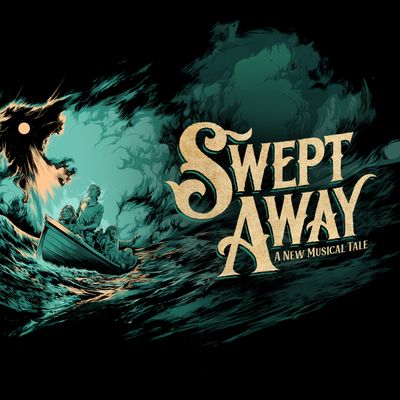
What happens when we stop trying to control every interaction and let the world surprise us? Broadway's Swept Away and Dickinson star Adrian Blake Enscoe joins host Robert Peterpaul for a wonderfully weird and heartfelt conversation about creativity, strangers, silence, connection, and finding the magic in simply being present... Read More
From the show: The Art of Kindness: Pop Culture & Positivity with Robert Peterpaul
Featured Shows
About
What happens when we stop trying to control every interaction and let the world surprise us? Broadway's Swept Away and Dickinson star Adrian Blake Enscoe joins host Robert Peterpaul for a wonderfully weird and heartfelt conversation about creativity, strangers, silence, connection, and finding the magic in simply being present.
This positive podcast episode features:
- Why making up a little story with a stranger is powerful
- How to embrace silence in a go-go-go world
- If bath houses could be the answer to reconnecting humanity
- The joy of disrupting the ordinary
- Acts of kindness from Bandits on the Run to Dickinson to Swept Away on Broadway, plus much more.
ADRIAN BLAKE ENSCOE is an actor, musician, and creator known for his work on Broadway, television, and with his musical trio Bandits on the Run. He originated the role of Little Brother in Broadway's Swept Away and starred as Austin Dickinson in Apple TV+'s Dickinson. He is also a founding member of Bandits on the Run and has developed several original musical projects, including What's Eating Gilbert Grape.
Follow Adrian
Follow us:
@artofkindnesspod / @robpeterpaul
Support the show!
(https://www.buymeacoffee.com/theaok)
Music:
"Awake" by Ricky Alvarez & "Sunshine" by Lemon Music Studio.
We are supported by the Broadway Podcast Network.
Transcript
This transcript was automatically generated and might contain errors.
[0:01] Adrian Blake Enscoe: What's up, world? I'm Adrian Blake Enscoe, and you're listening to The Art of Kindness with Robert Peterpaul. Thank you very much, Robert Peterpaul. We love you.
[0:21] Robert Peterpaul: Hello, beautiful people. Welcome to The Art of Kindness, where we have compassionate conversations with artists from all areas of the entertainment industry who are using their voice to spread joy and make this big, spinning planet in the universe a better place to be. I'm Robert Peterpaul, and I'm so glad you're here.
[0:58] Robert Peterpaul: Hello, friends. I'm so happy to be back with you. It's been a weird time for me personally as I get ready to say goodbye to one of my favorite people on the planet and to say hello to my new favorite person on the planet. Perhaps more on that at another time. I just want to thank you for sticking with me and surrounding me with so much love and kindness, of course. In this time, it was such a joy for me to revisit a conversation that I had this time last year with a grounded, spirited, soulful creative, someone who starred in major television shows like Apple's Dickinson, swept us all away with his performance in Swept Away on Broadway, electrified us all with their band Bandits on the Run, which is currently on tour, the Rough Magic Tour, which sounds, well, magical.
More on that in the show notes. And will continue to entertain us with musicals like What's Eating Gilbert Grape? Yes, based on the movie, it's coming. I'm talking about Adrian Blake Enscoe. Now, Adrian came to me in sort of a rough magic. Does that make sense? I was introduced to them in two incredible ways. One, because as you'll hear, my wife is the biggest fan of Dickinson. And two, because my friend Matt, who has an incredible podcast of his own called The Life Shift, please tune in, kindly made an introduction. He thought of me and made an introduction, thought and action. And that's kindness in itself. Thank you, Matt. Needless to say, this conversation was meant to be and may or may not end in a little ditty.
I gave you a taste of the song in the beginning here. I could have sat in Adrian's orbit for so much longer. And I hope you are so excited to join us here at the table. Without further ado, please welcome the amazing Adrian Blake Enscoe.
[3:13] Robert Peterpaul: Adrian, I am so pumped to finally connect with you today. I was first introduced to you by my wife, who don't be surprised if she busts in here right now and tries to grab the mic, because she is the biggest admirer of you. And Dickinson is her calming self-kindness show is what she puts on to calm down. She's obsessed with it. And so she freaked out when we saw Swept Away. And then I became so enamored with you and your talents. And of course, that story. And I truly admire the way you kind of use your heart to infuse this world with a creative adventure, if that makes sense.
[4:04] Adrian Blake Enscoe: Oh, my God. Wow. I'm not worthy of these compliments. I'm reaching for the words. I'm like, no, you really do. It's like so swashbuckling and fun, but rooted in heart. And I just appreciate you. So thank you for being here.
[4:14] Adrian Blake Enscoe: Oh, well, I'm so happy to be on the podcast. And I love that you have a podcast like this exists, that is about bleeding with kindness and trying to find kindness in the world. I think we really need something like this now.
[4:27] Robert Peterpaul: Thank you. And you know what? You did what I do, which is you turn the compliment back on me, Adrian. And, you know, you can't start a kindness podcast without some compliments. And so I would love to know, how are you at accepting them?
[4:31] Adrian Blake Enscoe: Oh, I used to be very, very terrible. And then I saw my bandmate and best friend, Regina Strayhorn. She's a double Leo. She loves birthdays and birthday celebrations. And for her birthday every year, she would be like, let's do a compliment circle. For some of the birthdays, they just ended up being like a compliment for Regina. But then we started extending it to like everybody who is there gives everybody else a compliment. And I really that refined my compliment accepting skills. I would say I'm a practice compliment acceptor now. So now I know just to say thank you and to appreciate it as maybe an angle on the world that I am not privy to at every second of the day, one that I can still kind of maybe crawl into somebody else's head and see. Oh, you know what? I could see why they would say that. Even if sometimes I'm like, I'm not worthy.
[5:35] Robert Peterpaul: That's a cool outlook. That was a high note right there. That's a cool outlook. And I think it probably helped you at the stage door, right? Because everybody else is in a very different perspective watching you. And then I'm sure you just got so much love, especially for Swept Away, which was the audience was swept away in that show.
[5:46] Adrian Blake Enscoe: Yeah, I mean, that entire experience was magnificent. I would say the stage door was one of the highlights for me. Just getting to really see how people were accepting and taking the show. A lot of people really took it deep into their hearts. And I so appreciated that people I had the experience of feeling like folks were letting us in and that the show wouldn't be the show without that. So I'd often thank people for bringing their whole selves to the show, because I don't know, as a performer, you really. I've come to see the audience as being such an important, integral part of the performance. Like we wouldn't you wouldn't have theater if it wasn't the audience being there.
[6:38] Adrian Blake Enscoe: Yeah, you know, we all if those of us who have done film and TV acting as well, you're used to doing stuff and even, you know, content creating like you're doing right now. It's not always like a person in the room with you. And sometimes you're really performing for a camera and you're kind of having to imagine and give yourself the energy back. But theater and music, live music, for what it's worth, are they're both they need the audience. So I just like it's a reciprocal gratitude.
[7:10] Adrian Blake Enscoe: I love that. I spent so much time at the stage door. I think I might have been I think I might have had the record for four hours at the stage door in the limited tenure I've swept away. It's just for me, like coming from a more of an indie folk background, the time after the show, we would call it act two with Bandits, because we because it's you never know who you're going to meet. Sometimes you meet people after shows that end up being friends, become friends or offer you some kind of very helpful tidbit. Or maybe they say next time you're in town, like crash on our couch, save a couple hundred dollars. And you're like, OK, great. It's really important. And I also think that like having a face to face exchange really.
It lets people know that they're in ownership of this as well. And that's what I really wanted to convey it at the stage door of Swept Away is like this show is our show. If you're touched enough to come back to the stage door afterwards, it's we're here because of you and we're creating this moment in time together. So part of it was also me being like, tell your friends, like let's get like get people out here. Yeah. If you are touched by this and probably people in your life would be if they came to see it. So, yeah, it was also being like this is more than just me and the cast and the creatives. It's also you. So so let's let's do this together.
[8:47] Robert Peterpaul: I love that. I'm about to sing Dear Evan Hansen. It's like, what about us? I don't know why that came about, but I think it does complete the circle there, like you're saying. And from what I remember within the Broadway community, there were so many whispers and shouts and talk of you just really embracing everyone at the stage door, which is beautiful. And at the same time, Adrian, you're giving your heart on that stage. You're stripping the audience bare. I mean, we say there's no hard feelings, but there's a lot of feelings from the show. And then this is the act three. And then sometimes there was an act four. I think of you doing midnight shows with your band after a show. Did I make that up? I mean, how are you kind to yourself and refilling your cup behind the scenes?
[9:29] Adrian Blake Enscoe: That's always a really important question. And I also feel like for someone like me, and I'm sure there are many people listening to this who are practicing the art of kindness wherever they go. It's kind of the last thought. How am I refilling and replenishing? And that's something that I've also had to acquire as a skill. I mean, first of all, I feel like I'm pretty lucky because I spend... I don't know. Friends of mine call me the Energizer Bunny.
[10:04] Adrian Blake Enscoe: I've gotten that too. Yeah. Keep going and going and going. It's like I think if you are coming from love and excitement and it can flow naturally, but sometimes that can obscure that you actually do need rest. And so I would try to I would just try to do things that would that would refill my cup. And for me, actually, the stage door was was a little part of that. But I had to be careful on two show days. I would I would try to make sure that I had at least a second to go to my dressing room and like lay down and and chill or read a book. And like I also think that that life moves in waves. So right now I have a lot more time on my hands. I'm trying to kind of read as much as I can, take walks, visit with friends before things get very busy again, as I know that they will.
[11:00] Robert Peterpaul: Yeah. Well, Energizer Bunny, first of all, great Halloween costume. Just get that out there. Second of all, there are folks like Dolly Parton, our Lord and Savior, has said, you know, she only needs five to four hours of sleep every night. I mean, I think everybody kind of refuels differently. And like you said, it does come in waves. And one of the questions I had for you, I mean, much later, but we're here. So I'll ask it is how are you at sort of coming down from these highs? Because Swept Away was a huge high. I mean, it's funny we're talking today, not to rhyme with the swept away today, because it's back in the news. It's everywhere with the Grammy whispers going around for your album, which is super exciting.
I'm so proud of that. I'm so happy to hear that. But yeah, how are you kind to yourself, I guess, even in these downtimes? Because I don't think a lot of people talk about coming from this huge high that is being in a massive Broadway show and then just sort of going back to life.
[12:45] Adrian Blake Enscoe: Man, it's I mean, it's truly it's. I have you I think I actually have to have a lot of softness for myself and with that question, because I have come to accept that you can't always be. And sometimes you have like being soft with yourself is just being like, you know, there's going to be hard days, especially in a career that has so many ups and downs. And having the questions like, oh, my God. Is this like am I doing the right thing? And like am I like those little momentary worries are very much part of processing how we go about this, this world and this life. And I think you have to accept that that's going to be a part of it. And you can't you can't tell yourself that that's a symptom of things not going well.
Automatically, I think it's important to listen when things don't feel well over and over again. But also sometimes when you're doing something that's uncomfortable and you're pushing yourself, you know, the the monkey mind can be a wild thing that can present all sorts of. I got a little like criticisms and stuff and you just have to. I'm trying to cultivate a good sense of myself to accept that and just be like, OK, I'm going to like sit with this in in quiet right now.
[13:29] Adrian Blake Enscoe: I'm a big. OK, here's here's a big secret about me. I love bathhouses. Oh, OK. So in New York, I go to the Russian Turkish baths on 10th Street pretty frequently.
[13:39] Adrian Blake Enscoe: I just love the temperature change and also, you know, putting your phone down and being, you know, kind of a lockbox where you're just, if you go with people, it's just real quality time that you get with people. And also the temperature change does something to my system that, especially going back and forth from heat and cold and sweat. And sometimes you go upstairs and outdoors and you feel the sun on your skin, you know, like, wow. Something about that always changes my mental attitude. So if I'm having like a rough day or if I've been feeling kind of off, I'll go there and try to just sweat it out. The last one that I went to, though, I went to one in Minneapolis where Sydney, my wife, is doing the show called The Ruins at the Guthrie Theater.
They have a bathhouse there really close to the Guthrie. And so we went, but it's a complete silent bathhouse. And being there for two hours, like, you're asked not to speak or if you have to speak, just keep it short and whisper. I was there with friends, but really it was kind of a solitary experience to just be sitting there. And it was, I definitely, it's the Energizer bunny thing. It can keep you from sitting with the scary feelings, like self-criticism, the worry that things won't be the same or that things will change or that things will stay the same and what you don't want to be in the world will continue to be with you forever. And I really had a moment in that bathhouse where I was like, wow, I need to do more like this. I need to be sitting and not filling my head and my heart with everything and just allow the silence to speak to me a little bit more.
[15:35] Robert Peterpaul: Yeah. Oh, that's beautiful. Allow the silence to speak to you a little bit more. I relate so much. Even when I'm sick, it's impossible for me to just lay there. I mean, it's hard, but once you kind of give into that, it's beautiful and it becomes a practice. And then it does extend to, you know, next time you're in a Broadway show, it'll maybe be a little bit easier for you to be quiet backstage and rest a little bit because you have this practice built up. I think that's kind of a beautiful act of kindness, but to work backwards and then don't worry, everybody, we're going to go back in a bit to Swept Away. I wonder from those early days growing up in Earlville, I believe, to now.
[16:10] Adrian Blake Enscoe: Good, good research. Earlville. Well, early days, Earlville. What is your definition of kindness and how do you think it's evolved over the years?
[16:22] Adrian Blake Enscoe: Wow, that's a beautiful question, Robert. And thank you for tying it to my hometown. That means a lot to me. Earlville is a tiny town. It's like 800 people and it's small enough that like going to middle school and high school, we actually, it was a combined school for like five or six towns in the area all went to Sherbourne Earlville High School, where I'm from. And it was still a pretty small class, like 100, 150 people. Wow, it's tiny. So it is like the place that you kind of, you know, most people. My parents were transplants. A lot of my classmates had like a long family history in that area. But my parents moved there. My mother's a child psychiatrist. And when she went to med school, they offered grants to go work in an underserved area.
And that if you did that, your med school would be paid for, which is an incredible deal. And my mother applied to a couple and one of them was up in Norwich, New York, which is not far from Earlville. And she and my dad moved there for just to, originally the plan was to be there for four or five years. And they just loved it so much. They'd never been in such a small town. They loved getting to know their neighbors. They decided to make it their home. And so, you know, I have a lot of kindness baked in because my mother's a physician. I think she came to that.
[18:00] Robert Peterpaul: What's her name?
[18:00] Adrian Blake Enscoe: I got a little mole going. No, I'm just kidding. JK. That's beautiful. And also, on my mother's side, there's a strong family history of like protest and trying to move the world towards social justice. So I would say that's where I started with kindness is just that you can make a difference in a personal way. My mom actually spent part of her childhood in Roxbury, which is a predominantly black neighborhood outside of Boston, because my grandmother was like, what can I do to help? And some of a fellow activist, I think a person of color was like, well, the first thing that you could do is like move to a black neighborhood. And so they and they did. And I mean, that comes with all sorts of other questions.
And like, I've actually had a lot of conversations with my mom, like unpacking. Well, that was a privilege to be able to make that choice for yourself. At the same time, it gave her a lot of perspective. And so like, I don't know, like just small acts like where what do you choose to do with your life? Where where where do you live? How are you treating the people around you? How do you how do you talk to the person at the bodega in the morning? You know, I think those things are actually deeply impactful. And in a way, political, not in the terms of like, you know, palace intrigue and, you know, the news cycle, but political in terms of how to make how to carve out the world that we want to live in. It's very, I think it's like kind of the most important thing that you can do is create them create your life to reflect that world.
[19:48] Robert Peterpaul: Yeah, that's really interesting. And it is I think you're right. It's those little things that add up. I mean, there's science behind that why you don't have to necessarily donate a million dollars to X, Y and Z. You can just start by giving somebody a smile when you walk by in the street or complimenting somebody and saying like you're I might say your outfit so cool. And I'm sitting here and like this. I'm usually more colorful. But I think your colors are shining out from inside. Thank you. That's I don't know what that means. I'm blacking out. Am I blacking out a little bit?
[20:23] Adrian Blake Enscoe: I wonder like in regards to using your art for social change. Is that something you think about like the intersection of where that lies in the stories you're telling and honoring your mom's legacy with, you know, the beautiful work you do?
[20:34] Adrian Blake Enscoe: Oh, man. Uh, yeah, I think about it a lot.
[20:41] Robert Peterpaul: Yeah, I think question. It is a big question.
[20:48] Adrian Blake Enscoe: It's funny because our systems of commerce and art, particularly Broadway, they're based on on systems of capitalism and extraction and exploitation. So it can be hard to try to figure out how to play the game of trying to get ahead and broaden your platform within the systems without buying in to without making sacrifices and like copping to that system, you know. And it's a question that I sit with all the time, like, for instance, right now, as a recording artist. You. There's a there's kind of an aware a growing awareness that Spotify is is not a good force for for artists and also just for the world, like the where is the money going? It's really it's going towards billionaires and CEOs and artists are not getting very much of it.
And how is that money being used once it's in the hands of of the Spotify CEO? That's a question that I've been sitting with a lot is how yet at the same time, Spotify is is kind of ubiquitous. So as an artist, is it better to try to use Spotify to get your music out there and then reach people and then speak up or just to exit the system entirely and try to create a parallel or oppositional system that more adheres to your values? It is tricky. And it's and it and and I'm still I'm wrestling. I bring this up because this is a question that I'm wrestling with right now a lot because I just think. I think there has to be a better way.
[22:38] Robert Peterpaul: Yeah. And I think media, too, it's relatable, I think, for listening to similar plight of using it for good. But then also there's a lot of negatives that come with these giant entities.
[22:50] Adrian Blake Enscoe: Yeah. Yeah. So. I do think that like what you can do is give people is make art that that aligns with your perspective and your philosophy. And, you know, something that I feel really fortunate about is when I started out with Bandits on the Run, my band, I was coming from theater school. I had done like a bunch of experimental and guerrilla theater. And I was like, well, what if we do this in the most public way possible? Like we create little characters, bandit aliases, and we do stick ups in the subway and be like kind of a silly little way of like creating a playful space in the most mundane space, which is, you know, your commute to work. And so we started off just playing songs in the subway and like having these little characters.
And I really I'm thankful for that experience. I didn't realize that that would be so impactful in the way that we make art, because it our first experience of putting our art out into the world was. I mean, I think maybe there was a little aspect of like, look at me, but it was also it became like, look at us and look at what we what we made out of the subway as soon as people are kind of watching and gathering around and missing their trains to to see what you do next. I just like it creates a vibe and that kind of that kind of playfulness and creating a vibe shift in the world with music and art is has been like kind of the most indelible aspect of of art for me. It's really it's it feels very different from from asking people to to pay for a show because because you have to like it's a self-selecting crowd and it's and you have to have the money to even go to a show, especially on Broadway.
Like, yeah, you're getting a certain crowd that has leisure and then you talk to other artists sometimes and they're like, I wish I could I could go to see theater, but I just don't even have the money to spend. You know, like, oh, my God, why? How did we get here? So I don't know. Like, I think doing sliding scale stuff, investing in physical spaces that we like physical media, too, is something that we're starting to talk about a lot. It's like, how do we go from from like a system where you're you're paying to have the ability to stream something, but it's never your your copy that you can listen to back to a system where like, hey, I'm the artist. I have this cassette tape that I would like to sell to you.
And then you have it and no one can tell you whether or not you can listen to it. You have the opportunity to listen to it. Yeah, it feels like a democratizing force. So that that's kind of where where we are just as a band trying to do that. And Broadway, I mean, that's a whole other story.
[25:59] Robert Peterpaul: I know it wouldn't take Alice down into the rabbit hole and then into the wonderland of Broadway. I think it's interesting just hearing you speak because that symbiosis, I think, is missing a bit on Broadway. And we don't actually have never said this on here. We don't talk about this enough, I think. But as a member of the quote unquote press or a content creator, I get complimentary tickets to go see a show and then talk about it or have someone on to talk about it, which is a beautiful privilege. And I'm providing them something in return. And so I wonder, it's like we all have something to provide. Like, I wonder if there's something to that, too, where tickets can be scaled because this person can then go back and do a talk on it at their school in, you know, Indiana because they just visited Broadway. Like, if there was more of a scale and a symbiosis to that, it's just become so, yeah, commercial and wild. And we could definitely spiral.
[26:54] Adrian Blake Enscoe: Well, you definitely see people, some productions take that opportunity, especially in the first couple of months, if they have the funds and the endowment and they're able to suffer, quote unquote, lower ticket costs for a little bit in order to get people into the door so that those people can can then go out and evangelize. If it's a good show, they'll be like.
[27:19] Adrian Blake Enscoe: You have to see this show. That wasn't an opportunity that Swept Away had, and I will forever regret that, that we didn't just offer a bunch of tickets to kids and younger folks, and just get people really talking about it. I think also part of it is educating the public that they're an important part of the community, that we literally wouldn't be doing this without them here, and we can't do it. If people don't come, then we can't do it. One other thing that I am thinking about a lot these days is Taylor making shows, making shows that are not just big machines that you reformulate every time you do the production, and casting people as interchangeable parts. I know there's a lot of work that goes into casting.
I'm not saying anything to devalue that. But I think sometimes with these bigger shows that are based on spectacle, there's a lot less thought put into what the unique human that you're connecting into the show can offer from themselves. So right now I'm working on a project that, when it comes to music, where it's an actor instrumentalist show, and we're trying to see like, okay, trying to pioneer another way of using the instruments so that someone can come in with a different instrument and plug in in a certain way with their own skill set. I mean, even within one instrument, you could have three different guitarists that play guitar in radically different ways. And to say, no, you have to play the guitar this way every time, is kind of a way of shutting out the human impulses of your performers.
So we're trying to create a bit more leeway within the score to allow people to bring themselves and their kinds of voices and encourage different types of people to play a certain part. So I'm really excited about that aspect. I think that when you do that, you signal to an audience that it's kind of our piece, that it's not like a painting on a wall that you pay to see, but it's a piece that you're co-creating with whoever's in the room. And I actually think that's like the anti-AI and digitization.
[30:03] Robert Peterpaul: Yes, I agree. What we see right now. Yeah. Is that Gilbert great? Am I making that up?
[30:06] Adrian Blake Enscoe: Yeah, that's one of the projects that we're working on.
[30:11] Robert Peterpaul: Yeah, so cool. That came up when I was researching you. And that's super exciting. I love that idea of everybody holding a paintbrush together, including the audience members. And I think that's why when you go see a show and there's any sort of audience interaction, it's always when people lighten up and even Swept Away had that just because of the music. I mean, I know you had people singing along a lot, which is wild. So it creates more of a community. And, you know, I do want to just stick on your band for a second, you know, have a little stick up here for a moment. Ben is on the run because thank you so much. If you haven't noticed, I got these transitions from my dad. I'm a dad joke, Cornball.
Well, you're infusing the world with these musical holdups. And I wonder, this might be something you need to think about, but do you have advice for our friends listening in on how to embrace this spirit of adventure in their own lives? Because I think a lot of people feel stuck, and especially with cell phones and after the pandemic, just getting used to being at home. What's your advice for creating your own adventures in your own daily life?
[31:18] Adrian Blake Enscoe: Oh, man, where to start? I got at the very beginning. Yeah. I'm kidding. I mean, I think something that we neglect is that the answers are all around us. I think it's so easy to get centered on your phone and what the vision of the world that you're getting through this screen is. And it is so distorted in my experience, because you look at the ways that political norms are being shattered, that we're seeing the rise of the right, that's terrifying throughout the world. And you're like, oh my God, what is wrong with people? But then I'll walk down the street, and if I really engage with people, I have seven lovely interactions with random strangers that are totally beautiful and selfless. And I always say to whoever I'm with, I'm like, wow, I love humanity.
I have that interaction basically every time. I remember reading this study a couple years ago that was about talking to strangers on the subway, which for me, the ears of my soul were just like, what? Yeah, that's actually also how I met my wife.
[32:41] Robert Peterpaul: I know, the meet queue is insane. I had a question about that, but I don't, I was like, I got to keep, I don't want to take up too much of your time. We can save it for later.
[32:49] Adrian Blake Enscoe: No, no, I just want to respect your time. But I think the story of you two meeting is a rom-com and is just so magical.
[32:55] Adrian Blake Enscoe: Well, it is definitely an adventure. And it came from playing on the subway and just saying like, I'm going to be open. I'm going to be open to people. At that point in time too, it was late at night and Sydney was one of the only people watching me. And I just struck up a conversation and then one thing led to another. But I think the underlying story is that people are a lot kinder than we're led to believe. And the people around you hold the keys to, like, can be life-changing interactions. I mean, I would not be the Adrian who stands before you today without that interaction of meeting Sydney on the subway, which was just like, just, it just came from being open.
[33:46] Robert Peterpaul: We are sitting, but I know what you mean.
[33:49] Adrian Blake Enscoe: I'm just kidding. Okay, the Adrian sitting before you. That's really beautiful the way you phrased it, that we all have that power, not only to affect each other if we're both open, because it takes both parties, right? But we do all have the power to walk in there. You mentioned earlier about vibes and change the vibe. If you walk into a room and it's just dead, even if nobody responds, you can go in there and bring a different energy to it if you want, which is, I think, what makes us human. And it's interesting with the AI of it all, because it's like, what do we want? We want it to get so close to what's exactly outside our front door. I mean, is that what the virtual reality is going to be? It feels like we're right outside. Just go outside. You know what I mean? It's wild.
[34:36] Adrian Blake Enscoe: I think the lure of AI is that it's a controlled environment. You can ask it to be a person, and it will be exactly what you want. You can say, I don't like that, and it will change. And what you relinquish when you're really present is the ability to totally control a moment. You kind of have to listen and see where people are. And 100% listening is impossible for me. Ultimately, I hear certain things, and I let certain things in. But I think as a philosophy to just approach the world with that, what's around me? Who's around me? What do they do? What's exciting for them? You actually have the ability to open doors that can lead you on an entirely other trajectory and can teach you something that can give you another friend, someone to lean on.
I just feel like that's kind of the stuff that life is built on, is those interactions with fate and with strangers, just being like, I'm here. What's going to happen? And one of my favorite things, this will happen sometimes in the Russian-Turkish bouts when I'm there with our dear friend Christopher Sears, who we're working on What's Eating Gilbert Grape with. I'm going to try this. I've never been to a bathhouse. There's a cold plunge there, and it's a pretty big one, so probably 10 or 15 people could be in there at the same time. And people will go in. Some people will just dip their toes in and be like, whoa! You got to start somewhere. Some people, like more experienced people sometimes, will spend like 10 minutes in 40 degree water, which is incredible.
It really, I mean, it changes your physiology. It's beautiful. But sometimes to weather the shock factor for your body, it's good to, I don't know, to do something different, to do something that takes your mind off of it rather than just watch the seconds go by. And one of the things that we'll do sometimes is just sing. And at first, when Christopher did this, the first time, I was like, oh, this is going to, like, people are going to be like, who the hell is doing that? That's so annoying. And instead, a couple people, including somebody that I really thought would be like, why are you doing that, just started singing along with them. And then we were like, the entire group in that room was singing Somewhere Over the Rainbow, including people that I just would have typed to not be into that.
And then afterwards, everyone was like, that was great. We made three new friends because we were singing Somewhere Over the Rainbow. Just talking about a way of changing the vibe in a space. When people are encountering unexpected things, it opens them up in a way. So if you are that unexpected thing, then you have the ability to reach into their hearts a little bit. If they're that unexpected thing that you're letting in, it changes you a little bit and just makes you a slightly different person, like maybe even a slightly more open person.
[38:06] Robert Peterpaul: Yeah, I think we can make anything a campfire, right? I mean, the cold plunge became a campfire and we could sing around it. I think that's special. Well, it's interesting, too, because I find this whenever I've been on stage in a show, and I know you have it on another level with Broadway and then, of course, doing concerts, which maybe you don't have this at as much. But it's like what you mentioned, that judgment. Sometimes you find an audience member and they're not really looking or they're just not cheering or clapping. And it's like, it's so hard to fight the urge to think they're not enjoying it. Because then afterwards, a lot of the times those quiet audiences are the ones that enjoyed it the most.
[39:46] Adrian Blake Enscoe: Yeah.
[39:46] Adrian Blake Enscoe: So it's sort of like what you just said.
[39:48] Adrian Blake Enscoe: Yeah. I can totally relate to everything you just said, because sometimes the person that is really standing still and I'm like, oh, no, it's so complimentary after a show. And I'll be like, wow, I really just didn't know. And it's actually, I was projecting my own insecurities onto you before you even were able to share anything that was going on in your head to me. Like I was thinking louder and like throwing it at you because I just thought you hated me. Especially now, too, because we live in this world where people consume so much media on the screen. I don't think there's a very high awareness that like you are sharing a space and an actor, a performer can see you often as much as you can see the actor and performer.
And so I do think that we that's a that's a sign of our times in a way is that people have phone face when they go see a show. Yeah. And they're just kind of like in their own world, not not really thinking about how their energy is affecting the room. I don't know. I feel like sometimes you can you can jumpstart a situation, though. The way that we go see theater is very it's in a formalized setting, right? Like there is a very clear fourth wall. People are in the dark, sitting in the dark, which, by the way, is my least favorite kind of concert to give is when we had a couple of these over the summer on tour where we were even in small spaces. It was like the stage was really brightly lit and I couldn't even see anyone past the front row. And and it is overwhelming. You're kind of like it's like, where's the gas? Because I can't really feel the energy of this at all.
[40:59] Adrian Blake Enscoe: I'm trying to find more ways to do that, because those are the really, really, really exciting times for me. It's like just being able to be like, oh, wait, it doesn't have to be this rigid structure. You're not going to see a movie. We can play with this. We did a show. This might not have been something easy to find, so this might be new to you. We did this show at Little Island a couple of years ago for a storytelling festival, and it was a musical, I guess, but we kind of made it a guerrilla piece. The three bandits were real bandits, and we were staging holdups around Little Island, which is, I think, a four-acre park off the coast of the west side at 14th Street. It's a really beautiful venue.
We didn't use the amphitheater at all. We were just in and around the space, and then we gave a little concert at the end. We did this one thing where we kidnapped a member of the audience and took them backstage. We wrapped a rope around them and carried them off in a wagon. Then we wrote a song with them about something, and we came back. It was all about just trying to use the audience and to get them involved. Certainly, it's unpredictable. There was a guy who basically became a fourth character in the show. He's this guy in this wheelchair who was commenting on all the things. We ended up having an exchange with him. He was getting people to laugh at this one segment. We were like, this is part of the show.
This is fantastic. That's really cool. There was one moment where I had to be at a certain place playing a song for a dancer who was in another space that you could see from the vista that I was leading the audience to. At that particular performance, someone was breastfeeding at that place. I had to kind of improvise a 10-minute song and dance off before finally getting into it. It was so wild, Robert. I've been there in immersive theater. Especially if you're moving from place to place and you just can't move. I was a tour guide on a bus as a day job for a while. You get stuck in traffic on the West Side Highway, and you just got to kind of make something up on the fly. I think engaging people is always the answer, is what I find.
I love that that's what that was all about. It makes me wonder, maybe there's a way as bandits you can hijack people's phones at your show and have it all be connected with some sort of app. I don't know. It lights up different colors. I feel like, yeah, maybe we could offline. I think I've seen something, a way to maybe do that. I do have to mention, speaking of iPhone face, it didn't apply to this period piece because y'all twisted it up. But if I don't mention Dickinson, my wife will come in here and take the microphone. So looking back on that show, my friend, are there any acts of kindness? I'm sure there were a lot that kind of stand out to you happening on set. I mean, I know those casting folks are so kind from there to working with Jane Krakowski and all these other kind folks.
[44:05] Adrian Blake Enscoe: Oh, wow. It was a big chapter of my life. It was really my first TV show that I was more than a day player on. And I got to immediately go into series regular mode, which was really special. I think the thing that you don't get to see on screen a lot is how much love and attention and work goes on behind the camera, including like specifically the PAs who are, you know, I think they have a pretty thankless job in some ways because they're really at the behest of the production. Sometimes they're working like 18 hour days, showing up before everyone else, leaving after everyone else. And I was just constantly, constantly taken aback by how kind some of our PAs were. One in particular, Sarah Selinger, was my first team PA.
And she just was so wonderful to work with and always there to help or offer a helpful tidbit. But I became friends with her. Maybe because it was my first job like that, I was just like, we're all making this together. And sometimes, I will say, sometimes like film and TV can break down in a very, very hierarchical system. I actually found out later that the way that crews are structured is directly based on army hierarchies, chain of command. Because at the time that Hollywood was beginning to pop off, there's World War I and World War II. And so a lot of the people that were working on the camera crew as gaffers, just behind the scenes were vets, and they defaulted to what they knew. So there had to be like a chain of command, which is important because there are these huge crews of 200, 400 people.
But something that I wanted to do, that I am trying to take forward with me everywhere, is just this spirit of like, we're all doing this together. And I felt like there were a lot of great moments in making that show where, yeah, we had Jane Krakowski and Hailee Steinfeld, and they were the one and two of the call sheet. But they were pretty open and wonderful. And there were a lot of really great group moments backstage. The first year, especially, we were at Steiner's studio, and we had this long hallway. And I would take my guitar and go out into the hallway and just play songs. And sometimes someone would be like, I have a song, and they would play the song. Oh, cool. Very Steve Martin of you.
Listen, goals. I love that man. Also, he's an incredible banjoist. So talented. He's very talented. I think it was those moments of being like, yeah, we're making this together. There's a really beautiful episode at the end of season three. And it's kind of like, all of the plots are kind of being tied up at that point. And there's a moment where a bunch of the kids in the show are like, being kind of called together for like, I think it's actually, it's like a going away party for soldiers. And so everyone is like, okay, two soldiers going to the Civil War. Everyone's coming together to be like, this might be the last time that we get to hang out. And Emily reads this poem of hers. It's like, these are the days that birds come back, a very few.
But it's just like this moment of taking stock and really being in a space in a moment. And looking around and being like, wow, life is fleeting and all we have is each other. And shooting that scene really struck me because I was like, wow, this feels so reflective of the community vibe that we've created on this show.
[49:00] Robert Peterpaul: Yeah. And it feels reflective of you. It's just hitting me. I know we talked about being Energizer bunnies, but the thing that shooketh me besides the ending of Swept Away, I mean, people walk out, they're very pale because there's something that happens and you're like, oh, snap, crackle, pop. But the thing that really shook me as a singer was that I walked away with this lesson and reminder that you don't have to rush into singing. You can stay in these moments. And you're so incredibly sort of deft at taking your time and just telling the story. And because of that, your vocals, I mean, they're beautiful and they shine through, but you're not like blasting everyone with your gift right away. And that, to me, is the mark of such an amazing talent. And so I don't know, hearing you say that, I feel like that's what you do when you sing.
[49:39] Adrian Blake Enscoe: That's so kind. Thank you. It's true. I think you want to let people in, right? I think you have this really great, I mean, shout out to your pre-pro, Robert, for this podcast. I love the document you sent over. And one of the things that you ask is just think about what is kindness to you. And for me, that's kindness, is sitting with someone and being present. And I think you get to do that as a performer when you're listening. It might feel counterintuitive sometimes because it's like we're taught that performers are the people that get the attention, that are doing the performance for everyone else. But I do think that there's a frame that you can look at where you're also the listener. You're receiving attention, you're receiving energy, you're receiving people the way that they showed up to the show.
And all the things that they had out there, all the problems, even if they're escaping them, they're bringing in their lives and you're holding them. You're sitting with them. It's almost like being a nurse in some ways. We're administering to each other. And so, I don't know, that means a lot to me to hear you say that I'm not slamming it right off the gate, that I'm inviting you in, because that's exactly what I want. I think it's funny. I think we do that with bandit songs a lot too. It's just kind of try to create a vibe, bring people in, and then go hard by the end.
[51:30] Adrian Blake Enscoe: It's like you're like, hey, come into my house. This is the house. This is my favorite mug. Here, do you want some tea out of it? Here, take a sip. Oh, let me tell you a story. The wildest thing happened to me today. You know? Yeah, I'm ready. There was this amazing, I think one of the most artistically formative experiences that I ever had was going to see this immersive theater company from Spain. The first year that I went to school in Pittsburgh, they were doing this thing called the Pittsburgh Festival of Firsts. It was all these international companies that were coming to make their United States debuts. And one of them was this immersive theater company called Teatros de los Sentidos, Theater of the Senses.
They're out of Barcelona. And they had a team of eight actors, and they rented out an armory, and they subdivided it into a bunch of rooms with blankets and pillows. It kind of felt like a pillow fort. And you as the audience member, you just got to kind of wind your way through this maze, and there are just different characters there. And sometimes they had a task to get you to do something, and they would lead you through something. But a lot of times, it really felt like they were open and listening to you as you were a co-performer. And so they were basing what happened on how you showed up. And I really, that's stuck with me for my whole life as a performer, because it was one of the most, I don't know, it was one of the most formative experiences for me.
I felt so held and kind of taken care of. And I don't even know if the show was trying to say a huge message about the world other than presence. Just be here right now, and look around and listen, because your story is happening to you as we speak.
[53:40] Robert Peterpaul: Yeah. Wow. That's incredibly beautiful. And I think, I mean, being present is such a hard, lofty thing for people. I always sometimes they hear the word presence. But as you were talking, it struck me. I mean, it really is just giving and or receiving in any moment. It's just being there to receive something or to give something to somebody else and fill their cup. And how beautiful would it be if everybody could kind of exist in that armory, that pillow fort? Now I wish I'm like, I wish my studio was like a pillow fort set.
[54:06] Adrian Blake Enscoe: You still can do it. That's true. Let's do it right now. Let me get this is a Disney World pillow. Okay, I'm down. I got my pillow. I should say, yeah, let's do this. I should say. Okay. Another point of inspiration for me is one of the folks that brought us together, Jenny Briggs. I know Jenny because she's from Pittsburgh. She lives in Pittsburgh with her family. And her daughter, Sarah, is on the autism spectrum. And she
[54:39] Adrian Blake Enscoe: I was told early on, Jenny and her family were told that Sarah might never speak, might have a hard time just living life in general. And Sarah created this program based on another program called Sunrise. She called it Sarah Rise. And they created this room in the house where Sarah could just be Sarah and wasn't expected to, you know, have manners, quote-unquote, whatever that means. Wasn't expected to conform to a certain way that humans are supposed to be. It was about a place where there are toys and games and all sorts of things. And you as a Sarah Rise cohort would go into the room and just be there with her and do the things that she was doing. Sometimes they're called isms. It's like, you know, maybe there is a board game and Sarah was going to take all the little pieces and like, just like, keep throwing them or putting them in one place on the board or like touching them a certain way.
And your job as a volunteer was to just do that with her. And that to me is also incredibly formative because it is just, it's just being there. It's lending your time, your attention and your presence to show up with people the way that they need. And Sarah, I mean, Sarah is so beautifully well adjusted. We actually banded to play it at her 18th birthday party.
[56:20] Robert Peterpaul: Oh, how cool.
[56:21] Adrian Blake Enscoe: This past year. And she got up on stage with us with a guitar and she played the show with us. Wow. It was her first time playing any of the songs on stage with us, but it was amazing to watch her entire birthday crowd. All of her friends were like, Sarah. Yeah, it was like, she was at the front of the stage, like, doing like, people would be like, wow. It was so, so beautiful. One of Jenny and Carl's friends was a musician, was there. And afterwards he was talking to us. He was like, it is so special. I feel every, it made me feel like every person should get the experience of being a musician on stage and the ability to take in that energy of an audience. It is, it's actually really heartening. So at the end of the day, you know, that is what keeps me being an energizer bunny.
[57:30] Robert Peterpaul: Yeah. Keep going and going and going is that energy.
[57:34] Adrian Blake Enscoe: Yeah. People just like, it's that exchange. It's a symbiotic relationship.
[57:39] Robert Peterpaul: Yeah. Kristin Chenoweth calls it an exchange of love theater. That's sort of her definition. I think as an artist, like anytime I've done a show where we've had a sensory performance, it's been the show that stuck with me from the production I did. And I think it's for that reason. It's like you said, even earlier, just having the lights up, having everything sort of be more present in the moment. It's a beautiful thing for both parties. And I'm so grateful that we were connected through that and through Jenny and you know, I look forward to hearing more and I know I got to let you go, but before I do, Adrian, I have a surprise game. It's called the compliment game. And I did want to do a segment that was called swept away with kindness.
I just didn't get my shit together, but maybe next time this game is based on me reaching out to someone in your life for a compliment or a loving statement about you. I'm going to read it to you. And then you have to guess who said it.
[58:18] Adrian Blake Enscoe: Whoa. How did you orchestrate this, Robert?
[58:44] Robert Peterpaul: Oh, I have my way. Lots of times I go through publicists, but lots of DMs lately, which has done the job. And I appreciate everybody who accepts this little Muppet into their DM area. Okay. Insert cheesy theme song here. Okay. I will read this to you now. You get three guesses and you can ask me yes or no questions. I really don't know much, but this one, this is beautiful. And I think you're going to, you think you're going to get it. Okay. Okay. You ready? It's proving impossible to pin down just one thing I love the most about Adrian. So I'll focus on just one of my many favorites. Adrian leads with their heart, which is as deep and soulful as it is joyous and whimsical as it is expansive and generous.
He wears his heart on his sleeve in the way he loves people, the way he makes art, the way he makes a pie, the way he stays vivid and ever curious about the world around him. If you've ever met Adrian, you've met that heart. It is singular and magic and shines so bright from within. It's a gift to live in that glow.
[1:00:12] Adrian Blake Enscoe: Oh man. Thank you to the person behind the question mark door. I'm allowed to ask questions.
[1:00:19] Robert Peterpaul: You're allowed to ask questions, but I famously probably don't have the answers, but please ask the questions. Yes or no? Is the person a member of my band?
[1:00:34] Adrian Blake Enscoe: Yes.
[1:00:39] Robert Peterpaul: Well, that's good because now I have three answers, but just for two people.
[1:00:39] Adrian Blake Enscoe: There you go.
[1:00:51] Robert Peterpaul: This is funny. I could see either Sydney or Regina writing that. I think so. Is it Regina?
[1:00:55] Adrian Blake Enscoe: Nope. Damn it.
[1:00:55] Robert Peterpaul: Is it Sydney?
[1:00:57] Adrian Blake Enscoe: It is Sydney. Yes. I second guessed myself. I was like, this is so beautiful. I knew that it was Sydney. That's so funny. Thank you, Sydney. One of the more beautiful ones that we've gotten over the years. I'm so inspired by your relationship, the way y'all are able to not just work together, but support each other. I'd love to hear a little bit on how you and Syd kind of balance each other in this rollercoaster career. I know you said she's doing a show right now. You're getting to kind of sit down from your high for a little bit and work on other things. How have you found that? I know it's a work in progress for everybody, but...
[1:01:38] Adrian Blake Enscoe: Oh, man. It's a beautiful adventure and a beautiful story. I think something that Sydney and I have that is very unique is that we get to co-create a lot. Both of our full-time jobs are actor, musician. And I would say a majority of the projects that both of us get are with each other. And that can come with its own challenges. Read, you know, is it a couple's fight or a bandit's fight? We've gotten better over the years of being like, oh, this is something that it's not even a fight. It's just something that we have to like, it's maybe about something else. So let's figure that thing out. I think a big part of it, though, is letting each other have our own identities outside of our relationship and outside of our group.
And that has been a guiding star. You know, I think it's so easy when you're working on something together for it to become a family. It's like having a baby. But when a parent has a baby, you're still the parent. And I think it's healthy for you to have a life outside of just your child. So I think having the ability to get really close and circle up on a project, and also to be like, okay, you're going to Minneapolis now. And this is a beautiful thing for you. And it actually has so very little to do with me. It's wonderful that I get to watch it from the outside and see Sydney grow and change. And having that balance of, yes, we're so interrelated and interconnected and meshed. But at the end of the day, you can and should find what's yours out there.
And I can and should find what's mine out here and write my Emily Dickinson poem songs. And then we can come back together after that and grow as a couple, because we're also living full lives outside of it.
[1:04:06] Robert Peterpaul: Thank you for sharing that. I think that's wonderful. And it's interesting, just hearing you speak for this hour, that co-creation is something you seem to value so much. And I love that because it is community creating. Even in your union, it sounds like the co-creation, the co-authoring. And that's something, whether we feel like we're creatives or not, we do every day. We're creating our own reality just by choosing to walk into one room versus the other, choosing to like wash the dishes now versus later. I mean, there's creativity in all those little moments, I think. And I appreciate sharing this little moment with you, Adrian. And before I let you go, I would just be so honored if you would leave us all with a song.
No, I'm just kidding. A kindness. I would be, but I wouldn't do that to you. A kindness tip. So if there's a kindness tip, a tangible item you would love for everybody listening to do on their own corner, just to try and contribute and co-create a better world.
[1:05:08] Adrian Blake Enscoe: Okay. I want everyone who's listening to try to have a conversation with one stranger in the next 24 hours. Here's a hint. If you can riff on a joke, make up a story together, that'll be the quickest way for an exchange to happen where you're co-creating, where you are suddenly teammates. I'm still perfecting how to do this. I don't know exactly. It changes depending on the person. But I think that's the way forward is to build a little story with a stranger.
[1:05:47] Robert Peterpaul: Oh, that's super cool. Build a little story with a stranger. That's a title for like a children's book or something or a coffee table book. I think that's really special. And we had someone on here once, Mike Cabellon, I think, who's a comedic actor. And he said, listen for the weird thing. So when you're talking to somebody, listen for the weird thing.
[1:06:04] Adrian Blake Enscoe: Listen for the weird thing. That's so good.
[1:06:07] Robert Peterpaul: You know, I love that.
[1:06:08] Adrian Blake Enscoe: I'm going to use that.
[1:06:09] Robert Peterpaul: Yes, I use it in like a party situations or whatever, you know, when you feel like you're making small talk, listen to the one weird thing and follow that and you'll have a more genuine connection. I just appreciate that we have people like you to look up to in this industry and in this world, Adrian. I think you're such a special human. And I'm so grateful we got to share this little time together on the mic.
[1:06:27] Adrian Blake Enscoe: Thanks, Robert. I'm so happy to be here. You're such an incredible interviewer, and I feel so lucky to have gotten to experience this.
[1:06:38] Adrian Blake Enscoe: And I really I will play you a song if you want.
[1:06:41] Robert Peterpaul: Oh, I mean, listen, I'm down.
[1:06:43] Adrian Blake Enscoe: I would see. Actually, wait, can I try and grab Cassie, my wife, who's the biggest fan ever?
[1:06:48] Robert Peterpaul: OK, let me I'm going to try and surprise her with that.
[1:06:52] Adrian Blake Enscoe: OK, she's in a meeting, but you know what? I'm not. What is what is what was the line that you wanted me to sing?
[1:07:02] Robert Peterpaul: Oh, so we start every episode with guests saying introducing themselves and saying you're listening to the art of kindness.
[1:07:09] Adrian Blake Enscoe: So if you want to, like, riff on that or do a little kindness, but or whatever, anything, no pressure.
[1:07:17] Adrian Blake Enscoe: What's up, world? I'm Adrian Blake. And you're listening to the art of kindness with Robert Peter Paul.
[1:07:29] Robert Peterpaul: Thank you very much, Robert Peter Paul.
[1:07:33] Adrian Blake Enscoe: We love you.
[1:07:38] Robert Peterpaul: OK, that that deserves the the soundboard.
[1:07:45] Adrian Blake Enscoe: I feel like that's this is.
[1:07:53] Robert Peterpaul: That was great.
[1:07:54] Adrian Blake Enscoe: OK, thank you so much. What I can't believe you have one of those.
[1:07:57] Robert Peterpaul: That's amazing.
[1:07:58] Adrian Blake Enscoe: I need one of those in my life.
[1:07:59] Robert Peterpaul: No, it's dangerous. I feel like when I'm in the conversation, I forget I have it. But when I when I start touching it, it's it's too much.
[1:08:07] Adrian Blake Enscoe: Until next time. Remember, everything is going to be OK.
© Broadway Podcast Network, All Rights Reserved