

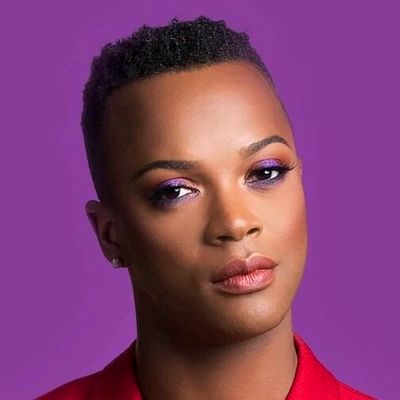
Tony Award winner J. Harrison Ghee joins The Art of Kindness with Robert Peterpaul to discuss their transformative Some Like It Hot journey, taking intentional time to rest and more. J... Read More
From the show: The Art of Kindness: Pop Culture & Positivity with Robert Peterpaul
Guests
Featured Shows


About
Tony Award winner J. Harrison Ghee joins The Art of Kindness with Robert Peterpaul to discuss their transformative Some Like It Hot journey, taking intentional time to rest and more.
J. HARRISON GHEE won the 2023 Tony Award for Best Leading Actor in a Musical, making history as the first non-binary actor to be nominated and win in this category for their role as “Daphne/Jerry” in SOME LIKE IT HOT, a role which also garnered them Grammy, Drama Desk and Outer Critics Circle Awards, as well as Drama League and Chita Rivera Award nominations. Ghee was selected by Billy Porter to star as “Robyn/Kevin” on the hit FOX series ACCUSED, and previously played the series regular of “Kwame” on Netflix’s RAISING DION. On Broadway, they starred as “Lola” in KINKY BOOTS, created the role of “Andre Mayhem” in MRS. DOUBTFIRE, and have dazzled audiences in roles such as “Velma Kelly” in CHICAGO and “Johnny Hooker” in THE STING, opposite Harry Connick, Jr.
To learn more about Maestra Music and get tickets to their Amplify 2024 event, please visit: maestramusic.org/amplify/
Follow J:
Follow us:
@artofkindnesspod / @robpeterpaul
youtube.com/@artofkindnesspodcast
(https://www.buymeacoffee.com/theaok)
Music:
"Awake" by Ricky Alvarez & "Sunshine" by Lemon Music Studio.
Transcript
This transcript was automatically generated and might contain errors.
[0:06] Robert Peterpaul: Hello, beautiful people.
[0:08] Welcome to the Art of Kindness, where we have compassionate conversations with artists from all areas of the entertainment industry who are using their voice to spread joy and make this big spinning planet in the universe a better place to be.
[0:22] I'm Robert Peterpaul, and I'm so glad you're here!
[0:36] Free yourself to see yourself.
[0:40] This is merely one of the mottos that today's guest lives by.
[0:44] Lucky for you, friends, the talent drops so many more nuggets of wisdom in our conversation.
[0:49] So let's get right to it.
[0:51] Today's guest is the joyful J. Harrison Ghee.
[0:58] J. Harrison Ghee is a Tony Award-winning Broadway performer from North Carolina.
[1:03] Their professional journey began while working as a cast member at Tokyo Disneyland.
[1:09] There, J. began creating drag persona, Crystal Demure.
[1:14] This is an experience that would connect J. directly with their Broadway debut role, playing Lola in the popular musical KINKY BOOTS.
[1:23] From there, Ghee has been seen on Broadway in Mrs. Doubtfire, playing Velma Kelly in The Muny’s production of Chicago, and opposite Harry Connick Jr. in Papermill Playhouse's The Sting.
[1:35] In addition to TV credits like Fox's Accused and Netflix's Raising Dion.
[1:40] I was blessed to see J. dazzle in the updated musical adaptation of Some Like It Hot during the 22/23 season, playing Jerry/Daphne.
[1:51] The utterly fresh take on the role originally tackled by Jack Lemmon earned J. a Tony Award.
[1:57] It was a historic moment as they became the first openly non-binary actor to be nominated and to win along with Alex Newell in Shucked.
[2:07] J. inspires both on and off stage, sharing wisdom with fans through a series they call The Gospel According to J.
[2:15] We do a little live version of that, discuss their journey through the lens of kindness and their work with the phenomenal nonprofit Maestra Music, which you can find out more about in our show notes.
[2:26] You can catch J. performing with Maestra tonight at Sony Hall in New York City.
[2:31] Well, tonight, as in March 25th, depending on when you listen to this.
[2:35] If it's past that, then hello, people of the future.
[2:44] As always, stay tuned after the interview for your kindness tip of the week with the one, the only Cassie Peterpaul.
[2:53] Back by popular demand, my wife.
[2:55] Follow us for more fun on social media at Art of Kindness Pod and at Robert Peterpaul.
[3:00] Now without further ado, please welcome the joyful J. Harrison Ghee.
[3:20] Robert Peterpaul: Well, J., I'm so excited to talk to you today. Thank you for your time.
[3:23] I'm a huge admirer of you, not only as an artist, but just as a human being on this earth.
[3:29] And I had the privilege of seeing you in Some Like It Hot with some of my friends.
[3:33] And just I have to say, first of all, thank you for being you.
[3:35] J. Harrison Ghee: Thank you.
[3:36] Robert Peterpaul: Thank you.
[3:37] J. Harrison Ghee: That touches my heart.
[3:38] I'm happy that anybody enjoys anything that I bring to the world.
[3:42] Robert Peterpaul: Oh, well, a lot of people do, I feel safe saying.
[3:46] And one of the questions I always started asking, because I think it has a lot to do with kindness in the arts, is how are you at accepting that love and compliments?
[3:55] Because I feel like it can sometimes be a tricky dance.
[3:58] J. Harrison Ghee: I'm getting better at it.
[4:00] Um, I don't do anything that I do for the attention of it or the accolades or the like, uh, you definitely want eyes on it so that people have more awareness.
[4:12] But even like yesterday I was shopping in Sephora and I was checking out, and the person checking me out asked for my like Sephora card number or whatever.
[4:22] And my name popped up in the system, and she was like, I knew it was you.
[4:26] They were like, I thank you so much for all that you do in the world.
[4:29] And it was that moment of like, okay, stand here, receive this.
[4:32] Like, yeah, you do the work and people are moved by it, and it is humbling for me.
[4:38] So, um, I'm getting better at just receiving it and owning it.
[4:44] Um, because we definitely in our society kind of downplay our own accomplishments and our own efforts.
[4:51] And we can celebrate ourselves more.
[4:54] That's a way we can be kind to ourselves.
[4:56] Robert Peterpaul: Yeah, I love that celebrating ourselves more.
[4:58] Because you're right.
[4:59] I think we're all told to be quote unquote humble, but I don't think that should discount receiving love because that's what we're on this earth for, to kind of love each other.
[5:07] And that's why I love theater.
[5:09] It's that exchange of love between the people on stage and the people watching.
[5:13] J. Harrison Ghee: Yeah.
[5:13] Robert Peterpaul: And I can say the last time I saw you, you probably don't, you might have been in like an excited blackout, but you had just come off stage winning the Tonys.
[5:20] J. Harrison Ghee: I was in the winner's room this past year, which was so special.
[5:23] And you lit up that winner's room because it was exciting to be there, but it's a long day, and it could get kind of stale with people just typing updates, all these journalists.
[5:32] You came in there and people were just like suddenly awake, and I just I loved it.
[5:38] So I felt what you were saying earlier about celebrating because you not only celebrated your moment, but I just loved how you made your moment also inclusive with all of us.
[5:49] You kind of celebrated everyone and used it as an inspiration.
[5:51] Anyway, I'm just I'm complimenting you for this whole time.
[5:54] I'll probably say that again later.
[5:56] As we unlock the door for our chat today, you know, one question that I think is kind of important is what is your definition of kindness, J.?
[6:04] How would you define it?
[6:08] J. Harrison Ghee: Kindness is something I had a revelation of during the pandemic of operating with a conscious sensitivity.
[6:18] The awareness that we bring so much to any given moment, and that we have the power to really think before we speak or act.
[6:30] It's so cliché and so simple, and yet it's hard for a lot of people to do that, to engage a conscious sensitivity, which, again, equals kindness to me.
[6:42] Because if you can believe and understand that everyone has a lot that they bring to any given moment, and that their response to something is not necessarily in response to you or that circumstance, but all that they've experienced in their life that they're bringing to that moment, yeah.
[6:59] You can know how to engage with kindness.
[7:03] Robert Peterpaul: Yeah, meeting people where they are.
[7:04] That's a brilliant definition.
[7:06] And I think it's wonderful because it's an important reminder to not take everything so personally, and it also accounts for giving people the benefit of the doubt and reminding yourself that they've been through whatever they've been through.
[7:19] And that's why they're acting that way.
[7:20] J. Harrison Ghee: Yeah.
[7:22] Because then our guard goes up.
[7:24] And but don't you find it's so hard for people to be vulnerable?
[7:27] Maybe not in our community, but outside the arts, especially, I think a lot of the times kindness is fueled by vulnerability.
[7:34] Even just smiling at someone on the street is kind of vulnerable and people get so nervous to do it.
[7:39] J. Harrison Ghee: Yeah.
[7:40] No, even in our industry, as creatives, we all fall into these roles and we, you know, people have power, or you know, the producers or the director and the things that we everybody, you know, play your part and I'll do mine, and I'll just go along to get along, as opposed to again, just really taking a moment to just breathe and live in the moment and allow that vulnerability to lead.
[8:03] It's something I'm actively working on every day of like before preparing to leave my home.
[8:10] The first thing I do every day is meditate.
[8:12] I literally have a little altar in my room where I go and check in with me and just kind of like remind myself that I'm enough, that I'm good, and that like go out into the world and just do you.
[8:25] And then kind of be prepared for whatever life is gonna throw at you.
[8:28] And it is hard to engage in that vulnerably, to really like be present um and not have your guard up or have a preconceived response for everything or like a I'm prepared for whatever.
[8:41] You're like, no.
[8:42] Yeah.
[8:43] Have a little fun, free yourself, really air it out.
[8:47] Robert Peterpaul: I love that.
[8:47] That's something you've led with too in that Tony's Wonder Room.
[8:50] You talked about how you go into your closet and you just say, what's gonna make me have fun today?
[8:53] That I put on, you know, lead with that joy.
[8:56] And I've heard you speak about this altar.
[8:57] I think in one interview, someone was joking about Hey Arnold and Helga Pataki and how maybe like what's on your altar.
[9:04] But what seriously, what are the things that sort of ground you that you look at in these times?
[9:08] I'm guessing there's some maybe crystals and candles.
[9:10] J. Harrison Ghee: Yeah.
[9:11] But is there anything on there specifically that you would advise if someone out there wants to make their own altar?
[9:16] J. Harrison Ghee: Uh, um, I'm trying not to get emotional.
[9:20] But um, my meditation, there's a meditation book I used by uh Joan.
[9:27] Oh, I literally was reading it the other day to make sure I got her last name.
[9:30] It's a very it's like a hard long last name.
[9:34] Uh, but it it uses different practices and and and points of view, and it advised that in building your altar, you put a picture of like an ancestor or somebody on there who like guides you and covers you, and my dad just died in October.
[9:50] And so there's a picture I found of him that is my favorite picture.
[9:53] Like I had never seen this picture before, and so it sits on my altar now, and I really like breathe into him and carry him in everything that I do and that I am, and um, along with crystals and Palo Santo and Sage and um, but that is like the primary thing that really grounds me there.
[10:14] Robert Peterpaul: Thank you for sharing that.
[10:15] That's beautiful.
[10:16] J. Harrison Ghee: Yeah, I actually advise we have a lot of actors that listen, and I I mean I'm not in a place to advise anything.
[10:21] I don't know why I said advice.
[10:22] Sometimes when I do self tapes, I'll put a picture of a person that is like reminiscent of the scene partner, just to create that kind of essence and feeling in your body.
[10:31] So it's yeah, yeah, it's it's interesting the power of just a photograph.
[10:36] And I think that's so lovely.
[10:37] Robert Peterpaul: I love that.
[10:38] I know also I want to just kind of start before we get into Maestra and your wonderful career here, way back at the beginning, you know, flying over your childhood.
[10:46] I know other ancestors and people that meant a lot to you that you talk about a lot, where your mom and your grandma.
[10:51] I would just love to know sort of generally what was your experience of kindness overall during your childhood, I think in North Carolina.
[11:00] J. Harrison Ghee: Um, it's funny.
[11:02] I this morning I was emotional scrolling on my phone before getting up and going to my uh altar.
[11:08] And there was a clip of someone quoting a scripture of Jeremiah 29:11 of like, for I know the plans I have for you to prosper you, to um not to harm you and to have an expected end.
[11:22] And that is something that my mother really prayed over me and spoke over me.
[11:27] And I just like was in my bed crying, and I immediately text her because I'm grateful for the kindness and the love that she like parented me with.
[11:37] There was a moment uh where she said, growing up that like God spoke to her and was like, 'You're gonna beat out of him what I put in him in the disciplining of me.'
[11:37] She had to physically and figuratively take her hands off of me and parent me differently, understanding that there were gifts, that there were things about me that if she if her and my father kept parenting me and disciplining me the way they were, I would be a different human.
[12:02] And so I'm grateful for her listening to that intuition and that instinct to be like, all right, I gotta release what I think is parenting and how I think is best to really let this being become.
[12:15] And that was also handed down from her mother, my grandma, who I mean, just loved me so purely and so honestly.
[12:28] J. Harrison Ghee: Yeah.
[12:28] And we just had this beautiful connection that is, I mean, something I cherish.
[12:35] And uh I'm grateful that I had that space.
[12:38] She she lived in the country.
[12:40] Like when I tell you there were only probably 10 channels on her television.
[12:45] Um, and we were always watching TV Land and like old TV shows.
[12:51] Robert Peterpaul: Yeah.
[12:52] J. Harrison Ghee: Um, but it was that purity and that groundedness that really gave me a foundation of love and kindness and just like truth.
[13:03] Robert Peterpaul: I love that you lead with that.
[13:04] And I also want to flag, I think it's so important and wonderful that you recently texted your mom that, and you'll always have that going forward, no matter what you had them the chance to thank her.
[13:14] And a lot of us don't, you know, how many times are the day does someone pop into our head and then we're busy doing whatever it is and it kind of floats away.
[13:21] And so the fact that you stopped and actually took action and said that.
[13:30] J. Harrison Ghee: Yeah, it's it's amazing.
[13:31] And I think hopefully it encourages people listening.
[13:33] I try to engage that all the time.
[13:36] Robert Peterpaul: Um, I I had gotten away from it a while in preservation and taking care of myself in processing the year of life I've had.
[13:44] I really kind of like got away from that, but I'm glad that I'm getting back in touch with following my instinct to just like like last night.
[13:52] I text a friend just because I like saw them and on my social media, and I just text them, I love you and a kissy face.
[13:59] And then that started this conversation, and they were on a set, and I was so happy for them, knowing all that they had been through throughout the past year, and they're getting back to work, and it was just a moment of love, and um, I I enjoy that.
[14:12] J. Harrison Ghee: Or when someone shows up in my dream, I make it a point to reach out and be like, "Hey, you showed up last night, like just want to check in, send you some love. Hope you're well."
[14:21] Robert Peterpaul: Yeah, I love that.
[14:23] J. Harrison Ghee: I do that all the time. I text Dolly Parton, I'm like, "You're in my dream. I love you, Dolly."
[14:28] Robert Peterpaul: No, she's amazing.
[14:29] J. Harrison Ghee: Anyway, the listeners are laughing because I bring her up every episode. She'll come up again, I'm sure, along with my grandma, who I was just talking to right before this, and she cannot wait to listen. But it's interesting, I feel like a lot of people don't talk about sort of going down from that high. And you had such a high this past season, winning the Tony for Anyone living under a rock for Some Like It Hot, which congratulations again.
[14:52] J. Harrison Ghee: Thank you. How do you come down from those highs? Even just stopping a show, it physically changes things. It is a wild ride. Um, and yeah, you know, we Tony's were in June, and we ran for another six months. So it was like a lot to process and then keep going, and you're still like in the throes of it. And then I had injuries with my feet, so I was dealing with that, and then again, my dad dying, and then we closed the show, and then I immediately flew to Tokyo, did a show there, came back, did Once Upon a Mattress, and then after the Grammys had a moment to like finally my body was like, "All right, okay, we can process."
[15:35] Robert Peterpaul: Yeah, and I was very intentional. I again, we're in a society where everyone's first question after moments like this is, "So what's next? What's next?" We're always like, "Well, great, you achieved that. Now what are you gonna do now?" And as I don't want to say hard as it was, but as intentional as it was to make the choice, I had to say to people, "My next step is rest. I refuse to be hurried or rushed or busy to please or prove anything to anyone. I have to take care of me in order to give anything."
[16:24] J. Harrison Ghee: You can't pour from an empty cup and oh I was touched things so so deeply recently. Um, Jennifer Lewis did an interview with Robin Roberts where she talked about this fall she had in Africa, and she really like she fell 10 feet off of a like the side of a building and nearly died, like broke bones in her body and was in Africa with a friend and didn't even tell her own family until she got back to America because she was saying, "I was fighting for my life, I literally could not talk."
[16:59] Robert Peterpaul: Wow.
[17:00] J. Harrison Ghee: And she was like, "I had to literally just be with me to deal with the situation," and that's what I felt like. I was like, "Okay, great. No, I have to sit still and be quiet for a second, and let that be okay. I can't post and and be on social media and be engaging because I've got a lot to process."
[17:23] Robert Peterpaul: Yeah, and a lot of us are afraid of that.
[17:25] J. Harrison Ghee: Yeah, we have to sit with ourselves and sit with our experiences in order to learn and to grow and to expand.
[17:35] Robert Peterpaul: Yeah, that's so important that you're leading by example with that. I even have a to-do list slash calendar next to me right now, and I'm thinking the society we've built isn't really conducive to having there's no calendar that I mean, there probably is now actually, I shouldn't say that. But overall, there's not calendars saying schedule in time for yourself. It's like we're scheduling all these things for other people and work. Why aren't we scheduling the time to just do the most important thing, which is reset and recenter?
[18:00] J. Harrison Ghee: Because you can't get from an empty cup, like you're saying. You have to put the oxygen mask on you first if you want to do anything else in this life. So I think that's really important that you said that. And I'm glad you had the awareness to do that. I mean, that's that's so smart.
[18:14] Robert Peterpaul: Yeah, that's a it it going forward, that is a part of my business plan. Rest is built in. It has to be.
[18:21] J. Harrison Ghee: Yeah. I wish it was across this industry because I'm thinking there's so many people that want to be in, and yet the schedule can be so unforgiving sometimes.
[18:30] Robert Peterpaul: Yeah. You know, maybe we maybe some people could do five shows a week, and then another person could do the other. I don't know. There's people can have a life too. And I think hopefully we're getting somewhere with that. But people like you, you know, setting that example again just really helps. So I love that.
[18:44] J. Harrison Ghee: And I just while we're on Some Like It Hot land, you know, people really hailed you for bringing yourself to the role, which is obviously that authenticity is it's what we've moved toward in the arts versus maybe old Hollywood, which was like, "Oh hello." So I feel like that was art that it had its finest, you know, but it's also one of the hardest things to do, just be yourself. Do you have advice for not only performers, but people looking to bring their authentic self to their work?
[19:10] J. Harrison Ghee: You have to engage that vulnerability and and trust your instinct. There were so many moments of creating that show that made me have to look in the mirror and stay in firm in who I am as an individual and as an artist, and to speak up to advocate for yourself. It was very clear that a lot of people had so many perceptions of you know, men in dresses and all of these things, and trying to get ahead of, well, why are we doing Something Like It Hot?
[19:41] Robert Peterpaul: Yeah, yeah, yeah.
[19:42] J. Harrison Ghee: We do need to know why we're doing anything, but also give things the chance to be. And so it as scary as it was, there were moments where I had to say to the creative team, "Hey, hey, hey, I'm confident being the artist and the human that I am. So let's not be concerned about the outside voices and the noise. Let's create art that causes conversation and be okay with that."
[20:10] Robert Peterpaul: Yeah. I love that. But I I or and I'm trying not to say but anymore. And I also love that the way the show started, it really met sort of, you know, you can't meet everyone, but it felt like it met everyone where they were, whether they were a fan of the old movie or coming to see this for the very first time. And it allowed people to sort of follow that journey because I feel like that's one of the hardest things in the arts is you know, I always use this as an example. The film Don't Look Up, which is all about climate change and has this important message. The people that are gonna watch that are not the people necessarily that need to hear the message. So if your art can kind of meet people where they are, and then does that make sense?
[20:47] J. Harrison Ghee: Oh yeah, it's so brilliant. It was the beauty of that experience with Some Like It Hot at the stage door. There were so many moments where baby boomers who love the original movie were like, "Oh, your gender fluid journey was so idle." Like they fully expressed to me that they could understand just a little bit better humanity, and that was the intention of why I did the project to begin with to be a mirror to people.
[21:16] J. Harrison Ghee: Um, one of my favorite experiences was opening night. Leon, our stage door security guy was sitting next to a cisgender white man. And after I finished, you could have knocked me over with a feather. That man turned to the lady he was with and was like, "I need to treat my son better." Simply from like watching this journey I'm having on stage. And you're like, "Yeah, it's that simple." But you just have to be available to what's in front of you and and take a moment to like take it in.
[21:50] Robert Peterpaul: Yeah, because when we all leave together at shows like this, you know. I just saw, I guess, on a different level, The Notebook, which is a very emotional journey. You're trying not to cry for three hours. But when you all leave, everyone does have that human first approach. You know, someone's helping someone get out of their seat, someone's holding the door for someone else, they're turning to pick up the playbill. You know, it does actually create action, which is lovely.
[22:12] J. Harrison Ghee: And for me, one of the most powerful moments of Some Like It Hot that just touched my heart, and I feel like is sort of the crux of the show. And please correct me if I'm getting it wrong because I saw it a while ago, and I tried to track down the script, but I couldn't find it. There was this just like this simple, powerful moment at the end of the show when your character has had this self-discovery journey and this this self-love, you know, falling in love with with Daphne. Christian Borle's character, I think asks what name he should call you. And your response was something along the lines of "Whatever you say, just say it with love," or that the intention. And that line, I mean, that blew me away. What did that moment mean to you? And were you involved in that moment?
[22:50] J. Harrison Ghee: You know, it was because that is what I say in my real life. And again, it found its way into the script. When we go around, again, in the culture of now we we do the first day of school, and you go around, say your name, your pronouns, and like who you play in the show. And I was like, "Hey, J. Harrison Ghee, play Daphne, Jerry Daphne, all things with respect. Like that is, I go by all pronouns with respect." And we showed up, and in the changes one day, it just said in the script, like, "Yeah, either is fine as long as you call me, you know, with love and respect."
[23:27] J. Harrison Ghee: Wow. And it's beautiful to feel the audience receive that every night.
[23:32] Robert Peterpaul: Yeah.
[23:33] J. Harrison Ghee: That was so powerful. Oh, it's like, oh. Because they laugh because people are like, "How you know, he says, you know, what do I call you?" And people are like, "I'm like, either is fine as long as you do it with love and respect." And it's like, ooh.
[23:47] J. Harrison Ghee: That moment, and then there's the moment I have with Osga when he's like, "When I am blind to even judging him." And he's like, "Yeah, the world doesn't have very good eyesight." Or "The world responds to what it sees, and the world doesn't have very good eyesight."
[24:03] Robert Peterpaul: Yes.
[24:04] J. Harrison Ghee: To hear the audience every night go, "Oh." Because again, it is people respond conditionally to what they see. Again, identifying as a non-binary person, walking through the world, it is interesting to see how people will conditionally respond to me. If I have facial hair, if I have um a dress on, and how they will still conditionally call me sir or he or whatever, or if I have on makeup, then they it automatically assume a feminine, and it's like, "Yeah, it doesn't matter how I present. If I tell you a certain thing, honor me for what I tell you. Because that's my truth."
[24:49] J. Harrison Ghee: Yeah. And it's individual. We can't meet everybody of like, "Oh, you're non-binary, so you should always have hair and makeup. And that's what helps me understand that you are that thing." It's like we have to meet each other individually. That's another way of engaging kindness of not compartmentalizing of like, "Oh, you're queer. So like that means this and this for you. My queer is different from somebody else's queer."
[25:15] Robert Peterpaul: As long as it's with respect, like you're saying too.
[25:18] J. Harrison Ghee: Is that that initial respect is there, even if someone I know people that get fearful too. It's like they don't want to use the wrong pronoun or whatever it is. As long as you have that intention of respect and we're all just connecting as humans, that's that's where it's got to start. That's kind of the fertile ground to have good interactions on this planet, you know, and have a nice life.
[25:45] Robert Peterpaul: And I love that you talk about that here and and so often. You become this this role model. I think you really embrace it, and I love that about you and and supporting you. What in this kind of season of your life, I'll say, is your approach to being a role model towards others? Has it kind of changed now that everything is quieted down, Tony's wise?
[26:02] J. Harrison Ghee: No, uh, it's like I said in my my Tony speech. It's like my mother raised me to understand that my gifts and my life were not about me. I am just the vessel on this earth that is a vessel for change, and like I am the vehicle for things. And so it's this thing of like, okay, I just get to be me, and people respond and people feel encouraged and feel seen. Um, I get it so much more now of like getting into musical theater. I moved here, it was a large leap of faith. Uh because I was gonna go do law or PR or communications or something safe. And then it was like, no, you got things, uh, go to New York, be the entertainer that you are. And then when I found Billy Porter's At the Corner of Broadway and Soul album, I was like, "Oh, there's a human in the world with something similar. Okay, great. If I can just that gives me hope."
[27:01] J. Harrison Ghee: And now, even more so, so many other things give me hope. Even opportunities like the political climate we live in, seeing people in the positions of power that they're in gives me hope. Because if you can be doing what you're doing at the level you're doing it, operating the way you're choosing to do it, that gives me hope that anything is possible. Even if it is a negative energy on that end, you're like, "No, that gives me hope."
[27:33] J. Harrison Ghee: Yeah, because you being the flaws and all messy human that you are with grace, I too can be effective in the world with who I am and what I do and what I present.
[27:46] Robert Peterpaul: That's a beautiful way to look at it. A lot of what you're saying aligns with me too, because I try to approach life living in the gray, if that makes sense. I think a lot of people live in the black or the white, and life is more complex than that. You can't really put people in these boxes like you're saying. To me, what people identify as it's it's so personal and it's community forming, but it's not necessarily a label, if that makes sense. I don't know the words to use. But yeah, I think that living in the gray is something that I don't know, we could use a little bit more of.
[28:18] J. Harrison Ghee: And I love that approach politically too, because in this frustrating world, you know, if you can at least take away sort of a positive mindset, you won't drive yourself too crazy watching the news, and then you can lead from love because a lot of the times if we lead from fear or anger, the train's not gonna necessarily leave the station, it might just vibrate and explode.
[28:39] Robert Peterpaul: Truly.
[28:41] J. Harrison Ghee: I'm gonna listen to that again after I when I edit this. I'm gonna keep listening to you on a loop. You know, what are your thoughts? I guess while we're here on leading with love in these moments that are so hard, even in our industry in a rehearsal room when there's that frustration. How can we all lead with love versus maybe jumping into the fear? I know that's a big question, and no one has the answer, but I would love your thoughts on it.
[29:03] J. Harrison Ghee: No, I mean, it's literally what moved me to get my first tattoo, which is quite large on my ribs, and it's the things I live by: intention, purpose, and love. I do everything in life with intention and purpose, but most importantly with love. In the rehearsal room for Some Like It Hot, there were moments where I had to lead with love, but also get people together. Casey Nicholaw, our director choreographer, there were so many moments where he would say, "Jay and the girls, Jay and the girls, Jay and the girls are gonna do this," and I'd be like, you could also just say the girls. If I am Daphne in this moment, and I gave you permission at the top of rehearsal, when I say all things with respect, I gave you the permission to call me all things.
So we have to give ourselves and each other the permission to play and to speak in draft. That was a tool that our HR team brought in to do diversity, equity, and inclusion, and it's one of the tools I've loved that they gave us of in any situation, saying, like, "Hey, I'm speaking in draft," meaning this may not make sense, it may sound crazy, I may not have the right language, but I'm speaking in draft. Hear me, give me the grace. And that also sprinkles in that love of just like, "Hey, I don't mean any offense to anybody, and I'm not trying to be hard here. Let me just say this thing out loud." Because that's the other thing I think in society, we're afraid to speak a lot of things out loud. And I'm forcing myself to get my voice back in my personal life to really just say things, just even just to myself, to say it out loud.
[30:50] Robert Peterpaul: Yeah, there's so much power in that. I love that. I'm gonna make that a social graphic or something, speaking in drafts. I saw a quote recently, too, that you've probably seen. It's that, you know, I reserve the right to change my mind. And I think things are published these days. Social, everything seems like so quote unquote permanent. And we can forget that just because someone maybe posted something 10 years ago, it doesn't mean that's how they feel today. And yet, you know, that can get dragged up for cancel culture, and we don't have to go down that rabbit hole, but that's a whole other thing of a big spectrum. So it's a really wonderful way to think. And I think this talk kind of perfectly leads us into the wonderful work you're doing with Maestra, which I said this yesterday, the day before we had Jasmine Amy Rogers, who is so lovely on here to speak about it.
And in researching the organization, it was really, I don't even, I don't think fascinating is the right word, just a little disheartening because it kept getting autocorrected to Maestro. And I'm like, this is Maestra. And that just says a lot right there. So you're doing the Maestra Music's Amplified 2024 event at Sony Hall, which is such a wonderful spot on Monday, March 25th, I believe, alongside some amazing talent. What a delight. Can you talk to me about what it means for you to work with them and the incredible work that they're doing?
[32:08] J. Harrison Ghee: It's exciting to always uplift underrepresented and underserved voices in life. And Maestra is doing that for women and non-binary people in the musical theater industry and being very intentional about that of like standing firm and everyone needs space to be represented in safety and in such support. And I love an opportunity to show up. To do it with Bonnie Milligan is a treat for me. We have done so much together. We literally got our equity cards together, we won our first Tonys together, we were neighbors on Broadway. We are connected on so many levels, and the conversations we've had about what we've experienced in the industry. And Maestra is supporting and uplifting and shining a light on the beauty and the possibility of really broadening how we see what is possible.
And talk about like shaking the table. We really have to make space for everyone at the table in an equal way. And it is wild to think that women and non-binary people don't get opportunities that men are just like handed. And the work that it takes to make that change is so important. And so an opportunity, even just like this gala is so wonderful to show up and be representation and elevate more voices like that.
[34:02] Robert Peterpaul: Yeah, it's so important. I think it's music directed by my friend Julianne, who I believe also worked on Some Like It Hot, whoever so it I wish I could go. I won't be able to be there, but everyone should get tickets because it's gonna be such an amazing evening. Are you gonna sing as well? I'm guessing, and perform a bit here and there.
[34:19] J. Harrison Ghee: Oh, we've got a lot of things planned. It'll be a fun evening. Who knows? Listen, and that was one of the things in creating it, even like it wasn't just like, "Hey, you all come in and host, and like we got it covered." They gave me and Bonnie the space to be like, "No, how do you want to be a part of this evening? How do you desire to run this night?" And really gave us the space to bring ourselves to the night so that we can be comfortable and also make the room feel safe.
[34:50] Robert Peterpaul: Yeah, and it was wonderful to it's always wonderful to create with Bonnie, but it's that thing of being like, "Oh no, we're confident in what we bring, and thank you for trusting us to be who we are."
[35:00] J. Harrison Ghee: Yes, and there's no limit to that. There was no like, "Okay, we need you all to play it safe here and do it." Like it's like, "No, no, no, no. Come in and go off." It's like unlimited.
[35:09] Robert Peterpaul: Now I hear Wicked in the head. Do you enjoy hosting? Is hosting fun for you?
[35:14] J. Harrison Ghee: It is fun.
[35:15] Robert Peterpaul: You're probably a great host.
[35:17] J. Harrison Ghee: I am. It's funny. A lot of people don't know that I used to do, like, I did drag in New York, like nightlife hosting parties, events, my own shows, cabarets, things like that for a few years. I haven't done it in a while. So it's nice to engage that part of me again and be like, "All right, yeah, you're capable of so many things." So I'm grateful for the opportunity to flex in different ways.
[35:45] Robert Peterpaul: Yeah, you are. You're capable of so many things. And getting back to Maestra for a second, just in line with the work that you're doing there. What do you think people out there listening in our industry, I guess, and beyond can do to help move the needle forward?
[35:58] J. Harrison Ghee: I think what's wonderful about these times is we've access to so much information and so many things we need to help move the needle forward on, but that can be paralyzing too. So I wonder if you have even something small, people out there can do it in their own circle.
[36:35] J. Harrison Ghee: Allow yourself to be uncomfortable. It's okay to know everything. It's okay to go into a space and into an opportunity and say, "Hey, I see what you're doing. I have no clue the fullness of this. Break it down for me." Allow yourself to be ignorant and really just ask questions. I'm grateful for that. In my experience making space for conversation and really, like I said, shining a light, and we build organizations like this so that people can be informed. And so that we can open ourselves and be more available and more vulnerable. And it takes a lot of courage to even make noise.
[37:11] Robert Peterpaul: It does.
[37:14] J. Harrison Ghee: And so opportunities like this give space for people to say, "All right, cool. I don't know what y'all are doing, but like fill me in, let me know."
[37:25] Robert Peterpaul: Yeah. I think we can let ourselves be curious. We were all curious as people about so many things. The brain scientifically is just attracted to change. That's why, you know, if I'm talking to you right now and my cat walks through the door, I'm gonna look over there because my brain needs to know what's happening. So society has made us so conditioned that safety is remaining the same. That as long as I can like put you in a box and keep you compartmentalized, then like, okay, I'm safe. I understand a thing as opposed to it being fluid and allowing there to be movement and evolution. It's one of the things I'm breaking myself of every day. I feel like we ask our, or we in society, we will often say, "Oh, you've changed," and it has such a negative connotation. As opposed to like, "Oh, you've changed." Like change is a good thing.
[38:22] J. Harrison Ghee: Yeah.
[38:23] Robert Peterpaul: And it's also again uncomfortable. Growth doesn't happen without growing pains.
[38:29] J. Harrison Ghee: Yes.
[38:30] Robert Peterpaul: We need change. I mean, we couldn't have the entertainment industry without change. You only had Some Like It Hot because there was a change that incited the story, and then there's changes all throughout, and that's why we enjoy watching it.
[38:41] J. Harrison Ghee: Yeah, but you're right, change gets a bad rap, but we need it.
[38:45] Robert Peterpaul: Yeah. And we like to watch it. That's why what's the close-up on in every big movie? There's that one shot of the performer watching a building explode. It's always the close-up shot that we think, "Oh, we're just waiting for it," you know?
[38:58] J. Harrison Ghee: Yeah.
[38:59] Robert Peterpaul: So it's very fascinating. On a sorry, I've been reading this book, The Science of Storytelling, just gonna shout it out. And now I think I'm a scientist, so I'm just dropping that information back.
[39:09] J. Harrison Ghee: No, Jay, my friend, you're becoming known for your. I don't know if they're called this, but I'm gonna call them Jay-isms because there's Dolly-isms and there's, you know, Oprah-isms, and your inspiring quips from this beautiful brain. I just wonder if you'll indulge me. You could say no, by doing a little flash round where I kind of read a sentence or a phrase and then you just pop a Jay-ism out, whatever comes to your head first.
[39:34] J. Harrison Ghee: Okay, okay, yay! I don't let's see how this goes.
[39:37] Robert Peterpaul: I don't even know how to make a game.
[39:38] J. Harrison Ghee: Okay.
[39:47] Robert Peterpaul: Let's see. Your first one is for people who are met with unkindness from others.
[39:54] J. Harrison Ghee: Oh, so this, I mean, this basically goes into like my gospels according to Jay or whatever. Um, someone doesn't understand you. Have they asked you questions? Have they taken the time to get to know you? Honey, don't waste your time on their ignorance. Live in the truth and the authenticity of who you are, and shine on them hoes. And honey, that's the gospel according to Jay.
[40:26] Robert Peterpaul: That was amazing. Oh my goodness. Okay, I got another one. This is exciting. For people who might not feel seen.
[40:36] J. Harrison Ghee: Free yourself to see yourself. Give yourself the space and the permission to be all of who you are and a little room to play on the side. Because that's you, boo.
[40:47] Robert Peterpaul: Have you said these before?
[40:49] J. Harrison Ghee: That one, I live by that. Free yourself to see yourself. Yes. I literally was saying it yesterday. I was in a rehearsal for another situation, another gala I'm doing. And somebody complimented my leather pants, and they were like, "I could never do that." And people say that often with things I wear, or like they see me and they're like, "Oh, that looks great. I could never do it." And it came to me one day, and I was like, "Oh no, because you haven't freed yourself to see yourself." You haven't given yourself the permission to be or to play. And again, it's like how I get dressed every day. I go to my closet and I was like, "Okay, what do I feel?" And oftentimes I will look at myself in the mirror and be like, "Oh, you are doing the most today," or "This is very..." and then I'm like, "Okay, great. Get everybody else's voice out of your head because you're already creating a narrative of how people are perceiving you. How do you perceive you?"
[41:38] J. Harrison Ghee: Yeah. And that's what the clothing shows to the world too. It's also kind of presenting, it's for you, and it's also for others to flag some of your personality if they want to. I'll never forget. Actually, I was doing a workshop with Julianne of a new musical recently, and I wore this sort of like blousey shirt thing that was a pale skin tone color. And I wear it all the time in life, but the director said to me, "Oh, that's so perfect. He's just gonna fade into the background. You know, it's so perfect for the character before he comes into his own." And I'm thinking, "Oh my god, I wear this all the time. I'm like, do I need to think about who I see myself as? Like, do I just not want to disrupt anything?"
[42:23] J. Harrison Ghee: That's your uh like assessment of it. However, what that means to me is something completely different. Again, that's their bringing all of their experience to that moment and their response, and it has nothing to do with you, actually. Thank you so much. I returned it. No, I didn't. It's in the thrift shop, Jack. Uh, what is okay, the kindest thing you can do for yourself. Trust your instinct. It is truly the kindest thing you can do to really just say, no, I trust me. Kindest thing you can do for others, Grace. Wow. Yeah. I picture Grace from Annie when you said that. You know the character case. I know that's not what you meant, but just being real. Finally, for people scared to follow a dream, what would the gospel be there?
If it doesn't scare you, then it's not for you. And it's that is uh a hard truth mirror to to face, but quite often those things that make us feel most is again because we we're already putting somebody else's narrative on the idea that we have. But if it came to you, you it it is for you to give.
[44:20] J. Harrison Ghee: Well, tomorrow is the uh night of a thousand gowns by the Imperial Court of New York. Um, and it's kind of a full circle moment because again, talk about drag. Um I've known of this event for years, and so they're giving me the diamond award, and I have to sing for it. And but it was a moment of like, I haven't been inspired to be in full drag in quite a while. And this was a moment where I was like, oh, this is I I must go in full drag. And so, like the look that is coming together, I'm just like, Oh, I can't wait to see. I'm gonna I'm gonna scroll Instagram for this. That's so exciting. You're getting your diamond. You're like a real housewife of Beverly Hills or something getting that diamond.
And my drag name is Crystal Demure. So I'm like okay. I love that. Wow. Well, I can't wait to stay tuned for that. And it's it's been such an honor and so lovely to speak with you. The first thing I want to ask you, and then I have just one more question, is I meant to say it earlier, but I just got caught up in the chat with you. Do you feel like there's an act of kindness that stands out now that we've kind of been through your life roughly, not I mean in 45 minutes as much as we could. Is there an act of kindness that stands out to you as sort of changing your trajectory and and leading you to where you are today?
[45:34] J. Harrison Ghee: I'm I'm sure, and I hope there were many, but just one that comes to mind. God. I mean, so many. I was like, where do I even I don't even maybe one specifically that led you to Broadway since we're the Broadway podcast network. You know, one that you feel like changed your trajectory as an artist, whereas maybe you had, I mean we all have those moments when we're kind of faltering. I I will say my experience in show choir in high school my my music teachers in high school I both of them my band director Roosevelt Pratt and my choir teacher Miss Sharon McNair the kindness with which they talked and poured into and saw me in a lot of ways really encouraged me to pursue the art me and allowed me space even beyond their own understanding I got to go back to my high school and take my Tony and you know show it to my band director and he admitted something to me that I didn't know until this moment that he was just like you know I saw so much in you you know in high school and I was like yeah and he said you know you taught me so much even then wow and he was like and to see the person you become is so beautiful and just like his pride and his joy for the path that I've taken.
But I'm like, oh yeah, I'm here because of what you poured into me. I'm here because of the discipline you taught me. I'm here because of the the the artistry and the love and the passion for music and art. Um, so just that kindness from those educators really gave me a foundation of love and of kindness and of giving and availability.
[47:51] Robert Peterpaul: Wow, that's the beauty of sort of the connection or the reconnection, even of humanity in these times. It's like a lamp can't shine unless you plug it in, plug it in. I think it's just so special that you had this, it's like cyclical. You helped each other. And that's, I think, the human spirit at its best. And I love that story. And thank you for saying teachers, because I do think as a society, we really need to uplift. Most people on here say a teacher, which I love because we need to really amplify teachers more and respect them more.
[48:21] J. Harrison Ghee: Yeah, no, even more so. I can go back even further. My elementary school principal, and I'm still again, I'm still in contact with all of these people. Like my choir teacher, Miss McNair, Miss Mac, has come to see every Broadway show. Like her daughter lives in New York, so they come together and they continue to love and support. But also, my elementary principal was one of the first people to see me and love me purely. And to this day, like my mom laughs and jokes all the time about like she's usually one of the first people on Facebook to comment on something or like love everything. And it was just the again, the safety and the kindness with which she nurtured me throughout my elementary life that made me be like, oh, okay, somebody sees me.
Whether they understand the fullness of what that is, they just know that there's something here and they're there to protect it and nurture it. And I'm so grateful to people like that, again, educators who are so selfless, and just like, no, there are gifts, there are things I have to nurture and be open to elevating and like pushing out into the world.
[49:45] Robert Peterpaul: Yes, that's something so amazing to be grateful for that leading with love. You know, I even know going to a Catholic school growing up during show and tell when I brought in like Barbies one time, you know, I could have been laughed out of the classroom, but I had a teacher that was very much just oh, this is fun. And then I was a weird, silly weird. I mean, I'm sure you've gathered I'm still a weirdo Muppet, and I just kind of made it fun and everyone enjoyed it. Similar thing, or running on the baseball field, everyone's like, I'm gonna be Derek Jeter, and then I run out, I'm like, I'm gonna be Mary Poppins, and I like leapt in the air and did a little ditty, and my dad's like, Oh, there he is. So it's it's kind of uh yeah, an important lesson in not squashing people's light. If you see something bring someone joy, that should bring you joy.
[50:27] J. Harrison Ghee: Yeah, it's joyful to watch that joy. I mean, even as a baby, you know? Oh, yeah. Babies smile when they see other babies smile. During the pandemic, I love to ask people instead of like, how are you doing? Uh, I ask people, what's bringing you joy these days? And to watch people have to actively think about that. Yeah. Because of course, especially during the pandemic, you're like, we're all stuck at home and you know, sitting like, when are we getting back to life and active and that you're like, no, what's bringing you joy? What is it? Even if it's my cup of coffee in the morning. Yeah. Or I like to listen to this one particular song and dance around and sops and whatever and just be foolish.
You're like, okay, keep doing that and add more of it to your life. And as actors too, approach that self-tape by playing your favorite song. Approach it with joy. Don't think about I gotta sit at this ring light, I gotta put on clothes, I gotta memorize this shit, I gotta find the intention, I gotta pull someone into read with me. You know, it's it comes back down to leading with that love, which is your philosophy. And I love that. And I've loved our time together. And it would be really special if we could just end it by you sharing a tangible kindness tip, something you would love for people out there to do every day just to make the world a bit brighter on their own corner.
[51:50] J. Harrison Ghee: Something I encourage, and I I need to re-engage in myself, is again when you see something, say something. I love when you see an outfit and you're like, yes, shoes, yes, bag, yes, hair, like give somebody that encouragement. Like it will lift your day and do something for them as well, and then they can pass that on, and then it becomes like contagious. Yeah. And it it makes you have to be vulnerable and connect. But I find myself again, like you said, our brains, we want to change. And like I walking down the street, I will look to try to like make eye contact with people. And I try to stop myself, but I'm like, no, make the eye contact and then smile. And then if there's something about them that like really sparks, like give them a little like, yeah, sis, love the glasses, yeah. Love the nails.
[52:46] Robert Peterpaul: I love that. We should do a segment where you just run around saying that to people. It's like the drive-by kindness. Have you seen those videos? People are in a car and they drive by and they just shout to someone on the street. Yes, Queen. Oh, yeah, yeah, yeah. I love your sweater. Your eyes are beautiful. And people are so taken aback because it unfortunately isn't the norm. The norm is to maybe look away or look on your phone, unless you're me, even with a mask on. I was like, hi! Like you're trying to connect. And it it is. There’s scientific research too that shows it changes people's chemistry. It changes their day. And yeah, you know, the world would be a more beautiful place if we all did that.
And you know, I I had Carol Burnett on here for my hundredth episode, which I totally blacked out during, and she shared a story that was similar to what you're saying. She was in waiting in line, and no one recognized her. She had a mask on or whatever. And the woman was just that was checking people out, was very sort of like brusque and not in a good mood and being rude to everyone. She got up there and she said, she chose the opposite. She said, Oh wow, I love your necklace. And it really brings out your eyes, and just gave her a compliment and met her with kindness. And she said, This woman changed in a second. Her face was brighter. She was kind to Carol and she didn't know who Carol was, you know, again.
So it was just sort of that instance of using kindness instead of the other stuff to travel through the world. And you certainly seem to do that. And I'm grateful we have someone like you to look up to. So just thank you. You're you're wonderful.
[54:11] J. Harrison Ghee: Thank you. Thank you. You have brightened my day with all of this love. I can accomplish so much now. So I I really do. I appreciate it. And it is the little things.
[54:22] Robert Peterpaul: Oh, well, I'm glad. I'm sure you would have accomplished it anyway, but I'm glad I could I could give you some love. And I thank you for all the joy you put out there. And everyone, please go to Maestra's Amplify event. Follow Jay on all the things. And we just can't wait to see what you do next once you're rested. There's no there's no rush on my end.
[54:39] J. Harrison Ghee: Thank you. I I'm pretty rested, and we're we're getting back to active life again.
[54:43] Robert Peterpaul: Okay. And then people will be excited.
[54:46] J. Harrison Ghee: I love that. Uh well, I'm about to start a production of KINKY BOOTS, so I'm gonna take your energy with me. Not in your role, obviously, but yeah. I I would say that to people every time they join the tour or the or Broadway. If they were new to it, I always like let that show change you. Because it it can and it will. Um, not just for the the frivolity and the fun of it, but like it is truly some like precious time spent in that world in that factory.
[55:16] Robert Peterpaul: I love that.
[55:20] Cassie Peterpaul: And now it's time for your kindness tip of the week.
[55:28] Cassie Peterpaul: Hi there, AOKers. Cassie Peterpaul here with your kindness tip of the week. This week, I'd like to encourage you all, if you haven't already, to open a library card. This opens up a lot of opportunities for connection, for seeking perspectives that are different from your own, and it also keeps the community thriving. There are so many events and other things going on at the library that you're you might not be aware of if you aren't in the loop. So get yourself a library card and open up a book.
[56:04] Robert Peterpaul: Thank you, Cassie, for that wonderful kindness tip, and thank you, dear listeners, for opening up your podcast app and tuning in. It is such a joy to share space with you always. And until next time, please remember, everything is gonna be a-okay.
© Broadway Podcast Network, All Rights Reserved