

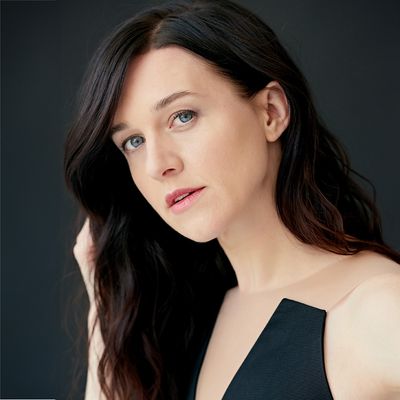
Tony Award winner and Grammy nominee Lena Hall brings her signature openness to The Art of Kindness with Robert Peterpaul, discussing her ongoing journey with self-kindness in the arts, the surprising truth about winning a Tony Award, and the supportive kindness of Jon Hamm while filming Your Friends and Neighbors... Read More
From the show: The Art of Kindness: Pop Culture & Positivity with Robert Peterpaul
Guests
Featured Shows
About
Tony Award winner and Grammy nominee Lena Hall brings her signature openness to The Art of Kindness with Robert Peterpaul, discussing her ongoing journey with self-kindness in the arts, the surprising truth about winning a Tony Award, and the supportive kindness of Jon Hamm while filming Your Friends and Neighbors.
LENA HALL is a Tony award winner and Grammy nominee who stars alongside Jon Hamm on the new Apple series, Your Friends and Neighbors, which premiered to rave reviews on April 11th (one episode a week after initial first two episodes in premiere week). Lena plays “Ali Cooper” the younger sister of “Coop” played by Jon Hamm. We come to find out she is a singer / songwriter who has had some mental health issues regarding a past relationship and is trying to start over again both in life and in music. Lena’s character gets to perform throughout the episodes, performing original material that Lena wrote, as well as covers of Radiohead, The Thompson Twins and more. She will be releasing an EP and album of her music from the show. Add in the Tony Award winning / Grammy nominated rock and roll voice and fans new and old are very excited. Previously, Lena starred on AMC’s Snowpiercer for 4 seasons opposite Jennifer Connolly after winning the Tony Award for co-starring in Hedwig and the Angry Inch on Broadway opposite Neil Patrick Harris. She originated the role of Nicola in the Broadway musical Kinky Boots Her other Broadway credits include Cats, 42nd Street, Dracula, the Musical and Tarzan, the Musical. Hall has also starred in Off-Broadway productions such as Radiant Baby, Bedbugs!!!, Rooms: A Rock Romance, The Toxic Avenger, Prometheus Bound, Chix6, Little Shop of Horrors, and the 2017 original play How to Transcend a Happy Marriage.
Follow Lena
@lenarockerhall
Let's be friends!
@artofkindnesspod / @robpeterpaul
youtube.com/@artofkindnesspodcast
(https://www.buymeacoffee.com/theaok)
Got kindness tips or stories? Want to just say hi? Please email us:
artofkindnesspodcast@gmail.com
Music: "Awake" by Ricky Alvarez & "Sunshine" by Lemon Music Studio.
Transcript
This transcript was automatically generated and might contain errors.
[0:00] Lena Hall: Hi, I'm Lena Hall, and you're listening to The Art of Kindness.
[0:09] Robert Peterpaul: Hello, beautiful people. Welcome to The Art of Kindness, where we have compassionate conversations with artists from all areas of the entertainment industry who are using their voice to spread joy and make this big spinning planet in the universe a better place to be.
[0:25] Robert Peterpaul: I'm Robert Peterpaul, and I'm so glad you're here.
[0:38] Robert Peterpaul: Lena Bobina, Banana Nana, Fofina, Lena Lina. LOL, you'll get that joke later.
[0:44] Robert Peterpaul: Hello, friend. I'm so grateful you've joined me here in Connecticut.
[0:49] Robert Peterpaul: Yes, we record in Connecticut, and we're talking with another Connecticut local today, who also happens to be, you know, an acclaimed artist on one of the country's top streaming series. Today's guest is Lena Hall.
[1:06] Robert Peterpaul: Lena is perhaps best known for her Tony winning turn in Hedwig and the Angry Inch. She also appeared on Broadway in Kinky Boots, 42nd Street, Tarzan, and the recent off-Broadway revival of Little Shop of Horrors.
[1:21] Robert Peterpaul: Lena's graced our screens in four seasons of AMC's Snowpiercer and is now back on TV with one of my favorite new shows. Lena currently stars opposite Jon Hamm in the Apple series that you're likely binging, Your Friends and Neighbors.
[1:38] Robert Peterpaul: And maybe binging it with your friends and your neighbors. See what I did there? There's a new episode tonight, I believe. Well, depending on when you're tuning in to this.
[1:47] Robert Peterpaul: Lucky for us all, Lena's character gets to perform some old favorites and new material that Lena wrote herself throughout the series. To our delight, she released an EP and album of her music from Your Friends and Neighbors. You could check that out in our show notes.
[2:07] Robert Peterpaul: Speaking of, you can also head to our social media and YouTube pages from there to see video from this conversation. Now, without further ado, please enjoy the lovely Lena Hall.
[2:33] Robert Peterpaul: You look like you're in this just like dreamy place right now. Are you at home?
[2:37] Lena Hall: Yeah, I have a house up in Connecticut that I bought before the pandemic. And so it is bright here, like sunny. It's the perfect day.
[2:46] Robert Peterpaul: Yeah, it's such a beautiful day. And I think we already had a little cameo from—is that a dog in the back?
[2:51] Lena Hall: Yes, that's my dog child. That's Dagney.
[2:54] Robert Peterpaul: Oh, hi, baby girl. She's huge.
[2:57] Lena Hall: Um, she's a Great Dane Labrador mix, so she's a giant, giant dog.
[3:04] Robert Peterpaul: We might have a cameo from one of my cats. They're not giant and they're not dogs, but they will try and bust through the door. So just to warn you, Lena.
[3:11] Robert Peterpaul: But I have to say, I'm so excited to talk to you. I'm such a big fan of your work, and I think obviously I admire your talent, but I've just also really admired over the years the way you speak so openly. Like when I think of artists speaking openly, I feel like you've really come into this place where you talk about navigating the business in a really real way.
[3:32] Robert Peterpaul: And I've like gone on TikTok and seen you live talking even about kindness, which is what this podcast is all about, or sometimes the lack thereof, which you know happens in this business too. Okay, we can be real. So I just I appreciate that about you a lot and I'm happy to talk with you today.
[3:48] Lena Hall: Thank you. Yeah, that's awesome. I had no idea. Well, that's cool. I thought no one saw those TikTok things.
[3:54] Robert Peterpaul: Listen, we be scrolling, we'd be scrolling. Hey, I also love your sweater, so there we go.
[4:01] Lena Hall: Now I'm just gonna keep complimenting you this entire time. I love it.
[4:04] Robert Peterpaul: You know, it's better than therapy, right?
[4:04] Lena Hall: Um, that's true. Let me cross my legs and get my notebook out.
[4:10] Lena Hall: This is vintage. I got it at a thrift store in San Francisco on the Haight-Ashbury.
[4:10] Robert Peterpaul: Oh, it's sweet. Yeah, I love it. Yeah, vintage stuff is cool because I mean I like to pretend I'm into that stuff, which I am, but I'm just like I don't really do it enough to really say that it always has a story. Like I feel like it comes with a history.
[4:28] Lena Hall: So you don't know who you're conjuring right now, but it's a good presence.
[4:31] Robert Peterpaul: Oh, thank you. Yeah. Also, I will say if you want to get more into vintage shopping, there's like, um, if you ever get a chance to be in Vancouver, Canada, their vintage stores are unpicked because everyone in Canada wears the same thing.
[4:47] Lena Hall: So anything that's like outside of the regular, what they, you know, what is worn every day, it's just like cheap and unpicked. There's fabulous crazy things available there that you're like, why did no one buy this and why is it only 35 Canadian dollars? That's like free.
[5:05] Robert Peterpaul: So we all got to get to Canada. I'm gonna write that down.
[5:07] Lena Hall: Yeah, Vancouver. I'm not picturing Doug Funnies just like walking around because you said everyone wears the same thing.
[5:13] Robert Peterpaul: I don't know if that reference is gonna go over anybody's head. I have no idea what you're talking about.
[5:16] Lena Hall: Doug? Oh, Doug.
[5:18] Robert Peterpaul: Maybe that wasn't your gen—the TV show Doug.
[5:21] Lena Hall: Oh, oh Doug, yes.
[5:22] Robert Peterpaul: Yeah.
[5:23] Lena Hall: Okay.
[5:23] Robert Peterpaul: Yes. Thank you. I thought I was on an island for a second.
[5:24] Robert Peterpaul: No, you're gonna say I will say the first question I always like to ask here after I like accost people with genuine compliments is how are you at accepting compliments? Because I feel like it's something you get in this industry, but it's like also a tricky thing sometimes, depending on your state.
[5:42] Lena Hall: I'm terrible at accepting.
[5:44] Lena Hall: You did a good job. It's true, it's like learned, you know, anytime someone gives me a compliment, I kind of roll my eyes like I'm like, there's no way they're telling me the truth. It's this weird thing that I have where I have a horrible, horrible time accepting compliments because I feel like a critique is what's true, and a compliment is just a lie.
[6:05] Lena Hall: Um, and I don't know, maybe that's because I grew up in the ballet world where you know every little thing is critiqued because it's such this, you know, perfectionist kind of art form that is just impossible. It's impossible. Like it's impossible to become it. Well, no one's perfect, obviously, but it's impossible to become perfect in ballet, right? There's always a critique.
[6:31] Lena Hall: So I grew up in that world and I was always critiqued when I was little. Like I started ballet when I was, you know, out of the womb. I basically was born into it. So it's, you know, um, so to receive a compliment is like you, like, you know, like why would you—why? That can't possibly be true.
[6:55] Lena Hall: And then I guess the real way I receive compliments is not spoken, you know. It like I hear it, but I never absorb it. The way I only ever absorb compliments, and I must work on this with my therapist, is like through applause.
[7:17] Robert Peterpaul: Oh, stage.
[7:19] Lena Hall: Yeah. Wow, that validation of the skin touching each other. That's the validation.
[7:24] Lena Hall: It's like, you know what I mean? It's like that's a—because that's kind of the only compliment you get in the ballet world, really, is just the applause.
[7:32] Robert Peterpaul: Yeah.
[7:35] Lena Hall: No, why would they know? It's such an intense world.
[7:37] Robert Peterpaul: Yeah, why would they ever say, you know, oh, that's a beautiful develop? No, they're like, if you do this, it'll go even higher. You know, there's like always something to work on in the ballet world.
[7:49] Lena Hall: It is wild.
[7:51] Robert Peterpaul: Wow. Yeah, I know to an intense level that to be true. I mean, not personally, I'm not wearing ballet slippers right now. I honestly break both my legs and fall into my face, and they'd have a lot of critiques with me, we'll say, Lena.
[8:01] Robert Peterpaul: But I was interested in how your relationship has changed with perfectionism over the years as you've entered this industry in many different ways, because I think a lot of us struggle with that, right? You're self-taping and you're like, my lighting's not perfect. I look like a Muppet, which I always do anyway, and like what if, you know, I'm—I love that actually, it's fine. There's a million things going through your head as an artist.
[8:22] Lena Hall: So to have even someone else saying that, I'm sure growing up made your relationship with perfectionism trickier.
[8:28] Robert Peterpaul: I don't know. I don't want to put words in your mouth, but it did, yeah.
[8:31] Lena Hall: And you're right. Like, uh, as an artist, we strive for this idea of perfection that doesn't exist. Um, you know, an idea of the perfect performance, it doesn't exist. Uh, we cannot objectively see what we do because we are inside of ourselves and we know the mechanisms of how we perform.
[8:55] Lena Hall: So to us, when we see our work, let's say with a self-tape, or anytime I see myself back on screen or hear myself back singing, um, my lived perception of what happened is a completely different thing than the perception of what I'm watching, and it's such a disconnect because it feels one way and then when you watch it, it looks a completely different way and you're like, uh, that's so bad, right? Because it doesn't match whatever you think is going on in your head and so because it's like a mismatch, it's never good enough. It'll never be good enough.
[8:55] Lena Hall: Uh, and so I found that if I—I have a lot of grace for myself now because when I watch something, I go, that's fine, you know what I mean? Just go, it's fine.
[9:49] Robert Peterpaul: Nope.
[9:49] Lena Hall: Just like, uh, like especially a self-tape, uh, if I make it through the scene, you know, and I make it through the scene and it's kind of connected and it felt good, then I usually like I'll briefly watch it back, but I won't get really into it and I'll be like, it's great, it's fine, just moving on.
[10:06] Robert Peterpaul: Okay. I need to learn that from you because we can enter that self-tape spiral where it's like you're on take number 27 and your reader who's like is probably your partner, whoever you're living with, like I'm about to leave this relationship. But you know, you're like I can get one more, you know?
[10:18] Lena Hall: Right, yeah. And the problem with that is I feel that when you get overly into your head, then your intuitions stop doing what they do so well. Our intuitions can take a scene and interpret a scene in like the purest sense. So your first few takes are going to be kind of the best.
[10:40] Lena Hall: And then as you go further into the, oh, I want to fix it, I want to fix it, because you keep watching back, you lose a sense of that initial—your initial response to the scene, and there it becomes more robotic or it becomes more acted, quote unquote, right? Whereas when if you do it kind of willy-nilly and you're searching for the words and you're trying to figure out what the scene is, that in and of itself is—you're so present in the moment and you're so trying to figure out what the scene is, and you're so like that, you're there, you're in it, and it's just these intentions that just come flying out, and you—because you're so overthinking about everything else and the logistics of it, you're not—it's—there's so much intention there already that you don't have to fight with it.
[11:25] Robert Peterpaul: But then when you start like, oh, I know this scene, you know, you get—then it becomes overly—it just becomes overly thought.
[11:32] Lena Hall: Yeah, yeah, yeah.
[11:33] Robert Peterpaul: And then it can—that's so true. Yeah, it can lose its—the—it can lose the complexity. Like overcooked pasta, it just gets—
[11:39] Lena Hall: Yeah, it gets fishy, yeah.
[11:43] Robert Peterpaul: Yeah, exactly. It loses that initial oomph that you have when the energy you have when you're first doing the scene.
[11:50] Lena Hall: I'm gonna Venmo you for acting lessons just now, just so you know.
[11:53] Robert Peterpaul: I mean, I think you'd be such a phenomenal acting coach. I know you don't need that, maybe a side business one day if you're into it.
[11:58] Lena Hall: I might, you know, yeah. Listen, helping people, it's a good gig.
[12:03] Lena Hall: I love helping people, yeah. I want people to like know that, you know, it like the—that because I went through a struggle with this, that and I'm still going through a struggle with this. I'm on a hit, I am on a, you know, number one TV show on Apple TV Plus, which is so good, massive, right? This is massive.
[12:22] Lena Hall: Yep. And I still struggle. I still struggle with the industry, still struggle with acting, still struggle with accepting myself and my talent and the limitations of my talent. Like I still struggle every single day, and I still learn things that I wish I had known 20 years ago.
[12:41] Lena Hall: So for me to give everyone the knowledge if they want to be a sponge and just to like, you know, have that knowledge that I wish I had had 20 years ago, um, I'm so happy to give it because to me it brings more joy knowing that someone got a nugget of something that's gonna help them in the long run to like find their way. That to me is like the best because I'd rather give back than to just simply keep give—like taking. I want to hold back.
[13:14] Robert Peterpaul: Yeah, it's like if you give me this, then I'll give you all my knowledge because I just absolutely love to, you know, see if any of this can make a difference in any actor's life so they don't have to deal with some of the stuff I had dealt with and didn't know any better. And there was no way to tell me.
[13:35] Robert Peterpaul: Well, so much. I mean, think about growing up and then seeing, you know, watching your favorite TV show and seeing a person on that show on that number one show come out and say, I'm still struggling with this. The person over here who's on self-tape take number 27 spiraling can say, I'm struggling in a different way, you know, and it's just—it's relatable, it helps us connect. And no matter what sort of level you're on, if you can just be open about that, I think it's a kind of why we're here.
[13:58] Lena Hall: Yeah, and in addition to helping others. And before we get into Friends and Neighbors, of course, I would love to know, Lena, what is your definition of kindness and how do you think it's changed over the years?
[14:11] Lena Hall: Ooh, bye.
[14:13] Lena Hall: My group was weighing in also as well. I think kindness is um selfless acts towards others that will brighten someone's day. I think kindness is having compassion towards someone and empathy towards someone. Um kindness is uh you can be kind towards yourself, so you can show kindness towards yourself with compassion and empathy, um, and kind acts as well. So there's self-kindness and there's kindness to others. Kindness can also come in the forms of information that someone really needs um in order to make a proper decision in their life, you know, if you have it. Um so it like like the hard truth. Yeah, you know, yeah, the tough love. Sometimes, sometimes tough love is kindness because you're the only maybe you're the only person who's gonna be like, hey, you have something black on your teeth.
Yeah, I know. Oh, I hate being that person, but you do need that person. That is kindness because you're showing you're like looking out for the other person. So there's hard things like that, like that truth or um that can sometimes be, you know, maybe we feel it's taboo to say something like that, but at the end of the day, you're kind of like looking out for the other person. Got that other person's back. And that to me, that to me is really important.
[15:43] Robert Peterpaul: I love that you made that the example. Are you watching Love on the Spectrum? If not, I'm gonna be able to do that. I'm obsessed with the I'm obsessed I haven't watched a new season. Oh, okay. I won't say that. But I am obsessed with Love on the Spectrum, and I am obsessed with Down for Love.
[15:57] Lena Hall: Down, yes. Uh it's so good. I could live my day with that much beautiful, just wide-eyed wonderment, and it's like a great way to put it. Their insight in the world is just is gorgeous. It's so simple and loving and kind. Like that's kindness, right? Down with love. And for all walks of life, it's like don't forget to ask someone else about their day too. They're teaching them on these dates. And it's like these are things we all should remember, you know? And I brought it up because there is something in the new season with something being a good one.
[16:31] Robert Peterpaul: Oh, on someone's seat, yeah.
[16:32] Lena Hall: Yeah, and I won't spoil it, but we also were so lucky. We had Tanner on here a little while ago. I don't know if you it was probably the best 45 minutes of my life. Besides this, this is great too. And I guess my wedding was fun.
[16:44] Robert Peterpaul: Your wedding was fun.
[16:46] Lena Hall: It was a good time. Time is fun. But yeah, Tanner. Yeah, but he he is so just such like a ball of sunshine. And so everybody watched the show if you hadn't. But I would love to know, Lena, starting in your career, were there acts of kindness or a big act of kindness that kind of stands out to you as changing your trajectory early on, just to kind of fly over as your dog leaves the room.
[17:07] Lena Hall: They're like, this is a big question. I need to go. I'm sure there were a lot, but I would love to know if there was a way kindness sort of transformed the journey you were on. Um from Cats to Hedwig to it's this terrible.
[17:27] Lena Hall: Um, well kindness can also be like a self-kindness because I think kindness gets like a puppies and rainbow rep. Yeah, that's why, because it's complicated. This is why I'm trying to wrap my head around this question. It's a complicated question because kindness comes in so many different forms. Whether that's like the kindness of the creative team that sat there and you know, like one guy, so my my first show was Cats. It was the National Touring Company of Cats, and I went to an open call in San Francisco. The kindness of my friend calling me, um, who was like, you need to get your ass here now, because they're having auditions for women at one, and it's like 12 o'clock. Can you get here? And so, like, I, you know, the kindness of my friend being like, you need to come to the kindness of the creative team.
There apparently um, I remember this. One of the guys who is on the creative team, he had to leave um early, but he stayed for my entire callback and missed his flight just because he wanted to see me perform these like long three songs.
[18:45] Lena Hall: This girl, this little, you know, I was a little girl, I was 17 years old, and this guy sat there and want and stayed, you know, and that act of just waiting for me and allowing me to prove myself that I could do something like that for this guy to be like, yes, her another act of kindness to miss your flight for that. Like because I will say that was probably the biggest changing that would that was that was my life-altering thing was booking the touring company of Cats because I wasn't planning on going into the industry. I wasn't planning on going into dance or theater, or it was always just gonna be something I did on the side.
[19:31] Lena Hall: And I wasn't I wasn't TV film thing at first was like, didn't you have a crush on someone when you were like that's what I just want to be famous to marry this person? Correct.
[19:39] Robert Peterpaul: Yeah, Jonathan Brandes.
[19:41] Lena Hall: Okay, shout out. Yeah, shout out Jonathan Brandes. Jay Baby. We miss you. And um I I wanted to be on TV because I wanted to meet him and marry him. Like that was that was my you know goal in life. But you know, to do musical theater and to perform on stage, I did not think it was something that I could do viably as a career. So I was I had graduated high school early, and I was kind of like, I don't know what I want to do. I didn't take the SATs, I didn't apply for any colleges because I was kind of in a in a phase of like, what is it that I want to do? What am I good at and what brings me joy? For a while I thought maybe I would be like a therapist or a psychiatrist or something like that, where I would help people because I I was very um curious about how people are and their psyche and like how like what what they're driven by. Like people fascinate me and still do.
[20:43] Lena Hall: But you know, again, I was like, I don't know what I want to do with my life. And then and then my friend called me and I went to this audition randomly, and then three months later, like right after my 18th birthday, it changed my trajectory of my life completely.
[21:01] Robert Peterpaul: Wow.
[21:02] Lena Hall: Mm-hmm.
[21:03] Robert Peterpaul: So you're just picking up the phone and calling people when you think of them.
[21:06] Lena Hall: Yeah, change someone's whole life. Instead of it, that person, I mean, I have ADHD, so it's a little hard, but instead of that person just kind of, you know, saying, Oh, like I don't want to be able to do that. Right.
[21:16] Lena Hall: Yeah. No, you know, it it's okay to give your friends a heads up if they're perfect for something. It's okay. It's not a competition. Really honestly, it is not a competition. If your friends excel because you were like, I'm auditioning for this, but you'd be so much better in this, or you should come in with me, or we could do this together. Like, who cares? Like, if you don't, it it doesn't matter if you don't book it and they do.
[21:42] Lena Hall: Like, yeah, I don't see the pro there's no problem in that because it's like there's there's a l, you know, everybody's on their own journey. Their success is different, everyone's success is completely different. And you have to be okay with going on the journey that you're going on, even if it means that you're not going to get to a place where you thought you would.
[22:03] Robert Peterpaul: Oh, and there's room for everybody.
[22:05] Lena Hall: And I there's actually science that shows that kindness does come back to you. It is contagious and it does come back, and it's not why we do it. But I've had instances where I had an audition and you know, the same thing happened. I'm like, my friend would be so much better for this. I sent it to that to them, and then casting actually remembers you as being sort of like a kind human. You know, like it it does come back to you again, not why you do it.
[22:26] Lena Hall: Okay, so if there's something behind it where there's like yeah, there's you know, there's like um, oh, I'm gonna get something back if I do this, then that's actually not kindness, that's a transaction.
[22:39] Robert Peterpaul: And yeah, and kindness is not a transaction, kindness is one way.
[22:45] Lena Hall: Oh, I like that. Right? So there's no getting anything, and and yes, it is reciprocal and it it it does change. What it does is it kind of changes your perspective of the world, the kinder you are, and the more the more giving and loving and compassionate you are, you kind of your your um vision of the world will shift into that, and you will see the world as kinder and more compassionate and and more loving to you.
[23:13] Lena Hall: And and it will open you up for those opportunities, and you'll kind of be more free to that. When you're more focused on like they have more than I do, and it's a competition and this is so hard and it that and everybody sucks. Guess what's gonna come? That energy is gonna come right to you. And guess what? It is gonna suck. It won't be kind like it will like it would so I I think in when kindness is done where it's like in a transactional sense where you you're expecting something to come back to you, then um then that's kind of it that sends it on a negative swing.
[23:52] Robert Peterpaul: Yeah.
[23:53] Lena Hall: Yeah. It's it's not the best intention or genuine. It's sort of like just being quote unquote nice, maybe or polite.
[23:59] Robert Peterpaul: Yeah.
[23:59] Lena Hall: And a little could be manipulative. Right. But I love that you bring that up because it's sort of like watching your friends on a TV show or on Broadway, whatever it is, thinking being so excited for them and thinking I'm excited for when that happens to me, versus being jealous and maybe going down a different path. I think that mindset's super important.
[24:14] Robert Peterpaul: And as we bring up Broadway, you know we're the Broadway Podcast Network. So before we get to Apple, we'll start at the B before we go to the A, which is backwards, but it's okay.
[24:25] Lena Hall: It's eh, okay.
[24:26] Robert Peterpaul: I think people would troll me if I did not just ask you about Hedwig for a second.
[24:30] Lena Hall: Uh yeah.
[24:31] Robert Peterpaul: Which as a kid, I would see the billboards, and I didn't understand why it wasn't about Harry Potter's owl, but you know, that's not my question.
[24:39] Lena Hall: Because that's well, that could be an angry inch if you look at the author of that. But you delivered, you know, such a vulnerable performance and kind of night after night. I wonder how I guess kindness, whether it was from others or toward yourself, played a role in sustaining you through that like emotional intense show.
[24:59] Lena Hall: Oh well, this is the opposite of kindness. So that's still a learning experience.
[25:05] Lena Hall: It is, yeah. I was very unkind to myself during that time period. I was drinking heavily, I was doing drugs a lot, and I was spiraling um into a really dark place, which is odd to think, because you would think that, oh, you want a Tony Award, this must have been the greatest thing of your life. And and it was a huge accomplishment. Um, and I and I'm so grateful for that.
[25:34] Lena Hall: And I and it was a highlight. But underneath the surface of everything was a real dark struggle that was going on where I was struggling at home. I was struggling with, you know, with kind of the substance abuse of it all. And then on stage, I was beating myself up in my head. And that to me, I was like, in the character, you know, the character is a very beaten down person. And only until they are let go and and let free are they able to be themselves and have this journey and transformation.
[26:16] Lena Hall: And what I was doing was I was feeling like it was okay to treat myself horribly like this because it was part of the character and it made it more real. And so I was I was hurting myself. I was not taking care of myself. I was completely burning the candle at both ends. I had very little, you know, to give and emotionally I was extremely unstable. And so I was making really weird choices that I probably wouldn't make if I could do it all over again, but in a sober state.
[26:58] Lena Hall: And um but with all of that said it created um an you know a relatable character for everyone where you saw someone who was really going through it and you really believed it and you really wanted this person to get out of this situation and to become who they really are and want to be and by that I connected with a lot of people um which was really special and I and I think the Hedwig community is is one of those extremely special communities that um it's small but mighty the people who have been touched and have related to Hedwig and the story of Hedwig and the story of Yitzhak are forever and like forever fans and forever obsessed with with the show and will always you know will always be affected anytime they see the show or hear the show or any any iteration of the show.
[28:06] Lena Hall: So I think that like as far as kindness is concerned, um yeah, uh there was there was kindness thrown to me. Um but because of because of the situation and because of what I was doing to myself, I didn't see it.
[28:24] Lena Hall: I was blind to it because to me it was all about this character. It was all about and I was making the character my life unintentionally. And you know, kind of living in the misery of this fight where, you know, I would spend my days hung over and then I would go and do a show that night just completely ruined and exhausted. And then after that, like this is during this time. Like and then after that night of doing the show, I would go and I would do a night show, late night show with my band. And then I would drink and then I would be hung over the next day. And it was kind of this thing that just was spiraling totally out of control. Yeah. And um if I could do that all over again and be sober, um, I would have it would be a different experience.
Of course I think the character would still be wrought with the pain and everything that you need because when you live your just living life you you'll feel that you'll you'll have enough experience no matter what happens to your life you have enough experience to um be able to play a character. It it's really really true. I mean if you've ever felt out of place or like like you're not in your own skin or like you've been abused or like you've been hurt. It doesn't even matter. You could go all the way back to being a child, like a really little child. Someone took away your doll. And you can use that emotion for abandonment or for you, you know, or your parents were supposed to pick you up from school and they forgot.
And you can use that. Like you can use all of it. So you don't need a ton of life experience in order to infuse a character with truth. Yeah. Um so and I I wasn't figuring that out that well. Yeah. And uh, and so um, and so now if I went back and I played Yitzhak again, but sober, it would be a I would have a different experience with it. And um, I definitely wouldn't put myself through some of the hell that I put myself through. And it wasn't for the art, it was for it was it was to beat myself down because the character is so beaten down. It was like it was not conscious, it was not intentional, but it was doing it. Yeah, yeah. I'm sorry you went through that, first of all. Oh no, it's I appreciate you sharing it.
And I love that you kind of put the emphasis on how it helped people. You know, you said it helped me connect with people and it helps people feel seen. And I think that speaks to who you are, probably the fact that that's your takeaway. It's a lesson a lot of actors, I think, have to learn, and it's really interesting hearing it from you that it was during that time of winning a Tony where a lot of us might think, I'll finally be kind to myself when I get that acknowledgement. It's like, you know, maybe it's I think awards are great in the sense that it does give you something to strive for, but it's not necessarily gonna change your mindset. Yeah, sometimes it can do bad things, interestingly enough.
Um, it can inflate those around you into thinking that you can't do this job, you can't do that job, or you know, you're a Tony award winner, of course you can't do that. And it's like, well, what if I want to do that? What if that's something that I wanna do? You know, it's like, why can't I do that? Or well, people are gonna think that you're struggling, or people are gonna think this, and you need to keep up the idea that you're you know unattainable and that people are gonna want you more and da-da-da. And it's like it can have a negative effect, interestingly enough, you know. It's interesting. It can also have an insanely positive effect where it will open all the doors, you know. So there's a double edged there.
There's a real double edge there. So for anyone who's really wanting to win an award and is like gung ho for it and wants it, you have to understand that there are some things that come with it that um that are a surprise. Like surprise, yeah, like I'm like, but I wanna do that, you know, dumb little role in that in that show because I want to work. Yeah, and then everyone around you is like drink the Kool-Aid and you're like, No, but I kinda want Sprite for Dr. Pepper. Yeah, I need to work. I wanna work. It's not about like for me, it was never about the status, you know, a status symbol of I have a Tony Awards, you have to treat me like a Tony Award winner. It's like I want I I won a Tony Award, which is amazing.
Like that, it was uh confirmation that I was doing a good job at what I do and and that people noticed that and and that that's amazing. But I thrive on working and I thrive on diving into as many different things as I possibly can because it makes me better at what I do. And for me, like I want what's the point of just doing what I do and stopping at a certain point that I get to, like as far as like the as far as like the level of craft that I do. Like what's the point of getting there and stopping? Like I want to get there, but I want to keep going. I want to get better. I want to expand the things that I can do and the ways that I can bring character to life. Like I want to go for it. Like and I do like Dr. Seuss, oh, the places you will go.
Right, yeah. And look where you've gone now. I mean, I gotta get to your friends and neighbors, which I'm not just saying this. I mean, I think most of the world is loving this show. It's such a great binge. I do love that we first meet you in the show, we see the contrast of the whole show. It's like you're sitting on this idyllic beautiful lawn, but then we don't realize you're kind of terrorizing maybe the people in the house in a way. Like it's a different experience for them, which is kind of the show's theme in a sense. It's like you're in this rich neighborhood, but that underbelly is so different. So suffice to say, congratulations. Thank you. Yeah, I don't know where I'm going with this, but I'm like reviewing the show live to you.
I just really do find that your storyline in particular has a lot to do with kindness. Like your character Allie is kind of the heart of the show, at least in what I've seen so far. Can you just speak to how you fleshed her out? You know, I know you felt connected to her from the moment you got the audition. Yeah. I think, you know, it you could get so just from a perspective of connection or or the character wise, um, you can get hung up when a character description says bipolar or says, you know, certain like words that you're like, oh gotta bipolar, you know, gotta research, you know. It's like you can get kind of hung up on that when you have to realize that oh wait, no, this person is is a person, it doesn't matter their mental health state, whatever I need in whatever I need in the scene, it's written in there and I can decipher it.
I don't have to go and research how you know how it is to be living on this planet when you're bipolar. Um I think everyone's experience is wildly different. There's massive the there's huge spectrums of that. And um, so it didn't really come into play because um I felt like underneath it all, um there's a level of sadness that is um just palpable with her. Everything she says and everything she does, there's a level of like, well, this is who I am and that's okay. And she is just living through life dealing, you know, just trying to feel like normal. Like, aren't we all just trying to feel normal? Like aren't we all just trying to feel normal like if it even exists, yeah, exactly. What is normal, but so you know, her not me.
Yeah, exactly. Like um, so she struggles with that, there's that in internal thing in there, and and I relate so much to the struggle of just wanting to like feel like I'm I'm normal, like feel like, you know, like I can function on a daily basis like everyone else seems to do, but somehow I I sit here and I feel like you know, stuck on something or or dragged down by something that I feel like everyone else could just be fine with and like why do I have a hard time with this? Why can't I deal with this? Why aren't I normal? No, I get that. Yeah. So for for her, the just the the opening of being sitting on a lawn and playing fake plastic trees by Radiohead, it it's such a tell for the character.
It's such a great introduction to her. Um, because that song can say it all in and the band, the Radiohead, it says it all. Like the the angst of it, the the sadness of it, the confusion of it and the the fighting with itself. Um the that I I'm a radiohead fan. So for me it spoke it spoke volumes, and then the rest of the scene I could just be, you know that little sister who's kinda like, oh hey, what's up? You know, you know, I'm kind of melancholy right now and like I'm feeling it, you know. How are you? Like it it's like a very like Ophelia in a way to make Shakespeare, like meeting her in in the field sitting there and I love how you're not leading like you said with the disease, but instead just showing this person reacting in any given moment.
They just have a different, you know, set of paint brushes than the rest of us, and they're a lot more colorful. And sometimes there's knives inside the uh, you know, the brush. Yeah, exactly. Yeah. Exactly. It's nothing that is, you know, that they it's like it's just it's just living in a world that is set up for someone else, and trying to navigate that. And there's so many people who feel that way. I feel like on the spectrum. We talked about it before. They say that a lot on that show. Yeah, I feel like everyone has something where they feel like they they function in a way that is not set up for them. It's set up for someone else. The normal people, quote unquote, which doesn't really exist.
And um, and so therefore I feel like Allie is a highly relatable character. Cause we're all just trying to survive in this world. And we're and you know, the world's difficult. It's just difficult. And um you see people who have their lives seemingly together, and you think that you want that, but really they're also struggling too. So that, you know, and it you don't have to give it a name. Like you don't have to give it a name like bipolar or like autism or any of that or depression or anything. I think it's a gent like a universal feeling of everyone feeling like we're just trying to survive in this world and put one foot in front of the other and deal with a world that is set up for someone else.
That's brilliant. What's the song you put one foot in front of the other? It's like the Christmas movie. And soon you'll be walking out of the door. Yeah. You have this. I'm gonna save that and post it at Christmas time. You have this beautiful moment with Jon Hamm. I mean, many in the show, but early on in the show where you basically say you come to his house and you say, Hey, you know, you might think that you suck at life, but in the brother department, you're pretty amazing. And I just like found that so touching. And it made me wonder, did you two like that? Like took my breath away to see that. I think because I'm a I'm a brother. I don't know. Did you two have the time to develop that relationship?
Or is that just natural chemistry? It's our natural chemistry. We um I hope like we did a chemistry read when I got a call back, which was a shock. Um trust, it was a shock. Uh, because I hadn't been booking anything for a long time. I was going through I was going through the like the long where you're like, uh another another self tape. I'm not gonna get this. I'll just put myself on tape really quick, just do, you know, do a real whatever. Like I'm just gonna say I did it, put it out there. You know, it was one of those. So I was like, well, what? Yeah. Um, and they did a chemistry check with me and Jon over Zoom, which is hilarious. And uh, and they were like, Yeah, you got it. I was like, oh shh, okay.
This is wild. What? Um, so when we went to go film, honestly, it was like setting up this chemistry with Jon was pretty instantaneous when when we when we met, because he feels to me it for well for me, uh you know, I don't know his thing. Maybe it was really hard for him. I don't know, but for me it was easy. Because I have a transcript from here. Let me uh from him and let me read it. No. Because for me it was it was uh an immediate sense of home and big brother like protection. So that big brother protection, I felt like I got a hug and I was like, hmm. Okay, yeah. This is this is an openness and there's just an openness to chemistry. There's an openness there that that it's hard to explain.
But if you have one um if you're working on chemistry with someone and you have one person who's like kind of yeah you know it's really it's impossible to have chemistry with that person because they are walled up.
[42:39] Lena Hall: Although the tree doesn't I don't know if you've seen that scene, but oh you gotta watch Superstar if you haven't seen it. It's so good. Okay, sorry. I'm just being a mob it now. But I know what you're saying. You know what I'm saying? Right. So when you try to have chemistry with someone, I did have that experience where it was like, hey, you know, and they were like they're like over here. And I'm like we're never gonna this is impossible. Like hi, you know, I'm here. I'm open, open. So just the simple fact that he's so uh he's a very giving actor and he's very open he's very open and he'll go there with you he'll just start riffing off things and going off book and yeah and you're like oh all right yeah let's riff let's do this I'm on the same page as you it's like um it's like a match of energy so it was it was instantaneous like the the chemistry and the setup and the feeling like this this guy you know who I had just met was my brother forever it was fast and easy and kind kindness like that's awesome yeah yeah I was gonna ask you about kindness with someone so sort of iconic.
I mean, this actor it has done such amazing things. People all over the world know him. And I just wonder, too, as a number one on the call sheet, are there things you witnessed that you really appreciated from like a kindness standpoint?
[43:58] Lena Hall: Yeah, actually. He's not okay. So there's a lot of people who are like, I'm not gonna take a note from another actor. A lot of people are like, I'm not taking a note from another. I'm like, uh-uh, no. Re like you have to work together. You cannot always have a director come to you and be like, how can I help? You've got to be open to that. And so anytime John was like, Oh, hey, could you just like wait a second so I can finish this move so we can have that line in the clear, blah, blah, blah. You know, I mean, he's like been doing this forever. I'm like, oh yeah, totally, no problem. Like, absolutely, of course. Yeah. Happy to be here for you, you know. And he would do the same for me. Like, if I asked for anything that I needed, he would do the same for me.
So, and it it opened the stage for me to ask questions as well. So it creates this again, this trust, an actor trust, where you're like, I, you know, I trust that you you are gonna tell me what you need. Yeah, I trust that you um are know your shit enough, like that you're gonna deliver and I can feed off of your delivery, and we can kind of feed the energy back and forth, and that's gonna kind of create this symbiosis with the with the chemistry and with the with what we need to create.
[45:21] Lena Hall: So I think with John, I mean, he A, he's been doing it for so long. He's very professional, no nonsense, love that, but he's also open, free, and honest. And that honesty that I experienced helped me trust and have an in and that instant connection came from just the open and honesty and the trust. Like I got this. You got this. We got this. And now we're gonna like improv some stuff and we'll have some fun with it here and have some fun. Like, who cares? Yeah, how are you? Great. Yeah. So it just is like um it's a relaxation that happens with the trust. And I also have um scenes with Ramin Kermelou, who I've done show who I've done something with before. And and so we had to have all this chemistry.
Um, and that was super easy because it was just like, oh my god, hey, how are you? Okay, you know, like yeah. So it's just one of those things, it's like you got, but when I met Ramin, I remember being like, Oh, you're open. Like, I can feel how open you are to wanting to have the chemistry and doing a good job with it. Just yeah, you don't need to find a key to try and pick someone's block.
[46:37] Lena Hall: Yeah. I think that's awesome. It should be like just if you were if you remain open as an actor, and you're like, you can try it's like it's almost like you're you're opening up to be like, I'm going to open up to you because I want you to trust me. You know, there that yeah, it's it's like uh it's um not a gift, it's a an invitation, essentially. Oh, I love that. Well, we all have an invitation to keep watching the show because it already got renewed, which is wild. And it speaks to the kind of show it is. I don't know if I have an invitation to ever see Ramin again because I was uh a reader at ABC and he came into audition, which was cool to see because he was a big Broadway star and he was going in for a role when a ton of people were going in.
He was nervous, whatever. And I came out and I was just like, uh, Raman, Raman um Kiramalu. And he was he was actually, he was really nice about it. But I didn't I actually didn't know. I think he was in La Miz at the time. I hadn't seen it. I don't know. I'm the word. It's okay. It's tricky because you don't want to over like research people because you want to meet people as people, but you want to know things.
[47:41] Lena Hall: It's okay. You know what? It's okay. Thank you. Okay. Thank you, Lina. Thank you, Lina. Just people do it all the time. Really? All the time. Lena. Lena. I always get a where's Mary because my last name's Peter Paul and Paul and Mary. And I'm like, she died, actually, the Mary and her family. Anyway. You're like, my mom's name was Mary. She's dead. They'll be like, You're like, I'm there's like a twin of me suddenly with a night. It's like, what's going on there? I'm gonna walk away. So, you know, you sing in the show, and I wonder, because we are the Broadway podcast network, like, do you think this show could be a musical? I know that's a weird random question. Guessing you haven't gotten it before, but I wanna know.
[48:23] Lena Hall: I don't want it to be a musical. Can we stop making everything musicals? I'm so exhausted by it. Not that it's fine, because it's not made for me. Like these things are these shows are not made for me to watch, which is fine because I can't anymore. I Well, you always I've heard you say like a show will find its audience, and if it's a good show, it'll it'll last with that audience. Yeah. It's true. Look at stereophonic is a great example. Three and a half hour play. A three and a half hour play. That yeah. Three and a half hours. I remember when I heard it was three and a half hours, I was like, oh god, right? You know, no one wants to see a three and a half hour play. I know. A long day's journey in tonight with uh Jessica Lang.
I did want to watch her, but that was it was a long day's journey. I'm just gonna say that. But this is a okay, so three and a half hour play, first barrier, no stars, second barrier, not a known IP, third barrier. Sells out, huge hit. I went and saw it. I thought it was incredible. And I and that three and a half hours, I was like, I could watch this for six. That's amazing. It's so good and it was so well done. And that's a thing. The pr the uh not all the producers actually, um, there was actually a producer apparently that pulled out from funding the the off Broadway because they were like, if you don't cast a star, I am not going to fund this show. And they didn't. They were like, no, we don't want a star in it. Wow. We want the show to speak for itself.
[49:58] Lena Hall: That's what I think ultimately what happened with Hedwig was after they had established it as this big huge thing with Neil Patrick Harris in it, they forgot to focus on how good the show is. It doesn't need a star. You don't need a star to sell Hedwig. You the show is so good, you don't need a star to sell that show. And so I think they they lost sight. They got the star thing, and then they got trapped in the trappings of like must have a star. Instead of being like, Neil Patrick Harris, Neil Patrick Harris is amazing. Now let's focus on how incredible this show is. Let's focus on how incredible everybody else is in the show. Let's focus on how beautiful and how much you must see the show no matter who is in it. So, um, because the show's really interesting. Yeah, because I think you can get stuck in the trappings of, well, you have to hire a star in order to sell tickets. But if, you know.
[50:57] Lena Hall: It's tricky because on the opposite side, too, I want to shout out, you know, Little Shop, I think is actually doing a great job of it's an iconic show and and people want to see that show, but they're also putting in very surprising people for the roles that we've come to know and love. And I think that's a cool sweet spot in this current industry where again everything's being made into a musical. They want the IP, or they want like a big name when there's no work anywhere. So like George Clooney's coming to Broadway and all these people. And so it is sort of a tricky thing. It is. There's a sweet spot. And I think that the the hard thing with a show like Hedwig, like with Seymour and with Audrey, you can kind of get by with having people who are known entities, but maybe aren't the greatest.
You know, it it's like you the it's not a hugely heavy lift, but you know, when you get someone good in there, it's great. And and you can stunt cast kind of like I say stunt cast, but um, they've been doing a good job casting like great people for Little Shop.
[51:59] Lena Hall: Yeah. It's not, you know, it it is stunt casting, but it isn't like surprising a little bit. Like it's not like they're they're not like bad. They're actually all really great. Umas a show like Hedwig is so hard for the one person on the stage. You have to have someone who is so good. And that's hard to find. That small, tiny little talent pool of famous people who can do that, sing that and pull that off eight shows a week, is nil. So you run out of people so fast, you run out of people so fast. Anyway. Yeah, I know. Okay, but I do have to play really quickly before you go, the surprise game.
[52:45] Robert Peterpaul: Okay. I'm sorry, Lena or Lina. It's called the compliment game. Basically, I reached out, I found someone in your life to give a compliment about you. I'm gonna read it to you, and you have to guess who said it. And you can ask me yes or no questions. I don't really know anything, but I'll try. Everyone's beauty is full in their own way. It's the compliments, game on me. Yay, okay. It's the compliment. Compliment. Yay. Lena is relentless, resilient, and best of all, she's never let an opinion get in the way of doing what feels right to her.
[53:22] Robert Peterpaul: I guess fearless is the word. And I have a hint too, if you need it. Is it Michael Mayer? Oh, but I do love Michael Mayer. Because I remember he called me fearless. Um you have a hint. This is like a a personal connection we had because it was too short to go through the teams of it all. So it's not my publicist.
[53:47] Lena Hall: Oh, but well, we do love Lisa. I love it. Hey, baby girl. She's such a shark. What an icon, honestly. I love her. I love working with her. She's amazing. Okay, but I'm gonna pull up the hints here. So it's interesting that we both are in Connecticut right now. I'll say maybe that's uh that's it. Patty Lapone.
[54:04] Lena Hall: Oh no. That would be cool. Because she's in Connecticut. Well, yeah. Oh, wait, not Patty Lapone. Like So you've created art with this person. You enjoy their writing. I think they've been in your life for a bit. You can ask me a yes or no question.
[54:21] Lena Hall: Stephen Trask? No. That's getting closer. Oh, it is. It's not getting closer. No, it is. It's not getting closer. No, sorry, I can't control my face. No. I'll say the name was getting closer.
[54:35] Lena Hall: Steve oh, Steven Amato? Yeah.
[54:37] Robert Peterpaul: Oh.
[54:38] Lena Hall: Steven Amato. I did Joseph with his wife.
[54:43] Robert Peterpaul: Oh, okay.
[54:43] Lena Hall: And he came to see it. And then we became friends.
[54:46] Robert Peterpaul: Yeah.
[54:46] Lena Hall: Yeah, yeah, yeah. Shit.
[54:47] Robert Peterpaul: I know. I was supposed to come see the show you guys did together, and he was like, interview Lena, and then we couldn't make it happen. I think you were out of town and whatever.
[54:55] Lena Hall: But going through a lot.
[54:59] Robert Peterpaul: I'm sure.
[55:00] Lena Hall: I'm sure. But yeah, I know you you produce a lot of your own concerts and everything, which is so exciting. And so we'll give Steven a shout out for that.
[55:07] Lena Hall: As he starts his own theater company.
[55:09] Robert Peterpaul: Yeah, yeah, yeah, yeah. Absolutely 100%. What a legend.
[55:11] Lena Hall: I know. Uh oh, well, I know I gotta let you go, Lena.
[55:14] Robert Peterpaul: Okay.
[55:15] Lena Hall: Uh, can you please just share a kindness tip for listeners? So can you leave us with something you would like everybody out there to do on their own corner of the world, just like to take action and try and make the world a little brighter overall.
[55:30] Lena Hall: Okay, heavy questions. I know. I'm sorry. How to be kind. Honestly, it's um be a listener. Just be a listener. Because a lot of times people just need someone who can really listen. And they don't need a fix. They don't need suggestions, they don't need help. They don't need the help, is the listening. And you can learn a lot if you just listen to someone.
[56:00] Robert Peterpaul: That's so beautiful. I'm gonna write that down and print it on my wall and look at it. Oops. Oop-oop-y-doo. That's kind of what what John does for you. And in, you know, to bring it back to your show a little bit. Like he doesn't seem at least this point forward trying to fix Ali. He seems like he's just kind of there for her.
[56:18] Lena Hall: Yeah. Safe place to land.
[56:20] Robert Peterpaul: Yeah. Which is a beautiful place for us to land. And I've so enjoyed this time with you, Lena. Thank you so much.
[56:24] Lena Hall: Thanks.
[56:25] Robert Peterpaul: And I'm grateful that we have you to look up to in this business. I think you're doing great stuff.
[56:30] Lena Hall: Thank you, Peter Paul and Mary.
[56:32] Robert Peterpaul: Oh, thank you, Lina.
[56:35] Lena Hall: Until next time, remember, everything is gonna be a okay.
© Broadway Podcast Network, All Rights Reserved