

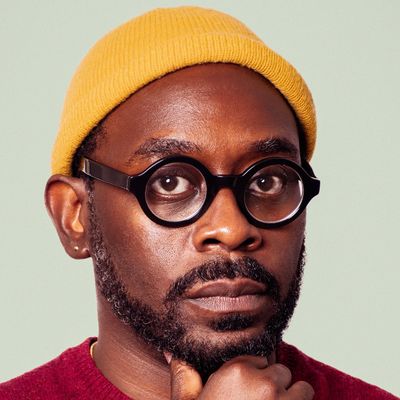
On this latest episode of The Black Business of Broadway, we are joined by James Ijames, a Tony-nominated playwright, and Pulitzer Prize winner for his play 'Fat Ham'... Read More
From the show: The Black Business of Broadway
Guests
Featured Shows

About
On this latest episode of The Black Business of Broadway, we are joined by James Ijames, a Tony-nominated playwright, and Pulitzer Prize winner for his play 'Fat Ham'. Tune in to hear James discuss how growing up in the rural South helped inform the creation of 'Fat Ham,' why he chose to adapt 'Hamlet,' and how writing became a transformative tool for manifesting his dreams.
Edited by Justin Payne
Transcript
This transcript was automatically generated and might contain errors.
[0:00] James Ijames: I think that theater is a part of the work and the project of being a citizen because you have to collect around a group of people who are performing an idea or performing a set of ideas for you. And that's what I think plays are. They're just like gestures towards that community to try to get people to start thinking and talking about what's happening. So it's always going to be valuable for that. Now, whether or not the society that we live in is actively promoting that value is the tricky moment we're in, I think.
[0:45] Gennean Scott: Welcome to the Black Business of Broadway, a podcast brought to you by the Broadway League and Black to Broadway. Here we highlight the stories, how to's, and successes of the Black professionals and legends of Broadway. I'm your host, Gennean Scott. Today's guest is James Ijames, a Tony Award-nominated playwright and Pulitzer Prize winner for his play Fat Ham. James has authored several acclaimed plays, including Kill Move Paradise and TJ Love Sally Forever, just to name a few. His plays have been produced by Flash Point Theater Company, Theater Horizon, William Theater, among several others. James has received a Bachelor of Arts in Drama from Morehouse College and a Master of Fine Arts in Acting from Temple University. He is also an associate professor of theater at Villanova University. Welcome, James, and thank you for joining us today.
[1:50] Gennean Scott: So we're gonna jump right in. How did you even start writing? I'm told that you were like 14 or 15 when your grandmother encouraged your growth. What sparked that interest?
[2:05] James Ijames: I think I was an anxious child, and I was curious, and my anxiety and my sort of curiosity sort of also made me a little bit of a temperamental child. And so I started writing really to sort of like process how I was feeling. And I think my grandmother and my whole family sort of took note of that and were like, that's okay. That's an impulse that you probably should follow. And my grandmother was in charge of the Christmas program at our church, and she was like, you should write something for that. And I did, and that was the first play that I ever wrote, and I think I was 15 years old. It was bad. I recently read it; someone gave me a copy of it for Christmas. My grandmother gave it to me when I was home for Christmas, and I was just like, whoa.
Not interested in character development or plot really, just sort of like knew how to put names and lines on the page, but the form just made a lot of sense to me. And so I just played with it as a hobby for a long time. And it wasn't until about 10 years ago that I started to get really, really intentional and had a plan of how I wanted playwriting to be a part of my career.
[3:30] Gennean Scott: Well, you know, it's a common theme. This is we're now starting our third season. It is a common theme for many of our guests to talk about church, either the writing or the acting or the singing or the lighting design from just flipping a switch, you know. But it's a theme, and I love it because it lets the public know that art is everywhere and that it can be cultivated everywhere. It's not just in the theater, and that we as Black folks are not new to art. Broadway's just new to us.
[4:17] James Ijames: Very true. And I mean, I think that my first theatrical experiences were in church.
[4:24] Gennean Scott: Yeah. But you went to college as a vocal and conducting major.
[4:31] James Ijames: Okay, so when I was in high school, I was really, really fanatically so into choral music. I sang in choir from ninth grade through college. I didn't start doing theater classes until I was a senior in high school, so that came pretty late, the theater classes. And I went to college thinking that I wanted to be a choral music teacher. So I had every intention of enrolling as a vocal performance major with the ambition of a conducting concentration, and I auditioned for a show at Clark Atlanta University. It was a production of Once on This Island, and Carol Mitchell Leon was directing this production. I don't know if you are aware of the late great Carol Mitchell Leon, who was a real pillar of the theater community in Atlanta, Georgia.
She was a professor of mine, and she was directing this play, and I auditioned, and I got cast as Augway, which is not an easy song to sing. And I loved it. It really captured me, the theater. And then, later on, I applied to the short play festival at Clark Atlanta, and it's one of the first times a play of mine was ever done in that festival, a play called Spin Cycle that I don't talk about very much because it was a very early play. But it was directed by my friend Jonice Abbott Pratt, and I was like, oh, I want this to be a part of what I do. I just didn't think it was something that people were gonna pay me to do. But I knew that I needed to be writing, and so I continued to write from there. That just sort of made the engine stronger for me.
[4:55] Gennean Scott: Right. So would you say that was the moment that you knew this might be a path for you?
[4:55] James Ijames: No, the moment that I knew that I wanted to work in the theater, I did a production a couple of years later at Morehouse of Joe Turner's Come and Gone, and I played Bynum. I was opposite Oscar nominee Brian Tyree Henry in that production, and that's how we got to be pretty good friends. And that play, that process working on that play, and then we got to meet August Wilson. Wow. He was honored by Morehouse while we were there. And I was like, I want to do this. To meet a playwright, a living playwright, I was like, okay, I think my ambition got sort of heated up at that point. I didn't go to grad school for playwriting because at that time it was kind of hard to get into a playwriting program without some plays under your belt, and I didn't really have any. And so I went to grad school for acting and loved it and have had a very good acting career, but the first love has always been writing for the stage.
[8:03] Gennean Scott: You mentioned you wrote yourself out of Bessemer City, North Carolina. Can you expand on that? What does that mean, and why was it important to you?
[8:19] James Ijames: I love Bessemer City. I go back to Bessemer City all the time. My grandmother still lives there. I have family that's still there. It's an important part of my creative DNA, actual history. I was never gonna be able to do what I'm doing now from there, and so the thing that I think helped me sort of move out of feeling like I needed to be in that town with my family was just my imagination and my desire to tell stories. And so when I say I wrote myself out of Bessemer City, it wasn't like, oh, I'm abandoning this place. It was like, no, I have to write myself into the world, so to speak. And then the way coming home is just a different experience, you know. I wanted to go off and do something and make these people proud of me because they had invested so much in me.
But yeah, I mean, I'm a Black gay kid from a small town. I needed to get out of there. You know, in the 90s, you know, like I mean, no, you know, now I think it's different. But like when I was getting out of high school, I could just see that if I stayed there, I wasn't gonna be the person that I needed to be and I wanted to be. So I needed to get out of there. That's kind of how it's manifested itself for me.
[9:59] Gennean Scott: Well, and you can see it in Fat Ham. The talking of being able to embrace and be who you are and how you developed Juicy. So Fat Ham is a modern adaptation of Shakespeare's Hamlet set in the American South. It tells the story of Juicy, a young Black man who is visited by the ghost of his father at his mother's barbecue slash wedding to Uncle Rev Pap. The ghost asks Juicy to avenge his murder by his uncle. Similar to Juicy, you grew up in the South. What influences did you bring from that South to the play?
[10:49] James Ijames: I think most of what I brought is the way people speak, the storytelling, the sort of signifying to use Henry Lewis Gates here, you know, the telling the tale, but like telling the tale a little bigger. The sort of force intimacy of family that I think sometimes queer people who have family that struggle with their identity feel, where you're very close to these people and you love them and they mean a lot to you, but they don't completely understand what you're doing and who you are and what's going on with you. And that's not a bad thing for them, and it's not the worst thing for you, but it is complicated. But just also like little cultural things that are significant to me. Like I think about the moment when Larry makes Juicy a plate as this act of love.
That's like a thing, it was like, oh, can you make me a plate? Like there's something about that that's just so uniquely Southern and Black that I wanted to have in the mix there. The sort of, you know, a ghost shows up in this play, and he's scared, but he doesn't run away. A part of what I'm interested in is, you know, one of the things that I've done post-pandemic is reframe my relationship to thinking about my ancestors and how I keep those people close to me. And so Juicy's conversation with his father is the conversation that they always wanted to have with each other.
[12:45] James Ijames: You know, Pap for whatever reason wasn't able to have that conversation. Juicy, for whatever reason, wasn't able to have that conversation. But post-life, there's this potential to understand something that an ancestor did. Yes. Um, or there's a potential for forgiveness or potential for redemption for someone. And that was interesting to me too, you know. Um, I think our society a little has become very carceral that um the notion of failure is like not all it's not available to everybody, you know, especially black folks. It's a privilege, it's a privilege. And so um I wanted to, you know, give this very messy toxic, awful father a moment to maybe try to make it right. He doesn't, he tells his son to go kill his uncle, but in the middle of that, in the midst of that, there's this moment that I love where he says, I really messed you up, didn't I? Yeah, that's an omission of like your harm to someone, which is a first step.
So my hope is that that sort of makes people, you know, you know, while you have the person be able to like sort of try to get those relationships in a good space. Um so yeah, I mean that's that's all the stuff that sort of comes from my life. I mean, none of the characters are really like people in my family, right? Yeah, completely. Um, and none of them are really like me. With I mean, the close the one that's closest to me is maybe Tio. Okay. Um, because I stay out of people's business, and you know, I'm just like, where's James? Oh, oh, you missed everything. Oh, dang, I'm sorry. I love that. Like, where did he go and where is he coming from? He just appears, he disappears. He went to go get some shoes, right? Yeah, some other stuff. But so how did you how did you say, okay, Hamlet? Like, how did how did you draw inspiration from Hamlet of all of all plays?
[15:07] James Ijames: Well, the the first Shakespeare I ever read was uh Julius Caesar in high school, I think it was in high school, and I was like, Oh, this is dope. This is great. I I just love the way that the character spoke. Every everything sounded like it was important. Now, this is like you know, young me reading Shakespeare for the first time, and then in college, I was cast in a scene, like an abbreviated version of Hamlet in college, and I got cast as Hamlet, and it's that first big scene with everybody in it where you know, though yet of Hamlet, our dear brother's death, the memory be green, that that scene where Claudius has taken the throne. And I played Hamlet in that scene, and I I remember thinking, what a fabulous moment in this play.
Everybody's here, and so what happens if the whole play happened and played out at this party? And that's where the idea of like starting my version of Hamlet very close to that moment. And then they never leave the party. Everything, all the stuff happens inside of the context of the party. And that felt really rich. It felt like a um, you know, the I knew that people who knew Hamlet would be waiting for the story to move outside of this location or that, and it never does that. It just it stays there. And then, you know, the whole thing, of course, erupts at the end and becomes something utterly completely different. Um, but that's where it started. I mean, like I I had always had a love affair with the play, and then maybe about six years ago, I just like started noodling with it and reading it and then wrote it uh over the course of a year. I think I like it's I think it was maybe 2017, 2018. I I sort of finished the first drafts of it. Um and then didn't send it anywhere.
[17:09] Gennean Scott: Why not?
[17:10] James Ijames: I don't know. It was like um there was a bit of me that was like, how who do who do you think you are? You know, one of the most um I I don't know if I want to uh beloved or um revered, I'll use that language, plays in the English language. Um to sort of say I'm gonna mess with it. And I knew that there had other been other adaptations of it. Um but I just won't I I don't know, I that didn't deter me and I like a challenge. And I also like messing with the canon like the things that we say are like you know really important. I feel like that's happening more and more um both on Broadway and and off Broadway and in the regions people are are looking at those plays in new ways. I was I also have to say I was really inspired by there was a um a lot of adaptation that I was seeing around and I was like this is so cool. So like it it I felt like I was a part of a lot of people doing a similar sort of thing.
[18:17] Gennean Scott: Right. Well and I mean we look we talk about theater and some people are you know are like oh theater's dying theater's going you know you hear all those different narratives that I I don't believe to be true because I love theater. You discuss the role of theater and its importance um given the prevalence of social media, movies, films, TV shows, and other forms of entertainment. So why do you still believe in in the vehicle of live theater?
[18:51] James Ijames: Um you know it's just it's it's very similar to me in the same way that people go to concerts you know that that collective effervescence um that we one would get at church let's say or um you know at a at a sporting event these are these are things that we sort of crave and we're sort of built to to sort of collect and do things like that. Um, whether it's in worship or if it it's in, you know, fun or hedonism or whatever whatever it might, whatever your pleasure is. Um, I think we are a little designed to do that. I think that theater is a part of the work and and the project of being a citizen because you have to collect around a group of people who are performing an idea or performing a set of ideas for you.
And that's what I think plays are. They're just like gestures towards that community to try to get people to start thinking and talking about um what's happening. So it's it's always gonna be valuable for that. Now, whether or not the society that we live in is actively promoting that value is the tricky moment.
[20:13] Gennean Scott: Yeah, I think.
[20:14] James Ijames: Yeah. I think for theater, you know, and one of the things that we tried really hard to do with Fat Ham is that it needed to feel imperative that you be in the space with other people when it was happening, and that um we wanted there to be not only a cathartic experience, which I think is so key to theater. Um, I think it's okay for plays to sort of leave people sort of on the on the cliff, absolutely. But I also think there's great value in allowing people that release at the end. Um that sort of dopamine rush of recognition, that dopamine rush of the pleasure of what you're watching, the you know, the delight, all of that stuff is I think really valuable. Um, and so it's really about us creating events that um I use the language of of event, um really intentionally right because people have to get up and leave their house and and their streaming devices and their TikToks and their you know we don't have to be in competition with that stuff um we just have to lean more fully into the thing that we do really well which is uh collect people and make them all move together.
[21:39] Gennean Scott: Yeah yeah um but that's tricky to do and it's hard to do and you know it requires a lot more creativity and and nuance than most people want.
[21:52] James Ijames: So true so true so true. But it's but at the same time you know and I and I and again I said this before we started recording every time I went I took away something different and it's because I I I truly believe the people I was surrounded with you know helped to inform somewhat how I took in you know what was going on in addition to what my day was like you know was I especially vulnerable walking in because there's there are some there's some real moments where you're just like oh and and and one moment was when um when Juicy's mother you know uh she comes she comes out to him and I think it I think and she starts she starts crying and you know and she's like pounding on his chest and I'm just like, oh my gosh.
I started, I started welling up too, because it was such a it was so surreal, and it was such a sincere moment of like I need you, I need you, and and you think about the people in your lives, you know, in your family dynamics, and you you think about those moments, and um, yeah, it was I I you know the first and second time I didn't walk away that way, but the third time, I mean I started walling, and it's like, okay, girl, you've done seen this like two other times, you know what's about to happen, but at the same time, I I just received it differently that day.
[23:27] James Ijames: And and that is, and that's why, and that's why I love theater so much.
[23:32] Gennean Scott: That's the magic.
[23:33] James Ijames: I mean, you don't knew I I had a student one time um describe the audience as the crowd that's always stayed with me. I love teaching because they like they always like say something where I'm like, whoa. I wasn’t thinking that that was gonna knock something was gonna knock me over today, but it just did. Um I've never lost that. Her name was Mary Lyons. If you're listening, hi Mary, I owe you a text message. Um but yeah, they they they said um it's the crowd. And I was like, a crowd is unknowable. You don't know what's in a crowd. Right, an audience is manicured, self-selecting, um, you know, um uh that they've they've been cultivated. And a crowd is a mass of people who have all different reasons why they're there and they're they want different things.
And so if you think about writing towards a crowd and not towards an audience. Uh it's a lot more freewheel. Um approach, I think, to to writing. If the expectation is not that people will behave as they always have, but if the expectation is I don't know how they're gonna behave, you write differently, I think.
[24:48] Gennean Scott: That's it that's really interesting.
[24:50] James Ijames: I had not thought about that, but it makes so much sense.
[24:53] Gennean Scott: It makes sense.
[24:54] James Ijames: It was a real paradigm show for me.
[24:56] Gennean Scott: Yeah.
[24:57] James Ijames: So at the end of Fat Ham, though, you took a different approach than that of Shakespeare's Hamlet. Why was it important for you that the characters live?
[25:10] James Ijames: Because we're so conditioned to expect and want black death. Oh, I love it. And I, you know, I I am a person who is preoccupied and curious about death. Um, and so you look at any and ghost and like haunting, like the the I the notion of haunting and specter is like all through all of my work.
[25:34] James Ijames: Um and so I in this play, Death is there, ghosts are there. I didn't I still didn't want everybody to die at the end. The only thing that I wanted to die at the end was the source of oppression in the space. That was it. That was the only thing that I wanted to die. So that and then and and even in that death, he the the the source of oppression is offered a lifeline multiple times. He chooses to die. Like he could be saved, but he won't let himself be saved. Um, and so I I I don't know. I felt like it was going to be powerful for everybody to come to this adaptation of this play where famously everybody dies at the end, and for it to be, oh, it's black people, so we get to see these black people all die at the end, and then they don't. They don't, not only do they not die, they like live like big time live, like capital L. And um that felt like rich um territory for me.
And it, you know, that a happy ending with black stories is a tightrope walk. Like, you know, people will look at it and say it's trivial, or you're not being serious about you know what's what what's really going on. And I'm like, my blackness is like laughing too loud, my blackness is you know, dancing too hard, my blackness is also, you know, quiet meditative prayer. So, like it what are we talking about here? You know, and so I really wanted to um to write this story where these characters all survive, and like it hit me pretty late in the Broadway process, and it was once we had gotten to tech, and Marcel Spears, who plays Juicy, came out at the end with the crown on, and I was like, oh, my Hamlet gets to be king.
That's dope. Like it just it just kind of hit me all of a sudden. I was like, you know, and that you know, to to to give credit where credit is due, you know, Sahim Ali and that design team just did a really great job of not only showing the liveness of these characters at at the end, but like really exploding that um and making them their most, you know, incandescent selves. Um so yeah, that's I just was like, they should get a happy ending. I want them to get a happy ending. Even Rev pops up at the end and gets to like you know, dance and and be in a place of joy with everyone else. So yeah. Well, and I loved it because I was like, everybody lives metaphorically also because you have Opal, Larry, and Juicy coming into their true selves, living.
And and and that and which to me made it feel like they hadn't really they they hadn't really been living before. Yeah. And so yes, they they live, live, but they also live, you know. And and it was I I think that's another reason I I I absolutely loved loved Fat Ham and what you did with it, what you all did collectively with Fat Ham and the representation and on Broadway, not just of black folks, but black queer folks, and um and s and the celebration of that. I I thought it was fantabulous.
[29:26] James Ijames: So what what are some of your hopes for the current upcoming generations? Um I hope that the next generation um there's a few things I want. I want them, I want them to figure out what is the the best time in the post-tech boom world to schedule when a play happens. Because I don't think eight o'clock at night is it anymore. Um I don't have any better answers. So I'm leaving it to the next generation to figure that out because I think it has to change in some way and and at least become more expansive. Um I want them to um be more fearless than we are, um, both in their approach to the making of theater and also just in their approach to advocating for space and access. Um a thing that I did in my career that I I hope more people will look at what I did and and follow it.
Um I never just like up and moved to New York. Um and it wasn't because I couldn't, it was because I I wanted to cultivate things on my own terms and and New York felt like a place where people uh decide who they need you to be, and it's like really hard to break that. And I I knew sort of coming out of grad school that I wanted to do a lot of different things, and so I found a place in Philadelphia that would that took all of that stuff very seriously. They took me as an actor very seriously for, you know, I had the training, but they also took me very seriously as a playwright early on, and they took me seriously as a director. And so I got to like really work out what my mission was, what my perspective was and point of view about what I think theater should be.
And so when New York came around, I didn't enter those spaces not sure of who I was. I entered in those spaces with a great deal of like focus and like clarity. Um so and and it helped me like when I think about the Broadway experience, like the people that worked on that show, from the producers on down, those were all people that felt very much in alignment with who I wanted to be working with, what kind of theater I wanted to make, what kind of theater I'm gonna, what the kinds of people I wanted to make theater with. Um and I think under different circumstances, I would have just sort of gone with someone who spoke the shiniest. But I went with people that spoke the language that I was speaking, and I didn't have to translate things for them.
And um I I think that was a large part of the success because we were really um working together. Um I want the next generation to not be afraid to um land and manifest their career in um black theater spaces. Um the first theater in New York to produce a play of mine was the National Blue, uh the National Black Theater in Harlem. Still, they were producers on Fat Ham. I have a commission with them now. I'm always going to be in community and in relationship with that theater with Jonathan and Shade. And um building that foundation means that everything else is unshakable, no matter where you go. Um, and I've been invited into some lovely rooms with some really lovely people. And, you know, I think about the Tony experience, and like I had nice clothes to wear because Sade Lithcott took care of me and made sure that I had nice clothes to wear to these fancy things.
That you that's not about theater, that's about community. That's about family. Yeah. And so finding those spaces and making those spaces your home. Like it's very easy to, you know, feel like you need to like move past your own people to get to a kind of success. And yes, there are fewer black people at that level, but you it doesn't mean you have to like abandon everything that has, you know, sort of got you where you are, you know, praise the bridge that brought you safely across. And I I yeah, I want us to not forget that those institutions exist and that they were designed and built and created so that we could be doing the very thing that we're doing.
[34:21] Gennean Scott: Oh my gosh. Well, it you kind of you kind of answered our last final question, but I just in case. What is one piece of advice you'd like to share with the black future leaders of Broadway?
[34:37] James Ijames: While revivals are amazing, we need the producers and the dreamers that are gonna put the next a raisin in the sun on Broadway. Not a raisin in the sun again. Although, listen, a perfect play. Should be done as much as possible. Um but I I I I find that um the revival is the space in which we um want to invest our dollars in that industry, and it it makes us culturally um an artifact as opposed to um a current manifestation in some way. And so I I think that's changing, you know. Johnson Bio's show, I cannot wait to see it, just had its first preview. Um Yaya's hair braiding, that's good with Whitney White directing, that's gonna be fantastic. Jordan's fabulous play was uh on last season. There's there's been many new plays on Broadway by black writers.
We struggle hard. We struggle a lot to get people in those doors. Um and you know, as the makers, as the people who are the movers and the shakers in the industry, we we have to sort of be guiding how we want the the crowd, the audience to to move. Not to say that people can't do revivals. I think the revivals are fabulous, but um there are I would venture to say thousands of plays that are viable for those stages. Um that'll never see them. Um and so then what do we do in 40 years? Are we gonna still be reviving plays from the 50s and the 60s? Or is it gonna be revivals of plays from now? Right. And what plays will be able to sort of fit into those slots if that's the thing that we're still doing. So that that's a thing for the future leaders.
[36:36] James Ijames: Right. Yeah, yeah, yeah, yeah, yeah. That is a thing that I I I desire. And I say that as somebody that um writes plays, but also somebody that's like very interested in like directing old plays. So I get it. I know why you want to take, you know, do your version of, you know, streetcar or whatever it might be. Yeah. But um yeah our white contemporaries are they're they're holding space for them to to do the new stuff and for those plays to become a part of the canon right um so that's that's a thing that I I noodle on and I I I'm curious and hungry for.
[36:58] Gennean Scott: I love it well James it has been such a pleasure chatting with you uh and and just taking a peek into you know your your insight and how you and how how your process you know works and I I thoroughly appreciate you taking the time uh to chat with us today it's my pleasure I had a ball.
[36:58] Gennean Scott: I want to thank our guests and you our listeners you could have been doing anything else but you chose to spend your time with me and I am grateful be sure to subscribe at BPN dot fm slash bb so you'll never miss an episode while you're at it tell a friend I'm your host Gennean Scott and we at the Broadway League hope you enjoyed this episode of the black business of Broadway.
© Broadway Podcast Network, All Rights Reserved