

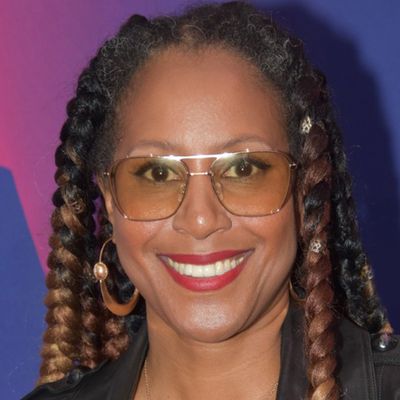
An inspiring conversation with Sade Lythcott, the CEO of National Black Theatre (NBT), about its history and how she is carrying on the legacy of her mother and founder, Dr. Barbara Ann Teer. Tune in to hear her discuss NBT's mission "to produce transformational theater..... Read More
From the show: The Black Business of Broadway
Guests
Featured Shows
About
An inspiring conversation with Sade Lythcott, the CEO of National Black Theatre (NBT), about its history and how she is carrying on the legacy of her mother and founder, Dr. Barbara Ann Teer. Tune in to hear her discuss NBT's mission "to produce transformational theater... through telling authentic stories of the Black experience," its emphasis on placemaking and holistic producing, and her vision for the future of NBT.
Edited by Justin Payne
Transcript
This transcript was automatically generated and might contain errors.
[0:00] Gennean Scott: I didn't choose this, it chose me. And I think that is the metaphor for life. You're constantly being prepared for the things that you don't even know are around the corner.
[0:14] Gennean Scott: Welcome to the Black Business of Broadway, a podcast brought to you by the Broadway League and Black to Broadway. Here we highlight the stories, how-tos, and successes of the Black professionals and legends of Broadway. I'm your host, Gennean Scott.
[0:38] Gennean Scott: Today's guest is Sade Lythcott, a Tony and Emmy Award-nominated producer and CEO of Harlem's National Black Theatre. National Black Theatre is the first revenue-generating Black arts complex in the nation and one of the longest-running theaters by a woman of color. Sade is the daughter of Dr. Barbara Ann Teer, the founder of National Black Theatre and a champion of African American arts and culture. In addition to her work at National Black Theatre, Sade also serves as the chair of the Coalition of Theaters of Color and sits on the board of various organizations such as Brooklyn Academy of Music, also known as BAM, Black Genius Foundation, and Art in a Changing America. National Black Theatre is one of the producers of Pearly Victorious, which is currently running on Broadway. Welcome, Sade. We are excited to have you here with us today.
[1:40] Sade Lythcott: So excited to be here with you. Thanks for having me.
[1:43] Gennean Scott: Absolutely. It really is a no-brainer. You all are pushing the envelope, and we appreciate you and respect the work that you all are doing. So with that, I kind of want to jump right in. National Black Theatre was founded in 1968 by Barbara Ann Teer, an award-winning performer, director, visionary entrepreneur, and champion of the Black arts movement, as well as your mother. I'd like to ask you, can you share a little bit about the history of National Black Theatre, your work there, and your overall mission?
[2:28] Sade Lythcott: Yeah. So as you said, National Black Theatre was founded in 1968 by Dr. Barbara Ann Teer, and we are proudly the oldest and longest continually run Black theater in New York. Dr. Teer, as an artist, started on Broadway. She was in several Broadway shows. She was a dance captain for a musical in the 60s called Quamina that won the Tony for its choreography. She was really clear about how limited Broadway was in those days from a perspective of representation, not to mention the lack of diversity on the producing end. She had a deep desire to be of service to her community and people, so she started a small acting school with Robert Hooks called Group Theater Workshop, where Robert and my mother would teach these young, incredible actors the craft.
Robert Hooks and Douglas Turner Ward would go on and form the Negro Ensemble Company, which really was focused on complicating the notion of the narratives primarily around commercial theater and really pushing the envelope of representation. For Dr. Teer, she thought representation was just a drop in the bucket, but that theater is such a catalytic form of art. Storytelling is what shapes the way we relate to each other, the way we relate to our communities, the way we relate to history. History is a story. What our people needed was a narrative shift. National Black Theatre birthed out of the culmination, the apex of the civil rights movement in 1968, Dr. King assassinated, his last speech saying build Black institutions, and the Black arts movement saying we have to pour the kind of love and resources into our own communities and kind of for us, by us, build ourselves up to be who we were truly born to be.
In 1968, Dr. Teer moved from downtown uptown to Harlem and founded the National Black Theatre. The interesting thing about our founding is she was so committed to this idea of Black liberation and service of human transformation that the company of actors, her first company of actors at National Black Theatre, were not called actors at all. She felt like the audition process that she had endured for a decade or more kind of triggered post-traumatic slave syndrome within our genetic coding, right? This idea that you're going into these rooms full of white folks that are asking you to smile big, that are asking you to say lines that don't recognize the fullness of your humanity. Because back then in the early 60s, what was available for African American artists were really a lot of tropes, right?
Like this trope work of two-dimensional Black characters not reflective of Black lifestyle. She thought that there was more harm than good in the way the kind of system of theater making worked from a Western paradigm. Instead of calling her actors, she asked the question, what if this theater-making process wasn't a self-conscious process where we as artists are nervous, scared, going in, wondering will they like me, will they accept me? Am I too much of this? Am I too much of that? Smile big, that whole paradigm. She said, what if we change it from something that was triggering and self-conscious to something that was God-conscious, meaning that within us we have all of the power and agency that exists in the universe and world.
So anyway, the first company, all of the actors were called liberators because she was interested in having a very deliberate conversation with liberatory texts, with not representation but infiltration. What does it look like to build a Black theater company where not only the actors on stage are representative of who we are, but so are the producers, so are the directors, and so on and so forth? The National Black Theatre was born out of this Black liberation, Black empowerment movement that theater could be of service to helping to shift and change our communities and ultimately our country by producing authentic and unapologetic stories of Black lifestyle.
[7:57] Gennean Scott: Oh my goodness, I wish you were here. I'm like, oh my goodness, yes. Yes, and yes, and yes, yes, and so growing up in that environment, was it a no-brainer for you to pursue a career in this area, or was there a particular light bulb moment that you had where it's like, you know what, this is what I want to do?
[8:27] Sade Lythcott: So Dr. Teer was a real visionary. When the company of liberators started having children, my mother and father included, she didn't want to be far from her babies. She also understood that part of the systemic challenge or the systemic issue with justice work, which ultimately is the work that we're doing, was that the education system was also equally flawed. They started a school at the theater. So my first education up until I was six years old, and I think my brother until he was nine, was in the theater. We performed, we toured, you know, we learned how to read, write, and do math, but we also learned about our history, our culture, and it was like as close to a Black utopia as possible.
It's funny because when I think about Harlem in the 70s and the 80s, all of the images are so dystopic, but for me it was nothing more than the warmest of hugs and the most soulful place on the planet, you know, that one could be. When the theater burned down in 1983 is when we actually matriculated into conventional schools, and I never looked back at theater. My mom would funnily say, you know, I don't know why I work so hard, it's not like y'all two are gonna do anything with this. We were like, you are right, lady. It was kind of that way for me in particular because I think, you know, as much as Dr. Teer and my mother loved my brother and I, I was very clear that her first child was the theater.
She was so dedicated to the mission and the work of the freedom work of storytelling that I had a really complicated relationship with the theater, and I was pursuing fashion actually. I went to NYU, where I went to college, and I did a year abroad in Italy. It's funny because when my mom was in college, she did a year abroad in Italy, and she could not wait to get back to the States. I, on the other hand, was like, oh, this is where I live, I'm doing this. This is a real wonderful life with wonderful people. I got a call from Woody King Jr., who was producing a Ron Milner play starring a kid he discovered. This is what he was telling me on the phone. I found this kid, and he's fantastic, and I think you're fantastic.
I want you to do this Ron Milner play called, oh, it'll come to me. I need you to come back to the States. I was like, um, I live in Italy now. He was like, I just think you're both brilliant. The actor was Chadwick Boseman, and I played his sister. Anyway, he sent me the script, and I started to romanticize, oh, maybe this is my moment. If anyone knows Woody King Jr., the founder of New Federal Theater, the king of Black theater, when Woody calls you, you go. That brought me back to the States to do this play, and it was the first time I came back into theater. When I tell you, I was terrible. I was like so bad. I was acting across from who would become like Black Panther, the goat, and I was just struggling.
[12:23] Sade Lythcott: So, but it brought me back to the States, and you know, my mother passed away soon thereafter, and from that point on, of when I did um the play was called Urban Transitions, Loose Blossoms. From that point on, being close to home and really seeing the gaps that existed at NBT, I costume designed for um MBT because at the time I was pursuant of fashion, and it was something I could be of service to my my mother, primarily not pursuant of my career. So when my mom transitioned and passed away unexpectedly in 2008, um the board of directors had asked me to come on board for six months while they kind of headhunted how they were gonna who the next head and how they were gonna restructure. And I've been here for 15 years.
And I think that is the metaphor for life. You're constantly being prepared for the things that you don't even know are around the corner. The first three the first three years were really hard, primarily because I didn't realize who my mother was or who what NBT was, you know, impact-wise until she passed away, if I'm being honest. I remember the first time I really realized what um who the who my mother was and what the National Black Theater does and what its impact was was when I learned about National Black Theater at NYU as a junior in college. I was like, wait, what? Hold on. This is my mom. Um that's that's mama. Yeah. And um, and like, and it's weird when you're the child of two, you grow up with all these aunties and uncles that you are that you love or you have complicated relationships with.
And as you navigate and go through, you know, school, oftentimes, you learn more about your who's in your living room and who's around your dining room table. And so, kind of my my aha moment of clicking into like this being my calling and not just the stewarding of Dr. Tear's legacy through the work of National Black Theater was when she passed away. There was a huge outcry from you know, icons from around the world, from you know, everywhere, everyone from President Clinton to um, you know, uh Maya Angelou, who was her soror, my auntie, and so um Maya Angela wrote um a eulogy to be read at my mother's funeral. Uh she couldn't she couldn't make it because she was wheelchair bound at the time, but Avery Brooks read it.
And it was just this beautiful handwritten poem that basically said, you know, hang it hang up her jersey, nobody can fill her shoes, no one can do what she did. There will be another, there won't be another. And I'm sitting here like steeped in grief, and also being like, if Maya Angelou said you can't do this job, like how am I supposed to the the audacity to do it? And so for the first few years, it was really challenging. I mean, the organization had some had some challenges because we had lost um our artistic director had passed away two years before my mother, then my mother. So it was all this transition, and it was when Auntie Maya passed away. I revisited those words just to post them on Instagram, and I realized she gave me the key, the aha moment I needed in my own career.
I say this story only because I think maybe some of your listeners it will help. It was that in rereading this incredible piece of poetry. What Maya's invitation to me was not to be my mother, right? To bring all of my gifts, all of what make me unique for this moment in time to the forefront. That they're not looking for a new founder. I can't be that, but what I can be is a steward of the work that our artists, our community, and the organization needs to take it to the next level and into the future. And so that's when it really clicked for me, and I was like, oh, I can run in these lanes. Oh my goodness. The message behind the message behind the message is inspiring. And I think I I am sure that there are other people who will hear that and recognize that I I should not try to be someone else.
And I need to be me, and I need to be authentically me because the time is right for me to be me. The universe doesn't need another whoever, you know. Yeah, yeah. So you can't be Angela Bassett. You can't be, you know, like you can't be Carrie Washington because Carrie Washington's busy being Carrie Washington, right? And so the thing is, God made you unique and special, and that is what your gift is. Like, it is not the training, you know, training is wonderful. Uh uh uh credits are wonderful, but the thing that will always resonate in every room is who you are, is the soul of who you are, and and Broadway in particular is in desperate need of the soul of who we are, because that's what will change the game.
[18:03] Gennean Scott: Okay, absolutely. Thank you for sharing that. So National Black Theater's uh theory of change is black liberation plus art plus placemaking equals human transformation. Why are all of these three ingredients uh necessary for human transformation to occur?
[18:24] Sade Lythcott: Hmm. Well, you know, there is that saying that like none of us are free until we're all free. Yes. You know, now we say at MBT, none of us are free until the black trans woman is free. Yeah. Um, and so the black liberation part of it is that this is freedom work, right? And that if we root in the liberatory transformational force of black liberation, create the container for our art through the lens of black liberation. Placemaking, meaning that we have to have a home. Black folks haven't had a home since we were ripped from the shores of Africa, right? There isn't one migration period, as folks know it in the you know, the 20s through the 40s. It's we've been in perpetual flight. So the placemaking part is the alchemy of saying we can root somewhere, we can be recognized and recognize each other.
So it's the art, the placemaking through the lens of black liberation equals and creates the container for human transformation, because that is the most soulful like algorithm that we can have, this freedom work, because when you get free, you literally give someone else permission to get free to. I know we'll talk about that a little bit later, but you know, it's like the soul of black folks have shaped this country and made it better every step of the way, but we never get the credit for that. And when you are soulful, she used to use the analogy of um James Brown. She said you could go anywhere in the world and you go to a concert, James Brown's singing, you could be in Japan. He hits that note, like hit you with a good foot or whatever, and people just start screaming, right?
It's like that is his authentic sound, and it turns everybody on. Beatles, same thing, right? It's not just black folks, but when you hit that vibration, everyone in earshot is transformed, is you know, turned on. And so that is what we that's the kind of stories we want to produce. Those are the kind of artists we we we support, and so that's why it's our theory of change.
[21:27] Gennean Scott: Awesome. Well, speaking of producing, can you discuss the concept that you all have of holistic producing and how that influences your approach to producing shows at the National Black Theater?
[21:42] Sade Lythcott: Sure. So uh in 2008, when I came on board, um, you know, community theater looks a certain kind of way, and I think has a certain connotation. Um, but I tell you, it's the thing that I am the most proud of. I say we're a community theater with a capital C. And we could also, you know, model certain things and and borrow other models. So at the time, you know, we didn't have an established season, we didn't have an artistic director. And about three years into my tenure, I um met Jonathan McCrory, fell in love, we fell in love with each other. He um, and we've been partners ever since. He's executive artistic director of National Black Theater, and from the two of us coming together, you know, we created a frame.
And and I always say, you know, there's this African proverb: if you know the beginning well, the end will not trouble you. And so I I did not want us to attempt to re-imagine or redesign national black theater. I wanted to go back to the beginning. Um, and and use the beginning um years, the four formative years of National Black Theater as a blueprint. And so what National Black Theater used to do is it used to go out into community. It used to perform theater on the street corners. It would perform theaters in the churches and in the bars, wherever our people were, we wanted to be able as artists to reflect their beauty, their image, the authenticity of who we are back at them, you know. And so that is how our theater started through ritual, through um through community empowerment, not engagement.
And so we thought, how can we do that through a contemporary lens where you meet community where they're at as opposed to asking community to meet you where you're at? Because, you know, a lot of folks in our communities don't think theater is for them. Right. Right? And and and we know why, because we haven't been really welcomed, you know. It's like they're like, well, if it's a cheaper ticket, will they come? It's like black folks have spent more dollars on, I mean, how much do we spend on Beyoncé, right? Like, how much do we fly to Vegas to see Usher? It is not the discounted ticket, it is that you're not empowering us to see these stories that you're choosing to produce. So, anyway, the roots of holistic producing come from meeting community where they're at.
So it's a three-prong approach to producing. One, we find the play, we want to produce an excellent piece of um theater that we think speaks to um just uh the the voice of the playwright is is is soulful and unleashing that soul on the script. We'll take um the first James Imes piece we ever did, which was Kill Move Paradise. We world premiered Kill Move Paradise. Now, when a playwright is being produced by National Black Theater, we don't ask them to be political, we don't ask them to have to have a social justice lens.
[24:52] Sade Lythcott: We promise them that we will care for the work in partnership with them, but they have to allow us to create a dramaturgical lobby exhibit or dramaturgical deck. Now, once COVID happened and started becoming digital, that teases out themes that are germane to our lives today, right? That are social impact issues that exist in the world of the play. So it's not the dramaturgy of the playwright, but it's the dramaturgy of the world of the play. And those topics are usually the topics that like our communities, plural, are talking about anyway, right? So for *Kill Move Paradise*, even though it was like this surreal, funny house, purgatory place, it was rooted in state violence. And so the summer of, you know, killings, that summer of 2017 when Mike Brown was killed after Trayvon Martin was killed, like, and we as Black folks had to witness all of this kind of trauma porn, all these murders played out on the television as if it was entertainment on repeat on the news.
We decided that that was the season we would dedicate to Black joy because that is what our community needed. We needed to be in pursuit of Black joy, find the healing, and this piece could do that. So our dramaturgical lobby for *Kill Move Paradise* was reflective of these nuanced conversations of like being turned into a hashtag, stealing your humanity after you're being, you know, like all of these things. And so that's the second prong of holistic producing. So we have the play, then we have the dramaturgy that speaks directly to community. So they may not know they want to see a play, but they want to be in this conversation because this is the conversation they're having. So they come to us for that, and then they get to see the play, and then after the play, the third part of holistic producing is we have a conversation.
We have these afterwards where Jonathan and I moderate a talk back with the actors or the director or the playwright if they're present, and we hand the show over to the audience and say, look, we're gonna make a piece of art together, right? If theater is ephemeral, then you're sitting shoulder to shoulder with strangers. You're gonna leave here, have a glass of wine, maybe, digest in your bubble of familiarity. It's not gonna shift you. There will be no human transformation. But if we can sit shoulder to shoulder and have a conversation, bring the dramaturgy into it, bring the play into it, and our own life experiences, then we become more human to each other. We become more connected, we stop being audience members and we start being community, and that we think is transformational.
So that is the secret and the principles of holistic producing, and we do that with every single show we produce. We apply that kind of algorithm to it because we are in the business of transformation.
[28:11] Gennean Scott: I totally agree. And you mentioned *Fat Ham* and we actually had James Iams on. I recorded with him last Friday. So his episode actually airs right before yours. But he did and he talked about Black theater, National Black Theater. So according to our research, you all made your debut with *Fat Ham* with James Iams, and can you talk about the importance of Black theater? We did a little bit of this already, but the importance of Black theater in these spaces, particularly Broadway, and what are some of your hopes and dreams moving forward, particularly on Broadway?
[29:02] Sade Lythcott: I think having you all behind *Fat Ham* and behind *Pearly Victorious* and whatever else it is that you all are choosing to bring is really transforming commercial theater. And I think it is, and I told James, I was like, I saw *Fat Ham* like way too many times because I felt there was a kinder fiction ship, there was an understanding, there was a place of feeling like belonging, not in just watching the dynamics, you know, in what was going on on the stage, but it was also the stories that were being told that resonated with me, and the environment, as soon as you walk in, it felt like home. And that's odd, you know, in commercial theater. So, you know, moving forward, what are your thoughts on doing more work, particularly on Broadway, if you have any?
[29:54] Sade Lythcott: I have said that producing *Fat Ham* on Broadway put a fire in my belly to want to do more, because for all the reasons you said it was so transformational, and it was also very flawed. Yes. And I was just like, yo, right? We should not have made history by bringing *Fat Ham* to Broadway. Like National Black Theater in the 150 years of the Great White Way should not have been the third Black theater to be a producer on Broadway. This system is so broken, and everyone knows it, right? It's not like I'm saying something that folks don't know and feel and have scar tissue and receipts to prove it. But there is this kind of jazz hands dance that people do around representation is good enough, and it's not.
Like it's amazing that stories like *Fat Ham* are being produced on Broadway, *Strange Loop*, you know, *Passover*, all of these incredible shows, but when you really break it down, these are developed in white spaces by white producers who enhance it for white audiences, white commercial majority white commercial audiences, and then at some point they want to sprinkle in Black folks somewhere, right? Like, oh, we have one producer who can do community engagement, right? And it's like if the most powerful art form on the face of the planet is theater, is storytelling, and our stories, though diversified from, you know, 60 years ago because we have more diverse playwrights and directors on Broadway, still not enough.
But the system and the lens in which it's being developed and produced and put out there is not your own, then what is at the other side of it, right? Like it will feel transactional, it won't feel transformational. And Black folks know when they sit in the theater and they see a comedy that has Black storytelling, and all the audiences are laughing at them and not with them, like it is problematic at best. And so *Fat Ham* was this amazing opportunity to do things differently, and it was a partnership with the Public Theater, you know, directed by Saheem Ali, James Iams' play, they met at National Black Theater. That family started in 2017 with *Kill Move Paradise*, and out of the pandemic, we knew we wanted to do something else together, and so *Fat Ham* was that.
To the Public's credit, I would say that when it was clear that this would transfer, we had really hard and uncomfortable conversations about what true equity looks like, and again, to the Public's credit, you know, we did that dance all the way to Broadway, and we positioned each other through our value lens, our holistic value lens, which really gave MBT so much agency in the work as it should, because we were 50-50 partners, right? So, like that the sense of agency that, like, as Black folks, we have to understand that our value doesn't lie in the matrix of commercial theater, which is just dollar for dollar, like what's the kicker that I get for this thing, because our currency is different, it's a different vibration.
And so that's what really made I think *Fat Ham* a really wonderful and hard-fought success. And we learned a lot on it. And as a result, to your point that you made when our people came into the theater, it felt like their home. They felt recognized, our company felt cared for. Like the idea of radical care as a hallmark of producing in and of itself is audacious, especially in commercial venues, like care. You know what I mean? Like always asking yourself is this decision a transactional decision or is it transformational? How can we go from transaction to transformation all across the producing way, right? And so, anyway, that's what *Fat Ham* was, and you know, being a commercial producer, you started to see all of the gaps that exist that, like what we do and how we do what we do can be of service to telling more complex, more impactful Black narratives in commercial spaces.
So it made so much sense that our sophomore Broadway show would be *Pearly Victorious* because, you know, the forefather of Black theater of art for activism on stage was Usher Davis and Ruby Dee. And so bringing back the revival of *Pearly Victorious* with the messaging, with an incredible cast and a director who's fearless when it comes to the love of not only his people, but understanding the togetherness that is essential in this moment in time, felt like we could be of service as producers on that piece.
[36:06] Gennean Scott: I love it. I love it. So you're currently in the process of rebuilding your new home for National Black Theater on Harlem's 125th Street and Fifth Ave. And I'm curious, what is the inspiration behind the redevelopment and what do you envision when it opens in 2026?
[36:32] Sade Lythcott: So folks thought Dr. Teer was crazy. In the 80s, she started buying real estate in Harlem, and she tried to tell everybody and a grandmother, you should get some of these brownstones, you know. They were selling brownstones for one dollar at the time, right? I know. But the folks who could afford, I mean, obviously they had all these stipulations that you had to be able to renovate it, blah blah blah blah. But the point of it was the folks that could afford or have the vision to afford real estate in Harlem at the time was like, I'm working this hard to get out, not to stay in.
[37:18] Sade Lythcott: You know what I mean? So anyway, in 1983, we were renting space in an old jewelry factory, doing loft theaters where we were founded on 125th and Fifth Avenue. And in 1983, my Dr. Teer really felt like the placemaking part was integral to this theory of change. And so she wanted to buy the building, and then there was a fire, and she's like, if this is an opportunity to buy the block. And folks thought she was crazy that at this burgeoning stage of the organization that she wanted to go from a theater maker, an artist to an entrepreneur. And she said, Why wouldn't I buy this city block? It's the most famous address in the world. And people were like, Oh, now you're really crazy because it's '83, you know, crack cocaine has hit Harlem, we're still reeling from all of the riots that had happened in the '70s. And she said, Go anywhere in the world and say Fifth Avenue, and everybody knows New York City, they know Opulence Breakfast at Tiffany's, right?
Say 125th Street, and everybody knows Harlem, which is the cultural capital of the Black world. I want to buy the intersection of the two and build the temple of liberation to my people. And she had a vision that she could create an environment, an ecosystem where Black artists could live, work, and serve. And so our new project is the actualization, right? Like any of us, all we are stewards of the unfinished sentence, idea, song, dance of our ancestors, right? And so the unfinished dream of Dr. Teer, the founder of National Black Theater, was to create an environment where we could come home to live, work, and serve. And so that is what we're building. We are building a mixed-use residential, new theater complex, community collision space on the corner of 125th and Fifth Avenue.
We believe that we're building the theater of the future. What I know in my soul and in my heart and in my spirit is that New York City doesn't need another institution. It doesn't need another venue. Black folks need a home, a home away from home, a place where you meet and greet your family, a place where your exhale feels the best. I'm disinterested in building another institution or empire. We got enough of that in New York City in Manhattan. What Harlem needs is a home for Black actors. So that is what we're building. We're excited about it. New training programs. We'll have a set shop in the cellar, so we'll have a way for folks to learn how to carpent, to be carpenters, to learn how to build sets, to get into unions to really create the ecosystem, the sustainable ecosystem that not only gives to the theater field, but really creates opportunities for folks in our own community to have opportunities in ways that they didn't think existed before.
And so yeah, I think that we're designing this space as a living land acknowledgment to all that have come before us and as a way to say, like, we're not asking for a seat at anybody else's table, we're building our own table, and you can pull up a chair. And so that is what the theater of the future will be, and we're very excited about bringing all of this energy from Batham to Pearly to all of the shows we produce off Broadway, bring all of that energy back to Harlem in 2026 and really have the ultimate homecoming.
[41:31] Sade Lythcott: So the title for your 56th theatrical season is called Defiance of Our Bloom, which is about celebrating the science, soul, and vibrancy of our bloom, preserving and transformation while acknowledging the struggle that we still face in society today. What was the inspiration behind this theme? So we theme all of our seasons at National Black Theater, kind of taking a gut check or a pulse check of what's around the corner for us as a people and for National Black Theater, you know, we're itinerant until 2026, and so we're having these conversations, these dramaturgical conversations in mostly places that don't look like us, right? And so the recognition of our journey, our experience in this country is that no matter what the circumstances, no matter what we have faced, we find a way out of no way to bloom.
So our art is our bloom, and against all odds, we will bloom, right? So this theme of the defiance of our bloom is really looking at that push-pull, the audacity to be so Black, the audacity to be so great, like it's really this idea of all of the shows that we're producing in our 56th season, are these incredible stories that are seeds that were planted that folks tried to extinguish in one way or another, and we get to produce them. They try to bury us, but they didn't know that we were seeds. So it is the bloom that we are celebrating against all odds in the stories that we're telling this season.
[44:00] Gennean Scott: I have one final question. Um, it is what is one piece of advice you would like to offer to the Black future leaders of Broadway?
[44:15] Sade Lythcott: What a great question. I have kind of two pieces of advice that are coming to me. The first I will borrow from Dr. Teer. Um, because she was asked that question in 1971 in this kind of seminal interview that has become world famous because Beyoncé sampled it on Alien Superstar on the Renaissance album. And so that talking piece at the end of the song is my mom, but it's a part of a longer interview that people should look up. And at the end of that interview, the interviewer asked the same question you asked. And her advice, she said to any actor, any producer, any policeman, any school teacher is to learn to love yourself. Learn to love yourself. You cannot be who you were born to be. You cannot serve who you were born to serve.
You cannot give a gift that you don't love. And when you can start loving yourself, you can start loving, you know, the person next to you. You can start pouring that love into your art, and that vibration will change not only your career, it will not only give you a North Star, but it will change the world. So learn to love yourself is the first piece of advice, but I stole it from Dr. Barbara Ann Teer.
[45:50] Sade Lythcott: Second piece of advice is I get a lot of questions and interviews about how I do what I do. And sometimes when people tell me back the things that I've accomplished, it's the first time it actually sinks in. The root of the word. It's the line in Pearly Victorious. 10,000 queens of Sheba, right? You walk into every room with every piece of wisdom of your ancestors. You are constantly surrounded by folks who dreamed you into existence. Always. So you're never lonely, you're never alone, you're never isolated, you do not take the bait, right? That is because your crown has been paid for. And as you walk into that room, your responsibility, invisible as it may be, right? Because we all Black folks don't need another job, but is to hold that door open.
But in your courage and your audacity, you are holding the door open for 10,000 folks to come behind you. And so when we walk into space as the only one or starting your career with trepidation with all that you will face, know that you're never alone, and that the energy that surrounds you that are your ancestors, go to work for you. You just have to say the prayer, ask the question, call on them because energy never gets destroyed, it just changes. So, what does that mean? Is that that walking intention of your being that got dreamed up hundreds of years ago, for you to be here today, is still at your fingertips. And it's the reason why I can build a 22-story building and have two shows on Broadway, and, you know, a sample on Beyoncé's album, and an incredible off-Broadway season, world premiering Nikki Douglas's Prey as we speak, because I'm not doing it alone, and none of us are. So that's my advice.
[48:54] Gennean Scott: Thank you. Thank you. It has been so incredible talking to you. I want to thank our guests and you, our listeners. You could have been doing anything else, but you chose to spend your time with me, and I am grateful. Be sure to subscribe at BPN.fm slash bb so you'll never miss an episode. While you're at it, tell a friend. I'm your host, Gennean Scott, and we at the Broadway League hope you enjoyed this episode of the Black Business of Broadway.
© Broadway Podcast Network, All Rights Reserved