

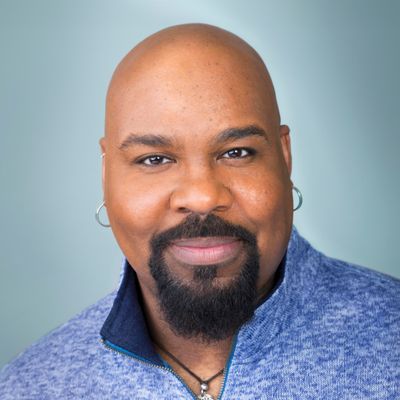
An intimate conversation with James Monroe Iglehart on his journey to becoming a Broadway actor and star, and what he is doing now. From accepting the Tony Award for his role in Aladdin and playing the role of Billy Flynn in Chicago to performing the voices of many wonderful cartoon characters... Read More
From the show: The Black Business of Broadway
Guests
Featured Shows

About
An intimate conversation with James Monroe Iglehart on his journey to becoming a Broadway actor and star, and what he is doing now. From accepting the Tony Award for his role in Aladdin and playing the role of Billy Flynn in Chicago to performing the voices of many wonderful cartoon characters.
Transcript
This transcript was automatically generated and might contain errors.
[0:00] Gennean Scott: Go for it.
[0:01] Gennean Scott: Don't let anybody tell you that you can't do it.
[0:04] Gennean Scott: This thing is a blank page for you now.
[0:07] Gennean Scott: You have got groups of legends who are putting together things in places so that you won't have to go through this.
[0:14] Gennean Scott: So you need to know how to read a contract.
[0:16] Gennean Scott: Don't just let your agent read a contract.
[0:18] Gennean Scott: You need to know how much you are worth.
[0:24] Gennean Scott: Welcome to the Black Business of Broadway, a podcast brought to you by the Broadway League and Black to Broadway.
[0:31] Gennean Scott: Here we highlight the stories, how-to's, and successes of the Black professionals and legends of Broadway.
[0:38] Gennean Scott: I am your host, Gennean Scott.
[0:43] Gennean Scott: I want to welcome our guest who needs no introduction because when he opens his mouth, you will instantly know who he is.
[0:51] Gennean Scott: He is the Tony Award-winning best featured actor for his role as Jeannie in Disney's Aladdin.
[0:58] Gennean Scott: And now he has taken on the role of Billy Flynn in the legendary production of Chicago, the one and only James Monroe Iglehart.
[1:10] James Monroe Iglehart: Perfect.
[1:10] James Monroe Iglehart: Well said.
[1:11] James Monroe Iglehart: Yes, long eye.
[1:12] James Monroe Iglehart: Well done, Gennean.
[1:13] James Monroe Iglehart: Yes.
[1:14] James Monroe Iglehart: Yay!
[1:14] James Monroe Iglehart: Hooked on Phonics worked for me.
[1:16] James Monroe Iglehart: Hey, girl, listen, I am good.
[1:18] James Monroe Iglehart: You know what I'm saying?
[1:19] James Monroe Iglehart: Well, thank you for joining me today.
[1:21] James Monroe Iglehart: It is a pleasure.
[1:22] James Monroe Iglehart: It is a pleasure to have you.
[1:24] Gennean Scott: So, James, I want to unpack your track to Broadway.
[1:28] Gennean Scott: But first, before I do that, okay.
[1:30] Gennean Scott: I want to tell the audience to go watch your speech on YouTube.
[1:35] Gennean Scott: Your Tony speech.
[1:37] Gennean Scott: Because, wait, wait, wait.
[1:39] Gennean Scott: Because that praise break at the end.
[1:41] Gennean Scott: Okay, it had me want to get my tambourine and start speaking in tongues.
[1:48] Gennean Scott: You had every mother of every church shouting with you.
[1:53] James Monroe Iglehart: The fun part is I have a homeboy of mine who I've known for too many years.
[1:58] James Monroe Iglehart: He was in my wedding.
[1:59] James Monroe Iglehart: His name is Tyler Merritt.
[2:00] James Monroe Iglehart: He is an author.
[2:01] James Monroe Iglehart: I'll do a little plug for his book.
[2:03] James Monroe Iglehart: He has a wonderful book called I Take My Coffee Black.
[2:05] James Monroe Iglehart: It's amazing.
[2:06] James Monroe Iglehart: It's about being a Black actor, Christian, as well as a musical theater person in America.
[2:12] James Monroe Iglehart: And you know, he wrote this book.
[2:13] James Monroe Iglehart: It's fantastic.
[2:13] James Monroe Iglehart: Go out, check it out.
[2:14] James Monroe Iglehart: And the audiobook, we're both on it.
[2:15] James Monroe Iglehart: It's great.
[2:16] James Monroe Iglehart: You'll have a great time.
[2:16] James Monroe Iglehart: I just sold this stuff.
[2:17] James Monroe Iglehart: He should be happy.
[2:18] James Monroe Iglehart: But when I got nominated for the Drama Desk Award and also for the Tony Award, he calls me up and he says, "Listen, man, you need this. There's a—I hate that it's called coding, but it is."
[2:30] James Monroe Iglehart: It's like my father used to say, you have to talk to the teachers one way and the brothers in the street another way.
[2:35] James Monroe Iglehart: So he calls me up and he goes from his author voice to his homeboy voice, and he goes, "Look, man, you might win, so you really have to have something interesting to do."
[2:46] James Monroe Iglehart: And so we get to the Drama Desk Awards, and I don't have a speech.
[2:49] James Monroe Iglehart: And so they announce my name.
[2:51] James Monroe Iglehart: I get up and I talk and I say thank you to my wife, to God, blah blah blah.
[2:54] James Monroe Iglehart: I do the whole spiel.
[2:55] James Monroe Iglehart: And then he looks at me and says, "Dude, you're gonna have to do something interesting at the Tonys."
[3:00] James Monroe Iglehart: And I said, "Again, this is Tony. I'm not winning a Tony, it's not happening. I'm not preparing anything."
[3:07] James Monroe Iglehart: So I prepared, I said, "Okay, I'm gonna thank these people, and that's it."
[3:11] James Monroe Iglehart: We get up there, and it's a long day.
[3:15] James Monroe Iglehart: You know, they're early, early in the morning.
[3:17] James Monroe Iglehart: We have to go back and do a matinee.
[3:18] James Monroe Iglehart: We take all the makeup off, put your suit on, go on the red carpet, do all the stuff.
[3:21] James Monroe Iglehart: Think I'm gonna sit my wife, don't get to grow backstage, do the song, blah blah blah.
[3:25] James Monroe Iglehart: Then all of a sudden we get to the category.
[3:26] James Monroe Iglehart: When I sit back down, it's my category the minute I get back from performing.
[3:30] James Monroe Iglehart: They call my name and it's a slow-motion moment.
[3:33] James Monroe Iglehart: I'm stealing a line from Robin Williams.
[3:34] James Monroe Iglehart: They said, "What was it like when you won the Oscar?"
[3:36] James Monroe Iglehart: It is a slow-motion moment.
[3:37] James Monroe Iglehart: Everything's going really, really fast, really slow.
[3:39] James Monroe Iglehart: As I'm walking up, I look at my wife, who I've been married to now for 20 years.
[3:44] James Monroe Iglehart: But at that time, it was like around 15.
[3:47] James Monroe Iglehart: If my counting is right.
[3:50] James Monroe Iglehart: So 15 years, knowing her from high school, of her looking at me and saying, "Is this really what you want to do?"
[3:55] James Monroe Iglehart: I say, "Yes."
[3:56] James Monroe Iglehart: She said, "Great, I'll get a real job so you can do that."
[3:58] James Monroe Iglehart: I'm looking at that.
[3:59] James Monroe Iglehart: I'm looking at the fact that I am in Radio City Music Hall.
[4:02] James Monroe Iglehart: And I'm looking at the first time I was in Radio City Music Hall was in 2010 when Memphis won the Tony, and we weren't even allowed to sit in the audience.
[4:08] James Monroe Iglehart: And then I'm looking out in the audience, and there is Audra McDonald and there is Norm Lewis.
[4:12] James Monroe Iglehart: And I'm looking at Thomas Schumacher, who not only is my boss, but I have watched on DVD extras of Disney movies all of my life.
[4:19] James Monroe Iglehart: And I'm looking at my boy Josh Henry, who we came up together doing this business.
[4:23] James Monroe Iglehart: And I look all around and I begin to think about my mom saying, "Keep God first in your life when you're doing anything."
[4:30] James Monroe Iglehart: And I go to tell everybody what's going on.
[4:33] James Monroe Iglehart: And there's a moment I used to hear in church where they would say, "There's a moment where you just can't have words anymore."
[4:42] James Monroe Iglehart: And it wasn't planned.
[4:43] James Monroe Iglehart: And there's this quick story about that.
[4:45] James Monroe Iglehart: I just had to give a praise shout.
[4:48] James Monroe Iglehart: There was nothing else I could do.
[4:50] James Monroe Iglehart: And what I did not expect was for half of the audience to stand up and praise with me.
[4:58] James Monroe Iglehart: And I looked, and you could see all of the African Americans on Broadway and in the community were up on their feet.
[5:05] James Monroe Iglehart: I get backstage.
[5:06] James Monroe Iglehart: I became friends with Zachary Levi that night because Zachary is a believer.
[5:11] James Monroe Iglehart: I get backstage.
[5:12] James Monroe Iglehart: People are like, the brother who takes me off with my award, he's like, "Say, man, you know, I didn't expect anybody to do that. You know, I go to this church, so and so."
[5:18] James Monroe Iglehart: And then all of a sudden at the end, Jessie Mueller thanks God.
[5:21] James Monroe Iglehart: It's one of those moments.
[5:22] James Monroe Iglehart: And then all of a sudden, as the next week, this lady from some southern place, this southern white lady comes up and she says, "I wasn't gonna see Aladdin. And then I saw you praise, and I told my husband we had to buy tickets because if that man is there, we have to go support the show."
[5:37] James Monroe Iglehart: It was an amazing, amazing moment.
[5:39] James Monroe Iglehart: And then there was a kid who came up to me and was like, "Do that little dance thing you did at the Tonys," and I had to explain.
[5:45] James Monroe Iglehart: I was like, "That's not a thing."
[5:47] James Monroe Iglehart: I said, "That is a moment of joy, that is a moment of inspiration, moment of being touched by the spirit, and you just go, this is what it is, and you can't manufacture that."
[5:56] Gennean Scott: So you saying that, I did not expect it to be a thing.
[6:02] Gennean Scott: I didn't expect it.
[6:03] Gennean Scott: But then again, someone said, "Dude, you do realize you shouted on the Tonys."
[6:08] Gennean Scott: It was the blackest moment ever.
[6:10] James Monroe Iglehart: Somebody said, I was like, you know, I didn't think about it. You don't, you know, when realness comes, you don't think about the time, but I was like, "Yeah, I guess it is."
[6:17] James Monroe Iglehart: Oh, okay.
[6:19] Gennean Scott: But that's what happened.
[6:20] Gennean Scott: In your speech in 2014, when you won the Tonys, during your speech, you said that you mentioned you prayed for this moment.
[6:28] James Monroe Iglehart: Yes.
[6:28] Gennean Scott: Since you were 17 years old.
[6:31] Gennean Scott: Can you tell us how did you know that this is what you were meant to do?
[6:36] James Monroe Iglehart: I knew this was what I was meant to do when I had my first solo in the Sunshine Choir when I was four years old.
[6:42] James Monroe Iglehart: My mom was a singer in church, and my dad was an actor in the 1970s.
[6:46] James Monroe Iglehart: If you Google James Iglehart, you'll see a lot of me.
[6:50] James Monroe Iglehart: But every now and then you'll see a really, really buff, light-skinned brother with an Afro, and that's my father.
[6:54] James Monroe Iglehart: And that's what I had in the house.
[6:56] James Monroe Iglehart: I had performers in the house.
[6:57] James Monroe Iglehart: And so the first time I sang a solo and the people applauded, my brain went, "Well, I don't know what the hell this is, but whatever it is, I want to hear this for the rest of my life."
[7:07] James Monroe Iglehart: So I knew then that I wanted to be a performer.
[7:07] James Monroe Iglehart: I wanted to be in front of people and do this.
[7:12] James Monroe Iglehart: So this is all I wanted to pursue.
[7:14] James Monroe Iglehart: But when I got serious when I got to be a teenager, that this musical theater thing was, you know, I think where I wanted to go.
[7:22] James Monroe Iglehart: And I started watching, you know, I watched the Tonys, you know, just as a thing.
[7:26] James Monroe Iglehart: But as I got into show choir when I was 16, I started really watching the Broadway stuff.
[7:30] James Monroe Iglehart: I always went to Broadway.
[7:31] James Monroe Iglehart: I shouldn't say I never went to Broadway; I was from California, but I always went to all the tours, all the touring that came.
[7:35] James Monroe Iglehart: So I always saw that.
[7:37] James Monroe Iglehart: But when I finally started watching the Tonys, I was like, "This is cool. I like this."
[7:41] James Monroe Iglehart: And I want to be there someday.
[7:45] James Monroe Iglehart: I distinctly remember watching Chuck Cooper win for The Life, and I was like, "Okay, I want to do that."
[7:53] James Monroe Iglehart: And then I found out that one of my heroes, Ted Ross, who's the original lion in The Wiz, won the same award.
[7:59] James Monroe Iglehart: And I was like, "Okay, so that's where I need to be."
[8:03] James Monroe Iglehart: Because if these brothers are doing it, then I want to do that.
[8:05] James Monroe Iglehart: So that's what I meant by I prayed for because I kept saying at the time, you know, when you're a teenager, you think you know exactly where you want to be.
[8:14] James Monroe Iglehart: And that was the pinnacle, you know, being on the Tony Awards was the pinnacle.
[8:18] James Monroe Iglehart: Being on Broadway was the pinnacle.
[8:20] James Monroe Iglehart: That was it.
[8:20] James Monroe Iglehart: And so you had to get there.
[8:21] James Monroe Iglehart: So all your drive, everything.
[8:23] James Monroe Iglehart: My friends were like, "Let's go out to a party."
[8:25] James Monroe Iglehart: No, I must get to Broadway.
[8:26] James Monroe Iglehart: It's like, "Dude, you are in Hayward, California. You are so far. We can at least go get ice cream."
[8:30] James Monroe Iglehart: Why are you hustling at nine o'clock at night?
[8:34] James Monroe Iglehart: What's wrong?
[8:34] James Monroe Iglehart: What you doing?
[8:36] Gennean Scott: Really so I was on the grind and that wasn't even working.
[8:40] Gennean Scott: At 16, you joined Show Choir.
[8:42] James Monroe Iglehart: Yeah.
[8:44] Gennean Scott: As a—I'm assuming you were still pretty tall.
[8:48] James Monroe Iglehart: Yeah.
[8:48] James Monroe Iglehart: You have some size.
[8:50] Gennean Scott: And as a big Black man, yeah.
[8:53] Gennean Scott: In Show Choir.
[8:54] Gennean Scott: How did your peers receive you?
[8:57] James Monroe Iglehart: Um, my white peers had no problem.
[8:59] James Monroe Iglehart: Okay.
[9:00] James Monroe Iglehart: My brothers had interesting views.
[9:03] James Monroe Iglehart: Uh-huh.
[9:04] James Monroe Iglehart: But I was always that Black kid that always had interesting views from other African American men.
[9:14] James Monroe Iglehart: My father was very strict on how we spoke and how we acted.
[9:19] James Monroe Iglehart: My grandmother used to jump on my mother for putting us in granimal outfits.
[9:23] James Monroe Iglehart: We had to dress a certain way, look a certain way, be a certain way, talk.
[9:26] James Monroe Iglehart: We were Iglehart, and we had to be a certain way, regardless of how ratchet the family might be on the inside, but on the outside, we had to be a certain way when we spoke to people.
[9:36] James Monroe Iglehart: And so you go to when you're in a Christian school, private school, it's fine.
[9:40] James Monroe Iglehart: Then my father put me to public school, and the brothers are like, "Why you talk that way? Why you talk white? Why you do that? Why you sing that white music?"
[9:47] James Monroe Iglehart: And I had to explain it to them two ways.
[9:50] James Monroe Iglehart: I said, "One, guys, I like this music. You know, you have to admit it, because you can't lie, but also I explained it in a way that they would understand and it kind of shut them up."
[9:59] James Monroe Iglehart: I said, "Guys, listen, man, I could be in a bus full of dudes playing football and in basketball and baseball.
[10:08] James Monroe Iglehart: Or I could be in a bus while you guys are all by yourself.
[10:14] James Monroe Iglehart: I am surrounded by gorgeous women who want to sing and want to dance with me and want me to throw them in the air.
[10:20] James Monroe Iglehart: Now, who of us is the smart one?
[10:23] Gennean Scott: And I'm sure they were quiet.
[10:24] James Monroe Iglehart: Oh, they were real mad.
[10:26] James Monroe Iglehart: They were like, "How wait, you mean girls?"
[10:28] James Monroe Iglehart: Let's put it this way: three of the brothers that were dissing me joined Show Choir.
[10:32] James Monroe Iglehart: That's all I got to say.
[10:33] Gennean Scott: Well, there you go.
[10:34] Gennean Scott: You were a recruiter.
[10:35] James Monroe Iglehart: I was like, "Bruh, I am in here by myself."
[10:38] James Monroe Iglehart: I told the show choir teacher I didn't want to do it anymore because my mom was a school teacher, and I was like, "I'm not gonna do that."
[10:42] James Monroe Iglehart: And then I went to a winter concert and saw this kid sing, and all the girls started screaming.
[10:45] James Monroe Iglehart: I was like, "Oh, come on, I can do that."
[10:50] James Monroe Iglehart: I'm a teenage boy.
[10:51] James Monroe Iglehart: That was my motivation.
[10:52] James Monroe Iglehart: The girls are screaming, sure, I'll be there.
[10:54] Gennean Scott: Exactly.
[10:55] Gennean Scott: So who would you say knowingly or unknowingly encouraged you or inspired you along the way?
[11:03] James Monroe Iglehart: Oh, definitely my mom and my dad.
[11:06] James Monroe Iglehart: They were never ever the parents who said you shouldn't do this.
[11:10] James Monroe Iglehart: They were definitely the parents who said, "You can, you will be great," but they were totally honest.
[11:16] James Monroe Iglehart: They were like, "You are going to get knocked down, you are going to hear no, there are going to be teachers that don't like you, students that don't like you, Black people that don't like you, white people that don't like you."
[11:27] James Monroe Iglehart: You're going into a business where everything is literally up against you, but you are talented, and if this is what you want to do, go do it.
[11:35] James Monroe Iglehart: And if you don't want to do it, don't.
[11:38] James Monroe Iglehart: But my father was, you know, he and my mom were so strong on the look, whatever you do, you do to the best of your ability.
[11:44] James Monroe Iglehart: My father used to say something really stupid: "If you're gonna be a bum, be the best bum you can be."
[11:47] James Monroe Iglehart: I'm like, "That's the dumbest thing I've ever heard."
[11:48] James Monroe Iglehart: That's the stupidest.
[11:50] James Monroe Iglehart: And it's so funny because my wife, Dawn, she always says, she goes, Look, if we're gonna do something, we're doing it. We don't half ass in this family. So that's what we tell the kids like if you're gonna do something, we're we're going all the way. So let us know because we're supporting. We don't want to hear nothing if we're going. So that's what it was. It was really just I really want to do this, and they were so supportive with me about this. And I had a couple of, I had a dear friend of mine, um, his name is John Long at the time. He was my first like real best friend. And he told me one time, he was four years old, three years older than me. And he was like, dude, you know you have talent, so why not just go for it?
Why why are you waiting? Who are you waiting on? Because I wanted to be a you know, a new addition. He was like, Why are you waiting for? He's like, Why are you waiting for a group? Just be solo. I'm like, Yeah, but you know, even Bobby Brown has backup dances. He was like, Yeah, but you don't have that kind of you know, money right now, so just go be solo and see what happens. And you know, so between my parents and him and this beautiful crazy girl named Dawn, who eventually became my wife, who I met in Show Choir. Oh, wow. Yeah, I met her the first day uh when I was when I was going to to to my new high school. Uh she was also so between those four people, those was this that was my support system to do to do this.
[13:03] James Monroe Iglehart: And so your career started in Broadway in 2006 with the 25th annual Putnam. Yes, yes. But okay, so prior to that though, there were there had to be some moments where you started Oh, yeah. Uh so how do how did you keep that mental fortitude to keep saying, I'm gonna make it to Broadway, I'm gonna be here. My ego, my ego of uh, you know, there's a moment where you have to let this go, but it is a motivator. I was gonna show them, whoever them are. I was gonna show them. All the dudes who talked mess to me, all the girls who broke up with me, all the girls who wouldn't look at me. I'm I'm gonna show them. I'm gonna go out there and I'm gonna be a star someday. And when I'm a star, they're gonna call me for tickets and I'm gonna go, no, you can't get no tickets from me.
You know what I mean? It was that motivation, it was that looking up there and going, uh, you know, you have to look at the list of people, Prince, you know, Morris Day, all these guys that I wanted to be like, you know, Bootsy Collins, George Clinton. I was looking at Ben Vereen, I was looking at Ted Ross, I was looking at Nipsey Russell, I was looking at all of these people, you know, Sammy Davis Jr. and Gregory Hines. I was looking at all these people, I was like, ah, they're all on problem. I want to be like that. And I was gunning, you know. So I was, every time I was either singing in somebody's four quartet to be voice to men, or I was, you know, dancing in somebody's show. And it just, that just pushed me.
I knew I had to be there. There wasn't another choice for me. I just all I wanted to do was be a star because I thought that was going to make me feel better about the life I had, which is a whole different story, which we may get into later. But it's I thought, I thought that being a star would make the bullies go away. I thought being a star would make the girls show up. I thought that being a star would make the financial issues that my parents had go away. I knew that if I could just be, because I didn't know anything about it. All I saw was what was on TV or what was on stage. And when you just see that, it looks so perfect. They don't have any problems. There weren't any social media for anybody to tell you, hey, I saw so-and-so doing something something, something, you know, it was just entertainment tonight, which was just perfect.
Nobody said anything. It was just Jet magazine, and it was always the front mag and everything was great. It was Ebony Magazine, it was just the beautiful, glossy moments, and nothing, no, none of those stars ever had any problems. And I knew if I could just be there, everything would be okay. So everything in my spirit was gunning towards that.
[15:41] James Monroe Iglehart: And so when you had that kind of motivation, when you just go, look, I've got no other side track. There isn't like, maybe you can, you know, people say, get another degree, you get some on the side. No, there is no fail. You've got to make it. Yeah. And then once you make it, that's when reality hits, and you start going, oh, snap. This wait, what? Adulting? I didn't adults do what? Taxes? What pay? Right. And then you realize life isn't perfect, right? Oh God, listen, that that's we'll get to that later. But that that was a crashing down moment. Right.
[16:09] Gennean Scott: Well, no, I mean, I think you know, James, you hit on something that so many of us, and when I say us, I mean black folks, deal with. I mean, even with your grandmother, I I know that exact same thing. It's like, oh, we're going Montgomery board, JC Penney. Why are you shopping at Kmart? We're not doing blue or blue light special. Call me mother, call me father. Yes. You know, what's what happens in the house stays in the house. In the house. What happens in the house, you girl, you are so right. What happens now stays in the house. No one knows that our family has problems. They don't need to know that. Don't be telling people your business. Don't be telling people your business. That's right. I mean, so I I definitely understand it. And I think many of our listeners probably understand that as well, because some of them are probably in those exact same shoes.
[16:51] James Monroe Iglehart: Yes. Right now, thinking that it's it's glossy, and it and once I make it, yes, you know. It's the and that's the thing, you know. You go, once I make it, it will be okay. And then you realize honestly, there is no making it, because if you make it, the journey's over. And then there's the word journey. That's what it is. But it takes you, you have to be older to know that it is a journey, it's not a destination. Once you get to the destination, now the fun part is I'm 47 years old and I still have to tell myself that. I still have to say, it's a journey, it's not a destination. Once the destination's over, you're dead. So keep living the journey and find new things to strive for because the journey's not over yet.
But when you're a kid, when you're 17, when you're in high school, or when you're a freshman in college and everything looks so far away. When you're in Hayward, California, and New York is literally across the country. When Hollywood is only eight hours away, but it still seems like it's light years away. All you want to do, it looks like that's the place to be. And then you realize it's not even a place. It's just, it's a job. It's a great job. It's a fantastic job. It's an it's a wonderful adventure and job that you can use to your advantage to help other folks understand what you're going through and maybe help them get to where they need to get to, but it is not a destination. And fame is not a real thing.
Fame is a moment in time for a project that you did. And if enough people like it, they'll talk about it for a little bit. And then that becomes this metaphorical drug that you keep chasing because you just want that feeling that I have I'm here. And when you're not, and you see other people are doing it. I mean, I don't know if I could have made it where I have today in my career, if there'd have been a Facebook, a social media, if there'd have been a Twitter, because I know what kind of kid I was. I was so busy looking at what other people were doing that I I gotta do it too, because they're wrong. If I had what's going on today, I think I would have drowned. I really don't know if I would have. I had to be a grown person to get my to get my ego and myself and my spirit strong enough to go, you can do this on your own without looking at what everybody else is doing. You know what I mean?
[19:11] Gennean Scott: Mm-hmm. Mm-hmm. And now look, you you have you you have quote unquote made it.
[19:18] James Monroe Iglehart: Okay. Yeah, I guess.
[19:19] Gennean Scott: I mean, I mean, like I I see your face on buses and on billboards.
[19:26] James Monroe Iglehart: Right.
[19:26] Gennean Scott: And and when I hear your voice, I know it's you.
[19:29] James Monroe Iglehart: Thank you.
[19:32] Gennean Scott: And you have, you know, you you've created this, you stepped into this iconic, you know, character, played by an iconic actor.
[19:41] James Monroe Iglehart: Yeah.
[19:42] Gennean Scott: You know, how did you, how did you approach that role of Jeannie?
[19:47] James Monroe Iglehart: That was a fun moment. Uh, I have loved Jeannie since I, again, 17 was like a milestone in my life. That's when I first saw the movie in 1992. And but when we got to the actual part of the show, all I knew was that I knew I knew I was funny, and I knew I had to bring a little bit of me to it, you know, because I had studied enough, you know, animation in Broadway to know, okay, Robin is being Robin, but he's being Robin with the volume turned up. I'm a big professional wrestling fan, like I'm a professional wrestling fan fiend. And Stone Cold Steve Austin and Dwayne The Rock Johnson both said that the characters we played in wrestling is our personalities with the volume turned up to like 20.
So I was like, okay, Jeannie has to be me with the volume turned up to about 20. But I was nervous because being an African-American male stepping into Genie, um, I had Disneyland had a Aladdin adventure, which was 45 minutes in Orlando, you know, in um in Anaheim. And they weren't ever auditioning black dudes for Genie. They were always auditioning black dudes for Jafar. And I remember my friends went to audition, and I was like, I don't want to be Jafar. There's no point in me going, because I know who I know what character I would destroy. So why would I go in for something I don't want to do? So I never went in for Disneyland, which was I'm so happy I didn't. But when this came around, they gave me the role.
Casey hired me, and I, you know, Tom Schumacher hired me, and I was like, Oh, great, I've got this. Oh no, I've got this. What do I do? And I had this fantastic conversation with of all people, Jonathan Freeman. For those who don't know who Jonathan Freeman is, Jonathan Freeman is the only um English speaking Jafar you've ever heard. So in the movie, it's Jonathan Freeman. Until two weeks ago on Broadway, Jafar was played by Jonathan Freeman. If you've been in any park, if you've heard any cartoon, if you've played any game, if it's in English, it's Jonathan Freeman. And he sat me down and he said, I said, John, I'm so glad to do this, but I'm so I'm really nervous that the audience is gonna be, you know, hate me or whatever.
And he said, Oh, you shouldn't. He goes, because you're exactly what Howard Ashman was looking for. And I said, What do you mean? He said, Well, when the film was first conceived, Jeannie was supposed to be uh like Cab Callaway Fats Waller. That's why, if you listen to the music, all of the music in Aladdin is Broadway, except for Genie stuff. It's all big band. Yeah, that's how they originally did it. And the original demos, which Alan Macon played for me, they were singing it like a Cab Callaway tune. That's what they were going for. And the film, when Disney bought the film, they bought the rights to Thief of Baghdad, which I can't think of the black man's name, it's Rex something. He was also in Cabin in the Sky.
Rex played the genie. It's a black man playing the genie in this because genies were slaves. Right. Genies were magical creatures that were slaves to the lamp. And that's why they called everybody master, and blah blah blah. So genie, so you know, you switch that when you get I dream of genie, which is white woman, blah, blah, blah. But honestly, it was Jeannie. Yeah, but the history. The history of it, Jeannie was a black man, and that was the thing. And it different places, it's different things, whatever. But in this movie, that's how they did it. And that's how Howard and Allen saw it. So once he said that to me, it I literally, I know this is gonna sound crazy, stupid, metaphorical, but the shackles were broken.
I was like, wait, he's a black man? Oh, I got this. Because I did my, I did my, you know, I did my tech quote unquote thesis on Fats Waller when I did A Miss Behaving and I studied Cap Callaway. And so I was like, this Cotton Club thing, this, I know this. So between knowing that, loving Robin Williams style, loving stand-up comedians, and being a Disney nerd, I was like, okay, this thing, I know exactly what I'm gonna do. And I said, okay, I'm gonna do this, and they're either just gonna love me or hate me. But this is what we're getting. And I did it. And when Alan didn't hate it, and when Disney didn't hate it, I'm like, the audience will see what happens.
[23:43] James Monroe Iglehart: And they let me go. And don't get me wrong, they pulled me back a couple of times. There were a couple of jokes I threw, and they were like, nope, nope, no, you can't. This is Disney. And you tap? I do not tap. Let me let me let me qualify. I tapped in the show. Oh, okay. I learned how to tap for the show. I need to say that because people be calling me like, yo, so I know you tap. I'm like, yeah, cool, hold time out. I learned to tap for the show. Um, and I can, if you know, if given time, I can learn the piece, but I am not a tapper. Like I've got friends like Jared Grimes, uh, Daniel Watts. These brothers, you know, do it, these brothers tap. I am a mover who can imitate things and look really good doing it.
So from Jeannie, you went to Freestyle Love Supreme and Hamilton. Actually, actually, I was I was in Freestyle Love Supreme before before Jeannie. Really? Yeah, I've been I've been with Freestyle Love Supreme for uh as of 2022, about 16, 17 years. Wow. When I was in Spelling Bee, uh, well, before Spelling Bee, actually, um, I met Chris Jackson, and we became really good friends. I teased Jackson because we were broke together. We were doing this horrible show in the Bay Area together, and he was he was bemoaning the fact, yo man, this in the heights thing gotta work. I got a wife, I got a baby. And I was like, yo man, this Memphis thing gotta work. I got a wife and a rent. Oh my god. And so the things worked out, and we became friends.
And then in that conversation, he was like, yo, I got this group called Freestyle Supreme, and you should join. Because we were outside freestyling, you know, just looking at the stars and just freestyle, because we had nothing better to do. We were freestyling about everything and thinking we are just dope rappers. Just you know, and that's how I, when I was in Boston for Spelling Bee, I auditioned uh along with um Utkarsh Imbekar, who is now like, you know, big time on Ghost CBS. And we joined at the same day. So I joined Freestyle Supreme in 2007, 2006, actually. Wow. And so I've been with the group. That was when I didn't have anything, when there was no job or nothing, we were on tour. We were playing colleges, we were playing malls.
Janine, when I say we were playing malls, I'm saying we were in the middle of the mall rapping about a drink that's not even around anymore. Remember Slice Cola or Space? Yes, yes, yes. They hired us to rap, and so we had to freestyle in the mall in Baltimore, and there's nothing like being in Baltimore and brothers walking by going, what are y'all doing? You know, and then we would have to be dope so they wouldn't like throw things at us. You know, it's just me and two white boys up there rapping in Baltimore, as they walk by and we are freestyling and dummies, well, they man, rap about uh corn dogs. His brother had a corn dog in his hand. And so I started flooring the corner. He was like, Oh, that was dope.
Next thing you know, more people were coming. By the time we got like half them all, security was trying to find out what we were doing. So, like, I've been with this group back before it was back before Lynn was famous. We were we were just trying to do this. So, yeah, free so the fact that the fact that Freestyle made it to Broadway, right? If you'd have told us in 2006 that Freestyle of Supreme would be on Broadway, all of us, including Lynn, including Tommy, including all those Candy Center Honor brothers, we would have laughed in your face. And the fact that we made it and it's a tour, and we have a school, and that people are trying to study and what? Right. It literally, that was a thing we did to make money when we didn't have what we thought we wanted.
And now it's one of our favorite things. If you call Freestyle Supreme, all the guys, all the family shows up, no matter what TV, no matter what movie we're doing, everybody shows up to the show. Oh, that's awesome. That's that's stuff that you did in on the bus in the school yard. No, you're busy. And we were like, they gonna pay us really? I guess so. Let's go. Well, and it prepared you for Hamilton. Yes, it did. Yeah, because there's a whole lot of fast talking there. Oh my gosh. I remember um I was a part Lynn called me and said, Hey, I got this uh this idea for the Hamilton mixtape. We're gonna do it at Lincoln Center, and I want you to play Mulligan. I said, cool. So the first Mulligan publicly was yours, truly.
So I got to be up there with some great people, John Brewer, Chris, UTK, Mandy Gonzalez, which I mean, wonderful Gavin Creole was just great. Lynn is there, and he puts out the first eight songs of the show. And then the same night, Casey Nicola was there and says, Hey, we just did Aladdin in Seattle. I think we have to do a demo for the Disney people. So when Tommy came to me and said, Hey, we're gonna finish, we're gonna go finish this journey with Hamilton. Do you want to go with us? I said, you know what, dude? I'm gonna stick with this Aladdin thing and see what happens. And he said, I totally understand that. Do your thing, you have our blessing. And I said, I know Hamilton's gonna be a hit.
We didn't know how big it was gonna be, but we knew it was gonna be a hit. So I'm in uh G I'm in Aladdin. I get a call for a free ticket to Corp. Come see, of course, the opening night because I'm a part of the Freestyle of Theme family. I'm sitting there, I see the show, and I'm like, oh damn, you know. Because honestly, we were in um we were in New Orleans doing a freestyle of Supreme uh gig for ESPN, and I got a call about Aladdin, and that's the same moment, literally behind me, Tommy Kale is asking David Diggs, I got this project called Hamilton. I think you'd be part of it. You want to be down? And Diggs goes, you know, his voice, yeah, man, sounds interesting. I'm down. Why just try it?
That was when he first introduced Diggs to the potential of being in the show. Because free, because Diggs was a part of Free Self Supreme. We were all together. So when I see it, I'm like, this is great, this is fabulous. I'm so happy for my friends. They got their thing, I got mine. Never in a million years did I think I would get a call. And then they they said, you know, Tommy calls me up one day and says, Hey, do you want to come back to the Ham fam? And I was like, Are you serious? I was like, Well, you know, I'm doing genie. I don't know if I want to do Mulligan, no disrespect to Mulligan. But he was like, No, no, no. I want you to do Jefferson Mulligan, you know, Jefferson um Lafayette.
Lafayette. And I was like, Diggs is wrong? Diggs is one of the fastest rappers, period. Like, not just in the show. Like his own music is ridiculous. So I said, like, let me think about it. And I called up Diggs. I'm like, I don't think I can do this. He was like, You can do this. They I said, I'm not you. And he was like, That's the point. Right. They want to now make it so that the care these characters are not carbon copies of everybody that started it. So they want you to bring your swagger to it. He goes, I know you can rap that fast because you do it when we're doing freestyle. We're playing around. So I stepped out on faith and did it. Never in a million years I thought it was gonna, you know, I knew it was gonna work, but I was like, I didn't know if it was gonna work as well as it did.
And I'm so glad it all worked out. But I had a great time in Hamilton and got to be there with my friends and make brand new friends. Um and uh just be a part of that history, you know, it was cool. So how do you decide what roles you you take? Um a couple things. One, I if I really feel like it'd be fun for me, will it will it be fun? Will it further my career? Um, what's the paycheck? Yes, yes. Also, um, is this something that I could sustain myself doing spiritually? And what I mean by that is like, you gotta love what you're doing. You can't hate going to work. And there was a moment where I almost said no to Hamilton because I was like, do I really want to, you know, step in after what Diggs has created?
Because it's such a it's now become this iconic thing. Can I step into it and put my own spin on it and have not the audience look at me and go, what are you trying to do? You know, but when I see a role that I think could be fun, and I I also take it as a challenge. What what scares me? Lafayette Jefferson scared me. And I said, Well, if it scares me, I go, Yeah, let's uh let's go do it, let's conquer this. And so that's that's what that's the other thing that that helps with the role. That's amazing. So let's talk about your current role for a minute. Sure. All right. Uh, you're at Chicago. You're taking on the role of Billy Flynn. What is that process like for you? You talk about making it your own.
There have been there have been several individuals who played this role. How do you make it your own? How do you make it so that it's it's you and it's not like Wayne Brady or Kyra Hall or any of the others? Uh the fun part is I know Wayne and I know Todrick. I know Wayne very well. I've known Todrick for many, many years. Um, and I also I looked at uh Billy and I said, again, it scared me. I was like, Billy's outside the the zone of what James Monroe Iglehart, the brand, if I could call it that, is known for. It is usually the you know, the big, brassy, loud talking, jumping around, flipping, you know, bright clothes, you know, doing that's that is me, really. And this is not that. And I said, Yeah, but there's a side of me that people don't know that you know, my friends know, my wife knows that that there is a Billy.
There is the business side, the side that determines when I'm gonna do the show, decide to talk to the producers, decide to talk to my agent of what I want to do and how I want to do it. And I was like, Yeah, let's just do it this way. Also, my pops was a businessman. When he left the business, he was he was uh he did financial planning and things like that. And uh the way he talked, the way he talked to white folks in the 80s, uh, I said, that's Billy Flynn for me. There is there is the loud talking, high voice James, and then there's the guy who's like, no, this is what we're doing. And when my father, when when he wanted to um discipline the kids and he didn't want anybody to know, he would get real close to our ears, and he would go, Now listen, we are in this mall.
If you do anything right now, you will definitely regret it. And then we would start crying. No one's like, Why are they crying? And he'd go, Stop crying before I give you something to cry about. And it literally was like so low that only the child heard it. And that was the deepness that I brought to Billy Flynn. That's the swagger I bring to Billy, where Billy knows he's in complete control of the situation. He knows he's the smartest person in Chicago. He knows this is not even a question of whether he's gonna win. He knows how to do it. He knows how to manipulate the audience, he knows how to manipulate the media. And that is the swagger that he has. And I was like, I know where to go with this.
And also, there's a fun part of singing in your baritone voice. You know, I do a lot of songs where I my baritones there, but I go do a tenor note here and there. Billy is just where he is. And there is something about that that is fun to me. And he's he, you know, there's not there's no gray area for Billy. Billy knows that Billy believes everything he says. There's no moment where he's lying. When he says, all I care about is love, he means it. He just, you just have to pay for it. Right. I will be there for the downtrodden person, but that downtrodden person has to have enough money to pay for me. And if you don't, nothing I can do about it. I'm gonna help the next downtrodden person with money, because I know what this is about.
And that for me, I was like, I know where to go with this. So there's a there's a definite 1980s black man swagger to it that he has that goes, because you had to be a certain way. There's even an argument I have in the show where I talk, where I say it to her in a certain dialect and then switch up when the people come in the door. And that is the who when I saw that I thought about my dad, and I was like, that's who Billy is. And yeah, you code switched. Yeah, that's that's what that's what Billy does. There's, you know, there's a especially since um, I will say this about this version of Chicago. If you were to come and see it, during the court case, there are three black people on stage, at least all the time.
The judge and Jermaine Rimbert, who plays the other lawyer, and myself. So the judge and the two lawyers, when I when we we noticed it the other day, because we were like Black History Month, we were like, has anybody thought about this?
[35:31] James Monroe Iglehart: Has this always been like this? When I came in, we were like, holy crap, the judge is Black, it's Jeff Gordy, Jermaine Rubin, and myself. We just started cracking up. We were like, okay. Yeah, and that's how we know we have far to go on Broadway, which I know we'll get to in the conversation. But when I get to this point and nobody questions, I was like, we're doing pretty good. Nobody's questioning this at all.
[35:57] Gennean Scott: So what do you do outside of Broadway? I mean, I'm sure you have a life outside of Broadway, right?
[36:04] James Monroe Iglehart: I do. My wife says I have too many jobs. My favorite thing to do is I am an animation buff. I love cartoons. I do voices for cartoons. I was the voice of a wonderful character named Lance Strongbow in the Rapunzel's Tangled Adventures on Disney Plus. I was the voice of Oscar in Vamp Arena. I've done voices on, oh gosh, now I'm, oh, I did one of my favorite cartoons growing up as a kid, the reboot of DuckTales. I am a huge, I literally have, I'm, people can't see it, but on my watch right now, there's Darkwing Duck. Oh, I see it. Yes, and I got to play Terrace Boba, who was Darkwing Duck's original villain in the '80s and '90s, played by Tim Curry, and now that was voiced by me when they did the special hour-long version of Darkwing for DuckTales.
No, I sit in this closet and I do cartoons all the time. That's what I do during the day. And there's a bunch of them coming out very soon, later this year and next year. But that's what I do. And I do crazy, my wife is in her office, and I'm in here sometimes barking like a dog, sometimes meowing like a cat. I've played an ogre, I've played a motorcycle, I've played a wizard who's afraid of magic. I do a lot of things, weird sounds in this booth. And I was that nerdy kid who knew who Mel Blanc was, who knew who Phil Harris was. Phil Harris is the voice of Baloo. You know, all those voiceover people, I knew who they were. I just loved it. And so now I get to do it as an adult. And it's literally my favorite thing, Gennean. I lose my mind in here. I have so much fun just in my own kiddie, man.
[37:50] Gennean Scott: No, it's okay. You should never grow up, right?
[37:53] James Monroe Iglehart: You should never grow up. And never be so full of self that you can't have fun, right?
[38:00] Gennean Scott: Yeah.
[38:01] James Monroe Iglehart: I think that's a main issue with people, especially you work so hard to be 18 or to be 21, so you could grow up and finally say what you want to say, that you run from your childhood. You just want to be an adult, and then you have these folks who are grown, but they've never grown up because they're just old. They've just grown old because they never got to have a chance to be a kid because they were running so hard to run away from their childhood that now here they are, and they're in their 40s or their 50s, and they don't remember anything about being a kid. So when they look at kids, they don't understand. They see a person who's 20, they don't understand, you're not in love. That's puppy love.
That ain't real. Or you don't know, you don't know what being, you don't know what hard times is. And you're like, no, no. Think about what it was like when you were a kid. Right, right. You know, think about that church person that said that mean thing to you that you still remember, that is still inside you, that you wish you could have said something, but your mama told you you couldn't because you wasn't old enough. And now don't treat that, don't treat kids like that because they may have the same scars you do.
[39:01] Exactly.
[39:02] James Monroe Iglehart: So I've always tried to grow up and not old.
[39:06] Gennean Scott: Yeah, that's that generational trauma that we really don't talk about.
[39:09] James Monroe Iglehart: Oh no, we do not talk about it. That's a whole nother podcast.
[39:14] Gennean Scott: That's a whole nother podcast, man.
[39:15] James Monroe Iglehart: But it is, but it is. It is, it really is. And the funny thing is, I've, you know, you meet other Black people, right?
[39:28] Gennean Scott: Right, yeah.
[39:29] James Monroe Iglehart: And okay, so here's a classic scenario. You're in a cast, somebody gets on the piano and starts playing something. Now, you could be Kojic, you could be Baptist, you could be Pentecostal, you could be something else, whatever, whatever, whatever. Now you all know the song. You may not know it the same way, but you all know the song. Then somebody makes a joke about a deacon and students all start laughing, and the white folks look at you and go, did you all go to the same church? You go, no. But we all had the same experiences. Now, when you have that many people, it's okay. It's all right. We're fine, we're going to be okay. And if we don't break the cycle for the younger kids, it's gonna keep on going.
[40:14] Gennean Scott: So, you know, well, and part of it, yeah, go ahead.
[40:17] James Monroe Iglehart: No, no, my mom and I have this conversation all the time. She goes, Well, I act bad. I'm like, you weren't bad, mama. It's not bad. I'm just saying that you did it because you were taught it, and I'm trying to say I'd like to do something different.
[40:27] Gennean Scott: That's exactly, exactly.
[40:29] James Monroe Iglehart: And I think part of it is that they, because of the time that they were in.
[40:34] Gennean Scott: Yes.
[40:35] James Monroe Iglehart: And they didn't want us to have to experience the things that they experienced. So we had to be 20 times better kids than any other kid. We had to look clean because otherwise we were gonna be seen as dirty and homeless and those poor Black folks, and you know, they didn't want us to be treated like that. It was a protection. I always make that joke. I was like, you know, there's that moment where you go, why do Black comedians say, you know, white kids get to do this, but we couldn't do that, and we'd got beat if we did that? And it's a funny joke, but no one looks at the root cause of why that is. The real cause is, sure, no disrespect, but that white kid could run out into the middle of the street, push over a kid, and then run back to the other side of the street.
If our parents or grandparents or great-grandparents did that, there could be dire ramifications at that. So you beat your kid before the society other could to make sure they were safe. My parents just mean, they just always owned me. I got to be better than everybody. It's like, yeah, because to them, that was the only way to make it. But in that same token, in order to be the best at what you do, you have to be better than everybody else. That's just the doggone truth. Everybody that's on Broadway worked their butts off to be the best—white, Black, Asian, male, female, binary, non-binary. They worked their butt off to be the best. That's why everybody, doesn't matter whether you're from the West End or you're from Japan, everybody wants to be on Broadway.
Because when you're on Broadway, you are the cream of the crop. Because you could be in anybody's. Listen, we may be mad at our parents, but they gave us a lifestyle and a way of working because anybody who is in this city doing what we do, whether it be in the Broadway League, doing a podcast, if you're in this city working and you're surviving, you are the best of the best. Because when they say if you can make it here, you can make it anywhere, they're not talking about the job you do. They're talking about the lifestyle you live in order to do the job you do. Because this place is hard.
[42:51] Gennean Scott: At the end of each podcast, we like to ask our guests this one final question. And it's what one piece of advice would you like to share with the Black future leaders of Broadway?
[43:09] James Monroe Iglehart: Is go for it. Go for it. Broadway has been around for many, many years. And there are shoulders that we stand on so that we can now do the things that we do today. Bert Williams, who was the first Black actor in the Ziegfeld Follies, who during a fire wasn't told that there was a fire or an emergency at the theater, and they told all the white people and he went to work, but they didn't tell him. And his picture is in the New Amsterdam Theater where Aladdin sits. You have guys like that. You have wonderful, amazing, beautiful actresses. I mean, we stand on the shoulders of Stephanie Mills. We stand on the shoulders of Tiger Haynes. We stand on the shoulders of Gregory Hines. We stand on the shoulders of Pearl Bailey, who was, you know, Hello Dolly.
We stand on the shoulders of Ben Vereen. And then those people, the people after them, stand on the shoulders, tell on their shoulders, you got your Brian Stokes Mitchell's, you got your Chuck Cooper's, you got your freaking Andre McDonald's, who has got more Tonys than anybody. That they had to see, you have LaShawn's, you have these people. You are living in a generation where you can grab a phone and make up a musical on your phone and it could go to Broadway. I say, go for it. But know your history and also know your game. This is called show business. Not show fun, not show family, not show friends. It's called show business. So when someone looks at you and says, Broadway is just a big family, that's a wonderful metaphor, and that's a wonderful thing to say at parties, and that's a wonderful thing to say at the end of the show when the producer goes, guys, we're closing our one big happy family.
No, this is show business. So when you, before you get here, know how to deal with your checkbook, know how to balance your budget, know what budget you have so you can make it in this crazy place. Go for it, but be prepared. Go for it. Don't let anybody tell you that you can't do it. This thing is a blank page for you now. You have got groups of legends who are putting together things in places so that you won't have to go through this. So you need to know how to read a contract. Don't just let your agent read a contract. You need to know how much you are worth. And you need to know whether you want to do it or not. And at this point, at this point, go for it, but don't blame anyone for why you didn't get it.
Because there are too many people working hard to put you in a place where you don't have to deal with the crap that these folks from the 2000s all the way down to the 30s had to deal with. You are in 2022. From here on, it's time for you to look at the shoulders you're standing on and see what they did and go, okay, I'm gonna go for it.
[46:38] Gennean Scott: Yes.
[46:40] James Monroe Iglehart: Thank you, James.
[46:42] Gennean Scott: Thank you. Thank you so much. And you, our listeners. You could have been doing anything else, but you chose to spend your time with me, and I am grateful. Be sure to subscribe at bpn.fm slash bbb. So you'll never miss an episode. While you're at it, tell a friend. I'm your host, Gennean Scott, and we at the Broadway League hope you enjoyed this episode of the Black Business of Broadway.
© Broadway Podcast Network, All Rights Reserved