

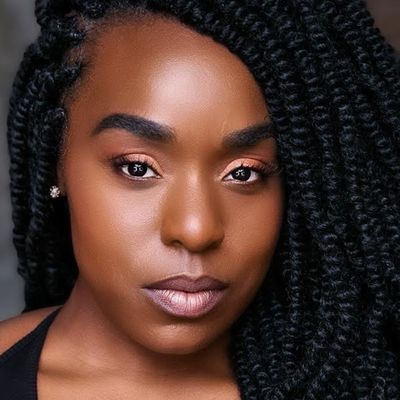
Actor, teacher, writer, and producer Maechi Aharanwa shares her experiences with the dark side, stopping the comparison game, finding mentors, pursuing the craft of teaching, and standing up for yourself in auditions. www.maechi.net... Read More
From the show: The Compass
Guests
About
Actor, teacher, writer, and producer Maechi Aharanwa shares her experiences with the dark side, stopping the comparison game, finding mentors, pursuing the craft of teaching, and standing up for yourself in auditions. www.maechi.net
Transcript
This transcript was automatically generated and might contain errors.
[0:00] Leah Walsh: Hi, and welcome to The Compass, the podcast documenting the struggles of life as an artist.
[0:05] Leah Walsh: I'm Leah Walsh. My guest today is Maechi Aharanwa.
[0:09] Leah Walsh: Maechi is a wonderful actor, a teacher. She also does some writing and producing. And she happens to be one of the amazing women from my class at Juilliard, group 38.
[0:18] Leah Walsh: So we spent four years together there as well as a lot of time over the last several years since we graduated. She's someone I've always looked up to. She's wise, she's fearless, and she's always looking for ways to grow and change.
[0:32] Leah Walsh: This episode has been a long time coming, so I'm so happy it's here. She's currently rehearsing for Winter's Tale at Theater for New Audience in New York City. So you can catch her there or check out her website, maechi.net, M-A-E-C-H-I, to keep up with what she's doing.
[0:49] Leah Walsh: Before we get started, I've been seeing a lot of plays lately, so I wanted to make a few recommendations. I saw Queens by Martina Myok and my other classmate Jessica Love from episode 70 is in the cast.
[1:00] Leah Walsh: It's an all-female cast. It's extremely powerful, and I would highly, highly recommend it. I also saw Relevance by JC Lee, who is another writer friend of ours.
[1:11] Leah Walsh: It's so smart. It's about the intersection of race and generation and feminism, and also the consequences that come from the Twitter sphere and instant judgment in our society. So I would highly recommend that as well.
[1:24] Leah Walsh: It has an amazing artistic team, too, all the designers and everyone. Here is my conversation with Maechi Aharanwa, and I hope you enjoy the 109th episode of The Compass.
[1:45] Leah Walsh: So the place that we always start is what do you do to try to keep from going to the dark side as an artist? And what does the dark side look like most often for you?
[1:59] Maechi Aharanwa: I'll start there. Most often the dark side. Because I stopped doing the thing that always carried me to the dark side. And that was comparing my journey to other people's journeys, whether they're artists or not.
[2:28] Maechi Aharanwa: So that keeps me from going to the dark side. And the things that I do and focus on to stay away from it. At this point in my life, I've learned to really accept that wherever I am is perfectly fine.
[3:11] Maechi Aharanwa: Yeah. Even though I may not feel like that. You know. Yeah, but just letting yourself be wherever you are. Yeah. Yeah, it sounds so simple, but how you went for so long without doing that? You're just trying to hide it or you're trying to pretend you're somewhere else.
[3:29] Maechi Aharanwa: Trying to be someone you're not. Yeah. Or longing for a place that either you will reach later or you may never reach and not living in the here and now. These are all things detrimental to one's life.
[3:47] Maechi Aharanwa: So I've learned. And it's exciting on this side. So when did you realize that you had to address comparing yourself to other people or other people's paths?
[4:01] Maechi Aharanwa: It's been an ongoing journey. Years and years ago, I did a show with this wonderful actress, wonderful artist, this wonderful actor named Lizanne Mitchell, and she said that comparison is a form of self-abuse.
[4:20] Maechi Aharanwa: And I always carried that statement with me. And sometimes I would use it and it would be helpful. But I think I really don't know what happened. I think constantly reminding myself of that when I got in spaces of comparison, something just snapped and sunk in and made me realize, yeah, why would you practice self-abuse?
[4:50] Maechi Aharanwa: I don't really know the time or if what else was going on around me. All I know is that I'm here now. I just think it was an ongoing process and a constant reminder, and constantly allowing different sources of positivity to affect me, and you know, that's always better.
[5:21] Maechi Aharanwa: That's always better. Anything is better than the dark place. Which all for me would have me alone in a room in a corner facing the corner. Just I've like been there. Beating myself.
[5:41] Maechi Aharanwa: Yeah. Mentally and physically sometimes just yeah. And if you step outside of that is a crazy visual. But maybe it was necessary, right? Yeah. Yeah, and I think especially as actors, it's just extremely, extremely tempting to compare yourself, even though we're all so incredibly different and unique.
[6:07] Maechi Aharanwa: Because the opportunities don't come in a predictable fashion. It's very easy to be like, well why did they get that and I didn't or what's different about me or what's I'm way better. That one always makes me laugh.
[6:27] Maechi Aharanwa: And so what scale are you using? What is the standard? How did you determine you were better than that person over there? Yeah. Yeah, Maggie, what does that even mean?
[6:40] Leah Walsh: How do you feel about the word success in relation to what we're talking about? Do you have a definition of that word that you find useful or do you find that society's definition of success is just something that's better left behind?
[7:00] Maechi Aharanwa: Definitely the latter. And what is especially interesting about being an artist is that everybody around you who is not an artist has an idea of what success is and they love to tell you and they do it in the most supportive way, you know.
[7:20] Maechi Aharanwa: I have some of my dearest friends, they just are in other fields, so they don't really get it, but they're like, You're gonna be successful because I'm not right now in their view.
[7:33] Maechi Aharanwa: A lot of people also don't know. Yeah. They don't really know what it is to be a working actor. What they do know are the Broadway stars and the movie stars and the television stars, and I don't think they realize that there are so many regular artists.
[7:58] Maechi Aharanwa: I heard or did I hear it or did I read it? You know this. One or the other. And Charlene Woodard, it was Charlene Woodard, and she said this thing about being a blue collar actor.
[8:14] Maechi Aharanwa: Uh-huh. And that resonated with me because it's what I do. I'm fortunate that I am able to work. Nobody knows who I am. So in my circles that are not full of artists, that does not look like success to them.
[8:29] Maechi Aharanwa: In my circles that are full of artists, they're like, Yes, you're working, we're so happy for you. But that also doesn't always equal success for me because I am working on a production or in whatever other capacity.
[8:56] Maechi Aharanwa: It is a part of success for me, but ultimately I do have lists. I have many, many lists.
[9:03] Leah Walsh: I know you do.
[9:04] Maechi Aharanwa: Yeah. You know, I make lists. I love a list. And I like to check these things off. As long as I'm moving forward and getting to scratch things off daily, weekly, monthly, yearly.
[9:17] Maechi Aharanwa: Uh-huh. Then I feel as if I'm successful. As long as I'm I have to be moving forward, whatever that means at the time.
[9:31] Maechi Aharanwa: Yeah, so society's idea of success, I don't even understand it. 'Cause I think that definition is applicable to a few. It's not for everyone, and it's definitely not for me.
[9:45] Maechi Aharanwa: And I don't think it's for a lot of my friends who are artists, and even the ones that are not, there are even though they might not understand what success looks like over here, they do know that for them success doesn't look the same as their neighbors.
[10:03] Leah Walsh: So I know you've done a ton of teaching in your career. Is that something you're still focusing on?
[10:07] Maechi Aharanwa: Oh, Leah, this is a good question. So I have always wanted to teach because I've always fallen in love with all of my teachers.
[10:24] Maechi Aharanwa: They hold an interesting way to put it. Yeah, they're listening. We're sitting here in the Juilliard School right now where we went to school, and there are teachers here that I still call as if though they don't have 80 students currently enrolled.
[10:42] Maechi Aharanwa: As if though I should be a priority. And the beautiful thing is that when I do call them, I always feel like a priority. I could literally cry about it right now. I'm not going to though. Well, I don't know. I don't know. We'll see where this goes.
[10:58] Maechi Aharanwa: I feel beautiful teachers. I feel so privileged to have all of these teachers in my life, and I've always wanted to be that for somebody.
[11:16] Maechi Aharanwa: What I am working with now is how do I continue my journey in acting because I love that so much, and also find the time to develop as a teacher, because I think that takes time in the same way that working as a professional actor, being able to be flexible when you're working, that takes time and it takes constant training.
[12:07] Maechi Aharanwa: Maybe just a month or two here at a time. Really a problem is that school hours where I can go observe these wonderful teachers are during rehearsal hours. When is this gonna work out?
[12:30] Leah Walsh: Right.
[12:32] Maechi Aharanwa: Can you really pursue both at the same time? Right. That's what I want to know. If there's somebody out there listening to this knows, please let me know how you manage it.
[12:46] Leah Walsh: So a lot of the teaching you've done up to this point has been a more on the short-term basis or workshops or after school things or like intensive.
[12:57] Maechi Aharanwa: Yeah. No, it really is something that I think we a lot of us picked up skill with through school or just using what we know, but I think you're right. It's its own craft.
[13:11] Maechi Aharanwa: Yes. That really takes time. I think so. Especially when I think about people who teach long term, like our teachers here who are teaching people over the course of a semester over the course of four years.
[13:26] Maechi Aharanwa: As opposed to just being the superhero who flies in for the week-long intensive and then leaves. Like that's a little more manageable to me. But then wait, I have to hold these relationships over.
[13:38] Maechi Aharanwa: I don't know. A course of a degree. And then beyond. And then beyond when we all come back knocking on your door.
[13:47] Maechi Aharanwa: With tears in our eyes saying, help me.
[13:56] Maechi Aharanwa: Help me. Do you have a lot of artistic mentors in your life? Do you feel like you've always you said you always have fallen in love with teachers, but are you someone who finds it easy to ask for help and to lately is kind of getting someone's life and have them?
[14:16] Maechi Aharanwa: Listen, I have been placing myself in people's lives lately.
[14:20] Maechi Aharanwa: It wasn't always easy because I didn't really know how those relationships happened. I would see them and I'm like, oh look at that. I want that. I didn't realize that people just actually asked. I didn't I didn't know that. How would you know? I just thought they happened. I thought or you were chosen. Yeah. You're special, you know. And I have asked I've asked two people to be a mentor to me. And when I asked them, they both said yes.
[15:08] Leah Walsh: Or were they what do you mean? Or did they just say yes?
[15:10] Maechi Aharanwa: They just said yes. So now that leaves one and I have some work to do because she's opened herself up and made herself available for whatever I need and whatever it is I want, and I need to start taking advantage of that because she's brilliant. Now you have to articulate what you were looking for.
[15:43] Leah Walsh: Yeah, I just want to be like a shadow around her while she's working and learning. And what I love about her is that her ability to say, I don't know. Let's figure this out while she's working and say after this long career she's had always point to the fact that she's still learning too I think that is a beautiful thing because when I look at her I see this extensive career this vast amount of knowledge like you must know everything meanwhile she's saying I have so much to learn there's a lesson right there right there which is what made me say I need to be around you I need to be around you because if you think you know nothing then I must know nothing.
[15:57] Maechi Aharanwa: Yeah do you have any um mentors?
[15:57] Leah Walsh: You know I don't think I have many um really active like conscientious active relationships like that right now but I have an abundance of people from my past who are I've really invested in those relationships and they've invested in me where similarly like if I I were to call them with anything um they would be there with advice.
[17:24] Maechi Aharanwa: Yeah. Whether from uh Lisa who performed Frankie Mine's wedding who you met just has been my artistic mentor since I was a kid. And like my second mom, just life stuff too. Or teachers in undergrad are here. That's an interesting thing because there are there's the whole other segment of mentors where that title isn't really put on it, but that's what they are.
[18:00] Maechi Aharanwa: Yes. In the present. That I don't have right now.
[18:03] Leah Walsh: Yes.
[18:06] Maechi Aharanwa: Yeah. And the the life mentors, though. Now those let me tell you about those. So you know how you do a show and it has an actor in it who's older. But it's not about the acting, right? It's about the dressing room chats and all the things you pick up about.
[18:28] Leah Walsh: I love being with actors, the generation ahead of me.
[18:34] Leah Walsh: But I like I like the idea of having someone who's actively kind of holding you accountable.
[18:34] Maechi Aharanwa: As well as the one I'm not focused on the one after me just yet. Um, but I I'm particularly talking about the generations uh that preceded me and just the wisdom they drop in the room. I mean you can't pay for it because you you become so close in the confines of a dressing room.
[19:01] Leah Walsh: I mean, and you're just naked literally and figuratively, and before you know it, you're sharing these deep intimacies, and there are things um my mom has never spoken to me about, but I've learned from these women.
[19:20] Maechi Aharanwa: So I'm prepared for the future stages of my life in a way that I didn't expect to be. I'm even well prepared now because they get me together. You know. Shout out to Miss Pauletta.
[19:36] Leah Walsh: That is beautiful.
[19:37] Maechi Aharanwa: And Miss Denise.
[19:41] Leah Walsh: I don't I don't know about you, but I my grandparents all passed away when I was younger. I'm not necessarily a part of like a church community or somewhere where I'm around a lot of the older generation constantly. Even though when I was younger, like since I was home educated, like I was always around peop not just like the third graders, like adults and kids of all different ages, and I I feel like I got used to that when I was younger, but now yeah, I'm not around as many people of the older generation, and I do miss that.
[20:13] Maechi Aharanwa: I I really think it matters.
[20:17] Leah Walsh: Um intergenerational connections.
[20:29] Maechi Aharanwa: And I I love and thrive on honest sharing where there's a space.
[20:43] Leah Walsh: This is why the dressing room.
[20:47] Maechi Aharanwa: I mean, how dishonest can you be when your girdle won't go up and you need help to pull it up, you know? Or when you're spending that close time together, like now everyone's on their devices so much, and you're you're not just like hanging out in the kitchen as much with people.
[21:09] Leah Walsh: No, I want some kitchen time.
[21:11] Maechi Aharanwa: Me too. Let's start a thing.
[21:14] Leah Walsh: Let's let's do it. We used to make dinner together more often.
[21:18] Maechi Aharanwa: Oh my goodness, you're roasted vegetable.
[21:22] Leah Walsh: With Sean.
[21:23] Maechi Aharanwa: Yeah. Started again. I th yeah, like a Sundays in the kitchen with something.
[21:32] Leah Walsh: I don't know. It has to have a name, you know, to be official.
[21:35] Maechi Aharanwa: And we'll invite it.
[21:38] Leah Walsh: Different people.
[21:40] Maechi Aharanwa: Every it's like that question that people always ask about like who are the four people living or dead that you would invite to a except they'll all be living.
[21:40] Leah Walsh: They'll all be living.
[21:53] Maechi Aharanwa: I can't stand that question. Cause they're I I want to know more about my family, so I think I would choose from my family.
[22:09] Leah Walsh: But the way my parents speak about their fathers, I think, wow, those are were mighty men. I would love to know them.
[22:16] Maechi Aharanwa: Yeah.
[22:22] Leah Walsh: Um, how does your family take in the fact that you chose to be an artist for your career?
[22:29] Maechi Aharanwa: I know you grew up in New York.
[22:32] Leah Walsh: Yes.
[22:32] Maechi Aharanwa: You are a New Yorker through.
[22:36] Leah Walsh: My family is actually very supportive.
[22:39] Maechi Aharanwa: And I went through this phase of not saying this was what I wanted to do. The life I wanted to pursue for a long time because I thought it was gonna be otherwise.
[22:53] Leah Walsh: I I made a after undergrad or before that?
[22:58] Maechi Aharanwa: Before.
[22:59] Leah Walsh: Before undergrad.
[23:02] Maechi Aharanwa: Because I've always known there's there was never a time where I didn't know that this was what I wanted to do. But I would say other things when asked because I thought that's what was expected of me. And then somewhere around high school time, I actually told my mom, and she was like, okay, because I wanted to go to performing arts high school. She was like, yeah, not performing arts high school, but that's wonderful. That's great. Maybe you'll study it in college. And I remember thinking, oh, I opened this. Oh, this is great.
[23:39] Leah Walsh: Um, yeah, they're very supportive.
[23:42] Maechi Aharanwa: And what's wonderful about that is every time I've been ready to throw in the towel because the journey is difficult at times, when I've wanted to give up, they've been the ones who have said, no, you need to go take a nap, you know. Go eat a cupcake, do something, but you sound very foolish right now. You're just having a hard day, a hard month, a hard year. It will be fine.
[24:14] Leah Walsh: Um, so I'm really thankful to that for that.
[24:18] Maechi Aharanwa: Um especially to my siblings, my brother and sister. They're they are very supportive.
[24:27] Leah Walsh: Is anyone else in your family creatively inclined?
[24:31] Maechi Aharanwa: You know what? I have um a couple of novels that my dad wrote.
[24:38] Leah Walsh: I do, yeah.
[24:39] Maechi Aharanwa: My dad.
[24:41] Leah Walsh: And they're good.
[24:43] Maechi Aharanwa: When did he write these?
[24:45] Leah Walsh: Before I was born.
[24:47] Maechi Aharanwa: Wow.
[24:48] Leah Walsh: Um yeah, which I didn't know for a long time that this was something I f found them, you know, going through his stuff. I don't know what I was looking for, but I was going through his stuff. And I remember sitting there and just reading this one called The Alien. I didn't know what it was gonna be, but it was about like an illegal alien. You know, I'm first generation.
[25:17] Maechi Aharanwa: Yeah.
[25:18] Leah Walsh: Um so of course he had a lot to draw from with this story, especially leaving Nigeria and ending up in Arkansas.
[25:30] Maechi Aharanwa: Oh I didn't know about that part of the story.
[25:32] Leah Walsh: Well he was in New York but he went to school in Arkansas.
[25:37] Maechi Aharanwa: Uh yeah so he wrote but he's a chemist, you know he's a chemist who used to have a printing shop back when printing shops were a thing, you know and but he had this whole other secret maybe it wasn't a secret maybe it's just something he doesn't small thing.
[25:58] Leah Walsh: It's no small thing.
[26:00] Maechi Aharanwa: Did you talk to him about it after you read it? Or did you just kind of leave it as a little secret?
[26:06] Leah Walsh: I didn't talk to him right away uh about it, but uh maybe two years ago I bought it up because I wanted to find it. I wanted to read it again now that I have more sense and 'cause I was pretty young when I read this story.
[26:25] Maechi Aharanwa: And he was so excited. And I think he has many more. I think I will be introduced to many more.
[26:33] Leah Walsh: Um but then I understood why he was so supportive.
[26:41] Maechi Aharanwa: And I think a lot of it probably has to do with he didn't follow that part of his dream. I do think he wanted to be a chemist. I think that was part of his dream. I think he had both things going for him.
[26:57] Leah Walsh: And my mom.
[27:31] Maechi Aharanwa: Yes.
[27:32] Leah Walsh: As an appreciator.
[27:34] Maechi Aharanwa: She appreciates art.
[27:36] Leah Walsh: I like appreciating it. You know what I mean? She's an appreciator.
[27:39] Maechi Aharanwa: My mom loves my mom loves the theater.
[27:45] Leah Walsh: She loves it.
[27:46] Maechi Aharanwa: She loves going. Her favorite musical is Fiddler on the Roof.
[27:53] Leah Walsh: Which makes me laugh.
[27:55] Maechi Aharanwa: I'm like, why how?
[27:58] Leah Walsh: But whatever.
[27:59] Maechi Aharanwa: Did she see it when it was on Broadway like last year or a year before?
[28:03] Leah Walsh: Uh no, I don't think so.
[28:05] Maechi Aharanwa: But then again, I don't know. Because this is the thing about my mom. She my mom is old.
[28:09] Leah Walsh: Uh she's older.
[28:11] Maechi Aharanwa: But she gets she doesn't sit down. She gets around.
[28:16] Leah Walsh: You don't know what she's up to.
[28:17] Maechi Aharanwa: I don't know what she's up to. She's more spry than I am.
[28:20] Leah Walsh: I'm like, mom, sit down somewhere.
[28:23] Maechi Aharanwa: Yeah.
[28:25] Leah Walsh: That's wonderful that they're supportive.
[28:27] Maechi Aharanwa: Yeah, they're really supportive. Um, and I'm sure it's been nice, like post grad school just to have family nearby.
[28:36] Maechi Aharanwa: Oh, yeah. Oh yeah. I mean, whose couches would I have slept on? Whose food would I have eaten? Whose shoulders would I have cried on? Well, I was gonna ask, and we don't have to talk about this if you don't want to, but kind of how you found a way between jobs or with your acting and teaching jobs to like patchwork together the financial side of your career.
[29:02] Maechi Aharanwa: Um it's helped to have that family around just for those backup fridges and couches. That art. I have done some things. Well, I um I've been running the arts education program for classical theater of Harlem for a while now.
[29:29] Leah Walsh: That's right.
[29:30] Maechi Aharanwa: Um, but it's interesting because while I think I have some goods when it comes to developing a program for the youth, um, working on the curriculum, working with teaching artists. I don't know anything about arts education in the department of education in New York City. So I'm really thankful that CTH gave me space to learn about the side of it that I don't know about as uh the rules and the guidelines.
[30:08] Leah Walsh: Yeah.
[30:10] Maechi Aharanwa: There are a lot of things to know. Um but the producing artistic director there was like, well, we can learn about it together. And I was like, oh, this is great. Thank you. I will take that job. I will I will do that. So I get to be a consultant there. Then for a while, I I a lot of I get to do a lot of coaching. There are a lot of people who love this craft as well, and they want to go to grad school or they want to go get into these wonderful undergrad programs or some summer festival or prepare for an audition.
[30:52] Maechi Aharanwa: And once I recognize that actually I'm I'm now I'm okay coach, you know. Once I and I was definitely empowered by my friends that I had worked with um a bit, just because you know you get with your friends to prep a thing, and they're like, You're good at this. I like I'm was I I I I would really really ask them, am I? They're like, Yeah, I would pay you. You would pay me? Okay, so maybe I would pay other people might pay me. Yeah. And then I took some classes, um with some people, and I really honed in on what I loved and at the same time about the way they coached, recognized that I had a completely different approach, a completely different way of working, and that I had something to offer actors who wanted a a coach.
[31:58] Maechi Aharanwa: Mm-hmm. So I could be I could join the arena with some of these other people. So that is that's another way. Yeah, and then those couches and refrigerators that belong to the family have helped as well.
[32:14] Leah Walsh: Yeah.
[32:15] Maechi Aharanwa: And this place, uh Juilliard has been wonderful in terms of creating opportunities and helping me step Okay, 'cause you know how you might know you can do a thing, but you don't really know because you haven't really done it.
[32:40] Leah Walsh: Mm-hmm.
[32:41] Maechi Aharanwa: You know, I'm not gonna hire somebody that says, I think I know how to make kitchen cabinets. I want the guy who has made some, knows what he's doing. So I tend to be hesitant about jumping in, but what's wonderful about this space is that they already know I'm hesitant and they still say, Come on, we'll help you with whatever you need.
[33:12] Maechi Aharanwa: And then I come and I'm like, Mm, I don't even need your help. But I did need to be in a space where I could fail and nobody was gonna say, Give me back every single dime, or you're not getting paid. Have you been what have you been doing here for them?
[33:28] Leah Walsh: Have you been directing or...
[33:28] Maechi Aharanwa: I when we first finished this place? Um I got to direct the MLK celebration.
[33:38] Leah Walsh: Oh, that's right.
[33:39] Maechi Aharanwa: Um, for a bit. But it most recently I've come back to do workshops with current students on a variety of things, and a lot of it um has to deal with art entrepreneurship.
[33:53] Leah Walsh: Nice.
[33:54] Maechi Aharanwa: Um, which I think is great that they are starting that conversation in the first year in all of the divisions. Uh, because that's a side of things.
[34:07] Leah Walsh: Yeah.
[34:08] Maechi Aharanwa: We need to No, I'm so glad they're starting to focus on it. And it and the way I think they are doing it, because it's still relatively new, is it's not taking away from the time you w need to, and you come here to to focus on whatever your art form is.
[34:27] Leah Walsh: I don't think it takes away from that.
[34:29] Maechi Aharanwa: Um, but maybe some of the artists coming out of here will have less of the hesitancy, hesit to they'll be less hesitant. Um in the way that I was, just because I started having that conversation a little later. I think starting it earlier is important.
[34:51] Maechi Aharanwa: Also, you know, yeah, I have an interest in directing. Let me do that. Let me fail more here. Um I have an interest in teaching. Let me fail more here. I can do these strange workshops that draw on all of the things you use in the theater, but to a different end. I can create that once I know what your need is.
[35:24] Maechi Aharanwa: And having them I think this is maybe the second or third year that they are doing it. But those are the kinds of things I've been able to come back in and do. And it's nice.
[35:40] Leah Walsh: Yeah, just having your eye I feel like when we came out there was such an emphasis on this is how it should go and you wanna get the agent and then the agent is gonna help you get this and then that's gonna lead to this.
[35:56] Maechi Aharanwa: And I wish there had been at least more of the conversation so that maybe my eyes would have been a little more receptive to what if this was the sparkle of this idea over here or this opportunity over here that didn't look like what I thought it would look like.
[36:12] Leah Walsh: I mean, look at your podcast.
[36:15] Maechi Aharanwa: No, I know, but how many years did I start that after we graduate?
[36:19] Leah Walsh: Right.
[36:20] Maechi Aharanwa: Uh I think it's great that hopefully people's minds will be, you know, looking for all the cracks right when they come out.
[36:28] Leah Walsh: Yeah.
[36:29] Maechi Aharanwa: Or while they're still in school. While they're still here.
[36:33] Leah Walsh: Um is there a lesson you've learned in the last couple of years that you're really proud of that you want to tell me about?
[36:42] Maechi Aharanwa: I am, and it is one that you taught me, actually.
[36:46] Leah Walsh: Uh oh, I might cry again. What is that?
[36:50] Maechi Aharanwa: You remember you shared this song with me, Be Kind to Yourself.
[36:55] Leah Walsh: Uh-huh.
[36:56] Maechi Aharanwa: That was something I really needed to learn. And I thank you for that. I really do because you know, we talked about it a little bit about going to the dark place, and I mean, we're all these amazing human beings with all these amazing skills, no matter what you do for a living. And somehow we find a way to diminish ourselves, make ourselves smaller.
[37:33] Maechi Aharanwa: All these different voices in your head. But that conversation has resonated with me. Be kind to yourself. And it is um in the same way the comparison thing has worked on me over the years. A constant reminder where I can sit here now and say it is something I actively practice. It didn't start that way. And I I hope everybody can be kind to themselves.
[38:09] Maechi Aharanwa: I mean, especially since there are so many people who will not be kind to you for you. You might as well be kind to yourself. But it's still something I have to teach myself over and over again. Life is uh and it's so e it's so easy, I feel like, to see in the people you care about, like to tell your friends, you know, to see how beautiful they are to you and see how hard they're being on themselves and be like, why would you ever say that you're saying you're so you're capable of anything?
[38:50] Leah Walsh: How could you I see you as this incredible person and then and then to beat yourself up?
[38:56] Maechi Aharanwa: Yeah. It's crazy. I don't I'm not sure why humans are capable of that, but we are. It is very complex, and I hope somebody cracks that code soon and dismantles that part of the code.
[39:13] Leah Walsh: Yeah.
[39:13] Maechi Aharanwa: Just turn that setting off.
[39:15] Leah Walsh: Yeah. What about you? Have you learned anything in the last year or so that or maybe it's not something newly learned, but something that's gone deeper.
[39:28] Leah Walsh: I've learned a lot of things.
[39:32] Maechi Aharanwa: What aren't they?
[39:35] Leah Walsh: I mean, I think just being a lot more honest with myself and with other people. Like you said, about where I am.
[39:40] Maechi Aharanwa: Yeah.
[39:42] Leah Walsh: Saying it and not trying to avoid it. You know, I stopped drinking in June. That was a big thing.
[39:49] Maechi Aharanwa: How's that going?
[39:50] Leah Walsh: It's good. But a a big part of that was like the final step of not avoiding what I was feeling or where I was.
[39:57] Maechi Aharanwa: Okay.
[39:58] Leah Walsh: Which was a long journey, and I had started a long time ago learning more about being honest and talking about where I was and things like that, and then that was the final step of like stop trying to numb it or turn away from it or run away from it. So that's been, yeah, a huge thing.
[40:19] Maechi Aharanwa: Oh.
[40:20] Leah Walsh: That's good. That is a good one. I want to keep learning more. More to learn. More. Thank God. Otherwise, life would be quite boring.
[40:29] Maechi Aharanwa: Um wild change of topic.
[40:33] Leah Walsh: Okay.
[40:35] Maechi Aharanwa: Can we talk a little bit about um the work you've been self-producing with your like short films and white screens and stuff?
[40:43] Leah Walsh: We can we can. If you like.
[40:45] Maechi Aharanwa: I would love to. Oh, here's the thing about that. I never have enough resources to do the thing I want to do the way I want to do it. Which means sometimes I'm wearing five hats, and then I have friends around who are learning things as we're trying to do them.
[41:07] Maechi Aharanwa: So then something always sucks about it, and I hate it when it's done, right? I'm like, oh gosh, I wasn't even acting because I was thinking about, or I wasn't doing my job as an actor because I was thinking about this other thing that was going on.
[41:27] Maechi Aharanwa: Uh how do people do this? And then my sound always sucks. Which people will you you can I it's easier for me to watch a fuzzy picture, but when the sound is bad, it's like I'm not even watching this.
[41:47] Maechi Aharanwa: So then you do all this work and then you have this sucky sound, and you just wanna go to the dark place because what little limited non existent resources you did have that you used to do this thing, in the end you still feel like it's a piece of crap, right? Well, not totally, but I'm I'm being very extreme right now. It's not that extreme.
[42:13] Maechi Aharanwa: Um but I had to realize that if I waited to have all of the resources that I needed, I would I mean, we wouldn't be having this conversation.
[42:28] Leah Walsh: You still made a thing.
[42:30] Maechi Aharanwa: The very first thing that I ever did, I did with a flip camera. Remember those?
[42:35] Leah Walsh: Yes.
[42:37] Maechi Aharanwa: They were hot for like a second. But they weren't meant to film things on, you know. It's like, let's take this cute video, friend, and have it forever. That's what it was for.
[42:50] Maechi Aharanwa: But I'm like, I'm gonna shoot a web series on these flip cams. And then my friend came along who had a nice camera. He's like, Oh, you gonna do a season two? I'll film it for you. Oh, okay, great. No sound. So the quality went up in some ways, but not in other ways. Then I had another thing I wanted to do, and I'm like, how do I do it? So I just started doing it, and eventually I will have the resources and I will get closer to the finished products I'm interested in sharing with the world. In the meantime, though, worlds will have to suffer, worlds will have to suffer um with me as I share things that are not necessarily that are I think great in some ways and lacking in others. Right. And I'm okay with that now.
When I first started, I was like, uh I'm embarrassed. Yeah. But now I'm like, you know what? This is where I am. No, and it's it puts you ahead of the twelve people who sat on the couch and thought about doing a thing and then never did. Mm-hmm. Yeah. Are you are you interested in writing your own material? Are these all kind of pushing yourself in that direction? Um, some of the stuff I have written. I I yeah, I've written some things. I've written some things the world has not seen yet that have been shot. One day I will edit those things and share them. Uh, but I do, you know what I really want to do? I'm gonna say it out loud. Okay. Which makes it real. Oh dear. I want to write a play. And here's the thing.
I was just talking about this last night with someone, and a few of my really close friends know. I really love theater, and I love a particular kind of theater. I love theater where you're in the audience and you're having a visceral response, whether you like the play or not, whether you think those actors are giving you life or you wish they would die, you're still having some kind of visceral response. I like theatrical theater. I like theater that has people leaving with extreme feelings, thoughts, and ideas that inspire conversations that go on for days. This is the kind of theater I like. Can I write something in that vein? Scares the crap out of me because I don't know. Everything that I've written has been um a short film or a web series or the you know right something that's uh a format that seems manageable seems very manageable and doesn't require this thing that I am after or that I love about the theater.
Um and sometimes when I see new plays, they don't have that, they do seem very much like a film, and I like that. You know, it's alright, but that would not be the kind of play I wanna write. I want to write something that has to be done in the theater that when people see it, they're like, how could we make this into a f is it possible? That's the thing I want to create. I don't know how I will begin.
[46:33] Leah Walsh: No, I agree. Those are the playwrights I'm thinking of in my head, are all those kinds of plays.
[46:39] Maechi Aharanwa: Yeah. Like you got a chance to do an Octoroon. Listen. Like Brandon Jacob Jenkins plays are ones that I always see, and I'm like, oh, this is a play.
[46:49] Leah Walsh: Yeah.
[46:49] Maechi Aharanwa: This is unapologetically a play.
[46:52] Leah Walsh: Exactly.
[46:54] Maechi Aharanwa: Ways I didn't know a play could be a play.
[46:57] Leah Walsh: Yeah.
[46:58] Maechi Aharanwa: Yeah.
[46:59] Leah Walsh: It's exciting that you're considering it and you're trying to.
[47:02] Maechi Aharanwa: I'm gonna make it happen. I don't know. I'm gonna call some of my playwriting friends. They're probably gonna laugh in my face. Like, they're gonna laugh. They're gonna say, can you come do this reading for me? Like, oh, you want to write a great American play? Great. Good. I've been studying for years. Good love with that. Try. I'm gonna try.
[47:26] Leah Walsh: That's great.
[47:27] Maechi Aharanwa: Yeah. And you know, my whole life is a movie, right? So I've written this movie about writing this play where I've written the play and I go to share it. See, I'm gonna have a pen name because this is how good choice. It's I'm definitely gonna have a pen name. It'll be some fantastical name. Uh, but in in this movie of my life where I've written this play, and I don't know if it's good or not, I'm gonna mail it to my friends. I'm gonna mail it. Like, dear actor, will you please read this play and give your feedback? Or I don't know. I don't know. Because you're getting two pieces of work out of this. The film about writing the play and the play. Uh, I wrote this web series that was based on a reality show or done in the format of a reality show because you know that's really original because nobody has done that.
Um, but it was called Page to Stage, and it follows this playwright who we're on her journey, and she's been chosen to be followed for this reality show. We're on her journey as she's getting this play. I mean, it's not about the play, but it's about it's really about her and her 10,000 lovers. Her 10,000 lovers and how she's seeking more, but you follow her on this journey with this play.
[49:06] Leah Walsh: I gotta find that.
[49:07] Maechi Aharanwa: That one hasn't been shot. It was written for one of my friends who uh I think is a fabulous, fierce lesbian woman. And I just I was trying to write her life, like the life I wanted her to have.
[49:25] Leah Walsh: Oh, okay.
[49:26] Maechi Aharanwa: You know, so I wrote it. Manifesting. I'm like, I need you to settle down. I need you to stop being such a ladies lady. Um, why did I start talking about this?
[49:41] Leah Walsh: What's your plays about writing a play?
[49:45] Maechi Aharanwa: Yeah. Well, now I need to write an actual play. So I'll keep you posted about that. We'll see where that goes. Are there any things that you've learned kind of since grad school that have changed the way that you audition as an actor?
[50:04] Leah Walsh: Hell yeah.
[50:05] Maechi Aharanwa: Well, I don't know if it's how you approach auditions. Yeah. I'm not sure because it's not that it wasn't a thing that was taught here, but I think when you are making that transition out of the womb, you know, things are you just working too hard. Working too hard, putting too much pressure on yourself. It's always about, or for me, I should say it was mostly about booking that job, but now I totally do the thing that they did teach us here. Oh focus on my sense of play. I want to have fun. I do focus because there are things that I'm constantly working on. And I do do that thing of picking what I am working on for this audition. And I did that when we left, but I didn't always do it once the audition was over at that time.
And I said, when we first left, when we graduated, um, at that time I didn't say this is what I want to work on so that I could use that as my assessment post audition as opposed to whether or not I got the job or so that I could have something tangible. So that I could be a working artist in the room and have a personal stake in it. That meant more to me than impressing the people behind the table. I hope that made sense.
[52:18] Leah Walsh: Yeah, I usually know exactly where I had one the other day and I was like, girl.
[52:27] Maechi Aharanwa: What are you doing? I mean it was sort of laughable.
[52:33] Leah Walsh: Yeah, I just approach it as a work session. I enjoy them. I know some people hate auditioning. Sometimes I hate auditioning on camera because I don't feel like putting on makeup. Like if I could just go to the audition. I don't need to take an hour and a half to get ready for this five-minute audition.
[52:55] Maechi Aharanwa: Exactly. If I could just go, I would um enjoy it more. But I enjoy auditioning now because I one want to enjoy it. I'm focused on the things that I consider the right things. And I'm I'm trying to have fun. And I'm like, when I'm done, I'm like, uh, yeah. That and that was I'm done. That was that. Hope you got something out of it. Bye. Bye. Deuces. See you when I see ya. If you're smart, you'll hire me. If you're not, oh well. See you the next time. You want me to audition for your play?
[53:40] Leah Walsh: Yeah, it's more fun that way.
[53:42] Maechi Aharanwa: Good for you. What about you? How are you approaching them these days?
[53:46] Leah Walsh: I'm not doing them these days because I kind of took a break to do a more steady day job thing.
[53:53] Maechi Aharanwa: Oh, that's right. You did tell me that.
[53:55] Leah Walsh: Yeah. How's that going?
[53:57] Maechi Aharanwa: It's good. I actually quit my last one. I'm about to start a new one.
[54:01] Leah Walsh: Are you excited about it?
[54:03] Maechi Aharanwa: The new one?
[54:04] Leah Walsh: Yeah.
[54:05] Maechi Aharanwa: Okay. It's still a day job. It's still a day job. But it's been okay. It's been good to have the structure. And it's actually for me, it's been good to kind of take the pressure of auditioning off for a little bit. Um, and whenever I decide to go back in, I need to get a new agent.
[54:20] Leah Walsh: Okay.
[54:21] Maechi Aharanwa: That was part of it too. Like I was able to cut the strings with kind of a toxic old relationship. Goodbye. So it felt like a weight off my shoulders. I would like to get back into it because I think I had a lot of anxiety around it, and like I'm ready to I want to go in with a sense of fun like you do.
[54:37] Leah Walsh: Yeah.
[54:37] Maechi Aharanwa: Like start a new relationship with auditioning. And it's gonna have to wait a little while.
[54:43] Leah Walsh: All right. Well, let it let it wait. It will always be here.
[54:47] Maechi Aharanwa: Yeah. The other thing about um time, even the way I used to prep my sides, I mean, I would be so just I'm gonna do everything right. Um I'm gonna get hit every there's a part of it of the work where it that is that is just there. Sorry, Becky, I didn't mean to say just. There's a part of it that is there, and you don't have to work for it because you have been working at this for so long, you know what to do. Trusting yourself and I I'm a woman now. I and I carry a lot of that into the room with me. Here I am. Deal with it.
[55:43] Leah Walsh: Yeah.
[55:44] Maechi Aharanwa: I'm not trying to be what they want you to be. No. Either you're gonna figure out this hair situation, we're gonna have a conversation about it together. You're gonna ask me a question about my hair and what it can and can't do. Or, or you know, to hell with you. Goodbye. Because that had always been a part of it too. What do I need to look like? How do I deal with it? This is here. I'm doing the work. You need to focus on that, just like I need to focus on that. Let's go.
[56:24] Leah Walsh: No, and I'm sure like certain assumptions people are making about you as a black woman, too.
[56:28] Maechi Aharanwa: Oh, yeah. I'm I'm like they have the courage to have an honest conversation if for some reason they're confused or whatever it is. Generally, or are they just judging people? I don't know what they're doing, but I know that I've not had that many honest conversations. And you know what else? It's 2018, and I started this at the end of 2017. You are not allowed to talk to me any way you want to. You are not allowed to perpetuate stereotypes in this room just because you are casting a thing and I am the actor. I will no longer be afraid to speak up for what is right in terms of how you respect the entirety of me.
[57:13] Maechi Aharanwa: I don't give two shits if you call me back in for an audition. And that has nothing to do with me. If you can't separate my artistry from that statement about humanity, then good night, goodbye. You know, I to God bless my manager, because I've called him like I'm never going in that office again. And he's like, wait a minute, wait a minute, wait a minute now. They just called. Do you have a callback? I'm like, oh, I do. One more time. Wait, okay, okay, okay. So me saying that thing, and this is the great side of it. What I've learned is that people are receptive to it. So all these years, or all the years where I was silent in fear of not being called back in for subsequent auditions or even for that particular project.
And they were polite about it. They just didn't know, and nobody has ever said anything. You know what I mean? So there's a whole other level of taking responsibility for where I want to see the world go with my artistry, and part of it is speaking up. And we're seeing that in so many ways. Um, but that is a personal way that I had I had needed to speak up. And once I get comfortable in a space, I've always been able to do it. But you know, with the way we audition, it's not like you're creating these dynamic relationships. You see some casting directors twice a year. No, I mean sometimes there's a hi, how are you? Sometimes there's nothing. Sometimes it's a conversation. The new per new person in the office that you're not even familiar with. Um but yeah, I'm I'm excited that when I have spoken up and Leah, you know me, I will admit that I've had to learn different ways to speak up.
[59:15] Leah Walsh: I was gonna say I've never seen you as somebody who's had a problem speaking up.
[59:19] Maechi Aharanwa: Well, yeah, you know, you went in the audition room, is different. It's a different thing. You know you know, it's the same way. Um, I laugh. I laugh. You know, we would when we were in school, there are things that would happen in the dressing room that the rest of the community would never see. All kinds of breakdowns and you know, and then you walk out like every day. Everything is great. Whatever. Yeah. Sorry, table. You walk out, everything is great, and there are things that happen in audition rooms that I mean, I think about all the times I didn't speak up. There's there's a power imbalance. Or at least you can allow yourself to feel that way for a long time.
[01:00:06] Leah Walsh: Yes.
[01:00:06] Maechi Aharanwa: And I I you know the casting directors always talk about we want you to win, we want you to do well, and da-da-da-da-da-da-da. And I totally believe them. However, in the actor mind, no matter how much they have said this, I've yeah, it's still your deciding about my future. Yeah, so I've given, but now I'm also listening to that part of the thing that they are saying. We want you to win. I believe. We want you to be the one so I can stop working on this project. We don't want to see 50,000 more actors. We want to be done. Yeah. That is exciting.
[01:00:44] Leah Walsh: What made you, you know, consciously make that decision?
[01:00:50] Maechi Aharanwa: Oh, people talk to you like you're not an artist enough. And literally are in the room perpetuating stereotypes that have nothing to do with the work on the page. You know, at a certain point, your system just rejects it. And the time that I am talking about where I actually had gotten a call, but my system rejected it, and I didn't say it, I didn't gather the thought and then share it. It came out how it came out, because I was disgusted and I was annoyed, and I felt belittled, and I felt like they weren't looking at me. I don't know what the hell they were looking at. That's how I felt. That was not their intention. Um but that's that's what happened. And you have to be careful with the language that you're using.
Not everybody feels that way or cares because people don't people then reduce it to you want me to be politically correct. And it's like, no, I just want you to respect me. I don't know about political correctness or not. I want you to respect me. Um yeah, I my system just couldn't take it anymore. It just can't. Yeah. I'm not. It's 2018. It's 2018. I'm not. And I'm an artist, and I can do this job, and I think you can do your job, and I think we should do it in a whole space, in a space that allows both of us to be whole. Your language doesn't have to be demeaning. And no, you don't get to say certain things, you just don't. And you don't get to reduce me to whatever you feel like reducing me to. Um reduction. Cause that starts to feel like degradation. Yeah. Which starts to feel like humiliation. Which starts to feel like all the Asians that we don't want around us. You know.
[01:03:22] Leah Walsh: Thanks, Lisa. Inspiring. This is really inspiring that you started this podcast. I'm loving having this conversation with you. How many episodes are you on now?
[01:03:34] Maechi Aharanwa: One million eight.
[01:03:36] Leah Walsh: Whew.
[01:03:37] Maechi Aharanwa: Yeah.
[01:03:39] Leah Walsh: Girl, you are doing the work.
[01:03:43] Maechi Aharanwa: I like it. I feel like an anthropologist, you know.
[01:03:46] Leah Walsh: Yeah.
[01:03:48] Maechi Aharanwa: I listen to some of them, and I don't get to listen to them, you know, straight through. I have I pick it up in pieces, and then some days I'm like, I don't want to continue with that one right now. I want to go here. And then I'll come back to this uh at another time. And I quite like it. I I quite like the conversations you have. I think I think they're easy in a way.
[01:04:13] Leah Walsh: It's good.
[01:04:14] Maechi Aharanwa: Thank you. How long do you plan on continuing?
[01:04:19] Leah Walsh: Um, I'm not sure. I'm just I'm gonna keep going. It's gonna it's kind of become like a a practice for me. And so it's gotten harder this year with the day job. It's gotten harder to pull it together every week and to always feel like I have the energy left over to do it. Yeah, but it feels good to hold myself to that standard of like I'm putting something out into the world every week. Whether I like it or not, I'm gonna do it. Since I'm taking a break from auditioning and doing that type, although I'm ready to do another play, peers, friends. Especially if you have a Shakespeare player you're doing. I need to do a play that rehearses at night. Call me. Um it's been a great artistic touchstone.
Cause I can spend all this time in this other world at an office where they don't know me. I'm only using parts of myself. And then I meet up with an artist who I respect and I get to have this non-small talk conversation for an hour or so and it just changes my whole week.
[01:05:31] Maechi Aharanwa: That's good. You know?
[01:05:32] Leah Walsh: Yeah.
[01:05:34] Maechi Aharanwa: And I hope other people feel that way listening to it. Um really nice. Has being on Playbill expanded your audience?
[01:05:44] Leah Walsh: Yeah.
[01:05:45] Maechi Aharanwa: Yeah, for sure. I need to I need to make like the next move now, but um yeah, it's been really good for it.
[01:05:51] Leah Walsh: Okay, good. I'm glad.
[01:05:52] Maechi Aharanwa: And it's really nice when you get those emails from people you don't know who found it somehow through a friend of a friend or through Playbill and have feel a connection to it or less alone because of it. It's been really special. So when you are having a day where you feel like you're uninspired or you're like losing steam artistically, are there any concrete things that you reach for again and again, like a certain book that you reread or a place that you go or music you listen to or something like that?
[01:06:23] Maechi Aharanwa: I call my friends.
[01:06:25] Leah Walsh: Yeah.
[01:06:26] Maechi Aharanwa: I'm I need that connection. Um because I think uh my own voices couldn't be loud, but my friends' voices are louder. Um I do there's the music, there are I try to not stay by myself. So while the music is helpful or reading a certain thing is helpful, or it's that those are still solitary or can be solitary. For me personally, it's better for me to go out and connect and do that thing we talked about at the beginning, share where I am and see what comes back to me that I can grab a hold to. And yeah, I also pray. And then the last question is have you seen anything lately that you want to recommend of any art form?
[01:07:31] Maechi Aharanwa: Ooh.
[01:07:34] Maechi Aharanwa: Black Panther.
[01:07:35] Leah Walsh: Yes.
[01:07:36] Maechi Aharanwa: All day on Friday every day. Go at the listen. A joy. Um, yeah, Black Panther is amazing. That's incredible. And listen, all those black people, that is a lot, that is a huge thing. And there's this little video uh going around, and there are these two little black boys, and they're like, I'm that one, I'm that one. And that is amazing. Because representation matters, and there are still whole segments in this country, segments of people, segments of the population who have never met people who don't look like them, whether that's a black person, an Asian person, or whatever person, they've not met so their only relationship to people that uh are different than them in terms of culture and look are uh media outlets, and if that variety isn't there, it's detrimental to our society's growth.
So this is phenomenal that you have these comic book characters, superhero right. This genre that people already know that they know the structure of, and you have such variety within that one story, and you have so many layers, it is everybody go see Black Panther, go see it and the women in it. Oh my gosh. I was so happy that the women characters were so central to the plot. Mm-hmm. And they're right there, they are right there with the men. Um, which is how things kind of have to work anyway, for any of us to be here, so it's just strange that societies still treat women like they are less than. I mean, there would there's nobody else to carry you. I mean, there it's just not possible. Well, I don't know what's possible with science right now. Let me not speak too soon. It's incredible, but yeah.
[01:10:02] Leah Walsh: Anything else?
[01:10:03] Maechi Aharanwa: No, I loved being here. Thank you for having me.
[01:10:05] Leah Walsh: Thank you so much. I'm so glad this finally happened. I love you.
[01:10:07] Maechi Aharanwa: I love ya.
[01:10:20] Leah Walsh: Thank you for listening to the Compass Podcast. If you find these conversations valuable to your life as an artist and would like to support the ongoing production of The Compass, please consider becoming a patron at patreon.com slash The Compass Podcast. Pledges start at as little as one dollar a month. You'll get access to bonus content and anything you can give would be greatly appreciated. Also, if you have a moment, please rate or review in iTunes. Every little bit helps other listeners to find the podcast.
[01:10:57] Leah Walsh: Audio assistance from Nick Choxie, and a special thanks to Frankie J. Alvarez. See you next time.
© Broadway Podcast Network, All Rights Reserved