

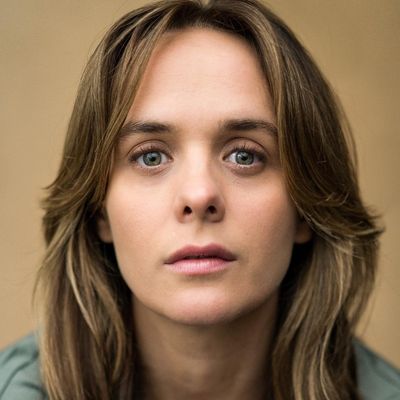
Actor Charlie Russell, currently performing in The Play That Goes Wrong on Broadway, shares her experiences with the dark side, creating work with a longterm company of artists, growing in a performance and owning your choices, the long journey The Play That Goes Wrong has taken to go from performing in a pub to running the show on Broadway, taking care of yourself during a long wrong of a very physical show, and exploring New York City... Read More
From the show: The Compass
Guests
Featured Shows

About
Actor Charlie Russell, currently performing in The Play That Goes Wrong on Broadway, shares her experiences with the dark side, creating work with a longterm company of artists, growing in a performance and owning your choices, the long journey The Play That Goes Wrong has taken to go from performing in a pub to running the show on Broadway, taking care of yourself during a long wrong of a very physical show, and exploring New York City. Check out everything Mischief Theatre is up to here: http://mischieftheatre.co.uk
Transcript
This transcript was automatically generated and might contain errors.
[0:00] Leah Walsh: Hi, and welcome to The Compass, the podcast documenting the struggles of life as an artist.
[0:05] Leah Walsh: I'm Leah Walsh. My guest today is Charlie Russell.
[0:09] Leah Walsh: Charlie is a lovely actor who I was connected with through my friend Amelia McLean, who was the guest on episode 77. Amelia is understudying The Play That Goes Wrong right now on Broadway, and Charlie is a member of Mischief Theatre, and she's been acting in the show since its creation.
[0:23] Leah Walsh: She was so kind to share her experiences with me. And I had a chance to see the show before our talk, and she's so hilarious in it. I highly recommend it.
[0:32] Leah Walsh: Uh before we get to the interview, on a personal note, I have been looking for a more full-time day job for a while now. And I finally started one in mid-May as an office manager at a digital ad agency.
[0:43] Leah Walsh: It's been pretty positive, a pretty positive experience as far as day jobs go, but I'm not really sure what I want to say about it yet. I'm still figuring out the schedule and how to balance my own creative projects and outlets with it, etc.
[0:57] Leah Walsh: etcetera. So I'm sure I'll be sharing more about the good and bad of it soon. But I've been enjoying the stability, which was the goal. With that, I hope you enjoy the 80-second episode of The Compass.
[1:27] Charlie Russell: Well, um, I suppose it also depends on what you would call the dark side, which I'm sure lots of people have discussed before. And I think, yeah, it's different for everybody. Yeah. When you're whether you're in work or not, the dark side. The dark side. Uh does sort of appear, I think.
[1:42] Charlie Russell: I find that my dark side, if I'm being honest, it comes from if I'm in a place of real self-doubt and self-criticism, which can get to a point where I'm almost immobilized. I can't make a decision.
[1:55] Charlie Russell: Yeah. You know, and I feel frozen because I haven't got the confidence to choose anything. Um so whether that's in my art, in my work, whether I can't make a choice about how I want to do that line or that speech or that scene, or it can come into um what do I want to do today for breakfast or what I'm gonna do with my life or this year, you know, where I want to go on holiday. And that kind of thing can really get in the way.
[2:27] Charlie Russell: Um I find that dark side. Yeah, self-doubt and self-criticism. So if I'm brutally honest, therapy. I just think everybody should go to therapy. Um, really. And um I would advise anybody to go. So you know, that helps a lot just to be able to talk about it.
[2:44] Charlie Russell: Yeah. Instead of just keeping it all in your head. Absolutely. And I think even if you aren't even in a particular point of crisis in your life, I'd advise anybody to go because it's a sort of going to the gym for your brain. Um it keeps it healthy and ticking over, and you're looking at it, it's like checkups all the time.
[3:03] Charlie Russell: Um my therapist will talk about, you know, a shaken can of soda, sorry, a bottle of soda, and if you open it all at once, it'll go cr might spill out and go all over everyone. Yeah. But then if you just let it out in little bits, eventually you can take the top off and be it can be maybe a flat bottle of coke, but still it'll be something dangerous. It's not dangerous.
[3:24] Charlie Russell: Um so I would advise anybody going to counselling therapy, you know, psychoanalytical or um sort of CBT type thing. Um, and then also finding uh things in your life that I have a funny feeling about positive thinking sometimes. I think it can be detrimental because it can imply that there's if you aren't positively thinking, it's all your fault, and it can kind of hurt in the long run.
[3:51] Charlie Russell: But if you can just take a moment to be grateful for little things that you do have, you can find that you just calm down, just but take yourself back to the present. And so I knit, for example. Um, and I'm not meditative. I'm dreadful, I'm absolutely dreadful.
[4:08] Charlie Russell: When did you start? I started a couple of years ago. I knitted one thing, um, a cushion cover, which went quite well, and now I'm knitting a blanket, which is going badly. I've had to unpick it so many times.
[4:19] Charlie Russell: Um, it's a much larger undertaking. Yes, it is, it is. It's a simpler pattern, but larger undertaking and thinner yarn. Um so whilst that actually causes me quite a lot of stress sometimes, um, in general, having little things I go, actually, I'm very lucky. I'm gonna sit here and knit, or I can have a cup of tea, take it one step at a time.
[4:40] Charlie Russell: You know, it's a way you deal with um you can deal with people who are having suicidal thoughts is to help them just think 60 seconds in the future or five minutes in the future rather than your life, your week. Yeah, exactly. So whilst I'm not I'm grateful not to have been had to experience anything like that, I still use it sometimes.
[5:00] Charlie Russell: I just think okay, yeah, for the next five minutes, what can I do? And it just calms you right down, and then be kind to yourself so that you can have confidence in decisions and realise as well that if you make a decision and it doesn't have the best outcome, you will also survive because I'm not a heart surgeon, so I won't actually kill anyone by doing it, you know.
[5:21] Charlie Russell: Yeah, so it's interesting with acting though, because I feel like so much is out of our control. Um, and this might actually be interesting to talk about with you since you've been working with your own company for so long but so often yeah I feel like we can think about the future and put so much pressure on things that are out of our hands.
[5:39] Charlie Russell: Like you TV audition and then it's yeah all these other people have these decisions to make that have very little to do with you. And you actually can't do anything about that. There's really but it's like you're thinking about your future next year in your life.
[5:54] Charlie Russell: Oh gosh yeah it can be completely exactly out of your control. Yeah. Well there's a book called um Happy by Darren Brown and he's a British magician and philosopher and he's a phenomenal man. He was recently um here in New York with a show and we got the very lucky enough to meet him. He's a lovely man.
[6:10] Charlie Russell: But this book is called Happy and it's a philosophy book. It it sort of draws mainly on the teachings of stoicism but it it's really amazing I advise anyone to read that alongside with some therapy as well. But it um it teaches you about that what can you control and the only things you can control are your thoughts and your actions so as long as you can be proud of those then after that there's nothing else you can do so you can sort of rest in a kind of happy place where you realize you're doing everything you can but then let go of the things you can't control and a lot easier said than done I find it very hard but yes I say it like I'm some guru I have I'm I find it very difficult.
[6:49] Charlie Russell: No some days it's easier than others I feel like the theatre company that you're doing The Play That Goes Wrong with and like how you guys all came together.
[6:59] Charlie Russell: I will hold on one second. Dave. Hi how are you? I'm Leah. This is Dave, everyone. Hello. Hello. See you in a bit um so Dave's just left.
[7:15] Charlie Russell: But he's also in the company. We're called Mischief Theatre. We formed, well, actually, Dave was one of the original founding members in 2008, I believe. A group of people had done the foundation year at drama school at Lambda and had to create this improv company.
[7:31] Charlie Russell: And I joined pretty soon after that, as did a lot of the people you'll see in The Play That Goes Wrong. And we for years worked as an improv company doing a long-form improv show called Lights Camera Improvise, which we used to, which we would do perform in London in the fringe, and then Edinburgh Fringe, and anywhere else that anyone would let us perform it.
[7:50] Charlie Russell: And then when enough people had sort of graduated from drama school or had some free time, a couple of the boys in the group got together to write this farce, this clown show, The Play That Goes Wrong. And it was actually called The Murder at Havisham Man. No, The Murder Before Christmas at the time, because it was a Christmas show.
[8:07] Charlie Russell: We did it above a pub to 12 people, four of which had paid money for tickets. And since then it's kind of grown into well, now it's on Broadway, which is wonderful, and it's a two-act show, and there's performances all over the world, and it's amazing. Mind-blowing.
[8:22] Charlie Russell: It's amazing. But the company works, um, has been working together for years, and we're all sort of friends, and so it I do have a slightly different experience, potentially to other actors, in that I have known what I was doing for the last three years, four years. I've sort of had work in the future.
[8:38] Charlie Russell: I've not I've not had that horrible vast expanse of nothingness to look forward to, which I've had previously, but not for a while, and I'm very grateful. Um so yeah, it's a very different experience, I think, to a lot of actors. Um it's a wonderful experience too to work with your friends.
[8:55] Charlie Russell: Oh, it's the best. Yeah, it's the absolute best, and also because you have input, you have a bit more control, like we were talking about earlier about the you know, having control over your destiny as an actor. We actually have artistic input and control, and we work together in the rehearsal processes are very collaborative.
[9:14] Charlie Russell: Um so whilst the writing does generally occur between uh three of the guys, Henry, Henry and John, um, it's collaborative with them in terms of development of those scripts. Yeah, do you guys use a lot of your improv experience?
[9:27] Charlie Russell: Um flashing out the script. Yeah, a little they kind of sit down and it's strange, you know. We don't use we don't use it in terms of using one of our improv exercises or like a Mike Lee thing where you don't even know where the scene's going until we've improvised it.
[9:40] Charlie Russell: It's more that because we are used to working in a very yes and environment when they have their script we go yes and and then we'll play with that. And it's sort of a bit of a joke, yes and now, isn't it? Makes me think of The American Office. But um, yeah, you you kind of are in a really great place for creating work because you're not saying no to any ideas, and then you can mine an idea and go deeper into an idea and develop it, which I think is very, very useful, and that comes I think from a lot of our improv training.
[10:09] Leah Walsh: Yeah, that's wonderful that you're all getting to still work together.
[10:13] Charlie Russell: It's amazing, and it really is truly about like company experience. Yeah, and very unlike what people normally experience, I'm very grateful for it. I think um it could means you have a family around you all the time.
[10:25] Charlie Russell: Yeah, friends, and you know, we fight like a family too, obviously. Of course, you know, your brothers and sisters fight, but then there's that true deep love that you have for each other, which you do for family, and I'm very grateful. I've always been a kind of person that looks for families where I go.
[10:40] Charlie Russell: You know, at school I had the drama club or the netball team, not that I was any good. Um or the rowing team or something, you know, and I would always find little families everywhere I went. So it's nice to have this one.
[10:52] Leah Walsh: Where did you grow up?
[10:53] Charlie Russell: Um I actually am from a military background, so my dad was in the Navy. So I've I've moved around quite a lot. I've been to a couple quite a few schools, um, which I think potentially maybe that feeds into it, you know, my desire for some sort of security and home base, yeah.
[11:07] Charlie Russell: Um but my dad now lives in a place called Bedford, which is about fifty miles north of London. It's in East Anglia, it's very nice. Um and is where I went to high school, you know, so I'd say won't I went where I went to high school and then I went to drama school in London.
[11:21] Leah Walsh: And when did you start getting into acting in high school?
[11:24] Charlie Russell: No, I'm annoying. I started doing drama when I was very, very little. Uh I'm not any had annoying.
[11:31] Charlie Russell: Oh, I'm just I was, I imagine I was highly irritating. Um Yeah, I can't imagine how annoying I must have been. But um my mum was great. She would bring me we did amateur dramatics in our local town in Cumbria called Grange Over Sands, if anyone decides to go, it's very beautiful. It's in the Lake District.
[11:47] Charlie Russell: Your mom did it too, or was it just for my mum did it, yeah. Um and so I used to come along with her, and then we did this thing, you know, pantomimes. I know they're not an American thing, but lots of people know about them.
[11:57] Charlie Russell: The Christmas show. Right. That often, if they're non-professional, they involve the community. And so I was one of the youngest kids that ever got to be in it. It was this fairy on stage and um in Pinocchio, and then there is this I was watching the video back a couple of years ago.
[12:11] Charlie Russell: And I was like, Oh, look at that. Oh, that little that little girl's not left the stage. The rest of the chorus have left the stage. It's now a scene with the baddies, and that little fairy's just, she's just, she's just doesn't leave the stage and she watches the whole scene from the stage, and all the audience are laughing, and the the other actors are patting her on the head and she has no idea, and then I realised it was me.
[12:30] Charlie Russell: It was me. Um so I always used to do that kind of thing, always wanted to do it. Um I think I would have loved to have done musicals, but was both cursed and blessed with not the strongest singing voice.
[12:43] Charlie Russell: And actually I'm kind of pleased because I think the musical theatre world is amazing, wonderful, but particularly challenging.
[12:51] Leah Walsh: Yes.
[12:52] Charlie Russell: And I feel maybe I've been given, you know, a little break, and actually I haven't had to go into that world because I would have loved it, um, but I don't know if I'd have the fortitude. I mean, even within other forms of acting.
[13:05] Charlie Russell: Oh, and there's so much, there's so many challenges and demands on the person, on the actor, and they're all amazing. I have so much respect for musical theatre performers, and I love going to musical theatre, but no, I generally just do acting and comedy, that kind of thing.
[13:18] Leah Walsh: Yeah.
[13:18] Charlie Russell: And so what does your family make of you being an actor then?
[13:23] Charlie Russell: Well, my mum has passed away, but she was extremely positive. She rang up Rada when I was seven asking if I could go, and they had to say, wait another sort of 10, 11 years. Um, she was very, very, you shared that with her though, yes. I'm very, very lucky to have had her support all throughout my life.
[13:42] Charlie Russell: And then my dad is very, very supportive, I've got to say very supportive. But he, um, he was the man in the navy, and always a lot of focus, there's always a lot of focus on the academic and the education. Fair enough, and I appreciate that. Um, but when I turned around and said, I'm not gonna take this place at university, so it's this university in London to do war studies, I'm going to do this one-year course in acting in Cambridge, and he sort of went, okay.
[14:14] Charlie Russell: But as soon as I told him that's what I wanted to do, he just went, okay, that's the new, that's what it is. I'm here and I'm 100% behind you. And um, I have this lovely memory of him coming into my bedroom one evening and sitting me down and saying there's a time where a man has to tell his father he won't go and work for the council for the local government. He wants to go and join the Navy. He said, it's your charts, it's your time to tell me this is what you have to do, and what who am I to stop here?
[14:43] Charlie Russell: So I mean he couldn't have done, it's outrageous, but um, it was very, very lovely, and he's always, he is so supportive. I'm extremely lucky, and now it's almost ridiculous, he's just so proud, and he comes. He came to New York recently um and he had tickets for the Saturday night, and I was normally have a Monday night off. But because of Memorial Day, we were actually performing on the Monday.
[15:05] Charlie Russell: So I said, oh, sorry, Dad, I'll miss you on the Monday night. And he said, okay, I mean, I could just come again. I was like, okay. That's the way my mom is doing it.
[15:13] Charlie Russell: Yeah, so I'm just a C we had a show, she always wants to see it twice.
[15:16] Leah Walsh: Yeah, isn't that lovely?
[15:17] Charlie Russell: Aren't we lucky?
[15:18] Charlie Russell: Oh, so much. And so my stepmother and my stepbrother came as well, and it was just absolutely wonderful.
[15:23] Leah Walsh: Yeah, it's great.
[15:24] Charlie Russell: That's so wonderful.
[15:25] Leah Walsh: Yeah, I'm very lucky.
[15:27] Charlie Russell: Can we talk a little bit about when the show first started and kind of the journey right to now doing it on Broadway?
[15:35] Leah Walsh: Yeah.
[15:36] Charlie Russell: Were you involved much with like the producing part of it when you were first starting and doing that?
[15:42] Charlie Russell: I won't, I don't adult or did you have to deal with, uh, much of the, I don't know what I'm, I'm not saying this very eloquently, but the fundraising and the getting on its feet, or did the other people kind of deal with that while you were just acting?
[15:56] Charlie Russell: So I don't want to overplay my role, um, but at the beginning we all had a lot to do with it because we've been doing our impro show Lights Camera Improvise in Edinburgh every year for like four or five years. We had been making money on that show in Edinburgh, which is a little bit unlike, it's not common to do.
[16:14] Charlie Russell: And we always put that money back into the company. We didn't pay ourselves. We hadn't paid ourselves for, it took us five years to pay ourselves. Um, so what that's the money we used to put on the production, which was really nice. We didn't have to do any external fundraising, um, any fundraising pages or asking the, um, certain people's parents invested, so they're our original investors, and they have, I think I believe been paid back with some interest, which is only fair, and we're very grateful for their help.
[16:44] Charlie Russell: Um, we, so it was Henry Lewis did a lot of the producing at the beginning, uh, um, with Jonathan Sayer as well and Henry Shields, who are the writers, and they dealt a lot with the old red line, which is the, um, theatre pub in Islington. And then we had people from Edinburgh coming to see us in London because our main aim at that time was to get to a venue called Pleasants in the Edinburgh Fringe.
[17:08] Charlie Russell: The Pleasants venue is a really well established and really well renowned venue, and we were desperate to get in there. We'd never been able to get in there with our impression.
[17:16] Charlie Russell: Oh, I watch you so badly. Honestly, it's just, I used, it's the best place in the world. It'll kill you. You'll die.
[17:25] Charlie Russell: The actual festival. A month and a full month.
[17:27] Charlie Russell: Well, it's a full month. Well, it's 26 days, something like that.
[17:30] Leah Walsh: Right.
[17:31] Charlie Russell: And we used to go for the full time um with one day off in the middle, so you perform seven days a week.
[17:38] Leah Walsh: Oh my god.
[17:38] Charlie Russell: You don't have a day off in the week. It's crazy. Um, but you only do one show and you go and see loads of other people's shows. Excited, and oh my gosh, it's so exciting.
[17:47] Charlie Russell: And then week three comes, which is the week of death, where everybody wants to kill themselves because they're exhausted and hungry and run out of money. And then the final week nobody cares again. It's so much fun.
[17:58] Charlie Russell: I really advise that you go, anybody go and go for longer than you think, four days minimum, I'd say, and with lots of money and with a raincoat, because it rains all the time.
[18:07] Charlie Russell: But we were desperate to go to a really good venue there, so we've been trying to get them in. Um, so we ended up performing again at the old red line in order to provide the Pleasants with a time to come and see us.
[18:18] Charlie Russell: And then we had this little transfer to we what you guys might call an off-Broadway space. So it's Trafalgar Studios is a West End theatre, but they have studio, the main studio is a West End theatre, but the studio with a little less space is a hundred seats or something, 60 seats, so that doesn't count as West End.
[18:39] Charlie Russell: Um, but it is in that area, which is amazing, and it's really well renowned as well. We were really pleased to be able to go there.
[18:45] Charlie Russell: Um, but what we would do then because it was so expensive, is that we, because our show was only an hour long, we'd perform at 7:30 and then again at nine.
[18:54] Charlie Russell: So we do two performances a day to try and make back the money. So instead of playing a hundred, uh, an audience of a hundred a day, we play 200 a day.
[19:03] Charlie Russell: Um, and then on a matinee day, we do three performances in the day with a 15-minute turnaround in between the two and the evening. It was outrageous.
[19:11] Charlie Russell: We nearly killed us all, I think, because we, um, I joined, I took a bit of time off and then came back to it because I'd had another job, but that everybody was so exhausted when I came back, and then I joined that kind of timetable and found exactly the same thing.
[19:25] Charlie Russell: Because everybody was working, I was working in a bag shop throughout the day, and then running from the shop to the theatre. Thankfully they were close to each other, um, to then do the show in the evening, then getting up in the morning.
[19:37] Charlie Russell: Dave, who you might have heard earlier, um, he would work the breakfast shift, so seven o'clock, eight o'clock in the morning at his restaurant until the early evening, and then run over and do the show.
[19:50] Leah Walsh: Yeah.
[19:51] Charlie Russell: Um, which you can only sustain for a certain amount of time. We were young and reckless, and we could do it for about maybe six weeks.
[20:00] Charlie Russell: Um, and it was worth it because what happened then was that these, um, English producers came to see us there and offered us a UK tour.
[20:09] Charlie Russell: So from then on, a lot of the production got handed over to them, the producing roles because that was actually their job, and they had the money and they knew what they were doing, and it was so exciting.
[20:19] Charlie Russell: And they took us um on a six-month number ones tour, which is sort of big venues in the UK, um, which was very fun. Again, quite exhausting, but really, really fun.
[20:31] Charlie Russell: And they then took on a lot of the difficult work. But I must say, Henry and Jonathan, particularly, and Henry Shields have always done a lot of the work and they still do, which I as a company member really appreciate because whilst Kenny Wax and Mark Benley are the best producers in the world, if you ever get a chance to work with them, do um, it's great to have someone who you know is part of your team working for you, working for the company, working for the work.
[20:57] Charlie Russell: Yeah, they're in the show. They're in, they act in the show.
[21:00] Charlie Russell: So they do a lot of that now. I would help when we went to Edinburgh, you know, I was Dave and I would do a lot of the press work. We would go to certain functions or write to the reviewers and that kind of to sort their tickets out.
[21:13] Charlie Russell: So we've all taken little roles as we can over time. Um, and now we'll do a lot of promotional things for the Broadway run.
[21:20] Charlie Russell: But after the six-month tour, just to finish the whole saga. It's a long process.
[21:24] Leah Walsh: It is long.
[21:25] Charlie Russell: It's crazy. So yeah, it went room above a pub, studio space, Edinburgh, UK tour for six months. Then we got the transfer to the West End, which way so we went to the Duchess Theatre, which is in Covent Garden, and it's still there now.
[21:40] Charlie Russell: So it's on its fourth cast. It's also since it's gone on an international tour, uh, Australia Asia Tour. It's also in a ton of other countries in another in or in non-English speaking countries or non-English speaking script.
[21:56] Leah Walsh: Yeah.
[21:56] Charlie Russell: And then now it's in Broadway. And that was a massive deal, and obviously that was helped a lot by JJ Abrams as well and Kevin McCullum.
[22:03] Charlie Russell: So JJ saw it in London off chance. On the off chance, just googled what play to see and came along, was a big fan. And Kevin McCullum um got involved, and he's a huge producer here and has been invaluable, and they brought it over with Kenny and Mark and with us, which is great.
[22:21] Leah Walsh: Yeah, that's incredible.
[22:22] Charlie Russell: It's a Cinderella story.
[22:24] Leah Walsh: It must, it's probably really annoying to hear for lots of people, but it what I hope it means is that people find hope because it can really happen when you work hard and have a bit of luck.
[22:33] Charlie Russell: Like you need some luck, but if you're making yourselves happy.
[22:46] Charlie Russell: But even if it hadn't, I'm so pleased that I've spent so much of my time on work that I enjoy and work that I'm proud of. So even if I hadn't quite made it all the way here, you know, it would never have been a waste.
[22:57] Charlie Russell: The trap you can fall into is to end game. Oh, I want a success on the West End or Broadway, so I'll try and tick everybody else's boxes. What will be commercially successful? How do I do it? And you forget the middle bit, which is a project that you like to do with a group of people who you like.
[23:17] Charlie Russell: That sees you through those days when you're working in the bag shop and then going and doing the performance at night and you're exhausted.
[23:23] Leah Walsh: When did you finally get to let go of your day job?
[23:27] Charlie Russell: It was the winter of 2013 because we were doing a production of our second show, The Peter Pan Goes Wrong, which at the Pleasants in London. And then after that I knew I was going on a six-month tour, so I handed in my notice at the bag shop.
[23:43] Charlie Russell: And I must say, I'm so lucky to have had that job. They were wonderful people, always gave me loads of support and time off auditions. I'm so grateful to them and always will be Aspinal of London if anyone's interested. Up market bag shop.
[23:55] Charlie Russell: And um, they were wonderful to me. But yeah, being able to say, um, I actually don't know when I'm coming back, if I'm coming back. And that was the last time I did a job that wasn't to do with acting.
[24:10] Leah Walsh: How exciting.
[24:11] Charlie Russell: Very exciting, really wonderful. And you know it's there if you ever have to go back.
[24:15] Leah Walsh: Oh, they probably would take me, you know, they're so nice.
[24:18] Charlie Russell: They just feel like, oh yeah, come back, that's fine. And I loved it. I really was just like, oh goodness, if excuse me, um, I really thought it's a good job I have these other things, because when you find something else that you quite like doing, that can be very tempting.
[24:32] Charlie Russell: You know, I really like working in retail. It just made me realise I probably wouldn't work in an office, but if I decide to give up acting, I'll do something with people, you know.
[24:40] Leah Walsh: Yeah.
[24:40] Charlie Russell: Retail or some sort of spa or hotel, something like that, you know.
[24:44] Leah Walsh: Right.
[24:45] Charlie Russell: Have you, do you feel like you're getting to explore New York that much? Are you just so busy and tired?
[24:52] Charlie Russell: Um, well, we're living the life, if I'm honest. We're extremely privileged position. All of us are in that. But um, I'd say we make an effort, so I try once a week to do something vaguely touristy or New York-y, and that way I'm not trying to cram it all in and because I was slightly worried about trying to cram it all in and then actually not enjoying myself.
[25:17] Leah Walsh: Yeah.
[25:17] Charlie Russell: Have you spent time in New York before?
[25:19] Charlie Russell: I've never been to New York before.
[25:20] Leah Walsh: Oh, amazing.
[25:21] Charlie Russell: And so for me, also sitting down in my apartment looking out the window and having a cup of tea is part of this experience.
[25:27] Charlie Russell: When my family members come to visit, and we sat, my auntie came and sat, she's my mum's sister, you see, so we sat on this sofa and we talked all day. And that was part of my New York experience as well, because it wouldn't have happened had I not been here because she wouldn't have come to visit just me. And it you know, it was wonderful. Um, but then also, yeah, we went up the rock for Dave's birthday, and we've been on a ferry and we've been in a helicopter and we've been to Brooklyn, up into the Bronx Zoo. Went to on a 9-11 tour and through the museum, which was extremely moving um and empowering as well. Sort of strangely felt very lucky for everyone I had around me. Love going to Bryant Park.
That's become a bit of a habit. It is beautiful. Yeah, we go and play games all the time. Yeah. And I go to the library nearly once a week. Nice. Um, so some things have become part of the norm, which is even better. And then some things are still ticking off the list. Going up the Empire State Building on Friday. Oh. Yeah. Very exciting because it's my birthday. Oh, happy birthday. Thank you. Do you know how long you'll be here? Or is it up in the air? No, we um, due to equity rules, um, we are not allowed to perform in this show for longer than a certain amount of time. So even though it's going to extend beyond us, um, and there are other actors coming in, we can't perform anymore because it's American jobs.
So um we're gonna our last performance is the 17th of September. And then we've got a few days grace, and then we have to leave the country. Get out, and then we have um Dave and I are thinking of going to Canada, crossing over the border, and then coming back in on a tourist visa to see more of America before I go home, which would be amazing. But yeah, so we know that we can't go on beyond September, which is probably a blessing because it'd be very difficult to leave. Yeah, given a choice, it's it's an amazing city, and the food is so good. Chicken tenders, it's changed my life. Chicken tenders, they don't have chicken tenders in London. Not as good. Do you know what I mean? We have great food in London? I've missed the good Indian food to be fair, but uh the the the fried chicken here is just outrageous. It's phenomenal. Blows my mind.
[27:33] Leah Walsh: So what sort of structure have you found works best to like build into your daily life to make sure you can make it through eight shows a week?
[27:42] Charlie Russell: This show is so physical. It is quite physical, yeah. Stage fighting and all this stuff, it just a lot of prep for it. A lot of energy, it looks like yeah. So uh it's a balance actually between um exercising enough that you are strong enough to do the show, but not exercising so much that you're too tired. Yeah, and I don't always manage it quite right, but I I try to. Um, so I I train twice a week with a a personal trainer. That's sort of my luxury that I've definitely afforded myself while I've been here. Also, because you know it's bagel room, do you know what I mean? You're in a bagel room. If you're gonna enjoy all the food, we need to go to the gym. Um, so I go training at least twice a week.
Um, and I'm working on strength particularly. So keeping everything all together, all my joints in place and things like that. Um and then I spend uh one time a week I I work on a project of my own. So I make sure that I I have a friend who I met through well, I met her in England, but she's from New York, and we work once a week on our own projects, but together we made a date. So we go to the library and we work separately.
[28:48] Leah Walsh: Like our writing project?
[28:49] Charlie Russell: Yeah, yeah. Um I've never written before, and it probably won't well, no, I shouldn't be so self-deprecating, but I you know it may not come to anything, but I know you're trying it. I'm trying, and I enjoy it. Yeah, some uh fictional, yeah. And um I would so I've I like I really really enjoy doing that, and I'd advise anyone to do that if they're in a company like mine to make sure you carve out I it's only two hours a week, but two hours where I work on my own thing. I mean having someone else who kind of holds you accountable, that's great.
[29:23] Charlie Russell: Yeah, and actually she's gone away, but I have to text her saying I'm doing it now, and she's like, Okay, I'm doing it now. It's very good, very helpful. Um doing all of that kind of thing, lots of sitting down and having a cup of tea. Yeah, it's very important. I've brought a mug from home and I've got English tea here and uh some English chocolate that people bring me every time they come to visit. And sometimes you need to have a little self-nurturing and mothering time where you just sit on the sofa and enjoy that. And I think that's really important because it stops you going crazy. Um, and you have to be kind to yourself. Yeah. But I'm also very lucky because the show is fun, because it's funny. It's not like it's not difficult to go up and do. Only if you're ill is it difficult. And even then the audience usually get you through because the Americans are so amazing.
[30:10] Leah Walsh: Um how has the American audiences been different than the ones you have in London?
[30:15] Charlie Russell: So um American audiences give you a standing ovation nearly every night. Now, when we first arrived, we were like, we are killing it. They are we're amazing, we're nailing it every night, and then we realize that they stand up to every performance because it's just like oh okay. Because in England, if they stand up, that's quite a big deal. Yeah, people are very funny about where they're standing up. Yeah. I'm not sure what that is, or if it's just that we're so supportive. I'm not sure we do deserve it every night. I feel like I don't know if it has something to do with even maybe the ticket prices that people are so invested that they that they've invested so much in having this experience for the night.
[30:54] Leah Walsh: Yeah.
[30:55] Charlie Russell: But they hold it to a very high pedestal and all that. I completely agree. And actually, it's funny. No, I think you I think you have a really good point because but it was funny because it in England we find our best performances are to audiences that have got discounted tickets because there's a feeling of, oh my god, I got this for 20 quid or 30 quid, so it doesn't even matter if it's bad, because I only paid 20 quid for it. So they they go in with a really positive attitude, exactly. We're really excited to be there. And when they've paid a lot, we find they're a little bit more difficult to please because they sat there going, I just paid £100 for this ticket, you better impress me. That'd be good.
But in America, it's this wonderful flip on that, which is I paid a hundred and something dollars for my ticket, so I'm gonna enjoy it. I am not gonna feel like I regret, I'm not gonna feel the regret of spending that money. I am going to have a good time. I've heard it's great. So it's gonna be great rather than I've heard it's great, so let's see if they impress me. There's a real front foot feeling to the American audiences. They're just already up for having a great night before you've even started, which really helps. And yeah, they just make the whole experience. Yeah, they'd just buy into it. That's great. Well, that's true, and they're very, very kind to us all. Um, but I'd say that the American audiences are louder as well, just big laughs, lots of clapping, which is very nice when you're doing a comedy show. Just absolutely lovely, yeah.
[32:15] Charlie Russell: Uh, there's so much physical comedy with like the props in the set. Um, when you were just starting out with the show, was the set such a big part of the the play, or did that kind of come along as you got more money and so it was a huge it was always been a huge part of the play. It's nowhere it's not always been as big as it actually is. Um so when we first started, it was three flats, you know, three sort of eight foot tall, four foot wide big squares, um which were set out in just a little trio, basically, that were attached to each other and could fold in and out. Um, a doorway, uh uh a window frame and a and a mantelpiece section, so three different sections, and we had a chaise long as well, chaise.
Um, and those things would fall, and we did everything by ourselves. Uh, we are the whole show was held together by magnets and duct tape, um, gaffer tape. We you know, you we had magnets strapped to sticks, which and those magnets on the other sides of things, and we would just pull off the magnet from the other side of the set. Um, or we'd cut a piece of string every night that would make the window um sorry, the curtain rail fall. Um, and it was a huge endeavour, and because I was knocked out for half of it, I became a sort of strange um theatre creature where I was crawling around underneath because it's this tiny space and the audience could see everything, crawling around trying to like reposition things ready for the next section.
[33:36] Leah Walsh: But there's this there's this thing in the show, I don't think this ruins it, but where a piece of set falls, um, and someone we have a Buster Keaton trick where it looks like it's gonna fall on a person, but actually she is saved by the window frame. She falls through the wheel frame falls over her, so she's actually safe, and we we've done that for since the beginning. But we weren't able to nail the the set into the floor, so it would move throughout the show. So even though we'd spiked where the set needed to be and where she needed to stand, throughout the show the set would have moved, so so suddenly those marks become obsolete and dangerous. So I would then move just before the the moment happened.
I would then grab the set and shunt it back to its position. Nancy would look at me, the whole the whole set. I'd just move it. She'd then look at me, we'd have eyes as if to say, Is it okay? And I'd be like, Yes, yes, it is. And then I would push it. So I had to push it over her. That scared me.
[34:34] Charlie Russell: Yeah. And then when we came into professional theatre, it was so funny because a trust exercise. It certainly was. And actually, though, we felt really safe because everybody knew that show inside out, every single person on that stage. Everybody knew each other's thing. So we went to professional theatre and do like West End and the Tour, and we were told we couldn't be in charge of it. Actually, we all got a bit more nervous. We were like, So who's pushing it and who's in charge? Charlie's not pushing it anymore. Oh, that's quite scary, actually. Because I trust her, and we had to all learn to kind of give it all up a little bit. And particularly in America, because the unions are stronger, so that we used to do a lot more in London, even even now, uh backstage, whereas now we hand the whole thing over to wonderful professionals who are amazing and talented and experienced. But it it was a little learning curve, definitely.
[35:20] Leah Walsh: Yeah.
[35:21] Charlie Russell: Yeah. It was crazy. Um, have you had any mentors in your acting career who've goodness, yes, many. I've had amazing teachers at school. You really have like they provided me so much. Well, we're talking about it, family, you know, a real place where I could go after school or before school. Because if things weren't always so great at home, you know, I spent a lot of time quite at school, and um, there was always this club, and they were always seeking me out with these extra opportunities. Oh, well, you know, the school's been asked to do this thing, and we thought you might like to do it. And I was always so grateful for that kind of thing.
[36:10] Leah Walsh: So how long were you at Lambda?
[36:12] Charlie Russell: Three years. I did three years there. Um so yeah, but then also some of my just very good friends, you know. I've got a friend, friend Alice, who I met on the tour of the Play That Goes Wrong, she came in as an understudy, and she's an actress and a writer, and we'll talk and we'll go and have for a walk and talk about our lives and what we want to do and the art, the things we want to make, and that's so helpful. The women around me, I find women particularly um enriching. Um loads of friends I've made. I can't think of anyone in particular now, and I'm gonna I'm gonna leave here thinking, Oh my god, I didn't say so and so. But um, really, really helpful. And then there's a director um who taught me who directed us in my third year of drama school, who I've kept in touch with ever since, Raz Shaw, and he and I are still really good friends, and he will would go out for a cup of tea and have a chat, and you feel centered again, you know, it's that moment when you're feeling a bit lost or a bit frozen and you're unable to make a decision or not sure what you want to do, and you're trying to please everyone.
Those people that whether you're they're your mate or your director or your old teacher who bring you back to yourself and also put confidence in you and say, I have confidence in you, yeah, I have faith in you. I really see you.
[37:31] Charlie Russell: Yeah, those relationships are so important, and I think I used to want and I do still want to be friends with everyone, you know that feeling of like I just want to be everybody's friend. The fear of being alone, isn't it? You say you think if I splat a gun, I'll be alright. But actually, as time's gone on as I've got older and through therapy as well, I've come to value my close individual friendships that may not number hundreds and hundreds, but the quality of them is so rich that you feel completely secure and loved, and actually you need five of those people in your life, or two or one if for some people.
[38:08] Charlie Russell: I agree.
[38:09] Leah Walsh: So you can value those more, I would yeah. If you don't want to talk about this, it's totally fine. But what's it been like for you and Dave to be in a relationship with another artist? Let alone going through this experience together. That's what makes it even more unique.
[38:23] Charlie Russell: Well, we were in the company together before we got together, so we were friends first, and um, and in general, I don't talk about the relationship for promotional things, but because this is more of a personal interview, I really don't mind. No, it's okay, but I do I in general, I think that people, you know, I will keep it separate, but um we were friends first, which really helped um just in terms of the relationship. It means that we have a strong friendship um as a base. Um it's had its ups and downs, really, really has. In many ways it's brilliant because um we earn exactly the same amount of money. And career-wise, there is no discrepancy or just no disparage. Oh, there's a better word. Basically, we don't notice a huge difference between our careers because we're actually doing the same thing as each other all the time, which means that so far we haven't come up against as much competition or feeling of inadequacy in comparison to the other.
[39:20] Leah Walsh: Yes.
[39:21] Charlie Russell: Which is very helpful. And I think that's something that lots of couples in the artistic industry have to deal with, which we haven't yet had to do, which we will, I'm sure have to do one day when he becomes a movie star or I become a movie star. But there's also just so many more opportunities for a man.
[39:35] Leah Walsh: Yes.
[39:36] Charlie Russell: There's just more roles. Yes, exactly. That is something that can come up. Yeah. But then the beauty of it is when you are with someone like that, we talk about and he goes, Yeah, so we should write an all-female farce. And you think, yes, thank you so much. I love you so much. Um because he's securing himself as well, so he can use a that's what being a man is about.
[39:55] Leah Walsh: Exactly.
[39:55] Charlie Russell: Yeah, exactly. Um but the difficulties come, you know, because we spend a lot of time together. So we socialise, we work, and we live together.
[40:04] Leah Walsh: Yeah, which is um intense.
[40:08] Charlie Russell: Very intense. The nervous love coming out of it kind of consciously trying to carve out time to use kind of heart.
[40:15] Leah Walsh: Absolutely.
[40:15] Charlie Russell: And the thing is, it should be done in a really open, positive way.
[40:19] Leah Walsh: Okay.
[40:20] Charlie Russell: So rather than it feeling like I'm having to do it because I'm trying to be independent from him, which is I s what I just spent a lot of our early relationship doing. I actually didn't want to carve out the time for myself. I was doing it begrudgingly to try and prove to him that I was sort of independent or something. Which actually of course just proves you're not very independent. Because it was all based around him still. But now that we've matured and I've got a little bit older, it just becomes really easy. I go, Oh, actually, I'm gonna go home, but you stay out and we have no issue with that. We spend whole evenings at the same party not talking to each other. And we both find that attractive in the other person.
And also you will then want to see the person at the end of the night, you go, how is your night? And that kind of enriches the relationship a little bit. It's a bit sexier, you know what I mean? You're not all over each other all the time. And yeah, we definitely do, definitely carve out that time. But also you carve out time specifically just for the two of you. Because if you work together and socialise together and then you come home and you're knackered and you just go to bed, you actually end up talk about the play.
[41:18] Leah Walsh: Oh only talk about work or your other friends or the play.
[41:21] Charlie Russell: Yeah. It can get a bit toxic too. So we spend we carve out time where we go and do a touristy thing just the two of us, or we go for dinner.
[41:31] Leah Walsh: Exactly.
[41:33] Charlie Russell: Well, I was worried about that more rather than between me and Dave, but me and the whole company. Because in London I spend a lot of time meeting up with people outside of the group, making a bit of an effort to go for lunch or a cup of tea or something. I literally have talked about tea so much. I love it. I'm obsessed. I'm such a stereotype. Um but I did, I thought, oh actually in New York that'll be harder because I don't have that um outer circle of friends, not outer, but you know, extended circle of friends. But I've made an effort to try and meet people, new people here, or just yes, spend time on my own, or just with me and Dave, where we're talking about our lives and things we care about that aren't, yeah, the work and the and the other people. Very very dangerous if you just talk about other people all the time. So you've got to talk about ideas, yeah, things you love. Um so it's an effort, but it's totally worth it. I'm very lucky.
[42:21] Leah Walsh: Is there a lesson you've learned over the last couple years that you want to tell me about?
[42:26] Charlie Russell: Yes, I'm sure there is. And let me just think about it. Yeah, or something that you're proud of that you learned. Doesn't have to be like a huge event.
[42:37] Charlie Russell: Well, actually, yeah, okay. When I first did the play that goes wrong, um, very first time, I was really, really proud of my work. And then I went away and I came back, and I spent the next year and a half chasing it. I didn't, and I and uh most of the company probably wouldn't even necessarily know about this, but I never felt quite comfortable with my own performance. I felt it was a little bit gross, literally gross, just too much, and spilling over the edges, a bit flabby, and that I was chasing laughs, gurning it just didn't feel the same. It didn't feel I didn't feel classy, I didn't feel good about it. It didn't feel sexy. I think sexy acting is really important, and I don't mean sexy as in sexual, I mean classy, sexy pulling back acting is the coolest.
And I wasn't doing it, and I and I and I spent my whole year of the West End actually not really being a hundred percent proud of my work. I always thought, God, if Tina Fey came to see this show, I'd be worried. I'd be actually a bit embarrassed of my performance. And I I never was able to get out of it. I was a little bit frozen in this like fear of making a bolder choice. And um, and then we had some time away. We did other shows, Peter Pan Goes Wrong and the comedy about bank robbery, and in the comedy about bank robbery, we started afresh. It was a new production and this new role. This woman from Arkansas, actually, and it's not a play within a play either. So it was a little bit more, you were more able to immerse yourself in it as an actor.
And I made choices I was proud of and really, really stuck by it and felt that feeling of going, this is what I wanted to do. So whether you like it or not, the audience, reviewers, parents, friends, actually, it no longer matters. Not that I'm being blasé and disregarding other people's opinions, obviously taking in everyone's opinion is really, really important and taking all your notes. But at the end of the day, owning that choice and and thinking, no, I I like what I'm doing every day. I like my my performances. So when I came back to the play that goes wrong, I just decided I'd learnt that's how you should feel when you're performing. So whilst someone might have watched both pre and post that break and probably seen no difference in my performance.
I feel it. I am much more proud of the performance I'm doing. And some people might think it's worse, and some people might think it's better, but it doesn't matter. I know now that I'm happier with the choices I'm making. And I know also in a show when I go, oh, nope, that wasn't good. I don't beat myself up over it either anymore. I just think, okay, well, tomorrow I'll just do it better. Because otherwise you can't continue. I'm not gonna go back there. I don't want to go back there to a place where I'm where I feel a bit actually, the it's not this isn't a good word to use, but like a bit prostitutional. Like it's sort of like I'm literally doing it for other people, and I don't feel like I'm choosing to do this and consenting to this performance. It feels I'm doing too much, I've got no control, it's running away with me, it's flabby, and now I have control over the choices I'm making. I've repeat myself. That is huge.
[45:49] Leah Walsh: That's wonderful. And then at the end of the day, you can go to bed and you're like, well, I liked it.
[45:56] Charlie Russell: Well, it's also just so amazing that that's part of what we do, is that it can be it can change so much. And the audience might not know, but your experience of what you're doing and the small things you're changing and the way you feel in your body and in your mind can change over the long term.
[46:12] Leah Walsh: That's wonderful.
[46:14] Charlie Russell: And I and I and I'm so glad it has. And I didn't think that kind of thing could happen. And now when I look about doing a new project with maybe even not this company, I feel like I can take that in. That I will absolutely take all the information, advice, and notes from out the outside, because I'm open to all of that kind of thing. But at the end of it, I will still do something I l I am proud of with the help of all these other people and these notes and things. Um and that makes me excited to do more projects rather than scared every time that I'm doing a new project that I'm gonna fail.
[46:48] Leah Walsh: That's fantastic. And then just to wrap it up so you can go. I have you gotten to see anything because you've been in your own show. I usually ask at the end if people want to recommend anything.
[47:00] Charlie Russell: Oh, I have actually. Um I well, he's gone now, but Darren Brown, I saw Secret. Um I think he's left the New York now, and this is the magician. He does this mind magic, he's amazing. If anyone gets a chance to see him, you can YouTube Darren Brown and um you'll love it. And then also, I've seen gosh, I've seen loads. I've been really, really lucky. The Broadway community here is amazing. You all go and see each other. Shows would line up and you'd help us.
[47:25] Leah Walsh: Well, we do a Sunday night, so we get Wednesday matinee off.
[47:27] Charlie Russell: Lovely. So I saw loads of things. I saw significant other present laughter. Hamilton.
[47:33] Leah Walsh: Yes.
[47:33] Charlie Russell: Oh god, and it totally lived up to the hype. I didn't know much about it. I listened to the soundtrack up until the room where it happens. And I so I didn't even know the ending because hilariously, English history, when we when we teach history in England, it goes America didn't exist. We discovered America, we own America. Blink, America is its own country. We just don't talk about the Aurora Revolution at all. So I didn't know anything about it from apart from the soundtrack. So I was quite shocked. Um it was amazing, and I learned so much. And what a wonderful performance. The performers are insane, they're so good. And I've met a couple of them, and I'm so impressed by everything they do. I saw Groundhog Day, I've seen uh I've seen loads of kinky boots. Did you get to see Indecent yet?
[48:27] Leah Walsh: No, I haven't seen Indecent.
[48:29] Charlie Russell: It's so good. No, I haven't seen as many of the plays. I'm really desperate to see Oslo Indecent and Doll's House Part 2.
[48:34] Leah Walsh: That's good too.
[48:35] Charlie Russell: Really want to see those. Um, but also I went to downtown, I went to the Infinite Wrench, which um a boy who I went to drama school with, and he's from America, and he's so he's here and he's in New York. He's actually from California, but it's this performance where they write 30 plays that are all about approximately two minutes long, and they try and perform each one in 60 minutes. You know, I saw something like that in Chicago, but yes, yeah, they have it elsewhere. Something else. I think it's there's a bit of copyright thing, and there's a split with some people creatively, so they've rebranded as Infinite Wrench. Um they're called the Neo Futurists.
[49:11] Leah Walsh: Yes, I've seen that.
[49:12] Charlie Russell: And I really would advise people going to see that. It was an amazing night. And it's it's a real antidote as well because they are not acting, they say they're not pretending nothing is a lie. So when they drink whiskey, they're drinking whiskey. Um they are themselves, so the stories they tell are true stories, unless they say this is a lie, and and that's so that's the truthful part. Um so it's a really amazing antidote to all of that, and all to sort of fictionalize things, and it's very moving and also hilarious. So I'd totally advise going to see that. That was so good.
[49:44] Leah Walsh: Wonderful.
[49:46] Charlie Russell: Yeah. Charlie, thank you so much. This was great.
[49:48] Charlie Russell: Thank you for having me. I'm sorry if I've rambled.
[49:51] Leah Walsh: Oh, it's wonderful. I was so nice to hear about everything you've been doing. Um, thank you for listening to the Compass Podcast.
[50:08] Leah Walsh: I'm Leah Walsh. More episodes are coming soon. Please look for us on Facebook, in iTunes. I'd like to thank the following people for their generosity. The Compass Cover Art is by Kim Miller, music by Brendan Speith, audio assistance from Nick Choxie, and a special thanks to Frankie J. Alvarez. See you next time.
© Broadway Podcast Network, All Rights Reserved