

I recently got to see an early screening of Steven Spielberg's "The Post", it was a very powerful film about the First Amendment. I recorded a talkback after the film with the cast (including Meryl Streep and Tom Hanks) and the casting director about the film and learning from history before it repeats itself... Read More
From the show: The Compass
Guests
About
I recently got to see an early screening of Steven Spielberg's "The Post", it was a very powerful film about the First Amendment. I recorded a talkback after the film with the cast (including Meryl Streep and Tom Hanks) and the casting director about the film and learning from history before it repeats itself. Check back next week for a new full episode of The Compass Podcast! Become a Patron.
Transcript
This transcript was automatically generated and might contain errors.
[0:00] Leah Walsh: Hi, and welcome to The Compass, the podcast documenting the struggles of life as an artist.
[0:05] Leah Walsh: I'm Leah Walsh. I have a mini episode for you today. I haven't done one of these in a while because I was trying to get the hundredth episode out before the holidays.
[0:13] Leah Walsh: But we recently got to see an early screening of Spielberg's The Post with Meryl Streep and Tom Hanks. And it's about journalists from the Washington Post and the New York Times who published the Pentagon papers regarding the involvement of the United States government with the Vietnam War and their cover-up of what was actually going on there.
[0:32] Leah Walsh: And it centers around Meryl's character, Kay Graham, who ended up being the first female newspaper publisher. Anyway, there was a talk back after the film with a bunch of the actors and the casting director, Ellen Lewis. And they had asked us to put our phones away during the film, of course, but they said you could take them out during the talk back.
[0:51] Leah Walsh: And so people were taking pictures, they were filming, and I decided on a whim to turn on my voice recorder just to see, you know, if it was a short and sweet talk back, or if it really got into the deeper issues of the film, which I had really enjoyed. And they really did. Uh so if you are interested, please take a listen.
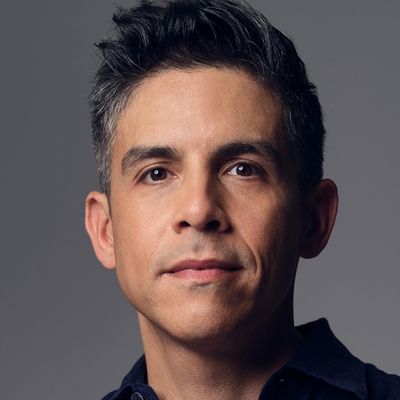
[1:10] Leah Walsh: This um this movie is about a lot of important concepts about the First Amendment and um the kind of lying to the press that's happening now. My friend Matthew Lopez, who is a playwright, wrote about this on Facebook when he saw the film recently. He said, Steven Spielberg's's new film, The Post, is as essential as American movie making gets, and not just because it features career high performances by Meryl Streep and Tom Hanks, starring in a movie together for the first time.
[1:38] Leah Walsh: Aside from being grand old fashioned entertainment, it is a robust and thoughtful defense of the First Amendment and a reminder that the press serves those who are governed and not those who govern. Catch it when it comes out at Christmas and bring your family. We find ourselves once again with our freedoms imperiled by an autocrat in the White House. It's good to be reminded of how Americans reacted the last time that happened. And I couldn't agree with his words more.
[2:06] Leah Walsh: So I hope you enjoy this uh this little recording and you get a chance to see the movie when it comes out. Another thing that they talk about that's really interesting is that Spielberg decided to make the movie in a very compressed amount of time. They started filming in May of 2017, and the movie is coming out now. And he really wanted to make it happen to come out before 45's first year in office was over.
[2:31] Leah Walsh: Anyway, I hope everyone has a good week. I hope you can get a little bit of sunlight somewhere. And I'll talk to you soon.
[2:52] Unknown speaker: It's weird for younger people. They don't believe me when I say that, but now that 60% of the people graduating from law school are women, and medical school has parity. There was nothing that there were very few women at the top of any industry. And she was delivered to that position by virtue of, you know, her pro her father owned it, owned the Washington Post.
[3:19] Unknown speaker: And when it came time to hand it down to someone, he gave it to her husband, who was a brilliant man. But and she didn't feel bad about that as portrayed in film. She thought that's the way it should be, and that's the way women thought. They thought men should run things, and that's the way it should be. And she, so her insecurity was built into uh the way she came into the post as a mature woman who had never run anything except her family.
[3:54] Unknown speaker: And she came to this moment in this historical moment where she had to make a gigantically complicated decision, a business decision aided by her great advisors, and um a decision about what's right to do in the world. And she had uh great advice on that, but it still all came down to her, and I think that's something conscience is uh where this meets our moment, you know, whether we stand up and do the right thing.
[4:41] Unknown speaker: And Tom playing Ben Bradley. Um dramatic pause. Do I get some license for a dramatic pause? Actually, formulating the question in my that's what it's trying to act with him. Jumping into your paws.
[5:06] Unknown speaker: You know, I've read, I and I I've read a lot about uh and I'm a political reporter by trade, and I guess I didn't have a good sense too of their relationship until watching this movie of Ben Bradley and Kay's relationship. It was a true partnership, it was, uh, and it was based on an ocean of respect and I think empathy. Uh, and I think when you combine that, that's a version of love that was undeniable between the two of them.
[5:28] Unknown speaker: He knew what his responsibility was, and his was to drive towards uh nailing down the truth in uh despite an awful lot of cynicism uh both in politics and and in media. But he he always he he knew what was at stake for this um anxiety-filled human being that had always just been either the daughter or the wife of the real forces behind the paper.
[5:57] Unknown speaker: And when she became the force behind the paper, and what's extraordinary about uh when we read the script for the first time in February, um, and then before we started making it in May, um was what is at what is was at stake. This is the story, really, of the week that Catherine Graham became Catherine Graham. Uh, and under circumstances where she truly could have made a decision that threw her in jail, cost her the the licenses for her television stations, it could have absolutely ruined her uh uh in the face of this almost incomprehensible assault on the on the First Amendment by the president of the United States.
[6:39] Unknown speaker: Um and he he funny 19 1971 2017, it's like you just take the integers and invert them. So so the the the great emotional structure of of the movie is is this uh that for for for Ben Bradley, he knows that only one person can make this decision, and if it's the wrong decision, they're not true custodians of the fourth estate, and if she makes the right decision, they could all go to jail.
[7:17] Unknown speaker: Well, what what a what a fulcrum of destiny that was for Catherine Grant. Let's do it. Let's do it. That scene, right? Where she is so dramatic. Sarah, I I know Sally Quinn very, very well. And I did not know Tony Bradley, Ben Bradley's first wife. So it really was an introduction to Second Wife. Yes, thank you for that. Sorry, thank you. Thank you, Tom. Thanks, Tom. Thanks for that. Second better wife. Thank you.
[7:48] Unknown speaker: There's that great scene where you're wrapping up and covering up her sculptures and paintings. And I feel like the line you deliver is like the centerpiece of this film about Kay's courage. Um I I think it was an opportunity for her to remind him of uh the luxury of his particular vantage point being a man. And as much respect and an admiration and equality as he felt with her and and for her, it he did need a little gentle reminder that so much was on the line for her.
[8:25] Unknown speaker: And I I did I did love that moment in the script, and I was glad that I got to be part of it. And to look in this mug while I was doing it was also an extra benefit. Yeah. Really good. Better and better.
[8:42] Unknown speaker: Um Bob. Um Hi. Sorry, what's it? Nobody's mentioned it yet. How great was Nixon in this movie? I mean, he fucking pulled it off. And it didn't arc much, but he made a whole three-dimensional asshole. But I didn't realize this till reading afterwards that that Steven Spielberg's used the tapes for his voice in that scene.
[9:09] Unknown speaker: Magoo. Yeah. As they say about Nixon. That's what was so cool about it. The real Magoo. Please call him that. Bob playing Ben, right? Um remind everybody about Ben's relationship with Daniel Ellsberg.
[9:26] Unknown speaker: How they first. Oh, yeah, they'd worked together at Rand years before. And uh so when all this went down, Bagdickian, real guy, you can see him on YouTube. He loved journalism, and that was his whole life, and he wrote a great autobiography as well, as well as a few other books about journalism, and uh he just kind of did the math in his head of people involved with uh the Rand, the work at Rand, and he kind of knew that uh Ellsberg was uh uh hot potato.
[10:00] Unknown speaker: He was a guy who uh was kind of an intense personality who might actually uh have the stones to do this uh to get these papers out. So he hunted it down. But it was Ben's line. It was Ben's actual line, right? The only way to assert the right to publish is a good one. It was, they stole it from me and he gave it to this this guy, Tom Hanks. I don't know why you would do that. There was nothing contractual involved in my opinion.
[10:26] Unknown speaker: But it's at the core of uh the of that question of what they're trying to do here is uh uh they all sort of agree that the paper has the right to publish. So the reason you can't um hold off just for out of you know whatever, because you're asked to uh with uh no lives in the balance uh that can be pointed to is because if you do that, then you are not acting on that right, and by not acting on it, you're losing it.
[10:59] Unknown speaker: You're it's such a it's kind of a catch 22 almost for the paper. You have to publish it if you know it. Um to uh to kind of live by to live the constitution and that right. And Matthew, playing Daniel Ellsberg.
[11:20] Unknown speaker: Did you feel a certain responsibility in playing that character given his role in history?
[11:28] Unknown speaker: Yes, enormously so.
[11:30] Unknown speaker: And forgive my ignorance as an immigrant among you all. Having read the first paragraph about Daniel Ellsberg, I sort of took an intake of breath when I realized whose shoes I was attempting to fill.
[11:46] Unknown speaker: Um, and not just to blame like a hot potato. But he was a true pioneer of what he did and the amount of bravery that took. I still can't quite fathom having the real privilege of sitting with him for a whole day. It still doesn't quite sink in as to the steps he took in order to put this in motion.
[12:21] Unknown speaker: So, um, yeah, how did you find him in person?
[12:24] Unknown speaker: Still enormously passionate and still enormously patriotic. And that was the more moving thing is he was so often called unpatriotic. And he did have a true love of country.
[12:41] Unknown speaker: Tracy, I think about Fritz and Washington. I thought he was such a good advisor to Kay Graham. He didn't tell her what to do; he helped her discover what she really wanted to do. Does that make sense the way I'm saying that?
[12:53] Unknown speaker: I think, yeah, it makes sense. I didn't know anything about Fritz Beebe before doing this. I still don't really know anything about him.
[13:02] Unknown speaker: I'm really only here because Craig T. Nelson wanted too much money.
[13:08] Unknown speaker: That is awesome. You know, they send you a lot of research material before you do a job like this, but a guy like me, I get hired right before we start. And I'm a very slow reader, and so I thought, well, I'll read this book called The Washington Post, since that's the guy I am. And I got up to Teddy Roosevelt, and then I had to go to work the next day with Meryl. It's like I only read up to Roosevelt. I still don't really know anything about Fritz Beebe.
[13:37] Unknown speaker: Um, but the job seemed to me the dramaturgy is on the page, and the job seemed to me to be about a guy who loves this woman and is going to help her make a decision. It seemed to me at its core, this was a movie about a woman who has to make a political decision and uses principles to guide her. And she consults with the good authority she has in her life, but ultimately it's her decision, and so that part of it was easy to play. That was all apparent on the page.
[14:14] Unknown speaker: Carrie Meg Greenfield, you know, as a political journalist, I admired her so much. I actually lived on Cambridge Place with her. You know, she lived on the block near Kay Graham's house, and she was such a role model. Then to see her breathe the decision by Justice Black and those lines, it's so powerful as a journalist. So powerful. As an actor, it's powerful too, because one of the things on your bucket list inevitably is your Spielbergian underscored moment in your career, which I now had. I hope to have another one, but you know, it's checked off that box, which is thrilling.
[14:52] Unknown speaker: I would have loved to have known her. I didn't really know much about Meg Greenfield when I got this part, but I really enjoyed reading about her. And one of the things that was said about her is that she had a very clear, strong sense of right and wrong. And that was something people said about her often. She was sort of unimpeachably, had always made that distinction, which makes her a great editorial editor, right? But she also had a great sense of humor, and she seemed like a really extraordinary person. And I'm just looking forward to the day that somebody makes a biopic about her because she's a very small part of this movie. I mean, she was just finding her way into the newspaper at that time. She was the assistant editor, and I think she's extraordinary. And if you don't know anything about her, go home and look her up. She's really interesting, and she was really important too.
[15:42] Unknown speaker: Yes, they became very good friends. They became very good friends, and in Catherine Graham's fantastic autobiography, if you haven't read it, it's called Personal History. It won the Pulitzer; it's like 700 some pages. Beautiful. Our friend Nora wrote a review of it and said halfway through, she was describing the book, and she just broke into it and said, "How can I convey how great this book is?" Because it really is. It's so beautifully imagined, beautifully written, and you realize just the greatness of these women, their potential, what so many women who were excluded from the rooms could have been and done.
[16:31] Unknown speaker: And one really revealing thing you made me think of was that she and Meg Greenfield would speak about how they kind of liked not having any other women around.
[16:44] Unknown speaker: Being with the only women in the room, yeah, and there was a little gloating of absolutely, yeah, they were dominant in that, and that was kind of shitty, so she wasn't perfect.
[16:54] Unknown speaker: No, she wasn't perfect at all. And she also spoke, and Meg wrote a very slim biography before her death that she never finished, and unfortunately, she didn't finish it before she got to her personal life. But she talked about men always presuming that she was an idiot, and so they would just tell her everything, and they would explain things and over-explain things, and she always got the scoop because she was like, "Well, tell me more," you know, and they would just spill it. So she was very aware of her own power in those rooms.
[17:20] Unknown speaker: And little did they know that Meg was Sumakum Ladi from Smith, and she was a Fulbright scholar.
[17:25] Unknown speaker: Yeah, she was extraordinary. Yeah, I actually, and because of this role, I went back and read her. It was actually the OBIT in the New York Times, and I just want to read this because she is so terrific. I'm with you on the movie. She wrote this scathing profile of Nixon in 1960, in which she wrote, and I just want to read it because I just think it's timely.
[17:46] Unknown speaker: So, uh, ref, and this is of Nixon, refusal to answer a question by setting up a straw man to attack instead is not an uncommon device of debating. But in Nixon's prose, the straw man emerges as more than a debating device; it is an innate feature of his thinking. Nixon apparently finds it almost impossible to make a statement that is not in some manner an argument. Ideas never quite exist for him until they have been pitted against something else, an extreme danger, a radically different point of view, or potential attack from some sinister quarter. And yet he looks great. We'll take him.
[18:34] Unknown speaker: So Alan, forgive me, I was working my way down the list, but Alan, you've long collaborated with Steven Spielberg's. How did you bring this terrific cast together?
[18:41] Unknown speaker: Well, I haven't long collaborated with Steven, but I've been working with him on the last three pictures that he's done, and it's been fantastic. And as they've spoken about, we were doing another film called The Kidnapping of Edgardo Mortara on Monday. And on Friday at 10:30, I got a call from his producer, Christy Bacasco Krieger, saying, "We're doing this movie, and you have to do it." It was truly like I thought she was calling to say, "We're going with one of the kids; you're leaving for Italy tomorrow." You know, instead, it was like, "No, we're doing this totally other film that we need to jump into immediately and get going." And that's what we did, and didn't have a lot of time, but I'm just everybody watching everybody here on stage. I mean, it just all gels.
[19:36] Unknown speaker: Thank you. Casting is so intuitive, and you know, and working with Steven, you work with the director. That's what our job is trying to feel who are these people, and who will embody this and who will work with Meryl and Tom, who of course were here already, and as I've said, everybody wanted, you know, actors were lining up, but it's always tricky, and it's very delicate casting. So I'm so very proud.
[20:08] Unknown speaker: Casting director's mom's career; she launched this one.
[20:16] Unknown speaker: Was this the first time, um, Tom, you and Meryl had worked with Steven Spielberg's together, all three of you?
[20:23] Unknown speaker: Yeah, yeah. I was never, I never had a movie that had a Meryl Streep position in it, and when she had one that I could have been in Mamma Mia if only I could sing this as close as I could get it. No, there, I mean, we knew each other kind of like from that kind of like famous people's club. Hey Meryl, pretend we know each other, I'm not so bad.
[20:46] Unknown speaker: Yeah, I think you're no, I didn't we didn't really know, but we we met Nora Mike and Nora, yes, yeah, or Mike stories, but I knew it was Mike Nicholson or Harry. But I knew how Steven worked, so I kept that in my pocket. So I never, I uh we got together with all everybody who was a writer, everybody who on the staff of The Post, we went over some things because I knew that Steven does not rehearse, and Steven has this great affinity for anything that actors bring to the mix, but uh, uh, I'm familiar with a guy, so I didn't have nearly I think the anxiety that a lot of other people did, including.
[21:03] Unknown speaker: Yeah, he didn't tell me that Spielberg doesn't rehearse. He told all of you.
[21:33] Unknown speaker: He didn't tell no, he didn't tell me.
[21:34] Unknown speaker: No, he didn't.
[21:35] Unknown speaker: That was a shock.
[21:37] Unknown speaker: Yeah, it was right?
[21:38] Unknown speaker: Yeah, right?
[21:39] Unknown speaker: Yeah, it's a guy how many lines.
[21:46] Unknown speaker: You know, uh, there's some days, as I said to the guys, there's some days where he was like, I I'm not sure how we're gonna shoot the scene. I'm not sure how we're gonna do it. What if we start? Okay, what is that? Uh Yanush Yamu. I've got a bus, I got a bus, we're gonna come down there. We're gonna have a we're gonna have a 75 right away. We're gonna see a little bit. Bring it up the bring it up the ceiling. We're gonna see this up in the ceiling, right? That's okay, we're gonna bring a two camera and next thing you know, you're shooting the scene. Uh and but there's other days where you just come in and it's set, and there it is. The shot is what it is, and what you have to do is behave realistically in that shot. But an awful lot of the work is done for you, and that's just the man who thinks it's a good thing.
[22:20] Unknown speaker: Yeah, but it was the real shock was how improvisatory it was, and how much freedom and collaborative freedom every actor had to bring.
[22:28] Unknown speaker: Didn't you? I was just so nervous. I didn't any instinct I had was just buried so deeply. I didn't know what to do. You know, I was really nervous. I think you know, one of the funny things was every time I went into the makeup trailer and there was a new person there, we all sort of leaned to each other, like, "Have you been sleeping?"
[22:47] Unknown speaker: Are you uh yeah, no, I haven't slept. I I'm wearing a diaper. It's like a everybody had that what Karen was saying of realizing we were all having this sort of bucket list fantasy be realized, uh, working with all of these people, you know it just it was extraordinary.
[23:05] Unknown speaker: So any instinct I had is you know, what's that great line from Waiting for Government? I I you know didn't pay attention to it or ignored it or something. Is there something since everybody here just saw the film? Is there something that that didn't make the film that ended up on the cutting room floor?
[23:20] Unknown speaker: Oh god, a lot. Yeah, I know. But that might inform our historical perspective of it. No. No, no, just took it change in the company was a lot of a big deal. And uh we had Truman Capote's black and white. And Jefferson Mays was fantastic in the company. We we shot it in the room at the at the plaza where it took place.
[23:44] Unknown speaker: Gloria Steinem came in, she was at the party, she was describing what it was like, and we were in there for a couple of days, and every you know, it's like everybody's in tuxedos and stuff like that. Um it was an attempt, I think, uh, to establish the newness of Catherine Graham because that party was thrown by Truman Capote, sort of as his introduction of her to the uh grand Glitterati intelligentsia.
[24:07] Unknown speaker: But it occurred in like 1965, 66, it was years before, and uh they just went took one look at the dreamboat who was playing Daniel Ellsberg, and we said, we'll start the movie with him. And that was that get that out of the way.
[24:28] Unknown speaker: It is the only scene, you know, of Vietnam and fighting in Vietnam, which is ultimately about you know 60,000 men who didn't come back. Yeah, I think it was the the black and white ball, the idea was to contrast the world of the literati New York and then the grit of and the but that was so it set up a contrast that was not valuable I think you thought of Catherine Graham as this party queen when she really was not that you there was a lot to work back from and also the the Vietnam stuff the cost of the war I don't know if anybody else wa was when you were we were doing this it was just the same time Ken Burns had released his seven part series eight part series and I was looking at that at the same time it was just you just the weight of it and the cost of it and remembering kids from my high school who just I mean it all came back and and um that's what the movie that was the stakes of of what they were doing was to reveal that that line from that I keep coming back to um that Meg read you know from from Justice the press was to serve the governed not the governors that four decades of presidents had essentially said this is a war and engagement that's not winnable.
[25:58] Unknown speaker: That was the Pentagon Papers and to McNamara's credit who who was duplicitous in many ways to his credit he commissioned them warts and all he wanted to he wanted to learn I mean yeah actually we actually had the papers there in those scenes where we were working, you know, sorting things out.
[26:22] Unknown speaker: We were actually, well, we read a lot. Most of us, well, I don't know. Can you uh we were actually reading the papers and they're pretty one-sided. It's amazing. Like, there isn't a page you pick up that is like Vietnam's going great. There isn't a single thing that you read that says it's going in our favor or it looks good or possibly. It's all negative. It's amazing.
[26:53] Unknown speaker: Um, talk about two, you know, you said, you know, younger younger women don't remember, but those scenes in the boardroom, the scenes with the investors. And I kept waiting for her to speak. I kept waiting.
[27:09] Unknown speaker: Yeah. I mean, I'm I I've been in meetings sort of like that. I've had a great idea in a meeting, and it wasn't heard. Anybody, a female else done this, and then somebody else uh hears it, Deb, sort of hears the thing. Maybe he heard it in his head, and then he repeats it, and if there's a commercial about it, I mean it's a this actually happens all the time.
[27:36] Unknown speaker: It will strike a heavy gong with a lot of women, and not just in the olden days. Um yeah, it's it's that thing. Women in leadership were just not completely there, comfortable with it.
[27:56] Unknown speaker: Um so this was the moment where a lot of things were breaking loose in that in this area. I mean, I was just in Boston, like a couple of hours ago, with uh Gloria Steinem.
[28:13] Unknown speaker: And we were talking to a group of 11,000 women. And I'm completely exhausted. But she, she's what, 85? And she has been through the whole first wave feminism, seen the whole the tide go out and everything get pulled away.
[28:34] Unknown speaker: And here it comes back again banked and ready. Ready to spill. And it's it's very exciting. This movie talks about that moment when women started to be people and admitted to the room where it happens and we were kept out.
[28:53] Unknown speaker: We've been kept out for a long time. So that's gonna change. Yeah I heard the other day that we're on the fifth wave of feminism. Did you know that?
[29:03] Unknown speaker: Yeah that probably it's just we're in an evolution things were one way for 4000 years. How can you expect it to change really fast um I thought about the um not only going back through history and seeing this but but also a reminder and and this is self-interested as a journalist but the role of the press is incredibly important.
[29:08] Unknown speaker: The role of the press in exposing you know and I thought about what's happened you know uh in our business too but the role of the press is ultimately about exposing abuse and whether it's in the Catholic church or in government tries to do that.
[29:38] Unknown speaker: The Constitution of the United States that promises a continued work towards a more perfect union um there's a reason the First Amendment is the First Amendment. You know, those rich male white slaveholders who didn't want to pay much of taxes, who wrote the Constitution, they actually put in something magnificent in there.
[29:58] Unknown speaker: And you can almost, you can almost say, the first, the First Amendment's enough. If we guarantee a country where there is no nationally established religion, meaning you get to worship God any way you want to. You can, there's a freedom of assembly, which means any kind you can gather with any like-minded people that you want.
[30:17] Unknown speaker: You can say anything you want to outside of fire in a crowded theater where there is no fire. That's an extraordinary, those are three extraordinary freedoms that humankind had never had guaranteed to them before.
[30:33] Unknown speaker: Then you throw in a freedom of a working press, meaning that you get to write and read anything you want to, and you get to divine whether or not it is the truth or whatever it speaks to you. That alone is probably the great pyramid tip, the tip of the pyramid that is the United States of America, and I think Western Free Thought.
[30:55] Unknown speaker: And our movie that is a period movie in 1971, there had been other assaults on the First Amendment before, be the Alien and Sedition Acts and the in the uh John Adams administrative, things like that. But there's always been a contentious press.
[31:09] Unknown speaker: There has always been a press that had an agenda that they were fomented. But you you could not be an American and curtail the press's right to print. The thing that's that's happening now that is extraordinary is it's that was an overt assault on the First Amendment.
[31:26] Unknown speaker: I think now we're experiencing more of a guerrilla war on the First Amendment is that there is a continuous decrying against the fourth estate for purposefully not wanting to tell the truth. And that's not true.
[31:39] Unknown speaker: You can Daniel Moynihan, the great great senator, said this great thing. You are entitled to your own opinion, but you're not entitled to your own facts. Now we are we are we are witnessing, I think, the legitimization, along with the diluting of the true essence of the fourth estate, is being met with a legitimizing of literally a false narrative that is put up by people who know they are lying, who are promoting a very, very specific agenda, either into to topple the status quo or maintain their place in the status quo.
[32:12] Unknown speaker: And it is the same that it is the same danger to our republic and to the constitution because it is purposely going after the creation of a less perfect union than the one our forefathers set down in the preamble of the Constitution.
[32:34] Unknown speaker: Thank you all for this wonderful film and for spending time with everybody here discussing it.
[32:39] Leah Walsh: Thank you and congratulations.
[33:10] Leah Walsh: Pledges start at as little as one dollar a month. You'll get access to bonus content, and anything you can give would be greatly appreciated. Also, if you have a moment, please rate or review in iTunes. Every little bit helps other listeners to find the podcast.
[33:28] Leah Walsh: The Compass Cover Art is by Kim Miller, music by Brandon Speeth, audio assistance from Nick Choxie, and a special thanks to Frankie J. Alvarez. See you next time.
© Broadway Podcast Network, All Rights Reserved