

In This Episode. In this episode, we talk with Ronald “Smokey” Stevens, an award-winning performer, director, choreographer, producer, and founder of Capital City Readers Theatre... Read More
From the show: The Drama Book Show!
Featured Shows
About
In This Episode
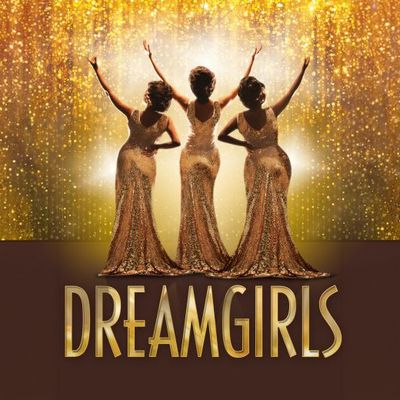
In this episode, we talk with Ronald “Smokey” Stevens, an award-winning performer, director, choreographer, producer, and founder of Capital City Readers Theatre. A veteran of Broadway productions including Bubbling Brown Sugar, Dreamgirls, and his own Rollin’ on the T.O.B.A., Stevens has dedicated much of his career to preserving and celebrating Black theatrical history.
His book, The First 60 Years: The History of Afro American Musical Theater & Entertainment, 1865–1930, chronicles the groundbreaking contributions of Black performers, producers, entrepreneurs, and theater owners following emancipation. From the birth of Black vaudeville and the Blues to the rise of Black theatrical entrepreneurship, Stevens shines a light on the artists who forged a path for American entertainment despite the racism and barriers of their time.
Transcript
This transcript was automatically generated and might contain errors.
[0:00] Mark-Eugene Garcia: Hello, and welcome to the Drama Book Show! My name is Mark-Eugene Garcia.
[0:22] David Rigano: My name is David Rigano. And in this episode, we explore a powerful and often overlooked chapter in American entertainment history with The First Sixty Years, the History of Afro-American Musical Theatre and Entertainment by Ronald Smokey Stevens.
[0:36] David Rigano: Through decades of research, performance, and advocacy, Smokey Stevens brings to life the stories of Black artists, entrepreneurs, producers, and performers who helped shape American entertainment between 1865 and 1930. From the rise of Black vaudeville and traveling performance circuits to the creation of new forms of musical expression and theatrical entrepreneurship, this book highlights the resilience, creativity, and innovation of the pioneers who built a foundation for the entertainment industry we know today.
[12:51] Ronald “Smokey” Stevens: In 1987, my late friend Jay Stewart and I conceived, wrote, produced, and performed in our production entitled, Roland with Stevens and Stewart, a tribute to the last days of black vaudeville. In 1998, I found producers in New York City and changed the name to Roland on the T.O.B.A. It was first produced at the N.T.A.R. Theatre on 42nd Street. It then moved off Broadway to the 47th Street Theatre to rave reviews before moving on Broadway at the Henry Miller Theatre. It was suggested to me on many occasions that I should write a book on the subject and period. I took up the challenge. Finally, had I had more information, when I renamed my show Roland on the T.O.B.A., it might have been called Roland on the Deadly Vaudeville Circuit instead.
And after you watch this documentary, you will soon understand why. As we focus on the period of African American musical theatre from 1865 through the 1920s, it is imperative that we look at the minstrel period in American entertainment, which began in the 1840s. During this minstrel period, white performers exploited on stage the inhumane living conditions of African American slaves for their amusement.
[14:33] Ronald “Smokey” Stevens: Okay, before I get into the period between the first 60 years, the period between 1865 and 1930, I do want to mention that the very first known black theatre in America was the African Grove Theatre, which was created in 1821 here in New York City by a Mr. William Bell. Mr. Bell was a West Indian free black man that purchased a home at 38 Thompson Street in the village downtown Manhattan. It was there that he began producing plays in theatre and productions and vignettes, which ultimately grew to become the African Grove Theatre. And one noted actor who was associated with the African Grove was the great Shakespearean actor, Mr. Ira Aldridge. You probably heard of him. And so that was the first recorded black theatre in America that predates the minstrel period, which is why I wanted to stop this film and continue. Now we will continue with the creation of minstrelsy in America.
[16:08] Ronald “Smokey” Stevens: During this minstrel period, white performers exploited on stage the inhumane living conditions of African American slaves for their amusement. They did this through coon songs, soft shoe dancing, simple jokes, slapstick behavior, and their infamous trademark, the burnt cork or blackface makeup. These white minstrel shows gained wide popularity as they traveled the country and performed for U.S. presidents by stereotyping and creating a non-thinking, shuffling, ignorant black character for everyone's amusement. This type of buffoonery and false imagery of African Americans on stage was the beginnings of American musical theater and entertainment, which lasted for over 50 years.
[17:37] Ronald “Smokey” Stevens: However, African Americans did not enter into this playing arena until the close of the Civil War. Following the violent backdrop of the Civil War, Charles Dix, a black man, was able to organize the first successful black-owned minstrel company in 1865, the Georgia Minstrels, in doing so, establishing black minstrelsy. This was the first example of black entertainment entrepreneurship, and contrary to historical beliefs, these first black minstrels did not perform in the traditional blackface. Yet, blackface was not completely absent from black minstrelsy. Many of the comedians of that era elected to blacken their faces to distinguish between the straight man and the jokester. Also, the blackface, coupled with the comedian's outlandish clothes, added to his comic ensemble.
[19:04] Ronald “Smokey” Stevens: Black minstrelsy came in two unique categories. Tent shows, a carryover from an earlier period, and legitimate minstrel shows, more or less an imitation of white minstrel shows. The blues got its exposure and a foothold in show business due to tent shows. The tent show was part circus, part theater, and part minstrel show. There were crowds, acrobats, theatrical sketches, musical numbers, marching displays, all under one tent. Ma Rainey was queen of the colored tent shows in the rural South. She and her husband, Paul Rainey, were the creators of the Rabbit Foot Minstrels, circa 1880s. Ma Rainey even discovered Bessie Smith, who traveled with Ma Rainey in the early days. They went on to create Paul Rainey's Minstrels, and in 1915, Rainey and Rainey's The Fascinators of the Blues, another first of black entertainment entrepreneurship.
[20:37] Ronald “Smokey” Stevens: Black Paddy's Troubadours was an important minstrel show and outfit, organized in 1895. Madam Cicioretta Jones, the Black Paddy, was an astute businesswoman and an awesome singer with an operatic voice that had a very wide range. Her troupe traveled to the U.S. and Europe for many years, from 1895 through 1920, discovering new talent and providing jobs for many African American performers, while many black people struggled to eke out an existence, only 30 years after being emancipated from slavery. James Weldon Johnson wrote in The Black Manhattan, white minstrelsy was, on the whole, a caricature of Negro life, and it fixed a staged tradition which has not been entirely broken. It fixed the tradition of the Negro as only an irresponsible, happy-go-lucky, wide-grinning, loud-laughing, shuffling, banjo-playing, singing and dancing being. Nevertheless, these companies did provide an essential stage training and theatrical experience which, at the time, would not have been acquired from any other source.
[21:53] Ronald “Smokey” Stevens: It is extremely important to understand that this medium, minstrelsy, also allowed black men and women the opportunity to become and grow as entrepreneurs for the first time in our history, during a time when black businessmen or women were unheard of and rarely accepted. In conclusion, thank you for listening. That was the minstrel period, ladies and gentlemen. It started as a dehumanizing, derogatory, negative portrayal of our ancestors as slaves for their amusement. But once we were able to get into the minstrel game, we changed it completely.
[23:19] Ronald “Smokey” Stevens: Now I want to go into the break from minstrelsy. Then came the break from minstrelsy with the creation of a show called The Creole Show, created by a black actor named Sam Lucas and another gentleman by the name of Sam Jack in 1891. This show was the first show to depart from the minstrel format. It was the first of its kind to present a beautiful female chorus to eager audiences. It opened in Boston during the World's Fair of 1891 and later moved to New York City. An article was written about The Creole Show in the Indianapolis Freedman on September 20, 1891. Sam T. Jack and Sam Lucas' Creole Burlesque Company recently opened at the London Theatre in New York City. The show commenced with a very pretty first part and attractive groupings of shapely femininity.
[24:35] Ronald “Smokey” Stevens: Then the break from minstrelsy continued by Bob Cole. In 1897, Bob Cole developed what became known as the Resident Stock Company. The company of 12 to 15 members were anxious to test this new field of study and creativity in their community. The Resident Stock Company threw away the caricatures and the grossly exaggerated performances in exchange for a more sophisticated performance including dramas, comedies, and musicals. As a result of this new genre, there began a great demand for stock companies everywhere, especially in the South. Every major city had its own Resident Stock Company or Black Theatre. And I would venture to say that Bob Cole is the grandfather, godfather, or creator of urban black theatre as we know it today. Every major city had its stock company, Washington D.C., Chicago, and New York. There were some noted stock companies of the times.
[25:41] Ronald “Smokey” Stevens: The Pekin Stock Company of Chicago was so fabulous that it was written about. The Pekin, with his talented stock company, quickly became the mecca of Black entertainment in Chicago. Almost all of the Black stars of the period played the Pekins, and it became a major tourist attraction. This statement was taken from a book entitled, *The Blacks in Blackface*, on page 280. Another noted stock company under the direction of Marion Cook was the Negro Players of the Lafayette Theater in New York City. The Negro Players of the New Lafayette was just as fabulous as the Pekin, and it was written about also. Quote, "The Negro Players, a company formed for the development of Negro music and drama, were opened at the Lafayette Theater, a large theater located in Harlem, on March the 17th, 1913, a series of productions."
The founders of the organization aimed to put into caricature of music and dramatic form, real pictures of Negro life, both in city and plantation. The New York, unquote, *The New York Age*, 1913. Bob Cole, the founder of the Urban Black Theater, as we know it today, did not stop there. He went even further with the creation of a show called, *A Trip to Coontown*. We're going to address that in a minute. In 1897, Bob Cole and Billy Johnson shocked the theater community because it was the first musical featuring an all-Black cast and was the first show to be written, produced, managed, and staged by Blacks in America. Unlike any other production, this show contained a continuity line with characters working out the story from beginning to end.
It opened on September the 27th in 1897 in New Jersey before opening at Miners 8th Street Theater here in New York City, and it eventually moved to the Grand Opera House and Casino Roof. *A Trip to Coontown* brought together some of the greatest creative artisans in America at the time. As *A Trip to Coontown* broke away from the old minstrel format, there was, however, some residual carryover from the period. Even the names Coon and Nigger were being used in shows and songs about African Americans to the distaste of the community at large. Sylvester Russell, a frustrated singer, began writing reviews of Black performers which appeared in the *Indianapolis Freeman* and other weeklies. Russell was also the first to speak out strongly in print against the then common use of the word Nigger and Coon in popular songs.
In spite of these obstacles, the representation of African Americans starring in the entertainment stew was overwhelming at the turn of the century. And as is stated in my book, Bob Cole was asked by Sylvester Russell, why did you name your show *A Trip to Coontown*? And Bob Cole had to admit that he made a drastic mistake. As the urban stock companies created by Bob Cole and the rural traveling shows, e.g., the medicine shows, ghillie shows, and carnivals were paving, excuse me, were paving a new ground of expression, theater ownership began to become in focus. Because of racial discrimination and an exhaustion from unscrupulous white theater owners, many African American businessmen and performers saw theater ownership as the most feasible solution.
In 1901, Chicago businessmen announced plans to establish a Black theater in their city and gave the following reasons. Quote, "It has long been a source of exasperation to the leaders of the colored society in Chicago that they could not secure a box orchestra seat in any of the white theaters, no matter how much they were willing to pay or how soon they got in line before the box office window opened. When they requested anything but a balcony seat, it always developed that the show was doing sold out business even if it was losing money in reality and the colored person would be forced to take a balcony seat or no seat at all. This fact has led to the plan of having a colored theater in Chicago controlled by colored people and catering only to colored people," unquote.
That was taken from a book entitled *The Ghost Walks*, page 208. African Americans realized that we would not be treated with respect and dignity while attending performances at the white theaters, even though we paid the same ticket prices as whites. African American journalist Sylvester Russell discusses this degrading policy of segregated seating in a letter published in the *Indianapolis Freedman* in 1904. Quote, "Dear sir, I have been asked by the people of Boston to express my opinion on the New York theater color line and discrimination. The management of New York theaters should have expected that some of the well-to-do colored families in the greatest city in America would expect to be accommodated on the lowers to see Williams and Walker.
Some of the managers who are drawing the color line are Hebrews. No manager of Hebrew blood in his veins should draw the color line and expect Americans to cease discriminating against the Jews at the exclusive hotels and summer resorts when they are drawing the race line themselves. The New York managers who discriminate on account of color are greatly to be condemned. The public cares nothing about where a respectable colored person sits in the northern cities in this enlightened age. The thoroughbred white people would be delighted to sit next to the families of Bishop Derrick, who rode with foreign princes, or Booker T. Washington, who dined with the president and conversed with them," unquote.
Sylvester Russell in the *Indianapolis Freedman*, 1904. In September 1905, the Black-owned American theater in Jackson, Missouri was forced to open as a result of racial tension, and this incident was also written about. The Black-owned and operated American theater formally opened with a performance of *The Black Patty*, who played to a packed house. The opening of this theater by Negro men was a result of racial discrimination by the manager of the Century Theater, which was white in Jackson, who refused to book Negro troops and made Negro patrons climb the fire escape to reach the gallery. This was taken from *The Ghost Walks*, page 348. Imagine that. Imagine being dressed with your woman, going out to see theater, and a man tells you have to climb the fire escape to get upstairs.
Good God Almighty. But that's what we had to endure. On January the 12th, this gentleman, Sherman H. Dudley, a theatrical mastermind, began laying the foundation to implement the first African-American touring circuit in American history. Now, Sherman H. Dudley got his dose of entertainment by portraying or performing in *The Medicine Show* in 1875. He went on to organize *The Ideal in Georgia Minstrels*, and he gained fame and popularity as S.H. Dudley and his mule in 1904 in a production called *The Black Politician*. However, with his strong entrepreneurial sense, he purchased several theaters from 1911 to 1913 in my hometown, Washington, D.C. These theaters were The Mid-City, The S.H. Dudley, The Fairyland, The Forica, and The Blue Mouse.
Soon, Dudley convinced other Black theater managers to join his circuit, The Dixie in Richmond, Virginia, and The Globe in Norfolk, Virginia. These theaters became the original members of the Dudley-Vaudeville circuit. As a result of dealing with unscrupulous white touring circuits and the vast lack of opportunity for African-American entertainers, Dudley looked to other avenues to combat this deficit. After the turbulence of the turn of the century Jim Crow segregation laws, Dudley made a public appeal which replaced African Americans at the reign of their own entertainment circuit and win freedom and creativity for the first time in history. And this is what Sherman H. Dudley did in 1913. He put out a call to action in the *Indianapolis Freeman* and other weeklies.
He asked for all well-to-do Black people, if you can rent, if you can lease, if you can purchase, buy, or build, I will guarantee you success. I will bring entertainment to your city 365 days a year and I guarantee you wealth. And by 1916, Sherman H. Dudley had amassed over 28 theaters on his circuit known as the Dudley-Vaudeville circuit. Others joined Dudley and I want you to see this man's face because not only after Dudley, boom, J.T. Gibson, who should be next. Ah, here we go. Others joining Dudley on this theatrical empire quest was John T. Gibson of Philadelphia, Pennsylvania, known as the Little Giant. Gibson was unlike Dudley; he did not possess a history as a performer but was strictly an uncanny, excellent businessman.
In 1910, Gibson met Samuel Reading, an owner of a theater called the North Pole in Philadelphia. Reading was impressed with Gibson's astute business savvy and decided to take Gibson on as a partner, hoping he could help his ailing business. After an unsuccessful year together, the relationship suffered and J.T. Gibson purchased the business from Reading for $800. Today that's equivalent to over $26,000. Okay, thus beginning the J.T. Gibson-Vaudeville empire. After purchasing the North Pole Theater from Reading, Gibson turned it into an immediate success, but he didn't stop there. His next focus, or he next focused his attention on the nicer and larger Standard Theater, which was a legitimate playhouse. Post-World War I prosperity brought wealth to J.T. Gibson and the Standard Theater of Philadelphia, and it was a veritable gold mine.
[38:31] Ronald “Smokey” Stevens: Every week receipts were well over $12,000. Many stars of the period gained their first experience at the North Pole and Gibson Standard Theater under his leadership and direction. Ethel Waters, okay? Also, the Nicholas Brothers. Also, Butter Beans and Susie. And right now, I would like to play me portraying Butter Beans along with Susie, Jack A. Harry, in the Cotton Club film or the Cotton Club Encore.
[39:16] Ronald “Smokey” Stevens: Butter Beans and Susie.
[39:46] Ronald “Smokey” Stevens: I don't want you no more. They can't be shot. You be on the hop now, pop off. You know my tank is full.
[40:33] Ronald “Smokey” Stevens: You know my tank is full.
[40:48] Ronald “Smokey” Stevens: You know my tank is full.
[41:08] Ronald “Smokey” Stevens: You know my tank is full.
[41:18] Ronald “Smokey” Stevens: You know my tank is full. That's Jack A. Harry and Smokey Stevens in the Cotton Club film, ladies and gentlemen.
[42:00] Ronald “Smokey” Stevens: Gibson, as I said, was an astute businessman who always was on the lookout for a good deal. He was also anxious to heed the call of Sherman H. Dudley for black theater ownership and his empire employed black performers for almost 20 years before its demise.
[42:20] Ronald “Smokey” Stevens: About eight years after Mr. Dudley's circuit was created and Mr. Gibson's acquisition of his two theaters, two gentlemen, E.C. Brown and A.F. Stevens, another namesake of mine, organized the Quality Amusement Company.
[42:39] Ronald “Smokey” Stevens: In 1919, Brown and Stevens also purchased, I said, the Quality Amusement Company, thereby gaining control of the Lafayette Players Stock Company and the Lafayette Theater Company here in New York City.
[42:54] Ronald “Smokey” Stevens: By the end of the year, the corporation either owned or controlled the following theaters, the Dunbar Theater in Philadelphia, the Howard Theater in Washington, D.C., the Avenue Theater in Chicago, the Putnam Theater in Brooklyn, New York, the Persian Theater in Pittsburgh, Pennsylvania. In addition to the Lincoln Theater in Norfolk, Virginia, this brought the number of theaters under Brown and Stevens Corporation to seven. E.C. Brown announced that by the year's end, nearly every large city in the country will have a first-class theater catering to the race people which they can be proud of and feel at home.
[43:37] Ronald “Smokey” Stevens: Taken from the book, Blacks in Blackface, page 309. In 1921, the fortunes of E.C. Brown and A.F. Stevens Amusement Company took a downward turn. In April of that year, the Quality Amusement Company withdrew from the Avenue Theater in Chicago, citing bad business.
[43:58] Ronald “Smokey” Stevens: A few weeks later, Brown and Stevens sold the Dunbar Theater to J.T. Gibson. The Dunbar Theater in Baltimore was the last piece of property sold by Brown and Stevens.
[44:09] Ronald “Smokey” Stevens: Now, unfortunately, Brown and Stevens, it appears, were not as savvy as Mr. Dudley or Mr. Gibson, or maybe they were overly ambitious in their business pursuits. This fact is not known. However, it must be stated that they were doers, and they were willing to invest their money in their communities with the desire to change the condition of their fellow man by providing employment to so many African Americans.
[44:44] Ronald “Smokey” Stevens: Now, I did my research because of my namesake, E.F. Brown. I wanted to see if he was a relative, and what I discovered was E.C. Brown and A.F. Stevens were bankers. That's right, that's why they had so much money and were able to invest in musical theater in Vaudeville at the time, which was a gold mine for black people.
[45:07] Ronald “Smokey” Stevens: Although S.H. Dudley and J.T. Gibson and Brown and Stevens were some of the first black theater owners, it was Sherman H. Dudley who organized the first black Vaudeville theater circuit. The Dudley circuit was more than a success. It was an awakening of the vast talent and financial rewards of an all-American touring circuit because of the fact that many African American performers never would have gotten an opportunity to showcase their talents with the white theater circuits.
[45:41] Ronald “Smokey” Stevens: Dudley was able to expose them to a wide enthusiastic audience. In addition, Mr. Dudley employed hundreds of African Americans during a time when jobs were scarce with earnings at poverty levels. Many artists under the Dudley circuit could get contracts for up to eight months out of one office, which was unheard of prior to his circuit.
[46:08] Ronald “Smokey” Stevens: Unlike the minstrels and other unsophisticated shows, the acts on the Dudley circuit carried an air of distinction because blacks controlled our own performances. These performances were able to create and mold the talents without the embarrassing stereotypes of past minstrel productions.
[46:31] Ronald “Smokey” Stevens: The success of the Dudley circuit gave birth to what became known as the Theater Owners Booking Association, also known as the TOBA. As the Dudley circuit gained notoriety and financial success, it came under the scrutiny of white theater owners who wanted to capitalize on the all-black touring circuit show business.
[47:02] Ronald “Smokey” Stevens: As blacks and whites supported the Dudley circuit in record numbers, white theater owners wanted to, too, take advantage of this goldmine. Also, white theater owners thought that they could book African American acts at a much cheaper rate, and from that thought, the Theater Owners Booking Association, the TOBA, or, as it came to stand for, Tough-on-Black-Asses, was nicknamed and born.
[47:32] Ronald “Smokey” Stevens: Unlike working on J.T. Gibson's Standard Theater or working on S.S. Dudley's Dudley circuit, work on the TOBA was very strenuous and exhausting. Performers would work five and six shows a day. Sometimes they would be cheated and only receive half pay. Managers sometimes would lie to acts to profit from the box office.
[47:56] Ronald “Smokey” Stevens: Now, considering the times of the 1920s, it was unheard of for an African American to protest or even bring up an issue of being shortchanged. Unlike the Dudley circuit, on the TOBA, African American performers and troops were always at the mercy of unscrupulous theater managers.
[48:23] Ronald “Smokey” Stevens: Although the TOBA provided work for hundreds of black performers, many complained about the unfair treatment by theater managers. Today, one would ask, why would African American artists subject themselves to this type of treatment? Folks, we must keep in mind that during this period of time in our history, the performing arts was one of the largest areas of employment for many African Americans.
[48:58] Ronald “Smokey” Stevens: To be able to make a living by performing on stage and getting paid was the dream and goal for many African Americans who were struggling to survive. The TOBA exploited this reality.
[49:17] Ronald “Smokey” Stevens: From 1911 when Sherman H. Dudley and J.T. Gibson purchased their first theaters until the Great Depression of 1929 and 30, black musical theater under black ownership in America prospered. In 1920, with the creation of the TOBA, things changed dramatically.
[49:41] Ronald “Smokey” Stevens: Mabel Whitman of the famous Whitman Sisters viewed white theater managers as the greatest contributing factor to the decline of the TOBA. In an extensive interview with the Baltimore African American newspaper, Ms. Whitman offers great insight.
[50:03] Ronald “Smokey” Stevens: Quote, "They say to themselves that the Negro audience must have someplace to go for their amusement. Instead of giving them the best possible talent, they pawned off the worst as long as they could get a crowd." Unquote.
[50:49] Ronald “Smokey” Stevens: In an article which appeared in the Pittsburgh Courier December 21st, 1929, William Nunn commented on the decline of the quality of shows on the TOBA. Mr. Nunn lambasted producers for presenting shows of inferior quality in order to save and make money expecting African American public to be content.
[51:13] Ronald “Smokey” Stevens: Now folks, as we draw attention to the life and times of African American performers performing on stage in the early 1900s,
[51:22] David Rigano: Welcome back to The Drama Book Show! We’re here with Ronald “Smokey” Stevens, and we’ve been diving into the rich history of Black entertainment. Smokey, can you tell us more about the significance of Black vaudeville?
[51:52] Ronald “Smokey” Stevens: Absolutely! Black vaudeville was a crucial platform for African American performers during a time when they were largely excluded from mainstream entertainment. It provided an opportunity for artists to showcase their talents and connect with audiences, paving the way for future generations.
[52:12] Mark-Eugene Garcia: That’s fascinating. How did the transition from vaudeville to musical theater occur for Black performers?
[52:32] Ronald “Smokey” Stevens: The transition was gradual. As vaudeville began to decline, many performers sought opportunities in musical theater. Shows like "Bubbling Brown Sugar" and "Dreamgirls" highlighted Black stories and experiences, allowing artists to take center stage in a way that had previously been denied to them.
[52:52] Dylan Glick: And your book, "The First 60 Years," covers this transition in detail, right?
[53:12] Ronald “Smokey” Stevens: Yes, it does. I wanted to document the contributions of Black performers and entrepreneurs from 1865 to 1930, emphasizing their resilience and creativity in the face of adversity.
[53:32] David Rigano: It’s incredible how much history there is to uncover. What do you think is the most surprising aspect of this history for people today?
[53:52] Ronald “Smokey” Stevens: Many people are unaware of the sheer number of Black theater owners and producers who played pivotal roles in shaping the entertainment landscape. Their stories are often overshadowed, but they were instrumental in creating spaces for Black artists to thrive.
[54:12] Mark-Eugene Garcia: That’s a great point. How do you think the legacy of these pioneers influences contemporary Black artists?
[54:32] Ronald “Smokey” Stevens: Their legacy is profound. Contemporary artists stand on the shoulders of these pioneers, drawing inspiration from their struggles and triumphs. The fight for representation and equality in the arts continues, and it’s essential to honor those who came before us.
[54:52] Dylan Glick: Speaking of representation, how do you see the current state of Black theater compared to the past?
[55:12] Ronald “Smokey” Stevens: There’s definitely more visibility now, but there’s still a long way to go. While we have more Black voices in theater, the industry must continue to push for diversity in storytelling and behind the scenes.
[55:32] David Rigano: It’s an ongoing journey. What advice would you give to young Black artists entering the theater world today?
[55:42] Ronald “Smokey” Stevens: I would encourage them to stay true to their voices and stories. The world needs to hear their perspectives. Also, seek out mentors and build a community; it’s vital to support one another in this industry.
[56:12] Mark-Eugene Garcia: Great advice! As we wrap up, what’s next for you, Smokey? Any upcoming projects?
[56:32] Ronald “Smokey” Stevens: I’m currently working on a new production that celebrates the history of Black musical theater. I’m excited to bring more stories to light and continue this important conversation.
[56:52] Dylan Glick: We can’t wait to see what you create next! Thank you so much for joining us today, Smokey.
[57:12] Ronald “Smokey” Stevens: Thank you for having me! It’s been a pleasure.
[57:32] David Rigano: And thank you to our audience for being here with us at The Drama Book Shop. We hope you enjoyed this deep dive into Black entertainment history. Don’t forget to follow us on social media and check out Smokey’s book for more insights!
[57:52] Mark-Eugene Garcia: Until next time, keep supporting theater and the stories that matter.
[58:12] Dylan Glick: See you soon!
[58:32] ♪ Musical number ♪
[59:02] David Rigano: That was fantastic! Thank you again, Smokey.
[59:12] Ronald “Smokey” Stevens: Thank you!
[59:22] Mark-Eugene Garcia: And thank you to our listeners for tuning in!
[59:32] Dylan Glick: We’ll catch you next week on The Drama Book Show!
[59:42] David Rigano: Bye for now!
[59:52] Mark-Eugene Garcia: Bye!
[1:00:02] Dylan Glick: Bye!
[1:00:12] Ronald “Smokey” Stevens: Bye!
[1:00:22] David Rigano: Bye!
[1:00:32] Mark-Eugene Garcia: Bye!
[1:00:42] Dylan Glick: Bye!
[1:00:52] Ronald “Smokey” Stevens: Bye!
[1:01:02] David Rigano: Bye!
[1:01:12] Mark-Eugene Garcia: Bye!
[1:01:22] Dylan Glick: Bye!
[1:01:32] Ronald “Smokey” Stevens: Bye!
[1:01:42] David Rigano: Bye!
[1:01:52] Mark-Eugene Garcia: Bye!
[1:02:02] Dylan Glick: Bye!
[1:02:12] Ronald “Smokey” Stevens: Bye!
[1:02:22] David Rigano: Bye!
[1:02:32] Mark-Eugene Garcia: Bye!
[1:02:42] Dylan Glick: Bye!
[1:02:52] Ronald “Smokey” Stevens: Bye!
[1:03:02] David Rigano: Bye!
[1:03:12] Mark-Eugene Garcia: Bye!
[1:03:22] Dylan Glick: Bye!
[1:03:32] Ronald “Smokey” Stevens: Bye!
[1:03:42] David Rigano: Bye!
[1:03:52] Mark-Eugene Garcia: Bye!
[1:04:02] Dylan Glick: Bye!
© Broadway Podcast Network, All Rights Reserved