

In this episode, we celebrate Broadway Poster Art: 1945–1969 by Nicholas van Hoogstraten, a visually stunning tribute to Broadway’s iconic posters—from My Fair Lady and Fiddler on the Roof to rare designs for legendary flops... Read More
From the show: The Drama Book Show!
Featured Shows
About
In this episode, we celebrate Broadway Poster Art: 1945–1969 by Nicholas van Hoogstraten, a visually stunning tribute to Broadway’s iconic posters—from My Fair Lady and Fiddler on the Roof to rare designs for legendary flops. The book offers an insider’s look at the artists behind the posters, featuring Al Hirschfeld, David Klein, Fay Gage, and more, along with alternate concepts, rejected designs, and fascinating stories about how these visuals shaped Broadway’s identity.
Nicholas van Hoogstraten is the author of Lost Broadway Theatres, the award-winning musical Johnny Guitar, and other theatrical works. He created television programs including KTLA Morning News and Private Sessions for A&E, and helped launch the original FX network. He lectures on theater history and owns Triton Gallery, New York City’s largest source for vintage and current Broadway posters.
Transcript
This transcript was automatically generated and might contain errors.
[0:00] Mark-Eugene Garcia: Hello, and welcome to the Drama Book Show! My name is Mark-Eugene Garcia.
[0:22] David Rigano: My name is David Rigano.
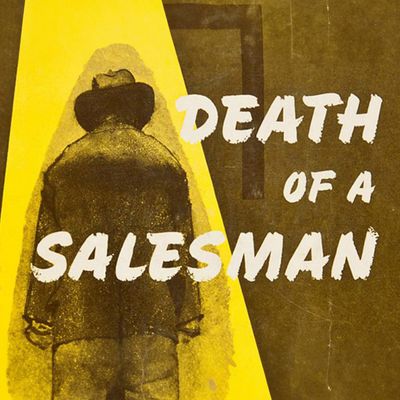
[0:24] Mark-Eugene Garcia: And today's episode, we're joined by Nicholas Van Hoogstraten, author of Broadway Poster Art from 1945-1969, for a conversation about iconic posters behind some of Broadway's most memorable productions, from beloved classics like My Fair Lady, The Fantastics, Hello Dolly, Fiddler on the Roof, Death of a Salesman, A Raisin in the Sun, and A Streetcar Named Desire, to rare designs from lesser-known productions and legendary flops. Nicholas reveals the stories behind the artwork and the artists who created it.
[0:58] David Rigano: I love Broadway poster art. I was so excited for this one. There are some amazing Broadway poster artists out there whose work is so recognizable. You can tell a David Byrd poster from a Frank Fravor poster.
[1:19] Mark-Eugene Garcia: If only there was some book that put all of those together so that we could have a conversation about it.
[1:27] David Rigano: And also, we're surrounded by iconic Broadway posters here at the store.
[1:31] Mark-Eugene Garcia: Oh, truly. Yeah.
[1:32] David Rigano: I love that when we're at the register, we've got Redhead right over us. I adore, I have always adored that three-penny opera with Raoul Julia's face as Mac the Knife on it.
[1:45] Mark-Eugene Garcia: But we've got—
[1:46] David Rigano: Even the more contemporary pieces that we have in the back.
[1:48] Mark-Eugene Garcia: Yeah, we've got Cheetah and Liza's profiles in the rink back there.
[1:52] David Rigano: They tell you not to judge a book by its cover, but at the same time, when you're judging a musical, you have to look at that poster first. That's what sells it.
[2:02] Mark-Eugene Garcia: And someone put a lot of very, very intentional work into that cover.
[2:09] David Rigano: 100%. It's storytelling.
[2:10] Mark-Eugene Garcia: Communicating something back.
[2:11] David Rigano: Yeah, they're telling you what you're going to see. It's the opening number before the opening number, before the overture starts. You look at that and think, huh, I want to see that show. And it's incredible because it's just one image that has to give you theme, story, idea, all of it. You can almost hear the sound in the posters, and that's what's really magical about Broadway poster art.
[2:35] Mark-Eugene Garcia: There's a story, and I don't know how much of this is accurate, that someone, I guess probably Edgar Lansbury or someone like that, had offices across the street from the Winter Garden Theater and was talking to David Byrd, who was the poster artist, and they were trying to come up with a poster art for the original Godspell in the 70s, and Follies was playing across the street at the Winter Garden, and he looked at the design for Follies, and he said something to the effect of, I want it to look like that. And David Byrd was like, oh, I designed that.
[3:10] David Rigano: So yeah, I can give you—
[3:11] Mark-Eugene Garcia: I can do that.
[3:12] David Rigano: And so that's why, if you look at the original Off-Broadway Godspell poster and the original Broadway Follies side by side, you're like, oh, they're very similar.
[3:23] Mark-Eugene Garcia: And you showed me on your phone just now, and that's mind-blown, because I never thought about that, and I think I've seen those covers and just assumed one was the other and not really thought about it.
[3:32] David Rigano: They're both so iconic, and the shows are so different, and he still does—Follies still has the crack down the face, so there's this sort of art deco quality to it, whereas the Godspell poster is 70s and so psychedelic, but when you think about it, it is the same artist and put them side by side, and they are very similar to each other.
[3:54] Mark-Eugene Garcia: We're going to have to do a display at the bookshop with that in there, because yeah, once you show that to me, now I can't—it's like those images that you're stuck with.
[4:02] David Rigano: I'm looking forward to some more mind-blowing revelations, and so let's listen to what Nicholas had to say and dive in.
[4:11] Mark-Eugene Garcia: Yeah, let's hear it.
[4:12] Nicholas Van Hoogstraten: So hello, and thank you for being here tonight. I just want to start out by asking you about what your theatrical background is, because clearly you've done quite a bit.
[4:40] Nicholas Van Hoogstraten: My background started in summer stock in 1973. I was an apprentice at the Cape Cod Melody Tent in Hyannis, and when my wife and I took our daughter up 30 years later to see it, she turned to us and said, “It's actually a tent.” I said, “Yeah.” I did a season of stock there when I was in high school, and then I said, “Oh, this is a fun way to spend the summer.” And then there was in Westchester Theatre in Yonkers, the Westchester Playhouse, and I did the next three summers there.
[13:13] Nicholas van Hoogstraten: Thank you for having me. I'm excited to talk about Broadway poster art and the incredible stories behind these iconic images.
[13:43] David Rigano: Absolutely! Your book, "Broadway Poster Art: 1945–1969," dives deep into the artistry and history of these posters. What inspired you to focus on this particular era?
[14:08] Nicholas van Hoogstraten: Well, this period was a transformative time for Broadway. The posters not only reflected the shows but also the cultural shifts happening in America. I wanted to capture that essence and showcase the artists who created these memorable designs.
[14:38] Mark-Eugene Garcia: You mentioned the artists. Can you tell us more about some of the key figures featured in your book?
[14:53] Nicholas van Hoogstraten: Certainly! Al Hirschfeld is one of the most celebrated artists, known for his distinctive line drawings. Then there's David Klein, who created vibrant, colorful posters that really captured the spirit of the shows. Fay Gage also contributed significantly, especially with her unique style that stood out during that time.
[15:27] Dylan Glick: It's fascinating how these artists shaped the visual identity of Broadway. Were there any surprising or lesser-known stories you uncovered while researching?
[15:38] Nicholas van Hoogstraten: Yes, absolutely! For instance, I found alternate concepts and rejected designs that were never used. Some of these designs were quite striking and could have changed the way we remember certain shows. It was a treasure trove of creativity that didn't make it to the final cut.
[16:08] David Rigano: That’s incredible! It must have been a joy to sift through all that material. How do you think these posters have influenced the perception of Broadway over the years?
[16:38] Nicholas van Hoogstraten: They’ve played a crucial role in shaping public perception. A well-designed poster can evoke emotions and draw people in, making them curious about the show. They serve as a visual shorthand for the experience of Broadway, encapsulating the essence of the performances.
[17:09] Mark-Eugene Garcia: And with the rise of digital media, how do you see the future of Broadway poster art evolving?
[17:38] Nicholas van Hoogstraten: It's an interesting time. While digital platforms offer new ways to promote shows, I believe there's still a strong appreciation for physical posters. They have a tactile quality and a sense of nostalgia that digital images can't replicate. I think we'll see a blend of both worlds moving forward.
[18:08] Dylan Glick: That makes sense. There's something special about holding a piece of art in your hands. What do you hope readers take away from your book?
[18:38] Nicholas van Hoogstraten: I hope they gain a deeper appreciation for the artistry behind Broadway posters and the stories they tell. Each poster is a piece of history, and I want readers to see them not just as advertisements but as works of art that reflect the time and culture in which they were created.
[26:27] Douglas Goldstein: The New York window card for Flahouli is the first use of these inks now trademarked Dayglo on a Broadway poster.
[27:47] Douglas Goldstein: The military and civilian uses of their invention continued after the war, particularly in product packaging and advertising.
[33:22] Douglas Goldstein: It is amazing to me how cursed it seems, since there is a different Lerner and Lowe that could be referred to as their Scottish play. Thank you for the knowing groans. I appreciate it.
[34:01] Douglas Goldstein: Douglas Goldstein, CFP®, is the director of Profile Investment Services and the host of the Goldstein on Gelt radio show. He is a licensed financial professional both in the U.S. and Israel.
[34:46] Douglas Goldstein: Securities offered through Portfolio Resources Group, Inc., Member FINRA, SIPC, MSRB, NFA, SIFMA. Accounts carried by National Financial Services LLC. Member NYSE & SIPC, a Fidelity Investments company. His book Building Wealth in Israel is available in bookstores, on the web, or can be ordered at www.profile-financial.com.
[35:18] Douglas Goldstein: Also, let us know in the comments section how you get involved. Any questions or other problems, please post them in the comments section.
[36:08] Douglas Goldstein: Douglas Goldstein, CFP®, is the director of Profile Investment Services and the host of the Goldstein on Gelt radio show. He is a licensed financial professional both in the U.S. and Israel.
[36:25] Douglas Goldstein: His book Building Wealth in Israel is available in bookstores, on the web, or can be ordered at www.profile-financial.com. Please see the complete disclaimer at https://sites.google.com.
[39:00] Douglas Goldstein: All information on this website is purely information and should not be used as the sole basis for making financial decisions. The opinions rendered herein are those of the guests, and not necessarily those of Douglas Goldstein, Profile Investment Services, Ltd., or Israel National News. Readers should consult with a professional financial advisor before making any financial decisions.
[40:12] David Rigano: I do have a couple more questions based on what you've shown us here and what we've discussed, but I also want to open it up to All Assembled. If you have any questions about the world of poster art or the book itself, it's, yeah?
[40:29] Audience Member: In relation to how the artists were chosen, did the production choose them, or did various artists submit things to be chosen?
[41:08] Nicholas van Hoogstraten: There's a production of a play that was written by Anita Luce in the late 50s that a young artist named Norman Sunshine did, and he was told to take the artwork to Anita Luce for her approval. He goes, Oh my God, Anita Luce wrote Gentlemen Prefer Blondes in the 1920s. She was one of the first female scenario writers in Hollywood during the silent era. So she was a major figure who was about four and a half feet tall, but she was a force to be reckoned with.
[41:58] He recounted the story of taking the art, racing up to her apartment in the Carnegie Hall building on the side where she had a studio, and knocking on the door, and opening the door, and this little person was there, and showing her the art. He saw his life pass before his eyes for a few minutes, and then she looked at him and said, Oh, it's just marvelous, just marvelous, and that's how that was approved.
[42:30] So I think there's probably a different story for every show, particularly in this era. But typically for this time period, so we know that Sunshine gets the job, or let's say Fravor gets the job, and shows up with 15, maybe not 15, five different, and goes through the process of which one do you like, what tweaks, blah, blah, blah, but I think back to your original question, also, what would the process have been for choosing the artist? Are they submitting spec work? Are they submitting past works?
[43:10] It could be both. Most of the artists were affiliated in this era with some type of ad agency. It may have only been one or two agencies that existed at the time, but they would have a lot of artists on their stable, and some of the, like the art director of one agency was not always the artist who was doing the posters, so they would bring in outside posters, they would have other artists on staff that they could call to come in, and so they would send the word out to the people who they were associated with and say, Hey, we have three shows coming up in the next two months, we're going to need some artwork, so let's talk about it, and then they would still get these submissions that would be accepted or not accepted, so every so often, I'll come across a poster for a play from 1962 and say, This was never produced, and that's why. They want us to have as much choices as possible.
[44:05] I remember I produced a musical off-Broadway, Johnny Guitar, and we had, I think we had 20 submissions from the agency for that, and then narrowed it down to one, pretty quickly to one that then the poor artists, I was writing them on because I really wanted it to look like a 50s poster, so we had that 50s colors in it, we had that 50s poses.
[52:55] Douglas Goldstein: Welcome back to The Drama Book Show! Today, we're diving into the fascinating world of Broadway poster art from 1945 to 1969.
[54:25] Douglas Goldstein: We have a special guest with us, Nicholas van Hoogstraten, who is the author of the book celebrating this incredible era of poster art.
[54:55] Douglas Goldstein: Nicholas, can you tell us what inspired you to explore Broadway poster art in this particular time frame?
[55:25] Nicholas van Hoogstraten: Absolutely! The period from 1945 to 1969 was a transformative time for Broadway. It was marked by a shift in artistic styles and the emergence of iconic shows that defined the American musical theater landscape. I wanted to capture the essence of that era through its visual art.
[55:55] Douglas Goldstein: That's fascinating! Can you share some of the key artists whose work is featured in your book?
[56:25] Nicholas van Hoogstraten: Certainly! Some of the notable artists include Al Hirschfeld, known for his distinctive line drawings, and David Klein, who created some of the most memorable poster designs of the time. Fay Gage is another artist whose work contributed significantly to the visual identity of Broadway.
[56:55] Douglas Goldstein: It sounds like a rich tapestry of talent. What are some of the stories behind the posters that you found particularly intriguing?
[57:02] Nicholas van Hoogstraten: One story that stands out is about the poster for "My Fair Lady." The original design concept was quite different from what we ultimately saw. There were several rejected designs that were just as compelling, and exploring those alternate ideas really highlights the creative process behind these iconic images.
[57:39] Douglas Goldstein: That’s incredible! It’s amazing to think about the thought and effort that goes into creating a single poster.
[58:09] Nicholas van Hoogstraten: Exactly! Each poster tells a story not just about the show, but also about the cultural context of the time. They reflect societal changes and the evolution of artistic expression in theater.
[58:19] Douglas Goldstein: How do you think these posters have shaped Broadway's identity over the years?
[58:29] Nicholas van Hoogstraten: They have played a crucial role in branding Broadway shows. A well-designed poster can evoke emotions and draw audiences in, creating a visual language that resonates with the public. They are often the first impression people have of a show, and that can significantly influence its success.
[58:39] Douglas Goldstein: It’s interesting to consider how visual art impacts the theater experience.
[58:50] Nicholas van Hoogstraten: Absolutely! The interplay between visual art and performance is vital. Posters are not just promotional tools; they are art forms in their own right that capture the spirit of the time and the essence of the performances they represent.
[59:07] Douglas Goldstein: Thank you for sharing your insights, Nicholas. It’s clear that Broadway poster art is a rich and important part of theater history.
[59:16] Nicholas van Hoogstraten: Thank you for having me! I hope listeners will take the time to explore this fascinating aspect of Broadway.
[59:27] Douglas Goldstein: We encourage everyone to check out Nicholas's book, "Broadway Poster Art: 1945–1969," for a deeper dive into this vibrant world.
[59:36] Nicholas van Hoogstraten: Thank you! I appreciate the support.
[59:38] Douglas Goldstein: And that wraps up today's episode of The Drama Book Show!
[59:45] Nicholas van Hoogstraten: Thank you for having me!
[59:52] Douglas Goldstein: Be sure to join us next time for more discussions about the world of theater.
[59:56] Nicholas van Hoogstraten: Looking forward to it!
[1:00:00] Douglas Goldstein: Until next time, keep the drama alive!
[1:00:06] Nicholas van Hoogstraten: Bye!
© Broadway Podcast Network, All Rights Reserved