

In episode 17, Mark-Eugene and David pass the mic to the incredible playwright and friend Nora Brigid Monahan who interviews the legendary Charles Busch!.. Read More
From the show: The Drama Book Show!
Guests
About
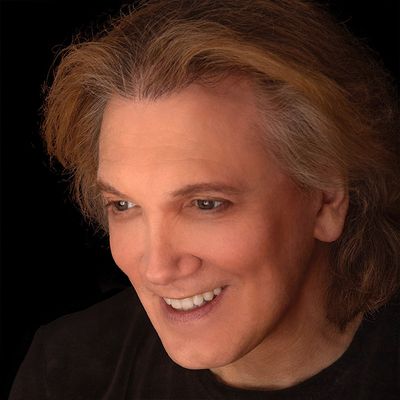
In episode 17, Mark-Eugene and David pass the mic to the incredible playwright and friend Nora Brigid Monahan who interviews the legendary Charles Busch! As the Tony Award-nominated writer behind "The Tale of the Allergist’s Wife" and the long-running hit "Vampire Lesbians of Sodom," and a Sundance Festival award winner, Charles Busch has carved a unique place in the entertainment realm as a playwright, LGBT icon, drag actor, director, and cabaret performer. Charles dives into his journey from losing his mother at a young age to becoming an LGBT trailblazer. He shares hilarious and heartfelt stories about his career, including encounters with stars like Joan Rivers, Angela Lansbury, and Rosie O'Donnell. Afterward, David and Mark-Eugene chat about a slew of upcoming events from Drama After Dark- a cabaret featuring staff of the Drama Book Shop, David’s multi hyphenated participation in an upcoming theatre festival, Mark’s upcoming production of Goat Blood, and the next big events at the Drama Book Shop.
Transcript
This transcript was automatically generated and might contain errors.
[0:19] David Rigano: Hello and welcome to The Drama Book Show.
[0:22] Mark-Eugene Garcia: I'm David Rigano.
[0:23] Mark-Eugene Garcia: I am Mark-Eugene Garcia, and this is episode 17.
[0:27] David Rigano: NC 17, the rated R1.
[0:28] Mark-Eugene Garcia: Yeah.
[0:30] David Rigano: It's rated something.
[0:33] Mark-Eugene Garcia: It's not rated R.
[0:34] David Rigano: PG, it ain't.
[0:35] Mark-Eugene Garcia: I'll say that.
[0:36] David Rigano: But I would expect nothing less of the creator of Vampire Lesbians of Sodom.
[0:43] Mark-Eugene Garcia: Die Mommy Die.
[0:44] Mark-Eugene Garcia: Die Mommy Die Psycho Beach Party.
[0:48] David Rigano: Uh this is the event that we had for Leading Lady, a memoir of a most unusual boy by Charles Busch.
[0:58] Mark-Eugene Garcia: Oh, it was so cool to see him walk through the door.
[1:00] David Rigano: Yes.
[1:02] Mark-Eugene Garcia: To have him here, not just here, you'll get to hear him read a little bit from the book, and just to hear him talk about his own life and realize that all of the characters that we've seen him play on screen and on stage, that's just who he is.
[1:22] David Rigano: I feel like that's something for a lot of us writers, though. It's the characters we bring to the stage or the characters that are living inside us.
[1:30] Mark-Eugene Garcia: And there was one point I turned to the publisher, one of the publishers was here.
[1:38] Mark-Eugene Garcia: I was standing in the back of the room and he was reading through a portion of the book, and I turned to the publisher and I just went, Why's the audiobook dropping?
[1:47] David Rigano: Yes.
[1:47] Mark-Eugene Garcia: And he was like, We are going into the record studio to finish recording it tomorrow.
[1:52] David Rigano: Yes, because you want to hear it with Charles Busch's voice?
[1:55] Mark-Eugene Garcia: Yes.
[1:55] David Rigano: Yeah.
[1:56] Mark-Eugene Garcia: It's funny. I remember he came to an event.
[2:01] Mark-Eugene Garcia: He was Seth Rodesky's surprise guest for when Seth Rodesky did an event here at the store.
[2:08] Mark-Eugene Garcia: And it was a filmed, a live streamed event too.
[2:12] Mark-Eugene Garcia: And it started before I could move away from the door.
[2:15] Mark-Eugene Garcia: And they were filming that direction.
[2:16] Mark-Eugene Garcia: So I found myself hiding behind the counter for the duration of the filming when somebody knocks at the door almost nine at night.
[2:26] Mark-Eugene Garcia: And I'm about to tell them, hey, we're closed, plus we're also filming something.
[2:31] Mark-Eugene Garcia: And I look up and realize that's Charles Busch.
[2:34] Mark-Eugene Garcia: And so I go and open the door, and he's like, Hi.
[2:37] Mark-Eugene Garcia: I'm like, You're Charles Busch.
[2:39] Charles Busch: Yeah, I'm Seth's surprise guest.
[2:42] Mark-Eugene Garcia: And all I could think of was it's a surprise to me too. You're not on my list.
[2:47] Mark-Eugene Garcia: But please come in.
[2:48] Mark-Eugene Garcia: And then so suddenly we're both hiding behind a counter.
[2:54] Mark-Eugene Garcia: Waiting for a commercial break, basically, and then finally bring him forward, and he got to join the broadcast.
[3:01] Mark-Eugene Garcia: But it was such a fun moment to be hiding behind a counter with him.
[3:04] David Rigano: That sounds like something that would be written into a Charles Busch play.
[3:08] Mark-Eugene Garcia: Right.
[3:09] Mark-Eugene Garcia: Um, yeah, the first experience I ever had with Charles Busch, actually, was when I was in college, the student theater group put on a production of Psycho Beach Party, which I had heard of so many of his plays, but I had not at that point read or seen any of them.
[3:30] Mark-Eugene Garcia: And though I think he might have around the same time been off Broadway with Die Mommy Die, maybe it was a revival, because I remember going to visit a friend of mine who was an usher, and we were gonna go out for drinks or something, and she just said, You wanna just wanna come in and watch Charles Busch take his curtain call?
[3:51] Mark-Eugene Garcia: And he descended a staircase in some glamorous gown.
[3:56] Mark-Eugene Garcia: Uh but I saw a student production of Psycho Beach Party that as written, Charles Busch play wrote himself in to, as he does with most of his stuff, wrote himself in to play Chicklet, who's kind of the Gidget character.
[4:14] Mark-Eugene Garcia: But I believe that that was the only cross-dressing role that was written into the show.
[4:21] Mark-Eugene Garcia: But when this whoever it was who directed it at the student production put it on, they did a lot of gender bendy stuff, which of course is so welcome in a Charles Busch play.
[4:33] Mark-Eugene Garcia: And the crazy mother in that production was played by a then 18-year-old freshman Cole Escola.
[4:41] David Rigano: Oh.
[4:42] David Rigano: Yes.
[4:43] Mark-Eugene Garcia: Brilliant.
[4:44] David Rigano: Oh, Mary indeed, brilliantly played.
[4:48] Mark-Eugene Garcia: And that was the first time I knew I went to a very small school.
[4:51] Mark-Eugene Garcia: I went to Marymount Manhattan College.
[4:53] Mark-Eugene Garcia: So I knew of Cole because you kind of know everyone when you're in a small, but that was the first time I ever saw Cole do anything on stage.
[5:01] Mark-Eugene Garcia: And I was like, that is someone to watch.
[5:05] David Rigano: Oh my gosh.
[5:06] Mark-Eugene Garcia: It's funny how you heard it here first with a tight circle 15 years ago.
[5:12] Mark-Eugene Garcia: And so we had Charles here, but you didn't do the moderating that time.
[5:17] David Rigano: We had the guest moderating.
[5:18] Mark-Eugene Garcia: And when you first told me that I wasn't gonna do the moderating, I was upset for only a second, because I was looking forward to it.
[5:25] David Rigano: Right.
[5:26] Mark-Eugene Garcia: Until I find out who our guest moderator was.
[5:29] David Rigano: Who was our guest moderator, David?
[5:31] David Rigano: Our guest moderator was our own coworker, Nora Brigid Monahan.
[5:36] Mark-Eugene Garcia: Oh, I love Nora.
[5:38] Mark-Eugene Garcia: Who not only is a wonderful writer in her own right and has two of her works, one play, one musical on our shelves here at the store and is going to be the subject of a future podcast.
[5:52] David Rigano: But she was kind of raised by Charles Busch.
[5:58] Mark-Eugene Garcia: Charles Busch was kind of her auntie Mame.
[6:00] David Rigano: That is incredible.
[6:01] Mark-Eugene Garcia: Yeah.
[6:03] Mark-Eugene Garcia: So learning that that was why, I was more than happy to step out of that spotlight and share that.
[6:10] David Rigano: Because she did a great job.
[6:11] Mark-Eugene Garcia: A little side note on Nora as well, and I've told her this, is that in all my years of managing retail and different places, Nora has given the best interview I have ever had.
[6:25] Mark-Eugene Garcia: And it was untaken.
[6:28] Mark-Eugene Garcia: It was just so fun and smart.
[6:34] Mark-Eugene Garcia: And something about interviewing at the Drama Bookshop, little behind the scenes, is that I am less concerned about what you know and more concerned about how you get there.
[6:45] Mark-Eugene Garcia: So when somebody says I'm looking for this play, it's not about I know this playwright off the top of my head.
[6:51] Mark-Eugene Garcia: It's more about I will figure it out, and this is my thought process.
[6:55] Mark-Eugene Garcia: And so I asked Nora a specific question during the interview and said, you know what? If I were to say I'm looking for a so-and-so, this type of player role for me to audition for, someone to audition for, and she turned back and said, I would ask this and this, and throughout the whole process, and I just immediately grinned, knowing that's exactly what I asked for.
[7:14] Mark-Eugene Garcia: And then she turned and said, and I would give you this playwright.
[7:17] Mark-Eugene Garcia: And also knew the answer.
[7:19] Mark-Eugene Garcia: And so it was just such a wonderful interview that it flew by.
[7:24] Mark-Eugene Garcia: And I knew within the first few moments I was gonna hire Nora, but it was just a wonderful process to watch her think and watch her answer these questions.
[7:34] Mark-Eugene Garcia: And so I am so grateful to have her here.
[7:37] Mark-Eugene Garcia: And it was just announced that she has a musical coming to Off-Broadway, a musical adaptation of Virginia Woolf's Orlando.
[7:46] David Rigano: Oh my gosh.
[7:47] Mark-Eugene Garcia: Yeah.
[7:47] Mark-Eugene Garcia: And she and I have had lots, you know, writers sit around to talk about writing.
[7:53] Mark-Eugene Garcia: So she and I have had lots of conversations about this upcoming production, and I know a couple people involved with it.
[7:59] Mark-Eugene Garcia: So that's a little plug for Nora as well, because she has that coming up.
[8:03] Mark-Eugene Garcia: And if you look up or we'll get a link or something, we'll figure out how to do this.
[8:08] Mark-Eugene Garcia: But Nora Brigid Monahan, Orlando, that's coming up, I think, at I'm really excited to see this.
[8:15] David Rigano: All right.
[8:16] David Rigano: Well, let's stop talking about Nora and let Nora start talking about Charles Busch.
[8:24] Nora Brigid Monahan: Hi, I'm Nora Brigid Monahan, I'm a playwright, and I also work here at the Drama Bookshop, and I have known Charles Busch since I was 11 years old.
[8:33] Nora Brigid Monahan: I was a child actor, and I was cast in a reading of a play of his at Manhattan Theater Club when I was 11.
[8:41] Nora Brigid Monahan: And I knew the name Charles Busch.
[8:43] Nora Brigid Monahan: I knew I was not allowed to see his play, The Tale of the Allergist's Wife, that was on Broadway the season before.
[8:49] Nora Brigid Monahan: And a very interesting and unusual thing happened where I got to read the scene and the audition with Charles, and I was playing, it was a play about a theater summer camp.
[9:00] Nora Brigid Monahan: It's one of his few plays that you don't all know, but I do.
[9:03] Nora Brigid Monahan: And I was playing sort of a younger version of himself, and I was reading the scene with him, and I can close my eyes and remember every second of it.
[9:12] Nora Brigid Monahan: We had this immediate connection.
[9:14] Nora Brigid Monahan: This was a person who got me and who saw me.
[9:18] Nora Brigid Monahan: And it's been a huge blessing in my life to get to know Charles Busch.
[9:23] Nora Brigid Monahan: And you all get to know Charles Busch too.
[9:24] Nora Brigid Monahan: Some of you personally, some of you through his fabulous work, from plays like Vampire Lesbians of Sodom to The Tale of the Allergist's Wife, of course, and for his films, Die Mommy Die, Psycho Beach Party, and his serious films, very serious person.
[9:39] Nora Brigid Monahan: And he's so multi-talented.
[9:41] Nora Brigid Monahan: He's had a fabulous career as a cabaret singer.
[9:43] Nora Brigid Monahan: He's an incredibly talented painter and visual artist.
[9:47] Nora Brigid Monahan: And he's a novelist and now a memoirist.
[9:49] Nora Brigid Monahan: So I'm so excited to be able to sit down with him today, and for you to all get to welcome Charles Busch.
[10:19] Charles Busch: It was reading, and then I did something quite out of character for me.
[10:24] Charles Busch: I contacted his mother in Long Island, and I was a little bit concerned that she'd think I was a weirdo, but I said, I'd really love to take Sean at the time to the theater.
[10:35] Charles Busch: And I said, okay, because I thought it's tied from the theater.
[10:38] Charles Busch: I don't really need a microphone.
[10:40] Charles Busch: But I I so I said, I'll I'll I'll uh pick them up at uh Penn Station and afterwards I'll put it back in the train and you can pick them up.
[10:48] Charles Busch: And she said yes, and and oh what adventures we had.
[10:52] Charles Busch: And we just uh oh my gosh, and we went to all these different shows, and you know I know a lot of people, and so it was marvelous to be able to take him backstage to meet Angela Lansbury and Liza, the palace, and it was just as great for me as it was for you, I think.
[11:06] Charles Busch: It's a magnificent way to grow up.
[11:08] Nora Brigid Monahan: And I've learned a lot about you from the book.
[11:10] Nora Brigid Monahan: Your stories to me then were much more tame.
[11:12] Nora Brigid Monahan: But I know if I ran out to get to read the fun ones that your aunt Mamba's once a prostitute.
[11:21] Charles Busch: What can I say?
[11:22] Charles Busch: So I should read you a little bit, actually.
[11:24] Charles Busch: All right, let me put my spectacles on.
[11:26] Charles Busch: Look at that cute little doggy there.
[11:28] Charles Busch: Oh my gosh.
[11:31] Charles Busch: Okay.
[11:32] Charles Busch: Well, now the book is it's uh written in a bit of an odd structure.
[11:38] Charles Busch: I get frustrated sometimes when I read biographies or autobiographies where you know the whole it starts off with their ancestors and their you know parents' lives and their childhood, and when do we get to the sexy stuff?
[11:51] Charles Busch: And so there's a bit of a collage that there it does, there is a logical order to the way it's it works, but I go off on tangents.
[12:00] Charles Busch: I can get to the fun stuff quickly.
[12:02] Charles Busch: And here's a a story.
[12:05] Charles Busch: And they're very short chapters.
[12:07] Charles Busch: It's it's a very good book to read on the toilet, actually.
[12:10] Charles Busch: Um you won't get hemorrhoids.
[12:12] Charles Busch: Read you, maybe that's a quote that we should put on the back.
[12:15] Charles Busch: Yeah, no, because they're short bill chapters, yes.
[12:19] Charles Busch: On the paperback.
[12:20] Charles Busch: Okay.
[12:20] Charles Busch: This is this short little chapter called The Women in Palm Springs.
[12:25] Charles Busch: 2012.
[12:27] Charles Busch: A role I always had a yen to play was Mary Haynes and Claire Booth Lucis played The Women, the role Norma Shearer played in the film.
[12:34] Charles Busch: I had the opportunity in several stage readings produced by the group Tweed in New York in the 1990s.
[12:41] Charles Busch: It was a very different but especially memorable experience to appear in the play for one night benefit performance for the Coyote Stageworks in Palm Springs with an all-star cast, including Lucy Arnaz, Lorna Luft, Michelle Lee, Florence Henderson, and Kay Ballard.
[12:58] Charles Busch: I shared a dressing room with Lorna Michelle and Lucy. Garbed in a chic, form-fitting black cocktail dress, I was straightening my seams when Michelle complained that it wasn't fair that I was the only one in the cast to be miked. What are you talking about? I asked her. I'm not mic'd. Michelle, in all seriousness, pointed to an area below my waist and said, I see the mic pack. It was necessary to diplomatically inform the lady, Michelle, that's my dick. Sheer poetry. Oh, it was Joycean, really. I chose three, but I think I'll just do two. Okay, let's see here. Okay, actually, this is it. My friend Kathy Carr, who's sitting in the front row here, who has done my wigs for 40 years, and uh and knows where the bodies are buried.
In fact, she in fact she helped put them there. Yeah. Anyway, so this is a chapter that involves her. Okay. We it's called Babes on Avenue C. We opened the new Limbo Theater. See, I should just say this this uh chapter is when we had our theater company, Theater in Limbo, in Al Alphabet City, where we used to do these plays at the Limbo Lounge. And so they uh it was first a little storefront on on East 10th Street between A and B, and then they moved to a slightly larger dump on uh 9th Street between B and C. So anyway, so here we go. We opened the new Limbo Theater on November 9th, 1984. Our gala opening night was not without incident. Kathy was set to arrive at my place around six o'clock to sew some straps on a gown before we headed over to the limbo lounge.
When I opened the door, she stumbled in, pale and moist, as a plate of linguini minus the red sauce. She said she felt she was coming down with something, quite an understatement, considering that she looked and acted as if she required embalming. I placed my hand on her forehead and it was burning hot. How is she going to handle her duties of stage manager? I laid her down in my bed. Kathy, you should have stayed home. You can't call the show. Slurring her words, she refused to consider that possibility. My immediate task, beyond playing Nurse Edith Cavell, was to get rid of the hair on my legs. I decided to try Nair a depilatory cream. As I was standing in the bathroom in my underwear, slathering on the smelly, sticky white stuff, Kath staggered towards me.
Charles, I think I need to. She pushed past me in the tiny bathroom and reached the toilet just in time to throw up. I managed to hold her head and smooth back her hair as she sat on the floor with her face in the toilet bowl. I thought to myself, I must really love her. Kath laid down in my bedroom and I phoned Aunt Lil. After I filled her in on Kath's condition, she counseled, if her temperature goes past 103, you'll need to bring her to an emergency room. The emergency room? The audience would be arriving in an hour, and I was covered in depillatory cream up to my crotch. When it was time to rub off the nair, strangely, not a single hair was removed. Had I not given it enough time? I'd have to get out a razor and begin shaving.
This was not an activity with which I was all that familiar, and I immediately bloodied my ankle in three places. Then the phone rang. It was Ken calling from the limbo lounge, wondering where when Kathy was going to arrive. I gave him the bad news that she wouldn't be coming at all. Ken, I really can't talk right now. I'm in the middle of shaving my he asked me to look in his address book, he was also my roommate address book for the phone number of a veteran Broadway stage manager we knew. Carrying the phone with its long cord, I hobbled toward Ken's bedroom, which led directly into mine. As I was dictating the number, Kath rose to her feet like one of Dracula's brides, and without warning, projectile vomited all over me, the phone, and the bedroom wall.
We were both in a frozen state of horror. Kathy began to sob like something out of the exorcist. My chest and my hair were splattered in vomit and my bare legs coated in white nair and blood. Hanging up the phone, I couldn't believe I was hearing myself say in a gentle spring byington voice, don't worry, darling, I'll clean everything up. I turned to face an imaginary camera and screamed, Ah. With that, I slipped on the watery floor, falling flat on my ass. Things have a way of working out, don't they? Our lighting designer, Vivian, ran the show. The straps of the gown were attached with safety pins. Kath's fever and nausea subsided, and my legs, though scabbed in eight places, were smooth as silk. The show went on.
[17:45] Nora Brigid Monahan: Okay. I guess that's all I did.
[17:49] Charles Busch: Yeah, now we'll talk. It's so amazing to hear the stories from the limbo lounge days. And it's funny, that one in particular reminds me of your wonderful novel, Horse of Lost Atlantis.
[18:01] Charles Busch: Oh, thank you. Which covers some of the it's a brilliant comedy novel, one of the last great comedy novels of the 20th century.
[18:08] Charles Busch: Oh my. I mean it.
[18:10] Charles Busch: Oh, thank you. And so it's it's so wonderful to hear the similarities between the narrative that you developed in that novel and and then in in the memoir.
[18:19] Charles Busch: It was very hard. I tell you, the the most difficult part of the book was the whole limbo, how we did Vampire Lesbians of Sodom and Limbo Lounge and how he moved off Broadway. Because I had told, first of all, I had turned it into a novel covering the same period. I had reduced it down to cabaret banter in a cabaret show. I had told the story so many times in so many interviews, and I had it all compressed. This afternoon when you tell the same story so many times, it was basically a series of one-liners. And then to try to this time really tell the story, and what was I feeling, what were other people going through, and to separate it from Horse of Lost Atlantis, which is fairly accurate, actually, that that part. And that that was the biggest challenge, I think, in writing the whole book, with was that part.
[19:09] Charles Busch: Yeah. And then, oh, this terrible thing happened. After the book was all really set in stone, and it was at the printer, in fact, it was really far along. And I happened to do cleaning out a forbidden drawer cabinet drawer, uh, a file cabinet drawer that you never go in, but I can slip a hand in to try to get an envelope out. Anyway, I opened it up and I discovered eight diaries that I kept during those early years that I totally forgot that I had. And I didn't dare open them. Because I thought, oh my god, what if I uh there's all this stuff I should have put in the book? And uh I thought nope. Just pretend it's I never opened that drawer. But I think in a way that that back in those days I wasn't terribly reflective.
And I think it was probably mostly who who I've been to bed with that night before or something, or pick up pick up clothes at laundry, that sort of thing. Scintillating stuff, I'm sure still. But maybe in the future, the the diaries, the lost diaries. But yeah, but I'm glad in a certain sense. I'm glad that I didn't have those when I wrote this. I think there's something like almost more magical in in really getting into the zone of memory. And I and I I found that uh as I really placed myself in this kind of magical spot of of remembering, all sorts of things start coming forth. Names of of people's dogs, just details that you never thought you'd ever come up with, because you're in the zone. You must know Nancy. He's a great memoirist.
[20:45] Nora Brigid Monahan: Yeah, no, that was interesting. I hope this isn't too dry of a question to ask or too literary, but you had mentioned the structure, and in terms of your being in so introspective in the book, it's so beautiful that this non-linear way that you've woven together your life. At some points it feels like that old Audrey Hepburn Albert Finney movie, Two for the Road, where you have this perfect segues where you can see a moment early in your life and how it would pay off or influence something that happened later. Did that come to you naturally?
[21:15] Charles Busch: I I took a very long time writing this book and I took some very bad advice too from from wonderful people. I I would go in the bookstore, look at biographies and stuff, and and I thought oh no, I think I forget who was it. Was it Tina Fey or somebody that it was just No, I think it was the girls.
[21:32] Nora Brigid Monahan: Nina Dunham?
[21:32] Charles Busch: Yeah. Yeah, her book was just a series of kind of essays about her life. Though maybe that's the way I should do. And and so I I thought maybe it'd be that. But at one point I thought it would really be a group of uh a book of anecdotes. I had a wonderful title, This Never Leaves the Dressing Room. So I I thought it was quite clever. But it was suited for just a book of dishy uh anecdotes. And uh and I gave it to I gave the book my f to my friend Tom Judson, who's my musical director for my cabaret actors, very astute fellow, and he read it. He said, I think you've actually have two books here, a book of anecdotes and a linear memoir. And I think you should really should just write your story. So yes, that's it. And so I began chapter one, I am born. And uh 450 pages I was still only 14 years old.
[22:18] Charles Busch: Yeah. And but I kept going. I filled in all the different blanks I didn't have before, and and oh, and then I I showed it to a very f famous uh editor, and sh and she thought it was just disappointingly hokey and old fashioned. And and then I I I thought, oh I why should why I listen to that muscle-bound piano player? Anyways, then I thought, no, I'm gonna go back and just really make it a free-floating story that that ha it it has it actually has a deceptively linear narrative, which I think is important, but within that, I go off a tangent. For instance, I'll talk about how my aunt started taking me to uh Broadway shows when I was 10 years old, and uh and I how we saw Carol Channing in Hello Dolly, which then triggers a memory of when I shared a dressing room with her in the 1990s. There's uh rhyme and reason from my shenanigans uh in the literary field.
[23:12] Nora Brigid Monahan: They read so beautifully.
[23:13] Charles Busch: Oh, thanks. Did you learn anything about yourself while you were writing it? Was there any sort of self-discovery while you were putting it together?
[23:21] Charles Busch: Yeah, yeah, in a certain sense, actually. I I I do think so. Uh I I think I saw other people's point of view a little bit, people who I'd, you know, were very upset with who I thought did me wrong, and then analyzing it so many years later that they had a good they had a point of view and uh trying hard, like we're all just trying hard. And so I I found myself very forgiving.
[24:39] Nora Brigid Monahan: So that that was fascinating. And is there anything that you think all of your fans will be particularly surprised to learn about you from the book?
[24:46] Charles Busch: Yeah. So in that sense, I I guess maybe I and then actually there was a very moving moment that my my mother died when I was seven, and my sister was ten. And my sister, Margaret, who passed away recently, and we were as close as two as a brother and sister could ever be. Never had a word of disagreement between us in sixty years since we were kids. Uh anyway, we had never ever discussed the day of my mother's death. We and never discussed like where she was, where I was when we heard the the news, because she she died just like down the street at a neighbor's heart attack. And so that was a very emotional thing for the two of us to actually for the first time as senior citizens to to talk about this moment that was really the most central episode of our lives.
[24:46] Charles Busch: But I was a prostitute.
[24:51] Charles Busch: A courtesan.
[24:54] Charles Busch: Well, a failed courtesan. I knew what basically what happened is that uh I was uh I got 11 years trying to make it as a a drag legend. It's very difficult to start off. How do you become a drag legend? I was I had every kind of crazy job. It's in the I was a psychic portrait artist. I just did everything. And at one point when I was living still living in Chicago, because I went to Northwestern and I stayed there for two more years. And it was the most awful office attempt there ever was. But I saw an ad in the gay paper, Circle of Ab and Red, David's models. So anyway, so I was the call girl for for about nine months, and it was the most fascinating period.
[25:35] Charles Busch: I absolutely recommend it for all of you. It's not too late. Good looking fellows here. Yeah, it's not too late. No, and I learned I really learned so much about that people and about people in the closet, because some of the people I had were somebody's grandfather from Wilmette, retired podiatrist to the family would never in a million years thought the grandpa was over, you know, my place. Yeah, no, it was fascinating a period. But it was a little embarrassing that my Polish cleaning lady was over and she saw the pile of the box of books and said, "Oh, can I have one?" So okay. And I don't know, I haven't seen her since. She might think when she finds out that her mistress was a prostitute.
I don't know. We'll see. Yeah. It's all beautifully and glamorously told. It's not a sordid book. No. And you really come across as there's this fabulous article about you and about the book in the New York Times that Ben Brantley just wrote. It was wonderful. Beautiful article. And one of your other proteges, mentees, Doug Plout, refers to you as the most fascinating person. And that really is how you come across in the book, really leap off of the whole thing. I hope in person. Yeah. No, that was wonderful. I have to say New York Times, I can't complain about them. Most people in the theater just, and particularly Ben Brantley, but the Times has been very good to me. And they've done a profile on me about every three years.
And he was on the beat for really the Frank Rich, I began when Frank Rich was there, and his review of the lady in question was a huge break for me, that review. And my career was made by a review in the Times with Vampire Lesbians, who was a third-string critic, TGR Bruckner. So it just, all along, and then there were times when you know you want to rave every time out, obviously, and I'd be disappointed when Brantley would have cavils and quibbles and I'd rage about it for a few weeks and then I'd reread it and think, he actually had a point. And often, really, most of the time, maybe every time, when I would then prepare the script for the Samuel French edition, I would do some rewriting based on the Times critic or another critic who maybe had a very wise cavil, and it was helpful.
[28:01] Nora Brigid Monahan: I think, and this is the last question I'll ask before I open it up to our lovely audience, but when a theater legend and artist like yourself writes such a beautiful and comprehensive memoir that as a reader, it's so exciting. And it's also a little fearful that you might be winding down. Now you have no signs of stopping. You have many more projects on the horizon.
[28:24] Charles Busch: Oh, today was difficult. Yeah. I don't know. It was very emotional and it's an emotional time for me. And we're doing this new play called Ibsen's Ghost. They were doing it joint production first at George Street Playhouse and then immediately with out of break going into primary stages here in New York. And you know, it's this big role I've written for myself and I don't know. I just listened to the whole state this morning and I just died in my eye and I was very upset. And so anyway, I called Carl Andrews, my longtime director who's now the artistic director of the Sharon Playhouse, and poor Carl, they're having a big crisis over the theater, and I called up to him. I really don't think I can do the play.
I just don't think I can do the play. It takes too much stamina and of course a couple hours later I'd calmed down and I guess I'll do the play. And you know, so he called me back to say to try to talk me down, and I'd already come down and so I said it could be worse for you. You could be working with Judy Garland or Maria Callas. Yeah. He said, I am already. So I'm doing the play until tomorrow. And you have your movie that you made that's gonna be in New York for a theatrical ride.
[29:42] Charles Busch: Well, thank you so much, thank you. Yes, we made this movie during the height of COVID called The Sixth Reel. And it's a wacky, it's contemporary, but it's like a wacky caper film that you might have seen in the 60s, where a bunch of eccentric characters are all trying to steal the same thing and hijinks ensue. And we got a great cast. It's the first movie I really got to co-star with my long-term buddy Julie Halston. And then Margaret Cho is in it, and Tim Daly is the love interest. And oh, and because all the theaters are closed, we basically had half the cast of Hadestown in our movie, André De Shields and Patrick Page, and all these a galaxy of Tony former Tony winners. And yeah, it was a great group.
And we shot it before there was a vaccine right on the streets of New York. And we had, it was just a marvelous time. And we were at all the different festivals and won awards. We've had a terrible time trying to get it on streaming service, whatever. But finally, we're having a theatrical distribution starting September 22nd, like in a week or so. 22nd to 29th at this wonderful new theater on 50 West 57th Street called The Look Cinema. And it's one of those wacky theaters where you can get a three-course meal while you're watching the picture. So, anyway, so I hope you'll come see the movie. I'm very proud of it. And it's a kind of movie you don't really see much anymore. A caper picture. So it's a lot of fun.
[31:12] Nora Brigid Monahan: Do we have any questions from the audience? I imagine you all haven't had a chance to read the book yet. So maybe some of your questions will be answered. If you're Facebook friends of mine, you actually have read a number of in your thank you in the acknowledgments.
[31:30] David Rigano: Yes, yes. I'm so curious because I and so many of us have gotten to see you be so many wonderful leading ladies. Do you have a favorite leading lady? Not of your own, but of your predecessors who you, oh in the pantheon of great actresses? Do you have a favorite leading lady?
[31:49] Charles Busch: Well yes. I've been asked that over the years and naturally, and there's this whole groove of great actresses. I love Bette Davis and Greer Garson is actually probably a very one of the people I've really cribbed from in my pre persona, as Julie would say, and Susan Hayward. But I lately I've been thinking, actually, if I just pick one, Norma Shearer is a big, big favorite of mine. Yeah, I like the ladies. But I think really the one I'm finding the most fascinating is Vivien Leigh. Actually, I just, her acting, she's so subtle and she gets that kind of in every one of her movies it's her deadpan that's slightly mad. And it's so appropriate in every movie she does, not just Streetcar, but that Hamilton woman, Waterloo Bridge.
Oh, I find her fascinating. And the very first show I saw on Broadway was Tovarich with Vivien Leigh when I was nine years old. With Aunt Lil, that was the first Broadway show we saw at the Broadway Theater. And when it, when the play, I had already seen Gone with the Wind, the 1961 reissue. So I was obsessed with Vivien Leigh at nine years old. And when the show was over, Aunt Lil took me to the alleyway where the actors come out of the stage door, because I just had to see Vivien Leigh up close. And there were a lot of people waiting down the thing, but I, just a little boy, I just pushed past everybody's to just set myself right in front of the stage door. And the cast was coming out, and I was waiting for Vivien Leigh, and then this beautiful lady came out with all this heavy eye makeup and her hair and a cap, and it was Vivien Leigh.
And I started talking to her, and she was so kind to me. She signed my playbill. And then while we were chatting, this very kind of conservative lady looked almost like the Queen of England in a lovely sort of Chanel suit, came out the door and she was walked past us and she was going down the alleyway toward a car that was waiting for her. And my aunt is going, she's interrupting while I'm talking to Vivien Leigh. And so then I looked down there again, and at this point this elegant lady was right standing right by the limousine, and she looked at me, and then when I didn't respond, she kind of shrugged and she got in the car. And then I walked over to my aunt, she said, that was Vivien Leigh.
What? And I, you know, I looked at my playbill signed by Carol D. Pasquale. Faker. She did that on purpose. That's not in the book. No. But I saw her again in another play. I saw Ivanov, which I think was the last play that she did in New York.
[34:49] Nora Brigid Monahan: The number of people you have met is so incredible. I mean, and it feels what's interesting though, what's unique about it is that it doesn't feel like a name-drop book. Right. Because their work has so informed your art and your career. You've evoked so many of them. And you have fabulous stories. Then you have a fabulous story about Garbo.
[35:09] Charles Busch: Very close friend. I grew up in New York City for one thing. So if you lived in New York, at a certain point, you're bound to run into Greta Garbo, basically. And I did. And yeah, I mean I've met so many people. One thing that's very interesting about my life, and I think comes across in the book, is that here I'm this drag artist or male actress, and it's wonderful that I embraced by the drag community as it is. And but I've also been accepted as an actress. And I find myself over the years I share dressing rooms with all these ladies, and nobody seems to bat an eye. And it's a curious thing of just sitting there. It's in the book here. I don't want to give away too much, but just I was, I think it was at one of these big Broadway care, maybe the, I don't know, Easter Bonnet contest, one of those things at the New Amsterdam Theater, and Carl arrived, he was gonna help me, and so we got there, and one of the staffers brought me to this big communal dressing room above, and we were the first to arrive as we were setting up my stuff, and then Mario Cantone was the host, and he's a friend of mine, and he poked his head in and said, "They put you in the women's dressing room."
I said, "No." He goes, "Yeah, so I'm downstairs with Nathan Lane and Brian Stokes Mitchell, and you're here with Audra McDonald and Carol Burnett." And really, and next thing we knew, suddenly Carol Channing walked in with her husband Charles Lowe, and they stood up in their makeup and anyway. The rest of the, it's a funny story. It's in the book, darling. It's in the front. But it's just weird that I've just been accepted.
[36:43] Nora Brigid Monahan: Yes, please. In light of your comments, Charles, is there anybody who you haven't met who liked me in the theater?
[36:53] Charles Busch: It's funny about actors, really. I really have, it's been wonderful when I've actually collided with these people. But in a certain sense, I don't know if I really would necessarily want to meet Bette Davis, who might be very intimidating, or some of these people. I think I prefer just seeing them on the screen, who I've cultivated was my favorite writers, because I really did feel that a writer is their work. I think that's the line from Suddenly Last Summer. The poet is his life, yes, it was public. Yeah, so I, and it was kind of funny. My three favorite writers when I was in my twenties were Armistead Maupin, because I just loved his book so much, and Gavin Lambert, who a lot of people don't know was a wonderful screenwriter and novelist, wrote Inside Daisy Clover, and my favorite novel is, which most people have never heard of called Running Time, and Christopher Isherwood.
And so I somehow I got to know Armistead, who then introduced me to Gavin Lambert, who then introduced me to Christopher Isherwood. And so I got to meet them all again and get to know them and be friends with all three. And that meant so much to me, but I don't know if I really necessarily would want to meet Greer Garson. I met more currently people who are living. A living? I think I met them all. I think I throw a name at me. I met them.
[38:23] Charles Busch: How about writers? Writers and playwrights. Um, I've known quite a bit of them. I um, Doug Wright and uh, David O. J. and Teresa Ignale was very kind to me. I'm sure who else we have there. Um, Edward Albee. Oh, oh, I cleaned his apartment. Yeah, and he was scary. No, I during my very brief attempt at cleaning apartments. That was it was much better being a hooker, believe me. Sarah Daryl. The worst. Yeah, so I met Albee when I was dusting. I don't know. Who else would there be? Who's a contemporary writer? Matthew Lopez, I met him, and uh, I get around.
[39:05] Nora Brigid Monahan: And the book, too, is your career is so uniquely multi-generational in that your work evokes so many of these artists from sort of the golden age of Hollywood. And then you also are, in addition to your work as an artist, you're known around town as a wonderful mentor and a person who gives back in the theater.
[39:26] Charles Busch: I do. Yeah. And it's in the book. A lot of the people, Carl Andrus and Ashley Morris, a lot of people whose careers are. I don't do that. Like Mr. Sondheim, who really, really was it mentored all. Remember after he died, just they all came out of the woodwork. Just generations of people that he was kind to. And he was awfully nice to me too.
[39:48] I do. I think I don't think they're all in the book. I see what's a good one. Well, that one's in the book. I just said, yeah, I'd start with the book. What the fuck? I just yeah, no, he uh started uh seeing my shows and and then oh with that, so really with the Allergist’s Wife, when we were and we moved it from Manhattan Theater Club, and we started pre we were about to start previews on Broadway, and I got a telegram opening night. I got a telegram at home who writes me a telegram. And I opened it up and it said, Welcome to big time, Steve Sondheim. And he had, and he was g had given that week an interview. I think Frank Rich did this big story, Sondheim at 70, I think it was, in the magazine section. And in that in that interview, he he said that the Allergist’s Wife was the funniest play he'd ever seen ever. And that really I think that really helped us sell out in previews.
[40:35] And shortly after that, uh, he invited my partner and I, Eric, to this party he was giving at his townhouse. And it was uh, it was uh uh I think the guest of honor was Peter Nichols, the playwright, and everybody was there. You just couldn't believe it. It's just everywhere you looked was it was just it was like a Hirschfeld mass caricature to life. And when it was everyone was leaving, Steve said asked us if we'd stick around and for a drink afterwards. And so we stayed, and it was just Sondheim and his partner at the time. Not the last one, and Eric and I, and we we stayed for quite a while just chatting with them, and it was just magical.
[41:18] And so I wrote him a thank you note afterwards, and I said, You really made me feel like I was part of the theater community. And he wrote me back, that was the point of the evening.
[41:31] Nora Brigid Monahan: That wonderful. I think you're gonna find a lot of people coming out of the woodwork now that the book is out, thanking you for everything you've done. Myself included.
[41:38] Charles Busch: Oh, I'm my proteges. I think with that, oh we take one more question and then we'll get to the sign-in thing. Would you talk about the importance of thank you notes?
[41:48] Nora Brigid Monahan: You were so good at writing thank you notes.
[41:51] Charles Busch: Oh, I'm glad, because I I wasn't always, and I've had to learn to be have good manners. Yes. And uh, I've had to had learned that now. I really try. I've learned to be much nicer in general. Just there's some it's mentioned in the book, but it happens where uh what one time I think I I think I may have been doing The Divine Sister and Carl and I were leaving the theater and the young young man asked me if I would sign his Taboo uh poster and that was kind of a miserable experience in the book. I mean there's a lot in the book it but my agent told me he cut some of that out because it was so depressing and I'm glad he did. But anyway it was a terrible experience.
[42:32] And so when this young man said would you sign this poster where he had every single person involved in the show had signed it and he seen the show like 68 times. And my but my response my stupid response was like and I thought you you liked it and anyway after after the we left Carl just lit into me and he said that was so awful that that guy he loved that show and why couldn't you have just had the ma good manners to just to say thank you and I it really shamed me and I thought he's so right and I and I I've never done that since when never will do that ever again. So you'd have to try it to be a sense of good person.
[43:13] Nora Brigid Monahan: I broke the post it was you're now known for being very generous with your time you've been very generous with your time with us tonight.
[43:25] Charles Busch: Oh that's a bit fun if you're ready we'll go to the back and line people up and you'll sign copies for five thank you smell it's always interesting to hear a writer talk about their craft.
[43:45] Nora Brigid Monahan: Yes. And their life. That part in particular. Our craft is so much influenced by our life.
[43:53] Charles Busch: But also to hear someone who their bread and butter has been camp theater.
[44:03] Nora Brigid Monahan: Right. To then yeah, to see what the influences, to see what the real world influences that brought him to that place was a real joy.
[44:15] Charles Busch: Oh, absolutely loved it.
[44:17] Mark-Eugene Garcia: Well, so we got a lot going on this week.
[44:20] David Rigano: Yes. Whether it's here, whether it's outside of here. I want to talk about something the Drama Bookshop is doing this weekend.
[44:26] Mark-Eugene Garcia: Yes. And you're part of that.
[44:28] David Rigano: I am. I'd love to hear a little bit about Drama After Dark.
[44:31] Mark-Eugene Garcia: Drama After Dark is a series that Aaron Clark Burstein, who's been on the podcast before, started. And it's a concert series where you get to see so many of the people who work here work in the theater, and most of them are performers. But uh obviously, as we've talked about, we have performers and writers and tech people and all across the the gamut. And so what Aaron has put together is a chance for the staff to show off a little bit. And the theme as we head into spooky season is villains.
[45:08] David Rigano: Spooky.
[45:09] Mark-Eugene Garcia: Yeah. I will be singing. I usually take it as a chance to sing something that I've written. So I will be singing the villain song from my musical Get the Duchess.
[45:21] David Rigano: Wonderful.
[45:22] Mark-Eugene Garcia: And a couple of other villains, including a maybe debatable villains. I think every villain is a hero in their own story.
[45:31] David Rigano: Right.
[45:32] Mark-Eugene Garcia: Yeah. We have a cast of heroes and villains that includes Aaron Clark Bernstein, Dylan Glick, Ashley Nicole Martin, Xavier Moses, David Rigano.
[45:41] David Rigano: That's me.
[45:42] Mark-Eugene Garcia: And Kristen Wolf.
[45:43] David Rigano: Yeah.
[45:44] Mark-Eugene Garcia: Accompanied by some guy.
[45:46] David Rigano: Some guy who's also been on his podcast.
[45:49] Mark-Eugene Garcia: Yeah, my brother Paul Rigano will be accompanying. And that's always great when we've had a series of fantastic uh accompanists, but it's always great when it's Paul because I'm usually singing something that we wrote together. So I'm like, oh, at least I know he knows that one already.
[46:03] David Rigano: Oh now, when's this gonna be?
[46:05] Mark-Eugene Garcia: That is gonna be this Sunday at 7 p.m. Sunday, the 29th of September at 7 p.m. at Green Room 42.
[46:15] David Rigano: Wonderful. And where can we get those tickets?
[46:17] Mark-Eugene Garcia: You can get those tickets at, I believe it's greenroom42.com. But if you go to if you go on Instagram at drama after dark, then there'll be a ticket link there.
[46:26] David Rigano: Oh, that's fantastic. I am excited to be there. I hope to see you all there. And because I can't just have one event within a weekend, I also am part of Scantic River Productions New Play Festival, which is on Saturday, September, and I have the theme is birthdays, and I have written a new play for this festival.
[46:51] Mark-Eugene Garcia: I am also directing a new play for this festival that Ashley Nicole Martin is also in.
[46:57] David Rigano: It's all family.
[46:58] Mark-Eugene Garcia: It's all family. Speaking of which, my father is also in the play, though.
[47:01] David Rigano: Oh, it really is all family.
[47:04] Mark-Eugene Garcia: And as of a week ago, I am also acting in a third play in this festival.
[47:10] David Rigano: Is this all on Saturday?
[47:12] Mark-Eugene Garcia: This is all on Saturday at 4 p.m. at Caveat on Clinton Street. And similarly, if you go to at Scantic River Productions on, I think that's what it is, on uh Instagram. There'll be a link to buy tickets there.
[47:26] David Rigano: Okay, so Saturday, the festival, Sunday Drama After Dark.
[47:30] Mark-Eugene Garcia: Yes. That's quite a lot.
[47:31] David Rigano: I'm gonna throw one in there too because I just had a reading of my show, Goat Blood last week. It went so well. And we are going to open a production that will play on October 18th, 19th, and 26th at Under St. Mark's Theater. You can check out Frigid Festival for tickets for that. And yeah, I'm looking forward to seeing everybody there. It's also very, very spooky.
[47:54] Mark-Eugene Garcia: Well, while we have you, while we're putting things on the calendar, I want to invite you to our next event at the store.
[48:01] David Rigano: Yes. Come in person, be a part of the podcast recording. On Tuesday, we have two incredible playwrights who are going to be here to do a panel discussion.
[48:11] Mark-Eugene Garcia: We've got Adam Simkowitz and Jaclyn Goldfinger.
[48:14] David Rigano: Yes, and they will be representing three books that will be uh they that will be focused on Letters to a Young Playwright by Adam Simkowitz, as well as writing adaptations and translations for the stage and playwriting with purpose, a guide and workbook for new playwrights.
[48:30] Mark-Eugene Garcia: Now, this event is called Making Art and Making a Living, and they are going to tell us really how to do both.
[48:37] David Rigano: And I think that's something that every playwright needs to learn.
[48:40] Mark-Eugene Garcia: And because they are two people who have been very successfully doing both.
[48:44] David Rigano: But something aside from them being successful at what they do, they also have really great hearts.
[48:49] Mark-Eugene Garcia: And the most giving spirits.
[48:51] David Rigano: Yes. I have loved all my interactions with them both here at the bookshop in previous events.
[48:57] Mark-Eugene Garcia: Yeah. And I'm looking forward to this one.
[48:59] David Rigano: Yeah, it's gonna it's gonna be a fun one. I'm really looking forward to to getting to sit down and chat with them about this thing that we do that can make us a living, but it's not easy.
[49:12] Mark-Eugene Garcia: It's not easy, and everyone does it differently.
[49:15] David Rigano: Yeah.
[49:15] Mark-Eugene Garcia: It's so exciting to see who does what. And we're gonna really delve into that on Tuesday, October 1st.
[49:23] David Rigano: So, David, what do we got going on the next episode of the podcast?
[49:23] Mark-Eugene Garcia: Next episode of the podcast is going to be also a panel discussion that we had for a book called Latinx Actor Training, which is a collection of essays edited by Cynthia Santos de Cure and Misha Espinoza.
[49:42] David Rigano: That was a fun night, too.
[49:43] Mark-Eugene Garcia: That was. Aside from that, Julio Augustine was one of the guests who was one of my college professors.
[49:51] David Rigano: So it was a fun little reunion when he walked through the door.
[49:54] Mark-Eugene Garcia: And he's been a great friend to the store, a great friend to the podcast.
[49:54] David Rigano: A great friend to Broadway.
[49:59] Mark-Eugene Garcia: He was Women on the Verge.
[50:01] David Rigano: Yeah.
[50:02] Mark-Eugene Garcia: In Chicago.
[50:03] David Rigano: Yeah. It's such a small theater world.
[50:06] Mark-Eugene Garcia: It's something you learn when you move to New York that and start working in the theater, is that everyone knows everybody and it's a big family.
[50:12] David Rigano: Yeah.
[50:12] Mark-Eugene Garcia: And now you're part of our family.
[50:14] David Rigano: Exactly to listen on the podcast.
[50:16] Mark-Eugene Garcia: So we're looking forward to having you be part of that media next week with our Latinx Actor Training episode.
[50:28] David Rigano: Please follow us on Instagram at Drama Book Show Podcast.
[50:32] Mark-Eugene Garcia: And please follow us on EventBright so that you always know when we post new events and you can come and join us in person.
[50:38] David Rigano: Yes, and all of the books we talk about can be found here at the Drama Bookshop.
[50:42] Mark-Eugene Garcia: And so can we.
[50:43] David Rigano: And we will see you at the bookshop.
© Broadway Podcast Network, All Rights Reserved