

Christine sits down with two writers and advocates, Georgia Stitt (Snow Child, Samantha Spade, Ace Detective, Founder of Maestra) and Lloyd Suh (The Chinese Lady, Charles Francis Chan Jr.'s Exotic Oriental Murder Mystery), to talk about the pipeline, who is granted access to being considered for jobs in the industry and why... Read More
From the show: The Dramatists Guild Presents: TALKBACK, sponsored by the Dramatists Guild Foundation
Guests
About
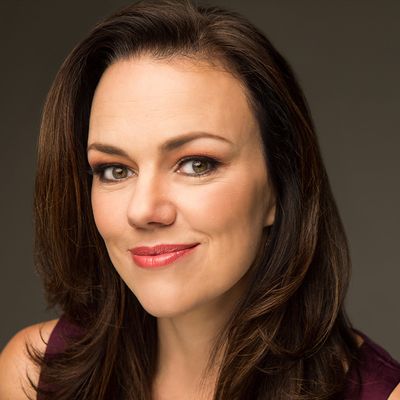
Christine sits down with two writers and advocates, Georgia Stitt (Snow Child, Samantha Spade, Ace Detective, Founder of Maestra) and Lloyd Suh (The Chinese Lady, Charles Francis Chan Jr.'s Exotic Oriental Murder Mystery), to talk about the pipeline, who is granted access to being considered for jobs in the industry and why. You’ll hear their theories on why the pipeline is perpetuated, whose stories are being told, and how musicians, composers, and playwrights can make a more welcoming space for all.
For more on Lloyd Suh visit https://newdramatists.org/lloyd-suh
For more about Georgia Stitt and Maestra visit maestramusic.org or GeorgiaStitt.com
To see the Asian American Performers Action Coalition Visibility report visit http://www.aapacnyc.org/2017-2018.html
This episode features Georgia Stitt and Lloyd Suh The Dramatist Guild Presents: Talkback is a production of The Dramatists Guild of America . This episode was produced by Sarah Storm, Amy VonMacek and Christine Toy Johnson. Robare Pruyn mixed our show. Our theme music was composed by Andrea Daly. Special thanks to Tina Fallon, Tari Stratton, and the Diversity, Equity and Inclusion Committee at the Dramatists Guild.
Transcript
This transcript was automatically generated and might contain errors.
[0:01] Christine Toy Johnson: Welcome back to Talk Back, the Dramatists Guild's conversation about the theater world we see and the one we want to see.
[0:08] Christine Toy Johnson: I'm your host, Christine Toy Johnson.
[0:11] Christine Toy Johnson: Things are very different this season.
[0:13] Christine Toy Johnson: At the time of recording, we weren't able to gather together in person due to the global pandemic.
[0:18] Christine Toy Johnson: Most of our theaters are closed, and in addition, our industry is going through a national reckoning on the systems of oppression that have been influencing whose stories get told and how and where.
[0:31] Christine Toy Johnson: A recent study from APAC, the Asian American Performers Action Coalition, has shown us again just how little parity there is on our stages.
[0:40] Christine Toy Johnson: From writers to directors to actors to artistic directors, the numbers show that there are hiring biases across the industry.
[0:49] Christine Toy Johnson: We will come through this unprecedented time together.
[0:53] Christine Toy Johnson: But when we do, we can't return to whatever we thought of as normal.
[0:58] Christine Toy Johnson: We want to come back better, building a fairer and more equitable artistic ecosystem.
[1:04] Christine Toy Johnson: To that end, this season we're looking at one subject from many different angles: access.
[1:10] Christine Toy Johnson: When we talk about access, we have to talk about the pipeline.
[1:14] Christine Toy Johnson: Now, the pipeline, of course, is not literal, but it does embody a sort of tacit understanding of what background, experiences, or connections one needs in order to gain access to even being considered in the first place.
[1:28] Christine Toy Johnson: Today I'm excited to discuss all of this with two luminaries.
[1:32] Georgia Stitt: Hi, I'm Georgia Stitt. I'm a composer and a lyricist and a music director, pianist type person, uh working in New York City.
[1:40] Lloyd Suh: Hi, hi, everyone. I'm Lloyd Suh. I'm a playwright and uh very happy to be here uh and to have served on the DEI committee, the Dramatists Guild Council uh with you, Christine.
[1:52] Christine Toy Johnson: Georgia and Lloyd have each been working to combat theater's pipeline problem from different angles. We'll hear more about that later. First, I wanted to understand the pipeline as they see it, what it is and how it gets perpetuated.
[2:05] Lloyd Suh: I think that the pipeline started because of convenience, because of capitalism, and you know, quite frankly, because of patriarchy and white supremacy culture. I think that it came about as a symptom of systems in place that make it very beneficial for certain institutions to perpetuate a kind of work that can make them feel safe.
[2:32] Lloyd Suh: The institutions within that pipeline structure feel needed. Young artists feel like, oh, I need that in order to make um to make a livelihood. For example, like the very expensive educational programs, and that these large institutions are ultimately held up by presenting the kind of work that their audiences expect. And I think that the those reasons for it be existing are the same reasons why it continues to perpetuate.
[3:07] Georgia Stitt: Yes, uh, so a lot a lot there. Um a lot of assumptions that keep getting made about what qualifies a person, right, to get into the pipeline. And also I like to expand on something you mentioned about well, it has to do with relationships, but it also has to do with the circles that are formed and how the pipeline seems to be um uh confined to those circles a lot of times.
[3:40] Lloyd Suh: Yeah. Totally.
[3:41] Lloyd Suh: Yeah, like the thing about a pipeline like if I'm expanding the just looking at the metaphor it it a pipeline goes in one direction typically right that there's a source and that there's a destination and I think that the destination like when you look at the landscape of of institutions that can convey success or legitimacy in our field uh whether they be productions or uh media outlets or what have you um the more those destinations are the same the more they're gonna look for the same sources if the if there's a diversity within like if like the thing that I want most for our field is that the the landscape of these destinations is as varied as the kind of work that's being generated by our generation of artists that might then instead obligate gatekeepers or people with power people with the authority and the and the opportunity to curate and decide what gets on stage to go to the source to develop relationships with the people who are generating the work and not just saying like waiting for that to be funneled to them through some pipe um but actually developing a relationship with the communities that they uh that they're obligated to would be a really, really exciting development.
[5:17] Georgia Stitt: I love that so much because I had never really considered that destination. You know, that is a large part of the question. Um, the assumptions of what the that destination should be, quote unquote should be. Georgia, do you have anything you want to add about that?
[5:34] Georgia Stitt: I do. I'm just very struck that the first two words that Lloyd said in response to this when he said, How did it originate were convenience and capitalism. And then you went on to patriarchy and white supremacy and all these things, which are, you know, which are also true, but I'm gonna start with um with convenience and capitalism. And I think from a from a practitioner's point of view, when you're making the show and you're and you're in production and you need the assistance, you need the help, what you need is is the tried and true person that has done it before, the person that you know is gonna do it well, and the person who's gonna deliver.
[6:08] Georgia Stitt: And so you ask among your colleagues and you say, Who's gonna help me get this work done? Because otherwise it reflects on me. That's the convenience element. And so the the net that you cast in terms of who you see in that moment is limited to who you know and who your colleagues know. And so this lack of diversity in that world is where that begins. If you only know people that have been sent to you or have found their way to you, and then your colleagues are all like you, and they only know the people, then there's no way, there's no way to widen that net.
[6:39] Georgia Stitt: I started an organization called Maestra Music that is um that promotes uh support, visibility, and community for the women who make the music and the musical theater. There were 22 people at the first meeting. We didn't even know each other. And then um I actively started looking for, okay, who are the other women, who's winning the awards, who's graduating from the programs, who's graduating from the not the elite programs, the other programs, who's moved to New York, who is in this festival, um, and and started emailing them individually and saying, Hey, this this network exists, won't you come? Won't you come? And so in New York City, that that list is now up to 160 something people. So 160 women in New York City composing music for the theater actively, not like I aspire to do that one day, but I have this resume that shows that I've actively been doing it.
[7:29] Georgia Stitt: And then we built um a uh directory on our website, which is maestramusic.org. We built a directory and that has now gone global. I just don't ever want to hear anyone say again, I wanted to hire a woman and I couldn't find it.
[7:43] Lloyd Suh: Exactly. I love I love Maestra so much. One of the things that is most frustrating to hear on so many different levels and and pertaining to so many different groups of people, is that there is a lack of parity because we don't exist. And so what Maestra has done is provided proof that we exist, and it's awesome.
[8:08] Georgia Stitt: So thank you for that.
[8:10] Georgia Stitt: Thanks. I mean, and I think it's step one, you know, it's it's the beginning. And um, and and certainly as the conversation widens, we think, all right, are we serving our women of color? Are we serving, do we have any indigenous women in this community? Do we we only have people in English speaking countries? You know, at a certain point it becomes um it it's self perpetuating that yes, the women that are being found are still in some ways the white women who have an education in music, and so that's where our focus is now is making sure that we're um we're really leaning into our responsibility to make sure that we're not creating the same pipeline problem uh in a a more narrow pipeline, I guess you could say.
[8:51] Lloyd Suh: Piggybacking on something you you have mentioned, Georgia, is that um if you continue to look in the same pools, you will only continue to find the same people. So the idea of being able to expand our circles of familiarity is a tough one, but it's uh something really worth thinking about and and not even just thinking about, but really taking action on because that's the only way we're going to actually expand that pipeline.
[9:24] Lloyd Suh: Well, here's an example. I can just expand on that for a minute. The way playing in a Broadway pit works for musicians is there's a person who holds the chair. That's the person who shows up every night and plays, let's say, the guitar every night. And then that person has a list of five approved subs. So if the main person can't play, then there are five people who have been trained and vetted and um and are ready to step in on a moment's notice, and the show will sound the same. You know, the show isn't upset because the sub didn't know how it went. So those people are approved.
[9:55] Lloyd Suh: There's a newish contractor named Christy Norder. She herself is a reed player. And she said, in order to get more women and people of color into the pipeline for that field, into the pipeline to be subs to ultimately hold a chair on Broadway, we have to go, as Lloyd said, into the places where people have not been told that this work is available to them. And we have to say, hey, this is a you play your instrument really well, you read music, you know how to do all the you have all the qualifications to do this job. Do you know that this job exists? But then you have to bring them in. And and she, along with the musicians union, has begun to train them, like a paid training process, two hours of union paid training where you say, This is what will be expected of you.
This is what's going to happen, and this is what you're gonna need to do, and this is how you prepare, and this is what you're gonna see when you get there. And you know, all the things that you wouldn't necessarily know if you've never done this job before.
[10:50] Lloyd Suh: And that has never happened before. There was an expectation that if you get asked to sub, you know what that means. Or that maybe the person who's training you has has anecdotally told you what you need to know. But this formal training that says I know you don't know what this job is, we're going to teach you what this job is so that you can be successful. I think beginning to think how to set people up for success is a way to expand the pipeline.
[11:14] Christine Toy Johnson: That's so great. Lloyd, can you tell us about the work you did and the position you held at the LARC Theater?
[11:24] Lloyd Suh: Yeah, uh for 10 years I served as director of artistic programs at the LARC. One of the things I'm most proud of at the LARC is the variety of different programs that we did that were unlike anything else that exists in the field. And part of that is about the access programming the Playwrights Week open access programming at this point is as far as I know the only one of its size that continues to accept open submissions from anywhere with no submission fee. I know that a lot of places in the field now that used to do that now charge fees or even select participants not from that pool entirely but curate some of those positions as well. I think that those are big barriers to access.
[12:05] Lloyd Suh: But I think another big barrier to access is the the limited range of ways in which things are selected. So one of the other things that we tried to do a lot at the LARC was lean on nominators, nominators from areas and uh communities that you know an organization based in New York might not have the ability to to identify. Um, so leaders of you know, grassroots theater organizations, new to play development programs, educational uh organizations across the country from specific cultural communities uh to um you know just widen the range of folks that could be considered for a lot of these opportunities.
[12:48] Lloyd Suh: But even more than that are like the partnerships, which are really about identifying leaders or working with leaders within cultural communities that are already doing like really robust, really intentional and really impactful work and working just to just to try to help amplify that. I'm thinking in particular about the uh you know, partnering with Greg Mozgala and the apathete around disabled artists, um, Keith Joseph Atkins with the New Blackfest, um, NOR Theater, and also the work that Catherine Correy is doing in pairing Middle East American artists in conversation with uh Middle East theater organizations and uh and playwrights from the Middle East, in addition to translation programs uh with Mexico, Romania, Russia, and Chinese language um playwrights. These are programs that just don't exist in other places.
[13:44] Lloyd Suh: And I think what it what it represented was creating this ecology where there was a the kind of artists who were in conversation with each other and uh working together and collaborating just was a very different kind of theater ecology than you see in other organizations. And a lot of that had to do with the fact that the LARC is an organization that didn't, as a non-producing theater company doesn't have to worry about uh critics or ticket sales or or tech. Because of the that unique positioning, there's an obligation to serve as an access point in ways that larger that we know that larger institutions that are risk averse are not gonna it's a void they're not gonna fill.
[14:30] Lloyd Suh: It's a role they're not gonna fill. They're not gonna do the work in developing relationships with those cultural communities. So maybe, you know, maybe there's an opportunity to just provide a different kind of access point in the field writ large.
[14:46] Lloyd Suh: Maybe there's a kind of access point where we can develop within a community of writers a different definition of success to put them in a position where they're in conversation with other artists in ways that feel fulfilling and feel sustainable and feel like the kind of work that they want to do in the world and that feels like gives them agency over what their work is doing in the world then that is a you know not just a different access point but in some ways a much richer access point.
[15:22] Christine Toy Johnson: I love that so much, Lloyd, everything about that.
[15:26] Lloyd Suh: And I think you know these conversations that we have about partnerships and relationships are so important.
[15:33] Christine Toy Johnson: I've literally heard artistic directors from some larger commercially run theaters say that they don't have time to go meet other directors, playwrights, designers, then they already know.
[15:51] Lloyd Suh: And so that's so they keep doing the same things with the same people.
[15:59] Christine Toy Johnson: I think it is also that they depend on the relationships that they already have, not just with the writers, but also with the agents and with the literary agents, and they trust that they're going to be sent the people that they're supposed to pay attention to.
[16:11] Lloyd Suh: And so as you continue to trickle down that chain, everyone in that chain has to commit to upsetting the way they've done things before.
[16:20] Christine Toy Johnson: You know, the agents have to look at their rosters, the literary agents have to look at the rosters. We have to look at who our colleagues are and who our peers are, all of us.
[16:29] Lloyd Suh: And that is the great work, right? That is like you said, you have to do that work in order to move forward.
[16:36] Lloyd Suh: Yeah, and I think part of that, like that kind of systemic behavior is symptomatic of a larger thing. I can't discount the role of artistic directors and their relationship to fundraising, the obligations of fundraising, the role of boards, the way this field is structured, the way nonprofit theater structures have been modeled over a very long time, puts a lot of power in these concentrated areas of historic wealth ultimately.
[17:11] Lloyd Suh: I think we're in a moment now, you know, we're in a moment where theaters are in a moment of existential crisis, right? And there's a lot of uncertainty about and like I don't know what's gonna happen to institutions, but I also don't know where are the resources gonna come from and where are they gonna go.
[17:30] Lloyd Suh: Like it's my hope that what happens with philanthropy, what happens with the funding cycles in our field, that we can say, you know what, we need a diversity of organizational structures. We need to populate this field with lots of different kinds of organizations that the smaller culturally specific grassroots organizations can get funded in like I think that that would be a huge seed change for our field if we started to redistribute a lot of the money that comes from philanthropy.
[18:28] Lloyd Suh: That it doesn't follow the same rubric of the majority of it going to the large institutions that already have these high ticket prices because that creates the obligation for those organizations to look for what's going to fill those houses at those prices.
[18:47] Lloyd Suh: So then they're looking for things in a different way. It's also tied to capitalism. I mean, we all know that from but when you said that as one of your very first words, I keep thinking about it, that it's connected to this idea that if you in America, if you work really hard and make a lot of money, then you get to be the decision maker and you get to be the one who decides where the money goes.
[19:09] Lloyd Suh: But if we're not starting from an even playing field, if everyone doesn't actually have the same opportunity to be rewarded for their work, then it is a self-fulfilling prophecy that only the elite are the ones with the money and the elite are the ones that have the power.
[19:25] Christine Toy Johnson: And the entire theater is built on this idea that those who have the money will support those who are doing the work. And there's an inequity built into it from the foundation. Last season we talked about stats being collected that reflect the lack of parity across the industry. And I wonder what your perspectives are on whether or not this kind of data collecting can make a difference.
[19:54] Lloyd Suh: Yeah, I mean, I think when the data is alarming, then it should serve as a wake-up call. And I think that that data is alarming and continues to be alarming even as it improves. You know, I think sometimes it can be hard to read data and know what to take away from it, but the data that we have is alarming.
[20:10] Georgia Stitt: And I think the way to move forward is clear. Yeah, I think collecting the data is important. I agree that the more alarming it is, the more of a wake-up call it serves to be. But it's also in how we tell the story of the data, because we are storytellers in an industry of storytellers. And so it's not just having the numbers, it's what the numbers say about what they're representing.
[20:34] Georgia Stitt: We have we've collected data, we're starting to collect data. We're at the very beginning of a process with gender in music in music theater. And for example, one of the statistics that we found was that in a five-year period, I'd have to I don't want to quote it because I would have to look it up to be exactly sure, but in a five-year period on Broadway, there were only two women out of roughly 180 chairs available on Broadway over the course of five years.
[21:01] Georgia Stitt: Two of them were women, and in both cases, they were hired specifically because either it was an all-female show or the band was visible on stage. So in five years, not a single woman was hired to play guitar just because she could play the guitar. And you hear a story like that, and you think, how is that possible? That cannot be possible. And that is part of why it's alarming.
[21:23] Georgia Stitt: It's that they allow different stories to reveal themselves and they activate people to say, Well, we have to do something about that, in a way that just saying we have a problem doesn't do. How can we tell the story of those stats and of that data in sort of new ways to get ears open about it and action to come from that? Do you do you have any thoughts on that?
[21:50] Lloyd Suh: I would welcome anyone's thoughts on that. It is a thing that I wrestle with too. Like, you know, it was as Lloyd said, shocking and activating. And so that's one way to go. But I agree that the marketing of the idea is just as important as the idea itself.
[22:08] Lloyd Suh: Do you have any words of wisdom insight? Um like going back to this thing about the ecology of the field and wanting to make sure that there's like, you know, part of one of the things about the data is that it like by revealing who's getting on stage, there's also the question of who's making those decisions.
[22:32] Lloyd Suh: And I think it's like, what do you do about the data? And I think the first thing is like, oh, let's have these same people who are making these decisions just pick more different people. There are organizations all over the country that are doing extraordinary work, and there is leadership. There's extraordinary leadership happening in our field, all across the place, you know, from my point of view.
[22:58] Lloyd Suh: Like and as a writer, like I've worked predominantly within culturally specific or you know, small but mid-sized grassroots organizations. I find so much value in working within those kinds of organizations, not just artistically, but just on a personal level, of feeling like what the impact of that is, seeing the difference in the audiences that you're talking to when you're in those organizations, you know, sometimes they're more intimate, but sometimes they're exactly the right audiences you want to be talking to.
[23:34] Lloyd Suh: There's a different type of conversation that you're having around cultural expression, around what you're saying, what you're exploring. Because I think as artists, you know, sometimes when we do our most raw, most dangerous, most uncertain work, we're interrogating something in ourselves. And it's hard to interrogate that in a place where you feel like the other.
[23:54] Georgia Stitt: If you're interrogating that with other people, collaborators and audiences, we're interrogating that with you, then it becomes just a very different, richer, more philosophically experimental exercise.
[24:10] Christine Toy Johnson: Lloyd, I think that's like the most mind-blowing thing you said that I to me in this whole talk is that it's hard to do that interrogation when you feel like the other. That's what we need in order to do this work is to create safe spaces where we feel like we're being encouraged and welcomed. And it makes me think about how important it is not just to change the leadership of the industry, but also the audiences, you know, who's coming to who's seeing them, who's welcoming them.
[24:37] Christine Toy Johnson: I thought there has to be something from the commercial theater world that stops thinking of that as other theater. It stops thinking of that as like, well, there's what we do and then there's what they do, but that it is all this collective, you know, this is the experience of being an American. This is what we do. And ultimately, I think it does come down to the can I sell this? Can I sell this to my audience? That's what I think the artistic directors in the theaters are asking.
[24:53] Lloyd Suh: Can I sell this? And the answer has to be, that's your job. That's your job is to figure out how to sell this, how to make your audience believe that these are the stories that will enrich them and will allow them to do their own interrogations, that the diversifying that you are doing at the top leadership level is actually the work of country. It's a work that we all have to do, and then parallel that too, and it will yield you the profit that you need to keep this institution running. I feel like that is where the conversation has to go.
[25:32] Christine Toy Johnson: I'd love to know from both of you other thoughts on how we can each take the reins and help expand the pipeline.
[25:44] Georgia Stitt: Well, the thing that I keep coming back to is this idea of mentorship and who is already in the room and who's holding the door open for the next person to come in. That when I think back on the jobs I had, it was because somebody said, Hey, I think you would be good for this. Why don't you come and watch me do it for a little while and then ultimately I'll be able to let you do it, which is beneficial to both people because the person on the top of that food chain is allowed to get rid of some of the work that is, you know, filling up his or her plate, and then the person who comes up is learning.
[26:17] Georgia Stitt: It's just this core idea of mentorship. And I think the word mentorship has become to be this very heavy thing. Like, will you be my mentor? Feels like this enormous obligation and contribution. And yes, I will like I'll be your teacher for a year and I'll shepherd you. And in fact, sometimes it's just the idea of inviting someone in.
[26:38] Georgia Stitt: There's a fantastic initiative called the plus one initiative. It comes from the Times Up movement. This idea that if you have, let's say a pair of tickets to an opening night party or a gala or benefit or something, instead of just bringing your significant other, why don't you bring someone who would benefit from being in the room? So that's an individual thing that you can do.
[26:59] Christine Toy Johnson: I'll say in my world, especially younger people write me and say, Can I take you to coffee? Which is such a daunting, overwhelming thing. Like I see you asking for access. I see you thinking that I have access. And what can I give you that will that will be a satisfying answer to that question? So, what is our role in that in thinking of mentorship in a less intimidating way? Because mentorship can come in many different forms, right? It has to, or we would never do it. It's too daunting.
[27:27] Lloyd Suh: Right.
[27:32] Lloyd Suh: We're looking for impact. Um ways to quantify that impact that aren't oriented to capitalism.
[27:42] Georgia Stitt: Hmm.
[27:44] Lloyd Suh: It's about like what is the work you're doing doing in the world. That's the big question.
[27:52] Georgia Stitt: Yes.
[27:53] Lloyd Suh: Yes.
[27:54] Georgia Stitt: And what could it be doing in the world?
[27:56] Lloyd Suh: Yes.
[27:56] Georgia Stitt: And now is the time to really think about that.
[27:59] Christine Toy Johnson: So really uplifting for me too to speak to both of you and thank you for all of your insight and activism and initiative on all the things that you do to make a difference. I really am so grateful to both of you.
[28:21] Christine Toy Johnson: My thanks to our guests, Georgia Stitt and Lloyd Suh. You can learn more about Georgia's work by visiting GeorgiaStitt.com or Maestra.com. To learn more about Lloyd's work, visit newdramatists.org or mytheater.org.
[28:36] Christine Toy Johnson: Next week, we're taking a look at the advantages and disadvantages of participating in collegiate and graduate level theater programs. Our guests will be Vichet Chum and KJ Sanchez.
[28:47] Christine Toy Johnson: Talkback is a production of the Dramatists Guild of America. It was produced by Sarah Storm, Amy von Masick, and myself. Our theme music was composed by Andrea Daly. Special thanks to Tina Fallon, Terry Stratton, and the Diversity, Equity, and Inclusion Committee at the Dramatists Guild.
[29:04] Christine Toy Johnson: I'm your host, Christine Toy Johnson. Please support your local arts community. They need us. See you next week.
© Broadway Podcast Network, All Rights Reserved