

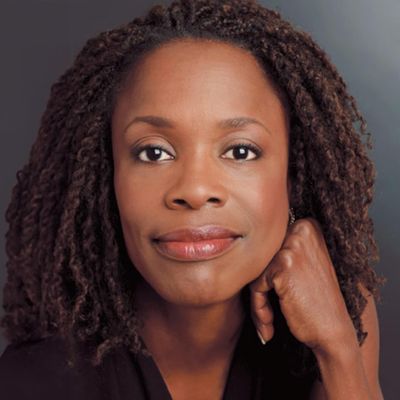
We're excited to welcome back actress and writer Charlayne Woodard. In Season 1, Charlayne spoke with Christine Toy Johnson about her experiences marketing her work. In this episode, Charlayne takes us to the beginning of her career, sharing about how her early experience in the oral tradition inspired her to start creating theatre... Read More
From the show: The Dramatists Guild Presents: TALKBACK, sponsored by the Dramatists Guild Foundation
Guests
About
We're excited to welcome back actress and writer Charlayne Woodard. In Season 1, Charlayne spoke with Christine Toy Johnson about her experiences marketing her work. In this episode, Charlayne takes us to the beginning of her career, sharing about how her early experience in the oral tradition inspired her to start creating theatre. She goes on to discuss how she overcame resistance from members of her community when she wrote her first play as a high school student, and how her own encounters with inequity have kept her motivated to help support her fellow community of writers.
This episode was produced by Amy VonMacek and Christine Toy Johnson, with postproduction by John Marshall Media. The music is composed by Andrea Daly. Talkback is a production of the Dramatists Guild of America and is distributed by The Broadway Podcast Network. Join the conversation online, using hashtag #dgtalkback.
Transcript
This transcript was automatically generated and might contain errors.
[0:00] Christine Toy Johnson: Welcome to the fourth season of The Dramatist Guild Presents Talk Back.
[0:05] Christine Toy Johnson: I'm your host, Christine Toy Johnson.
[0:08] Christine Toy Johnson: We've shifted our focus this year to talk about craft and inspiration.
[0:12] Christine Toy Johnson: Our guests this season are my colleagues and friends from the Council of the Dramatists Guild of America.
[0:18] Christine Toy Johnson: Our guests will give us a unique look into how they write, what makes a good story, and what drives them to keep working on the DG Council.
[0:26] Christine Toy Johnson: Stay with us.
[0:32] Christine Toy Johnson: Welcome back to Talk Back.
[0:34] Christine Toy Johnson: Charlayne Woodard is a brilliant writer and actress with a long career.
[0:38] Christine Toy Johnson: I'm so excited to share this conversation about how she comes from the oral tradition of storytelling and how that inspires her solo work and so much more.
[0:49] Christine Toy Johnson: Thank you so much for joining us today. Will you please introduce yourself to our listeners?
[0:56] Charlayne Woodard: My name is Charlayne Woodard, and I am an actor slash playwright.
[1:02] Christine Toy Johnson: Thank you so much. I know you're an incredible multi-hyphenate artist. And I wanted to start with asking you how it all began for you. What inspired you to start acting and then writing?
[1:15] Christine Toy Johnson: I think it's in that order, correct?
[1:17] Charlayne Woodard: Yes.
[1:18] Charlayne Woodard: Acting. I believe that all of us creatives are born. I think it happens early on. And for me it really did. It started with aunties that were in love with soul music and Motown and my father loving jazz, so there was always music and singing in my home. Always.
[1:44] Charlayne Woodard: The first time I performed was for church. I sang a solo, and I had to sing that song because my grandmother called it her dying wish. I want to see my granddaughter sing in the junior choir. It was her dying wish. So I learned early on, you don't just stand in front of the microphone, you don't just stand in front of people and perform. Something has to be in you, in your gut. Something has to force you to express yourself in that way.
[2:19] Charlayne Woodard: And my love of my grandmother and the thought that at 12 years old I was gonna lose her. I'm gonna sing now because this is the last gift I can give her. And that happened, and the whole congregation, it exploded. And to be 12 years old and to be like, oh, maybe 50 pounds, 60 pounds at 12 to actually rock that church like that was the most powerful, one of the most powerful moments of my life up until then. But the feeling that you get that works when you're in it and you're flying through, and you chase that spirit for the rest of your life. You just chase it, you know, and that feeling, and that's what I did.
[3:06] Charlayne Woodard: From then on, I went to a high school and met a humanities teacher who also ran the theater department. His name was John Bealey. And I took this intro to drama class in 10th grade, and he introduced me to the Greeks. He introduced me to Shakespeare, Tennessee Williams. We did shows like that. We didn't do musicals in high school. John Bealey didn't like musicals. I did a This Property Is Condemned and Antigone.
[3:36] Charlayne Woodard: And then in 12th grade, this was the thing. We realized that I had there was no 12th grade project for me to play that I could go into because there were no plays about young girls who were black. So John Bealey said, How about we round up all of your friends who can anyone who could sing, juggle, act, dance, anything. We'll have auditions, we'll choose them, 16 of them, and we will write our own play based on growing up in Albany and dealing with the history of Albany, New York.
[4:10] Charlayne Woodard: And what an empowering thing that was that spring, I'll never forget it, because we created a play called Anyone Round My Goal Is It. And it was a big success. It was a scandal that all of a sudden, for the last play of the year, it was all black kids. That didn't happen in our school. There were only 300 black kids out of 1,500. And all the theater department and everything was all white, except for me and Alex Thomas and Cleve, his brother. Other than that, we got flack from the principal. We got flack from the fire department because the way we all put up some scaffolding to reach the second balcony so that we could all be intimate and not just in that big auditorium. It was wild. It was wild and exciting and scary.
[5:04] Charlayne Woodard: And we ended up doing it not one weekend, but all four weekends in June. It was amazing. And after that, oh, and we toured some local jails. What was there's nothing better than doing work that you created in front of a captive audience? They made us feel like superstars. Wow. Then there it is, that feeling that you chase again and again based on the hard work that you put in. So that's what happened after school. I didn't have any choice but to go to conservatory and get ready and prepare for a career in the theater.
[5:45] Christine Toy Johnson: And at that point, did you know that you would want to write as well? Tell you for yourself because you've done a lot of solo pieces. I'm just interested to know if that, if you knew from that early age.
[5:59] Charlayne Woodard: No, I buried that one. I said, okay, there's that experience. I have to go be an actor. I'll tell you, here's the thing. I read voraciously. I love good literature from everywhere, all over the world. I read from early age I could read. And what happened to me is I found the black women who were writing novels, Toni Morrison, Gloria Naylor, these women, J. California Cooper, Alice Walker, Octavia Butler, Jamaica Kincaid. I read these books that had was written from a black gaze and introduced me to people I already knew and opened up my world to events I didn't know could happen.
[6:49] Charlayne Woodard: Oh I mean, that Toni Morrison, those Alice, that Alice Walker, those women made me know that I couldn't write. You can't do this. I would be transported with their books, and I read many of them of all of their books as they came out. I was hungry for to see women, black women, black girls, grandmothers, aunties, families. Even though the country was acting as if we don't have families, not these black people, they're all single. Everybody was a single mom, and everybody had a lousy dad. And I came to LA after I'd done, oh, 15 years of musicals in New York City. I sort of was driven to LA because of no one would give me any words to say. And after 15 years, I said it's time to use some words.
[7:43] Charlayne Woodard: Because I still loved what those players, what those writers were doing, and I wanted to be a part of it. I kept going to class. I stayed, became an observer at the actor studio. I ran into, I found my teacher, my first teacher out of drama school, Geraldine Barron. Oh, and so when I came to LA, I was actually ready to use the other set of muscles. But here's what happened in LA. I was disappointed because at the time we were only used in these sitcoms for the most part. Sitcoms. And I'm like, I'm not good at that.
[8:27] Charlayne Woodard: And I read in Maya Angelou's book, Wouldn't Take Nothing for My Journey Now. She said, if you don't like something, change it. If you can't change it, change the way you think about it, but stop complaining. Stop going for coffee afterwards with actresses after auditions and complaining. Stop. Stop that. If the people who are writing these shows don't know who you are, you have to let them know who you are.
[8:54] Charlayne Woodard: So this is what I realized. And so when my pastor's wife asked me to do some singing at the women's retreat, I told her I'm not singing. She says, I'm sure you'll come up with something. Because my grandmother had died. I wrote a story about grandmama and how she really introduced me to the theater. And I did it for 450 black women in a big ballroom, all at circular chair tables. And it was as if it was a duet. It was a back and forth. It was a relationship with an audience I had not felt until then. Visceral.
[9:41] Charlayne Woodard: And they laughed and they cried and they stood up and waved their napkins in the air. And afterwards, 450 women came and lined up, and the young ones said, Thank you for telling my story. And the older one said, And now you have a new grandmother. They'd hugged me. It was just it was a monumental night. And I remember calling my husband, I said, Harris, I'm going to put four more stories to this one story about grandmama. This is a play. I know how to make this storytelling a play.
[10:18] Charlayne Woodard: Christine, I come from storytellers. I come from storytellers. I come from the oral tradition. Every Sunday, when I was little, my grandfather and grandmother who lived in the country outside of Albany, they would invite all of their children, their eight children and their children. We all came after church to their house for dinner. And every time at some point in the evening, before everybody went home, granddaddy would sit in the big chair and he would talk to us and tell us stories about growing up as a sharecropper in Shabuta, Mississippi. Stories about the escape, as my grandmother said, Oh, we had to steal away these kind of things.
[11:01] Charlayne Woodard: He would chastise us. Anyone who had a bad report that day in school, he would chastise us with a story. Everything was done in stories. My grandmother would see us tickling each other, and she goes, Oh, did you hear about that man that got rid of three wives and they didn't know why? They all just died. And then they found out he was tickling them to death. And there it is, no more tickling each other. This is an example of how they would chastise you.
[11:30] Charlayne Woodard: They would adjust you, give you an adjustment with a story. And it worked. So I had that one story. And a few months later, I had the opportunity to work with the Equity Waiver Theater here in LA and do a three-character play original. And this company, the Fountainhead Theater Company, said we do emerging artists. I said, okay, I'll do this play for you if you do my play next. I had no play. I had grandmama's story, but on the closing night of the play, there was a party in the little tiny, you know, 55-seat theater. And they the company called me into the office, threw me the keys to the theater, and said, You're up next with your play. Wow. Christine, it still blows me away that I had the keys to the theater.
I don't even know if they knew what that meant to me. And those keys to that little 55-seat theater on Santa Monica Boulevard made me a playwright. Because they threw me the keys, they said, you can come in here, you can work anytime within the next five weeks. We will get some designers for you. I knew they had no money. I told them, nah, nah, nah, no designers, no nothing. It's going to be a black box. You see, it pays to have done all that theater in New York City before I got there. I said, we're gonna do it in a black box, and I'm going to make all of the things, everything in the story come to life by myself. It is an acting exercise for me. And I can only do it, I knew it, just by the tools I had as an actor that I developed as a person who originated a lot of work in New York City.
I still, that's all I want to do is originate. And because it challenges you, just really challenges you. So that's how I did that play. And then Manhattan Theater Club got a hold of it through Esther Sherman, who used to be my agent at William Morris. She said, I sent her the review and she said, okay. And three days later, she said, I got you at Manhattan Theater Club in their little theater for the sprint. Wow. Esther Sherman. She represented Fugard and John Patrick Shanley. And she said, that's my room, because that's where she put their work. And she put me there. Esther was dying of cancer at the time. And she wanted to pay me back for something. And she did. And then I remember on my birthday, she was too sick to come to the show.
And she says, But I have a gift for you. You'll be published by Penguin. Now, come on. What is all that? All I know is it's all about saying yes to everything that shows up on your doorstep. Say yes. There is no such thing as failure unless you don't get in the game. You have to have the courage to fail, the courage to mess up in order to feel the sweetness of the finished product. And I don't mean the success of the finished product, I just mean the sweetness. That is such great advice. You know, yeah. Yes. So that's how I came to writing these plays. That play. And that play opened up a lot of doors for me in New York City, so that then people said, Oh, she's all by herself and she held down two hours.
Well, that means she must be able to do leads. And that's what I've been getting ever since. Wonderful parts to originate. Mm-hmm. And my plays have been developed. I love the community that we are in because when they see something, they decide people who are artistic directors like at the time, Daniel Sullivan was an artistic director of Seattle Rep. And they asked my play Pretty Fire to come there. And I said, Okay, all right. They said, Who's the director? Ah, I don't have one. I said, I don't have a director, but maybe I could use that guy that is the artistic director there at Seattle Rep, I thought, because he certainly did a good job with Wendy Wasserstein's work. That's what I was thinking.
I said, What about that dude? And they said they'd let me know. Oh, Daniel Sullivan said he'll mount your play. And that was a great thing because Daniel Sullivan is my first and only collaborator. Really? And he taught me all about collaboration. One day in rehearsal, we're doing Pretty Fire. And in between, I chat, chat, chat, chat, chat, talk, talk, talk. And I told a story. And then when the stage manager said, okay, that's enough, we're back to work. And Daniel said, Charlayne, you know that story you just told? Write a play about it. And next year we'll put it into the New Works Festival here. Come on. I had a year to write a play when I just done Pretty Fire in five weeks. I was like, yes, this is doable.
I mean, if you ask me to do that now, I cannot. But I said a year. And then I went about writing it the way I write, Christine. I don't sit at the computer and do that. I don't sit there typing. I start telling the story. And I tell it and I tell it everywhere. I remember we were doing The Crucible, the film, and on in the van on the way to that island that we worked on in northern Massachusetts off the coast, I would be telling the story of meat. And then we get there and I said, Oh, to be continued. And that I did it like that. I kept telling that story until Seattle Rep said a year later, we need that play. I said, Oh, okay, it's flying in with me because the workshop was starting on Tuesday.
I sat down and finally it was typed up. And I gave it to them almost hot off the printer. And we had a read-through. Because that's how I do it. I talk and talk and talk, and people said, wait a minute, I'm lost. What do you mean? Ah, that's not clear. And I also have to use all my senses. The sensory work is important. But that oral tradition, that telling it until it's right, that's how I do it. Until you would tell it and then write it down after you had been telling it for a while. Right. Once I see all the images, once I smell all the smells there are to smell when you walk into that room, because if I could take you into a room, if I smell the tuba rose that's drawing me in. Seriously see it and the lighting and you see what I mean?
So I have to for the solo plays use all that sensorial work. Actually, I found one of my stories in Pretty Fire through a sensory exercise with Geraldine Barron. I was doing a sensory exercise on the rain. And in the rain, an event happened. An event that I had thrown away completely, like it never happened. If anybody ever asked, have you ever been molested? I'd have to say no. And I did. I didn't attach that horrible event to anything having to do with my life. Happened when I was 12. And then I was screaming, I was screaming in that rain. And Geraldine, you have to call Geraldine if you go deep into an exercise. And she came and put a little rescue remedy under my tongue. And then she said, Go to your journal.
And I wrote it down. That whole story that came back to me that I didn't know I had. How is it for you to share such personal stories in your plays? What I learned from that women's retreat, because the story I told there, I thought it was singular, only my personal experience. And I was talking about grandmama. I was talking about Marguerite Johnson, who gave me my first song. I was talking about the people I love. And it was really easy to tell that story. And I saw that the more personal I got, the more universal it was. So I learned early on when I did Pretty Fire, and I came up with that story called Nigger, like the first time somebody called me that name. And I would have people come in to rehearsal.
I said, Everybody have an open rehearsal, come so I could tell you a story. Because I created this, the play on my feet, all the blocking, everything on my feet. And friends would drop in. And I had made all these stories so comical and friendly and lovely. And Elena Reed came to one of my rehearsals and said, Oh Charlayne, I remember what happened the first time they called me that name. Oh my God. And that's all she said like that. And then I had to go back and explore the story. Not just that story, but every story of Pretty Fire. And not going to the surface of the truth. And the thing that would change me, enrich me, and if it did that to me, it must do that to the audience. So I learned early on to be brave and seek the truth first.
Then, if it involves anyone else, send them their part of the story. And if they say, like my girlfriend Audrey said, don't tell that story, Charlayne, please don't say that. I've got children. Okay, it's out. Just like that. Of course, my sister Allie don't portray me like that, like how I was when I was a kid. I've got children, I've got grandchildren. I said, oh no, Allie, we're doing it. So, Charlayne, when you speak about creating it on your feet and the blocking and everything, does this mean that you're also directing yourself? I think it's a funny thing. I love directors. They come with the ones that come with a vision, the ones that have a plan for everything. But for solo work, especially if it's autobiographical, I think the artist has to take the lead.
And I love, even now in plays that I do that are not that I did not do, I love it when the director says, try that walking over there. I live for that because huh, let me try this. This might enhance what I'm going through. I do that, but this solo work, we have to take the lead. Just the right question. One day he said, we were working on a play, and he says, I kept talking about riding my bike back home and being so upset after work, but then I get home and there's the story. And after three times, he said, What is that play you were upset about?
[23:00] Charlayne Woodard: I told him it was Ain't Misbehavin'. He said, Can I hear a little bit something about that? I said, Are you kidding me? I'll never talk about that show again. It was too much. It was challenging beyond belief. I don't even know if I met the challenges. But I went back home and I looked at that whole play. And that question of his, what was that play you that got you so upset? That changed the whole thing. You know. And then I could come into rehearsal and move about and do as much as I want. And what I loved about Daniel is he knew that I had a physical ability. He knew that she's athletic. She could, I could do cartwheels. I remember working with George C. Wolfe on what is it? The Brecht, Caucasian Chalk Circle.
And I at one point in rehearsal, I just did circle, circle, circle, gruchels, running, running, running, running until I could tire myself out. And then he says, Oh, that's good. Let's keep that. You see, but Daniel said, Don't, I want you to sit in a chair and you don't get up until you're ready. And I sit in a chair and I'm telling the story, and I get a he says, not yet. Not yet. You know? So there it is. That's direction that I got because it was my body telling me something that I didn't allow it to tell me before.
[24:22] Charlayne Woodard: I'll tell you, those first workshops, Daniel's too busy doing his own work to do my first workshops. But then there's Robert Egan, who ran the OHI Playwrights Conference. He did a lot of my first workshops, the one not up at OHI, but then when I had the next step towards it, like at the La Jolla Playhouse, he would step in and help me with that. I believe you need that third eye. That third eye that says, What's the story again? What are we going for? What is it that you need? Are you working on any new plays currently? Uh now I've written a two-character play called The Garden.
[25:07] Christine Toy Johnson: And are you in it as well?
[25:09] Charlayne Woodard: I didn't write it to be in it. Do you know what I mean? I did not write it to be in it. I wrote it because it's a play with two middle-aged women. Two women, there's so many black women that haven't had a chance to have a leading role. And they're 55 and 60. August didn't write for us. And the new playwrights are, I must say. But I really want this, I wanted to give two women who have chops, who've been in the business for a long time a chance to be on stage and live and create in this garden and have that growth in the garden.
[25:48] Charlayne Woodard: I love that. I did it at the La Jolla Playhouse. I didn't think I was going to. I was looking forward to watching other people do it because I was supposed to be working in London, but the schedule changed, and then I could go, and I did it at the La Jolla Playhouse.
[26:05] Christine Toy Johnson: So you were in it at the La Jolla Playhouse?
[26:08] Charlayne Woodard: Mm-hmm. And it's a mother-daughter thing, middle-aged daughter, and a mother who's like 80. And they go, they have to talk it out. I have so many friends who say I haven't spoken to my mother in eight years. And I say, How can you do that? Wow. I said, You gotta be the bigger person or something. Oh no, Charlayne, you don't know anything about this kind of relationship. So they're right. I'd never had that kind of relationship with my mom, but I had to explore that kind of relationship. And the journey gave me the exploration gave me the garden.
[26:49] Charlayne Woodard: And I it was so great. I did a bootleg thing uh Paula Vogel at the Dramatists Guild convention, she was giving this intensive, and I kept thinking, I gotta sign up for her intensive, I gotta, and time went by, I didn't sign up, but the day she had it, I decided to just bust in, not bust in, but sneak in five minutes after everybody was in the room, say 10 after nine, and I snuck in, sat in the back seat, so I was just going to rip off the intensive. Now Paula said, Is that Charlayne back there? Come on up to sit down because you had to submit your work to her and everything. I didn't have time for any of that, but I had to have a piece of some Paula Vogel wisdom, and I can't tell you the thing she said and the way she made you're talking to an actor, a writer, who never took a course, you know, in writing. So she's sitting there giving me the rules, and the one thing that I really did use in The Garden is she said, there has to be a surprise.
[28:06] Charlayne Woodard: I love that. I love that consciously. Where's the surprise? And also there's this thing, George Wolfe says, make sure there's blood on the ground at some point in your life. Is there blood on the floor? So you're thinking, oh, is there a surprise? You know, is there ever a moment of danger, a moment of risk? Is the whole play dangerous? Like, you know, Jeremy O'Harris, Susan Laurie Parks. You know, I could look at all those other plays that I so love those playwrights, and I could say, I see that surprise there. I see where there's blood on the floor. I learned so much from going to all these plays. And that's why it's great to go see plays. You we have to see them. But anyway, I could just go back and think of the people I've worked with and wonder where was the blood and where was the surprise.
[29:12] Christine Toy Johnson: I want to shift our conversation a little bit. This season is all about inspiration and craft, and we're speaking to all Dramatists Guild council members specifically. And so one of the things I've been asking everybody to talk about is what has inspired them to be of service on the council. And I know that you have been on the council since 2011. And I wanted to ask you what inspired you to first run.
[29:38] Charlayne Woodard: First of all, I didn't run for it right away. No, I was nominated by one of the council members. Right. And I don't know, but I have a feeling it might have been my sweet Mickey Grant. Oh. Because I was so inspired by her being a playwright. Yes. And an actor. Yes, of course. And did all wrote all those musicals. And I did, I got my equity card on Don't Bother Me, I Can't Cope. Her bus and truck tour of that, of her play. So Mickey was on that council. So I never asked her if she was the one who pulled my name out of the hat. But next thing you know, I've been I was called and said, You've been nominated. Would you like to run like that? So I thought, yes. You know why? Because the Dramatists Guild had so helped me with going over my contracts.
What do you do when you have these plays and they give you these big contracts and they can have your play in the palm of their hand? And I wanted ownership of my plays. And then when I learned how to deal with that, then I wanted to make sure that everybody had ownership of their plays. That everybody had protection or someplace they could go to. If some director is saying, okay, if you're gonna do it in DC, then I need to have a cut of it because I directed it and all that, taking advantage of new playwrights. I wanted to be a part of the Dramatists Guild because they were a part of all of that.
[31:15] Charlayne Woodard: And even right now, with this new media. Yes, the Dramatists Guild is on, it's on on point. Wait a minute, and all this stealing of the material, and oh it's crazy. And I wanted to be a part of the group that did protect dramatists and the work of dramatists that kept an eye on everything. A group that also inspires. Oh, you read The Dramatists, just any session of it, and you want to get to work. Also, the Dramatists Guild forms a community nationwide. You know, they're not just New York City. It's everywhere. It's all over the country. And I love being a part of a community of dramatists and dramatists that want to help out. For instance, on the Dramatists Guild Foundation. How many people during this pandemic did they help out?
In so many ways. I'm just receiving information, and I'll insert this, but the Dramatists Guild Foundation gave away over three million dollars in grants during the early part of the pandemic. And yes, we're so grateful to everybody who continues to contribute to the foundation. It's really remarkable how much the foundation has been able to help people. And to read the stories of all of these people, and we all have it all that we're it the passion for our work is what we have in common. I love it when we give those awards at the end of the year to these playwrights. I live for that, to give them their applause from their peers. There's nothing better. But that's why I joined. That's why I keep signing up again to be on the council. Because I do love to be a part of helping everyone.
[33:18] Christine Toy Johnson: I love that so much. Thank you so much for joining us. It's been so it's always so inspirational to talk to you about everything that you're doing, and I love getting some insight into your process.
[33:31] Charlayne Woodard: Oh, thank you, Christine. And thank you for talking to me.
[33:35] Christine Toy Johnson: Thanks to Charlayne. To hear all our episodes, you can find us on the Broadway Podcast Network or Apple Podcasts. Please be sure to rate us and leave a review. Learn more about our guests from all our episodes by visiting www.dramatistsguild.com. This episode was produced by Amy Von Masick and me, Christine Toy Johnson. Music was composed by Andrea Daly. Special thanks to Dick and Rogers Sound Studio in Vancouver, British Columbia. Talkback is a production of the Dramatists Guild of America and is distributed by the Broadway Podcast Network. Join the conversation online by using hashtag #dgtalkback. As always, to be continued.
© Broadway Podcast Network, All Rights Reserved