

In this episode, Christine talks with ground-breaking pioneer and fellow Dramatists Guild Council member Gretchen Cryer about longevity in the field, how development of new musicals has changed over her decades long career, and how she keeps going!.. Read More
From the show: The Dramatists Guild Presents: TALKBACK, sponsored by the Dramatists Guild Foundation
Guests
About
In this episode, Christine talks with ground-breaking pioneer and fellow Dramatists Guild Council member Gretchen Cryer about longevity in the field, how development of new musicals has changed over her decades long career, and how she keeps going!
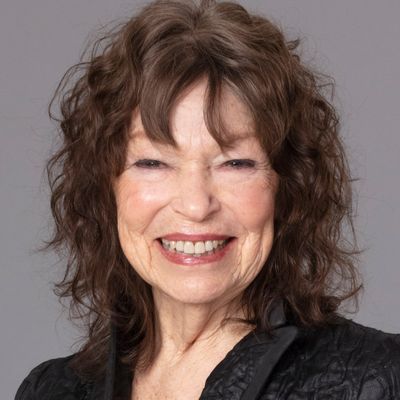
Gretchen Cryer has been breaking barriers since she and Nancy Ford began writing musicals together in the late 1960s, becoming the first female composer-lyricist team produced on New York City stages, perhaps best known for “I’m Getting My Act Together and Taking it on the Road”. She’s one of the Dramatists Guild’s longest serving Council members and is President emeritus of the Dramatists Guild Foundation. Gretchen is currently writing a show with her granddaughter Gracie Hyland, called “House on Fire”.
Note: for the answer to the question Christine and Gretchen ask about what role writers take when asked to raise enhancement money for productions at non-profit theaters, come back for the answer in episode 7!
The Dramatists Guild of America is the national, professional membership trade association of theatre writers including playwrights, composers, lyricists, and librettists, whose mission is to protect the economic, legal, and creative interests of professional writers in the American Theater. Visit www.dramatistsguild.com to learn more.
This podcast is supported by the Dramatists Guild Foundation (DGF), a national charity that fuels the future of American theater by supporting the writers who create it. DGF fosters playwrights, composers, lyricists, and librettists at all stages of their careers through educational programs; awards, grants, and stipends; free space to create new works; and emergency aid to writers in need of immediate support. DGF is a 2024 recipient of a Tony Honors for Excellence in the Theatre. By supporting and nurturing the creators of today, we protect the stories of tomorrow. Visit www.dgf.org or follow @DGFound to learn more about DGF's grants and programs or ways to donate.
Talkback is executive produced by Christine Toy Johnson and edited and recorded by Bruce Johnson. Our theme music is by Andrea Daly. Distributed by the Broadway Podcast Network.
Transcript
This transcript was automatically generated and might contain errors.
[0:01] Christine Toy Johnson: Welcome to Season 6 of the Dramatists Guild Presents TALKBACK, sponsored by the Dramatists Guild Foundation.
[0:15] Christine Toy Johnson: I'm your host, Christine Toy Johnson. We're so happy to be back. This season is all about reinvention. With so much change going on in our industry and our country, I wanted to sit down with some of my fellow writers who also serve on the Dramatists Guild Council and ask them about the many ways they're writing in and about the moment we're in. I hope you'll be as inspired and fascinated by their responses as I've been.
[0:42] Christine Toy Johnson: In this episode, I get to talk with groundbreaking pioneer and fellow Dramatists Guild Council member, Gretchen Cryer, about longevity in the field, how development of new musicals has changed over her decades-long career, and how she keeps going. Gretchen Cryer has been breaking barriers since she and Nancy Ford began writing musicals together in the late 1960s, becoming the first female composer-lyricist team produced on New York City stages, perhaps best known for I'm Getting My Act Together and Taking It on the Road. She's one of the Dramatists Guild's longest-serving council members and a president emeritus of the Dramatists Guild Foundation. She's currently writing a new musical with her granddaughter, Gracie Hyland, called House on Fire. Here we go.
[1:31] Christine Toy Johnson: Gretchen Cryer, I'm so excited to have you here on the podcast. Thank you for being here.
[1:36] Gretchen Cryer: I'm excited to be here.
[1:38] Christine Toy Johnson: Thank you. There's so many things to talk about because you have obviously incredible history, not only with the Guild, but in the American musical theater. And I don't honestly know where to start. So I'm going to start with, actually, I do know where to start. I'd love to ask you about how long you have been a member of the council of the Dramatists Guild.
[2:05] Gretchen Cryer: Okay, I became a member in 1973. At that time, everybody had to have had a show on Broadway in order to be considered for the council at all. And Nancy Ford and I had our ... the first show that we ever had on Broadway was 1973. We'd had a couple of shows before that off-Broadway, but we had a show, Shelter, at the Golden Theater. And it ran the entire month of February in 1973. But thus, I became eligible to be considered, to be nominated to be on the Guild. And probably they were looking around at the table of all white men and thinking, well, okay, she will be a token of some sort. And so I actually got on the Guild. And when I arrived, Mary Rogers was on the Guild. And Lillian Hellman, who never came to the meetings, so I ... Actually, one meeting, she was there, and I never talked to her, so I never got to know her.
And Ruth Goetz, who had had a play called The Heiress on Broadway. And they were the only people, the only women on an otherwise white male council. It really was an old boys' club. In fact, Mary once said that it was the best club in town. And it was, because they were all witty, and we had an open bar for council meetings.
[3:40] Gretchen Cryer: I heard about that. Everybody was drinking and just having the greatest time. And at that point, all of them were making their living as playwrights, unlike most playwrights today.
[3:53] Christine Toy Johnson: Yeah.
[3:54] Gretchen Cryer: There was an article in the New York Times, I don't know, a few months ago, interviewing very prominent playwrights like Brandon Jacobs Jenkins, Bess Wohl, I forget the other two or three other people, about if they could make a living in the theatre. Brandon said, now Brandon, who's one of the Pulitzer Tonys and MacArthur grants and everything, finally he has kind of made his living doing that. But Bess, now she's about to have a show, a transfer to Broadway. And the other people said no. I mean, playwrights nearly always today have to have day jobs to help support themselves. Most of us would be considered by the IRS as hobbyists. That is, we don't make our living from our actual writing. We are teachers, we are computer people.
You know, we have a variety of other waitresses. So it's a strange thing to be in an industry where you're really probably not going to make a living and you'll have to do something else to support your artistic creations. And that's different.
[5:24] Gretchen Cryer: Yeah, I've always said it's very strange that my day job is being an actor.
[5:28] Christine Toy Johnson: Well, yeah.
[5:30] Gretchen Cryer: That's been an amazing thing. Thank goodness you have that.
[5:33] Christine Toy Johnson: Yes, thank goodness. So how has that, you've seen it change, obviously, since the 70s until now. What do you think are the main factors that have made that change?
[5:49] Gretchen Cryer: Well, now the latest factor is that the not-for-profit theaters, where many works are begun and developed, they have gone through funding crises. Well, first with this administration cutting back funding on major arts organizations across the board. So suddenly the not-for-profits are stuck having not been able to get the federal funding that they perhaps had been able to in the past. And then the fact that theater costs so much to produce these days. And as a result, just in the last five or seven or eight years, this horrible trend has happened, which is the not-for-profits, which are struggling, if they decide that they want to do your work, which in itself is a big win for you as a writer, finally you have a theater that says, yes, I really like your work, I want to do it.
Then they say, well, yes, but we'd love to do your work, but we're going to need enhancement money. And when they say enhancement money, we are talking about hundreds of thousands of dollars in a not-for-profit, a not-for-profit that is considered an off-Broadway size venue. I mean, this is nuts. That the playwright is asked to raise.
[7:25] Gretchen Cryer: To raise it. Which means that playwrights now not only have to be creators, they have to have sources of great wealth from friends or supporters. And I'm trying to figure out what we as playwrights are going to do about this, because it's a fairly new situation. I mean, when I just found out that one of my friends that had his piece done at a not-for-profit in the city last year had to find $550,000, and then I have another friend whose piece is about to be done in the same theater, another $550,000. A couple of things that I have written, a couple of other not-for-profit, not that one, is talking about $300,000 in case of both of my things. So this is nuts. I don't have $300,000 in my back pocket.
[8:25] Christine Toy Johnson: Right.
[8:26] Gretchen Cryer: Who does? Now, obviously, there are a few people, and most of them are on the council, maybe, I don't know, five or six people who have made fantastic money. I mean, if you wrote Wicked, you're doing okay. Or Hadestown. You know, those shows, yes, yield Hamilton. Okay, those are huge, huge earners. But the rest of the artists, that's not the world we live in. And so where are we going to be finding the people? I mean, I've really been thinking about this. I think especially since the government has just slashed arts funding, we're going to have to go to the upper 1% of our population, the people with lots of money, and say, look, guys, it's up to you. You're going to have to start funding us.
And I'm really looking into that now and trying to find billionaires who have an interest in the arts and saying, okay, who else is going to do this? The government, we're not going to have any national support of the arts from our administration. So you guys are going to have to step up.
[9:49] Christine Toy Johnson: Yeah, well, I think that the circling to actually the whole theme of this season is about reinvention, because I think we are constantly needing to reinvent ourselves and the ways we get art done.
[10:07] Gretchen Cryer: Yeah. And, okay, one of the ways that I have... Now, my day job is being a teacher. I teach one-on-one people. I teach a workshop also called Creating Your Own Solo Performance. And I am working one-on-one with many solo performers who I start out as a writing coach because we start out with a blank piece of paper usually. And then once the piece... And it takes a year or two to find what the story is and work with people one-on-one. And then are they going to perform their own piece? Sometimes yes, sometimes no. But if yes, then we start putting it on its feet, working on it in my living room. And, in fact, I have a salon coming up this next Friday night. I'll invite you. Anyway, not me, but one of my people who's... Well, finally, I have one piece that started in my living room, in my workshop years ago. Then it's been worked on for three years in my living room. And it just was picked up by Penguin Rep. And we just had a very successful run with great reviews. And that gives...
[11:26] Gretchen Cryer: Now, but that's an entirely different way to come at getting your things on, is working in somebody's living room for a few years, developing the thing, and then getting it to the place where some not-for-profit can come, and it just so happened that the not-for-profit that picked up Jimmy's piece did not ask for enhancement money.
[11:49] Gretchen Cryer: It's one of the few. We need to make a list of the good guys who are not asking for enhancement money. But that's a completely... whoever worked just in their living room on pieces until it got to a performance level, that's... but you can do that with a solo performance because you've just got one person in your living room. If you were doing a big cast, that would... and that would take money to pay people for their time, you know, so...
[12:17] Christine Toy Johnson: And for people who might not understand the idea of enhancement money, I wonder if you can talk about that a little bit, what you... in your experience, because you... do you become an investor in your own piece, or are you really just providing funds?
[12:38] Gretchen Cryer: I don't know the answer to that, because I did not have $300,000. So I haven't been in that situation to know what kind of deal that ends up being, because it sounds like you are... well, you are a finder, it's not... if it's not your own money, which it probably is not your own money.
[13:00] Christine Toy Johnson: Right.
[13:01] Gretchen Cryer: You have found a person who either believes in your piece or is just a kind friend.
[13:07] Christine Toy Johnson: Okay, a very kind friend.
[13:08] Gretchen Cryer: Very kind friend.
[13:09] Gretchen Cryer: Who has a lot of money to...
[13:10] Gretchen Cryer: Who has a lot of money to help you.
[13:12] Gretchen Cryer: And they become producers.
[13:13] Christine Toy Johnson: Because they like you.
[13:14] Gretchen Cryer: Or major investors.
[13:15] Gretchen Cryer: And they become... well, yeah, they become major investors. You still have to have general management.
[13:20] Christine Toy Johnson: Right.
[13:21] Gretchen Cryer: People who know how to actually get a show up on its feet.
[13:25] Gretchen Cryer: So then the deal is, that is, the places that are asking for enhancement money are usually not-for-profits.
[13:35] Gretchen Cryer: And they are going to then hope, after they have done a run of this piece, that it will get picked up for a commercial kind of run.
[13:44] Gretchen Cryer: And at that point, then, I suppose the people who have contributed the enhancement money have a piece of the commercial investment.
[13:54] Gretchen Cryer: But what the author has as finder of these people, I don't know. I haven't had that experience.
[14:02] Christine Toy Johnson: Good question. And also, then, the royalty pool changes, and that must be influenced.
[14:09] Gretchen Cryer: I think this is an interesting topic to explore at the Guild and see what we can find out.
[14:16] Gretchen Cryer: Because I think people would be very interested in knowing.
[14:19] Christine Toy Johnson: But your main point is that the terrain is completely... it's shifting sands.
[14:24] Gretchen Cryer: And we don't even know where it's going or how it is going to develop.
[14:31] Christine Toy Johnson: We don't know.
[14:32] Gretchen Cryer: We don't know. We're all these uncertainties, which makes it even more important.
[14:37] Gretchen Cryer: Well, it's hard to find investors who don't care if they're going to lose their money, who just are wanting to do it to be part of the arts.
[14:50] Gretchen Cryer: So people are probably pulling back from investing in things because of the uncertainty.
[14:59] Christine Toy Johnson: I want to go back to the 70s and ask you about the climate.
[15:09] Gretchen Cryer: So the climate was different in so many ways. You're in the room with the open bar and, as Brandon likes to call it, the hot goss that you probably were hearing from all of those.
[15:21] Christine Toy Johnson: Tell us who else you remember being part of the Council at that time.
[15:26] Gretchen Cryer: Well, Edward Alley, Albie, Stephen Sondheim, Arthur Lawrence, Dory Sherry, and Garson Canan.
[15:38] Gretchen Cryer: Oh, God. Who all? I think it was before Lanford was there.
[15:46] Gretchen Cryer: Oh, God. I'll come up with some more names.
[15:51] Christine Toy Johnson: That's okay. No, that's really... it's fascinating, all the people that you've mentioned.
[15:55] Gretchen Cryer: They were witty. They were all witty.
[15:59] Gretchen Cryer: And Edward was unapproachable, so I always hugged him when I came in just to cross his boundaries.
[16:09] Gretchen Cryer: But to tell the truth, I got on the Council in 1973, and I did not speak for 10 years because I was intimidated by these guys.
[16:19] Gretchen Cryer: If you've got Edward Alley, if you've got Stephen Sondheim quipping, you're not going to say anything because you're not going to quip as well.
[16:31] Christine Toy Johnson: Well, I think you're selling yourself short.
[16:34] Gretchen Cryer: No, I didn't say anything.
[16:36] Christine Toy Johnson: What were the kind of burning issues back then?
[16:40] Gretchen Cryer: It had to do with whether or not the Guild was a union or not, and there was big discussion about that.
[16:48] Gretchen Cryer: Whether we were crossing a line by having the minimum basic payment things.
[16:55] Gretchen Cryer: I mean, we couldn't demand it because we weren't a union.
[16:59] Christine Toy Johnson: Right, and you're not collectively bargaining because we own our copyrights and we're not employees.
[17:04] Gretchen Cryer: Yes, right. And we staunchly needed to maintain the right to our copyrights because the reason the Guild was formed in the first place was that way back producers would put their names on plays that they wrote it and had the copyright on it, and the authors did not have it.
[17:26] Gretchen Cryer: That was the situation before the Guild got formed.
[17:29] Gretchen Cryer: So now, at least, we own our things.
[17:33] Gretchen Cryer: We just can't get them on.
[17:36] Gretchen Cryer: So I guess, in a way, it's a step in the right direction until the times change and we can suddenly start getting things on.
[17:45] Gretchen Cryer: Now, actually, what I'm thinking, to begin with, in the 70s, well, in 67, Nancy and I had our first musical off-Broadway at what is now the Lucille Lortel Theatre.
[17:59] Gretchen Cryer: And we self-produced, in a way, because my husband co-produced David Cryer, ex-husband, David Cryer, partnered with Albert Poland, who became a very famous manager and producer.
[18:14] Gretchen Cryer: That was his first show, and I think he was 18 or 19 years old when he produced our first show.
[18:22] Gretchen Cryer: But we raised the money for it.
[18:25] Gretchen Cryer: We did backers auditions.
[18:27] Gretchen Cryer: My doctor invested, but the total investment was just $40,000.
[18:32] Gretchen Cryer: For a musical that had 12 characters, a band of four, off-Broadway, it cost $40,000 to put that on.
[18:43] Gretchen Cryer: And we raised it by just doing backers auditions from the people that we knew, and the average investment was maybe, I mean, a big investment would be $500.
[18:58] Gretchen Cryer: So we did that. Same deal with our second show in 1970, The Last Sweet Days of Isaac.
[19:05] Gretchen Cryer: Now, that one was a huge hit. The first one ran still for three months or four months.
[19:12] Gretchen Cryer: Now's the time for all good men. Ran that long, and it didn't, I don't think it returned its investment, but it was not a horrible flop.
[19:24] Gretchen Cryer: The next one, The Last Sweet Days of Isaac, actually ran for a year and a half, and actually, I saved $17,000 that year.
[19:38] Christine Toy Johnson: Good for you.
[19:39] Gretchen Cryer: That was really amazing. That was my first time.
[19:42] Gretchen Cryer: Now, that was a big success as a writer at that time.
[19:46] Gretchen Cryer: That was huge.
[19:47] Christine Toy Johnson: And were you acting in all of these pieces as well?
[19:49] Gretchen Cryer: No.
[19:50] Gretchen Cryer: Oh, I acted in the first one, and that was a strange circumstance, because we did not cast me to begin with, and we did not cast my ex-husband.
[20:01] Gretchen Cryer: But what happened is the leading man that we cast ended up not being able to cut it.
[20:08] Gretchen Cryer: So my ex-husband, David, who had an incredible voice, stepped in, and one week before we were to open, the leading lady lost her voice completely.
[20:20] Gretchen Cryer: So I stepped in, and because it was starting to look like a vanity production, because we had raised the money and we were doing the whole thing, and nobody at that point wanted to do a vanity production.
[20:29] Gretchen Cryer: But back then, you weren't supposed to. Today, we're all put in the position that we've got to do a vanity production, but back then, you weren't supposed to.
[20:37] Gretchen Cryer: So I changed my name as an actress to Sally Niven.
[20:43] Gretchen Cryer: You will notice, if you look at the cast of Now is the Time for All Girls, it was Sally Niven playing opposite David Cryer.
[20:50] Gretchen Cryer: But the reviews came out, and Sally Niven got brilliant reviews, and Gretchen Cryer did not.
[20:58] Gretchen Cryer: And I thought, oh, damn, I changed the wrong name.
[21:02] Gretchen Cryer: And Sally Niven just never went on to fame because she disappeared from the theater world after that.
[21:09] Christine Toy Johnson: She disappeared.
[21:10] Gretchen Cryer: Yeah.
[21:11] Christine Toy Johnson: Never say never.
[21:12] Gretchen Cryer: No.
[21:13] Gretchen Cryer: She might come back.
[21:14] Christine Toy Johnson: You never know.
[21:15] Gretchen Cryer: Well, then, okay, so then the second show, we did the same thing. We did backers auditions, and that got produced by Hala Stoddard and was a big success off-Broadway.
[21:30] Gretchen Cryer: Austin Pendleton starred in it with Freddie Weber. Then Shelter was our big Broadway show after that.
[21:38] Gretchen Cryer: Ran one month and did not make any money and lost all the investment.
[21:45] Gretchen Cryer: Then Joe Papp produced I'm Getting My Act Together. Now, that was a not-for-profit.
[21:51] Gretchen Cryer: He asked for no enhancement money.
[21:54] Gretchen Cryer: We did not have to go out and raise money for that at all.
[21:58] Gretchen Cryer: And then that was a success and ran for three years here in the city and a year in Chicago and a year in L.A. and then all over every place.
[22:09] Gretchen Cryer: And so that one had movie sales three times.
[22:12] Gretchen Cryer: Never was made.
[22:13] Christine Toy Johnson: Wow.
[22:14] Gretchen Cryer: The movie wasn't made.
[22:15] Gretchen Cryer: So that one show actually made money.
[22:19] Gretchen Cryer: And then, I mean, that gave the illusion that you could make money in the theater.
[22:27] Gretchen Cryer: But that has not happened since.
[22:29] Gretchen Cryer: So, and then the other shows that we've had were commissioned.
[22:35] Gretchen Cryer: We did Anna of Green Gables for TheatreWorks, and that was just a commissioned thing.
[22:42] Gretchen Cryer: We commissioned things for American Girl, did a couple of plays for that.
[22:46] Gretchen Cryer: And so now, though, going out and doing that.
[22:50] Christine Toy Johnson: Trying to get things on, we are facing this whole different world. We spoke about this briefly when you first came in the room about how you are seeing, you have witnessed a lot of changes in the country and in the theatre's response to, it's hard to be completely, to not acknowledge that the current politics, the current culture affects us in the art sector.
[23:25] Gretchen Cryer: Oh yeah, sure. And so I wonder if you could talk about that a little bit, how you have kept going, because you're writing a new show right now with your granddaughter, I want you to talk about that in a minute, but you have had this very long career where you just keep going.
[23:44] Gretchen Cryer: Well I do just keep going because I don't know what else to do. This is what I love to do. And then I support myself by teaching, you know, that's how I have... But how do you keep going, how do you keep your spirit as bright as it is?
[24:03] Gretchen Cryer: Well because I think it's really fun to do what I do. I absolutely love the process and I'm loving directing these solo shows now, that's really fun. And I hadn't really been a director before, but just since I've been working with solo artists, I've just kind of come into it, because first I'm being the dramaturge and then I'm becoming the director, so that's how that happened.
[24:30] Gretchen Cryer: But okay, how do I keep going? It's just fun, and I just keep writing stuff. Well Nancy and I have a sequel to I'm Getting My Act Together, it's called Still Getting Your Act Together, and we're doing a 29 hour reading, November 7th, so you've got to come to that.
[24:53] Christine Toy Johnson: Yes, I want to.
[24:54] Gretchen Cryer: So, I'm not going to be in it, I'm not going to be in it. Who is producing the 29 hour reading of that?
[25:00] Gretchen Cryer: Do you have a different producer? Penguin Rep, who just did Jimmy's show, is going to be producing it, and we got Mary Lou Henner to play the role that I originated all those years ago.
[25:12] Christine Toy Johnson: So you don't have to be the producer on that thing?
[25:14] Gretchen Cryer: No, I am not, no, no. No, Penguin's just producing the 29 hour reading. We don't have a producer for the whole show, but the first step these days seems to be these 29 hour readings, which cost something.
[25:31] Gretchen Cryer: They do, yes, yes, because development, that's a whole other conversation for people. You know, I mean the word development did not come into being until the last couple or three decades. Back when I started, you didn't develop a play, somebody just produced your play.
[25:49] Gretchen Cryer: You didn't develop it, you didn't do endless workshops, endless readings, endless going to festivals, trying to do it, all that stuff. We didn't do that. A producer said, I want to do the play, or the musical, and then they produced it.
[26:09] Gretchen Cryer: And the ones that I was in as a performer to begin with, back in the 60s and 70s, the first one was Little Me, well, it just got produced, and it was worked on out of town. We went out of town. And all the changes were made out of town. I remember we worked on one number in Little Me, Bob Fosse was the director, and it was rewritten 17 times, but out of town.
[26:36] Gretchen Cryer: That's what you did, out of town.
[26:38] Christine Toy Johnson: So every night you would go and maybe do a different version of it?
[26:41] Gretchen Cryer: Yes, we had to learn a whole different Bob Fosse thing every night. Yes, for 17 nights, or 17 performances, until we finally got it. But that's the way, but the producer never questioned whether or not he, and they were always he's, were going to produce it.
[27:02] Gretchen Cryer: They committed, we are producing this, and they raised the money. David Merrick was the sole producer. Today, on the playbills, you have 73 producers, and at the Tonys, when they call the winner of the Tony, 73 people descend upon the stage, because it takes that many.
[27:25] Gretchen Cryer: David Merrick, we're talking in the 70s and 80s, was the sole producer, and he raised the money, and he powered this thing through. And that, let's see, what else was I in? Well, Little Me, and then I was in 110 in the Shade, and I was in 1776.
[27:45] Gretchen Cryer: And all of them were just that the producer was going to produce it, and then you went out of town, and that's where there were... But nobody was developing a musical, or developing a play. That word develop makes me nuts.
[27:59] Christine Toy Johnson: I know. I know we're kind of going all over the place, because I'm so fascinated by all of the things you're saying. But I do want to ask you a question about this whole idea of process, because I think that's such a...
[28:14] Gretchen Cryer: I have such an issue with people not understanding that... Not to develop it, but the work needs process, and needs time to change, and needs time to grow. And so, I think it's interesting what you say about, in those days, when a producer would make a commitment to the writers to do the show, and it sounds like understanding that out of town, you will be making changes.
[28:41] Gretchen Cryer: Oh my God, yes. You write this number 17 times, not saying, it has to be perfect from this day. 1776, they cut an entire act out of it, out of town. A whole act, which meant an entire set that was constructed for the second act had to be cut.
[29:00] Gretchen Cryer: It started out as three acts, and then I think it started out... But they cut the whole battlefield, that whole segment of the play. And some of the characters, some of the people who... I was understudying a character that just got cut, but I still was understudying the other two, both Abigail and Martha.
[29:26] Gretchen Cryer: So I still had those two characters, but there was a third character, a woman who was playing the role of a battlefield prostitute, because there was a whole battlefield thing with the soldiers.
[29:38] Christine Toy Johnson: Wow. I didn't know all of that.
[29:40] Gretchen Cryer: Probably a good idea. But that was done out of town. It's so interesting. It was not done in development, no. And that involved a big financial decision, because they were cutting an entire set, which had cost $100,000, which at that time, in 1970, was a huge chunk of change, to cut $100,000 of a set out of a piece.
[30:05] Christine Toy Johnson: Wow, that's so interesting.
[30:07] Gretchen Cryer: So process, yes.
[30:09] Christine Toy Johnson: Yeah, so it's so important, and I think it has changed over time.
[30:13] Gretchen Cryer: Well, tell me what you perceive of that, about the process.
[30:16] Christine Toy Johnson: I think that sometimes people are overly result-oriented in a shortened period of time. So I think we all know that you write something, and then it goes through changes, and you learn more from having collaborators in the room, actors and directors, and that it changes, and you rewrite, and you keep changing it.
[30:45] Christine Toy Johnson: But I have found, in some instances, that if the expectation is for a result to be finished early on, too early, or else, they don't-
[30:59] Gretchen Cryer: It gets dropped.
[31:00] Christine Toy Johnson: Yeah.
[31:01] Gretchen Cryer: That's what I'm seeing, not only from my own projects, but from others.
[31:04] Gretchen Cryer: Yeah, and that's a big difference, because producers back then, in the 70s, committed to the writer, and to the play, or the musical, and they stuck with it. They didn't- and they saw it through to the end. Now, either it turned out to be a success or not, but they stuck with it.
[31:25] Gretchen Cryer: It wasn't- right now, I know what you're talking about, you're always on the line. Every new workshop that gets done, oh, is it going to go on from here, or not? Is it going to get dropped? Oh, you know, so there's- until you actually are going into rehearsal for the full production, you don't know that it's really going to happen.
[31:52] Christine Toy Johnson: That's a big difference.
[31:53] Gretchen Cryer: Yes.
[31:55] Christine Toy Johnson: So I want to jump forward to the new piece you're working on, and why don't you tell us about it, how you started thinking about it, because I think I was in a meeting with you once, where you started talking about the idea of it, and I'm so thrilled that it's-
[32:12] Gretchen Cryer: The crazy part is that 40 years ago, I wrote two songs. I wrote the music, as well as the lyrics. Normally, when I wrote with Nancy, Nancy always wrote the music, and I just wrote the lyrics. But I wrote two songs, one called The Captain of Industry, about a guy who's a multi-mega-billionaire, head of the biggest fossil fuel company in the world, and then a song for his wife called Precious Days.
[32:43] Gretchen Cryer: I wrote it 40 years ago, and I knew that I wanted to write something about climate change 40 years ago.
[32:51] Christine Toy Johnson: Wow.
[32:52] Gretchen Cryer: But I did not know, after writing The Captain and writing his wife, I didn't know where it was going to go. Then a couple of things happened, just maybe two or three years ago. My granddaughter graduated from college and came to live with me in New York, and she, Gracie Highland is her name, she is a fantastic singer-songwriter.
[33:26] Gretchen Cryer: She had just written a song called Early Teenage Crisis, and it was great. It was about wondering what the world is coming to, and being in an early teenage crisis. Actually she originally wrote Early Twenties Crisis, but then we started talking about it and the idea of having the daughter of The Captain of Industry and his wife be a 13-year-old who's in a teenage crisis about the fact that her dad is destroying the planet.
[33:59] Gretchen Cryer: So I decided it needed to be a fairy tale. And then the other thing that happened is that I read two very important articles. I read about the last two northern white rhinoceroses on Earth. They are a mother-of-two.
[34:15] Gretchen Cryer: I think that the most important thing is to keep writing. I mean, I just feel like if you stop writing, then you stop being a writer. And I think that’s true for any artist. You have to keep creating, you have to keep pushing yourself, and you have to keep finding new ways to express yourself.
[34:45] Gretchen Cryer: The landscape has changed so much, and I think that’s a good thing. There are so many more opportunities for women and for diverse voices now than there were when I started. And I think that’s really exciting. It’s important to embrace those changes and to be part of that evolution.
[35:15] Gretchen Cryer: I’ve always believed in collaboration. I think that’s one of the most beautiful things about theater. You’re not just creating in a vacuum; you’re working with other people, and you’re all bringing your unique perspectives to the table. That’s what makes the work richer and more meaningful.
[35:45] Gretchen Cryer: I remember when Nancy and I first started writing together, we were often the only women in the room. It was challenging, but it also pushed us to be better and to prove ourselves. Now, I see so many talented women and non-binary artists making their mark, and it’s inspiring.
[36:05] Gretchen Cryer: I think the key to longevity in this field is to stay curious. Always be open to learning and growing. Whether it’s through new experiences, new collaborations, or even just new forms of storytelling, there’s always something to discover.
[36:35] Gretchen Cryer: I’ve had the privilege of working on so many different projects over the years, and each one has taught me something new. Whether it’s a small workshop or a full production, every experience contributes to your growth as an artist.
[36:45] Gretchen Cryer: I’m currently working on a new show with my granddaughter, Gracie Hyland, called “House on Fire.” It’s been such a joy to collaborate with her and to see the world through her eyes. It’s a reminder of how important it is to pass on what we know to the next generation.
[36:55] Gretchen Cryer: I think it’s essential to support young writers and artists. They are the future of theater, and we need to create spaces for them to thrive. Whether it’s through mentorship, funding, or simply providing opportunities, we all have a role to play.
[37:15] Gretchen Cryer: The challenges we face as artists can be daunting, but they can also be incredibly motivating. I’ve learned to embrace the obstacles and to use them as fuel for my creativity. It’s all part of the journey.
[37:45] Gretchen Cryer: I’ve seen the industry change in so many ways, and while there are still hurdles to overcome, I believe we’re moving in the right direction. It’s important to keep pushing for progress and to advocate for ourselves and each other.
[37:55] Gretchen Cryer: I think one of the most rewarding aspects of being in this field for so long is the relationships I’ve built. The connections you make with other artists can be incredibly powerful and can lead to amazing collaborations.
[38:05] Gretchen Cryer: I’ve always been passionate about storytelling, and I think that’s what keeps me going. There are so many stories to tell, and I feel a responsibility to share them. It’s what drives me to keep writing and creating.
[38:15] Gretchen Cryer: I think it’s important to remember that every artist has their own path. What works for one person may not work for another, and that’s okay. The key is to find what resonates with you and to follow that instinct.
[38:25] Gretchen Cryer: I’ve had my share of setbacks and disappointments, but I’ve learned that resilience is crucial. It’s about getting back up and continuing to fight for your voice and your vision.
[38:35] Gretchen Cryer: I’m excited about the future of theater and the new voices that are emerging. It’s a thrilling time to be a part of this community, and I can’t wait to see where it all goes.
[38:45] Gretchen Cryer: I think we all have a responsibility to lift each other up and to create an inclusive environment. It’s not just about our individual success; it’s about the success of the entire community.
[38:55] Gretchen Cryer: I’m grateful for the opportunities I’ve had and the people I’ve met along the way. Each experience has shaped me as an artist and as a person, and I wouldn’t trade that for anything.
[39:05] Gretchen Cryer: I believe that art has the power to change lives. It can inspire, heal, and bring people together. That’s why I’m so passionate about what I do, and why I’ll never stop creating.
[39:15] Gretchen Cryer: I think it’s important to stay connected to the community and to support each other. Whether it’s through attending performances, sharing resources, or simply being there for one another, we can make a difference.
[39:25] Gretchen Cryer: I’m looking forward to continuing to write and to explore new ideas. There’s so much more to say, and I’m excited to see where my journey takes me next.
[39:35] Gretchen Cryer: I think that the most important thing is to keep pushing boundaries and to challenge the status quo. We have the power to create change, and we should never underestimate that.
[39:45] Gretchen Cryer: I’m proud to be a part of this community and to contribute to the ongoing conversation about art and its impact. It’s a privilege to be able to share my voice and to connect with others.
[39:55] Gretchen Cryer: I hope that my work inspires others to pursue their passions and to never give up on their dreams. We all have a story to tell, and it’s worth sharing.
[40:05] Gretchen Cryer: I think that as artists, we have a unique perspective on the world, and it’s our responsibility to use that perspective to spark dialogue and to create change.
[40:15] Gretchen Cryer: I’m excited about the future and the possibilities that lie ahead. There’s so much more to explore, and I can’t wait to see what comes next.
[40:25] Gretchen Cryer: I believe that the best is yet to come, and I’m committed to continuing my journey as a writer and an artist. It’s a lifelong pursuit, and I wouldn’t have it any other way.
[40:35] Gretchen Cryer: Thank you for having me on the show. It’s been a pleasure to share my thoughts and experiences, and I hope to inspire others to keep creating and pushing forward.
[40:45] Gretchen Cryer: I look forward to seeing how the theater community continues to evolve and grow. Together, we can make a difference and create a brighter future for all artists.
[40:55] Gretchen Cryer: Let’s keep the conversation going and support one another in our journeys. We’re all in this together, and that’s what makes it so special.
[41:05] Gretchen Cryer: I’m grateful for the opportunity to share my story and to connect with others who are passionate about theater. It’s a beautiful thing, and I’m excited to see where it leads.
[41:15] Gretchen Cryer: Thank you for listening, and I hope you find inspiration in your own creative endeavors. Remember, never stop creating!
[41:25] Gretchen Cryer: I believe that the arts are essential to our humanity, and we must continue to champion and support them. Together, we can create a world where everyone’s voice is heard.
[41:35] Gretchen Cryer: I’m looking forward to what’s next in my journey, and I hope to continue to inspire others along the way. Let’s keep the magic of theater alive!
[41:45] Gretchen Cryer: Thank you again for this opportunity. It’s been a joy to share my thoughts and experiences with you all.
[41:55] Gretchen Cryer: I can’t wait to see what the future holds for all of us in the theater community. Let’s keep pushing boundaries and creating amazing work together.
[42:05] Gretchen Cryer: I hope that my story resonates with others and encourages them to pursue their passions. We all have something valuable to contribute, and it’s important to share that with the world.
[42:15] Gretchen Cryer: Thank you for being a part of this conversation. It’s been a pleasure to connect with you and to share my journey as an artist.
[42:25] Gretchen Cryer: I’m excited to continue exploring new ideas and to collaborate with others who share my passion for storytelling. Together, we can create something truly special.
[42:35] Gretchen Cryer: Let’s keep the dialogue going and support one another in our creative pursuits. We’re all in this together, and that’s what makes it so powerful.
[42:45] Gretchen Cryer: Thank you for listening, and I hope you find inspiration in your own creative endeavors. Remember, never stop creating!
[42:55] Gretchen Cryer: I believe that the arts are essential to our humanity, and we must continue to champion and support them. Together, we can create a world where everyone’s voice is heard.
[43:05] Gretchen Cryer: I’m looking forward to what’s next in my journey, and I hope to continue to inspire others along the way. Let’s keep the magic of theater alive!
[43:15] Gretchen Cryer: Thank you again for this opportunity. It’s been a joy to share my thoughts and experiences with you all.
[43:25] Gretchen Cryer: I can’t wait to see what the future holds for all of us in the theater community. Let’s keep pushing boundaries and creating amazing work together.
[43:35] Gretchen Cryer: I hope that my story resonates with others and encourages them to pursue their passions. We all have something valuable to contribute, and it’s important to share that with the world.
[43:45] Gretchen Cryer: Thank you for being a part of this conversation. It’s been a pleasure to connect with you and to share my journey as an artist.
[43:55] Gretchen Cryer: I’m excited to continue exploring new ideas and to collaborate with others who share my passion for storytelling. Together, we can create something truly special.
[44:05] Gretchen Cryer: Let’s keep the dialogue going and support one another in our creative pursuits. We’re all in this together, and that’s what makes it so powerful.
[44:15] Gretchen Cryer: Thank you for listening, and I hope you find inspiration in your own creative endeavors. Remember, never stop creating!
[44:25] Gretchen Cryer: I believe that the arts are essential to our humanity, and we must continue to champion and support them. Together, we can create a world where everyone’s voice is heard.
[44:35] Gretchen Cryer: I’m looking forward to what’s next in my journey, and I hope to continue to inspire others along the way. Let’s keep the magic of theater alive!
[44:45] Gretchen Cryer: Thank you again for this opportunity. It’s been a joy to share my thoughts and experiences with you all.
[44:55] Gretchen Cryer: I can’t wait to see what the future holds for all of us in the theater community. Let’s keep pushing boundaries and creating amazing work together.
[45:05] Gretchen Cryer: I hope that my story resonates with others and encourages them to pursue their passions. We all have something valuable to contribute, and it’s important to share that with the world.
[45:15] Gretchen Cryer: Thank you for being a part of this conversation. It’s been a pleasure to connect with you and to share my journey as an artist.
[45:25] Gretchen Cryer: I’m excited to continue exploring new ideas and to collaborate with others who share my passion for storytelling. Together, we can create something truly special.
[45:35] Gretchen Cryer: Let’s keep the dialogue going and support one another in our creative pursuits. We’re all in this together, and that’s what makes it so powerful.
© Broadway Podcast Network, All Rights Reserved