

In a recent interview, Broadway luminary Casey Nicholaw stated “I’m just a bouncy chorus kid.” And while it’s true that he performed in eight Broadway shows over 11 years, he’s also launched a second, rather successful, career as a director and choreographer... Read More
From the show: The Ensemblist
Guests
Featured Shows

About
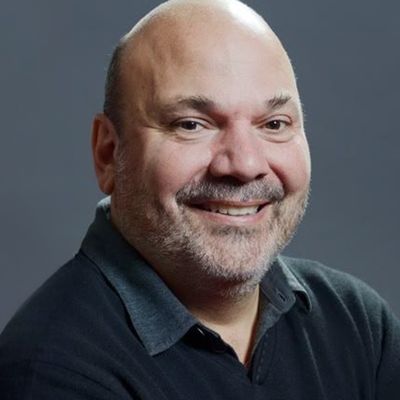
In a recent interview, Broadway luminary Casey Nicholaw stated “I’m just a bouncy chorus kid.” And while it’s true that he performed in eight Broadway shows over 11 years, he’s also launched a second, rather successful, career as a director and choreographer. So it got me thinking, what is it about a bouncy chorus kid that made him into such a prolific leader?
If you don’t know Casey Nicholaw by name, you’re certainly familiar with the shows that he has worked on. He’s the director and choreographer of Mean Girls, Something Rotten! and Aladdin. He’s a Drama Desk winner, a Drama League winner, an 11-time Tony Award nominee, and one time winner for The Book of Mormon. He’s basically a winner.
He’s also on the record for sharing that in every production he helms, there’s one number he’s most proud of. I thought this was a fascinating topic for a mini-series: for an acclaimed director/choreographer to walk us through some of the most famous and crowd-pleasing numbers in the musical theatre canon. We talked about his time as a Broadway performer, the inspiration for those numbers - as well as how he build a number from an idea to a Tony Award-winning hit.
Transcript
This transcript was automatically generated and might contain errors.
[0:00] Mo Brady: Have you heard of this Broadway?
[0:02] Unknown speaker: Yes, sire, and we don't stand a chance there.
[0:05] Mo Brady: Why not?
[0:06] Unknown speaker: Because Broadway is a very special place, filled with very special people.
[0:13] Mo Brady: You're listening to The Chorus Kid, a new miniseries from The Ensemblist, the only podcast that shows you Broadway from the inside out. Welcome, I'm Mo Brady.
[0:21] Mo Brady: People who need people, and who are, in many ways, the luckiest people in the world.
[0:32] Mo Brady: In a recent interview, Broadway luminary Casey Nicholaw stated, quote, I'm just a bouncy chorus kid. And while it's true that he performed in eight Broadway shows over 11 years as an ensemble member, he's also launched a second, rather successful career as a director and choreographer. But this quote got me thinking. What is it about a bouncy chorus kid that makes such a prolific leader in the musical theater? If you don't know Casey Nicholaw by name, you're certainly familiar with the shows that he has worked on. He is the director-choreographer of Mean Girls, Something Rotten, and Aladdin. He's a Drama Desk winner, a Drama League winner, an 11-time Tony Award nominee, and one-time winner for The Book of Mormon.
He's basically a winner. He's also on the record for sharing that in every production he's helmed, there is one number he's most proud of. I thought this was a fascinating topic for a miniseries, for an acclaimed director-choreographer to walk us through some of the most famous and crowd-pleasing numbers in the musical theater canon. So, in my conversation with Casey, we talked about his time as a Broadway performer, the inspiration for those numbers, as well as how he builds a number from an idea to a Tony Award-winning hit. Here's our conversation.
[2:08] Mo Brady: Good morning.
[2:09] Casey Nicholaw: Good morning. How are you?
[2:10] Mo Brady: Good. Very good. Would you introduce yourself and tell us what neighborhood of New York City you live in?
[2:14] Casey Nicholaw: I'm Casey Nicholaw, and I live on—it's sort of no man's land a little bit, but it's 110th and 5th.
[2:20] Mo Brady: So, I have a few questions for you. I want to ask you about performing in ensembles, sort of in large swaths.
[2:25] Casey Nicholaw: Okay, great.
[2:26] Mo Brady: And then this idea of every show you do, you have a number that you're most proud of.
[2:31] Casey Nicholaw: Right.
[2:32] Mo Brady: And I noticed there are some similarities there, often ensemble numbers.
[2:35] Casey Nicholaw: Yes.
[2:36] Mo Brady: Why did you love performing in ensembles?
[2:38] Casey Nicholaw: Well, it was always my dream. You know, I just wanted to so much. I love singing and dancing. I didn't know if I was any good at it, but, you know, I loved movie musicals as a kid. You couldn't see the wall in my bedroom because it was just covered with, like, every movie musical poster and every program of any show I ever saw in San Diego.
[2:54] Mo Brady: What of your performing experiences just felt like a great, cohesive ensemble group?
[3:00] Casey Nicholaw: Oh, well, Crazy for You, for sure, which was my first. That was really special. Susan Stroman's big Broadway show, and, you know, Mike Ockron was the director, and, you know, they ended up becoming a couple and then married during that time. And so it was just a really special time. I just remembered feeling so important as an ensemble member. Mike Ockron, I remember the second day of rehearsals took us all into—we each had a half hour meeting with the director, and we would go into the room with him and we would just talk about what we thought our place in the town was going to be, what we'd have in our pockets, what our personalities were like. And it was so smart of him because then he figured out, oh, if he doesn't live in town, he'd be coming from stage right. If he's a go-getter, he would be always cleaning up. It's sort of even if the audience didn't know what those specifics were, they were specific to all of us, and I learned so much from him.
[3:48] Mo Brady: One word that we don't use to describe ensembles very much anymore is chorus. How do you feel about the word chorus?
[3:52] Casey Nicholaw: Well, it kind of isn't a chorus anymore. A chorus is a bunch of people who stand and sing, you know, and there was always the singing chorus and the dancing chorus. But now you kind of have to do everything, so I guess ensemble feels better.
[4:06] Mo Brady: What is a lesson that you took from your performing experience that you've transitioned and tried to incorporate when you're directing helming shows?
[4:14] Casey Nicholaw: It's just work hard and be nice to people. Basically, you know, you just never know and meet as many people as you can because you never know who is going to show up later in your life, that you're going to end up even if you, you know, maybe you weren't pals during that show and then all of a sudden you're business partners. You just don't know, and I think that's one of the joys of this business and one of the joys of life.
[4:35] Mo Brady: I've noticed that you have a lot of sort of repeat clients in your pocket.
[4:40] Casey Nicholaw: I do.
[4:41] Mo Brady: Why is it important for you to hire people that you've worked with before?
[4:44] Casey Nicholaw: Well, you know what you're going to get and also you surprise each other or you know, for instance, I'll just use an example, you know, Brooks Ashranskas in The Prom. You know, everyone knows he's got this funny side and then he delivers such a touching performance as well and I just love to be able to let people show more. You know, I know more about them as people than they're able to show more on stage and push them to do.
[5:07] Mo Brady: Do you make your friends audition?
[5:09] Casey Nicholaw: Sometimes, not all the time. I get nervous when they audition. Also, too, I don't want to be pushing a friend because I just feel like it feels like it might be icky a little bit so I don't actually push that part of it. And then when they audition, everyone's like, that person's great and I go, yeah, I think so too, you know. But usually everyone sees the talent. I'm attracted to talented people as friends. I think it started that way and then I ended up hiring them because also too, like when Drowsy Chaperone happened, I wanted to, because it was my first time directing a show for Broadway, we didn't know it was going to be Broadway yet, but I wanted to surround myself with people that I knew so that I was comfortable. And basically everyone in that show was someone I worked with in a dressing room when I was a performer and that's sort of how that happened, I think.
[5:53] Mo Brady: This whole interview sort of came out of this idea that you said, each show you do you have a number you're most proud of. Do you know it's going to be your favorite before you stage it?
[6:03] Casey Nicholaw: No, you have no idea.
[6:05] Mo Brady: So when does that happen that you are like, this is going to be it?
[6:09] Casey Nicholaw: Well, I think it happens differently each time. You never do know, but then there's a moment where you kind of go like, oh, this is working. And sometimes, usually in pre-production, I spend all this time on the first number that I think is going to be the big number of the show. And then that ends up being fine, but then you start learning more about the show. So I do pre-production in two stages, like it's two weeks, and then I let like a month or two go by while the writers are doing other stuff, and then I do like another two weeks, so I sort of know the show better and stuff. And usually the numbers that I work on end up being better because I know more about the show.
[6:43] Mo Brady: Just marinated more in it.
[6:45] Casey Nicholaw: Yeah, absolutely.
[6:47] Mo Brady: How do you know how many people to cast in an ensemble?
[6:50] Casey Nicholaw: It's funny, I just sort of like pick it off the top of my head. Mean Girls, I go, oh, you know what, there has to be more girls than guys because you want to feel that energy. I don't think you can do less than six and six, and if there's partner dancing, you definitely have to do that. Four couples on stage will feel like four people. It won't really look like more people. Yeah, I usually go for about six and six unless it feels like we need to add it, unless it needs to be guy-heavy. Like Aladdin was 10 guys or 12 guys.
[7:13] Mo Brady: That's big.
[7:15] Casey Nicholaw: Yeah, Aladdin was the biggest, I think.
[7:17] Mo Brady: Tell us a little bit more about your pre-production. How much do you have planned going in?
[7:21] Casey Nicholaw: I pretty much plan everything going in. I mean, it doesn't mean I don't throw it all out. It's pretty planned. It starts with me figuring out which numbers need dance in them and how I want to shape them, and then I talk to Glenn Kelly, the dance arranger, who does most of my shows, he and David Chase do, and Glenn will just come, I'll tell him what I want, he'll just come up with music, and then we'll just keep finessing it. And then it starts with me sitting on the floor with my eyes closed just listening to the music over and over and over, and Glenn playing it, and then me going, all right, I'll cut this a little bit and add this so I get the shape of it, and I start visualizing it. And then usually it's my associate and I in a room with Glenn for a week. And then we'll get dancers in a week after that. And then I'll kind of repeat that the second group that I do.
[8:02] Mo Brady: Got it.
[8:03] Casey Nicholaw: So then you have the patterns, or you have the moves, you have both.
[8:06] Casey Nicholaw: I think the most important thing is the story. Figuring out the build of the number and figuring out what the story is to go through it, because I just don't think you can just stop and dance. And especially if it's in a comedy, nobody wants you to stop the energy of the laughs to just stop and dance. So I have to figure out what the story is. And sometimes you don't know right away.
[8:26] Casey Nicholaw: Once you know that, you know the build and the story, then you can figure out the steps much easier.
[8:30] ♪ Musical number: "You Won't Succeed on Broadway" — performed by Casey Nicholaw ♪
[9:27] Casey Nicholaw: All right, so let's dive in. Your first Broadway choreography job, Spamalot. And the number that you had identified was "You Won't Succeed on Broadway." So tell us what happens in "You Won't Succeed on Broadway."
[9:42] Casey Nicholaw: It basically starts with Robin, which is David Hyde Pierce's character, says, well, sire, let me explain it like this. And he just says, you must have this. And then it goes into this minstrel kind of feel. And then it just keeps building. And then there's an homage to Fiddler. And they do like the bottle dance with Grails on their heads. You know, everyone, you know, the ladies take off their scarves. And everyone just starts going crazy until it feels like this whole big Jewish wedding number by the end of it.
[10:07] Mo Brady: Where did all of these visual jokes come from?
[10:10] Casey Nicholaw: Oh, my gosh, they, I don't know. It was crazy. That was the, that was one of the last numbers I staged before we went into rehearsals. It's funny. I started talk, I started figuring out the build of it. We were just like playing around in pre-production. And then I met with David Hyde Pierce about the number. I wanted to like teach him some stuff and go over it beforehand. And the number wasn't really, the lyrics weren't really Broadway oriented yet. I wasn't crazy about them, quite honestly. And I talked to David. I said, we're going to rewrite all of these lyrics. And he was furious in a David Hyde Pierce way, which is more collaborative than furious. But he was like, you can't do that. You can't do that.
That's not going to work. I like these lyrics. I don't want you to change these lyrics. I'm just going to build the numbers. I'm just going to build great. And he's like, all right. All right. I trust you. I'll let you do it. And then we'll talk about it. I said, great. And the number just built perfectly. It really did. And then I was, I would say to the four people playing the minstrels, now just do something, you know, comedic here. And then I said, Christian, I'm going to put a wig on you and have you cross there. And it just sort of happened. And I think my favorite numbers are the ones that were fun in the creation of, where I didn't expect it. It was maybe surprising or it just worked. You know, that's, I think what makes me so happy. But just seeing David Hyde Pierce in that number, never having done a big number before, was just thrilling.
[11:25] Mo Brady: At what point does the bottle dance come in? When are you like, we got to get everybody on their knees?
[11:30] Casey Nicholaw: I just knew we did. I just knew we did. That was, that was like, we just have to absolutely do that. But it's funny, too, because, you know, David plays the piano in the middle of the number, too. And, you know, he is a concert pianist. And so we were like, we have to use it. He was like, no, I really don't want to. I really don't want to. And just all the elements worked well together.
[11:49] Mo Brady: How do you know about, like, the piano section sort of is like a break in the number, right?
[11:55] Casey Nicholaw: Absolutely. And then it goes, and then hysterically, it goes into the bottle dance. Right. But we didn't know that to start with. You know what, you sort of know the elements, and then you go, oh, that would be funny here. Or you just, it's just inspirational work. That's what's so much fun about working with people. You know, I have it in my head, and then someone throws something else out, and I'm like, oh, yeah, that's got to fit in there somewhere.
[12:12] Mo Brady: How do you go from, we should have a hay joke to building a barrel of hay?
[12:17] Casey Nicholaw: The hay joke was way last minute. Like, that was in rehearsal. It wouldn't be funny if, and I was like, oh, my God, yes, yes. And then you just, that happens, and then, like, the next day, a barrel of hay shows up to, like.
[12:27] Mo Brady: Yeah, pretty much. Oh, gosh, Broadway, man.
[12:29] Casey Nicholaw: Yeah, totally. I was like, okay, let's do this. Toe touches for the full male ensemble.
[12:34] Mo Brady: Oh, they hated me for that. They absolutely hated me for that. They really did.
[12:40] Casey Nicholaw: Right away, I was like, okay, this is what we're going to do. Well, it just seemed right, and it just seemed funny. And also, I didn't care if they were perfect, because it's about the comedy of it, so.
[12:49] ♪ Musical number: "I Don't Want to Show Off" — performed by Casey Nicholaw ♪
[13:21] Casey Nicholaw: Let's talk about "Show Off."
[13:22] Mo Brady: Right.
[13:23] Casey Nicholaw: Well, she basically says, I don't want to show off anymore, and then it's like, click, click, click, and people are taking pictures of her. Every time she says, I don't want to show off, she's doing something that she's showing off in. And then she's spinning plates, and then she's getting locked in a refrigerator, and then, you know, it just keeps building. "Show Off" was my favorite. A one-person number, but again, uses the full ensemble.
[13:43] Mo Brady: Absolutely. I mean, the full ensemble is four people in "Dressy Chaperone."
[13:47] Casey Nicholaw: No, but everybody was there. All the characters were in it. Moving around and facilitating it.
[13:51] Mo Brady: Yeah. How many of Sutton's tricks were developed on her?
[13:56] Casey Nicholaw: They were pretty much really laid out, just how to get from one thing to the next. Oh, what about this? And I talked to Greg. I said, I want her to change clothes like five times. And he said, okay. And then we had to figure out how to make that work. And the only thing Sutton and I talked about ahead of time is I wanted to know what acro she could do and what tricks she had up her sleeve.
[14:15] Mo Brady: So all of that was stuff that she had developed?
[14:17] Casey Nicholaw: Yeah. I mean, it ended up being less than it originally was because, you know, she broke her wrist when we were strangely in the song called "Accident Waiting to Happen." She fell and broke her wrist. And so she did all of the L.A. run with a cast on her. And so then the show was just built around being able to... Well, she still did it. No, but she did everything right at the end of previews. She did everything that she had done before except some of the acro stuff. And then she just said, you know what? Let's just not push it. She did some great stuff where she got to the floor and then she did a back bend and then she kicked her legs all the way up slowly. I mean, it was really cool.
[14:51] Mo Brady: Is that stuff that you were working together on or was that like pre-pro on your own?
[14:55] Casey Nicholaw: No, that stuff that she... You know, I will build it on people, especially the stars. I don't want to give them something that makes them uncomfortable. And if they're like, I don't really like doing that, no one's going to look good doing something they don't want to do.
[15:06] Mo Brady: And did the staging change for different leading ladies?
[15:08] Casey Nicholaw: No, at that point, you know, it's ingrained in it. So, yeah, so I didn't change that much.
[15:14] Mo Brady: How did the glass of water trick come?
[15:16] Casey Nicholaw: I just thought it would be funny. These are all just like ideas that are coming on.
[15:20] Mo Brady: Yeah, totally. You're just sitting...
[15:22] Casey Nicholaw: Totally. And they're happening in the pre-pro time?
[15:24] Mo Brady: They're happening in rehearsal?
[15:25] Casey Nicholaw: I think a combination of pre-pro and me laying in bed at three in the morning. And then, of course, rehearsal too. It's like you never really remember where... I never really remember where stuff comes from, you know, because it's always like, you know, you're just throwing ideas back and forth.
[15:40] Mo Brady: Do you have like a notepad next to your bed that says...
[15:42] Casey Nicholaw: No, I sure don't.
[15:44] Mo Brady: No?
[15:45] Casey Nicholaw: If it's there... Oh, I always thought the straitjacket would be funny too.
© Broadway Podcast Network, All Rights Reserved