

As performers, our bodies are our instruments. We use our physical beings to create sounds, embody characters and tell stories. So when that physical instrument is suffering, how does that affect a performers’ artistry?.. Read More
From the show: The Ensemblist
Guests
Featured Shows
About
As performers, our bodies are our instruments. We use our physical beings to create sounds, embody characters and tell stories. So when that physical instrument is suffering, how does that affect a performers’ artistry? And, perhaps more importantly, what does it do to a performer’s psyche when they aren’t able to work to the best of their abilities.
That’s a conversation I wanted to explore in this new mini-series Hurt and Healed: an honest look into actors’ injuries, recoveries and the stigma that comes from not being able to be your best onstage.
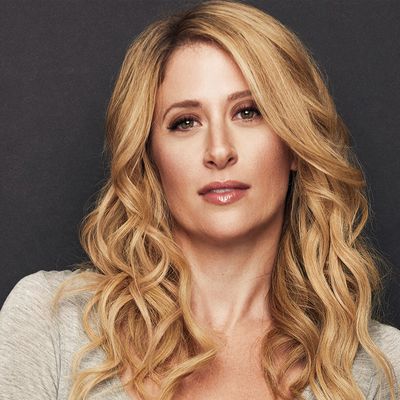
There is not a theatre performer who leads with more grace than Caissie Levy. Yes, she’s played some of the most iconic roles in Broadway history - from Elphaba in Wicked to Fantine in Les Miserables - but she’s also a warm soul that pulses with kindness.
...it’s probably because she’s Canadian, eh?
Recently, Caissie (who currently leads the Broadway cast of Frozen as Elsa, opened up on social media about a vocal fold injury she incurred during a decade ago, how she worked towards recovery and the stigma she still sometimes endures as a result. Here’s our conversation...
Transcript
This transcript was automatically generated and might contain errors.
[0:00] Mo Brady: You're listening to Hurt and Healing, a new miniseries from The Ensemblist, the only podcast that shows you Broadway from the inside out. Welcome, I'm Mo Brady.
[0:19] Mo Brady: As performers, our bodies are our instruments. We use our physical beings to create sounds, embody characters, and tell stories. So, when that physical instrument is suffering, how does that affect a performer's artistry? And, perhaps more importantly, what does it do to a performer's psyche when they aren't able to work to the best of their abilities? That's a conversation I wanted to explore in this new miniseries, Hurt and Healing, an honest look into actors' injuries, recoveries, and the stigma that comes from not being able to be your best on stage. There's not a theatre performer who leads with more grace than Caissie Levy. Yes, she's played some of the most iconic roles in Broadway history, from Elphaba in Wicked to Fantine in Les Miserables, but she's also a warm soul that pulses with kindness.
It's probably because she's Canadian. Recently, Caissie, who currently leads the Broadway company of Frozen as Elsa, opened up on social media about a vocal fold injury she incurred a decade ago and how she worked towards recovery, as well as the stigma that still sometimes endures as a result. Here's our conversation.
[2:06] Mo Brady: Hi.
[2:21] Caissie Levy: Hi. Would you introduce yourself and tell us what neighborhood of New York City you live in?
[2:24] Caissie Levy: Yes, I'm Caissie Levy and I live on the Upper West Side.
[2:27] Mo Brady: And what's your current job?
[2:28] Caissie Levy: I play Elsa in Frozen on Broadway.
[2:30] Mo Brady: The reason I wanted to talk to you was about something you had posted on social media recently. Can you describe what that was?
[2:34] Caissie Levy: My agents actually alerted me to the fact that on some of the theatre sites, which I know better than to read, there was sort of rumors going around that I'd been fired when I played Elphaba in Wicked in Los Angeles back in 2008. I just wanted to, in the age of social media, you know, we have access to our fans and our friends and our foes, and I wanted to just set the record straight about it, because I did have a tough time when I was playing Elphaba out there after doing the understudy track on Broadway for a year. I went out to replace and play the role, and I'd been dealing with a cyst on my vocal cords for a number of years prior to taking that job, and it really just became something I couldn't manage while doing that contract.
And I was incredibly depressed and frightened and scared and sad. Rather than extend my contract, which I had been asked to do by my family at Wicked, I opted to finally have the cyst removed with a doctor that I met out in LA. And I now look back and think, oh, that must have been the reason I was meant to take that job out there, was to meet Dr. Nasseri, who he sort of was the one that said, you know what, we just got to take this out and you'll be fine. And I was. So rather than have that rumor permeate, I decided to just address it and say, no, I wasn't fired. Actually, I was asked to stay on and then I was asked to come back to Broadway a number of times, but I had other jobs that conflicted.
And the reason I left that job at the end of my first contract was in order to get this cyst removed. And I just didn't realize when I tweeted it that I hadn't talked about my vocal injury in that public forum yet in my career. And it just totally went viral. And all of these people around the country, both actors on Broadway who have dealt with similar issues and vocal injuries and surgeries, as well as fans who never really heard about this element of the business, were responding and saying, oh, my gosh, thank you for speaking out about this, because either I've been going through it as well or my friend has, or I'm a voice teacher or I'm a speech pathologist and therapist. And, you know, I'm trying to help people kind of remove this stigma. And so it just became a conversation starter. The number of people in our business who were like, me too, me too, me too. I was just shocked at the sort of prevalence of vocal injuries.
[5:00] Mo Brady: Did that surprise you?
[5:01] Caissie Levy: Well, no, because so my surgery was 10 years ago. I've had a lot of friends in the time since come to me and say, I know you had this done because you've told me about it, because I've talked about it with my friends. I just hadn't in sort of an official capacity on social media or in the world of my work. But I helped a lot of other friends and colleagues through this kind of thing because I'd been there and I shared my experience with them. And there's also plenty of people who did not speak up after my tweet who I also know have been through this. And absolutely, their prerogative not to say anything. I mean, it took me a decade to talk about it publicly. So it is very prevalent. And those of us working in this world, as you know very well, we deal with this all the time. You're an athlete. I wasn't surprised.
[5:41] Caissie Levy: Yeah, I'm an athlete. That's how I've always described it. My brother, I remember when I first started working on Broadway, he, pardon my expletive, he would say, you're in the fucking NBA. And it's true. And that was his sort of frame of reference for making it on Broadway. But it's true. We are vocal athletes and we're physical athletes. And eight shows a week, no matter what the role is, no matter if you're in a singer track or a dancer track, no matter if you're doing a play or a musical, it's really vocally demanding. Your vocal cords are muscles and they take a lot of wear and tear and they require a lot of maintenance. And I know for me anyways, and I think this is true for most people working now on Broadway, we feel like if we admit to having a show we need to call out of or a vocal problem, that it's some sort of indicator that we aren't good enough, that we don't have the skills to do our job when in fact, if you look at any athlete in any professional sport, they injure their muscles and they need to rest those muscles and then they come back just as strong.
No one ever says, oh, well, you know, you couldn't play ball that day. You had to sit on the bench. You must not be worthy of this job. You can't play this point guard position. You can't play a forward. It's like, no, of course not. This is the muscle I use all the time. And I think as singers and actors, we feel like it's a comment on our abilities when in fact, it's our abilities that allow us to perform at the level we do eight shows a week in spite of the vocal fatigue and the exhaustion.
[7:04] Mo Brady: What is a vocal cyst?
[7:05] Caissie Levy: That's a good question. I didn't know any of this until I was dealing with it. A cyst is different than a polyp, is different than a nodule. As far as I understand, you can have nodules on both vocal cords. A cyst often occurs on just one vocal fold. I first found the vocal fold cyst back in 2004 when I was in the ensemble of Hairspray on the national tour. I had finished the Toronto production. I'd gone out on the tour for about a year and a half. And in that time, I went from playing Tammy and the ensemble to playing Penny. I started to have this vocal fatigue and I didn't know what it was. And I think I was in Atlanta and the company sent me to an ENT and we found I had this cyst that the ENT at that time had said it was probably there from the time I was a kid.
I had just finished a run of Maureen and Rent on the national tour. That was my first job and I had no vocal trouble, but something about the physical and the vocal exertion of Hairspray, I think just brought it to light.
[8:12] Mo Brady: That's an intense show.
[8:13] Caissie Levy: Yeah, for the ensemble. I mean, yes, Shoshana Bean, Jen Gambatese, there are these leading women on Broadway who were in the ensemble of that very, very active show.
[8:20] Mo Brady: Yeah. And what a great show. Oh my gosh. Happiest years of my life. And I can still do that choreography in my sleep. So I found it then and I started to do a little speech therapy, started to learn more about vocal health because I was really young and new in the business and didn't really know much about what I should be doing to protect myself. After Hairspray was when I got the understudy for Elphaba on Broadway and did that for a year and I was still dealing with this cyst and sort of singing around it and working with vocal coaches and ENTs to just sort of maintain. But it wasn't until I was playing Elphaba full time and singing that score eight shows a week that the cyst became unmanageable and I hemorrhaged around the cyst.
So basically a blood vessel was present near the cyst and that blood vessel burst. And that can happen just from overuse of the muscle. It can happen from medication. I took a lot of Advil at the time, which I didn't know was blood thinning, and that can cause blood vessels to burst and hemorrhage. So all of that combined with stress, with maybe not great nutrition or lack of hydration, all these things can sort of take a toll on your vocal health.
[9:10] Mo Brady: Was there a moment where it hemorrhaged and you were like, ow?
[9:12] Caissie Levy: Yes. It was more of an instant loss of voice. You can sort of feel, you know, every artist, every actor knows their instrument. And I knew my voice very well then, even at my young age. And I could feel that something didn't feel right from one moment to the next, that like I couldn't, my chords didn't feel like they were touching. They weren't phonating properly. And I knew instantly that something was wrong.
[9:34] Caissie Levy: Yeah. And then of course, you go to the doctor and you see blood on your vocal cords and you think, oh, my career is over. It's done. And you feel shame and embarrassment and you think I'm not good enough and you think I'm damaged and nobody can ever know because how will they ever hire me again? That sort of doesn't go away. I mean, that was a pretty big trauma.
[9:57] The Ensemblist & Broadway Podcast Network: Welcome to The Ensemblist, where we celebrate the performances and careers of ensemble performers.
[10:24] The Ensemblist & Broadway Podcast Network: In this episode, we delve into the theme of hurt and healing, particularly focusing on how physical injuries affect performers.
[10:51] The Ensemblist & Broadway Podcast Network: Our guest today is the incredible Caissie Levy, known for her iconic roles on Broadway.
[11:11] The Ensemblist & Broadway Podcast Network: Caissie has graciously opened up about her experiences with vocal fold injuries and the impact it has had on her artistry.
[11:31] The Ensemblist & Broadway Podcast Network: We’ll explore the stigma surrounding injuries and the journey of recovery.
[11:51] The Ensemblist & Broadway Podcast Network: So, without further ado, let’s dive into our conversation with Caissie Levy.
[12:11] Caissie Levy: Thank you so much for having me. I’m really excited to talk about this topic.
[12:31] Caissie Levy: It’s something that I think a lot of performers go through, but we don’t always talk about it openly.
[12:51] Caissie Levy: I’ve had my share of injuries, and it’s definitely been a journey of learning how to cope with them.
[13:11] Caissie Levy: I think the hardest part is the mental aspect of it, feeling like you’re not able to perform at your best.
[13:31] Caissie Levy: It can be really isolating, especially when you’re used to being on stage and giving your all.
[13:51] Caissie Levy: I remember when I first experienced my vocal fold injury, it was devastating.
[14:11] Caissie Levy: I had to really reassess how I approached my craft and my body.
[14:31] Caissie Levy: The recovery process was challenging, but it taught me so much about resilience.
[14:51] Caissie Levy: I learned to listen to my body and respect its limits, which was a big shift for me.
[15:11] Caissie Levy: There’s a lot of pressure in this industry to always be “on,” and that can make it hard to admit when you’re struggling.
[15:31] Caissie Levy: I think it’s important for us to create a culture where we can be honest about our injuries and our healing.
[15:51] Caissie Levy: It’s okay to not be okay, and we need to support each other through those times.
[16:11] Caissie Levy: I’ve found that sharing my story has helped others feel less alone in their own experiences.
[16:31] Caissie Levy: It’s a reminder that we’re all human, and we all face challenges.
[16:51] Caissie Levy: I hope that by talking about this, we can start to break down the stigma around injuries in the performing arts.
[17:11] Caissie Levy: It’s about finding strength in vulnerability and understanding that healing is a process.
[17:31] Caissie Levy: I’m grateful for the support I’ve received from my colleagues and friends during my recovery.
[17:51] Caissie Levy: It’s made a huge difference in my journey, and I want to be that support for others as well.
[18:11] Caissie Levy: We need to lift each other up and create a safe space for these conversations.
[18:31] Caissie Levy: I truly believe that sharing our stories can lead to healing, not just for ourselves but for the entire community.
[18:51] Caissie Levy: Thank you for allowing me to share my journey and for highlighting this important topic.
[19:01] The Ensemblist & Broadway Podcast Network: Thank you, Caissie, for your openness and for being a voice for so many performers.
© Broadway Podcast Network, All Rights Reserved