

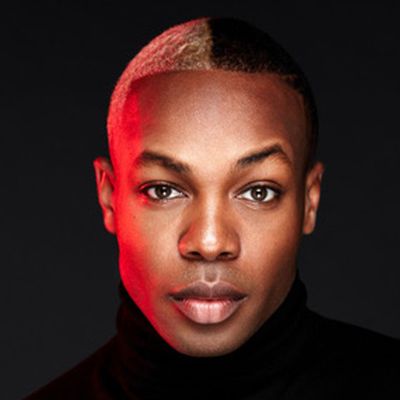
Todrick Hall is a trailblazer in the world of video. His work has always sought to entertain and engage, uniting his love of music, theatre and Disney with unparalleled production quality... Read More
From the show: The Ensemblist
Guests
Featured Shows
About
Todrick Hall is a trailblazer in the world of video. His work has always sought to entertain and engage, uniting his love of music, theatre and Disney with unparalleled production quality. Blasting open the possibilities of online video, he’s also created studio albums, live touring productions and award-winning music videos.
But Todrick’s first love was Broadway, as is obvious from the number of times he’s trod the broads on the mainstem. Last week, he finished a run as Ogie in Waitress the musical on Broadway. But he’s also played Lola in Kinky Boots, Billy Flynn in Chicago - both here and in London. And in 2007, he made his Broadway debut in the original production of The Color Purple as a replacement in the show’s ensemble.
Transcript
This transcript was automatically generated and might contain errors.
[0:00] Mo Brady: It's Sunday morning, so make a joyful noise.
[0:08] Mo Brady: You're listening to My First Time from The Ensemblist, the only podcast that shows you Broadway from the inside out.
[0:14] Mo Brady: I'm Mo Brady.
[0:17] Mo Brady: Lord, hallelujah, today's the day God hath made.
[0:36] Mo Brady: Welcome back to My First Time, where we talk to Broadway stars who made their Broadway debuts in the ensemble, to talk about why that experience helped shape them as artists.
[0:46] Mo Brady: Todrick Hall is a trailblazer in the world of video. His work has always sought to entertain and engage, uniting his love of music, theater, and Disney with unparalleled production quality. Blasting open the possibilities of online video, he's also created studio albums, live touring productions, and award-winning music videos. But Todrick's first love was Broadway. This is obvious from the number of times he's trod the boards on the main stem. Last week, he finished a run as Ogie in Waitress the Musical on Broadway. But he's also played Lola in Kinky Boots, Billy Flynn in Chicago, both here and in London. And in 2007, he made his Broadway debut in the original production of The Color Purple as a replacement in the show's ensemble. Here's our conversation.
[1:31] Mo Brady: Hi, Todrick.
[1:46] Todrick Hall: Hi.
[1:47] Mo Brady: Would you introduce yourself? And do you live in New York City?
[1:50] Todrick Hall: I don't. I live in LA.
[1:51] Mo Brady: Okay. So introduce yourself and tell us where you live.
[1:53] Todrick Hall: Okay. My name is Todrick Hall, and I live in Los Angeles.
[1:57] Mo Brady: When did you make your Broadway debut?
[1:58] Todrick Hall: I made my Broadway debut, I believe it was in 2007 in The Color Purple on Broadway, the original Color Purple.
[2:04] Mo Brady: So take us back to before the audition. What was your career like up until that point? You were 19, 20?
[2:11] Todrick Hall: I was 20. I grew up taking ballet my entire life since I was eight years old. So I had a lot of theatrical experience. And luckily, I went through this phase where I had a crush on a boy that was a cheerleader at my high school. And so I decided to become a cheerleader, which was not a very smart thing in keeping me focused on my dreams and aspirations of being on Broadway. But I started learning how to be a gymnast and started tumbling, which ultimately was like the key ingredient that got me into The Color Purple on Broadway. So everything happens for a reason. I had done a couple of cruise ships. I had worked at Disney World, done the Beauty and the Beast show. And I remember I was on a cruise ship and I was miserable.
And my mom was sending me tapings of Oprah Winfrey show because I just loved the show. And I saw that Fantasia was in The Color Purple on Broadway. And I was a humongous American Idol fan and had voted for Fantasia every single week. I was an active American Idol fan. I didn't just watch. I voted and voted and voted until they cut us off voting. I was like, I really want to see her in the show. I've never auditioned for a Broadway show or anything before, but I wanted to get to New York to go see her. And my family was very poor. We didn't have a disposable income to be able to fly me to New York just because somebody that I liked was on Broadway. That was an unheard of preposterous concept, not going to happen.
But I went on actorsequity.com and I saw that they were having auditions. And when I looked at the breakdown, it was like, must be African American, check. Must be able to sing, dance, act, check. And also has to be able to do a pretty difficult tumbling pass and understudy one of these lead roles. And in my mind, I was like, this could actually be something I would be right for. And so on a whim, I broke my contract on the cruise ship. I quit, called my dad because we didn't have money. My dad was like, I'm never going to fly you there. Don't ask me to pay for you to fly to an audition ever again. And I will never forget my mom screaming at him on the phone in the other room and getting into this huge argument because I never really asked my dad for anything.
And I wanted more than anything to go to New York and audition, but also to see Fantasia. My mom comes into the room and it was like a Viola Davis, snot running down her face, tears in her eyes. She was like, pack your bags. You're going to that audition. And the next day I flew to New York and I came here with a guy I was talking to at the time. And we saw a few shows. We were rushing shows every morning. I went to the audition and I just remember walking into the room and being so overwhelmed, like a fish out of water, second guessing everything. Like, am I good enough for this? Is this what I'm supposed to do? Like, am I really talented enough today? I have a delusional moment where I thought for a second I was amazing enough to be even in this room auditioning with these people who live in New York who do this all the time.
But there was a sense of naivety as well, like where I just didn't realize how difficult it was to get on Broadway. So I didn't understand like the stakes as well. And so we auditioned and I remember Jamal's story, who was the dance captain. I didn't feel like he was looking at me. I was like, I'm not going to get this. It was, I'd never done contemporary and it was Donald Byrd choreography. I was just like, there is no way I'm going to get this. I was in the back of the room. I wasn't brave enough to step up to the front. Everything's felt so foreign. I made it to the end and there was me and like five other guys. And it became really real in that very moment that one of the six people in this room was going to get this role.
I remember going to see the show that night and I still get goosebumps thinking about it because I grew up in a crazy neighborhood, but then I moved to a school that was predominantly white. I wasn't raised around a lot of black people. There wasn't the diverse world that we live in right now, where you see a lot of representation of yourself. I never had seen black people doing things that I loved to do. I saw Audra McDonald in Annie and Brandy in Cinderella and that was it. And when I saw that show, I was in tears, not just because it's already tear jerking, like beautiful show, but because it was the first time I saw an entire cast of African-American people doing something and felt so proud.
I walked out of that theater like, I am so proud to be African-American because we are the only race that could have told this specific story in this specific fashion. I just was like, this part is mine. I have to get it. And I stayed up all night rehearsing the lines. I was like, I will not go in with my script. I'm going to be prepared. That night I had tickets to see Legally Blonde on Broadway and I was in the theater and my phone was dead. And so I was like charging my phone behind the merchandise table, which was probably like not approved, but I could not make it through the show because I was just like so antsy. I went out into the lobby halfway through the first act. I couldn't even wait till intermission.
And I had a missed call from a 212 number. I was a basic bitch up until this point, but I knew that 212 was not from Texas. And it was like, and I was like, 212, that area code means something. And I went outside on my flip phone and it was pouring rain. And I got a voicemail saying, hi, this is Justin Huff. And we would like to invite you to join the cast of Oprah Winfrey's The Color Purple on Broadway. And I just started crying. And I went and sat outside in the rain, like one of those moments where you don't care. I sat down Indian style in front of the theater. I didn't have a camera on my phone or anything. I just sat there and just like looked at the theater, let the rain just like pour on me for like 35 minutes.
Like I found out on Thursday that I got the job and I started rehearsals on Sunday. I think I did a Saturday and Sunday vocal rehearsal. And then I started rehearsing Tuesday, Wednesday, Thursday, and I went into the show on Friday. It was like not even a whole week after I found out that I was in the show.
[7:31] Mo Brady: Holy smokes.
[7:32] Todrick Hall: It was insane.
[7:34] Mo Brady: And you moved to New York in that week.
[7:35] Todrick Hall: Yeah, for the first time.
[7:38] Mo Brady: How did you, like, did you go back?
[7:40] Todrick Hall: I got out on Thursday. I flew home Friday and then I got my stuff and I flew back Saturday. And I think I started rehearsals either that Saturday, we did vocals or Sunday. And then I was off Monday. And then by that Friday, I was in the show. It was insane.
[7:53] Mo Brady: Where did you move?
[7:54] Todrick Hall: Well, luckily, one of the ladies who was in the show was about to leave The Color Purple to go on the tour. And she had a lot of people she was considering letting sublet. But because we were working in the same place, she's like, I know where you work, I know that you're going to get these checks. And I know how to find you if I don't get my checks. So she let me move right into her apartment. It just was like the most smooth transition.
[8:14] Mo Brady: What did you do in those five days of rehearsal, the six days of rehearsal?
[8:19] Todrick Hall: I just, I looked up online that there was a clause that if you weren't great enough, like people could fire you within two weeks after you got into the show and Actors' Equity. So I was just like, so on it. So there every day early. And when I left, I didn't do anything but rehearse, rehearse, rehearse every single day. And I would just sit in my apartment and watch reruns of That's So Raven and rehearse. And I just was, I just didn't want to make any mistakes. And there was that huge African number that a lot of it wasn't even to count. It was like breathing and we all had to dance together. I watched the show every single night. And after I got into the show, I watched Fantasia off to the side of the stage, like every night because I just could, I'd never met a celebrity before.
I couldn't believe that I was there. I remember buying everything that they had on the merchandise table. I didn't even use my discount. I just wanted everything. I didn't know I could get a discount. And I was like, I'm going to save all this stuff so that Oprah Winfrey, if she comes to see the show, I can meet her. I ended up getting a hemorrhage in my vocal cord and I didn't do the show. And Oprah Winfrey came to the show the weekend that I wasn't there. And then finally, like two weeks before I left the show, I was down underneath the stage getting ready and the whole theater started shaking and everybody in the room was like, Oprah's here. Like they, like it was like everyone knew she was there.
Like the entire theater erupted. And it was like a volcano. I mean, it was like an earthquake, not a volcano. After the show, Bebe Winans and Sacha Khan were in the show at that point. And Bebe took me into a room to meet Oprah. And it was just me, their security, Gayle, and Oprah. And she signed all of these things to me that I still have. And I have them framed in my house. And she wrote this long letter to me. And it was just such a surreal experience. I got to meet Patti LaBelle and Ertha Kitt and Tyler Perry and Tyra Banks. And every week there was somebody new coming to the show. Jordan Sparks, who is now a close friend of mine, had just won American Idol and she came to the show. And I was just like a little kid at Disney World.
Like every single day I was like, oh my gosh, I'm getting to meet these really cool people. And I don't know that there will ever be an experience that makes you, your heart flutter like that again, or makes you have butterflies or puts a fire inside of you. It's like, it's like being in love for the first time. The first show that you do on Broadway is just one of those things. It's the peak, the pinnacle of musical theater performance. It's like, my mom didn't understand. One week before I got cast in The Color Purple, I accepted a job working in High School Musical at Disneyland. And so when I told my mom I was going to do this, she was like, but you love High School Musical. She did not understand because we just come from such a small town. I was like, this is like the MBA for theater mom. And that's what I had to explain, to say to her, for her to understand the magnitude of how huge this opportunity was.
[10:57] Todrick Hall: How long were you in the show?
[10:57] Mo Brady: 11 months.
[11:03] Todrick Hall: 11 months. What are your memories of performing the show?
[11:03] Todrick Hall: I just remember just being in love.
[11:04] Todrick Hall: Every night. I loved the costumes. They were so beautiful. I loved the revival, but there was something regal and majestic about the way we opened the show and how proud everyone was when they walked down the runway and stuff in the opening of The Good Lord Works in Mysterious Ways. So I remember that. You know when you're a little kid and you see a fog machine for the first time or you understand how a pulley pulls the backdrop out. I had never seen a turntable or sets that slid on. I was so fascinated by every aspect of the show, like the costumes, the makeup, the wigs, how they worked, the sound department, and how the lights worked. I was just like a six-year-old who had never been on a stage before.
That's how I felt every night when we were performing it. I just loved it so much. And every now and then when there was a moment where you thought, I'm kind of getting tired of this, they would swing you out and you could watch the show. And it was just all of the rejuvenation you needed to get back up on the stage and dance your heart out the next day. Because sometimes it's easy to forget how touching and powerful the story is when you're underneath the stage on MySpace at that time, like trying to get service to talk to your friends on MySpace. And then you go out and everyone's crying. But the story was just so moving. And Fantasia was so phenomenal in the show. So it was just such a great experience.
And I'm still working with people now that I worked with in that show. I've made some very long-lasting friends and what I would consider to be my family. There's a Color Purple reunion every year. I try to go when I can. And I try to meet up with the cast members. And they've been so supportive of everything that's happened to me. They come to my concerts. And it's just one of those things that you just will never forget it. I don't even have the words to describe how incredible of an experience it is to be involved in such a family-oriented show. The energy in that theater was so amazing because I felt like it was my aunts and uncles and they would teach me the things that I needed to learn.
And they would give me notes, which was like completely inappropriate in theater, but it was done in such a loving way that I appreciated it. And I grew so much as a human and as an artist from being in that theater.
[13:06] Mo Brady: Do you remember anything specific that those aunts or uncles told you? Maybe not necessarily about the show itself, the notes, but advice?
[13:12] Todrick Hall: Well, I just learned a lot about being an adult and being punctual. Like I had never ridden on the train or anything. And on Broadway, there's a 30-minute call time before the show, which is not a lot, but they give you that grace because they're assuming that you're a responsible professional. And when I got there, I was running late, just like five or 10 minutes, but when it's only 30 minutes before the show, that's not acceptable. And so I just learned a lot about being punctual. Now I panic if I'm late to anything. Like today I walked in exactly at 12 o'clock on the dot. I just learned so much. And those are the fundamentals about being a professional and being in this industry that I learned from being in The Color Purple and about how to pace yourself and to prioritize your work because I learned from being in that show, honestly, some of the older people that had been in the business for a long time and had done The Wiz and done Dreamgirls on Broadway and were in the movie of The Wiz explained to me at a very young age, like when you're an African-American in this industry, you have to be 10 times better.
You have to maybe run around the racetrack 10 times to equal someone else who is your peers one time. And you have to be able to tumble. You have to be able to sing and act and do all these things and execute it well. You cannot be out at the club playing around because your job is to get here and absolutely slay this show, which is not easy to do eight times a week. The work ethic that they instilled in me because no one from stage management was going to be like, your voice is a little rocky today because I was just in the ensemble. But it was the pride that everyone took and being there every day. And Linda Twine, our musical director, we had music cleanup rehearsals almost every week. And I've never since I left that show been a part of a show or seen a show that was musically that tight because she understood what it meant to be a female African-American musical director in 2007.
And she was like, when people come to see this show, you're going to hear every word and we're going to agree on the pitch. That's what she would say every day. And it was just the most clean, precisely executed musical that I'd ever been in. And every day, everyone took such pride and accountability of making sure they played even their smallest of parts and making sure that the story was told to perfection. And I just love that. And I've carried that with me even in smaller scales, what I could do on YouTube or what I could do when I'm doing my tours or making videos for my albums, or that when I have a moment where I'm like, I could just put it out like this, I go back to those moments where these powerful people who have had to fight so hard for their opportunity to perform in this industry and remember what it's like to just put that extra time in to achieve the closest thing you can to excellence. And I learned that from being a part of that show.
[15:48] Mo Brady: So you just finished Waitress yesterday, which was your fifth Broadway show. How has performing on Broadway changed?
[15:55] Todrick Hall: The industry has changed. I would love for it to change more, but it has changed a lot. And I'm so grateful that I've been able to play roles like Billy Flynn and be, I think, the first African-American to play Ogie on Broadway as the role. My understudy, Tyrone, also plays the role and he's African-American. And I love the fact that they're giving me an openly gay man who could be oftentimes found in his natural habitat wearing wigs and heels, a role of like a hotshot lawyer in Chicago, or to be like the quirky love interest in Waitress. I just love coming back here because it's not the money that you come back to Broadway for, it's the love and the passion for why you ever started performing.
Like I wanted to be on Broadway my entire life. And every time I get the opportunity to return to Broadway, I jump at the chance. Even if it means financially, I will be like giving up jobs that would be someone else's yearly salary for a one-day gig. I would rather be on Broadway because I just love it. There's nothing like the adrenaline rush that you get from interacting with a live audience. So I love it. It's a lot more pressure now to be a lead on Broadway, even though being an ensemble is very important and very difficult. But when your name is on the bill or your name is like outside and people are paying to come and see you, there's an extra pressure that you have to like go home, steam, rest your voice, take care of yourself, drink more water, like to be on every single night because a lot of the fans that come see the show are not thespians or people who have been raised going to Broadway musicals.
They're people who are stepping into a theater for the very first time because they fell in love with a YouTuber or your journey or your story or your brand. And they become lifelong theater fans because of that one experience that you introduced them to. And without someone introducing me to theater at eight years old, very young as an impressionable kid who didn't know where I fit in in a world where all my cousins were playing football and basketball and things that I would have never been good at. It's so cool to be able to introduce these kids to this world and have them like completely fall in love with it and go back and see multiple shows and be seeing my fans tweet about the Tonys where they would have never even known what the Tony Awards were or who any of the people that were up for the awards are.
And now they know everything. And they're telling me things about Hadestown and about, you know, Slave Play or about any new shows that are coming out. I just think that's really awesome. And the fact that I've been able to expose so many people to theater is one of the things in my career that I'm proudest of.
[18:17] Mo Brady: It's the way you walk into a theater doing The Color Purple different than the way you walked into a theater to do Waitress?
[18:23] Todrick Hall: I believe so. I think like any human, we are all like just like oftentimes infested and filled with like insecurities. And I know that I don't have like a traditional Broadway voice. And that's why I was always so confused when I was on American Idol, because they would keep calling me Broadway, which is true. I had been on Broadway, but I don't have a trained voice. I didn't grow up doing musical theater my entire life. And so I used to panic about the fact that I was going to sound different. But then I started thinking about all my favorite people in the world, like the Harvey Fierstein's of the world or Eartha Kitt or Bernadette Peters is not known for being this big Celine Dion-esque beltress.
Like she's known for being an iconic performer and her voice is so recognizable. And like, she's such a star. And I've now recently become like, okay, with the fact that I'm never going to sound like Billy Porter did in Grease or sound like Michael Kilgore or sound like Alex Newell in Once on This Island, which are all things that I would love to be able to one day do, though, like that is like goals. If I could just one day sound like Alex Newell for one day, I would record 16 albums and be okay with never singing ever again. But I've understood now that this is the voice that God has given me, and it's like very unique. And I have to just be able to take each role that I'm given and put my own spin on it and be okay with that.
And so that's kind of how it's changed my performance ability. I don't try to fit into a mold anymore. I just think that sometimes I have a moment when I'm on Broadway, and I'm like, dude, you're here. Like, this is not a joke. Like, this is something that I was like, hopefully, in my lifetime, I will be able to step on the Broadway stage one time. And this is so many people's dream and passion. And like, if you're a kid out there who is listening to this, who has goals or aspirations of someday stepping into the spotlight or being on Broadway, know that a it's worth every single time that you're not gonna be able to go to a party, you're not gonna have a social life to go do your plies and go to dance class and go to tumbling class to learn how to be the most diverse version of yourself and the most marketable version of yourself.
And it is just such an incredible thing to be able to continue this art form that is like such an old school art form, but one of the only things that can't be fixed in post and can't be altered, and you can't Photoshop it. It's like a real thing that you have to actually have the talent to get onto the stage. And the thing that you were born to do and to share your gift with an audience eight shows a week is such a blessing. I just like to just acknowledge the fact that it's it's not an easy thing to do. It's not an easy place to get to. And I never take it for granted that like this is such an incredible opportunity. And I'm so flattered and blessed and I feel so grateful that people have thought enough of me and my talent to bring me back to Broadway over and over and over again.
[21:05] Mo Brady: Special thanks to Todrick Hall for sharing his stories with us this week. You can learn more about him and how to connect with him online by visiting our website, theensemblist.com. The Ensemblist was produced today by me, Mo Brady. Please help others find out about The Ensemblist. Leaving us a rating and review on Apple Podcasts is a great way to do it. We're currently trying to get 300 reviews on Apple Podcasts. So check out the number. If you can add one, that'd be so appreciated. Also, make sure you're following us on Instagram to see the latest posts from our website. New Photography. We post about new episodes there. It's a great way if you love Broadway ensembles, you love theater to get the newest best information from us. All right. Thanks for listening, guys. Until next time.
© Broadway Podcast Network, All Rights Reserved