

This month, Beautiful: The Carole King Musical will shutter its doors after nearly six years on Broadway. Along the way during its 2,418 public performances, The Ensemblist has been lucky to share stories from many of its ensemble members... Read More
From the show: The Ensemblist
Guests
Featured Shows
About
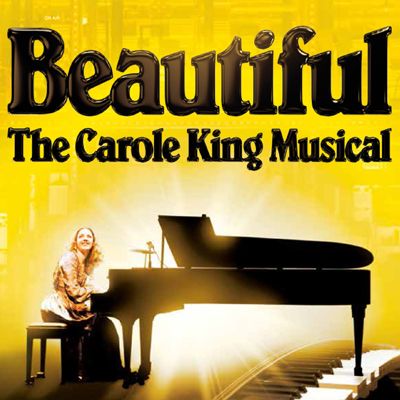
This month, Beautiful: The Carole King Musical will shutter its doors after nearly six years on Broadway. Along the way during its 2,418 public performances, The Ensemblist has been lucky to share stories from many of its ensemble members. In honor of its closing, we wanted to share some of our favorites from our early years, as well as a new story to the podcast from one of the show’s touring cast members.
Transcript
This transcript was automatically generated and might contain errors.
[0:00] Mo Brady: You're listening to The Ensemblist, the only podcast that shows you Broadway from the inside out. Welcome, I'm Mo Brady.
[0:24] Mo Brady: This month, Beautiful: The Carole King Musical will shutter its doors after nearly six years on Broadway. Along the way during its 2,418 public performances, The Ensemblist has been lucky to share stories from many of its ensemble members. In honor of the show's closing, we wanted to share some of our favorite stories from our early years as well as a new story to the podcast from one of the show's touring cast members. First up are a trio of short stories from actors who performed in the show on Broadway. Back in 2014, original cast members Kevin Duda and Rashidra Scott each shared stories with us about the creation of Beautiful, from developing one of the show's most memorable moments to the buildup and rehearsal involved in creating the show's Tony Awards performance. Here in their own words are Kevin Duda and Rashidra Scott.
[1:12] Kevin Duda: My name is Kevin Duda and I currently live in West New York, New Jersey. Development is pretty much the same across the board in any business you go into, but for musicals there is an intricate part of the audience and the fourth character with that fourth wall is so important and not until you get it on its feet and you see how the scene leads to the song, how the song leads to the applause, how the applause leads to the break. All of those specific things you don't get in reading form. Beautiful started for me in the spring of 2013 when I got a call from Stephen Carnahan Casting to do a reading of this new Carole King show. One of the reasons you do readings is to get a respite from what you're doing.
So I jumped in and it really truly was like a second Mormon experience for me where they start to wrap the parts and the materials around you as an actor. And so we ended that another 29 hour reading and about two weeks later we heard that it's going to Broadway. In Beautiful they assigned me Neil Sedaka in the reading and it was this really fun little part. It had a full song in the beginning. He sang "Oh Carole" and so for the reading I thought it would be really fun for me to appear. So I hid behind my stand and I hid behind another actor. On that musical cue I whipped around to the stand with the biggest Neil Sedaka smile I could muster and started singing "Oh Carole" and it always got a huge laugh.
That really was the reason that Neil Sedaka kind of like whips around the corner in the show now. They were trying to put in as many songs as they could and some songs were going in that just weren't working. When we got to San Francisco things changed left and right. I had a character in Act Two that was added from the fall to Broadway. It changed again. It changed a lot. The song shifted specifically her opening song. My favorite thing about developing new material is the chance that something I say or do will make it into someone else's life. Knowing that the way I say a line may make it into a script that then is published by MTI that then some kid in Nebraska is saying the same. That's cool.
[3:03] Rashidra Scott: I'm Rashidra Scott and I live in Jersey City, New Jersey. I didn't grow up watching the Tonys so it's all very new. The energy of it, the excitement of it, just the actual awesomeness of being in that space and not just being a part of a show that was nominated but HOLY CRAP I'M IN A SHOW THAT WAS NOMINATED AND WE'RE ABOUT TO GO PERFORM. It was exciting and I was so preoccupied watching the monitor where we could actually see who was performing on stage. We are doing a montage. We're featuring Jessie. We have many moments in our show of quartets so we're doing a mash of Jessie into one of the quartets into a huge ensemble number including our swings which is amazing. We're so excited about it.
For me to be able to perform on the Tonys is an unrealized dream come true. Again, didn't start watching until about seven years ago and because I was just starting to immerse myself in this community and really starting to say this is what I'm going to pursue. I've always loved performing. I've always loved singing. I'm going to pursue this and to be accepted among the community, to have the great honor and fortune of being able to be cast in a few shows but particularly this show as to be a part of the opening company of this show that is being so well received and the Tony committee and the community in some sense wants to honor us and wants to see us. It's not something that's lost on me even though I'm random ensemble person number whatever I am in the show.
There's still something kind of amazing about being able to step up on that stage. Radio City Music Hall, first of all, because even if I didn't really grow up watching the Tonys, I did grow up going to performing arts high school. We did do tours of Radio City seeing where the Rockettes and just thinking of all the history that's at Radio City and to stand on that stage and represent our show which we treasure as a gift. We think it's something that's very special. I've had the honor of being a part of two or three of the readings before we came to Broadway. So seeing it from the sit and stand at a music stand to being in production on Broadway to now we get to be on the Tonys and it's aired nationwide.
All of my friends in other countries, in Hong Kong and China and wherever, they can access it and watch it via internet. It's kind of unreal and unbelievable. I'm a very, very, very lucky and humbled performer to have this opportunity.
[5:19] ♪ Musical number: "The Locomotion" — performed by Rashidra Scott ♪
[5:33] Mo Brady: Later in the show's run, Brittany Johnson came into the studio to share the joys and challenges of playing a real life character on stage. Portraying Little Eva in the production, she channeled a real life music icon as she implored audiences to do the locomotion with her. She told us about creating the character and how bringing yourself to a role is important even when you're embodying an icon.
[5:55] Brittany Johnson: My name is Brittany Johnson and I live in the Bronx right by Yankee Stadium. Right now I'm playing Little Eva in Beautiful: The Carole King Musical. You have to be very particular when you're portraying a real person and especially a person that's still living because you don't want to become a caricature of that person. I did a lot of research. I read her memoirs. I watched hours of videos, interviews, and performances dating back from when she first started to now even, even though I didn't play her now, but just the transitions. And I feel like I did most of that research initially when I was auditioning because I wanted to go in and already be her. Honestly, my associate director and my stage managers have given me the most insight and then the people that come to see the show, but just people who come back and tell us stories about what it was like to work at 1650 back then.
This is one of those shows where I feel like I've brought more of myself to the character because I know the essence of what the locomotion is. It makes you want to get out of your seat and dance and you want to do whatever the person that is on stage leading you to do. You want to do it and you want to believe that they're having fun doing it. And I have fun when I do it every night. So I feel like I brought more of myself to her than trying to let Little Eva inform me because there isn't much out there about it. I've watched a lot of video on her, but the movement and the things that we're doing in this show is unlike anything that they did. So it was difficult to put in any like iconic Little Eva movement and people who've come to the show who knew her and they're like, you got it perfectly right. She just was so happy and like so bright all the time. Like you got it. So I was happy to hear that.
[7:38] Dimitri Moise: Just last year, I wrote a piece for our website about Beautiful. Performing in the show's first national tour, I've seen firsthand how feminism, beauty, and unity present themselves in the production. Here, in my own words, is my reflection. The Bitter End, circa 1970. It's been years since she's played or sung in front of anyone, but she steps up to the piano to introduce a new song on which she has been working. When the opening chords of Carole King's "It's Too Late" are introduced, the crowd begins to buzz with excitement. Without fail, this excitement is typically followed by applause from the audience night after night. It may seem like just another scene in Act II, but in this moment, we are transported.
The moment transcends time and space. For some, this song may bring them back to the first time they listened to the Grammy award-winning album Tapestry. For me, it brings me back to my middle school self, a young boy struggling with his identity and his sexuality. This song allowed me to take a look at the antagonists in the story of my life and brush them off. In retrospect, I realized what this meant. If they couldn't accept me then, it was too late for them to try and make amends now. Forgiving, but no way of forgetting. For Carole, this song brilliantly represented a time in her life when she stood at a crossroads. She was forced to make a difficult decision and sever ties with the person who she felt completed her, made her feel whole.
She was trying to pick up the pieces of her life and from there, "It's Too Late," one of the many hits of Tapestry, was born. The introduction of this song in Beautiful: The Carole King Musical is just one of the many moments that represents the strong, optimistic, and loving woman in King. This show is incredibly important for our time, depicting a real woman overcoming tough moments and big obstacles in her life in order to succeed in a world that was not built for her to do so. It should be a little unbelievable to see how the life story of Carole King could be so relevant in 2019, but history does repeat itself, doesn't it? When I look at our social and political climate as a country, at the administration no one expected to hold power, and at the incredible grassroots movements like the Women's March and Black Lives Matter, it's hard for me not to see how important a show like Beautiful is right now.
The show opens with a key phrase from Carole: sometimes life goes the way you want and sometimes it doesn't. And when it doesn't, you find something beautiful. A 16-year-old King in the late 1950s goes against her mother's wishes of becoming a teacher and follows her dream of being a songwriter. When she arrives at the now-famed Brill Building, she is met with disdain as she attempts to prove her worth as a person who can hold her own in an industry where women were not known to be songwriters. Not only is she able to make her mark in the building as a teenage songwriter, but she is also able to become the Carole King superstar that we know and love today. In my conversations with some of the extraordinary women in our show, one moment that stood out came from Sarah Bacall, who currently plays Carole on Broadway.
Sarah says, "Every day, Beautiful serves to remind me that beauty, identity, and confidence should and can come from within. As women, or even as people, it can be easy to base our worth or identity in others—our spouse, our family, our jobs. Beauty, especially, is a quality easily mistaken for coming from others instead of a feeling within yourself. With all that life throws at us, it's important to realize that the only constant is ourselves." I went through many incredibly dark moments in my life, growing up as a gay Black man, desperate to fit in and be accepted by my peers. As an adult, I have come to learn and love every facet of my being, despite the negativity and hate I faced in my life.
A similar lesson is taught not only through the story of Carole, as she finds that strength within herself, but also through some of the other women in the show, particularly Cynthia Weil, who carries that strength and assuredness in herself from the moment the audience meets her. She is presented as a woman unwilling to sacrifice her career for any man. She is disinterested in bending to society's need for a woman to be wed, for example, and makes those feelings clearly known. Kaley Harwood, former swing on Beautiful, describes her experiences as having to go on for those women as polar opposites. As a swing, Harwood understudies all the female roles in the show, including Carole, Cynthia, and Jeannie, Carole's strong-willed mother.
Kaley says, "To go on stage as Carole and truly desire that quiet life in the suburbs with Jerry and her kids and the white picket fence, you know, there's nothing trite or anything about it. It's kind of an inviolable optimism she has, clinging on to that dream while still making cutting-edge songs. And then you play Cynthia, who's career-focused and doesn't want a man to distract her from that drive she has. And then even Carole's mother, who has another perspective, who's been burned, who has a jadedness about romance and is more practical." These women all offer such unique perspectives. Despite the divisiveness that is ever-present in America today, one thing seems to bring all these audiences together, even with the very feminist themes in Beautiful.
Life can send us all down unexpected paths, but we must continue to grow and overcome. This is a central theme of the show. I know I faced times in my life that forced me to grow, overcome, and move forward. So have many others. It's where we are as a country today. It may feel scary. It may seem impossible. But together, we can build that strength to grow together, overcome together, and move forward together.
[14:13] Mo Brady: Special thanks to Kevin Duda, Brittney Johnson, Dimitri Moise, and Rashidra Scott for sharing their stories with us this week. You can learn more about them and how to connect with them online by visiting our website, theensemblist.com. The Ensemblist was produced today by me, Mo Brady. You can help others find out about The Ensemblist by leaving us a rating and review on Apple Podcasts. You can also download episodes wherever you get your podcasts or at theensemblist.com. And make sure you're following us on Instagram to see our original photography, find out about newest episodes, new blog posts. It's a cool place. It's a cool place. Yeah. Join us. Leave your fields to flower. All right. Thanks for listening, guys. Until next time.
© Broadway Podcast Network, All Rights Reserved