

Recently, Jackson Cline of The Ensemblist has been asking several questions about queer representation in musical theatre. How has the portrayal and inclusion of queer characters evolved over the years?.. Read More
From the show: The Ensemblist
Guests

Featured Shows

About
Recently, Jackson Cline of The Ensemblist has been asking several questions about queer representation in musical theatre. How has the portrayal and inclusion of queer characters evolved over the years? Are more queer artists getting opportunities to tell these stories, both onstage and behind the scenes? And does giving queer-identifying individuals opportunities to create queer roles create a richer theatrical experience for the audience?
Over the course of this mini-series, we’ll dive into these questions and hear from some of the talented artists who have put their stamps on Queer Characters on Broadway.
Today, we’re going to take a journey through time, looking at the evolution of queer stories told in Broadway musicals. So, jump into your time machines, and let’s head back to 1969.
Transcript
This transcript was automatically generated and might contain errors.
[0:00] Jackson Klein: You're listening to Queer Characters on Broadway, a new miniseries from The Ensemblist.
[0:14] Jackson Klein: I'm your host, Jackson Klein.
[0:29] Jackson Klein: I fell in love with musical theater when I was three years old, thanks to my now worn-out VHS copy of Cats. As I discovered other musicals throughout my youth, I was able to see parts of myself in many musical theater characters. However, there weren't many in which I saw my queerness represented. Nor were there many instances in which I saw those queer roles portrayed by queer artists. Of course, queer representation has come a long way over the past two decades, but there's still so far we can go. Recently, I've been asking myself several questions about queer representation in musical theater. How has the portrayal and inclusion of queer characters evolved over the years? Are more queer artists getting opportunities to tell these stories, both onstage and behind the scenes?
And does giving queer-identifying individuals opportunities to create queer roles create a richer theatrical experience for the audience? Over the course of this miniseries, we'll dive into these questions and hear from some of the talented artists who have put their stamps on queer characters on Broadway. Today, we're going to take a journey through time looking at the first question and examining the evolution of queer stories told in Broadway musicals. Now, keep in mind, this is just an overview. As much as I'd love to take a deep dive into every queer character to ever be in a Broadway musical, that episode would be far too long. So let's jump into our time machines and head back to 1969.
While it's hard to nail down the first queer character to ever appear in a musical, the first major openly gay character in a Broadway musical was Sebastian Bay, a nemesis of Coco Chanel in 1969's Coco. This production premiered just six months after the Stonewall Riots, which were a major tipping point in the gay rights movement. While Rene Aubert-Genois' performance was celebrated with a Tony Award for Best Featured Actor, the role has since been criticized as a negative caricature of a gay man. Now, there were some queer members on the creative team, but both the actor and writers creating the roles identified as straight. Now, just three months later, Applause opened at the Palace Theater on Broadway.
Like Coco, Applause also featured a gay supporting character, Dwayne Fox. This time, however, he was portrayed in a much more positive light. In the show, Dwayne Fox is Margot Channing's hairdresser, and he has a significant moment early on in the first act when he takes Margot and Eve Harrington to a gay bar in the Greenwich Village during the song, But Alive. An ensemble of gay men enjoy a lively evening with the trio during this number, which was one of the first times ensemblists embodied openly queer characters on Broadway. Additionally, Leroy Reams, who played Dwayne, was the first openly gay actor to originate a gay principal role in a Broadway musical. Just five years later, a chorus line not only broke new grounds in form, but also for queer characters.
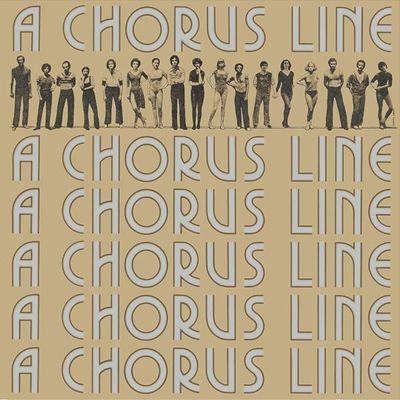
While he's not the only gay character in the show, I'm going to focus on Paul, a dancer auditioning for Zach's musical. In a deeply moving monologue late in the show, he tells his story of growing up gay in Puerto Rican, the shame and bullying associated with it, and then getting hired to dance in a drag revue. Not only did a chorus line dive deeper into the inner lives of its gay characters than any Broadway musical had before, Paul was also the first queer character of color in a Broadway musical. Sammy Williams won a Tony Award for this role, which was inspired by the real-life story of co-librettist Nicholas Dante. In the 1980s, mainstream queer representation remained slow, although 1983 was a major year for gay men on stage.
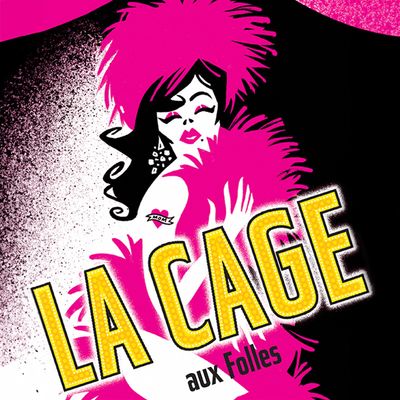
Although it closed on opening night, Dance a Little Closer featured the first same-sex romantic relationship between supporting characters in a Broadway musical. Just three months later, La Cage a Fall opened and quickly became a hit, running for four years. La Cage, a story about a young man's gay parents meeting his fiance's conservative parents, was the first Broadway musical with a gay relationship at its core. It was created by an entirely gay team of writers, Harvey Fierstein and the late Jerry Herman, with gay director Arthur Lawrence on board as well. La Cage won multiple Tony Awards, including Best Musical, and its Act One finale, I Am What I Am, emerged as a gay anthem. Notably, one of the two leading men in many of the male ensemble roles were drag queens. We asked Paul Kanin, who played a cagelle in the 2004 revival, into the studio to discuss his La Cage experience. Here's Paul.
[4:59] Paul Kanin: We are what we are, and what we are is an illusion. We love how it feels, putting on heels, causing confusion. In La Cage, the cagelles are fabulous performers who work at the cabaret bar that George and Albin Zaza, a gay couple living in the south of France, own and run this club. They're kind of the glitz and glamour to this story that's strongly countered by this conservative religious family whose daughter is engaged to be married to George and Albin's son. And when all these characters come together, it shines this huge magnifying glass that the audience gets to see really how important acceptance and loving all of our beautiful differences can be. The cagelles were definitely significant for queer representation in musical theatre ensembles because the drag culture and community and history is such a significant part of the queer journey towards equality.
The fact that La Cage was such a big hit was so important to drag being represented on this huge public level and gave visibility during such a crucial time during the AIDS crisis to this whole community. My performance in La Cage of Clo-Clo was definitely positively shaped by my identifying as a queer artist, but drag is something that I personally had never identified with as an expression of myself. I'd never done it before, so the makeup, the heels, the wigs were all very new to me. And of course it was fun, but I found something very powerful in playing that part, and I learned a lot about myself and how to face fears. But ultimately there's just something very strong and brave about a man in a dress on stage that I had never experienced before, so it was very empowering for me.
My favorite thing though about performing in drag on Broadway was watching the audience go through the journey with us, especially people you know are seeing drag for the first time ever. They watch, they question, they get on board, and they're rooting for us by the end. So just that way theater can change people's minds is incredible to watch. I think the story of La Cage is still very important for audiences to experience. I think it'll always be important because of its historical context in that it made such an important statement in a crucial time during queer history. The original won six Tony Awards. Our revival in 2004 won two Tony Awards, Best Choreography and Best Revival, and then the 2010 production received three Tony Awards. So it just kind of shows that acceptance and tolerance and fabulousness never really go out of style.
[8:08] Paul Kanin: Sometimes the deck, sometimes the ace, sometimes the deuces. There's one life and there's no return and no departure.
[8:21] Jackson Klein: Thanks Paul. While La Cage was a major hit, no major queer musicals debuted on the main stem throughout the remainder of the decade. Why were the 1980s so slow for queer theater? AIDS. With many gay actors and creatives succumbing to AIDS-related illnesses and significant homophobia due to the epidemic, it sadly makes sense that we'd see a decline in queer-centered art around this time. However, as we enter the 1990s, it becomes clear that the theater community has chosen to channel some of their fight against AIDS into art. First came Falsettos, two one-act musicals in a trilogy developed throughout the 1980s by James Lapine and the openly gay William Finn. Falsettos follows Marvin, originated by Michael Rupert, a New Yorker who has left his wife for a boyfriend as he tries to create a new type of tight-knit family.
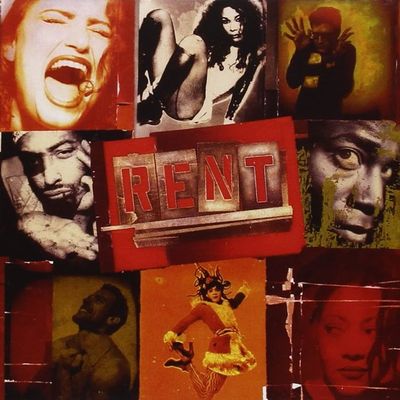
Falsettos was the first Broadway musical to deal with AIDS. In the show, Marvin's neighbor, Dr. Charlotte, sees his mysterious illness start driving gay men to the hospital where she works. Later on, Marvin's boyfriend, Wizard, becomes sick and eventually dies from AIDS-related illnesses. This groundbreaking work also featured the first prominent lesbian couple in a Broadway musical, Dr. Charlotte and her girlfriend Cordelia. Now, up until now, gay men, mostly white, have been the primary queer group represented on stage in mainstream works. Beginning with Charlotte and Cordelia and Falsettos, we finally get to see a little bit more diversity. Four years later, Rent burst onto the scene, changing the musical theater game forever and featuring many gay and lesbian characters and AIDS-related themes.
Additionally, there's an explicitly bisexual character, a rarity in Broadway musicals, Maureen Johnson. Another character, Angel, made waves for queer representation. Often referred to as a drag queen, it's sometimes speculated that Angel may fall somewhere on the non-binary spectrum. There just wasn't as much language or conversation surrounding gender identity at the time, so it's hard to know for sure what was intended. Additionally, the ensemble featured many gay characters, most notably at a life-support group that's members are coping with HIV-AIDS. Here's Telly Leung, who was the final actor to play Stephen Others during the show's original Broadway run, to chat about Rent.
[10:33] Telly Leung: We first meet Steve in Rent at the life-support meeting, which happens in the middle of Act I. Mark is invited by Angel and Collins to attend the meeting, and Mark is actually shooting the meeting as well. You find out that life-support is actually a support group for people who are living with HIV and AIDS, or maybe who have friends who are living with HIV and AIDS and want to know how to best help their friends and their family cope. Steve, to me, represents one of the many people in the 90s who got the diagnosis for the plague and just didn't know, wanted to find others who were like him, wanted to find a place where he didn't feel so isolated by his diagnosis. We don't get very much backstory about Steve, but we do know that Jonathan Larson based those people that we meet in life-support, Allie, Pam, Sue, Steve, Gordon, based on people that he knew himself.
Later on in the musical, Steve leads the entire company of Rent in a particular section of the show called Will I, which asks some very basic questions, and Jonathan brilliantly writes it as a musical round. The lyrics are, Will I lose my dignity? Will someone care? Will I wake tomorrow from this nightmare? And I can imagine that as Steve is singing this at the life-support meeting, I'm sure these are questions that people ask themselves all the time during this time, during the early 90s, when this plague was ravaging people and taking friends and family away, but there weren't very many answers on how to cure it and how to deal with it. I'm sure these were the questions that were echoing in everybody's mind, especially as the plague continued to spread, but there wasn't any answers or anything as to how to cure it or how to best help those people you love who were suddenly stricken with this mysterious illness. In 2019, we have a very different relationship and a different knowledge of what being HIV positive means now, but in the early 90s...
[12:58] Jackson Cline: Welcome back to The Ensemblist. Today, we’re diving into the evolution of queer characters in Broadway musicals.
[13:28] Paul Canaan: It’s fascinating to see how far we’ve come in terms of representation.
[13:58] Telly Leung: Absolutely. I think the visibility of queer characters has changed dramatically over the years.
[14:28] Jackson Cline: Right, and it’s not just about visibility; it’s also about the depth of these characters.
[14:48] Paul Canaan: Exactly. In the past, queer characters were often one-dimensional, but now we’re seeing more complex portrayals.
[15:08] Telly Leung: And it’s important to have queer artists telling these stories.
[15:18] Jackson Cline: Yes! When queer artists create queer roles, it adds authenticity to the storytelling.
[15:38] Paul Canaan: It enriches the theatrical experience for everyone in the audience.
[15:58] Telly Leung: I think audiences are craving those authentic stories.
[16:08] Jackson Cline: Let’s take a look back at some key moments in Broadway history that have shaped queer representation.
[16:28] Paul Canaan: Starting in the late 1960s, we saw the first inklings of queer characters on stage.
[16:38] Telly Leung: Yes, and those early portrayals were often steeped in stereotypes.
[16:58] Jackson Cline: But they laid the groundwork for what was to come.
[17:28] Paul Canaan: Fast forward to the 1980s, and we see shows like "La Cage aux Folles" that began to challenge those stereotypes.
[17:48] Telly Leung: That was a huge turning point for queer representation in musical theatre.
[18:08] Jackson Cline: And then the 1990s brought us "Rent," which really pushed the envelope.
[18:28] Paul Canaan: "Rent" was groundbreaking in its portrayal of LGBTQ+ characters and issues.
[18:48] Telly Leung: It brought a whole new audience to Broadway and opened doors for more diverse stories.
[19:08] Jackson Cline: Today, we’re seeing even more representation with shows like "The Prom" and "Hadestown."
[19:28] Paul Canaan: These shows are not only inclusive but also celebrate queer identities.
[19:48] Telly Leung: It’s exciting to think about where we’re headed next in terms of representation.
[20:08] Jackson Cline: Absolutely. The future looks bright for queer stories on Broadway.
[20:28] Paul Canaan: And it’s crucial that we continue to support queer artists in telling these stories.
[20:48] Telly Leung: Yes, their voices are essential to the evolution of musical theatre.
[21:08] Jackson Cline: Thank you both for sharing your insights today.
[21:28] Paul Canaan: Thank you for having us!
[21:48] Telly Leung: It’s been a pleasure to discuss this important topic.
[22:08] Jackson Cline: And thank you to our listeners for joining us on this journey through queer representation in Broadway musicals.
[22:28] Paul Canaan: We hope you enjoyed it and learned something new.
[22:48] Telly Leung: Until next time, keep celebrating the stories that matter.
[23:08] Jackson Cline: See you next time on The Ensemblist!
[23:28] Paul Canaan: Bye!
[23:48] Telly Leung: Bye!
[24:08] Jackson Cline: And remember to support your local theatre.
[24:28] Paul Canaan: Yes, every voice matters.
[24:50] Telly Leung: Take care, everyone!
[25:10] Jackson Cline: Bye for now!
[25:30] ♪ Musical number ♪
© Broadway Podcast Network, All Rights Reserved