

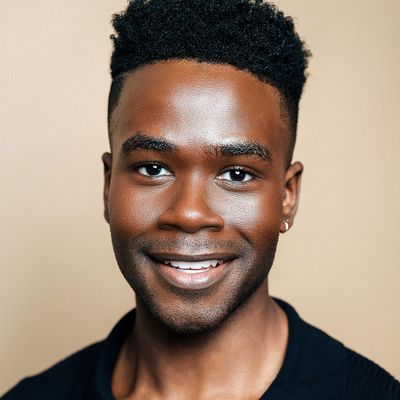
Bradley Gibson made his Broadway debut as a swing on the 2014 musical adaptation of Rocky. Since then, he created the role of Tyrone in A Bronx Tale The Musical and is currently storming the Pridelines as Simba in Broadway’s The Lion King... Read More
From the show: The Ensemblist
Guests
Featured Shows
About
Bradley Gibson made his Broadway debut as a swing on the 2014 musical adaptation of Rocky. Since then, he created the role of Tyrone in A Bronx Tale The Musical and is currently storming the Pridelines as Simba in Broadway’s The Lion King. He joined me in the studio for a candid conversation about how race has played into his career thus far, and where he sees opportunities for better representation on Broadway stages. Here’s our conversation...
Transcript
This transcript was automatically generated and might contain errors.
[0:29] Mo Brady: You're listening to The Ensemblist, the only podcast that shows you Broadway from the inside out. Welcome! I'm Mo Brady.
[0:51] Mo Brady: One of the loudest and most vibrant cultural conversations to recently hit the Broadway community has been about racial representation. Throughout the industry, there's been a persistent desire from both audiences and artists to see more diverse stories on stage. And yet, the racial diversity of our country still isn't reflected in the racial diversity of Broadway performers. There's been no seismic shift in the number of actors of color performing on Broadway. Yes, systematic change often comes with incremental progress. However, the recent crop of Broadway musicals seem to provide few examples of such change. I've been curious what all of this feels like for artists of color, so I asked a few of them into the studio to share their experiences with racial representation in the theater industry.
Bradley Gibson made his Broadway debut as a swing on the 2014 musical adaptation of Rocky. Since then, he created the role of Tyrone in A Bronx Tale The Musical and is currently storming the Pride Lands as Simba in Broadway's The Lion King. He joined me in the studio for a candid conversation about how race has played into his career thus far and where he sees opportunities for better representation on Broadway stages. Here's our conversation.
[2:24] Mo Brady: Hi, will you introduce yourself and tell us what neighborhood of New York City you live in?
[2:40] Bradley Gibson: I'm Bradley Gibson. I live on the Upper West Side.
[2:44] Mo Brady: And what's your current job?
[2:46] Bradley Gibson: I am Simba in The Lion King on Broadway.
[2:52] Mo Brady: We've heard of it. So when was the first time you felt like you saw someone that looked like you on stage?
[2:58] Bradley Gibson: Oh my gosh, I definitely would say it was The Lion King. Really? I saw The Lion King on Broadway in high school. I was on a choir field trip from North Carolina. And I was really blown away by the show because I, like everyone else, love the movie. And I also love Broadway and musical theater, of course, but I had not really thought much about The Lion King on Broadway. I was more so into, you know, at the time, The Phantom of the Opera or something else, right? So I didn't really want to even see the show. I was trying to convince my teachers to go see something else. But we went to see The Lion King and they sat me right in the center seat of that front row of the mezzanine. And I was taken aback.
It was such a profound experience for me because I had never seen that many people on stage that looked like me. I've been doing this since I was five years old. And I've always been around theater people and singing and dancing, but I never felt like I was around people that looked like me or people that understood me or sounded like me. And I never really, I never saw it. So to see a full stage of people that looked like me on Broadway, it liberated me and made me feel like I was going to be able to do what I wanted to do, that there was a place for me. And I think that moment was a big, you know, step in my life. It changed everything.
[4:19] Mo Brady: Was the musical theater community that you grew up in mostly Caucasian? Or pretty split in terms of ethnicity?
[4:25] Bradley Gibson: Ooh, it was very white. And that's not a bad thing. I had an amazing arts education and my theater community was really great. The dance community was great. But yeah, I was definitely one of maybe two or three. I was the one that was consistent, right? Like show to show, year to year.
[4:45] Mo Brady: So was that the first time you saw an all black show?
[4:47] Bradley Gibson: Yes.
[4:48] Mo Brady: Okay. Was the decision to pursue going to Boston Conservatory before or after?
[4:54] Bradley Gibson: It was after that. And I think that Lion King experience, seeing that Broadway show, and then I did my first professional job when I was 16. I did Summerstock. I did A Chorus Line up in the mountains of North Carolina. And I was the youngest person in the cast. I played Richie. Everyone else was a New York City actor doing a gig, right? That summer, I learned so much about the theater. I learned about what it meant to be in musical theater. I learned about what it meant to live in New York City and audition and go to school for musical theater. I had no idea that that was even an option. So those two experiences really opened up my mind.
[5:31] Mo Brady: What were the shows that you were doing at Boston Conservatory? Are you getting a chance to do any sort of race specific roles?
[5:35] Bradley Gibson: No.
[5:39] Mo Brady: No. Okay. I would assume no, because I would assume that there would be kids of all races, but mostly white kids that go to a musical theater training program.
[5:48] Bradley Gibson: Yeah. I really love my college experience. I have so many memories and great friends and family that come from those four years. But I have to say that I never really did any sort of race specific show or role there. And that is something that I wish it wasn't that way. I wish that I had teachers and mentors that were kind of leading me in that direction or understood that that was something that I needed to know and understand. I think it's so important to know, of course, the history of theater, the history of musical theater, but also the history of your community within that, right? And I had no real concept outside of Norm Lewis and Audra McDonald. And they're the titans, right? The icons. But there's so much more.
[6:34] Mo Brady: Is that because it wasn't part of the curriculum to talk about The Wiz or is it because there weren't professors that weren't Caucasian?
[6:41] Bradley Gibson: I think that just weren't the professors there. And I think that while maybe we would have hit some of those shows or some of those moments, so I did know about that, but no one ever really told me what direction I should be going into. No one ever really told me what the business would be expecting of me as a black man. Yeah, I wish it would have been different. So when I got to New York, I had to really learn a lot really fast.
[7:07] Mo Brady: Let's pull that apart. Okay. So Lion King is your third Broadway show?
[7:08] Bradley Gibson: Yes.
[7:08] Mo Brady: Okay. You debuted in Rocky and then A Bronx Tale. Okay. I didn't get to see Rocky. Was that a race specific role?
[7:14] Bradley Gibson: I was a swing in the show. I understudied Apollo Creed, which is race specific.
[7:19] Mo Brady: Okay. So then all of your Broadway credits in some way have to do with race.
[7:25] Bradley Gibson: Okay. So let's dig into that. You walked out with a musical theater degree. Three bucks, two bags, one me.
[7:31] Mo Brady: Truly, truly. And then how is your auditioning experience different than your Caucasian classmates?
[7:36] Bradley Gibson: Oh, wow. Before I got out of school, I auditioned on a whim for the Porgy and Bess tour. And I went in for that because I loved the cast recording. I saw the show when it was at ART in Cambridge when I was in school, and I loved the show. And I really, I loved it because I love the score, of course, but also because I was seeing Audra McDonald, Norm Lewis on these great Joshua Henry on stage, these black performers that look like me and we're doing this amazing show that won the Tony. And so I went to audition for it. And I started getting callbacks for it. And it really started to go in a positive direction for me. And that was the first time I ever auditioned for anything that was a Broadway tour, a Broadway show.
And I quickly realized then I was like, oh, there's a certain, there are things for me. I started going in for the Book of Mormon soon after college from Showcase. And Beautiful was new at the time. So I started going in for the out of town trial of Beautiful and Rocky as well. And all of these things I was going in for were race specific. I also realized that there were certain styles that I was expecting people to understand musically as a black performer. And, you know, there's a certain style of singing, of dance, everything like that. And of course, some of that is naturally within myself because of my history and my family's love of music and Motown and, you know, black culture, right?
But I quickly realized that there were some things that I had to pick up on as far as vocally. I saw that people wanted me to sing in a more of a soaring sort of R&B style. And while I had that sort of naturally within myself, it took some voice lessons. It took some time, some training to really get my chops there because it wasn't there from school. I had great vocal training as far as legit goes or like really the groundwork of my voice was really strong. And I have like a pretty malleable instrument so I can always kind of mock or make my voice sound like something. But having that true training in that way took a lot of work and it paid off. But yeah, I had to learn a lot really fast.
[9:48] Mo Brady: So everything that you mentioned in terms of audition opportunities are race specific.
[9:53] Bradley Gibson: Every single one.
[9:54] Mo Brady: Is that true? Like you haven't been seen for The Phantom of the Opera. I'm trying to think of shows that don't, you know.
[10:01] Bradley Gibson: You know, one thing I can remember having a few callbacks for was for Cinderella for The Prince for the tour. There was a...
[10:10] Bradley Gibson: Besides that, it was all very specific. Do you think there's a difference between seeking all ethnicities on an audition breakdown and casting all ethnicities on an audition breakdown? I think that that is often always said, right? Searching for all ethnicities. But I think it's not always really what is wanted or really what the end result is planned to be, right? And that is really saddening to me because then you feel like you're being lied to. You feel like you're being lied to because you're going in for something that is supposed to be open to everyone, but really, at the end of the day, it's not going to be that. I think that if you're going to do that, you're going to say that, really be true to that.
And that does not mean having a show that is, we have a black girl in the ensemble kicking her face, you have an Asian guy singing with the ensemble. That's not diversity. That's not a diverse cast. That's just, you know, a couple of specks here and there. So no, I've never really experienced a show where I felt that I was a part of something that was diverse in that way, or was not race specific.
[11:15] Mo Brady: Why do you think the racial diversity of our country is not replicated with the racial diversity of Broadway ensembles, casts?
[11:21] Bradley Gibson: Yeah, race makes us uncomfortable, right? I think it makes us uncomfortable. And I think that when you start really being diverse, and really letting everyone have a seat at that table when it comes to race, you have to understand that you're required now to really embrace that culture. And that culture and their stories are naturally a part of your story, unless it is a fairy tale. Unless we're doing Wicked, unless we are doing some sort of fantasy world, no matter what you do, that culture is going to be put within your show and within this character now, because we see that person's skin color on that stage when they're playing that part. I think that that's scary for people. And people don't want to get it wrong, or they don't want to make it all about that.
And I think that people are just afraid. And I understand that. But we have to get over that. Because if we're going to be representing the culture that we live in on Broadway, then that's going to be a colorful one. Everyone's a part of it.
[12:23] Mo Brady: Can you remember a time that you saw a musical theater cast that you thought was racially representative?
[12:28] Bradley Gibson: My first time coming to New York after college was seeing the Ragtime Revival in 2009. And that was really cool for me because Stephanie Umo went to the Boston Conservatory. And she had recently graduated like a few years after. And she played Sarah. She played Sarah. So it was not only ragtime is also, you know, racially diverse and a beautiful story about America and race and everything. But also we were going as a school to see Stephanie, an alumni of the school, do it. And not only is she an alumni, but she's a black alumni. And she's playing one of the lead female roles. That was huge for me. And then huge for me and huge for my other black friends from school, but also my other just friends of color, Latino, Asian, who are sitting there in that audience as freshmen, watching this black girl from our school play this lead role.
It was so powerful. And I don't even tell that story enough, I think, for enough credit for how much, man, how good that felt and how powerful it made me and I think all of us sitting in that theater feel as freshmen, you know, as these 19-year-old kids who are just going to school from all over the country. We didn't know what we're doing. We were, you know, the musical theater school, you're getting like broken down to be built back up, right? They're like tearing away all the crap you do that's wrong. And seeing this beautiful brown girl on stage singing and belting like a dream and playing this stunning role in this stunning production with maybe the most beautiful score ever, Ragtime is, that was so powerful.
[14:06] Mo Brady: I'm sure you've done shows like this, but every show we've talked about has been race specific. As a black performer, how does it feel different to be part of an all-black show or an all non-white show like The Lion King versus being part of a show that's all races, ethnically diverse?
[14:24] Bradley Gibson: Um, is there a different sort of learning or teaching that you have to do or comfort level? I don't, I don't know. I think when you're, you know, when you're amongst people that look like you, that sound like you, that understand your history, there's a natural sense of unity and family. I think that's the beautiful thing about doing all black shows. I've done, I'm in The Lion King, but also I've done regionally, I've done Dreamgirls and it feels good because you have this natural family dynamic that's happening, whether it be because of the music that you like or the music in the show or just talking about your experiences or in work, but also experiences with your family and like school or just simply like coming from musical theater, talking about being one of two black kids in college, in your college class, right?
Like we get that. We can laugh about that. We can understand that. So the good things, the bad things, it's beautiful, but also it's just as beautiful to be in a show that is diverse in a different way. You know, doing a Bronx Tale, which is also very specific with the black people and the Italians and whatnot, but what a beautiful experience that was that I will never, ever forget. I loved every single person in that cast and that crew. Broadway is so beautiful because it's such a community and it's such a family. And yes, there's like a natural love you have when the people look like you or it's like The Lion King. It's naturally that, but man, like it's magic to be in a building like a Bronx Tale was.
I will never forget that. And I will also never forget feeling like a lot of us have different backgrounds, but we're like hanging out all the time and we are loving on each other and celebrating babies being born and marriages together. Like that's so special. And I think it's such a learning experience too, whenever you do come from different backgrounds, right? That's another beautiful part about being in a cast that is diverse and taking that risk. It's that we're all learning together. We're building this show together and we're doing the show together each night, but also like we're forming relationships and are learning about other cultures and other things that we don't know about. And I think that that is something beautiful too. And I think that when it happens, no one ever is upset about it, right? So let's keep doing it. Let's do more of it.
[16:53] Mo Brady: One last question, kind of flipping the first question on its head. That moment at The Lion King seemed pivotal for you. Have you had an experience at the stage door where someone told you they felt like they were seen?
[17:04] Bradley Gibson: Yeah, a lot. There's been a lot of moments where people have reached out and just wanted to say thank you for a thousand reasons. A few weeks ago during Broadway Care season, we take photos in the lobby of one of the roles each night, takes photos for donations. And my last time doing it for the season, a girl took a photo with me and she just said to me, and also the cast member who was taking the pictures and taking the donations, thank you so much. This is so special. She was like these beautiful brown people on stage telling this story that everyone universally loves. It is not something that like just kids like, or just, you know, millennials. Everyone, young and old, no matter where you're from in the world, loves The Lion King because it is a story about animals that is so human.
It is the most human story I think ever. Talking about loss, talking about finding yourself, things that we all can see ourselves within. And I think that it's so universal because it's animals. And when you get to the theater, you're being forced to see it being told through people of color. And it's also a cultural experience. It's an African cultural experience. So yeah, moments like that are so beautiful because I just, you know, when you're in something, you don't, you're not there all the time, right? You're not, your mind's not always there thinking about, oh, I'm changing someone's life. Yeah, the cultural impact of what I'm doing every day. But it's so beautiful whenever you get a chance to hug someone who's just saying thank you, right?
Like theater is service. Being an artist is also doing service. Broadway performers are doing acts of service every single day. And we do it because we love it. But man, it feels good whenever someone says, thank you for empowering me or allowing myself to be seen. Yeah, that's life changing. That's why I do it.
[19:12] Mo Brady: Special thanks to Bradley Gibson for sharing his stories with us this week. The Ensemblist was produced today by me, Mo Brady. The Ensemblist is proud to be a part of Broadway Podcast Network. If you can't get enough of theater conversations directed into your earbuds from us, there are more than 30 other great theater podcasts to listen to on the network. Check us all out at bpn.fm. Also, The Ensemblist has joined the world of Patreon. You can support the work we do here at The Ensemblist for as little as $5 a month. Check us out at patreon.com slash The Ensemblist. If you feel like supporting The Ensemblist but don't have $5 a month to spare, you can help us by leaving us a rating and review on Apple Podcasts. You can also follow The Ensemblist on Instagram to see the latest posts from our website, where we share the stories of talented artists working in theater ensembles on Broadway and across the country. Thanks for listening, guys. Until next time.
© Broadway Podcast Network, All Rights Reserved