

Today’s guest knows a thing or three about covering roles of Broadway. Those three specific things are Otho, Adam and Beetlejuice - all roles he covers in his duties as a swing at the Winter Garden Theatre... Read More
From the show: The Ensemblist
Featured Shows


About
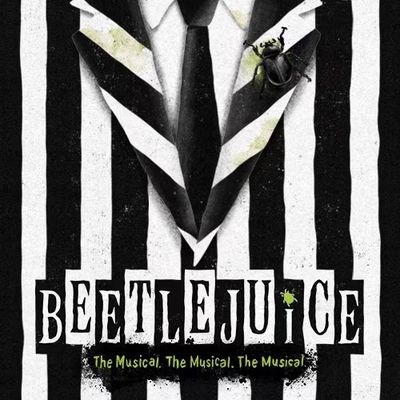
Today’s guest knows a thing or three about covering roles of Broadway. Those three specific things are Otho, Adam and Beetlejuice - all roles he covers in his duties as a swing at the Winter Garden Theatre. Beetlejuice isn’t his first foray into covering leading roles either; He’s been a standby on The Book of Mormon, School of Rock, and understudied Michael Urie in last season’s Torch Song. I wanted to know how he manages to standby for such grueling characters, both living and undead. Here’s our conversation...
Transcript
This transcript was automatically generated and might contain errors.
[0:00] Mo Brady: This episode of The Ensemblist is brought to you in part by our Patreon members, including Cullen Elijah, Joanne T. Garvin, Christopher Gurr, Linda Lee, and Joey Soji. You can support the work we do here at The Ensemblist for as little as $5 a month. Check us out at patreon.com.
[0:19] Mo Brady: You're listening to The Ensemblist, the only podcast that shows you Broadway from the inside out. Welcome, I'm Mo Brady.
[0:39] Mo Brady: This season, 288 actors worked as Swings on Broadway. That's literally a third of the performers working under Actors' Equity chorus contracts. And yet, the job of a Swing is still one of the most esoteric jobs in the theater. In general, Swings are hired to understudy multiple ensemble tracks in a production. They're asked to remember all of the lines, blocking, choreography, vocal harmonies, and backstage traffic for multiple roles. But no Swing's job is exactly the same as another. And often, one Swing doesn't know how another Swing memorizes all the information they need to know. That being said, today's guest knows a thing or three about covering roles on Broadway. Those three specific things are Otho, Adam, and Beetlejuice, all roles he covers in his duties as a Swing at the Winter Garden Theater.
Beetlejuice isn't our guest Will Blum's first foray into covering leading roles, either. He's been a stand-by on The Book of Mormon, an alternate at School of Rock, and understudied Michael Urie in last season's Torch Song. I wanted to know how he manages to stand by for such grueling characters, both living and undead. Here's our conversation.
[2:09] Mo Brady: God, I hope you're ready for a show about dish! Can you introduce yourself and tell us what neighborhood of New York City you live in?
[2:18] Will Blum: I'm Will Blum, and I live in Harlem.
[2:20] Mo Brady: And what's your job?
[2:22] Will Blum: Right now, I am a, I think I'm an official Swing in Beetlejuice, the musical on Broadway. And I cover Beetlejuice and Adam and Otho.
[2:31] Mo Brady: It's a little confusing, though, because typically we think about a Swing as covering ensemble tracks and a stand-by covering principal tracks, and yet you are a Swing.
[2:40] Will Blum: Only because Otho is technically an ensemble track.
[2:42] Mo Brady: Got it.
[2:43] Will Blum: That's the only reason.
[2:44] Mo Brady: So do you cover any of the other guys in the ensemble?
[2:46] Will Blum: No. Specifically, even so much, Connor Gallagher, the choreographer, and I have worked together before and he knows my dance skills very well. And so even when I go on for Otho, I only do the character of Otho. I do not do the rest of Kelvin's track, because it involves tap dancing and these other things. And so Connor specifically was like, don't let him dance, which I am fine with.
[3:07] Mo Brady: What do you think makes a good Swing?
[3:08] Will Blum: A cool head, more than anything. Like, I immediately think of Eric in our show, because he's probably gone on for the most, I think he's gone on for like 11 different tracks in the show, maybe 12 now with Otho. I think there's a certain trait that all good Swings have where they can really compartmentalize these different, I remember even when I was little reading the Rent book, and a Swing, and there was talking about how they went on for Angel at the matinee and Collins at the evening and had to do both parts of that harmony. And I was like, that's awesome. Like, that would be so cool to be able to be everybody in the show. And I'm a director as well. And that's, that's what I think about more than anything.
As a director, you get to be everybody. And that's always what I've sort of wanted to do is just get a hint, like, if I could be Delia, I would love to be Delia. You know, it's just so much fun to just step into all of these different masks and get to play around. Never get bored, I think, you know, absolutely. But the other side of that, which, which I very much I'm trying to get a hold of now is, is adrenaline is just trying to understand that everything's going to be okay. I'm, I'm very easy to sort of stress out. I think the best Swings don't have that.
[4:18] Will Blum: Well, it was sort of a confusing, I was only offered Adam and Otho covers when they thought they were only going to have one principal male Swing. And so once they hired Sean Montgomery, it became everybody in the building knew that I was a superfluous third cover for both Adam and Otho. So I focused solely as a Beetlejuice Standby.
[4:35] Mo Brady: Okay, you said you are not a real Swing. And yet, if I went on Playbill vault, I would see you are you've made a career of being a Broadway Standby understudy.
[4:40] Will Blum: Yeah. So there's obviously something about this that you are good at.
[4:49] Will Blum: I don't know if it's so much good being good at the job, or if it's just being good at doing homework and do it like I am really good at exceeding expectations, or I'm oftentimes the person when they're like, Who the fuck can do this? They're like, Oh, well, try Will out and see, you know, and so I know that producers love me for that, because they know that if Alex is out, the audience gets to feel like they're watching a star being born, it's a completely polished and fully realized and frankly, like very different, simply because I can't do the Beetlejuice voice that Alex does. And so I think there's a feeling the show is so well crafted and so funny, that as long as I get out of the way, the audience just goes nuts, because there's so much of it that seems improvised already.
And they just think that this is the understudy improvising and feeling comfortable enough to do this. And so more and more and more, I just get them over on my side. And like, that's the fun game of it. For me, I don't know if it makes me good at it. But that's what I like about it is, you know, seeing disappointed faces when I start and then at the end, people are up on their feet cheering and screaming, like, it's so much more gratifying to know that they didn't know who I was. They didn't expect me to be good or and or equal to. And I won, you know, written into the script, he's, he's very pansexual. And so there's often aspects of my sexuality that I will always try to hide, frankly, because I'm always cast as very heterosexual, bro types, even.
So being able to sort of expose myself under this Beetlejuice mask is like, rewarding to and I started noticing, and the more that I would go on that the more that I revealed myself, the more the audience loved me. And that's like a crazy, beautiful feeling to have of just like, oh, it's me. It's not even it's not all this that's doing it. It's it's what I'm giving. And that's like a beautiful feeling to go home with.
[6:49] Mo Brady: When did your journey with Beetlejuice start?
[6:52] Will Blum: I first auditioned it was actually I had just come back from directing in London, it was the first audition that I went to in like May of 2018. For the DC run, I did not get it. I was very sad that I didn't get it. This would have been for an ensemble track that covered Beetlejuice like now it Abe Goldfarb got it. Got it. And he's, I mean, he's brilliant. You know, I'd like but we're very different people. So it's obviously to be easier to be like, okay, that wasn't what you're looking for. I'm very thankful that I didn't get it because I ended up getting Torch Song in perfect incredible form. I got the call that I would be in the Broadway company the day after Torch Song closed.
[7:33] Mo Brady: Wait, because you auditioned for it in 2018. You didn't get it. You didn't hear a thing until someone called and offered you?
[7:40] Will Blum: No, no, I went back and auditioned again. What I guess would have been December. Yes, December of 2018 when they came back from from DC and they were looking for specifically offstage covers. And I think a good reason of why I didn't get it as well in the beginning was I'm not a dancer. You know, I'm I love dance. I took eight years of ballet when I was younger, but I'm just no good at it. I tried. I tried.
[8:04] Mo Brady: Okay, so you booked the job, right? What are you doing in rehearsals when other people are up on their feet?
[8:10] Will Blum: At that point, I was actually the first offstage cover to join because they realized how intense the character of Beetlejuice was. And to be honest, for the first two weeks, and if you've seen the show, you can probably understand it's just insanely overwhelming. You know, I mean, there's no point in even looking down to write down something because he'll be across the room. By the time I look back up, I'm a very visual learner, very, very good at learning music by ear these things. So for me watching and Alex Breiman, both Alex's are brilliant, but both Alex Breiman is brilliant in that he it's like he just has a grab bag of choices all the time. And he'll just throw things out and just see what sticks, but it all sticks.
It's incredible to watch. And so the fun thing for me is I am not that kind of person. I am not an improviser. My idea of hell is an improv class. It scares me. It's very intimidating. Innately, I don't feel very funny. So when I was watching Alex, I could look at every choice that he threw out and say, oh, I like that. I'm going to take that and this and this and this from column A and this from column B. And there were sometimes choices that he just did once. And I was like, I love that. I'm keeping that forever. And so I've tried to craft a show that that is pretty much the same. I always try to do things that work. If I make a new choice, it's done over three shows. And it's like a little, you know, I inch here and I inch there. But my nightmare is like technical difficulties and having to come up with something hilarious to say, like, I'm not that kind of guy, you know.
[9:46] Mo Brady: So you were doing your homework.
[9:46] Will Blum: Yeah, always. Were you doing your homework on your own? Were you like working with a stage manager and associate director?
[9:51] Will Blum: For the longest time, it really was on my own, only because they were really, you know, they were putting the show up. I don't actually I can't remember when we started. You know, there were certain things I would make sure to learn. I would pull Nancy, our associate choreographer aside, you know, and say, oh, can you teach me this real fast? I need to work on this, you know, upstairs while y'all are doing this. Or there were plenty of things that I sort of grabbed people and said, hey, what's going on here? What's it you know, what is this prop or blah, blah, blah. And Alex and I have a great relationship because we did School of Rock. I was his alternate for School of Rock. And so he he knows the kind of performer I am. I know what kind of performer he is. And he
[10:26] **The Ensemblist**: Welcome to The Ensemblist, where we celebrate the performances and careers of ensemble performers on Broadway.
[10:56] **The Ensemblist**: Today’s guest knows a thing or three about covering roles on Broadway. Those three specific things are Otho, Adam, and Beetlejuice—all roles he covers in his duties as a swing at the Winter Garden Theatre.
[11:26] **The Ensemblist**: Beetlejuice isn’t his first foray into covering leading roles either; he’s been a standby on The Book of Mormon, School of Rock, and understudied Michael Urie in last season’s Torch Song.
[11:56] **The Ensemblist**: I wanted to know how he manages to standby for such grueling characters, both living and undead. Here’s our conversation with Will Blum.
[12:16] **Will Blum**: Thanks for having me! I’m excited to be here.
[12:36] **The Ensemblist**: So, let’s dive right in. You cover three roles in Beetlejuice. How do you keep track of all those different characters?
[12:56] **Will Blum**: It’s definitely a challenge! Each character has their own distinct personality and quirks, so I try to focus on the essence of each one. I also rely heavily on the notes I take during rehearsals and performances.
[13:16] **The Ensemblist**: That makes sense. Do you have a specific process for preparing for each role when you know you might go on?
[13:36] **Will Blum**: Absolutely! I usually spend some time before the show going over the lines and blocking in my head. I also like to visualize the character's journey throughout the show to really get into their mindset.
[13:56] **The Ensemblist**: That’s really interesting. How do you handle the pressure of being a swing, especially when you have to go on at a moment's notice?
[14:16] **Will Blum**: It can be nerve-wracking, but I’ve learned to embrace the adrenaline. I remind myself that I’ve prepared for this, and I just have to trust my instincts and training.
[14:36] **The Ensemblist**: Have you ever had a particularly memorable experience while going on for one of these roles?
[14:56] **Will Blum**: Yes! There was one night when I went on for Beetlejuice, and the energy from the audience was electric. It felt like everything clicked, and I was able to really connect with them.
[15:16] **The Ensemblist**: That sounds amazing! It must be such a thrill to perform in front of a live audience like that.
[15:36] **Will Blum**: It really is! There’s nothing quite like it. Each performance is unique, and the audience’s reactions can change the whole experience.
[15:56] **The Ensemblist**: Speaking of unique experiences, you’ve also been a standby for other shows like The Book of Mormon and School of Rock. How does that compare to being a swing?
[16:16] **Will Blum**: Being a standby is a bit different because you’re waiting for a specific moment to go on. As a swing, you have to be ready for anything at any time, which keeps you on your toes!
[16:36] **The Ensemblist**: It sounds like both roles have their own set of challenges. What do you enjoy most about being a swing?
[16:56] **Will Blum**: I love the variety! I get to explore different characters and styles of performance, which keeps things fresh and exciting for me.
[17:16] **The Ensemblist**: That’s a great perspective. What advice would you give to someone who wants to become a swing on Broadway?
[17:36] **Will Blum**: I would say to be adaptable and always be prepared. Take notes, watch the performances closely, and don’t be afraid to ask questions. It’s all about being ready for anything!
[17:56] **The Ensemblist**: Wise words! Thank you so much for sharing your insights with us today, Will.
[18:16] **Will Blum**: Thank you for having me! It’s been a pleasure.
[18:36] **The Ensemblist**: And thank you to our listeners for tuning in to this episode of The Ensemblist. We’ll see you next time!
[18:56] **The Ensemblist**: Don’t forget to subscribe and leave us a review!
[19:16] **The Ensemblist**: Until next time, keep celebrating the ensemble!
© Broadway Podcast Network, All Rights Reserved