

This week, I wanted to share with you an extra-special conversation from my friends over at The Spark File podcast. Now, if you haven’t heard of The Spark File podcast, I want you to open up your podcast app and and subscribe to them right now... Read More
From the show: The Ensemblist
Guests
Featured Shows

About
This week, I wanted to share with you an extra-special conversation from my friends over at The Spark File podcast. Now, if you haven’t heard of The Spark File podcast, I want you to open up your podcast app and and subscribe to them right now. The Spark File is hosted by Susan Blackwell and Laura Camien - two bad ass bitches with gobs of experience in the theatre space who are obsessed with sparking creativity and inspiration in others.
I’ll take a page from their stump speech and share with you that a spark file is a place where one consistently collects creative inspirations and fascinations. Laura and Susan are on the hunt for fresh ideas, images and inspiration that spark creativity and peak curiosity. Things that inspire all of us to get up off of our asses and make something! Plus, they have a kick ass theme song that makes my butt bounce every time I hear it.
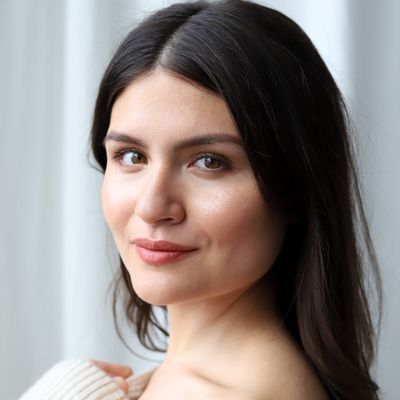
I’ve been obsessed with The Spark File since its launch last fall, but when I heard this conversation with Phillipa Soo I knew I had to share it with you. In this selected short, Phillipa, who you probably know for originating the role of Eliza Schuyler Hamilton in Hamilton, takes about the disappointment she felt during her next Broadway outing, Amelie, and the lessons she learned from it. Here’s their conversation…
Transcript
This transcript was automatically generated and might contain errors.
[0:00] Mo Brady: Hey Ensemblist listeners, Mo Brady here, and this week I want to share with you an extra special conversation from my friends over at The Spark File Podcast. Now, if you haven't heard of The Spark File Podcast, I want you to open up your podcast app and subscribe to them right now. The Spark File is hosted by Susan Blackwell and Laura Kamen, two badass bitches with gobs of experience in the theater space who are obsessed with sparking creativity and inspiration in others. I'll take a page from their stump speech and share with you that a spark file is a place where one consistently collects creative inspirations and fascinations. Laura and Susan are on the hunt for fresh ideas, images, and inspiration that spark creativity and peak curiosity.
Things that inspire all of us to get up off of our asses and make something. Plus, they have a kickass theme song that makes my butt bounce every time I hear it. I've been obsessed with The Spark File since its launch last fall, but when I heard this conversation with Phillipa Soo, I knew I had to share it with you guys. In this selected short, Phillipa, who you probably know for originating the role of Eliza Hamilton in Hamilton, talks about the disappointment she felt during her next Broadway outing, Amelie, and the lessons she learned from it. Here's their conversation.
[1:50] Susan Blackwell: I want to share something that I've learned from you, Pipsters, in observing you. It's really about staying loose and having fun. It's so interesting for me to hear that you're this very studious, good student, and you can live in that gear. The magic trick for you is to really make sure that you cut loose and fly free in your performances and have fun. I think you're succeeding in my observation of you. We did this reading of a musical called Kiss Me, Kate. Kiss Me, Kate is a musicalization of Taming of the Shrew. It was so fun. It was crazy fun. We did it at the Public Theater. Lee Silverman directed it. I was playing one of the gangsters. There was a lot of non-traditional casting going on in that.
During this reading that we did in front of a big old invited audience, you're out in front. Do you remember this? You're out in front. You're singing something. It's a moment where all eyes are sort of focused squarely on you. You kind of lost the melody. We'd only spent a week rehearsing it. You've kind of lost the melody. You were just in this very free, easy way. In front of an audience, you were sort of like, what is it again? It was so full of laughter. You were giving no fucks. It's the kind of moment that I can say honestly, because of my sometimes performance anxiety historically, my adrenaline and cortisol issues, it might have burned a hole in my brain for days. But you were just so easy and so breezy about your imperfection in this moment. You just kept on going. Do you even remember it?
[4:03] Phillipa Soo: I don't. I think it's because there was no adrenaline or cortisol. You were just like, what is it again? The musical director, I think that was Vadim, he was like, this is the melody, whatever it was. You picked right back up and you kept going. I was like, that's how you do it. That's how you are free and easy. Does that give you a feeling when I describe that to you?
[4:08] Phillipa Soo: Yes, it gives me a lot of feelings. I'm charmed because here's the thing about that. I don't remember that. The way that it happened sounds about right. But me 10 years ago would remember that moment. Have had anxiety about it. We'll never forget it. Also, in the moment would have probably had a hot flash and gone beet red and then had diarrhea. Adrenaline, cortisol, all of it. Not to say that that stuff didn't happen. There was things probably going on inside of me. But what I've learned is my habits, my tendencies. This is something that just blew my mind open when I was in school, is that there were things that I had come across that were preventing me from really expanding artistically, going further, becoming a better artist, becoming a better performer.
One of my teachers said to me, look, some of these things that we're bringing up, you're always going to have to deal with. They're not going to go away. You're not going to check off a box and finish it and it'll be done. These are the things that are going to happen for the rest of your life.
[5:40] Susan Blackwell: Such as?
[5:41] Phillipa Soo: Such as, for me, a tendency to have anxiety and freak out about messing up and needing to be perfect. The opposite of that would be let it hang loose. Find that. That has to be a choice for me every time.
[5:56] Susan Blackwell: Boy, you are making that choice.
[5:58] Phillipa Soo: And maybe it'll come naturally one day or sometimes, but I can't expect it to just come naturally because it's not a muffin recipe. I didn't check off the box and do my due diligence and then all of a sudden I'm free and loose all the time. It has to be a conscious decision for me. And even further, I realized being out of school and out in the world, how that manifests for me is when I have those moments of anxiety or those oops moments or those sort of like, this is going to end my career and my life moments. If I can shorten the amount of time it takes for me to laugh about it later, then I've accomplished it. It could take a couple days. It could take like a month. But if I'm sort of working towards shortening how long it takes for me to just laugh at myself about those moments, then great.
[6:59] Susan Blackwell: So what I was observing, and the reason why you don't remember it is because it wasn't traumatizing to you. But what I was observing is you have in that moment, however you got there, whatever grace you had granted yourself before we started that reading, you had really shortened that. It was a millisecond before you were like, I don't know what the melody is. You just got right there really fast. And it was so, to use your word, it was super charming. And I actually carry it with me. I think about it more than I'd care to admit when I am like, okay, in a moment, in a millisecond, if I fuck up, if I trip over my words, if I don't know what the melody is, like if I can't access what the word is that I'm trying to use, how are you going to play it, Susan?
And I really carried that, watching you do that in my heart. And I was like, what would Pippa do? Pippa would be like, what is it again? And then just the audience would laugh and you would just go on. You just go on. I love that.
[8:10] Phillipa Soo: I'm so glad that you like that.
[8:11] Susan Blackwell: You're like, I'm glad I could be of service.
[8:13] Phillipa Soo: Listen, if it can do something for someone, at some point, my sort of like, oops moments. You've done it. This reminds me of a topic we're slightly obsessed with on this podcast. And that topic is failure and how we process our perceived failure. Do you have a particular thing that you felt you failed at? And could you talk us through how you processed it?
[8:39] Phillipa Soo: Yeah. There's the kind of failure that happens when you're working on something as an actor and you feel like, oof, that didn't quite happen. That didn't land. That moment or like, oh, I couldn't quite get there. The emotion wasn't there. And that's just informative to me.
[9:00] Phillipa Soo: Yeah, that's interesting. It's information. Like I try and take it as not like, you know, a measure of my worth and more just information about what's happening either. You know, like if I'm doing a really emotional scene and for some reason it doesn't get there, I think, oh, I don't really actually know what my
[9:46] Phillipa Soo: I feel like I've maybe let other people down. Not letting myself down, but like letting the world down in some way. And that would be like being in a show that maybe closes much earlier than we think it's going to. I did this beautiful play called Amelie the Musical. And it was the most wonderful experience and we had a really good time making it. And for one reason or another or many reasons, it just didn't last. We ran for about five weeks on Broadway. And it's just so silly because like, yes, it's called, is it technically a failure? I don't know. Who came up with that term? Was it a success? I mean, if you told me I was doing a five-week run of Amelie on Broadway, I'd be like, yeah. A limited run, limited engagement.
It was a great five weeks. But that's my perception of it. And so I think like with the sort of like critic outward world, what do people see me as success or failure or stuff is like completely unhealthy. That like, it's a success to be able to go to Broadway in the first place. Like the odds of making it there are so small anyway. So like you have to take into account all the things that you do to get to a place. And then you'll come to see that like the sort of failure, whatever it is, is so much smaller than anything it did to take you to get there.
[11:10] Susan Blackwell: How was it for you like when, I mean, we've made Broadway shows that have received, shall we say, earlier than expected closing notices. How was it for you to receive that information, something that you had poured so much of your heart and soul into and something that you were literally at the center of that creative experience? You are the key art for that, all the show posters, you are the center of it. Your name is above the title. How was it for you to receive that information? And in those days, how did you process it?
[11:56] Phillipa Soo: I didn't process it necessarily like in that moment that you were mentioning. Well, you still are working. You still have a job to do.
[12:05] Susan Blackwell: Exactly. Well, but I think more that like, you know, that's sort of what I was talking about that moment it takes for you to laugh at yourself. That took me a while to find.
[12:14] Phillipa Soo: Sure. A little bit longer. That one took a little bit longer. But I did learn about letting yourself have those feelings. I was mourning it too. I wasn't just disappointed in myself for being a failure. That was the smallest part of it. I think the biggest part was that I just wasn't going to be able to continue doing this thing that I planned on doing for a long time and put a lot of energy into. And these people that I made it with, I wasn't going to hang out with anymore. So there was a lot at play there. So I actually did not handle it well. I just was very depressed. And I felt like, oh, gosh, what am I going to do? I made a mistake. Something went wrong. It was clearly all my fault. What am I going to do next?
[13:08] Susan Blackwell: What shifted it for you? Because you're not there now.
[13:11] Phillipa Soo: To be perfectly honest, and I hate saying this because I don't want this to be me. But here we go. But I got another job.
[13:20] Susan Blackwell: Yes.
[13:21] Phillipa Soo: Yeah. And I felt better about myself.
[13:23] Susan Blackwell: Yes.
[13:23] Phillipa Soo: Life went on.
[13:24] Susan Blackwell: And life went on. But I was pissed at myself because I was like, look at me. I just got another job. Someone handed me a thing. And all of a sudden, I feel better about my life. What a sap I am because I just spent four months being like, Steve, I'm never going to work again.
[13:46] Phillipa Soo: Oh, my God. And then all of a sudden, I'm like, oh, I get to do this other thing. We work in such a crazy business because it is a lot about external opportunities. For many of us, it's about external opportunities and when they arrive and being available and waiting for them to show up and blah, blah, blah. But here we are. So that was your truth for that moment?
[14:08] Susan Blackwell: That was the truth. That was the truth then. And it won't be like that ever again. Because eventually, I found that moment of like, haha, like I'm laughing at myself because I was like an insane person. I was like, oh, my God, this is it for me. Nothing ever is going to happen ever again.
[14:25] Phillipa Soo: Did you feel like in a way it was sort of cheating to feel better just because you got a job?
[14:31] Susan Blackwell: No, yeah. I think that's what I was so pissed at myself for. I was like, I know my self-worth. Why did it take somebody giving me permission to be okay with having a couple months of free time? But to use your words earlier, that's information.
[14:51] Phillipa Soo: Totally.
[14:51] Susan Blackwell: That's information in this ongoing investigation that we're all doing about ourselves and creativity. That's information. And so if you do have a feeling that you want it to be different next time, there are ways you can influence that.
[15:05] Phillipa Soo: Yeah.
[15:05] Susan Blackwell: Well, to use your words again.
[15:07] Phillipa Soo: We're just throwing all your words back in your way.
[15:09] Susan Blackwell: Oh, my God. I love it. I love it. Tell me everything I said. This is hard-hitting journalism.
[15:15] Phillipa Soo: You said it won't happen again, because you did learn from that experience.
[15:19] Susan Blackwell: Yes.
[15:19] Phillipa Soo: And you're determined that next time it's not going to come from external forces. You feeling better can come internally.
[15:27] Susan Blackwell: Yeah. I think before it happens, I can be conscious of it. Even if for some reason I go down that road again, like I think so many of us do in this industry where we're like, here we go again. I'm unemployed and I can't just enjoy having two months off.
[15:46] Phillipa Soo: A little downtime.
[15:47] Susan Blackwell: Right. From the previous two months, I literally had no time. So I don't know. I just feel like just getting better is taking as it comes, as opposed to feeling like I have to prescribe a way to be. But like you said, next time it happens won't be the first time that it happens.
[16:04] Phillipa Soo: No. Even if it happens in the exact same way, my perception of it will be different.
[16:09] Susan Blackwell: Yeah. I like that.
[16:11] Phillipa Soo: Even if I'm bummed out and blue for four months because I don't know what's happening next, and then somebody gives me a job and all of a sudden I'm happy, that experience will ultimately be different because I have this perspective in my mind of like, it's not the end of the world. I'm blue about it. I want to be working. I grieve it. But also, free time.
[16:35] Phillipa Soo: The other variable that I know, this is the drum that Auntie Susan and Laura always bang, but the other variable that I just want to add into this mix is I think this also can be shifted by making your own work. That is another thing that can shift this. If you are somebody who knows yourself to be a creative artist, in addition to being an interpretive artist, there's something about knowing that, yes, in addition to seeing what external opportunities come my way, there's a short story that I'd be interested in having made into a play that I can direct. That sort of thing also can really go a long way in shifting. It doesn't take away the pain and the grieving and the loss of having invested so much of yourself in a project that you love and having it feel like it got cut short, but it does something. It's like a little more sense of personal agency.
[17:31] Susan Blackwell: I guess it goes with that, like what I was saying, space, ritual, and experiences, that sometimes space is just given to you without you asking for it. You don't have to create it for yourself.
[17:46] Phillipa Soo: I just meant a little space, not all the space.
[17:48] Susan Blackwell: All the space. Same thing with the other two aspects, like your experiences and the sort of rituals that you have. Some of them find you more than you find it, and so you work with what you're given in that way. So if you're given a lot of space, fill it. If you're given no space, fill it.
[18:15] The Ensemblist & Broadway Podcast Network: Special thanks to Susan Blackwell and Laura Kamen for sharing their interview with Phillipa Soo. Like I said, this is just a portion of the full two-part interview with Pippa, and it is chock full of sparks. They have additional interviews with Gavin Creel, Sara Bareilles, and multitudes of other creative sparklers out there. So open up your podcast app and subscribe to them right now. Thanks for listening, guys. Until next time.
© Broadway Podcast Network, All Rights Reserved