

That’s right - host Jackson Cline heads Off-Broadway for today’s episode! When he was doing my initial research for this series, many of the examples of queer representation that I found interesting happened to be produced off-Broadway... Read More
From the show: The Ensemblist
Featured Shows

About
That’s right - host Jackson Cline heads Off-Broadway for today’s episode! When he was doing my initial research for this series, many of the examples of queer representation that I found interesting happened to be produced off-Broadway. However, due to timing, he sadly made the choice to cut all of that from our history episode. He thought it’d be fun to dig deeper into those shows while in quarantine. Here’s the result!
Transcript
This transcript was automatically generated and might contain errors.
[0:43] Jackson Cline: Today, I am coming to you from my isolation pod on the island of Manhattan, and I could not be more excited to share another episode of Queer Characters on Broadway.
[0:53] Jackson Cline: Well, Queer Characters off-Broadway.
[0:58] Jackson Cline: That's right. We are heading off-Broadway for today's episode.
[1:03] Jackson Cline: When I was doing my initial research for this series, many examples of queer representation that I found interesting happened to be produced off-Broadway.
[1:12] Jackson Cline: However, due to timing, I sadly made the choice to cut all of that from our history episode and just focus on Broadway.
[1:20] Jackson Cline: So, while we are all in quarantine, I thought it would be fun to dig a little deeper into those shows and take another history lesson.
[1:29] Jackson Cline: So, jump in those time machines, buckle up, and here we go.
[1:35] Jackson Cline: As you may recall, explicitly queer characters started appearing in Broadway musicals in the late 60s and 70s with roles such as Dwayne Fox in Applause and Sebastian Bay in Coco.
[2:04] Jackson Cline: Around the same time, queer characters were also shining on off-Broadway stages.
[2:09] Jackson Cline: For example, Paul San Marco and Gregory Gardner in A Chorus Line, which premiered at the Public Theater before it transferred to Broadway.
[2:17] Jackson Cline: While memorable and significant to the history of queer representation in musical theater, these characters were never the center of their show's stories.
[2:26] Jackson Cline: However, that same year, 1975, the off-Broadway musical theater scene saw its first mainstream queer story take center stage in Boy Meets Boy.
[2:37] Jackson Cline: This was nearly a decade before a Broadway musical hit that same milestone.
[2:42] Jackson Cline: Boy Meets Boy was written by Bill Solly and Donald Ward, and it premiered at the Actors Playhouse on September 17, 1975, where it ran for 463 performances.
[2:54] Jackson Cline: It was even revived in London in 2012.
[2:57] Jackson Cline: Boy Meets Boy was a musical comedy stylistically hearkening back to the days of 1930s black-and-white movie musicals.
[3:04] Jackson Cline: Think Fred and Ginger, for example.
[3:07] Jackson Cline: The central romance, as suggested by the title, is between two men, and it results in a same-sex wedding at the end of the show.
[3:15] Jackson Cline: Radical in 1975.
[3:18] Jackson Cline: Notably, their relationship is treated as if it were just as socially acceptable as a heterosexual romance at the time.
[3:25] Jackson Cline: This was a huge leap forward for queer representation in the musical theater.
[3:32] Jackson Cline: The next off-Broadway musical I want to talk about is actually a trilogy of one acts by librettist James Lapine and composer-lyricist William Thynne.
[3:41] Jackson Cline: And the first installment, In Shrouders, premiered at Playwrights Horizons in 1979 and focused on Marvin, a married father who realizes he's attracted to men.
[3:53] Jackson Cline: Over the course of the show, he grapples with whether or not he should disrupt his family life to live his truth.
[3:59] Jackson Cline: The next installment, March of the Falsettos, came two years later.
[4:03] Jackson Cline: It explores the family dynamic now that Marvin has left his wife and taken Whizzer, a male lover.
[4:10] Jackson Cline: Part 3, Falsettoland, which did not premiere until 1990, focuses on Marvin's life as his son comes of age and his lover Whizzer dies of AIDS.
[4:22] Jackson Cline: Marvin's neighbors, Dr. Charlotte and Cordelia, were the first prominent lesbian characters in a major off-Broadway musical.
[4:29] Jackson Cline: Well-received, March of the Falsettos and Falsettoland were combined to create Falsettos, a full-length musical that opened on Broadway in 1992.
[4:39] Jackson Cline: As I mentioned in Episode 1 of the series, Falsettos was significant for being the first major musical to deal with AIDS, addressing the epidemic onstage as it was still ravaging the country.
[4:52] Jackson Cline: In June 1993, Whoop-Dee-Doo, a gay musical review, opened at Actors Playhouse running for 271 performances.
[5:01] Jackson Cline: With fabulous costumes by Howard Crabtree, this very campy review featured many musical numbers, several highlighting more serious points about gay life even though they were all comedic in style.
[5:13] Jackson Cline: Three years later, When Pigs Fly, which was created by Mark Waldrop, Howard Crabtree, and Dick Gallagher, three of the many men behind Whoop-Dee-Doo, opened at the Douglas Fairbanks Theater and ran for just over two years.
[5:28] Jackson Cline: Taking on the review format once more, remaining stylistically similar to Whoop-Dee-Doo, When Pigs Fly took on topics such as staying true to oneself, unlikely lovers, and finding lightness during hardship.
[5:41] Jackson Cline: Once again, the success of the show was widely credited to Crabtree's costume designs, which inspired much of the writing and delighted audiences.
[5:50] Jackson Cline: Sadly, Crabtree passed away from AIDS in June 1996, two months before the show opened, and he was never able to see the show's success.
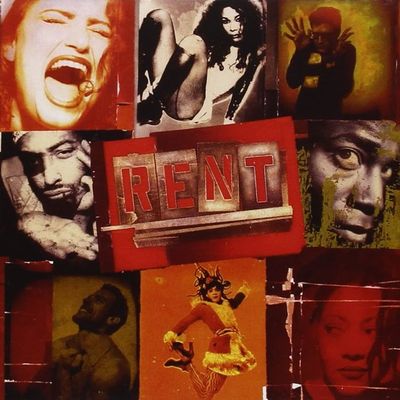
[6:00] Jackson Cline: In January 1996, a new rock musical called Rent burst onto the scene at New York Theatre Workshop. It featured music, lyrics, and book by Jonathan Larson.
[6:22] Jackson Cline: Rent followed a group of young artists in Manhattan's East Village, several of whom are queer and some of whom are living with HIV-AIDS.
[6:31] Jackson Cline: The show is sometimes criticized for putting the queer characters in supporting roles and killing a queer character while a straight HIV-positive character lives through a near-death experience.
[6:42] Jackson Cline: However, it cannot be denied that Rent's status as a mega-hit, transferring to Broadway's Nederlander Theatre and running for over 12 years, shone a light on queer life and the AIDS epidemic at NYC for millions of fans who might not have otherwise been exposed to such stories.
[6:59] Jackson Cline: In 1998, John Cameron Mitchell and Stephen Trask's Hedwig and the Angry Inch, in which a genderqueer rock singer tells her story in concert, opened at the Jane Street Theatre and ran for two years.
[7:12] Jackson Cline: Mitchell, a gay man, originated the title role. Having the story told was a huge step forward for an underrepresented community, but as I mentioned in Episode 1 of this series, Mitchell has made it clear in interviews that the show is about survival and reinvention and is not intended to be a, quote, trans fairy tale, end quote.
[7:34] Jackson Cline: I echo my hope that a genderqueer artist can take on this role in major future productions, perhaps impacting the audience's experience in an even deeper way.
[7:44] Jackson Cline: As the 20th century came to a close, Falsetto's writers William Finn and James Lapine teamed up once again to write A New Brain, which premiered at Lincoln Center Theatre in 1998.
[7:56] Jackson Cline: Heavily inspired by Finn's own experience with a medical emergency, gay composer Gordon Schwinn, played by openly gay actor Malcolm Goetz, worries that he will die of an arteriovenous malformation before he writes his greatest songs.
[8:11] Jackson Cline: Shortly after the start of the new millennium, a slew of musicals about gay life hit off-Broadway stages.
[8:18] Jackson Cline: A Man of No Importance, produced at Lincoln Center Theatre in 2002, followed the story of Alfie, a closeted bus driver and community theatre director living in Dublin, Ireland during the 1960s.
[8:31] Jackson Cline: Over the course of the musical, meek, quiet Alfie grapples with his sexuality and comes to the realization that he must express his true self.
[8:40] Jackson Cline: After an assault reveals his sexual orientation, many people in Dublin turn on him, but his community theatre tribe remains loyal, embracing him as the wonderful, kind man he is.
[8:53] Jackson Cline: Written by the late Terrence McNally, one of the great American gay playwrights, and a score by Aaronson Flaherty, direction by Joe Mantello, and a star performance by Roger Rees, A Man of No Importance won the Outer Critics Circle Award and was nominated for seven Drama Desks, as well as the GLAAD Media Award for Outstanding New York Theatre.
[9:23] Jackson Cline: Soon after A Man of No Importance opened, Xanadont, some lighter fare, premiered at the John Houseman Theatre after a short developmental run at the Rodney Kirk Theatre.
[9:49] Jackson Cline: Set in a parallel universe, Xanadont takes place in a heterophobic world where homosexuality is the norm.
[10:04] Jackson Cline: Saves the Day. Also in 2003, the off-Broadway premiere of Avenue Q, a risque musical comedy featuring a closeted gay Republican puppet as a supporting character, opened at the Vineyard Theater before a Broadway transfer. Next up was Damon Introportalo and John Hartmuir's Bear, a pop opera, which played at the American Theater of Actors. Bear followed two closeted gay teenagers in a secret relationship as they came of age at a Catholic boarding school. Ending with the fatal drug overdose of one of the leading men, Bear was the first major queer coming-of-age musical. In 2012, Bear was revised to become a book musical, with an added emphasis on the themes of bullying, the gay marriage movement, and LGBTQ plus suicides.
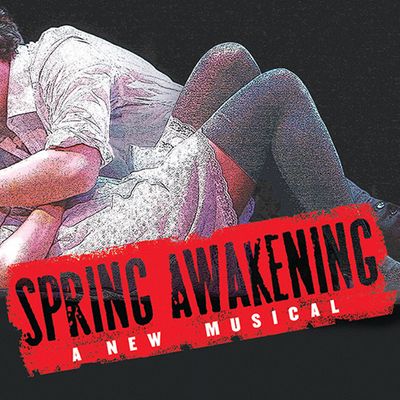
It ran at New World stages, closing after only 65 performances. In May 2006, Spring Awakening, another coming-of-age musical, opened at Off-Broadway's Atlantic Theater Company before a Broadway transfer later that year. While the central characters were all heterosexual, a subplot featured two gay teen characters romantically intertwined. One was comfortable with himself, and the other was still not. Two years later, Stephen Sondheim's Roadshow, with a book by John Wideman, opened at the Public Theater in November 2008 after nearly a decade of development and regional productions. Based on actual people and events, Roadshow follows brothers Addison and Wilson Meisner's adventures throughout the early 20th century, from the gold rush in Alaska to Florida real estate and beyond.
In the show, Addison is portrayed as gay and meets an artist named Hollis Bessemer on a train to Palm Beach, Florida. They become lovers and take on the Florida real estate scene together. While the real Addison was presumed to be a closeted gay man, Hollis was fictional, created so the authors could explore Addison's sexuality more openly on stage. In 2010, The Kid, produced by The New Group, opened at Theatre Row. Based on Dan Savage's nonfiction book of the same name, The Kid follows Dan and his partner Terry, played by Christopher Sieber and Lucas Steele, as they go through the open adoption process for a child. While not the first musical to feature gay parents, it was the first with a focus on gay characters wanting to become parents.
At a time before gay marriage was even legal nationwide, a show about gay parenthood made an extremely important political statement. That same year, York Theatre Company produced Yank, a World War II love story by David and Joseph Zelnick, which had made its New York debut at the New York Musical Theatre Festival in 2005. Yank deals with a gay romance in the army during World War II. The timing of the production coincided with a national push to repeal Don't Ask, Don't Tell, making it extremely relevant at that moment in time. In 2013, Fun Home premiered at the Public Theatre before a Broadway transfer two years later. Based on Alison Bechdel's graphic memoir of the same name, Fun Home follows Alison's discovery of her own sexual orientation and also addresses her relationship with her gay father.
As I'm sure you've noticed, I've hardly mentioned women this episode. The few queer female characters in major off-Broadway shows to date have been supporting roles. Maureen and Joanne in Rent, Cordelia and Dr. Charlotte in Falsettos, but finally we are seeing one take center stage in Fun Home. The production is also notable for having both a lesbian leading lady, Beth Malone, and a lesbian librettist, Lisa Krohn. Invisible Thread opened at second stage in 2015 after a world premiere at ART. This show, written by Matt Gould and Griffin Matthews, follows a gay American actor volunteering to build a school in Uganda. His boyfriend, a composer, soon makes the trek to join him. Invisible Thread is a rare example of a musical that explores an interracial, interfaith, same-sex relationship.
[14:44] Jackson Cline: In 2016, Dan Collins and Julianne Wick Davis's Southern Comfort opened at the Public Theater. Based on the documentary of the same title, it follows Robert Eads, a transgender man battling ovarian cancer, and his chosen family in Georgia during the final year of his life. While the show made a wonderful effort to shine a light on transgender life and educate its audiences on issues relating to it, there was some controversy surrounding its casting, and rightfully so. Of the many transgender roles in the show, only two were played by transgender actors. When I read this, I was honestly quite shocked that so many cisgender actors were cast in these roles at a major theater only four years ago.
If this were produced now, I think, at least I hope, that that would not have been the case. In 2016, Max Vernon's The View Upstairs opened at the Lynn Redgrave Theater, produced by Invisible Wall Productions. Inspired by the most deadly attack on a gay club until 2016, The View Upstairs follows a young fashion designer in the present day who purchases a building and finds himself transported back to the upstairs lounge in 1973. While there, he meets its employees and patrons, learning about the struggles of the past generation of queer folks, the meaning of community, and a little bit of queer history. I find it so special to have a show that does shine a light on a real piece of queer history.
The final musical I want to highlight today is A Strange Loop, Michael R. Jackson's new musical about a gay, Black, overweight musical theater composer named Usher, which premiered at Playwrights Horizons in May 2019. In the show, Usher is working on writing a musical about a composer working at a miserable day job. Through this format, Usher is able to explore many of his demons and inner voices, portrayed by a six-person ensemble called His Thoughts. After a very successful off-Broadway run, A Strange Loop has a regional premiere scheduled for Washington D.C. this fall.
[19:01] Jackson Cline: I want to break the cycle that's so ingrained in me. But change comes way too slow and I am in a hurry. There's all of this rejection which brings such misery. But with my white girl music I drown out the flurry. So, what did we learn about queer representation off-Broadway? Well, while Broadway has made significant strides over the years, off-Broadway always seemed to be one step ahead. While Broadway was starting to feature queer characters in supporting roles in the late 60s or late 70s, off-Broadway's Boy Meets Boy was already featuring a same-sex romance at the center of the story. Yes, there are now many Broadway musicals with queer leading roles, but it still seems like there are a few more off-Broadway musicals putting these characters at the center of their stories.
In that same vein, many of Broadway's hit shows featuring queer stories—Rent, Falsettos, Fun Home, and more—premiered off-Broadway before making the leap. Perhaps this was because producers and theater companies saw this as less of a financial risk when putting a lesser-told story center stage. For similar reasons, I feel that queer off-Broadway musicals have explored a wider variety of stories over the years, from gay adoption to queer teen suicide to the colorful crew at the Upstairs Lounge. That said, as I'm sure you've noticed, like Broadway, off-Broadway's queer stories tend to be very much focused on white gay cisgender men, although I was pleased to notice that not a single musical I highlighted from 2013 to 2019 had one as the lead. Tides are shifting, and there is more diversity in queer storytelling. Gay men have beautiful stories, but so do LBTQ-plus people. There's still a long way to go, but progress is being made.
[19:01] Jackson Cline: The Ensemblist was produced today by me, Jackson Klein. There are two great ways you can support The Ensemblist right now from your isolation pod. One is by leaving us a rating and review on Apple Podcasts, and the other is by becoming a Patreon member. You can do that at patreon.com slash The Ensemblist. Please subscribe to The Ensemblist on Apple Podcasts, follow us on Spotify, or listen to our full catalog on the Broadway Podcast Network by visiting bpn.fm. Be sure to follow The Ensemblist on Instagram to see the latest posts from our website, where we share the stories of talented artists working in Broadway ensembles. Now, go listen to a queer off-Broadway musical cast recording. I know you want to. Thanks for listening, guys. Until next time.
© Broadway Podcast Network, All Rights Reserved