

A decade after Sunday in the Park with George won the Pulitzer Prize, a new musical exploded on the scene in a way the theatre community hadn’t seen since A Chorus Line... Read More
From the show: The Ensemblist
Guests

Featured Shows
About
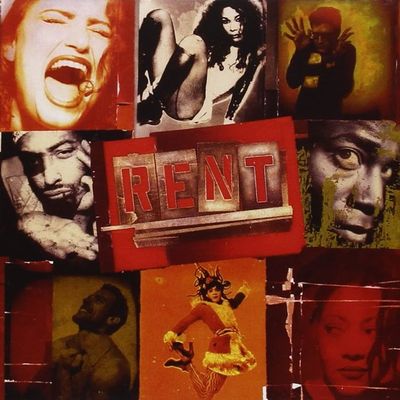
A decade after Sunday in the Park with George won the Pulitzer Prize, a new musical exploded on the scene in a way the theatre community hadn’t seen since A Chorus Line. RENT, with music, lyrics & book by Jonathan Larson, was presented at New York Theatre Workshop in January of 1996 before quickly making the jump to Broadway that April, where it won four Tony Awards and the 1996 Pulitzer Prize.
For many theatre artists, including ourselves, RENT was a formative part of their creative identity. Like South Pacific, How to Succeed and A Chorus Line, RENT spoke to a specific part of life in America at the time it was written - ticking every box in the Pulitzer committee’s requirements. RENT’s impact lasted far beyond the show’s 5,123 Broadway performances- this little show about a slice of life in Manhattan’s East Village has been presented all around the world, and twice on film.
At its debut, RENT felt like a completely new kind of storytelling, something that hadn’t been seen on Broadway in at least decades, but perhaps ever. But RENT’s connection in its spirit and staging to the Broadway musicals that paved the way for it may surprise you.
Transcript
This transcript was automatically generated and might contain errors.
[0:01] Moe Brady: You're listening to The Ensemblist, the only podcast that shows you Broadway from the inside out. Welcome, I'm Moe Brady.
[0:19] Moe Brady: A decade after Sunday in the Park with George won the Pulitzer Prize, a new musical exploded on the scene in a way the theater community hadn't seen since A Chorus Line. Rent, with music, lyrics, and book by Jonathan Larson, was presented at New York Theatre Workshop in January of 1996 before quickly making the jump to Broadway that April, where it won four Tony Awards and the 96th Pulitzer Prize.
[0:43] Moe Brady: For many theater artists, including ourselves, Rent was a formative part of their creative identity. Like South Pacific, How to Succeed, and A Chorus Line before it, Rent spoke to a specific part of life in America at the time it was written, ticking every box in the Pulitzer Committee's requirements. Rent's impact lasted far beyond the show's 5,123 Broadway performances. This little show about a slice of life in Manhattan's East Village has been presented all around the world and twice on film.
[1:11] Moe Brady: At its debut, Rent felt like a completely new kind of storytelling, something that hadn't been seen on Broadway in at least decades, but perhaps ever. But, Rent's connection in its spirit and staging to the Broadway musicals that paved the way for it may surprise you. Stay with us.
[1:27] Jennifer Ashley Tepper: Rent is about a group of artists who are struggling against the shadow of HIV and AIDS, against poverty, against being true to themselves as artists at the end of the millennium in the village in New York City.
[1:53] Jennifer Ashley Tepper: One of the most obviously striking things about Rent is how different it was from the typical Broadway fare when it debuted. The crazy thing about Rent is that part of the big revolution that started was that people didn't really believe that pop rock music could be part of a hit Broadway musical other than this British invasion. So, Rent really was different than everything going on at the time because in the 90s, Broadway was dying and there were classic musicals written with classic forms of music and there were reviews, but it wasn't as healthy as it is today.
[2:29] Jennifer Ashley Tepper: Certainly, Broadway was not as busy as it is today and Rent came in and was totally unlike anything else and for the first time adapted pop rock into a sung through musical that was American. And that was very different than Sunset Boulevard and Smokey Joe's Cafe and all these great musicals, but that were not necessarily driving the art form forward. Rent came and really drove the entire next 10 years and on.
[3:03] Jennifer Ashley Tepper: So, the ensemble in Rent is just like Chorus Line notable because it was so diverse. The ensemble, you have people of different sizes, races, ages. Rent looks like New York City in a way that definitely musicals didn't in the 90s. And a lot of people, especially actors, talk today about how like they're in theater because they saw Rent and knew that Asian people could be actors or that black people could be actors. It really kind of shook that up and that was one thing that was different about the ensemble.
[3:39] Jennifer Ashley Tepper: It wasn't that there was no diverse casting, but it was the first hit since Chorus Line that took charge of it in that way. And the ensemble in Rent, I don't think, was consistently cast with like types throughout. They played with that a little bit more. So, that was important to like what the ensemble is meant to that show.
[3:59] Michael McElroy: Michael McElroy and I live in Harlem. I went into Rent for the first time in 1997. I replaced Jesse Martin playing Tom Collins and I played it for two years and then I left to do another show. And then the guy who replaced me left because he got another show and they asked me to come back. And I came back to Rent for another nine months and then I left. And then six years later, they asked me to come back and I closed it on Broadway in 2008. And then January of 2009, we went on what ended up being an international tour.
[4:32] Michael McElroy: I think Rent is the best example of an ensemble show because it depends on every person. And it was interesting when the show moved from Off-Broadway to Broadway, that was when it becomes necessary by union rules that you have to delineate who's the principal, who's an ensemble person. But up until that moment, and I think it was the way that Michael Greif and Jonathan Larson built the show, was that it was an ensemble of New York people. And what I loved about being a part of it was that to us, as the people on stage, everybody is a part of telling that story.
[5:04] Michael McElroy: So from the homeless man to Mr. and Mrs. Jefferson to Mimi to Roger, everybody's a part of the fabric of New York at that time in telling the story. So I think it was an incredible ensemble. Before Rent, I'd done Miss Saigon, The Who's Tommy, High Rollers, Social Pleasure Club, that's the Helen Hayes, and Pegalopona on Broadway. And the bigger shows like The Who's Tommy and Miss Saigon, there was definitely a differentiation between the principals and the ensemble.
[5:37] Michael McElroy: We were like our own posse, and that was my experience of what an ensemble is. And with Rent, that kind of blew that out of the water because every person was that individual, necessary, unique part of the puzzle that created the world of New York City. So it was the first time I was ever in an experience where it felt that way.
[5:57] Michael McElroy: The first time I saw the show was when I got the job. And one of the first things that struck me was how much it was about that community of people on stage. And though some people had specific narratives that you could follow, it really was about that world, and each person held up their own part to tell that story. And I think you really get that from the beginning of the show.
[6:19] Michael McElroy: The way Michael Greif staged it is that they come out as a community of players that are going to tell you the story in this landscape of New York City at this period in time.
[6:36] Adam Chanler-Berat: Partly because of the show's structure, most of the cast spends the majority of the show on stage, providing even leading players like our third guest with standard ensemble moments. My name is Adam Chanler-Berat, and I live in Greenpoint, Brooklyn. I played Mark in the Off-Broadway revival of Rent.
[6:55] Adam Chanler-Berat: There were moments of ensemble movement in Contact. We all danced in isolation in our own little world, but together in the same space. And, you know, we were all manipulating the set together. And I think that that, in terms of staging, it was all very, very, very much storytelling using the ensemble. Everyone was doing their part.
[7:20] Adam Chanler-Berat: There was a live camera, so I would film and it would be projected onto big monitors and projection screens on the stage. And there was a moment where I got to pan to every member of the company during the finale, which was my favorite part of the whole show.
[7:37] Adam Chanler-Berat: Perhaps Rent's most iconic moment is one that features the full ensemble of players at the top of the second act. Like a chorus line before it and next to normal after it, Seasons of Love provides a moment for the full company to stand at the edge of the stage and communicate directly with the audience, the kind of contract with the audience that only live theater provides.
[7:56] Adam Chanler-Berat: It's humans with humans in real time, breathing the same air, hearts beating all in the same room. In Seasons of Love, we did the line at the lip of the stage. I think what's so great about Breaking the Fourth Wall is that it immediately acknowledges that this is a theater, that we are storytellers. And it dissolves that level of remove that you can have if you're watching something that feels like 100% pure naturalism. But so many great theater pieces use that technique to sort of dissolve the boundary.
[12:36] Michael McElroy: Like many Pulitzer winners before it, Rent is one of those rare pieces of musical theater that have crossed the threshold into popular culture. That's a remarkable feat for a show that not only entertains but also educates. I honestly feel like Rent educates in a way that's kind of unprecedented, and I think that growing up in a generation where Rent was the one show, and I'm sure Hamilton is this for teenagers today, that my non-theater friends knew Rent, and when you were 12, you would sing Rent even if you went to, you know, not theater camp or you weren't in the school shows. A lot of other people knew it, and the fact that 12-year-olds could understand what HIV and AIDS were and what it meant to be impoverished and how Hispanic and Black and white communities were interacting in New York City, like, it had all of these educational aspects that really taught people.
That was the starting point to understand this very important crisis in America, and it's funny that that was the first time a musical won where that wasn't part of the criteria. I remember being at home on my pizza box, Macintosh, and putting the Rent CD in and having my one non-theater friend with me and playing the album from start to finish and being like, this is us. This is like our generation. We have a voice. So I think it gave a voice to a lot of people who felt underrepresented in musicals.
[13:55] Michael McElroy: Rent's vivid reflection of American life into popular culture and the way it brought new audiences and artists to musical theater made it a shoe-in for the 1996 Pulitzer Prize for Drama. Rent, to me, is an incredibly vivid slice in American life, and they were very big on making sure that it was about now, even though the issues being dealt with at the time were things that were very specific to the late 80s, early 90s, in terms of the AIDS epidemic. And so I think that Rent is an incredible slice of American life in New York City at that time, in that place, the East Village, with this community of voices, of artists, of activists that only happened in that time and only could have happened in that place. So if you're going to look at what the definition of it is, it fits perfectly. So I think that Rent is a perfect example of what should be a Pulitzer Prize winning musical.
[14:49] Michael McElroy: Rent came at a time where the most successful shows on Broadway were all British, and Rent staked a claim to the musical in a way that was very American. It was also this American tragedy that Jonathan Larson had written something so brilliant that was so acclaimed and passed away before knowing it. Just like when Hair became a really big hit and then everyone was like, everything is going to be a pop-rock show like Hair, and there were all of these big flops, there were all these experimental shows that tried to be like Hair, Rent was followed by tons of shows that were like, Broadway's really going to have American pop-rock scores now. And a lot of them didn't do well, and some of them did, and then eventually we got to the place we're at today, where Broadway is filled with music that sounds like it could be on the radio again, and Rent was the beginning of that starting.
And the people who saw Rent, who are the people who are writing musicals today, it takes that long for Broadway to evolve. It took Lin-Manuel Miranda and Sara Bareilles and these people seeing Rent, and then getting to be old enough to be Broadway writers for Rent to have its full influence and impact. So that was one way that it changed Broadway for sure.
[15:53] Mo Brady: Thank you to Adam Chanler-Berat and Michael McElroy for allowing us to share their stories this week. The Ensemblist was produced today by me, Mo Brady. The Ensemblist was produced today by me, Mo Brady. There are two great ways you can help The Ensemblist right now. One is by leaving us a rating and review on Apple Podcasts, and the second is by becoming one of our Patreon members. You can do that at patreon.com slash The Ensemblist. Please follow The Ensemblist on Spotify, iTunes, or you can subscribe on Apple Podcasts. You can also find all of our episodes at bpn.fm with the rest of our Broadway Podcast Network family. And make sure you're following us on Instagram because we are putting a lot of content out there. Things are moving fast, people. Alright, thanks for listening.
© Broadway Podcast Network, All Rights Reserved