

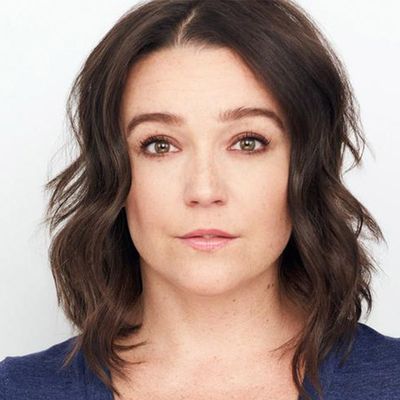
In Stephen Sondheim’s Follies, the character of Carlotta sings of her long and varied character in the showstopper “I’m Still Here.” The lyrics share that her decades in the show business have provided her with “plush velvet sometimes, sometimes just pretzels and beer.” The same could be said of today’s episode guest, Cameron Adams... Read More
From the show: The Ensemblist
Guests
Featured Shows

About
In Stephen Sondheim’s Follies, the character of Carlotta sings of her long and varied character in the showstopper “I’m Still Here.” The lyrics share that her decades in the show business have provided her with “plush velvet sometimes, sometimes just pretzels and beer.”
The same could be said of today’s episode guest, Cameron Adams. The legendary Broadway ensemblist made her Mainstem debut in the 2000 revival of The Music Man. In the twenty years since she’s been a mainstay on New York stages, performing in an extraordinary 13 Broadway shows.
Cameron joined me over the phone to share some of the most memorable moments of her career thus far, as well as how the industry has changed for ensemble performers in the last two decades. Here’s our conversation…
Transcript
This transcript was automatically generated and might contain errors.
[0:00] John Whelan: You're listening to The Ensemblist, the only podcast that shows you Broadway from the inside out. I'm your host, John Whelan. In Stephen Sondheim's Follies, the character of Carlotta sings of her long and varied career in the showstopper, I'm Still Here. The lyrics share that her decades in show business have provided her with plush velvet sometimes, sometimes just pretzels and beer. The same could be said of today's episode guest, Cameron Adams. The legendary Broadway ensemblist made her mainstream debut in the 2000 revival of The Music Man. In the 20 years since, she's been a mainstay on New York stages, performing in an extraordinary 13 Broadway shows. Cameron joined me over the phone to share some of the most memorable moments of her career thus far, as well as how the industry has changed for ensemble performers in the last two decades. Here's our conversation.
[1:22] John Whelan: Hi there, Cameron. Thank you so much for joining us.
[1:38] Cameron Adams: Thank you for having me.
[1:39] John Whelan: Oh, you're very welcome. Why don't you go ahead and tell us where you are calling from today?
[1:44] Cameron Adams: I'm actually calling from a beautiful apartment in Jacksonville, Florida, close to my boyfriend's family.
[1:53] John Whelan: Times sure have changed, haven't they?
[1:55] Cameron Adams: Yes, they have.
[1:57] John Whelan: And if you weren't in Jacksonville, Florida, where would we regularly find you in the city?
[2:04] Cameron Adams: You would regularly find me in Harlem, which is one of my favorite New York City neighborhoods.
[2:09] John Whelan: Well, we're talking to you today because you are one of the names that stands out as somebody who has had quite the extensive career dancing on the boards of Broadway. How many shows, if you know it off the top of your head, how many shows do you have under your belt?
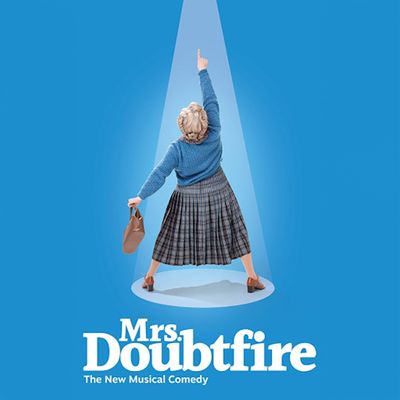
[2:28] Cameron Adams: I just, right before all of this coronavirus situation happened, I was three previews into my 13th Broadway show, which is Mrs. Doubtfire.
[2:42] John Whelan: Lucky number 13, eh?
[2:44] Cameron Adams: Lucky number 13.
[2:47] John Whelan: So what is your track in that?
[2:50] Cameron Adams: So I am in the ensemble, which is a fairly small ensemble as of a lot of newer musicals nowadays, which means we all wear mini, mini hats. I dance, I sing, I have a hilarious feature in the middle of the first act, which I won't give too much away. We did a little bit of a press presentation, but Daniel Hillard is attempting to cook for his family for the first time as Mrs. Doubtfire. The kids are upstairs doing their work. He has no idea what he's doing, so he gets on his computer and asks Siri, basically, how to cook a delicious, nutritious meal. And I pop up as one of three very funny YouTube chefs. They're all three a nod to three very famous chefs. And I won't give too much away because when you see the show, it's a little more clear with our costuming, but it's very, very, very funny and very clever.
It's a huge production tap number. It's one of the more traditional sort of old-school production numbers, I would say. And you get to see Rob McClure really shine because obviously we see him wear mini hats in the show, literally. But in this number, you get to also see him dance a lot, which is kind of fun. So I get that fun feature, and then I get to understudy the female lead, Miranda Hillard, which is the Sally Field role from the movie and beautifully portrayed by Jen Gambatese in our production.
[4:07] John Whelan: Oh, that sounds like so much fun. I'm hopeful that this brings more positive light to others who like to tap dance while cooking their dinners, because I thought that was just me.
[4:17] Cameron Adams: Turns out it's a really popular thing to do.
[4:23] John Whelan: So this is to be show number 13 for you. But let's go back to show number one, which was The Music Man, the Susan Stroman revival of The Music Man. What was that experience for you, Yao?
[4:38] Cameron Adams: Well, what's crazy is our opening night for Mrs. Doubtfire originally was supposed to be April 5th. And April 5th also marked the 20th anniversary of our first preview for The Music Man. There's been a lot of parallels. Also, the first rehearsal for Mrs. Doubtfire for New York for the Broadway production was the same day that I moved to New York City 20 years ago. So I've had a lot of weird parallels with Mrs. Doubtfire and The Music Man, which is kind of very, very cool on this sort of anniversary year. Yeah, it's very neat.
[5:12] John Whelan: You were a teenager, correct, when you started with The Music Man?
[5:15] Cameron Adams: Right. I was 17 years old when I moved to New York to do the show. I moved from Myrtle Beach, South Carolina with I don't even think I had a real headshot. I had like a school headshot kind of sort of situation. I was certainly not trying to be a professional child actor. This sort of presented itself in a very unique way. And when it happened, my parents and I looked at each other and said, well, I guess you have to take this opportunity because I was so close to being done with high school. I was so close to being 18 that they sort of felt like if we put this off, who knows what her journey will be. So we went for it and I moved up here at 17 with my mom and she stayed with me until I turned 18 and finished high school.
And then she waved. I think it was like literally a few days after I turned 18 and she waved, got on the plane and went back to South Carolina. But we had a pretty amazing time together, the 10 or 11 months she lived in New York with me. Kind of crazy. You just jump in headfirst when you're that age. You don't have you don't think too much about you're fearless.
[6:20] John Whelan: Yeah, it's so different now. I mean, what a pool to be jumping into. First show 17 and working with Susan Stroman. You said you didn't have aspirations of being a big child actor. So had work prior to this been anywhere near the equivalent of working with such high-ranking folks?
[6:39] Cameron Adams: No, I, you know, I did plays at my church. There weren't even at the time there wasn't as much community theater in my hometown. Now there is a ton. Thanks to all of the high schools have incredible theater programs in my hometown close to Myrtle Beach, South Carolina and the Theater of the Republic in Conway, South Carolina, where my mom was a choreographer for years. They do beautiful work and there's all this great theater down there now. But when I was a kid, it was just a little more limited. And so I did things at church. I did things with through my dance studio. I started going away to summer theater programs and summer dance programs. And I loved it. And I knew I wanted to try to do this.
But I was obviously just looking at the sort of traditional path of college, studying musical theater or acting theater in general music, whatever, in college. So I was just beginning. I was a junior in high school when all this happened. So I was just at the beginning of like looking, investigating for the future.
[7:41] John Whelan: It's like, hey, Broadway, sure.
[7:42] Cameron Adams: Yeah, nothing to come close to working with Susan Stroman on a Broadway show. You clearly had the bug and have enjoyed it. Big picture, that junior in high school to now sitting in Jacksonville, Florida, looking at that career that you've had, what have you noticed that is different today than when you first stepped into that rehearsal room back with The Music Man?
[8:04] Cameron Adams: It's pretty incredible. I think back now at that time, and not only am I so lucky that that was my first Broadway show, I'm so lucky that that was my first professional theatrical experience. The people that I worked with on that show, I'm still incredibly close with. We all keep in touch. We all keep each other up to date on our lives, personal, professional. And I learned so much from that group of people. So as soon as I finished high school and was in what would have been college mode, because we didn't know how long the show was going to run and what that was going to be, if it had been a big flop, I would have moved back to South Carolina, finished high school with my high school and looked at colleges and done that route.
And luckily, it ran for a long time, a solid two years, which for a revival, I think is always pretty great. And through that process, because of the people I worked with, I started taking classes and voice lessons and acting classes and dance classes and all of the things that I knew I needed if I wanted to actually stay. And that's like the greatest gift anyone could have given me was, hey, here's this acting teacher, you should just go do a scene study class. Hey, here's this. This is my voice teacher. They're going to help with technique. This person is good at finding music, that kind of thing. And I just sort of took it all in and was open. And like I said, when you're that age, you're just so fearless.
And what I will say has changed is, at least for me personally, you know, I started in this business and I thought I was one thing. And I have very much changed it to something completely different, which is a really beautiful thing that a lot of people either don't stick it out, financially can't stick it out or their love for this dies, whatever the reasoning. Unfortunately, a lot of times in this business, people don't have super long careers, not always. And so to watch myself personally change from what I consider just a dancer to a dancer who could understudy small roles to a dancer who could understudy bigger roles to a dancer who could understudy big roles, have a feature in a show, step off Broadway and play roles, go do things for people in a studio privately to help them work on new musicals, create things with people.
Like if you had asked me 20 years ago, if I would be able to do all of those things, I'd be like, no, no, no, I just answer. No, no, no, I just do this. And so it's really quite lovely to, I'm a bit more nostalgic and I'm sure it's probably a lot of what we've got going on with the world also. And the fact that I was, you know, a month away from opening a new musical and all of that, but it's kind of lovely to see. And I don't know if we always had that opportunity, maybe. Maybe I'm wrong, but I feel like it was a little more limited for people to do that. You know, you were a dancer and that's it, or you were a singer and that's it. People are so well-versed now. The triple threat is the norm.
And I'm very proud of that because it was not the case even when I started 20 years ago. Or it wasn't as common and people didn't think that existed. And so I'm proud that that is a thing that people see now.
[11:24] John Whelan: And as you as a performer have changed yourself, have you experienced the ensemble's change? You had mentioned that in Mrs. Doubtfire, the ensemble is on the smaller side, which is more of a common trend these days. But what other changes to the ensemble have you seen, trend-wise or the like?
[11:46] Cameron Adams: I do think that's a big one. It's not always the case. I mean, a couple of years ago, I was at My Fair Lady at Lincoln Center with a 40-piece orchestra. And I forget how huge our ensemble was, but it was very large. You know, it was a more traditional and, you know, that's the way to do My Fair Lady, especially if you're at Lincoln Center, you got to fill that big stage. So that Vivian Beaumont stage is, you know, she's a football field. So that's really lovely, but that's not really the norm anymore. So people have to wear many, many hats. Like I was saying in Mrs. Doubtfire, I'm dancing like crazy and everyone sort of is in the ensemble. And then we all have standout features and a large majority of us have to cover huge roles.
So I will say that I think is more the norm now for a lot of ensembles. But I also think the way that the musical has changed, that the way that musicals are written nowadays, this is my first new musical in a while. I'd been in revival land sort of on and off for my career. I've definitely done more revivals than new musicals, but I have done enough new musicals from the ground up to say that we just write things differently nowadays. So I do think there's more opportunity for people in the ensemble to have features and standouts. And it's just such a reminder that what we do is a team sport. It really, really is a team sport. And even in shows nowadays that we don't actually have ensembles, quote unquote, everyone's on a principal contract or whatever.
It's an ensemble piece because everyone is there together making that happen. And look, nowadays people play instruments on stage and playing instruments and tumbling and singing and dancing and balancing hoops on their head. So it's, you know, you've got to sort of do it all. It's amazing to see.
[13:46] Cameron Adams: I'm always juggling. So you mentioned you've lived in revival land, but there have been some shows that you've worked on from the ground up. On a personal level, originating your own track to coming in as a replacement, to being a swing and an understudy, what of those duties do you find most enjoyable? That's such a good question because they all offer a different perspective and they all offer a different experience. And I'm really, really glad at this point that I was a swing at one point and have swung shows. A, it gives you such an appreciation for how hard that job is. It's one of the hardest jobs, if not the hardest job. It's so hard to be a swing. Obviously depending on the show, all of that, but it is incredibly challenging and it takes a certain personality and person.
Obviously you have to be talented because you have to be maybe the most diverse person in the room, but you also have to have a certain kind of personality which is, okay, I've done the work. I've done the prep. A large portion of this is out of my control and I just have to go out there and do the best I can do. And oftentimes, you know, your costume isn't right or you don't have the costume that works for that or this and that. And it's just hard. So I'm really glad I've done that. I personally don't ever need to do that again. I sort of made that choice a while ago. I never mind internally covering a feature or a moment in a show, but I don't want to be like a full on-swing ever again for me personally.
But I commend anyone that likes it and appreciates it and can do it because those people work harder than anyone else. And I think it's a good thing for people to do because you learn a lot. I think it helped me be a better understudy, which I do love to understudy. I love to understudy, especially if it's a role I'm very excited about. This role at Mrs. Doubtfire covering Miranda was the first time covering a role that is an adult woman who has children and it's contemporary, which is really a nice change of pace and a different feeling. And I do love this part because it sort of felt very natural to me and where I am in my life. I'm not a mom. Just age-wise, it felt like a really good fit for me, which was exciting.
I love to cover if I love the role, especially like I got to understudy on Nice Work If You Can Get It and I got to cover Kelly O'Hara, which is something, I mean, that's another thing. If you'd asked me 20 years ago, I'd be like, no, I could never do that. Just never say never. If you just work hard enough and put yourself out there, it's pretty amazing what you can accomplish. Or you just never know where your life is going to go. But that was one of those roles for me also where I felt like, oh, this just fits. It feels right for me. It was sort of a tomboyish, rough and tumble kind of character. And I felt like I could relate to that and really bring something to that. And I just loved it.
And watching someone like Kelly also doesn't hurt. She's one of my heroes in this business as a friend and someone I look up to very much. But I like to cover. And I have to say, this show, Mrs. Doubtfire came at the right time because I didn't know that I needed a new musical, but I needed a new musical. I needed this process. It sort of reinvigorated me in a way that was really exciting, being a part of something from the very first reading to then doing some pre-production for it, which I love to do also, to then going out of town with it and watching it change and watching writers be unafraid to try new things. And a brilliant director like Jerry Zaks going, that doesn't work. Let's try this thing instead.
And great idea. Go for that. Nope, I was wrong. Try this again. And I love that. I mean, that's the really creative part of this because ultimately when you do a big budget Broadway musical, show business, it's money. We're making a product to make money. It's also entertainment and it's also art. So it's a fine line. I found that this process has been really fun for me because I feel like it's all of those things. I get to create art. I'm contributing my input as well as watching other people do the same. And it's really fun. Whereas with a revival, there's only so much you can change. So it's interesting in a different way because I love watching people put their own twist on thing. My Fair Lady was very much that way.
I had not worked with Bartlett Sher before and watching him take a piece of theater that everyone knows like the back of their hand and really dissect it and really do his homework. There's not a question you could throw at him that he didn't have an answer to. And if he didn't have the answer, which he always did, he would say, we're going to figure it out. And it's really impressive to see, but that's a whole different beast than like a brand new piece of theater that we're, yes, it's based off of a movie that everyone knows, but we have to make it fit for 2020. We're not doing a 1990s Mrs. Doubtfire. We're doing a 2020 Mrs. Doubtfire. So I don't know if there's one that I like more or less.
I like getting to be funny. I'm a really silly person in my personal life. Anybody that knows me well, you know, it's like such a reminder that social media and things are, I think I'm pretty silly on there too, for the most part, but my close friends, my boyfriend, my family, I am a very silly person. And so I love this show because I get to be funny in it. And that makes me truly happy. I want to just make people laugh all the time. So I don't know. I can't tell you what is better or worse because nothing will also beat walking on stage in a huge, beautiful hat, singing Sunday Close with Bette Midler.
[19:23] Cameron Adams: It sounds like it. And speaking of Jerry Zaks and Bartlett, you've worked with some juggernauts, Stroman, Marshall, Carlisle. Have any of these director choreographers been a part of that encouragement or the inspiration that you found but didn't know you necessarily needed 20 years ago to help you not just be a dancer, as you put it?
[19:39] Cameron Adams: Oh, 100%. I mean, it's really, I'll tell you what, when you work with people like that, all of those people you just named, it's amazing how inspiring they can be and how, if you are the type of person, and now I sound like an after school special, but if you are the type of person who is willing to be open and not bring a lot of ego, which is tricky in this business, I totally recognize, but if you can let the ego sort of go and you're open to A, trying things and B, listening and not thinking you have it all figured out all the time, then all of a sudden you are guided by someone who is so knowledgeable and gives you opportunities that, like I said at the very beginning of this interview, that maybe you didn't think were possible.
Kathleen Marshall has been very good to me over the years and she first hired me when I was like 19 years old to do a TV film version of The Music Man with Kristin Chenoweth and Matthew Broderick and Victor Garber and Molly Shannon and she hired me for that job and then we didn't work together for a little while and after that, and I played Zanita Shin, so I had lines and scenes and things, and then after that she hired me as an adult. She's really someone who's given me opportunity to, yes, dance and sing on Broadway and be in an ensemble and cover someone like Kelly and do things like that, but also she's called me to work on shows regionally or in a studio that are a work in progress that are getting figured out and play roles and have features and have input to trust me with that and that means so much to me and I do think it's because she's willing to give someone a shot even if when she met them they were a 19-year-old dancer.
I think a lot of times the people that are at that level, like Kathleen Marshall or Jerry Zaks or Bart Sher, Bart didn't know me either before that and My Fair Lady is not a huge dance show and I think going into that show, funny enough, my track was more of a singer-actor-character-person track, you know, and that's what I did more in that show. I was one of the maids and I mean I still had to can-can at the end of the show for Chris Catelli and get my leg up at like 10-15 at night, which was like whoa, but you know, you do it, you get it done. For Chris Catelli, you get it done. I do believe that if you approach a situation with humility and an openness, no one knows everything and no one should go into any situation thinking they know what's next and what works and whatever because you're gonna have someone look at you and go, actually, you're wrong and this is what I want and I'm the director, whatever, you know.
If you're also a director at the level that those people are, they've had to work their butts off to get there and they have some, have to have some humility also and I have to say this is the other thing I'll say about working with those people is you realize when you work with people like that, and I have had very few experiences like this, but when you work with someone that doesn't quite have it all together and hasn't done all of their homework and hasn't prepared quite as much as they should have, it really stands out. Those people are more prepared than anyone else in the room and it's very inspiring.
[23:24] John Whelan: Well, I'm truly one of those people who claims not to know everything, but I do want to know one thing and hopefully you can shed a light on this. So you may have played opposite Daniel Radcliffe once or twice, correct? What was that like?
[23:39] Cameron Adams: He is the dreamiest of dream humans. I adore that man so much. I don't think anyone that has worked with him could ever say a bad thing about him. He's one of those people. He's just amazing. He works so hard. We did How to Succeed together and if we started at 10, he was there at nine. If we finished at six, he was there till seven. It's that kind of work ethic. He wanted to approach his first giant musical with all of the openness and love and seriousness and all of that. He just wanted to jump in headfirst and be as good as he possibly could be and the outcome showed because I thought his performance was incredible. Also, such a good dancer. Who knew, but such a good dancer and just a great guy.
And so it would be scary to go on opposite anyone. To go on for Rosemary, it's a great part. It's an iconic female role in musical theater history. That show is one of the best shows ever written in my opinion, so it's already intimidating. But then to go on opposite Harry Potter is very scary. He is so warm and lovely. I'm still very good friends with the other understudy and she and I talk about this, how lucky we were for that to be such a beautiful experience for us and how sometimes if you work with someone very famous, that is not always the case and he is just the best guy ever. He's just great and funny and will pull a gag on you so fast.
[25:09] John Whelan: Does your job just seem like the most fun? I know I got to make out with Harry Potter on Broadway. Not everyone, not everyone can say that. That's strange.
[25:21] Cameron Adams: I'm left feeling inspired. Like you just, you, you're a good storyteller and that's at the heart of everything that we, we try to do and it's working for you because you're, you're telling the stories on the biggest stages with the biggest stars. I'll tell you one more thing before we go. It's interesting when you feel a shift in this industry and I felt it, I felt it a few years ago where you are the like new green person and then you're somewhere in the middle and then all of a sudden you become an actual veteran and people ask your opinion on something or they whatever and, and it's super intimidating but it's also nice to know that you feel confident enough to go, okay, I did live through an experience similar to that and I can give my best two cents to that and it makes me super thankful to the people that have mentored me and inspired me and some of those directors and choreographers but it's a lot of my peers.
I think that's the other beautiful thing about this business is it's so small that you just keep working with each other over and over again and it's really a really tight-knit family. You just learn so, I teach a lot now and that's what I always say. I'm like you have to learn from each other because those are the people you will be with for a very long time, hopefully.
[26:36] John Whelan: Thank you to Cameron Adams for sharing her stories with us today. The Ensemblist was produced today by Mo Brady, Jackson Klein, and me, John Whelan. There are two great ways you can be helping The Ensemblist right now. One is by leaving us a rating and review on Apple Podcasts and the second is by becoming a Patreon member. You can do that at patreon.com slash The Ensemblist. Please follow The Ensemblist wherever you listen to podcasts, whether that be on Spotify, on Apple Podcasts, or at our home of Broadway Podcast Network at bpn.fm and be sure to follow The Ensemblist on Instagram. Thanks for listening, guys. Until next time!
© Broadway Podcast Network, All Rights Reserved