

Today we share with you three great stories from three great women, all of whom have understudied leading roles on Broadway and tour. Over the last year, each of these performers shared their stories of going on as understudies with The Ensemblist on our blog... Read More
From the show: The Ensemblist
Featured Shows
About
Today we share with you three great stories from three great women, all of whom have understudied leading roles on Broadway and tour. Over the last year, each of these performers shared their stories of going on as understudies with The Ensemblist on our blog. And today we share these stories again with you, read by the actors who wrote them.
First up is a story from Christine Cornish Smith. Less than a week after opening Kiss Me, Kate at Studio 54, she received a surprising text. Every actor who’s understudied a leading role knows what it feels like to receive this text. You know, the one where the stage manager writes that the leading lady is out and you’re going on in the role?
The next story we have to share comes from Shereen Ahmed, who became the first woman of color to play Eliza Doolittle on Broadway. While she’s a trailblazer in terms of representation, her love of the show My Fair Lady is something she developed at a very young age. And while the role isn’t one that she imagined playing, there are reasons why she was the perfect choice to take on the part as an understudy in the Lincoln Center Theatre revival.
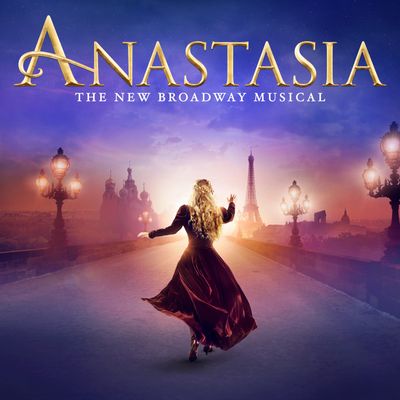
Our last story is from Hannah Florence, who was so inspired by her friend Shereen’s story that she wrote her own piece for us inspired by it about going on as Anya in the national tour of Anastasia.
Transcript
This transcript was automatically generated and might contain errors.
[0:00] Mo Brady: You're listening to The Ensemblist, the only podcast that shows you Broadway from the inside out. Welcome, I'm Mo Brady.
[0:17] Mo Brady: Today we share with you three great stories from three great women, all of whom have understudied leading roles on Broadway and national tours. Over the last year, each of these performers shared their stories with us about going on as understudies on our blog. And today, we share these stories with you again, read by the actors who wrote them.
[0:38] Mo Brady: First up is a story from Christine Cornish Smith. Less than a week after opening Kiss Me, Kate at Studio 54, she received a surprising text. The one where the stage manager says the leading lady is out and you're going on in the role? Well, here to tell us about that day is Christine Cornish Smith.
[1:04] Christine Cornish Smith: I've come to believe that when you firmly declare something, the universe will test you in that declaration. So when someone asked me if I would go on as Lois soon, I answered, oh yeah, I won't go on. You know, it'll be a long time. She's never going to call out. But you better believe that the next day, I got a call that I was on for both shows. All I know is that with the help of the amazing Stephanie Stiles, who plays our Lois, the supportive and loving cast and crew, and some hot tea with a side of Ricola, I made it through going on as Lois Lane slash Bianca, just a few days after opening Kiss Me, Kate. And I had no rehearsal, no put in, just thrown on.
[1:53] Christine Cornish Smith: So I'm lucky enough to be understudying one very special and generous lady, our Lois Lane, Stephanie Stiles. She gave me an extra heads up early Wednesday morning. So talk about a wake-up call. I didn't even need coffee. I was suddenly awake AF. This is my third Broadway show, but my first time understudying a principal role. So I relied heavily on the advice and stories from the Broadway vets and friends that I've worked with in the past. I remember specifically that my two really good friends from My Fair Lady, Matt Wall and Cameron Adams, they both told me to know the lines in the songs like the back of my hand because no matter what happens with the blocking or the choreo, if I know where I am in the script, I'll be okay. So with that advice, I felt very prepared in that regard walking into the theater on Wednesday. The catch is Lois has a series of lifts, stunts, and tricks with props, all of which I had never touched or run with any of the boys.
[2:53] Christine Cornish Smith: So I was in full makeup and pin curls by 10:30 a.m., pacing around like a crazy person until people started filtering into the theater so I could start running through the things I'd never done before. Since I'm on eight times a week in my own ensemble dancing track, there are a lot of things I'd never seen Stephanie do because I was in a quick change or etc. Stage management and cast members were so supportive and arrived early to run things with me while I tried my best to remain calm and simply focus on each task at hand, one thing at a time.
[3:24] Christine Cornish Smith: I'm a maid who would marry and will take with no qualm any Tom, Dick or Harry, any Harry, Dick or Tom. It was hard not to get in my head as Stephanie is a petite and slender dream. So all the lifts and stunts were built onto this very small girl, me being 5'9" over here. Let's just say it added another element of comedy with my long frog legs squeezing through this ladder upside down at the end of Always True to You. So after running the important things for safety, we were already at half hour for the show. The first show was an out-of-body experience. I was making weird mistakes, running up to the payphone, immediately picking up the phone and shouting, "Hello, is Bill Calhoun there?" without, you know, putting in a quarter, dialing a number or waiting for the phone to ring, anything at all.
Or in the song Tom, Dick or Harry, I got so into it that I belted out, "Tom, Dick or Derry." Don't know who Derry is. That definitely made everybody laugh. And I also quite enjoyed falling to the floor downstage in Always True. But as I fell to the floor, realizing that I was on the wrong number, I looked to my right, seeing a huge pool of light and I'm in complete darkness. So naturally, I crawled into the spotlight like a desperate actress while singing Always True to You because, you know, I needed to find my light.
[5:01] Christine Cornish Smith: There's an oil man known as Tex, who is keen to give me checks. And his checks, I fear me that sex is here to stay. Before I knew it, we were at the curtain call. So then it was time for me to review what the heck just happened and get geared up for the evening show. Serendipitously, my parents happened to be in town and came to the evening show along with some amazing friends that came to support. The second show was definitely less frantic and I was able to take in what was actually happening with a little more presence, which was nice. I had moments that felt so surreal and dreamlike that I really had to remember to remain focused so I wouldn't get emotional. The fact that I used to listen to Kelly O'Hara sing The Light in the Piazza on my little CD player in high school, just completely idolizing her, my whole upbringing, and now she's my castmate giving me blocking just seconds before being pushed on stage and executing said blocking in front of hundreds of people on Broadway. That was crazy.
[5:57] Christine Cornish Smith: The thing that struck me the most was how everyone really came together and worked as a team. The day really reminded me about the community aspect of theater and how no performance can occur without all the elements coming together and all the people coming together. There are so many parts to the whole and it's so beautiful. The fact that Stephanie Stiles is sick and at the ENT and she's sending me like silent videos of footwork to help me out in the morning and then flowers show up at half hour from Stephanie wishing me luck. She's just such a class act. Pam, one of our assistant stage managers, was walking me through backstage traffic that I had never seen before, like mid-show, as she's calling out other cues and handing people things.
Jeff, our production stage manager, showed up early with his two-year-old in order to give me the tracking sheet and an updated script because we had just froze the show like a week prior. It was all very inspiring to see teamwork functioning at its best and I felt truly in awe of all the generosity of the artists and everyone around me. It was a day I'll never forget, but it was almost too good to be true.
[7:27] Christine Cornish Smith: Here I am! Dick, Dick, Dick. I dig a dick! Dick, Dick, Dick. I dig a dick! Dick, Dick, Dick. I love a dick!
[7:36] Mo Brady: Thanks, Christine. The next story we have comes from Shereen Ahmed, who became the first woman of color to play Eliza Doolittle on Broadway. While she's a trailblazer in terms of representation, her love for the show My Fair Lady is something she's developed over many, many years. And while the role isn't one she imagined playing, there are reasons why she was the perfect choice to take on the part as an understudy in the Lincoln Center revival on Broadway before playing the role on the national tour. Here, in her own words, is Shereen Ahmed.
[8:05] Shereen Ahmed: Bed, bed, I couldn't go to bed. My head's too light to try to set it down. Sleep, sleep, I couldn't sleep tonight. Not for all the jewels in the crown. In my home, My Fair Lady was the movie night staple. Every time I popped my VHS into the TV, I felt instantly transported to early 20th century London. The soaring orchestrations of Lerner and Lowe burst through my bedroom and it was immediately transformed into a glorious study. I twirled endlessly till I could have danced all night, my tight curls flying across my face in a frizzy mess. My mother can confirm I danced all night, even after several attempts to go to bed. Sorry, Mom. I was 12 years old, and even though I knew every line and every song by heart, I anxiously sat on the edge of my seat as Eliza confronted each challenge with striking determination, courage, and wit, plowing gracefully through them one by one. It was a masterpiece.
[9:27] Shereen Ahmed: Meanwhile, every Sunday, I was shuffled to the local mosque, where, just like Eliza, I spent hours reciting my vowels, only for me, they were in Arabic. If I ever felt the urge to crumble and defeat, I would channel Eliza's perseverance. Memorize a 42-verse surah from the Quran in Arabic? Even the most difficult challenges felt conquerable. It was safe to say those few, okay, numerous movie nights spent in Covent Garden had a major impact on me. Fast forward to a couple of years, and, much to my parents' distress, I was on my way to the big city to follow my dreams of performing on the Great White Way. Well, let's just say it wasn't exactly a cakewalk.
[10:16] Shereen Ahmed: After waiting countless hours and cattle calls to sing eight bars, being told politely that perhaps advanced ballet isn't the appropriate level for you in dance class, I should have taken the hint when the pointe shoes broke out. I was wearing gym socks. And being stereotyped out of most, if not all, open calls I attended, I needed to be reminded of my why. So, when a friend suggested to me to attend the My Fair Lady open call, I went on the whim of frustration. I expected absolutely nothing but the rare opportunity to sing. For me. It was for Broadway, after all. There was no way in hell I was booking that. Then, there was a callback. Cool. More practice, I thought. Then another. Next thing I know, I'm sobbing on the floor with my best friend, whose couch I was sleeping on for a couple of weeks by that point.
I was going to be an ensemble member of the Lincoln Center Theater revival of My Fair Lady. It was truly a dream come true. I soaked in all of its glory. Any chance I had, I was offstage, watching anxiously, just like I had as a child. Only, it wasn't on VHS. It was eight shows a week for over a year. So, when the opportunity came for me to understudy the leading role, it was brought to my attention that in the show's entire Broadway and West End history, Eliza Doolittle had never been portrayed by a person of color. Ever. My Fair Lady premiered over 60 years ago, while Pygmalion, the play the musical is based upon, premiered over 100 years ago. So, I wondered, where do I fit? This prompted me on a journey I never anticipated.
[11:55] Shereen Ahmed: Growing up Muslim and Egyptian in a post-9-11 world was, for lack of a better term, hard. Sure, there were a couple of protesters outside the mosque nearly every Sunday, and sometimes I'd be referred to as the terrorist in school, but eventually discrimination became the norm. Once my family was refused service at a local restaurant for being one of quote them. This refusal was on Islamic holiday, Eid al-Fitr, the last day of Ramadan. Fear mongering was rampant in a post-9-11 United States, and blatant and title discrimination was not far behind. I was a part of a community that was outcast and encountered systematic discrimination on a daily basis. My Fair Lady became my outlet as a child. I found solace in Eliza.
She confronted discrimination I also faced, and broke free despite her status as a working-class woman in Edwardian England. It is through Eliza's determination for a better life that she challenges the restraints society placed on her. Through the medium of speech, she is able to climb up the ranks of class. Although My Fair Lady examines the social inequalities of early 20th century England, the show feels eerily familiar to 21st century US, intertwining class, race, and gender into one potent revival. What better time to revive the show than now? It is simply not enough to examine class without also understanding the intersection of race and gender, and how these three pillars of discrimination can alter the human experience.
If Eliza were a person of color, would her experience be different? Possibly. But now it's time to sleep. Lincoln Center Theatre's production of My Fair Lady is more diverse than any other production of the musical scene in Broadway and West End history. It is breaking ground in diversity, inclusiveness, and equal opportunity by opening a once-sealed door. After more than 60 years since the original show's premiere, they are sending an important message to those whose hope for their own future in the theater could be impacted by the fact that this barrier has finally been broken. That makes LCT a true pioneer in changing the realm of American theater. And I couldn't feel more humbled and grateful for the opportunity to perform in my dream show in my dream role, a role that I felt was never an option for me before this production.
I may not fit the historical mold, but Eliza is a heroine for the 21st century. Her story still rings honest and true today, challenging the social institutions that perpetuate discrimination. That is what makes her story so timeless. So consider this a love letter to My Fair Lady, or perhaps a thank you to Lincoln Center for finally opening the door. Either way, the once-impossible challenge feels entirely possible. If only 12-year-old Shereen could see her now, she would never go to bed.
[15:07] Mo Brady: Thanks, Shereen. Our last story is from Hannah Florence, who was so inspired by her friend Shereen's story that she wrote her own piece about going on as Anya in the national tour of Anastasia. Here, in her own words, is Hannah Florence.
[15:30] ♪ Musical number: "Heart" — performed by Hannah Florence ♪
[16:10] Hannah Florence: Honestly, I feel terrified right now as I begin to type, and it feels pretty darn close to how I feel as Anya-slash-Hannah about to pick up her suitcase and step foot into Paris for the first time to find her family, herself, and to proclaim it to the world through a super demanding yet triumphant song nonetheless. What a terrifying yet also exhilarating moment. Ultimately, she and I call upon our innate determination and strength and march bravely ahead despite our biggest enemy, fear. In April of 2018, I started seeing my current therapist. I knew that I really needed to face some major issues surrounding my relationship with myself and my identity as a half-Chinese, half-Jewish-slash-white girl.
Orienta, as I cheekily call it. I had never brought up in therapy before, in the past, the fact that I kinda hate being half-Jewish and half-Chinese. Of course, though, that's not something you're supposed to admit, that you hate your genetic makeup, you know? You're supposed to be proud of being so interesting and exotic and ethnically ambiguous according to the positive vocal inflections people have been saying to me my whole life, so telling her that I actually felt super depressed about this aspect of me felt really taboo and hard. Being ashamed, embarrassed, and frustrated about my mixed heritage is something I've struggled with my whole life and been ashamed to admit, thus it was something I just straight up avoided thinking too hard about.
I figured, well, there's nothing I can do about it, so I'll just shove it away in a bottom drawer in my brain and just keep on existing and stuff. After all, as a lady in showbiz, there's always a good distraction around every corner. An audition, a show, a crazy night out, dinner with friends, a Netflix show to binge. Somewhere down this road I know someone's waiting, years of dreams just can't be wrong. When I was little, growing up in an upper-middle-class Connecticut suburb, kids would often bully me using microaggressions about the things that made me different from them. You're not Jewish, the Jewish boys would confidently state. Are you adopted, others would ask, I suppose because I didn't look like I belonged with either of my parents.
At Chinese Sunday school, I didn't speak Chinese and the full Chinese kids fully ignored me. Once my best friend shared with me that when she first saw me with my mom, she assumed I was adopted. She can't play Clara in the Nutcracker, she's Asian, ballet classmates would murmur. Still today, I'm quizzically asked, what are you? By complete strangers, Uber drivers, salon employees, coworkers, bartenders, and others on a regular basis. To me what they're really saying when they ask that is, you look different and I'm noticing it. It's not necessarily meant in a malicious or pointed way, in fact they often mean it in a complimentary or friendly, curious way, but I almost always feel outed and pointed at by it simply because it's happened so many times throughout my life that I find it exhausting and demoralizing having to explain myself and my interesting looking face over and over and over again.
One session, my therapist was giving me examples of how I can maybe think about all this differently and said in a super light and breezy, totally nonchalant way, I'm half Chinese and half Jewish and that's cool. I promptly laughed in her face, LOL, LOL, LOL. She looked at me dead in the face and said, why so funny? Through uncontrollable shudders of laughter, I said, and that's cool? I can't say that? I can't say that? Yes, you can, said Dr. M. No, I can't, I vigorously replied, not with a straight face and with meaning, like I can say it, but I definitely don't believe it or think it, you know? That's okay, she said, just saying it, saying the words even if you don't believe it is a good start.
I love Dr. M. When the opportunity came up over a year ago for me to be seen as an Anya cover in Anastasia, I was excited, yet suspicious. When my friends and colleagues who I ran into at Ripley Greer said, oh my god, that is such a good part for you, I would say something like, yeah, I guess, but they probably won't hire me though because I'm not really the right type. Of course, in my head, what I meant by not the right type was not white, but whatever. Of course, I'm still going to audition and try my best. Try my best I did. I didn't book it at the time, but then a few months ago, after closing My Fair Lady at Lincoln Center with my incredible friend, Shereen Ahmed, a then-Eliza cover, now Eliza on the national tour, and the first Middle Easterner to play the role on Broadway, I got the call that I had an offer for the Swing slash Anya Understudy track on the tour.
I said yes. I performed Anya for the first time a few weeks ago on our closing day in Los Angeles. It was thrilling. I had so much fun, so many nerves, so much adrenaline, so much freak out, so much joy, so much feeling. I honestly didn't really think about how my ethnicity would or could be a thing that might need to be addressed because, honestly, it was the furthest thing from my mind what with so many other important details to focus on that day. Over the next week, it was brought to my attention that I am the first Asian American slash mixed race American to play the role. So what does that mean to me? I think it means that I want to share with little girls, little guys, little non-binary peeps out there who may feel like they don't know anyone who looks like them or is like them that they can be themselves and maybe actually not be viewed as so different.
They can get awesome opportunities to play princesses and princes, even if the aesthetics of those cartoons didn't or don't exactly look like us. Younger me would have thought it nearly impossible for me to be cast in traditionally white ingenue roles. But I guess I'm sort of doing it now in an amazing dream role about a strong, kind, powerful, intuitive, smart woman who is struggling to stand up for who she knows she is in her heart and in her dreams. On her journey, she is told over and over again that she can't possibly be a princess Anastasia, and she, like me, has major moments of doubt. And she, like me, often feels like giving up. But ultimately, Anya perseveres and risks her life to take ownership of the royal woman she knows she is. I'm understudying this girl, and I'm also half Chinese and half Jewish, and that's cool.
[23:00] Mo Brady: Special thanks to Shereen Ahmed, Hannah Florence, and Christine Cornish Smith for sharing their stories with us. The Ensemblist was produced today by me, Mo Brady, and Jackson Klein. There are two great ways you can be helping The Ensemblist right now. One is by leaving us a rating and review on Apple Podcasts, and the second is by becoming a Patreon member, which you can do at patreon.com slash The Ensemblist. Please follow The Ensemblist on Spotify, on Apple Podcasts, or at our home of bpn.fm, as well as on Instagram, where we share the stories of talented artists working through the coronavirus pandemic. Thanks for listening. Until next time.
© Broadway Podcast Network, All Rights Reserved