

Today on the pod, we share part of a conversation with Octet’s Margo Seibert. In this conversation, our sister podcast Page to Stage talks to Margo about her work in the Drama Desk Award winning ensemble of Octet... Read More
From the show: The Ensemblist
Guests
About
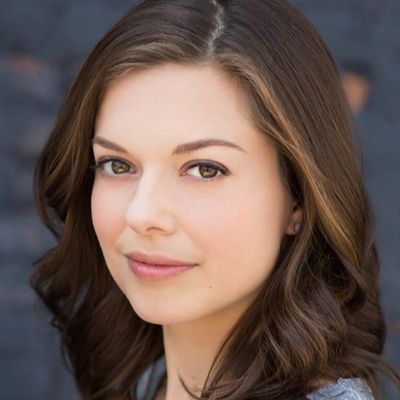
Today on the pod, we share part of a conversation with Octet’s Margo Seibert. In this conversation, our sister podcast Page to Stage talks to Margo about her work in the Drama Desk Award winning ensemble of Octet.
Hosted by Mary Dina and Brian Sedida, Page to Stage features excellent conversations with theatre makers. We are big fans of this up-and-coming podcast and are so grateful to them for letting us share a portion of their conversation with Margo Seibert. Enjoy!
Transcript
This transcript was automatically generated and might contain errors.
[0:00] Mo Brady: You're listening to The Ensemblist, the only podcast that shows you Broadway from the inside out. I'm Mo Brady.
[0:21] Mo Brady: Today on the podcast, we share part of a conversation with Octet's Margo Seibert. In this conversation, our sister podcast, Page to Stage, talks to Margo about her work in the Drama Desk award-winning ensemble of Octet. Hosted by Mary Dina and Brian Sedita, Page to Stage features excellent conversations with theater makers. We are big fans of this up-and-coming podcast and are so grateful to them for letting us share a portion of their conversation with Margo. Enjoy!
[1:07] Margo Seibert: There had been two workshops. I was only part of the second workshop of Octet. And I mean, talk about like the most intimidating thing. I mean, again, as I said, I hinted to earlier, I'm a sight singer. I'm a sight singer. And but sometimes I go with what I think should be on the page and not exactly what's on the page. I don't have any music theory. And I was in that room with an incredibly talented group of people, I would say at least half of which have like a deep music theory. And that seemed very helpful. And so it was for them. And so I honestly felt like in that first workshop, and I don't mean this in any kind of negative way, it was a bit every person for themselves in the sense that my part is so difficult and your part is so difficult.
And when we put the two of them together, it's literally like what on earth is happening that we would, I mean, we would be rehearsing, I would rehearse, come home after the after rehearsal for the workshop and rehearse for an additional four hours. And we didn't have, we didn't know how we were going to get our pitches at that point. So we were still being guided by our music director, or he was occasionally accompanying us. But I mean, Dave's writing is not easy. It's beautiful. And that's what makes it so incredible. But it was not an easy learn.
[2:44] Margo Seibert: And how long did you guys have as far as like the rehearsal development process goes?
[2:49] Margo Seibert: Oh, well, I think that so the workshop was like two weeks. But then when we were at Signature, I want to say we had like something ridiculous. Four weeks. Yeah, I want to say I mean, if it wasn't four weeks, it felt like four weeks, but it could not have been more than five. I'm almost positive. It was, it was four. So we had one week that they tacked on before the show began a few weeks before the before rehearsals began, where we got together and tried to review what we had done in the workshop based on memory, based on what was, yeah, based on memory, memory and what was still there. And then like, I mean, we had or and Simone on our music team, and they sent us like an individual track for every single number for every single part.
So the idea was that we had so little time to really learn this music, let alone put it on our feet, and be able to sing and then move at all while doing it, that it was almost imperative. We had a chat very early on in rehearsal that said, basically, you need to be off book by like, a week, a week. Yeah, by yeah, like, we know we don't have all the we still didn't have all the music written. Dave didn't have all the music in yet. So I know we're starting rehearsals, but like you should be off book. So it was, it was very hard. It was very hard. And that is like where the family I think truly began. It's like this very unique experience that a very select group of people are in. So that kind of just like draws you together as a unit into a family like, and like, if I don't have this book in front of me, how on earth am I finding my note?
Okay, so my note is your note three measures before, but a half step, half step up, you know, so like, I have to be listening to you, then I have to hold that note that I have, you know, and it was just like, really, like, that rehearsal process, the how incredible our MD was, like how prepared Annie tip was to be like, okay, she like, she basically knew what she was doing in the outline of the show. And the staging was very simple, but very effective. And like, Dave knew what he wanted. You know, I mean, he didn't really do a ton of rewriting he did. Like in terms of nevermind, not that number, here's a different number, you know, everybody was just working as hard as they possibly could.
[5:28] Margo Seibert: And you guys were on stage the whole time.
[5:28] Margo Seibert: Yes. Not only are you focusing on, you know, just like the music in general, and like making sure that your part is going well, but I feel like there's definitely this other sense of focus that you need, or this muscle, this focus muscle that you're flexing the whole time, truly, just to get to the end, I'm sure, but to be in the moment, and to be with that, you know, that group. And that's so present in the story of the show itself. So I'm wondering how that might have affected your process, you know, while you're on stage, and I guess preparing to and like keeping that, that same focus eight times a week. Yeah. Yeah, that's a great question. I really think that what I enjoyed so much about Octet was that, like, you always felt like you were part of the unit.
You always, I mean, it was eight people singing eight different parts. So everybody is essential. And like, and it's really gonna mess everything up if somebody goes out, you know. And so to that, and I also loved that everybody got a moment of individual sharing. So it was this wonderful thing where, you know, we're a unit, we come out, we sing, we tell our story, and we move right back to be that support system. And, and I think, because the music was so hard, because it was so much fun to sing together. And because we had to be so supportive. I mean, the only time when you weren't singing backup is when you're singing your solo number. There, there was no time to kind of like zone out, you know.
And so you just feel so well used. So important, and, and like, everyone is depending on me, and I'm depending on everyone else. So it's, it was such a, it's such a, I don't know, such a team, such a team to do a show like that. I often think about how long we know when you have a longer run, that's more than I don't know, like, you know, two, three weeks, maybe trying to maintain the energy and the ability to do what you do to recreate it, you know, eight times a week plus. And having to be on stage and having to be in that, in that moment, I'm sure really helped keep you kind of like on edge a little bit in a good way and in a helpful way. Would you say that that, that was your experience?
[8:02] Margo Seibert: Absolutely. I mean, I honestly don't, I don't remember us finding Octet particularly exhausting, because it fed us, you know. I mean, it wasn't a particularly long show, but it was a very dense show. And it also just felt like because it's centered around people's relationship and addiction to technology, it felt incredibly important to be sharing that with the audience every night. It felt incredibly important to, like, take a moment to examine our relationship to our phones, our dating apps, our gaming, how we shame other people online. And so, it also felt like, in addition to us enjoying each other's company and, like, being a unit, being a team, it also felt very important to be sharing this with the audience right now. I mean, honestly, it feels like even right now, like a year later.
[9:05] Margo Seibert: Yeah. I was thinking the same thing, honestly. It'd be totally crazy if you guys did, like, a virtual version of this, because that would be on, like, another meta level.
[9:14] Margo Seibert: That would be so meta.
[9:15] Margo Seibert: I wouldn't put it past anyone. I'm sure things are in development. But I think that that was, like, another element of it was that, like, people left that show sometimes not wanting to talk at all, but wanting to talk about and put their phones away or, like, re-examine why they're using their technology and how they're using it. It felt almost like, I think some of the best theater feels like it feels like a service.
[10:07] Mo Brady: Ensemblist was produced today by Jackson Klein and me, Mo Brady. There are two great ways you can be helping The Ensemblist right now. One is by leaving us a rating and review on Apple Podcasts, and the second is by becoming a Patreon member, which you can do at patreon.com slash The Ensemblist. Please follow The Ensemblist wherever you listen to podcasts, whether that be on Spotify, on Apple Podcasts, or our home of Broadway Podcast Network at bpn.fm. You can also follow us on Instagram for all the latest episodes. Thanks for listening, guys. Until next time.
© Broadway Podcast Network, All Rights Reserved