

Hosted by the Broadway Advocacy Coalition, Broadway for Black Lives Matter Again is a three-part forum for the Broadway community to heal, listen, and hold itself accountable to its history of white supremacy... Read More
From the show: The Ensemblist
Guests
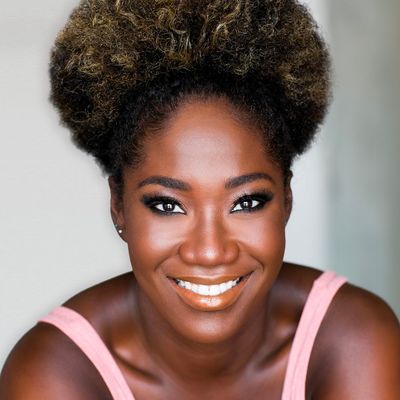
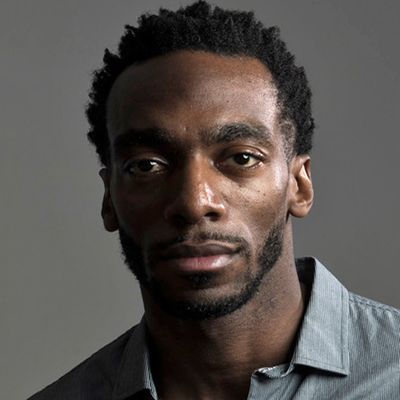
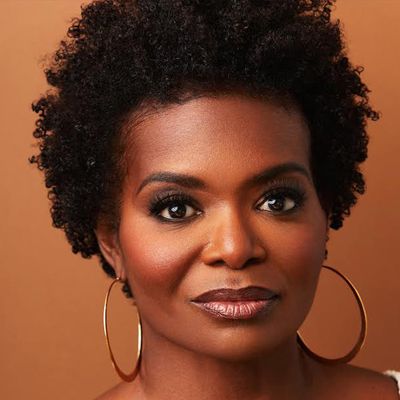
About
Hosted by the Broadway Advocacy Coalition, Broadway for Black Lives Matter Again is a three-part forum for the Broadway community to heal, listen, and hold itself accountable to its history of white supremacy.
Day 2, Day of Listening, was a space to center the experiences of black industry professionals, while challenging white allies to bear witness and reflect on what it means to dismantle implicit bias as it related to institutional and internalized racism. Here to tell us more is Broadway Advocacy Coalition co-founder Chrisitan Dante White.
Transcript
This transcript was automatically generated and might contain errors.
[0:00] Jackson Klein: You're listening to The Ensemblist, the only podcast that shows you Broadway from the inside out. Welcome, I'm Jackson Klein.
[0:22] Christian Dante White: Hosted by the Broadway Advocacy Coalition, Broadway for Black Lives Matter Again is a three-part forum for the Broadway community to heal, listen, and hold itself accountable to its history of white supremacy. Day 2, Day of Listening, was a space to center the experiences of black industry professionals while challenging white allies to bear witness and reflect on what it means to dismantle implicit bias as it related to institutional and internalized racism. Here to tell us more is Broadway Advocacy Coalition co-founder Christian Dante White.
[1:04] Christian Dante White: We just wrapped Day 2, Day of Listening, with the Broadway Advocacy Coalition. I'm still processing. My name is Christian Dante White. I am so proud of my brothers and sisters for coming together tonight and creating this amazing event. We had close to 5,000 people in one space listening there with love, passion, a want to change. And how do we do it? And step one of that was for us to all listen. So today was just about our white allies joining us black artists and just listening to our stories, listening to our heart. The event started with Britton sharing his heart, sharing that he was nervous and excited and to hear and to learn and to be in this space with everyone. And he kind of just gave us a breath of calm centered energy as we were entering into this scary space to share with so many other people.
I know for me listening like this, these have been conversations in a code of conduct that we as black people have lived our whole lives and adding on to that in black theater or just in theater in general. Michaela introduced us to the DARVO method, which means to deny, attack, reverse victim and offender. And she invited us to make sure that we connected to the meaning of that and to listen with a new ear, with a new heart, with a new lens, which was so beautiful to set up the room because it could easily be turned into something negative or something pointed. And we wanted to be heard and we wanted to be honest and we wanted people to really listen and take their defenses down and hear our hearts and hear our souls.
We then went to Cody, Daniel and Amber who spoke about their truths. Cody has an amazing production stage manager, has worked in a million Broadway shows and he shared with us that the difference is being black behind the table. He was working and was told to smile more, even though he'd been working hard all day. But to us as black artists, that means that whatever I'm doing is somehow intimidating you and how that feels in a space to create. Amber Iman shared a story about how someone was inappropriately making comments about her hair and she tried to get help and no one was really there for her. And she as the victim was the one that was punished. She missed out on two jobs, she said. Because of speaking up for her truth and her right, Daniel Watts just shared how I feel so many times that we as black artists, we see our brothers and sisters getting killed on the streets and we have to walk into these theater spaces and still do a show.
And when we want to say something, we don't feel safe. He went to a company manager, stage manager, I can't remember, and asked to if we could post about it. And they said that it was not appropriate to get political. That's like a hot button, I think is what he said. And he had to then go on stage and do a show. And he said so brilliantly that we as black artists are lucky if we make it to the theater because they're killing us in the streets. The question was brought up, what does this new standard of Broadway, how does it look? And Amber brought up a good point that we talk about casting so much, colorblind casting and diversity. And Amber said so brilliantly, it starts from the top. Who are our black producers?
Who are our black theater owners, black artistic directors, producers? That trickles down to casting. And I think so many times so many people think that when they just have diversity, one or two black people, that that is enough. And that's not the answer. We want equality. We want equity. We want to be treated the same as the person next to us. That's what we deserve, especially in a space of theater that is so much about inclusion and equality. But yet it does not look that way on paper. We're not seeing that. We're not seeing all of the many colors of the rainbow behind the table that's in charge, that holds the power, that has the money behind the thing we love the most, theater, art. We then brought on LaChanze and Liesl, who both are incredible artists.
LaChanze's career goes above and beyond. I mean, she is Ti Moune. Liesl is about to have the Respect movie starring Jennifer Hudson. And we brought them in to speak because some people get it misconstrued that the higher up you go, that you don't experience these microaggressions or racial inequality because you're quote unquote successful. And LaChanze just shared that she's still a Black woman. Yes, she is this Tony Award winning brilliant actress, but she's still a Black woman when she walks out of that theater without her costume hair and fabulousness and that glorious voice that we all love so much. She's still seen as a Black woman. She could have very well been a Breonna Taylor and she spoke to how Black women are not valued enough in life, let alone in theater.
Liesl shared, she is from South Africa and how she has to code switch and set up a room to be safe. And there's always this checking point of like, is everyone okay? Am I doing the right? You know, it's not, we can never just fully do the work. We're always having to make sure everyone is feeling okay and safe, quote unquote safe around us. It was so important that we had these two women who are so successful speak to this because like I said before, success does not erase race. It does not. There was such a beautiful sense of having close to 5,000 people in the room with their hearts open, with their ears really listening because I feel that those people in that room really want change and they really want to know what to do.
I commend the Broadway Advocacy Coalition for creating this space, which was a gift, which was reiterated the whole night. We did not have to do this, but we did it because we know that that's how we move the needle forward. We talked about holding yourself accountable. Here are steps. We had a whole goodie bag full of resources for people to have and a template on social media to hold everyone accountable. And then we offered two therapists at the end for people to unpack and continue this process from tonight because 90 minutes is not enough and invited people for day three, which we are so excited about tomorrow. Please forgive me for not being as eloquently articulate as I usually am, but I'm still so moved by what Broadway Advocacy Coalition has done in our theater community and how important it is.
And I'm really excited about people really being awake now, being woke, being enlightened. I feel like this is something that Black artists and Black people have just carried with us so long and to now be able to have these hard conversations and know that people are really listening is so moving in so many ways. And it's overwhelming. I keep using the term I'm exhausted yet ignited. And right now I am exhausted yet ignited. I look forward to day three. Again, I thank you, BAC. Anyone listening, please go to our website, read about things that we are doing. And I hope that you are doing the work at home because that's how we change. We need all hands on decks, all hearts and all minds. And I challenge anyone listening this to listen, to listen to the documentary, to listen to the audiobook, to read and to listen, to listen and not judge and then assess and then hold yourself accountable how you can move forward. Thank you so much.
[9:42] Jackson Klein: Special thanks to Christian Dante White for joining us. The Ensemblist was produced today by Mo Brady and me, Jackson Klein. There are two great ways you can help The Ensemblist right now. One is by leaving us a rating and review on Apple Podcasts. The other is by becoming a Patreon member, which you can do at patreon.com slash The Ensemblist. Please follow us wherever you listen to your podcasts, whether that be on Spotify, Apple Podcasts, or at our home of broadwaypodcastnetwork at bpn.fm. You can also follow us on Instagram, where we share all of our latest episodes. Thanks for listening. Until next time.
© Broadway Podcast Network, All Rights Reserved