

next to normal was the second rock musical to win the Pulitzer Prize for Drama after RENT, but it is also a close cousin of kitchen sink-style plays that have won the award as well, such as 2007’s winner Rabbit Hole and 2008’s winner: August: Osage County... Read More
From the show: The Ensemblist
Guests
Featured Shows
About
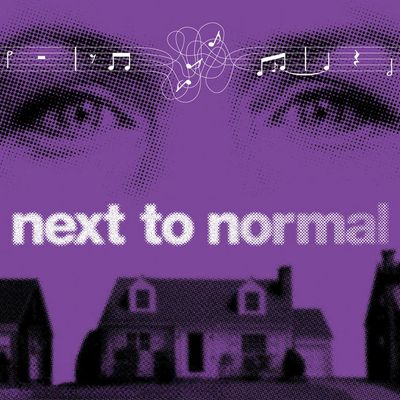
next to normal was the second rock musical to win the Pulitzer Prize for Drama after RENT, but it is also a close cousin of kitchen sink-style plays that have won the award as well, such as 2007’s winner Rabbit Hole and 2008’s winner: August: Osage County.
With music by Tom Kitt, and both book and lyrics by Brian Yorkey, next to normal is many things: a family drama, a rock opera, an exploration of mental illness. But is it an ensemble musical?
The cast of next to normal has only six actors: The four members of the Goodman family: Diana, Dan, Gabe and Natalie. Then there’s Natalie’s boyfriend Henry and one actor who plays both Dr. Madden and Dr. Fine. And that’s it. So the show technically has no ensemble.
So what does a show like next to normal mean for the history of the ensemblist? We certainly don’t have separate singing and dancing ensembles any more, but has the use of ensembles run its course all together?
Transcript
This transcript was automatically generated and might contain errors.
[0:11] Mo Brady: You're listening to The Ensemblist, the only podcast that shows you Broadway from the inside out.
[0:16] Mo Brady: Welcome, I'm Mo Brady. Next to Normal was the second rock musical to win the Pulitzer Prize for Drama after Rent, but it's also a close cousin of kitchen sink-style plays that have won the award as well, such as 2007’s winner Rabbit Hole and 2008’s winner: August: Osage County. With music by Tom Kitt and both book and lyrics by Brian Yorkey, Next to Normal is many things: a family drama, a rock opera, an exploration of mental illness. But is it an ensemble musical? The cast of Next to Normal has only six actors: The four members of the Goodman family: Diana, Dan, Gabe, and Natalie. Then there’s Natalie’s boyfriend Henry and one actor who plays both Dr. Madden and Dr. Fine. And that’s it. So the show technically has no ensemble.
But neither did Sunday in the Park with George. So what does a show like Next to Normal mean for the history of the Ensemblist? We certainly don’t have separate singing and dancing ensembles anymore because no one can afford it, but has the use of ensembles run its course altogether? I doubt it. I mean, of course not, but then we'd have no podcast and I don't want to think about a time with no podcast. So let's keep going. Stay with us.
[1:40] Mo Brady: So Next to Normal has a very complicated plot, but our friend and Broadway historian Jennifer Ashley Tepper has a surprisingly succinct way of describing the show's story. Next to Normal is about the impact of mental illness and specifically bipolar disorder on an American family, and it's also about how they deal with a personal loss. This kind of subject matter and its in-your-face storytelling, while newish to the musical side of theater, is right in line with typical Pulitzer-winning fare. Next to Normal is different than the average Broadway hit. There are very few shows that have been Broadway musical hits with casts that small. So that was very different than the other things going on on Broadway at the time.
There was this stigma around the show when it first started that maybe this was a really, really great off-Broadway musical, and that something about mental illness that had six actors was not going to be seen as the average Broadway audience member's cup of tea. And so the fact that it really became a hit and surprised people in becoming a hit, I mean, that speaks to how different it was than other Broadway shows at the time. In talking about how musicals are not awarded the Pulitzer as much as plays are, Next to Normal dealt with mental illness in a way that no musical had ever even come close to doing that before. So I think that speaks to why musicals won the Pulitzer. A lot of it is tackling a topic in a way that has not been tackled in musicals before, and Next to Normal certainly did that.
And it's almost completely original. It's not based on a book. It is based on American life that is happening around us. I mean, it's very similar to what playwrights did that began to revolutionize the straight play in the 30s and 40s.
[3:18] Mo Brady: Because it has six cast members, they're all in principal contracts, so each of them does play the ensemble, so to speak, in certain numbers, where they might assume more of a general role and put on a costume that designates that they're not their main character. In general, I mean, even for any musical, it's very rare to not have anyone that's in the ensemble. So, with no quote-unquote traditional ensemble, why is Next to Normal an ensemble show? Why are we talking about it on The Ensemblist? Well, like Godspell, Lennon, Danson, and other smaller shows, the company works together in a tight-knit way, like all ensembles should. Many of the show's reviews around the country have noted this interconnectedness with the cast.
Rochester City Newspaper's Leah Stacey wrote, "With a six-member cast, Next to Normal is meant to be an ensemble show. Each character has their time to shine, due in part to an equally distributed gripping score and narrative lyrics." Oh my God, thanks, Chad! Our first guest, who was in the room during the show's development, echoes these sentiments.
[4:27] Adam Chanler-Berat: Hey, my name is Adam Chanler-Berat, and I live in Greenpoint, Brooklyn. I originated the role of Henry in Next to Normal at Second Stage, which then traveled to Arena Stage in Washington, D.C., and then that production came to New York, and I stayed with it all the way through. Next to Normal is definitely an ensemble show by definition, that it is group storytelling. We are playing multiple parts, and all have responsibility in pushing forward the storyline. It is Diana's story, but, you know, at one point I was a pill-holding doctor, and at Second Stage I was a customer in Costco. It's a chamber musical, so we all had some lifting to push her story along.
[5:16] Adam Chanler-Berat: A chamber musical, you say? Elaborate, please. What I always think of a chamber musical is it's sort of like a band, which Next to Normal is a rock opera, and we were the band members in that. So that's what I always thought of a chamber musical, it's like a small ensemble storytelling. And so it's two and a half hours of six people, all playing various characters, and we all have our little moment to take the baton and then pass it on to the next person. There are only six of us telling the story, and, you know, when you're building a chord, someone may be musically alone on one vocal part, so when you lose that, it might lose an integral part of the chord. So it really felt like we were all sort of holding and supporting each other musically.
And it also deals with such operatic, emotional landscapes that the world of bipolar disorder and mental illness really sort of lends itself in some way to the musical metaphor and theatricality that musicals bring with it.
[6:24] Adam Chanler-Berat: That musical in particular, because of its subject matter, really required a trust and support and camaraderie among the six of us that was really integral to not just the success of the play, but the sanity of the cast. So we did a lot of bonding time when we were out of town with the show. It was really, really like a family unit. And I think all musicals feel like that in some way, but because there were so few of us and because the subject matter of the show had such intensity, it really required that we bind together in that way. There's an extra layer of trust between the cast members of Next to Normal. It's necessary to play these six characters. Not only are you relying on just one or two scene partners, you're relying on the entirety of your company to tell the story.
[7:23] Pearl Sun: Hello, my name is Pearl Sun and I live in the borough of Manhattan. I was brought on to be the standby for Alice Ripley for the role of Diana Goodman for the national tour. I think that because of the themes and because of the subject matter, we as the actors have no other place to go but to be super connected. Whether we're talking about mental illness, suicide, loss of self, shame, secrecy, all of those things that we can all relate to in one way or another, but they're all very deep themes that force you to be connected. There was no separation in Next to Normal. There can't be. We're constantly working off of each other, playing off of each other. Again, if we're not at the forefront, we're doing something to help support the story.
And if you were to track any one person, there's always something going on, whether it's verbalized or not. And we were always together and sitting down and talking to each other about what we were going through or what our characters were going through. So we were all privy to each other's process. So I think that in that regard, it is very different from a larger show with a larger cast where you do have principal characters and you do have ensemble characters.
[8:34] Michael Berresse: My name is Michael Berresse. I currently live in the borough of Brooklyn in the hamlet of Brooklyn Heights. And I directed a production of Next to Normal starring Heidi Blickenstaff and Margot Seibert at the Weston Playhouse in 2013. I think Brian and Tom did a beautiful, remarkable job with that score in creating that kind of interdependence between characters. My favorite songs in that show are not the solos. They're the duets or the trios. They're the ways in which the characters sort of rely on each other. There's something remarkable that happens when you really have a conscious sense of the way in which characters are dependent upon each other to help tell the same story. In addition to that, I think that there is an amazing amount of humanity and detail within these characters that is courageous but also is surprising to some people who are fans of more easily consumed musical theater.
It's not an easy show for the audience. You have to be willing to go there or you can't reap the rewards of Next to Normal. I realized that in my design meeting with the set designer, I asked for convertible pieces. I wanted the dining table to also be the piano and all the art in the walls to be framed but painting-less. I realized it's because I wanted everyone to share the burden of every moment. When Natalie sits down to play her song in the music studio, there are two other actors that had taken the dining room table from the house and had, in one swift move, moved it across the stage, flipped down the keys, flipped up the side, removed the chairs, and suddenly become a piano. The nature of the way in which things were convertible was of a piece with actors sharing the burden.
[10:17] Michael McElroy: Next to Normal's emotional subject matter is heightened by the score, as we heard from our fourth and final guest, who was an emergency understudy during the Broadway production and a replacement in the dual roles of the Doctors on tour. The rock music gives permission to deal with these kinds of themes. A rock score gives you the opportunity to deal with the angst and the high drama in a way that a traditional musical theater or contemporary musical theater score is not necessarily going to give you that permission. The passion, the fire, you know, it's all of that. And these three scores all do that. And I think also that whole thing of when we're kids and we listen to rock music, what speaks to our angst as teenagers more than being able to be in your bedroom with that brush and just your rage against the world and how it's unfair treatment of you and, you know, and your pain and your love and your loss that you think you know so much about at 14, 15, 16 years old. If you go back and look at the soundtrack of your life at your most angsty, it's almost always rock music. It really appeals to the angst-filled teen that we all carry around with us.
[11:32] Pearl Sun: Well, the score itself has at times such a frenetic nature to it, but it's all very much controlled. So I really paralleled it to bipolar disorder itself, where you have your manic highs and your freneticism, and then you also have very centered moments too. In that show in particular, there were so many vamps that had to go on, but everything was really very controlled. So you couldn't go too far outside of what was going on because there was a rhythm and a pace that was required in this piece and in the storytelling and in the staging that you were constantly listening. Your exits and your entrances were so important, and sometimes very quick, so you just had to be very laser-focused. And I feel like that's a heightened sense of listening.
[12:27] Pearl Sun: With only six vocal lines to tell the full story, working as an ensemble of six can be more taxing than a typically structured musical. The vocal parts, especially for the four central family roles, are incredibly demanding. And also you're screaming at times, you're crying often, so that has an effect on you vocally as well. It becomes a marathon. You really have to pace yourself in a different way to make sure that you're taking care of yourself when you're not on stage so that you can pull that out eight times a week. There are definite solo moments in the show, but the ensemble singing, really intricate and really unusual, actually, if you really listen and pick them apart. It's tight harmonies, and that speaks to the tight-knit nature of our show.
[13:12] Pearl Sun: Not only is the cast highly connected, many productions of Next to Normal place their band on stage, heightening that ensemble feel between actors and musicians. They are on stage the entire show. They are just as naked as you can be for a musician, because musicians are so used to being in the pit, so they're unseen. They can read a book between when they need to play, or they can text, or what have you, but when you're on stage like that, you can't do anything like that. And they're experiencing the show with us in a different way than when they're in the pit, because in the pit they can check in and out. But when you're involved with the show and you're on stage, you have no choice but to be involved from moment one to the end. And I think that that also helps support the actors on stage as well. You have the energy of those six musicians behind you, whether they're playing or not.
[14:10] Michael McElroy: I think in a show like Next to Normal, because it's so aggressively messy and emotional, in order for the show to work, the actors have to be willing to connect emotionally to each other. And you have to have a really safe environment in the rehearsal process, in the discovery process, and in the execution of the material. For me, it's related, because the power of the way in which we do things together is so much greater than us going off on our own as an ensemble, as a group of theater artists, as a community in any way. If we band together, we're able to solve problems, we're able to express things, we're able to do things in a way that we can't any other way. And I think that's why, no matter what I do in my life, and no matter what platform I have, I'm always going to return to my roots as an ensemble member, because they have taught me the most in my career of how to approach my life.
[15:56] Michael McElroy: Part of the appeal of Next to Normal and directing Next to Normal for me is twofold. Number one, I have a bipolar sister, and I wanted to give voice to her story, but I also wanted to give voice to my experience of her story, which I think is one of the most interesting aspects of the show itself, is that it isn't just about Diana's story, it's about the way in which her story affects all the people around her. For me, I think one of the things that elevates the ensemble aspect of Next to Normal is that fact, is that the repercussions of one character's story are the source of every other character's story, so they are literally dependent upon what another character is saying or doing to fulfill their journey as a character in the musical.
[16:40] Michael McElroy: It was important for me that no one is the hero and no one is the villain in that show. I think perfection is unrelatable, and humanity is all we're ever looking for. I say this to my actors in every production that I direct, and I said it many, many times during the production of Next to Normal, the quote-unquote fractures in your performance, the moments of quote-unquote failure, those are the golden opportunities. We all secretly hope that if something goes wrong to someone on stage, that person's going to be nicer to themselves than we are to ourselves when something goes wrong in our own lives, and I think with messy, broken characters, it's inherent. In a show like Next to Normal, when you've got people that are messed up, they're immediately more relatable, because there's no sheen on them.
They are deeply, deeply human from the get-go, and it was important for me to find actors who were willing to really explore that with each other, to not be afraid of their own insecurities or their own failings, and that they were willing to share that as characters and as actors on stage with the other actors.
[17:47] Michael McElroy: I think that Next to Normal really paved the way to talk about family relationships. Since then, there have been shows like Fun Home that have been brave enough to talk about the dysfunction in families, to discuss and to work through the struggles that we deal with, and I think it brought forward an honesty to theater that was very raw and necessary.
[17:59] Adam Chanler-Berat: So like we said at the top of the episode, not only is Next to Normal related to other family dramas, but Jen, Michael McElroy, and I showed us its myriad connections to other Pulitzer winners.
[18:27] Adam Chanler-Berat: Every musical that has won the Pulitzer Post-Chorus Line was impacted by the workshop format. So Next to Normal started as Feeling Electric at the New York Musical Theater Festival, and that idea of how people and artists who were in it over the course of a decade who shaped it, that I guess is related to how the ensemblist has changed throughout the 20th century. Even though those people aren't literally ensemblists, everybody who was in the show impacted the words and the music that happened on stage.
[18:58] Adam Chanler-Berat: The similarities that it has to Rent, it speaks to a specific world and experience that for me, not many musicals are written about. Rent deals with AIDS in that period of time, and now this deals with bipolar disease and all these things that usually people don't sing about. And here we have two very different populations using the musical theater art form to tackle really usually not musical themes. And yet once again, the thing that connects them is the humanity of these people. And both of the shows, I think, really put it out there to really grapple with these issues and not in a way that sugarcoats it in any way. And I think that sometimes audiences respond to that. They're like, oh, this is kind of making me have to kind of step into this in a different way.
[19:46] Adam Chanler-Berat: Really just by subject matter alone, Next to Normal really pushed the boundaries of what people thought musical theater was capable and able to discuss and hold. I remember Brian and Tom talking about why they chose this, and they were watching some Dateline episode, and they were like, wouldn't it be the craziest thing if we made a musical about ECT, electroshock therapy, and bipolar disorder and mental illness? And I think part of what drew them to it was that it had never really been done before. So it was sort of like a dare. But that is how the form changes. I mean, when you think about the other Pulitzer Prize winning musicals, like Sunday in the Park with George, that did things that had never been done before it. So I think the only way you really break that boundary is by saying, this is a crazy idea, but I think it's worth doing.
[19:46] Mo Brady: Thank you to Michael Berresse, Adam Chanler-Berat, Michael McElroy, and Pearl Sun for allowing us to re-share their stories this week. The Ensemblist was produced today by me, Mo Brady. There are two great ways you can help The Ensemblist right now. One is by leaving us a rating and review on Apple Podcast, and the second is by becoming one of our Patreon members. You can do that at patreon.com slash The Ensemblist. Please follow The Ensemblist on Spotify, or you can subscribe on Apple Podcasts. You can also find all of our episodes at bpn.fm with the rest of our Broadway Podcast Network family. And make sure you're following us on Instagram because we are putting a lot of content out there. Things are moving fast, people. All right. Thanks for listening.
© Broadway Podcast Network, All Rights Reserved