

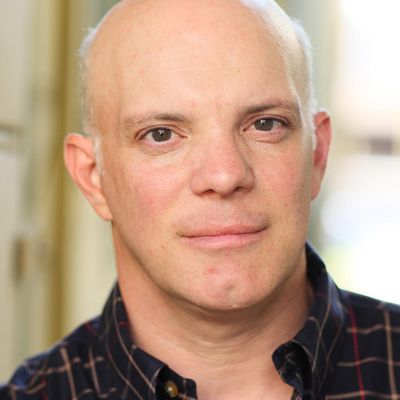
We’re revisiting our 2014 interview with Eddie Korbich. As we know, original cast recordings are vitally important in bringing Broadway and off-Broadway musicals to audiences both before and after the shows have left the stage, and Eddie is no stranger to the process of creating them... Read More
From the show: The Ensemblist
Guests
Featured Shows
About
We’re revisiting our 2014 interview with Eddie Korbich. As we know, original cast recordings are vitally important in bringing Broadway and off-Broadway musicals to audiences both before and after the shows have left the stage, and Eddie is no stranger to the process of creating them. He’s been featured on five! In this interview, Eddie spoke with us about how cast recordings inspired him as a child, the ins and outs of recording them, and the magic of being featured on one for the first time.
Transcript
This transcript was automatically generated and might contain errors.
[0:00] Jackson Klein: You're listening to The Ensemblist, the only podcast that shows you Broadway from the inside out. Welcome, I'm Jackson Klein.
[0:19] Jackson Klein: This month, we're digging deep into the Ensemblist archives to share highlights from some of our favorite interviews from our early days. Today, we're revisiting our 2014 interview with Eddie Korbich. Original cast recordings are vitally important in bringing Broadway and Off-Broadway musicals to audiences both before and after the shows have left the stage, and Eddie is no stranger to the process of creating them. He's been featured on five. In this interview, Eddie spoke with us about how cast recordings inspired him as a child, the ins and outs of recording them, and the magic of being featured on one for the first time. Here's our conversation.
[1:10] Eddie Korbich: My name's Eddie Korbich, and I live in Maplewood, New Jersey. The Broadway cast albums that I've been involved with are The Drowsy Chaperone, The Little Mermaid, Gentleman's Guide to Love and Murder, Carousel, and Seussical, the musical. Absolute, the original company member of Wicked. However, they originally called me and said, we don't have enough understudies. We're looking for someone to cover Joel Grey. And I went, oh, stand by for Joel Grey. Well, I never did that before, but I will stand by for Joel Grey. So then I called them and I said, so this is how I would like it to be seen in the program. Eddie Korbich, stand by for Mr. Grey. And they said, oh, we don't want him to just stand by for Mr. Grey.
We want him to stand by for somebody else. And I said, well, who? And they said, how about Dr. Dillamond, the goat? And I'm like, great. So we'll say, Eddie Korbich, stand by for Dr. Dillamond and the wizard. Well, no, because we might need him to do something else. Like, okay, what is this? We need him to cover all the high tenors in the ensemble. And I said, so basically I'm a swing now. They're like, yes, but we didn't think you'd take the job if we just called you a swing. I'm like, okay, well, what the heck? I'll take the job. My first day that I was on contract was opening night, which was October 31st. They'd already made the album, so I wasn't even involved with it. But contractually, whoever's ever on that opening night playbill cast list is required to be on all the stuff from then on in.
And so that's why myself and Adina Alexander are on the original cast album of Wicked and you hear us not at all. The original cast recording is a complete record, as close as possible, of the Broadway show that you're doing, all the music, sometimes the dialogue, a complete record of it with the members of the original cast. I remember South Pacific being a really big one in my mom and dad's house. And then Music Man became everything to me. I didn't care about anything else. And then I got to play Harold Hill when I was a junior in high school. It changes all the time. Originally, they didn't have shows on Sunday back then. So Company, all the original ones were right after you opened, the Sunday after you opened.
It was immediate, which is why so many of those old cast albums, the people sound so exhausted on them. Nowadays, I remember Seussical, we opened in October, I think, and we made the cast album sometime in November. So it was pretty close to after we opened. This, we opened November 17th. We didn't make the cast album until January. And there are some reasons for that. I think politically, they want to get the album released as close to the Tonys as possible so that people go, oh, look at this score. So we recorded it later in January so that everybody's voice was rested. It's also that people have to get their stuff together and make sure that all the orchestra has everything. Because what we've recorded on the cast album for Gentleman's Guide, there are a few things that were cut in previews that Steve Luttwak wanted to put back in.
So it is 99.99% what you see on stage with then eight bars of material that you don't see on stage, which is his original concept. So they have to get all that stuff back to the orchestra members that way. Even Carousel, we took two days off. That was done over three days. And I recorded on a day off. I remember Michael Hayden and Audra actually had a show that night, and they came to the show and said, the recording went really well today. That's only my experience. That's only what I've been involved with. I've always done it on a day off. As a matter of fact, Drowsy Chaperone was fun because it was Easter Sunday. And it was such a party that Casey, the director, and Casey Hushin, the assistant director, had an Easter egg hunt for us after we did half of the album during break. So all over the studio were Easter eggs. We all went. It was $100 in the Easter egg that you found. So it was great.
[5:01] Eddie Korbich: There's not one particular studio that all the Broadway shows go to to record an album. Whatever studio they choose is whatever meets the demands of that particular show. If a show's really, really small, they certainly don't need a huge studio. There was a BMI studio, which was huge, where they used to score films. That's where a lot of us used to go. I remember doing Assassins there with 33 pieces, and everyone was just standing right there. That's kind of in the past now. The orchestra is isolated from the singers who are in different rooms, and you are all connected by your headphones. Shigaboom Records, which does a lot of the Broadway shows, will choose it with the producers and everybody else.
So yeah, it's all over the city. Any additional rehearsal for the recording would be if there was going to be a major cut in a song or something else. Again, each show is different with the demands of each show. For Drowsy, we didn't do anything. For Mermaid, we didn't do anything. And frankly, for this, we didn't do anything. So what I'm saying, I guess, is I can't remember ever going into major rehearsal for a cast album. We go in, and if there's any changes, for the most part, they'll plop it down in front of you and say, oh, by the way, we're cutting these bars, so remember when we go there, go. You want to run through it a few times? Sure, let's do that. Boom, you're ready, go. And it goes really quickly.
There's not a lot of crap going on because they don't have time to do it. You have to get the entire album done. As far as how many days does it take to make a cast album, Carousel was the only show that I have done that I can remember that took three days, more than one. I, myself, was only in for one day. As far as the rest of the cast albums that I've been involved with, it's been one day. Ten in the morning till whenever you're done. The day structure, as far as who is needed when, is at the discretion of the producers. It used to be, in the old days, we were there all day long. Anybody. Even if you weren't doing something, and you just hung out and waited. For the past few shows that I have done, and I'm including Little Mermaid and Gentleman's Guide, we were given specific call times.
I didn't come in till 12:45, and then I was released at 6:15, and the people stayed till 8:30, 9, 10. So I was only there for specific times. If you get all the ensemble in to do your number there and chunk it out, then you can get rid of other people and you don't have to keep them. Also, it's a money thing. If you go into overtime and the people are just hanging out and not doing anything, you want to get all those people who are not going to be on overtime out of the studio so that you don't have to pay overtime. That makes sense, right? Also, during the course of the day, you're not going to have the ensemble do every single song, one right after the other, bang, bang, bang, bang, or all your principals do it, bang, bang, bang. So it breaks it up. We would do an ensemble number, maybe two, and then Jefferson would do his number, and then he'd get a break.
[11:01] Eddie Korbich: As far as how many takes, as many takes as you need to get it as perfect as they want to hear it without diminishing returns. By diminishing returns, I mean for the most that I've been involved with. Anything past five, six, seven, frustrations are going to happen, and it's just going to be silly. You'll find out that they'll go back to take one and say, well, that was perfect. I don't know why we did any more. In an ideal atmosphere, the orchestra is there at the same time that you're singing so that there is complete conformity and drama and symbiosis between you two. Sometimes that just doesn't happen. The orchestra for our show was in two, three days before and prerecorded quite a bit of the tracks, and we basically sang to a clip track, which is good if everything's going along, but if you're in a point where the drama demands that you take a little bit more time here, a little bit more time there, or a fermata, which means a hold, hold, hold, hold, hold, and it's up to you to decide when you're cutting off.
The conductor then brings his hand down to start the orchestra again, and he looks at you and smiles and said, I'm sorry, it's only four counts. I know you want to do seven, but we're only doing four. That can be frustrating. We only had to do that a little bit. Carousel, sadly enough, was a lot of prerecording, and I had to sing to that, so I'm not overjoyed with my performance on Carousel, because I don't think I gave the performance I give eight times a week. Mermaid, on the other hand, is probably the favorite way that I've sounded on any cast album for me, because first of all, I don't sound like me, and I hate the way I sound, but when I'm doing Scuttle's voice, like this, coming like this, I loved it, and I called them up at Disney, and I'm like, you've made me sound better than I've ever sounded on any cast album, and I have to go back to Girl Crazy.
It was the very first time that I heard myself that I'd been listening to for years and years everybody else on albums. It was the first time that I could finally say, oh my gosh, now that's me on an album, and I was kind of like, I'm good. I know that sounds horrible, but I was really happily. I was afraid. I was so nervous. I thought I was going to hate it, and it was horrible, and there are a few things that I would go back all these years later and say, I can do that better, I can do that better, but for the most part, I was really proud. I was really giddy, and I was not shaking, but you know that thing inside of you where your stomach is just like, oh my gosh, oh my gosh, oh my gosh? It was that kind of thing.
I just felt really cool, and then I thought, I can now say that I'm on a cast album. At that point, it was on a record. Remember those? You don't. You're too young. Or you could go into Colony. Remember Colony? Anyway, and you could go through it, and it would be like, Girl Crazy, I'm on that. That's me. That's me right there.
© Broadway Podcast Network, All Rights Reserved