

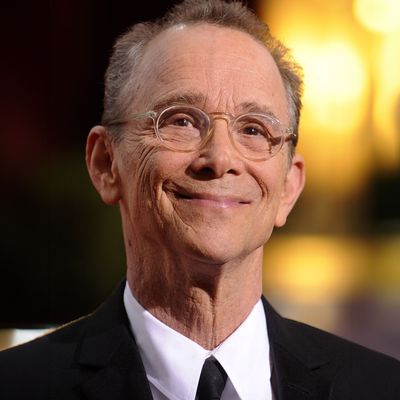
In our first episode we interview Broadway legend, Joel Grey... Read More
From the show: The Fabulous Invalid
Guests
Featured Shows
About
In our first episode we interview Broadway legend, Joel Grey
Transcript
This transcript was automatically generated and might contain errors.
[0:00] Jamie DuMont: Hey guys, this is our first episode.
[0:02] Leslie Kritzer: We're really doing it.
[0:05] Jamie DuMont: I'm Jamie DuMont.
[0:06] Rob Russo: I am Leslie Kritzer.
[0:08] Rob Russo: I'm Rob Russo.
[0:09] Jennifer Samard: And I'm Jennifer Samard, and this is The Fabulous Invalid.
[0:25] Jamie DuMont: We're gonna discuss theater with just about every type of theater professional you can think of. From actors to directors to designers, people in the pit, backstage, you name it.
[0:36] Leslie Kritzer: Some weeks they'll be all four of us and a guest. Some weeks they'll be two of us. Some weeks they may not be anybody.
[0:44] Rob Russo: Um, the point is we're gonna sit here, eat some food, try to get our guests to drink, and talk about who they are and why they do what they do.
[0:51] Leslie Kritzer: And don't forget, Jamie.
[0:53] Jamie DuMont: This food is amazing, and you and Jamie makes a food every time we do this.
[0:57] Rob Russo: Thank you. Might be my new favorite chef, and today's specialty is on these onion tarts and the tomatoes.
[1:03] Leslie Kritzer: Forget it.
[1:03] Jamie DuMont: Oh, and there's cheese.
[1:04] Rob Russo: They will always be cheese.
[1:06] Jamie DuMont: And what is this?
[1:07] Rob Russo: This is arugula instead of mame.
[1:12] Leslie Kritzer: You guys should be jealous we're listening to.
[1:14] Jamie DuMont: I like to throw a lot of shit in my grains. Um, in all seriousness though, we want to take a look at theater both seriously and not take ourselves too seriously.
[1:23] Rob Russo: So, does that sound good?
[1:24] Leslie Kritzer: Sounds great.
[1:25] Rob Russo: Sound me up.
[1:25] Leslie Kritzer: I'm in.
[1:26] Rob Russo: I'm in.
[1:33] Jamie DuMont: All right. So getting back to our show. Um, let's see. There's gotta be something fabulous worth talking about this week.
[1:42] Leslie Kritzer: Um, I know something that's on my mind.
[1:46] Rob Russo: I had sort of mixed feelings when I heard that they were changing the name of the gypsy robe to the legacy robe.
[1:53] Leslie Kritzer: Um, I feel like I might be on an island in this.
[1:57] Rob Russo: Um, I don't think you are.
[1:58] Leslie Kritzer: I don't understand it.
[1:59] Rob Russo: Okay.
[2:00] Leslie Kritzer: I don't understand why it's a big deal.
[2:02] Rob Russo: Like, why did we change it? Maybe one of you should talk about what the gypsy robe is first, right?
[2:06] Jamie DuMont: So folks have the could the actors please address the gypsy robe in the room.
[2:09] Rob Russo: I'm sorry, the legacy robe.
[2:11] Leslie Kritzer: Oh, well, from what I understand, I'm not sure of the dates, but that is 1950.
[2:16] Rob Russo: Thank you, Rob Russo. You are our resident encyclopedia.
[2:21] Leslie Kritzer: But yeah, the every show you uh the ensemble member who has done the most contracts, the Broadway contracts as uh as an ensemble member.
[2:29] Rob Russo: Um total on opening night in total, yeah.
[2:32] Leslie Kritzer: On opening night. Not replacements. Uh it is it's beautiful, honestly. I mean, I mean, my gosh, it's just a it really shows your body of work, your lifetime of work, and they get presented with this robe that comes from the previous winner, the previous winner is there and presents you with it, and then you have to run in a circle.
[2:49] Rob Russo: I think it's three times, and you tap everyone's hand, and then that individual has to go to the dressing rooms of every of every person to quote unquote bless the show.
[2:58] Leslie Kritzer: And once you do that, the show is blessed. I hope I'm saying it all correctly.
[3:02] Rob Russo: And the robe itself is decorated.
[3:03] Leslie Kritzer: It's decorated with yes, and and the and the winner uh determines what that will be, and usually the wardrobe crew who is always amazing on every show, let's be honest. They're they're they're they're the secret weapon.
[3:15] Rob Russo: Yeah, you know, uh, they will help um sew whatever item is are is on the robe, and uh everyone in the show will usually autograph it and it and it and so on, and so it goes on and on.
[3:26] Leslie Kritzer: I just think it's ridiculous.
[3:27] Rob Russo: I'm gonna go right in it.
[3:29] Leslie Kritzer: Wait, so I have a question. Are we no longer calling dancers gypsies? Is the whole like is the whole term shaped?
[3:34] Rob Russo: I think there's a there's a difference though, right? I mean, what what makes this scenario different, and I think why people took umbrage with it in this era where we're being more thoughtful about the words that we use and what they mean, um, is that you know, gypsy as applied to the Romani people, right? Who are the the um course you knew that term the itinerant, you know, uh uh people who came from India and ended up in Europe and ended up being persecuted and you know were on Hitler's list and to this day still face persecution.
[4:11] Leslie Kritzer: Um they have been called gypsies, they don't call themselves gypsies. It's what's called an exonym, um, a name that just that others use to describe a group, right? And so the word gypsy itself is not offensive, right? But it carries with it this connotation as applied to a persecuted people, right?
[4:32] Rob Russo: So but if the negative connotation is the fact that people apply the term gypsy negatively, however, if a dancer or a group of dancers refers to themselves as gypsies in a positive way, how is it a bad word? Why are we changing it?
[4:50] Leslie Kritzer: I'm a little confused.
[4:53] Rob Russo: To their credit, right? The issue was raised, and actor's equity threw it to a vote, right? So I don't I don't know if you guys voted as part of that.
[5:00] Leslie Kritzer: No, it's a committee.
[5:01] Rob Russo: The committee, okay.
[5:02] Leslie Kritzer: Stupid. I'm sorry. I I and I don't care. Like I really think it's dumb.
[5:05] Rob Russo: I mean, we have so few things to celebrate now, and I feel like everything getting so PC, we're gonna be vanilla to death, and I just think comedy is suffering because of it.
[5:18] Leslie Kritzer: So many things are suffering because of we have to like, yes, I get it, I get it. Look, the Cleveland Indians are changing their um uh uh mascot, they're taking the Indian face off of it, right? Which makes sense to me. That's out and out racist. It makes sense to me.
[5:33] Rob Russo: Right.
[5:35] Leslie Kritzer: But it's not like we're calling this the N robe. You know what I mean?
[5:38] Rob Russo: That would, but yes, technically that would be uh very but it that is a more prevalent, I think, derogatory name.
[5:51] Leslie Kritzer: Sure.
[5:51] Rob Russo: But I I just I don't agree with it. I think uh gypsy didn't Chita Rivera said she's a gypsy. She's like, yeah, I'm a gypsy. I mean the ultimate gypsy. She's the one I think she's the gypsy that all gypsies aspire to.
[6:03] Leslie Kritzer: Yeah, I mean, listen, we all listen, we're in a union. I s I support my union, I love my union, I take issues with my union, but I am a proud equity member. I just think this was not the right call.
[6:15] Rob Russo: And I think you know what? You know what I have to say, honestly. They made such a big deal about this. We need to work on other things like our lab contracts and our workshops and shit like us not having dental insurance. Like, let's work on those things and let's leave the gypsy robe alone.
[6:31] Leslie Kritzer: Well, it's just probably just an easier effects, right?
[6:33] Rob Russo: I just got really mad, but it's you know what? I'm sorry, like I I'm you know, I I just it's like it's a celebration, and we're not saying gypsy people are bad.
[6:47] Leslie Kritzer: I am fancy free and love to wander. I've got a gypsy in my soul. See those dancers? They're chorus dancers. In show business, we call them gypsies because they move around so much from town to town, from show to show. Wherever the work is, the gypsy is.
[7:07] Rob Russo: No, it's a tradition. It just it just feels like a very long standing tradition that obviously will continue but it seems like they it seems like they picked a fight that wasn't there but I I could be wrong.
[7:20] Leslie Kritzer: Well it's a play a devil's advocate it's just a name right the the tradition will continue it I picked up with Head Over Heels this summer the first show to have the legacy robe as opposed to the gypsy robe I believe it was J Elaine Marcos.
[7:32] Rob Russo: And there you go and the world didn't fall apart and you know we'll just we'll get used to it right I have friends on both sides of this argument and if there's one thing I usually try to do especially in politics is I don't like both ciderism one but I do see both points of view.
[7:48] Leslie Kritzer: The other point of view just to point it out was that if it's not it's not up to me as this Caucasian woman from New Hampshire to say whether it's offensive or not because it doesn't affect me I guess but I I think I tend to agree more with the two of you about my personal opinion about it.
[8:08] Rob Russo: That said I think the whole thing to Leslie's point um is such that I I wish both sides would just keep it in perspective when they're fighting about it because I see I don't like how angry it gets on social media sites because really what it comes down to for me is three things water in Flint Michigan infrastructure in Puerto Rico and you know parents and children being separated at the border that's what I want to focus on I honestly I could for me I don't care if it's called the bathrobe right now in my life you know.
[8:08] Leslie Kritzer: Well said Leslie you see what's happening here right so the voices of reason are on the opposite side of the table.
[8:50] Rob Russo: And then there's us.
[8:51] Jamie DuMont: All right. Well, with that, I think it's probably a smart time to uh bring on our first ever guest.
[9:19] Rob Russo: Our very first guest. This is so exciting.
[9:21] Leslie Kritzer: It's our first one, guys.
[9:23] Rob Russo: Oh my gosh.
[9:24] Leslie Kritzer: Our very first guest is a star of stage and screen. He has the rare distinction of winning both a Tony and an Oscar for the same role as the MC in Cabaret. An acclaimed photographer, author, and director.
[9:38] Rob Russo: And the best dressed man I know.
[9:39] Leslie Kritzer: Oh. We are delighted today to welcome Joel Grey.
[9:45] Jamie DuMont: Thank you, Joel, for coming on this lovely evening to be with us.
[9:51] Jamie DuMont: So I thought we'd start off by just asking a few silly questions before we kind of dig into the meat of things.
[9:57] Joel Grey: I hope they're really silly.
[9:59] Jamie DuMont: Well, you've said yourself.
[10:01] Joel Grey: No, I love silliness.
[10:02] Jamie DuMont: Well, what drives you crazy?
[10:04] Joel Grey: The things that aren't silly.
[10:07] Jamie DuMont: There you go. You know, people that are too serious about everything, you know, who don't have a little twinkle somewhere.
[10:17] Joel Grey: I like a little twinkle.
[10:19] Jamie DuMont: What's a guilty pleasure of yours?
[10:21] Joel Grey: Ah.
[10:22] Jamie DuMont: Some people eat ice cream, some people like trashy novels.
[10:27] Joel Grey: I think ice cream is high on the list.
[10:30] Jamie DuMont: Do you have a flavor?
[10:31] Joel Grey: Uh vanilla.
[10:33] Jamie DuMont: Vanilla.
[10:35] Joel Grey: Or chocolate. Depending on the colour. Or vanilla.
[10:39] Joel Grey: I don't feel guilty about any of my pleasures.
[10:43] Jamie DuMont: I like that. Um and then where on a more serious note, where do you draw inspiration from right now, this moment?
[10:53] Joel Grey: Well the recent my recent job and uh assignment was to tell the story of Fiddler on the Roof in Yiddish, a language I don't speak, but that I've heard all my life.
[11:17] Joel Grey: Uh my dad spoke it professionally. My mother wouldn't allow it in the house. Um my grandparents spoke it. My grandfather was was a tailor, Max the Taylor. I used to go visit him in his tailor shop in Cleveland, Ohio, and he would listen every Saturday to the Metropolitan Opera on the radio.
[11:46] Joel Grey: That was his guilty pleasure. And um he thought, my grandfather, that everyone that was any good was Jewish. He's you know Kohusov was a Jew. He actually said that to me.
[12:11] Joel Grey: So there was always a little humor somewhere in my house. And um I I just you know, grew up with a lot of emotional input and kind of emotional excitement.
[12:34] Jamie DuMont: And uh I've I'm happy to say that I've survived that you did.
[12:42] Joel Grey: Yes, you did that you certainly have.
[12:44] Jamie DuMont: You know, in preparation for this, I reread your memoir this week, uh Master of Ceremonies, uh, which is a wonderful, honest, open book about your life, and a lot of the book is very um full of stories about your childhood and stories about your parents, and um you write a lot about your mother, and I was very struck on this second reading of the book.
[13:13] Joel Grey: Because you have a mother.
[13:14] Jamie DuMont: I well I do have a mother, I've met your mother.
[13:18] Joel Grey: Yes, and and and I I did notice a few similarities between our two mothers, but I was really fascinated with with the loving portrait that you that you paint of your mother.
[13:32] Joel Grey: She's a strong woman, she's a bit of a mama rose, she was very fashionable, she was a great cook, and there's a lot of love there, but there were a lot of challenges. There was there were difficulties with the two. She was very childlike and not mothering.
[13:48] Joel Grey: She didn't know about really being careful with her children because she was not cared for herself.
[13:57] Jamie DuMont: And that growing up, you felt that lack of love or that.
[14:02] Joel Grey: No, my mother wasn't motherly.
[14:04] Jamie DuMont: Right.
[14:05] Joel Grey: She loved me. She really loved me uh, but she didn't know anything about caring and uh treating new new babies in a certain way that they need.
[14:22] Jamie DuMont: Is that why you found Haven in acting at such a young age? Was it like another family? Was it was it like the were you searching for a family through a community in the theater?
[14:35] Joel Grey: I I didn't know I was, if I was, but I went to the theater one day to see a children's performance. Uh I don't even know what it was, but it was at a great place. Uh a very serious theater called the Cleveland Playhouse. Anyway, I went to see this thing with children doing a show, and I remember was the first thing I knew. I said, I want to do that. I whispered to my mother, and she signed me up, and I was a part of this children's group that met every Saturday called the Curtain Pullers. And that was my savior.
[15:20] Jamie DuMont: What was it like performing with your father? Because you started performing with your father not soon after kind of the time we're talking about, right? Like you you started a laboratory.
[15:34] Joel Grey: Oh, you moved to Los Angeles.
[15:36] Joel Grey: Yeah, we moved to Los Angeles, and there was nothing for me to do. There was no playhouse, nobody wanted to hire me to do anything. I mean, I was 13, and I would just go and wait outside the studios for the movie stars to come out, and I had a such a great autograph book. And I don't know where it is.
[16:02] Jamie DuMont: Oh my goodness. What was your favorite? What was your your prized autograph that you got at that time?
[16:07] Joel Grey: Lana Turner.
[16:09] Jamie DuMont: Oh.
[16:10] Joel Grey: Well, this was the golden age of Hollywood, right? I mean, you must have seen them all if you were waiting out of the wheel.
[16:16] Jamie DuMont: Right.
[16:17] Joel Grey: Oh my gosh. She was something else. She and Rita Hayworth.
[16:22] Jamie DuMont: Yeah.
[16:22] Joel Grey: Yeah. That uh that's a that's a that's a good one.
[16:27] Jamie DuMont: Um it's a good get.
[16:28] Joel Grey: Yeah. But so you get you get Lana's autograph and a couple of others, and then at what point do you actually start performing with your dad?
[16:37] Joel Grey: When I was about 15 or 16, and I was just just so frustrated that there was no place to act. And I didn't sing or dance. I had no idea what it was. And um, I said to my father, like, how could I be in your show? I mean, it's all mostly in Yiddish, and it was very, very smart with a lot of very talented uh Hollywood uh singers and dancers, and it was it was really uh the hot thing in LA.
[17:18] Joel Grey: You load six ten tons of hot salami.
[17:25] Joel Grey: I hockerine ever thing gets you asking. I owe my shoe me to the delicate played at a theater called the Wilshire Ebel.
[17:40] Jamie DuMont: Oh, sure.
[17:41] Joel Grey: Which was totally anti-Semitic for so many years. And they gave my father, not I mean, they didn't give it, but they uh they let him use the theater for a sum every weekend for a number of years.
[18:04] Jamie DuMont: And sold out.
[18:05] Joel Grey: Yeah, I was gonna say it was a big hit.
[18:06] Jamie DuMont: Yeah.
[18:07] Joel Grey: It was a big hit.
[18:08] Jamie DuMont: And is that the moment doing or the moment that you discovered that you you had a song and dance man inside of you, was it on that stage?
[18:17] Joel Grey: I think you're right. Yes, I think it was absolutely then. Uh my father's sister, who was my godmother, her name was uh Aunt Jean, and everything I did was perfect to her. Whereas everything I did for my mother was iffy.
[18:36] Jamie DuMont: Right.
[18:37] Joel Grey: So Aunt Jean was perfect. She would go to the theater and see me in a show. This is many, many years later when I I had some success, and she would always pull me towards her backstage and say, I didn't applaud for anybody else.
[18:58] Jamie DuMont: Yes, Aunt Jean. That's a good aunt.
[19:01] Joel Grey: Well, your mother came around because you do mention in the book that your mother would introduce herself as Mrs. Mickey Katz, but then as your success grew, she would say that she was Joel Gray's mother.
[19:12] Joel Grey: That's right. She knew what to do.
[19:13] Jamie DuMont: She knew what to do. Well, and it it sounds like she was proud of you.
[19:17] Joel Grey: She was a no, she was uh an outstanding person, a painter and uh a great homemaker, superb cook. Um I think she always wanted to be in the movies.
[19:30] Jamie DuMont: Yeah.
[19:31] Joel Grey: And what really do was always sort of ahead of the movie. Everybody did then when she was growing up, and the movies were just like so romantic and so exciting. There was everybody wanted to do to be a part of that.
[19:45] Jamie DuMont: And she was good looking. Did you want to be in the movies at that time in your life?
[19:50] Joel Grey: Uh no, much later.
[19:55] Jamie DuMont: But who doesn't want to be in the movies?
[19:57] Joel Grey: Well, it is uh it is it is very few. Jen and I would like No, I'm good.
[20:03] Jamie DuMont: No, I'm really you're okay because the you mentioned the anti-Semitism uh back in Los Angeles at those in those days, which was not just in Los Angeles, but were you aware of the fact that you were performing at a theater that that didn't necessarily want you to be there?
[20:23] Joel Grey: No, they were uh welcoming to us, but their history their history had been anti-Semitic. So they were No, it wasn't anti-Semitic. There just were no Jews.
[20:32] Jamie DuMont: Oh, there were no Jews.
[20:33] Joel Grey: Oh, okay.
[20:34] Jamie DuMont: So I get it.
[20:36] Joel Grey: No, it isn't no, you're absolutely right. It is it's not like they were actively keeping you out. They just uh they hadn't opened their doors yet.
[20:44] Jamie DuMont: And so were you was your father was this the Borschkapades? Was this so the Borschkapades was the first time they opened their doors?
[20:51] Joel Grey: To yes, to a show like that.
[20:54] Jamie DuMont: Right. Can I ask a question? When do you when did that start to change in Hollywood as far as more Jewish people being involved as producers, as uh directors, and when did that start changing?
[21:08] Joel Grey: I think that the movie business was always uh had a a heavy Jewish uh influence.
[21:17] Jamie DuMont: Right.
[21:17] Joel Grey: But there was just a lot of anti-Semitism in the world.
[21:17] Jamie DuMont: In the world.
[21:22] Joel Grey: And still today.
[21:23] Jamie DuMont: Right, of course. And here we are, and I'm doing Fiddler on the Roof in Yiddish in a time when the world in many, many ways feels like it's falling apart, and anti-Semitism is on the rise, and um immigration is a disaster, and uh we have a president who is you know just uh an crazy egomaniac, put to put it nicely.
[22:03] Jamie DuMont: Yeah, I was trying to hold on.
[22:06] Joel Grey: You don't have to hold on to so let's talk a little bit about Fiddler because it is a stunning, stunning production, and it it really does resonate now.
[22:18] Jamie DuMont: You guys have been?
[22:19] Joel Grey: I've been asking.
[22:19] Jamie DuMont: I haven't been able to see it yet. I want to be able to do that.
[22:21] Joel Grey: Well, like nobody can get a ticket.
[22:22] Jamie DuMont: Yeah, I mean, yeah, you know somebody.
[22:27] Joel Grey: Now we know somebody.
[22:28] Jamie DuMont: So can you talk a little bit about the significance of directing this production of Fiddler in Yiddish with English and Russian subtitles, uh huh? And what that experience has been like and what it means to you.
[22:46] Joel Grey: I don't know. Uh it's a highly unlikely success. And nobody could have imagined it. But the things that's so interesting is that I think the fact that it's in Yiddish and everybody knows the story so well that they don't need to follow that particular, and they know the music so well. So they're involved. And I wanted to focus on the relationships and what those relationships were with fathers and daughters and sons and um being hounded and kicked out, and how that's really so much a part of our world today.
[23:39] Joel Grey: But I think that the idea that it's in another language is making it totally understandable. It made me pay attention in a way that I wasn't prepared to. It drew me in a laser-focused way because I didn't it it I didn't understand the words. But as you said, I know what's happening. So I was able to enjoy the show on a level I never have before. It's truly a remarkable production.
[24:12] Jamie DuMont: What was the rehearsal process like? Was it really, really difficult?
[24:14] Joel Grey: First of all, we uh had very little time, and we had uh an open call for actors who would learn Yiddish for the audition. These poor people. It was so hard. And it really showed a kind of excitement and fervor for the project. If they took that time to work on a language that they had no idea, and that was not part of their background.
[24:55] Joel Grey: And then they had to be, they worked with a director only on the Yiddish, separate from everything else.
[25:05] Rob Russo: A director that wasn't you that was from the theater.
[25:08] Joel Grey: Right. That worked with the folks being—were you worried that that attention to that time commitment of having to learn a foreign language would take away from the rehearsal process of what you needed to do?
[25:24] Joel Grey: I had no choice.
[25:47] Rob Russo: In Yiddish parts?
[25:49] Joel Grey: Yeah.
[25:50] Rob Russo: Wow, is that normal?
[25:52] Joel Grey: It doesn't surprise me though, because it doesn't surprise me at all because I would think, you know, it's such a special event. I mean, it seems like such a special thing, and to work with you, I mean, people would jump at the chance for that.
[26:06] Joel Grey: Well, that's an interesting thing because I wish I'd known about it. Yeah, I didn't know I would have—our agent did. Our agent called us.
[26:15] Joel Grey: Yiddish the torch. Like 10 years ago, I—someone would say this was happening then. I don't think it would have happened. I think somehow now with these troubled times, people are curious. And I think people who come with backgrounds that they don't know a lot about, and with all this ancestry DNA, I mean, I think that there are a lot of Jews in a lot of the Gentiles that come to see this show and like themselves, like those characters, like the tenacity and the heart that they show and how much they believe in their God or whatever.
[27:14] Rob Russo: Right, you know, it's about everybody, it really is.
[27:20] Joel Grey: And I think that there was a time when a lot of Jewish people I knew were really not wanting to talk about that, and it's changed. The situation in Israel is so complicated, people don't know quite what to do with any of it, and the fact that our United States of America is under such siege, and no real answer today about what's going to happen, and you keep thinking, how is this possible? It's just so open and ugly, and we're lost. We're lost. We're all affected by it.
[28:55] Joel Grey: I left the theater with a feeling of hope, which is not how I normally leave a production of Fiddler.
[29:02] Rob Russo: Yes.
[29:02] Joel Grey: I normally leave devastated. You're gutted at the end of the show. It's because you know what you know, you know what's gonna happen. You know where it goes. And yet with this production, I was left with a piece of hope, which I thought was really fascinating.
[29:18] Rob Russo: I'm thrilled about that.
[29:20] Joel Grey: Well, thank you. That's really hopeful.
[29:27] Rob Russo: Well, since we're moving in the direction of what comes next, this might be a good time to talk a little bit about a role that you are very identified with, and that would obviously be playing the MC in Cabaret.
[29:41] Joel Grey: What? Did you do that?
[29:43] Rob Russo: Come on.
[29:46] Joel Grey: If I were a Nazi.
[29:50] Rob Russo: I have so many questions.
[29:51] Joel Grey: I do too.
[29:52] Rob Russo: You made me do that. We have so many questions. We just do.
[29:55] Joel Grey: We do, we just do.
[29:56] Rob Russo: All right. First off, you go. Where do you keep your Oscar and your Tony? Go.
[30:00] Joel Grey: Come on over.
[30:02] Rob Russo: Okay. After I see your brilliant production of Fiddler on the Roof, it's a date.
[30:07] Joel Grey: Yeah.
[30:07] Rob Russo: It's a date. I think a few of us recently rewatched the Tony performance.
[30:13] Joel Grey: Yes, we did.
[30:15] Rob Russo: Oh, when I won the Tony?
[30:17] Joel Grey: Yes.
[30:18] Rob Russo: I mean, yes, that was.
[30:19] Joel Grey: And we opened the show.
[30:20] Rob Russo: Yes, you did.
[30:21] Joel Grey: And then that was the first incredible. That was the first cross-country Tony Award.
[30:30] Rob Russo: It was always in just New York.
[30:30] Joel Grey: It was the first televised broadcast.
[30:34] Rob Russo: Right.
[30:35] Joel Grey: And Wilkommen was the first musical number ever performed across the country.
[30:41] Rob Russo: On the television.
[30:41] Joel Grey: Correct.
[30:42] Rob Russo: Yeah.
[30:43] Joel Grey: I think so.
[30:43] Rob Russo: Well, you opened the show, didn't you know?
[30:45] Joel Grey: I certainly did.
[30:47] Rob Russo: Incredible.
[30:47] Joel Grey: It was.
[30:53] Rob Russo: Yes. I'm interested. I was really struck by the fact in going through your biography that this role, the MC, was the first role that you originated in a musical on Broadway. You had done a couple other shows before. You've done a play, Come Blow Your Horn.
[31:08] Joel Grey: And I had replaced people.
[31:10] Rob Russo: You had replaced people, right.
[31:13] Joel Grey: In musicals. But the first role that you created on Broadway original is this iconic performance that has really, you know, it's the name of your memoir, Master of Ceremonies. I wonder if you could talk to us about what that was like. Take us back to 1966. You're handed this.
[31:31] Joel Grey: Oh, nobody expected it to be a success.
[31:34] Rob Russo: Right, right. I mean, it was unlikely. A Broadway musical about a gay man, and they didn't call him gay, but we all knew it, and a slut of a nightclub singer just all sleeping all over the place, and Nazis taking over and winning at the end of the show, right?
[32:09] Rob Russo: Did it feel subversive at the time like this was something that had never been voted for on the—totally it was. It was not a good bet in terms of the pre-Broadway talk and then opening night we were in Boston at the—not the Colonial, yeah, and the opening number came on and we finished it and we were ready to—and nobody could move. They insisted on applauding and applauding, and we all stood backstage and looked at each other. What do we do? What happens? Stage manager, what should we do, the number again? You know what I mean? What the f is this? And it finally died down, but you knew then that we were doing something powerful. You just knew that it was magic, and you could feel it in that moment.
[33:20] Joel Grey: Ah, and yet the MC, which I also had never realized, doesn't speak a line of dialogue. There's no dialogue.
[33:26] Rob Russo: No, and yet he is so omnipresent.
[33:28] Joel Grey: And you would think, right? You know, he so brilliantly comments on what's going on on stage. When I read that in your memoir, that you got the script and you went through it and you kept looking for where are my lines? Where are my lines?
[33:42] Joel Grey: Right. No lines. How am I gonna find out who I am? Right. He doesn't even have a name.
[33:47] Rob Russo: No. Now, Joel, did you audition for it? Or was it like a straight-up offer situation?
[33:52] Joel Grey: No, I didn't audition.
[33:53] Rob Russo: So it was an offer.
[33:54] Joel Grey: It was the first thing I ever did not see.
[33:58] Rob Russo: So for the young people at home, that does not always happen.
[34:02] Joel Grey: But it did for—in this instance.
[34:04] Rob Russo: Well, I had paid some dues.
[34:07] Joel Grey: Right. You know, I had been around for 10, 15 years killing myself and playing all these other parts that were other people.
[34:17] Rob Russo: Did you get a call? Like what was that like when that happened?
[34:20] Joel Grey: They just called you and they were like—
[34:20] Rob Russo: You really want to know?
[34:24] Joel Grey: Of course. We're here. Read the book.
[34:26] Rob Russo: No.
[34:27] Joel Grey: It's in the book. I was ready to quit the business. I didn't have any work. I didn't see anything happening. And it was, you know, I had two young children. And it was time to quit. It just was too heartbreaking. And I had just done a dreadful play at Joan's Beach that was just heartbreakingly amateurish. And it was like she almost—you wanted to be people to just walk out. It was a shame. It was dreadful.
[35:10] Rob Russo: I've been in one of those.
[35:12] Joel Grey: And so that closed, and I paid the bills, and I was ready to think of what else could I do. And the telephone rang, and he said, uh, Jolie. Uh, yeah, you know. It was Hal Prince.
[35:28] Rob Russo: Hal Prince.
[35:28] Joel Grey: Right. And that's what he—he's always called me. We were pals. I went to see Fiddler on the Roof in Washington as his buddy. Um, anyway, he said, um, what's the matter? I said, I, you know, this and that, and I don't feel so great. And he said, well, forget about it. I got a show I'm doing, and I think there's a good part in it for you. And I said, Yeah. Oh, okay. He says, come see the run-through of the playing of the score. And, um, you know, I thought Hal Prince pretty good. I wanted to work with him for a long time, and I went to the reading, and everybody was there. It was very Hollywood-y movie, all about Evie, sort of hilarious, sensible sensibility. And um, they introduced Fred Ebb and John Kander, and John Kander started to play the piano. And Fred started to sing.
[36:48] Joel Grey: Wilkommen and I thought to myself, that's gonna be my song. And then I had to figure out how to play the part.
[37:00] Rob Russo: Which you had a little bit of trouble at first, right?
[37:03] Joel Grey: It didn't come to you right away.
[37:04] Joel Grey: Well, no, there's no lines. You're starting from nowhere from C. Okay, then you had to create this mythic character from nothing.
[37:14] Joel Grey: That I've told nobody about ever.
[37:18] Joel Grey: About the real MC MC.
[37:20] Joel Grey: Get the wine, get the wine, get him talking. Talking, get him talking.
[37:24] Joel Grey: I was saying then you had the rare opportunity to perform it for the film.
[37:29] Joel Grey: Yes.
[37:29] Jamie DuMont: And well, what was that like? Because obviously, you know, film is so different.
[37:32] Joel Grey: That was just hard. That was just hard because the director didn't want me in the movie.
[37:39] Jamie DuMont: The director being Bob Fosse.
[37:41] Joel Grey: Yeah. Who do you think he wanted to play that part?
[37:44] Joel Grey: I think he wanted himself to play it.
[37:46] Jamie DuMont: Do you think he would have been any good?
[37:48] Joel Grey: Yeah. He was a good performer.
[37:51] Jamie DuMont: Would you have gone and seen that film? Would you have gone to the film Cabaret if he had played that part?
[37:56] Joel Grey: Probably. He didn't play the part of himself in his own movie.
[38:02] Joel Grey: I think he somehow saw himself in that role.
[38:09] Jamie DuMont: Couldn't admit it.
[38:11] Joel Grey: Yeah. Yeah, it's hard. He was tough to work with.
[38:16] Jamie DuMont: You've said that before.
[38:17] Joel Grey: Well, I mean, if he didn't want me in the welcoming set, how good could that be?
[38:24] Jamie DuMont: But you did eventually, I mean, look, you ended up making one of the greatest musicals, if not the greatest movie musical of all time.
[38:33] Joel Grey: I just saw it at the Quad Cinema like four days ago. They did a whole Fosse retrospective.
[38:40] Jamie DuMont: How was it?
[38:43] Joel Grey: It's a good film.
[38:44] Jamie DuMont: When was the last time you saw it?
[38:47] Joel Grey: Long time.
[38:48] Jamie DuMont: Wow.
[38:49] Joel Grey: But it's very different from the stage play in many as well as it should have been. And yeah, and Fosse did a wonderful job. That's it. It's a genius. It's a great movie from Fosse's standpoint.
[39:03] Jamie DuMont: Absolutely.
[39:05] Joel Grey: And Liza and Michael and all of you. Everybody, Marissa, everybody was at their best.
[39:13] Jamie DuMont: But clearly you and Fosse figured out a way to work together. Clearly, there's a lot of magic that happens on that screen.
[39:22] Jamie DuMont: So what how did you guys get to that place? Was there a was there any particular turn?
[39:29] Joel Grey: No, just do it. Do it my way.
[39:30] Jamie DuMont: Is that how he operated?
[39:34] Joel Grey: Sort of. And or if I did it my way, it was okay.
[39:40] Jamie DuMont: Did Fosse want the character of the MC to be different than the way you were portraying it?
[39:49] Joel Grey: We never talked about it. We never talked about it.
[39:51] Jamie DuMont: Wow. I don't know how you make that film and not talk about these things.
[39:56] Joel Grey: Well, because I'd already said who the MC was.
[40:04] Jamie DuMont: So you held your ground. You did what you do, and if he had a problem with it, then he had a problem with it.
[40:11] Joel Grey: Well, I mean, I had the producer's backing and a Tony.
[40:18] Jamie DuMont: Now did Liza kind of have your back in all that? I mean, she must have seen what was going on. She must have felt that vibe.
[40:25] Joel Grey: Yeah. And she had your back.
[40:26] Jamie DuMont: Yeah. Because I'm sure he wasn't like that to her as much.
[40:32] Joel Grey: No, he just adored her.
[40:34] Joel Grey: Fond Oliver, yeah. Well, you two together on screen just cackled. I mean, it was sparkling.
[40:41] Joel Grey: She's a great, great actor and just a totally lovable person. And so good.
[40:50] Jamie DuMont: Didn't you love her performance in that?
[40:52] Joel Grey: Oh my gosh. Unbelievable. It's one of the best female leading performances ever.
[40:57] Joel Grey: I mean, I try I strain to think of another performance that is as total and iconic and central to the success of the film. I mean, it's yeah.
[41:09] Joel Grey: Incredible. There isn't a false note anywhere in that film on anything. He did a great job. Every single thing.
[41:17] Joel Grey: I have to say, you know, growing up, we had a VHS tape of Cabaret in our house. And I was a kid, probably five, six, seven years old. And I would take it out and I knew where all the musical numbers were. I would fast forward to the musical numbers because everything else went over my head.
[41:33] Joel Grey: But there was something about I mean it's you know the obvious magic of those musical numbers, starting from "Wilkommen" at the beginning to "Two Ladies" and the "Money Song" was my favorite. I mean I was obsessed with that. I tried to recreate it on the playground at school and was kind of scolded for it being a little off-color. I went to a Catholic school, so you can imagine.
[41:54] Joel Grey: And the gorilla, the gorilla, of course. And there was this tremendous conversation with the producers and the movie company as to whether that to use the real line at the end, right? That was changed for Broadway.
[42:12] Joel Grey: If you could see her through my eyes, she isn't a mesquite at all, which is what they ended up with on Broadway. And in the movie, if you could see her through my eyes, she wouldn't look Jewish at all.
[42:26] Jamie DuMont: Did you feel a sense of betrayal when that was changed before Broadway? Because it was in out of town, right?
[42:31] Joel Grey: Excuse me. Um just the idea of that. Right? Set you off.
[42:39] Joel Grey: Um I was very, very vocal about holding on to that. That I thought the whole show really went to that moment that was so horrible.
[42:57] Joel Grey: I understand your objection. I grant you the problem's not small. But if you could see her from my skite at all.
[43:23] Joel Grey: But he couldn't do it. It was 1966, and audiences just weren't ready for that.
[43:28] Joel Grey: But I would forget very often, right, on stage. Oh, oh guy, from sorry. The stage manager. God damn it, we you oh shoot. You know what I mean?
[43:43] Joel Grey: I saw the movie recently, and I just I've forgotten.
[43:47] Jamie DuMont: That's great. What do you think happens to the MC?
[43:51] Joel Grey: Ha! I love that question. Nobody knows.
[43:57] Joel Grey: I know my little cousin Eric has his credit. This is Tarakalon also because an eminent upon his mother's eminent and my sister and my brother took the hawking one another too. But I'm not the name come pope. I put the name come here, put in the bank to our crew. Yes, me. I'm sitting pretty. Life is pretty sitting with his sitting with you.
[44:26] Jamie DuMont: I want to jump forward a little bit, um, unless anybody else has any other Cabaret questions. Um, I wanted to talk a little bit about The Normal Heart, um, which is a obviously very important play to the world and to all of us. Um it's a play that you have a special relationship with because you played the part of Ned Weeks, and then you went on to direct a very successful production of it many years later. Um so how does working on a show in both of those capacities shift your experience of the show?
[45:06] Joel Grey: Well, I went on in a rush in the first place, because Brad Davis, who created the role, was like a week after, and found out he was dying of AIDS, and Joe Papp called and said, How quickly can you go into the show?
[45:26] Jamie DuMont: Right.
[45:27] Joel Grey: And it was fraught. Well, the show itself was fraught. Everybody was sick, nobody was talking about it. Everybody was terrified. And um doing that show and hearing the audience weeping and coughing and gasping and looking at the names on the walls of all the people who had already died. And people came in and didn't know that some of their friends were gone until they saw it up on the set. And um it was a it was one of the great experiences of my life, and it's a beautiful killer, heartbreaking play, and um it breaks everybody's heart to see it and do it.
[46:27] Joel Grey: But when we did the reading, what was it five, six, seven years ago? Something like that.
[46:36] Jamie DuMont: In Los Angeles.
[46:37] Joel Grey: Here. Oh, here in New York.
[46:39] Jamie DuMont: Yeah, at the Walter Kerr. You were there.
[46:42] Joel Grey: I was and um everybody came and they were more ready to listen. They were not in that terrible moment of oh my god, what's happening to our lives? We can look back at it, and they and then all of a sudden, people came to it, and it became a big hit. Time has a way of doing that.
[47:11] Joel Grey: It was a phenomenal production. And I mean, everybody who saw it was I had a hard time getting up out of my seat.
[47:20] Jamie DuMont: That's exactly how I felt. When it was over, I resented the ushers saying, okay, you gotta go, because I was so struck by the power of Larry Kramer's words and Joe Mantello's performance. And I mean the whole ensemble.
[47:39] Joel Grey: It was my first time seeing it, the revival twenty eleven. Um and I...
[47:41] Jamie DuMont: That's because you're such a boy.
[47:44] Joel Grey: Oh, please.
[47:46] Joel Grey: Um but I immediately, you know, looked it up and and to put together that it was first performed in nineteen eighty-five, as you describe, at you know, the early years of this crisis. I cannot fathom what it must have been like for you as a performer to do that play at the Public Theater every night. Because nearly thirty years later, it was just as devastating for me, and we do have that you know, that time, that distance from um the horror of those early days.
[48:19] Joel Grey: Um and I was I was just absolutely blown away by it. I mean it was and I I can imagine for you too, you know, having performed it and now directing it. Must have been a real I think about Fiddler with your childhood with you know, a grandmother who came from Russia and Yiddish and your father performing in the Jewish theater, and then here you are at the age of eighty-six, directing Fiddler on the Roof in Yiddish. To me, The Normal Heart is another one of those bookending experiences for you that you know you couldn't have planned a more synchronistic beautiful way to have, you know, lived your career.
[48:57] Jamie DuMont: And of course that's the way it always happens, right? You can never plan a career, uh certainly one like yours.
[49:02] Joel Grey: Um but do you I mean I It is pretty weird. Right It's another way to put it, right?
[49:08] Jamie DuMont: You know, I mean d do you ever unconventional.
[49:11] Joel Grey: Sure sure sure absolutely not by plan, by the way.
[49:17] Jamie DuMont: Right.
[49:18] Joel Grey: Well you couldn't.
[49:19] Jamie DuMont: That's just living.
[49:19] Joel Grey: You couldn't. Life is what happens when you're busy making other plans.
[49:23] Jamie DuMont: I love that totally John Lennon said that the other one.
[49:26] Joel Grey: I think so, yeah.
[49:27] Jamie DuMont: I want to wrap up sort of shortly. Um, but I do have a couple of just sort of housekeeping questions, just things I'm curious about that I've never asked you.
[49:37] Joel Grey: Really?
[49:38] Joel Grey: Um and you think this is the time.
[49:41] Jamie DuMont: I think this is the time.
[49:42] Joel Grey: I do.
[49:43] Jamie DuMont: Um who I always knew you were cheeky.
[49:46] Joel Grey: Well, that's that goes without saying.
[49:49] Jamie DuMont: Um, who did you want to work with or do you want to work with that you haven't worked with?
[49:55] Joel Grey: Other than me.
[49:56] Jamie DuMont: That's good.
[49:58] Joel Grey: You know, there are a lot of movie directors, and um I'm not interested particularly in performing anymore. It just does not hold uh a magic for me. And um I think I did it. I mean, I could always be wrong, and somebody would offer me something to do that would be short, like three or four months. But even three or four months turns into a year before you do it and after you do it. Um a movie is another thing, you know, to work with uh I worked with uh Lars von Trier. I saw Breaking the Waves, and I said, Oh my god, I want to be in that kind of a movie, work with a director like that. And the next thing I knew, he was making the movie with Bjork.
[51:03] Joel Grey: Dancer in the Dark. And um I there was no money, and it was not even a part. She called one day. She's Bjork. Yes, you weren't making a movie, and we would like very much for you to be in it. Thank you. Goodbye. That was Bjork. And I loved her, and we made a very interesting film. I think it's unheralded.
[51:38] Jamie DuMont: I would agree with that.
[51:39] Rob Russo: Yeah, I agree. I would, I would absolutely agree with that. And that working that shoot was not particularly, it was a little out of your comfort zone in the way that Lars and Bjork worked, is that correct?
[51:51] Joel Grey: Um it was just different than anything I'd ever done because that's how he works. You shot abroad, right? You shot in Amsterdam.
[52:00] Jamie DuMont: Was it Amsterdam or how Copenhagen.
[52:04] Joel Grey: Yeah. And yeah, was it a few days? Was it a month? Was it about three weeks, I think. It was about three weeks. And you recorded a song in a shower, is that correct?
[52:15] Joel Grey: Well, um we had a duet, and uh I was waiting for a couple of weeks in a hotel while they finished whatever they were doing. That you know, it was very unusual. And um I got a call and said, We're recording the duet today in um room 410. And I said, Fine, okay. I came down there, I barely knew Bjork. And uh we're both standing in the shower. And the guy's holding the microphone, and I thought, okay, we're doing a layout. That was it. That was what was on the big screen.
[53:03] Jamie DuMont: Literally singing in the shower.
[53:04] Joel Grey: Yeah.
[53:05] Jamie DuMont: Which which you could actually say you were paid to sing in the shower.
[53:10] Joel Grey: I could. More or less. Not much. This this and we're we're wrapping things up here, but this comes from my husband, and he asks, tell us the Judy Garland story.
[53:24] Joel Grey: Judy Garland's story. Oh. Well, I don't know, there are a few. He said you were gonna say that.
[53:32] Jamie DuMont: He did.
[53:33] Joel Grey: He did. He said the palace.
[53:34] Jamie DuMont: Oh, the palace, right?
[53:36] Joel Grey: I was in Cabaret, and it was a big success. And I was my throat was always tired because I didn't know how to sing well, you know, uh correctly. And it was Sunday, and we went to the palace to see Judy Garland, and she was having throat trouble. And um, so she was getting anybody who was in the audience to come up and take some of the you know, do a number or sing something actually, she would make them do that. And um she introduced me and the audience acknowledged me, and uh she said, Wouldn't you like to do a number? And my throat was crappy, and I said, I don't think so, thank you very much. And I stood up and I acknowledged the crowd. And I was sitting with my wife, and I said, Oh, God help us. Next thing I know, she says to the audience, don't you want to see him do a number?
[54:46] Joel Grey: And I was swept.
[54:48] Jamie DuMont: She wasn't going to let you get away.
[54:50] Joel Grey: No. I was swept up onto the stage. And there I was, and the music started. And she said, uh sing cabaret somewhere in the audience. And I said, I don't know that song. I don't, that's not my song.
[55:09] Jamie DuMont: That wasn't your song.
[55:10] Joel Grey: Um and Elliot Lawrence, I think was in the pit, and he started it, and it was in a very high key. And within like two bars, he modulated, and I'm standing there and I'm singing a song that I don't know. And I have Judy Garland on my arm, and we're the lights are down and the spots on us, and we're dancing, and I'm thinking, this is unbelievable.
[55:43] Jamie DuMont: Doesn't get any better than that.
[55:44] Joel Grey: Did she know the words?
[55:46] Jamie DuMont: Pardon?
[55:46] Joel Grey: Did she know the words?
[55:48] Joel Grey: No. But the thing is, I've always thought that somebody must have been there and photographed it. Or I would just pray for them to show up. Oh, yeah. If you're out there.
[56:02] Jamie DuMont: Yes, yes. If you're out there. Please send that photo to us.
[56:04] Joel Grey: Well, you painted a beautiful picture for all our listeners. What a great story.
[56:07] Jamie DuMont: I know. Amazing story.
[56:12] Joel Grey: Um okay, I have one more question, and and it and and it's a simple one. But if if you were to think about your legacy and you were to think about, you know, what that looks like, how do you want people to remember you?
[56:30] Joel Grey: An actor. And a man.
[56:37] Jamie DuMont: I'll be the same.
[56:42] Joel Grey: Aviento.
[56:47] Jamie DuMont: Good night.
[57:00] Rob Russo: Okay, it's Rob here with a segment that we're calling You May Be Wondering. So, you may be wondering why we decided to call this podcast the Fabulous Invalid. Well, the phrase is one long associated with Broadway as a description for the great white way itself, perpetually deemed in decline and yet always seeming to bounce back. Indeed, since the dawn of the commercial live theater in New York, it's always been seen as an industry that's imperiled, on the brink of oblivion due to shifting cultural preferences, financial pressures, and technological advances. And yet, through depression and war and the advent of moving pictures, radio, television, it has endured thanks to endless reinvention, creativity, imagination, and sometimes just sheer will and a heavy dose of luck.
[57:46] Rob Russo: Broadway's financial position and cultural influence have certainly wavered over the years. Today, it is undoubtedly a booming industry, a billion-dollar industry, that is at the very heartbeat of New York City and American culture at large, while still maintaining its own niche allure. We see record-breaking grosses in attendance, hit shows running for decades with tourists flocking, but it wasn't always like this. Just a few decades ago, Broadway was seen as hopelessly, maybe even permanently in financial crisis. Theaters were empty for years, tourists stayed far away from Times Square. So this fluctuation is really nothing new. In the late 1920s, as vaudeville faded from the boards and talkies became the fashion, the fabulous invalid was put on life support.
The rise of radio in the 30s and 40s and the explosion of television in the 50s kept it there. Every season was considered a mini triumph in the face of certain death. And yet, at the same time, the Rogers and Hammerstein Revolution changed the trajectory of musical theater. And new playwrights like Eugene O'Neill, Tennessee Williams, Arthur Miller, they all burst onto the scene. Looking back, the 1960s are kind of now considered a golden age, even though by the early 70s it was kind of the nadir of the industry. I mean, how many times over the years have you heard someone say the American musical is dead? And then something comes around, like hair or a chorus line or rent or Hamilton. The truth is the theater is ephemeral.
It happens in a place, at a moment, and then it's done, left only in memory and tradition. It's fleeting. It requires people to show up, and it requires a constant new energy and new content. So it's easy to understand why people might think that we're always just kind of one season away from disappearing altogether.
[59:30] Rob Russo: The Fabulous Invalid is also a 1938 Valentine of a play by Moss Hart and George S. Kaufman, leading dramatists of the time. In it, a theater husband and wife die on the opening night of the fictional Alexandria Theater, which is really just a substitute for the storied New Amsterdam. And then they linger on as ghosts as shows come and go, and the form changes from roughly 1903 to 1938. While that play ran a mere 65 performances at the Broadhurst Theater, it also cemented the fabulous invalid in the lexicon of theater lovers as a doting way to describe a uniquely American cultural institution that is so dear to our hearts. And now, as the name of this podcast, we hope to contribute in some small way to the project of keeping the theater alive and enduring.
[1:00:45] Rob Russo: Our theme music is by Lucky Chops. Today's episode was edited and engineered by Aaron Kaufman and Charles Van Kirk. Find us on social media at the Fabulous Invalid. Be sure to tune in next Wednesday.
[1:01:08] Joel Grey: Right out loud.
[1:01:13] ♪ Musical number: "Both Sides Now" — performed by Joel Grey ♪
© Broadway Podcast Network, All Rights Reserved