

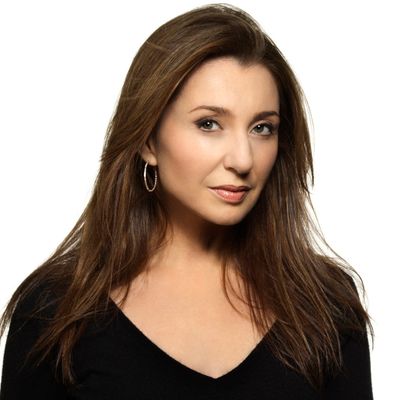
This week we talk to Donna Murphy about friendship, love, loss, and Star Trek... Read More
From the show: The Fabulous Invalid
Guests
Featured Shows
About
This week we talk to Donna Murphy about friendship, love, loss, and Star Trek.
Transcript
This transcript was automatically generated and might contain errors.
[0:00] Jamie DuMont: I'm Jamie DuMont.
[0:01] Rob Russo: I'm Rob Russo.
[0:02] Jennifer Simard: I'm Jennifer Samard.
[0:04] Jamie DuMont: And this is The Fabulous Invalid.
[0:19] Jamie DuMont: Welcome to our second episode. Before we dig in, talk about what's going on and get to our interview, I think we've got some news to share.
[0:25] Rob Russo: You've probably noticed that our fabulous co-host, Leslie Kritzer, is not here today. She is down in Washington, DC working on Beetlejuice, which is coming to the Winter Garden Theater in spring, right?
[0:40] Jamie DuMont: Spring.
[0:40] Rob Russo: I don't think they've announced the start date of previews, but it opens right before the theater deadline.
[0:44] Jamie DuMont: Yes.
[0:46] Rob Russo: They have done that.
[0:47] Jamie DuMont: Yes, yes. It opens in late April at the Winter Garden.
[0:49] Rob Russo: And I just have to say that we were all at Joe's Pub just a couple of weeks ago.
[0:54] Jamie DuMont: No, a week ago.
[0:55] Rob Russo: A week ago.
[0:56] Jamie DuMont: A week ago tonight, actually.
[0:58] Rob Russo: It was last Monday.
[0:59] Jamie DuMont: The one week anniversary.
[1:00] Rob Russo: Where she did her one woman show.
[1:05] Jamie DuMont: Burn it to the ground.
[1:06] Rob Russo: Burn it to the ground.
[1:06] Jamie DuMont: Yes. It's great. We had so much fun.
[1:08] Rob Russo: Oh my god. So funny.
[1:12] Jamie DuMont: Well, we miss you, Leslie. And you will be with us sometime in the fall when you're back, or maybe sooner. We'll see.
[1:19] Rob Russo: Yes, yes. And our other fabulous co-host, Jennifer Simard, has some exciting news too.
[1:24] Jamie DuMont: Jennifer is now back on Broadway in Mean Girls.
[1:28] Jennifer Simard: Yay! I'm so happy there, you guys.
[1:31] Rob Russo: Are you a mean girl?
[1:32] Jennifer Simard: No, but you're too.
[1:33] Rob Russo: I know.
[1:34] Jennifer Simard: Oh my goodness, no.
[1:36] Jamie DuMont: Well, Jennifer, I'm an angel.
[1:39] Jennifer Simard: And your track is as all of the female adults in the show.
[1:43] Jennifer Simard: Correct. I am Mrs. Heron, Ms. Norberry, and Mrs. George, and those roles were originated in the film by Anna Gasteyer, Tina Fey, and Amy Poehler.
[1:53] Jennifer Simard: And it is my privilege to sink my teeth into them. I'm having so much fun. And it's really back to my roots because I used to play many characters off-Broadway in a—it feels like a zillion different off-Broadway shows. So it's really quite fun.
[2:07] Rob Russo: And you can fill them.
[2:08] Jennifer Simard: Aww, that's really cool.
[2:10] Rob Russo: And a lot of wigs, too.
[2:11] Jennifer Simard: Oh, a lot of wigs. A lot of wig changes.
[2:13] Rob Russo: I love it though. It's so much fun. It's like now I'm a blonde. And let's see what that feels like.
[2:17] Jamie DuMont: Well, speaking of wig changes and personality changes, you also have a wonderful cabaret show that you did. You premiered a couple of weeks ago called Stigma.
[2:27] Jennifer Simard: Yes, I did, and you were there, and I thank you for coming.
[2:30] Jamie DuMont: Oh, it was so, so much fun. I wasn't there because I don't really like you very much.
[2:34] Jennifer Simard: No, I know.
[2:34] Jamie DuMont: Well, you are a mean girl.
[2:35] Jennifer Simard: So yeah, that's actually true. So clear.
[2:37] Jamie DuMont: No, I was dealing with a thing.
[2:40] Jennifer Simard: I know you are. Well, what's great about your cabaret show is that we get to see a different side of you, you know? Because we do know the kooky character actress, but getting to see some more serious and personal work was really—
[2:45] Jennifer Simard: Oh, thank you. Yeah, it was the darker side. I'm much more—I, in my personal life, I'm much more interested in going to the bottom of the pool and not swimming on the surface.
[3:03] Jennifer Simard: And I don't even know if this really feels like a cabaret show to me. I don't know to you, it felt—it's more like performance art meets cabaret.
[3:11] Jamie DuMont: Totally.
[3:11] Jennifer Simard: And I hope there's—we succeeded in creating an arc for people to relate to, even though it's storytelling about my life. And I'm so glad you were there, and we're lucky enough that they invited us back. So we're gonna reprise it two more times on November 5th and December 17th.
[3:29] Jamie DuMont: That's great. So listeners out there, get your tickets.
[3:31] Rob Russo: Yeah, how do I get my tickets? Is there a website?
[3:33] Jennifer Simard: Go to the Green Room 42 website, and there are links there, Linky Lou's little linky love, the Green Room 42 family. And I can hook you up there, and I appreciate it. Thank you. I'm really proud of it.
[3:47] Jamie DuMont: Alrighty. Let's get to our show.
[3:47] Rob Russo: Let's get to our show.
[4:19] Jamie DuMont: So there are a few things going on in the world this week and this last week. We lost one of our own, Marin Mazzy, and that was—I think hugely felt by—it was felt by everybody, and it was a tough week.
[4:37] Rob Russo: I think that she was loved by everyone who knew her and didn't know her personally, and I think it was a real blow, and we're all still reeling from it to a certain degree. I think one of the things that came up with her passing was the—I don't want to say controversy, but the brouhaha about the dimming of the lights and who gets the lights dimmed for them. It's a complicated subject.
[5:03] Jamie DuMont: Um, I don't really—my feelings are sort of all over the map about it. Maybe somebody else has something more articulate to say.
[5:15] Rob Russo: Well, I can chime in a little bit, having done a few Broadway shows now. And I think moving forward, it would be my preference to be more liberal and inclusive with doing it because it is a small community, and it's truly not every day we're losing one of our own. It's not that frequent.
[5:35] Rob Russo: And I think in order to move forward positively, I don't want to waste time talking about why didn't it happen or why did there—you know, why did we need a social media campaign to make it happen? I think it's better to give positive reinforcement for the fact that it was done, thank goodness, and I want to thank the league and the people in that committee for making that decision.
[6:03] Rob Russo: And I wanted to, if they're listening, say as a member of the Broadway community why I think that's such a beautiful and positive thing. So many times we've gathered on stage when I've been in a show, and people who are higher up the chain of command will say to us, "We here at Fill in the Blank are all one big family." And by doing this, it indicates that you believe we are a family through your actions and not just your words.
[6:35] Rob Russo: The night that the lights were dimmed outside the August Wilson, it wasn't just actors out there, it was stagehands, it was stage managers, and it was so interesting to see passersby not understand what was going on. And it was only for a minute, but it inevitably created a conversation with some of these strangers who were curious as to why this was happening. And that's a beautiful thing for the theaters and theater owners to know that these people were moved.
[7:03] Rob Russo: It indicated our shared humanity, and they to a person thought it was such a beautiful thing that we on Broadway do this. And I personally like to think of Broadway as a ship on the ocean. And what it shows is that whether you're an admiral or a captain or, you know, a petty officer or just a seaman, that you have value, that you matter, and that is good for morale, and therefore it is good for your work product because everyone goes back into the theater to do their eight shows a week, six days a week, which is really hard, everyone. When you have one day off a week and you don't live residually, you live by wages, it's really hard.
[7:49] Rob Russo: So things like this bond us down to our soul, and it's not done for everyone. And I just want to take a moment to honor Jeff Leffah's. I hope I'm saying his name correctly. I didn't know him individually, but he's a gentleman who was at Chicago for approximately 20 years and unfortunately committed suicide, which is a topic near and dear to my heart, and that was in June, you know, and so I just think it's important, whether you're famous or not famous, to realize that being aboard this ship for any period of time like that is quite something, and I'm for all—I'm for doing it as often as possible.
[8:33] Jamie DuMont: Well, what if they—so I think one of the things that people don't fully understand is exactly how that decision gets made in terms of who gets the lights dimmed and who doesn't, and Rob is actually gonna address this a little bit later in the segment, just in terms of the whole history of the dimming of the lights. But my question is, would it be something that could be more inclusive in terms of that decision-making process? Like, what if there was a committee that included members of the acting community, the stagehands, whatever that looks like, there could be a broader group that votes on this and hears arguments, pro and con, or I guess they would be mostly pro in terms of dimming the lights.
[9:16] Rob Russo: I guess it's a wonderful idea what you're suggesting. I think my only fear is having gone through grief myself. I think the last thing you want as a family member or friend is when you're already grieving, is to have your loved ones' CV put up for debate because it almost feels like a loss a second time. Do you know what I mean?
[9:36] Jamie DuMont: Yeah, yeah.
[9:37] Rob Russo: There's a tension here between an urging for transparency, which I think is very much the zeitgeist that we live in, and people, especially with the evolving fan culture on Broadway, where people—and because of social media—where people, audience members, fans, feel so much closer to performers than they probably ever have. And so when someone like Marin does pass away, it feels personal because people form these connections and are able to, given technology.
[10:10] Jamie DuMont: Um, and at the same time, there is the concern for, you know, turning this into a circus where everyone's sort of lobbying and jockeying for this honor, when it should be something that is private, that is special to the community. And what I love, and you know what you touched on in your—when you were talking just now, is that there's a sense of celebrity on Broadway that I think is different from what others outside of our community might think of as celebrity.
[10:44] Jamie DuMont: And someone like Marin, certainly to people who are in the theater world, she's a goddess. I mean, she is one of the legends. But you step outside of our community, and she's not on everyone's lips. She's not someone that most Americans could pick out of a police line, and yet, you know, she is so special and dear to us. And so I think the concern about making it too much of a public process is that it sort of degrades the ceremony itself.
[11:14] Rob Russo: There was a time our happiness seemed never ending.
[11:21] Rob Russo: I was so sure that where we were heading was right.
[11:28] Rob Russo: Life was a road so certain and straight and unbending.
[11:35] Rob Russo: Our little road with never a crossroad in sight.
[11:42] Rob Russo: Back in the days when we spoke in civilized voices, women in white and sturdy young men at the hall.
[11:56] Rob Russo: Back in the days when I let you make all my choices.
[12:18] Jamie DuMont: Let's do it.
[12:33] Jamie DuMont: I am so thrilled to introduce our second guest. And on a personal note, I've known this wonderful, beautiful lady for 20 years.
[12:41] Rob Russo: Crazy.
[12:42] Jamie DuMont: Crazy. But and most recently, my beautiful and wonderful colleague at Hello Dolly on Broadway. I'm so thrilled to introduce you all to two-time Tony Award winner, Emmy Award winner, and fellow college dropout.
[12:55] Jennifer Simard: Yeah, Murphy!
[12:56] Jamie DuMont: Oh boy.
[12:57] Jennifer Simard: There are three college dropouts.
[12:59] Jamie DuMont: I'm K.
[13:00] Jennifer Simard: Okay.
[13:01] Jamie DuMont: I'm in great company.
[13:02] Jennifer Simard: Yes, yes. Where did you drop out of, Jamie?
[13:05] Jamie DuMont: Uh, San Francisco State University.
[13:07] Jennifer Simard: Yeah, I'm Boston at the Boston Conservatory of Music, a fine school.
[13:10] Jamie DuMont: And you were at University Tish School of the Arts undergrad drama.
[13:13] Jennifer Simard: Yeah.
[13:14] Jamie DuMont: So I'm the outlier who doubled down and got a law degree.
[13:17] Jennifer Simard: So amazing.
[13:18] Jamie DuMont: You—my parents would have been very proud of you. What are you doing that gives you comfort, relaxation, gets you out of your head?
[13:32] Donna Murphy: I meditate. Right now I need guided meditation because it's really, at least as a starting point. And then I will I can be on my own, but that's greatly helpful.
[13:44] Jamie DuMont: Are you new to meditation or have you been doing it for a long time?
[13:50] Donna Murphy: I did it pretty consistently back in the late 90s. And truthfully, I was researching a part that I was playing for a Star Trek movie. And I was playing this, you know, very evolved, enlightened woman who was Aniche. And I thought, oh my God, she just has a whole different energy than I do. And so I studied with somebody in meditation and yoga and it was so helpful. And I remember people coming up to me on the set, you know, saying, oh, you just have this energy about you. I was like, I'm learning, I'm learning. And it was a beautiful thing too, I mean, one of the most wonderful things about what we get to do is that each role, each job, you step into another world and another character's experience and that character's perspective and it's an opportunity to learn.
So I do try to do it daily. Sometimes it's, you know, four minutes in the morning and four minutes at night. I listen to music, I listen to inspirational speaking, I listen to podcasts. I don't have the time to read as much, but I have affirmations that I read daily that help me.
[15:21] Jamie DuMont: All right, since you brought it up, you were in a Star Trek movie. I just have to ask. What is it like being a part of that juggernaut? I know this has nothing to do with theater, so don't turn off people, but I'm curious.
[15:33] Donna Murphy: So funny because there's so many people who are in that particular cast who come from the theater. Ah, I just I remember that we were on location up in the mountains north of Los Angeles, and there was a moment where Jonathan Frakes was our director, and he said, okay, so when do the show tunes start because I'm just we've been waiting for months for you to be and I mean I would, you know, kind of hum a little bit in the trailer and stuff but I wasn't the type to kind of burst into songs from shows I'd been in or you know I whatever and well the person to start singing Patrick started singing from Sweeney Todd and suddenly there were a lot of show tunes being sung and I was sort of the last one to join in.
[16:27] Donna Murphy: But many of that company had come from the theater originally. What was it like? Well, it was a little bit like attending a class reunion for a high school that you never attended, you know, crashing a reunion. Everybody knew each other. They all knew each other well but they were so welcoming and they were so just fun and friendly and appreciative of you know whatever I had to bring to the table and I didn't really realize this the responsibility of stepping into that world that was so beloved and so just you know the people who watch that series whether it was that specific incarnation of it or any incarnation of it they take it very seriously and I was not someone who had watched it and so just preparing for when I auditioned for it I felt like I needed to immerse myself as much as possible so that I could go in from an informed place and a respectful place.
[17:43] Donna Murphy: And so I always say each part I played, you know, I came away with a gift. And I don't always own that quality, certainly, but it's something that I know is there to access and that I have been able to own it. So it was a very cool thing. But it's funny because people say, oh, you must do all the conventions. So I was advised by the regulars. They said, don't you know, don't do the little conventions. You're gonna be asked to do the big ones and wait, do the big ones. And I was asked to do a couple, a convention in London and another international convention, and I wasn't available. And then like there weren't that many asks, and I was like, what happened? You missed the boat, and then occasionally like somebody, I don't have a regular Facebook, I have like a fan Facebook page, and I'm not very attentive to it. I don't even have a website. I've got to get that stuff together.
[18:39] Jamie DuMont: You're on Twitter though.
[18:39] Donna Murphy: Yeah, I am on Twitter. Are you on Instagram?
[18:41] Donna Murphy: I am on Instagram, and you know, my daughter says, mom, but you're like you're not you just don't do it the way I the way the kids do it.
[18:51] Donna Murphy: Well, I don't know about the kids. I just it's hard to be in the moment and also capturing it at the same time.
[18:57] Jamie DuMont: I agree a hundred percent.
[18:58] Donna Murphy: It's really hard, you know, and it's I mean, there's I've had some fun with it, and I've it's also been meaningful to be able to communicate things that I would like to say to an extended group of people, whether it's personal or about something that I feel passionately about, but sometimes like that, there's something that I feel very passionately about, but it's not the moment that I can take the time to put together the post.
[19:34] Donna Murphy: I wonder how much of life we miss by posting on social media.
[19:38] Jamie DuMont: Yeah, I mean because you're so busy trying to capture that photograph or that video or say that word or word those 47 characters, or how many is it?
[19:48] Donna Murphy: 150. See, I don't even know. But then you're missing the thing that's actually happening. It's really I'm very, I'm it definitely is something that I wrestle with.
[20:01] Jamie DuMont: Yeah, I do too, because you get into a whole socioeconomic debate about it as well. Because you can actually get hired or not based on how many followers you have and all of that.
[20:13] Donna Murphy: I'm sorry, nonsense, but it's the truth.
[20:15] Jamie DuMont: So that's a little shitty to me.
[20:17] Donna Murphy: It is but it's real.
[20:20] Jamie DuMont: So you have this real pressure, is my point. You have this pressure, like, well, you have to you have to post every day, and hashtags are the key to getting more people, and it it at one point you just you almost feel about the work. Shouldn't it be about the work?
[20:30] Donna Murphy: And I'm torn as well, only because I'm a realist, I think at the end of the day. But at the same time, I don't really like the game that I'm being asked to play.
[20:47] Jamie DuMont: So it's interesting.
[20:48] Donna Murphy: Well, that's funny you say that because you I think you're very good on Instagram.
[20:51] Jamie DuMont: I actually yeah, I said this to you the other day. I actually think you're really dedicated to it.
[20:56] Donna Murphy: So it's interesting to hear you say that you actually don't quite feel that way.
[21:00] Donna Murphy: Well, I think it's the professional posts that I'm uncomfortable with. The stuff I like posting the most is really reposting anything that my new favorite Twitter everyone is John Shanley, the playwright.
[21:11] Jamie DuMont: Yeah.
[21:12] Donna Murphy: Oh my God, yeah. You're missing out because you must go check it out.
[21:15] Donna Murphy: Or you know, Diego explains things that are dark and interesting and a little outside the box. Those are the things I actually enjoy posting. I just have to figure out how to repost.
[21:24] Jamie DuMont: I keep I'll teach in a simple way.
[21:26] Donna Murphy: Well, you teach both of us.
[21:27] Jamie DuMont: Yeah, it's an app.
[21:28] Donna Murphy: I'll go.
[21:29] Jamie DuMont: Sidebar.
[21:30] Donna Murphy: I have it. I have I just as my daughter says, mom, you take five steps to accomplish what you could do with like one like story of my life, honey.
[21:39] Donna Murphy: Well, I'd love to hear from you. You know, since you have had this extensive career over many decades, you know, from your Broadway debut in They're Playing Our Song to wrapping up Hello Dolly. What strikes you as the biggest things that have changed in terms of being a performer?
[22:01] Donna Murphy: I mean, social media, that's social media is huge. You know, how much does that change the experience? Are there any other aspects of performing in the theater that over that course of time you've observed have changed the experience?
[22:15] Donna Murphy: It's interesting. I came in, you know, I was at NYU and I went to an open call and I got a Broadway show, and I really didn't know anything about the business. I didn't know people in the business. I didn't have an agent, I hadn't I had been going to other open calls, so cutting classes to go to some open calls because I in certain ways. I also you were speaking earlier, I don't know if we were actually on mic, I think we were not yet, about being you know, foregoing on 40. And I was the oldest of seven. And I grew up fast. And I always joke that I always knew there was somebody younger, cuter, and needier than me so I better get over it. And I was lucky because there were a lot of things that I was really interested in that drew me to getting involved in those matters and at school, both in the arts and academically, and so I had things that I loved and I just wanted to know more and more and more and more about them, and I loved being treated like a grown-up.
[23:27] Donna Murphy: Point being that while I was at NYU, I was very pragmatic. I had this plan. I thought I'm going to go to I'm gonna study at NYU, as it turned out, and I give let's say get my education and then I will hopefully have a nice bedrock of technique. And then I'll give myself five years, and if I'm not making a living in the business, then I'll find something else to do. And there are many things I'm interested in in this world, even though I'd known since the time I was probably three or four, that acting and singing and creating stories and being a part of telling stories was what I wanted to try to do with my life and what I was doing throughout my school years.
[24:18] Jamie DuMont: I'm sorry it's not worked out for you. Did you have a plan B?
[24:23] Donna Murphy: Well, I've had several plan B's after I realized that that little pragmatic vision was not the way it worked. You know, first of all, so I got a job and it was on Broadway, and I thought, oh, well, I did it. That's it. You know, I've things are kind of taken care of themselves. And I was doing that show, and it went but it was wonderful. I was an understudy, but I was like, oh, okay, so I'm not really there doing it, but I watched. I got to learn so much just watching.
[24:53] Jamie DuMont: Did you go on?
[24:54] Donna Murphy: I went on a lot. Yeah, I went on for well, but it was three people in the ensemble.
[24:57] Jamie DuMont: Right.
[24:58] Donna Murphy: Voices of Sonia Walsh were the female chorus. And then I did get to when the first actress of that group that left was Debbie Shapiro, now Debbie Grabbitt. She left to do a new show, and I was asked to replace her. So that was great.
[25:18] Donna Murphy: But you know, when I was in school, I wasn't studying musical theater. I was studying the undergrad drama department with Stella Adler, and I love to sing, and I had a job as a singing waitress, my sophomore year, singing with like a trio, singing standards. I remember them saying, what's your key? And I was like, what's my key?
[25:39] Jamie DuMont: I feel like I'm an old one. Can we go to the Stardust Diner and just recreate that? Like I want you to like be at my table singing me a song.
[25:47] Donna Murphy: Are you kidding? Although I was at Barbara's Steak Row.
[25:50] Jamie DuMont: What was it?
[25:50] Donna Murphy: It was like some restaurant that I don't know how long it was.
[25:53] Jamie DuMont: A singing steakhouse?
[25:55] Donna Murphy: It was like the 70s?
[25:57] Jamie DuMont: It was the 70s.
[25:58] Donna Murphy: It was a re it was it was the late 70s, it was not like on roller skates and like singing show tunes.
[26:05] Jamie DuMont: No, it was like there was a trio, and it was kind of a dark and cool medium ring.
[26:14] Donna Murphy: And I read singing about the meat medium ring.
[26:21] Jamie DuMont: Yeah, yeah.
[26:23] Donna Murphy: Oh gosh.
[26:24] Jamie DuMont: Manhattan, straight up.
[26:27] Donna Murphy: Exactly.
[26:28] Jamie DuMont: Oh my god, wouldn't that be great if you sang all your orders?
[26:31] Donna Murphy: That would have been much more.
[26:33] Jamie DuMont: I would just I have this image. I'd love to go surprise some theater fans at a singing restaurant, and there in comes Donna Murphy with your potatoes and hash and just I'm gonna sing a little show tune for you.
[26:45] Donna Murphy: That was my second singing waitress job, actually. I'm remembering that the North Shore Music Theater, which still exists up in Beverly, Massachusetts.
[26:54] Donna Murphy: I think I speak for the entire world when I say that we're grateful that you were a singing waitress and that you decided to sing for us the rest of your life.
[27:04] Donna Murphy: Yeah, I mean, so well while I was at NYU, I still was sneaking off and doing musicals or going to open calls for musicals because I did love to sing, but I did want to, uh, truth was you know what? I was on the wait list for Carnegie Mellon for musical theater. I got a full scholarship for their drama department, waitlisted for musical theater, and my second choice was NYU and to study with Stella Adler, and so I went, all right, then that's what I meant to do. My parents were like, "You're getting a full scholarship at Carnegie Mellon. That's the school you..." I said yes, but not on the musical theater department. Don't you think it was the, I mean I have to assume that the basis in the bass and drama, the Stella Adler training, that heavily influenced who you became as a singing theater actor, right?
[27:53] Donna Murphy: Because yes, it was my journey. It was my, and it was there, um, I mean I did plays and musicals and I loved doing them equally. I just I realized while I was at NYU, I didn't want to have to give up s I didn't want to give up singing to act, and I didn't want to just as I didn't want to exclusively do musicals. I didn't want to exclusively do plays. Um, but it definitely influenced me. I mean, although the truth is that it was very intimidating initially. Um, and I found Stella intimidating, and I didn't get it right away, and that scared the hell out of me, because I thought maybe I'm really not meant to be an actress. I knew I wasn't. I mean, I was in some way intuitively, um, and with whatever talents, you know, I was blessed with, I was born with, and what I'd observed and absorbed, uh, in watching. And I was so young, and um, and so back to this theory of me being very mature, voted most sophisticated in my class superlatives. Those are never wrong.
[29:09] Donna Murphy: Yeah. Um, but I was very immature in regard to not being able to keep myself from the distraction of wow, I can pick up a trade paper and I could go to an open call and maybe stand on a Broadway stage and sing 16 bars. And just I thought, just to stand on that stage and sing, that that's that could be enough.
[30:36] Donna Murphy: And what I learned is that I learned quickly that it was great to be in a Broadway show, but I wanted to play parts, and I wanted to keep growing. And so I left there playing our song, and I had a tiny tiny part in a new musical that was at the Goodspeed Opera House and was in the ensemble, but had a writer for a small part. And so that to me was, you know, a step forward. And my parents were like, "You're what?" I mean, I first, you know, really upset them by dropping out of school. They really wanted me to graduate from college. But then I was in a Broadway show, and that was pretty cool, and that my father didn't get it for a long time, but my mother got it. And um, and then I left that to do a show that they hoped would come in. It was a new show, and but I now know I went and did that show. I was meant to be there because that's where I met my husband.
[31:36] Donna Murphy: I've been searching home for you, but then what does it matter? Hello again. I think I speak for everyone here when I wanted to say we know that you're really close with Maren, and we wanted to extend our sympathy to you. And I wanted to follow up with that question, if I may, out of love, is that um you lost your husband two and a half years ago, followed by this. And I didn't know if you had any words of insight and wisdom for our listeners who are also going through loss and grief. And if they haven't, they will. Yes. Did what have you learned in the last two and a half years that's helping you now? And how are you able to help Jason who's going through it? Is there anything you'd like to share with us? And we love you.
[32:33] Donna Murphy: Well, I love you. I love all you guys for being open to this kind of conversation too. And yeah, I mean, Maren was one of my best friends, and um she uh was a great light in my life in thousands and thousands and thousands, maybe millions of lives. Who knows how many lives she touched. I've known Maren since the day we started passion rehearsals for the workshop. And it was, uh, I was telling somebody this the other day, uh, that literally the first day I walked into rehearsal, um, in the space we were using in the Rose building in Lincoln Center, um she was golden. I mean, there literally was just this golden person with this aura.
[33:33] Donna Murphy: And what I learned within literally the first hour or two of rehearsal is that everything about her was golden. Her humor was golden. The voice was truly golden. Her, um, open, strong. She's so strong, but a lot of people who were strong, they're tight. There's a tightness about them. And I, I can that can be me in circumstances. Marin was just so open. And I remember her saying, "Oh, Donna Murphy," and wrapping her arms around me. And I said, "We're gonna have lunch today, aren't we?" And she said, "Yeah, I think we're gonna have a lot of lunches." And we sat out, excuse me, around um the fountain at Lincoln Center, first day of rehearsal, and just opened our hearts to each other.
[34:30] Donna Murphy: And um she remained a dear friend of both myself and my husband Sean's. I mean, Sean adored Maren and uh just always said that's one of the greatest dames you're ever gonna know. There's no straight line process through grief, it's not linear, it's you think you have turned a certain corner in it, and then it sneaks up on you, and it's not always uh harsh and brutal, it can be a very small moment of just recognizing that something that you shared with that person that you took for granted there were small moments um they come up all the time for me in regard to Sean my late husband because we shared our lives for 36 years so um I mean as partners in the same sp not the same space but of different spaces but sharing those different spaces physically and living together um so you know the things you share when you're flossing and washing the dishes whether it's about what happened in rehearsal that day Dolly was the first theater piece that I did that he wasn't present in my life other than my first job which was their playing our song which I got which was why I dropped out of NYU everything being uh having some kind of tangent and connection but then the next show I did was the show that I met Sean on a show called Zapata at the Goodspeed Opera House which is another story and a half um so I've always had him we bounced you know our experiences as artists um off of one another and not that I don't continue to do that but I'll I'll never forget the process during the process of Dolly which was very you know different from anything I'd ever experienced um just realizing when I came home that he wasn't there to I mean I knew he wasn't there it had been months since he had passed, but to share just something that had happened or an idea I had about something I wanted to try.
[36:57] Donna Murphy: Uh, people assumed that the loss, in addition to just the the parallel of some of the things in Dolly's life as a widow and as a as a new newly I don't care for the word widow particularly, but that's about old associations. Um, and it's just a word. But anyway, as another woman who had lost the person who was the love of her life, and that's how I felt. Uh for me it was new. For Dolly, it was 10 years old. Um but uh I had friends who'd say, "Yeah, well, I'm sure that you and Sean, like you know, ran material together, ran scenes." I said sometimes when we were cramming for auditions or had to put ourselves on tape for things, but no, I didn't, he wasn't my acting coach. You know, it wasn't um it wasn't Big Malia, and it wasn't it wasn't a stars born, it wasn't um, it wasn't that uh scenario. It was just partners, people who were journeying together and who understood a lot about um the realm that we shared.
[38:11] Donna Murphy: So there was this added realm when our beloved friend Marin was diagnosed, and she was boy, she just took it on with such courage and grace. Marin went through so many things during the, god, I two and a half years that she was journeying with cancer and living with cancer, that you know, my breath would hold thinking will she be able to come out on the other side of this um living on this plane, as I put it of existence, and she always did. And there was some a number of us who were very close to her that felt like it that was just that was just going to go on and on and on somehow for her.
[39:14] Donna Murphy: And spiritually, she had she did not want to leave, but I think she was open to whatever the journey was meant to be. She I did not want to leave what she was leaving behind. You know, she was open to what might be ahead, unknown. She was enlightened, and she shared that with my husband. She shared it with me.
[40:15] Donna Murphy: And another, it just our lives were connected, and certainly my relationship with Maren was its own relationship, and Sean's relationship with Maren was its own. But the interwoven nature of our lives did make her passing deeply personal. Um yet the light and the love that the community, which is of course what you were asking me about to begin with, and I kind of went off here. Um there's not a person that I know who has worked or met Marin who wasn't struck with her love, her generosity, her humor, that just magnitude of talent, which just grew and grew and grew, and the way that she embraced everything, and so that brings me joy, and um, and she inspired me from the day I met her, and it only grew.
It only grew. And Marin gave so many of us so many different elements of her grace and light and love and talent and hope, and she's still doing it, you know. Um I hear her, I feel her, and I know Jason does. Um, and I know that Jason has felt he too. The love from the community has been remarkable. I've never seen anything quite like it, and you know, we've lost too many, too young. We were talking about that earlier. It really felt overwhelming to a lot of people. And it was a it was hugely impactful her passing. And I I think that was felt by people who knew her really well, like you did, and people who didn't know her at all, but knew her talent and her and her work. And I I honestly I can't remember um something that's impacted us quite like this in the theater community.
[43:28] ♪ Musical number: "Your Love Will Live in Me" — performed by Donna Murphy ♪
[43:35] Donna Murphy: I think it's always beneficial to talk about these kinds of things because I think it helps the person grieving, but I think it helps people that may not even know they are gonna need these words someday. Because you will. Living in the now, being grateful for the now, it's all we know. It's all we really know is what's happening in this moment. We know what's happened in the past, that's true, but in terms of we can look forward to we can look forward to things we can you know have uh desires and and uh ambitions and plans but all we know is this those of us sitting in this room with this beautiful piece of avocado toast and and the most wonderful cup of green tea I've ever had in my life I I think question that's no we we mentioned this to our listeners last week that Jamie he provides snacks and we can't wait for this back every week no and that we're having this conversation because of where we are now well thank you for dropping out of college thank you for for gracing us today with your beautiful thoughts and uh and your power and uh and thank you for uh for golly for just being you.
[43:57] Rob Russo: Oh well thanks for tolerating my um many tangents my hashtag is tangent queen well I mean it's not officially so but uh I think it should be Darmia Darmia wants you to put that on every Instagram post mom get on it that's a good stage name too soon queen I'm also always looking for people's book titles like what would be what would be the title of your book right so maybe it's maybe yours is tangent queen it could be tangent queen how about beautiful deep soul. How about that?
[45:32] Donna Murphy: Love you, Donna.
[45:33] Donna Murphy: Love you too. Thank you, guys.
[45:59] Rob Russo: Rob here with you may be wondering. You may be wondering, what's the deal with Broadway dimming its marquee lights when someone notable passes away? Broadway's equivalent of flying a flag at half-mast. Well, the tradition dates back to 1952, when English actress Gertrude Lawrence, then starring as Anna in the original production of The King and I on Broadway, fainted backstage after a Saturday matinee and was hospitalized with viral hepatitis. Within days, she'd slip into a coma and then die. It was later revealed that Lawrence, who had been sickly for some time, had liver and abdominal cancer. Beloved for her Tony winning star turn, the decision was made to dim the lights at the St. James Theater where The King and I played.
When other theaters found out, they joined suit, and a tradition was born. Though it got off to a slow start. Universal dimming would not occur again until 1960, following the death of Oscar Hammerstein II. And then not until 1977, with the death of Alfred Lunt. Starting in the 1980s, though, the practice became far more common and routinized. Today, the Broadway League, which is a trade association of theater owners and operators, producers, presenters, and general managers, they have an informal committee that decides who gets the honor. Once a decision is made, usually within a few days of a person's death, theater owners are informed, and marquee lights are dimmed for one minute. This used to happen at curtain time, typically 7 or 8 p.m., but it's now done 15 minutes before curtain, so that audiences filing into theaters can observe.
A press release is sent out to mark the occasion, but otherwise, there's no ceremony or fanfare. As Jennifer mentioned earlier in the episode, people on foot who are walking in the theater district might not even know what's happening.
[47:40] Rob Russo: As marquee technology has changed, some theaters now feature LED boards, as seen at the Imperial and the Music Box Theaters on 45th and the Marquee Theater on 46th. When it comes time to dim lights, those theaters now replace a show's logo design with a still image of the person being honored, which adds a degree of personalization to the occasion and informs those people on the street of who's being honored that evening. To avoid lobbying, the criteria that the Broadway League's informal committee considers in deciding who gets a tribute is mostly kept private. And as we talked about earlier in the episode, that has led to some very public consternation. In 2014, when comedy legend Joan Rivers died, a decision was made not to dim the lights, even though it had just been done for Robin Williams.
Joan Rivers had appeared in three Broadway shows, one a quick flop, as a replacement in Neil Simon's Broadway Bound, and most memorably in Sally Maher and her escorts in 1994. So after much public outcry, the league reversed its decision. Flash forward to February 2018, five-time Tony Award winner Jan Maxwell passed away, and once again the league declined to dim the lights. A decision was made instead that the Marquee Theater, where Jan had made her last stage appearance in Follies, would dim its lights. Then the Manhattan Theater Club joined in, dimming the lights at the Samuel Friedman Theater where Jan had played twice. This selective dimming was seen as a slight by many, but also allowed for a concentrated gathering outside those two theaters.
And then just last week, three-time Tony nominee and 2017 Hall of Fame theater inductee Marin Mazie passed away at age 57. Despite having created iconic performances and passion, ragtime and kiss me Kate, among others, the league once again decided to decline to dim the lights. Six individual theaters went rogue and announced that they would dim their lights. Then, in response to public outcry on social media, the league reversed its decision. And all theaters dim their lights. This second major boo haha in just over six months points to an evolution in fan culture on Broadway and has also shined a light on an otherwise opaque process. Some argue we should do away with dimming the lights altogether.
Others want more liberal use of the honor. Regardless of where you stand in this debate, it underscores that theater performers are loved and celebrated by fans the world over. And these fans form strong kinships and feel a sense of loss when someone passes away. As Maren Massey sang as Helen Sinclair in Bullets Over Broadway in 2014, there is a broken heart for every light on Broadway.
[50:14] Jamie DuMont: Jamie here. That's our show. Thanks for listening. The Fabulous Invalid is a production of OM, etc. and the Fabulous Invalid LLC. Our theme music is by Lucky Chops, who are currently on tour, so check out their website, LuckyChops.com for info and dates. Today's episode was edited and engineered by Aaron Kaufman. Find us online at thefabulousinvalid.com and on social media at FabulousInvalid. And listen to us on Stitcher, SoundCloud, and Podbean and our website. And be sure to tune in next Wednesday. This episode is dedicated to Marin Massey.
[50:52] ♪ Musical number: "Look at What You Want" — performed by Donna Murphy ♪
© Broadway Podcast Network, All Rights Reserved