

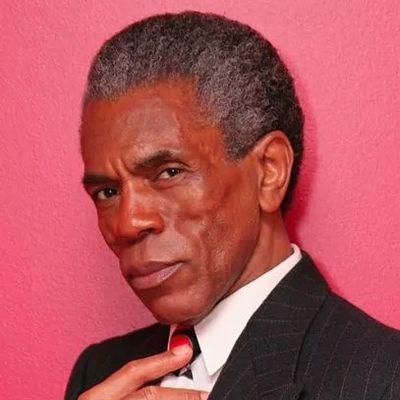
On this week’s episode, Mr. Wiz himself, André De Shields, joins Jamie and Rob for dinner at Orso Restaurant to discuss his 50 year career as a performing artist during which he has played such seminal roles as The Wiz in “The Wiz,” The Viper in Ain’t Misbehavin’, The Jester in Play On!, Horse in “The Full Monty”, and his current Tony-nominated role as Hermes in Hadestown on Broadway... Read More
From the show: The Fabulous Invalid
Guests
Featured Shows


About
On this week’s episode, Mr. Wiz himself, André De Shields, joins Jamie and Rob for dinner at Orso Restaurant to discuss his 50 year career as a performing artist during which he has played such seminal roles as The Wiz in “The Wiz,” The Viper in Ain’t Misbehavin’, The Jester in Play On!, Horse in “The Full Monty”, and his current Tony-nominated role as Hermes in Hadestown on Broadway. Take a seat, and learn some lessons from a theatrical legend and master. This week’s music: André De Shields performing “The Viper’s Drag” from Ain’t Misbehavin’, “Way Down Hadestown” from Hadestown., Stephanie Mills singing “Home” from The Wiz, and André singing “So You Wanted To See The Wizard” from “The Wiz” and “I’m Just A Lucky So And So” from Play On!
Find us on Twitter & Instagram: @fabulousinvalid
Facebook: www.facebook.com/fabulousinvalid
Rob’s reviews: www.stageleft.nyc
Email us at: info@fabulousinvalid.com
Jamie Du Mont
Twitter: @jamiedumont
Instagram: @troutinnyc
Rob Russo
Twitter/Instagram: @StageLeft_NYC
Jennifer Simard
Twitter: @SimardJennifer
Instagram: @thejennifersimard
Transcript
This transcript was automatically generated and might contain errors.
[0:00] Jamie DuMont: I'm Jamie DuMont.
[0:01] Rob Russo: I'm Rob Russo.
[0:02] Jamie DuMont: And this is the Fabulous Invalid.
[0:20] Rob Russo: Hi, Jamie.
[0:21] Jamie DuMont: Hi, Rob.
[0:21] Rob Russo: Well, here we are, back again at the lovely Orso restaurant.
[0:24] Jamie DuMont: This time on a Sunday night.
[0:26] Rob Russo: Not our normal Monday.
[0:28] Jamie DuMont: Sunday at Orso.
[0:32] Rob Russo: Okay, that the the it was the commitment was good at the beginning, and then you you waited out.
[0:37] Jamie DuMont: I didn't have the words.
[0:38] Rob Russo: I didn't have the words.
[0:38] Jamie DuMont: I get that.
[0:39] Rob Russo: I didn't have the words.
[0:40] Jamie DuMont: It's fine.
[0:40] Rob Russo: But we are delighted to be back at Orso.
[0:41] Jamie DuMont: It's actually really busy considering it's just about six o'clock.
[0:45] Rob Russo: Yeah, well, all the matinees have gotten out, so folks are piling in.
[0:48] Jamie DuMont: They have we saw a matinee.
[0:50] Rob Russo: Filing or filing. Pick your poison.
[0:52] Jamie DuMont: We did. We saw a matinee today, which was a lot of fun.
[0:56] Rob Russo: A new play called Continuity.
[0:58] Jamie DuMont: Very funny.
[0:59] Rob Russo: At uh City Center, Manhattan Theater Club production.
[1:02] Jamie DuMont: Really superb.
[1:03] Rob Russo: I loved it.
[1:04] Jamie DuMont: Great.
[1:04] Rob Russo: Absolutely loved it. Go check it out.
[1:06] Jamie DuMont: As Rob said, it was like part epic proportions and part what was the other one.
[1:09] Rob Russo: Noises off.
[1:10] Jamie DuMont: No, it's like you put them together and add a very important message about climate change.
[1:15] Rob Russo: And you've got continuity.
[1:17] Jamie DuMont: Speaking of theater.
[1:19] Rob Russo: Yes.
[1:20] Jamie DuMont: Last night we did something that was really kind of. I want to almost go and as bold and say life-changing for me.
[1:27] Rob Russo: We went to Brooklyn to see an immersive off-off Broadway production of streetcar named Desire.
[1:34] Jamie DuMont: Yes.
[1:35] Rob Russo: At a not a theater. It was really like a raw space or it's a music like event art space that they you know rent out for various um, you know, events and such.
[1:46] Jamie DuMont: And it was like called Mr. Rogers, yeah.
[1:48] Rob Russo: 50 people folding chairs, and we sat around, basically in the living room of of the Kowalskis.
[1:55] Jamie DuMont: Yeah, Stella and uh Stanley.
[1:57] Rob Russo: And it it not only was it a brilliant production, and I think when this airs, it will only have one weekend of performances.
[2:03] Jamie DuMont: Right, sadly.
[2:04] Rob Russo: Going, so if you can go, go, it's well worth it.
[2:07] Jamie DuMont: But what was so life-changing for me was just that reminder that there is such great, exciting, experimental, and wonderful theater all over the city.
[2:17] Rob Russo: Yes.
[2:17] Jamie DuMont: It's not just in these 12 blocks or downtown, it's everywhere.
[2:22] Rob Russo: That's absolutely right.
[2:23] Jamie DuMont: Yeah.
[2:24] Rob Russo: You need to really look for it and and discover it.
[2:27] Jamie DuMont: Yeah.
[2:27] Rob Russo: Um, but when I can, when I have the time, I really love trying, you know, trying to see something that's a little off the beaten path, like this production of Street Carnegie Desire, which you haven't mentioned, um, makes history as the first production to ever uh have a gender queer actor playing Blanche Dubois.
[2:43] Jamie DuMont: Well, I saved that part for you because I knew I would goggle genderqueer and get it wrong.
[2:48] Rob Russo: Um yeah, so the the the Williams estate um approved this casting decision, um, which is you know quite exciting.
[2:55] Jamie DuMont: And and it was great.
[2:57] Rob Russo: The payoff was was it was absolutely uh just stunning and uh it totally destroyed me in the end.
[3:05] Jamie DuMont: Um that play does, you know, uh by itself, but um the way it's performed um in the end, it really really all comes together.
[3:13] Rob Russo: There were moments where I felt like I needed to excuse myself and let them have their privacy.
[3:18] Jamie DuMont: That's how intimate it really was.
[3:20] Rob Russo: And that was the point, obviously.
[3:21] Jamie DuMont: Right, and this production itself is you know, I I I use the the word uncensored in my review because it there are two very explicit scenes um that are, you know, sort of there on the page, but as directed and performed by these actors, you know, seemed to have required the use of an intimacy coordinator.
[3:39] Rob Russo: Um and you know, we're feet from two very naked actors in a very I was okay with that.
[3:46] Jamie DuMont: Oh no, I wasn't complaining, but we were actually the only two people looking at Stanley.
[3:50] Rob Russo: Everybody else was averting their eyes.
[3:52] Jamie DuMont: I wouldn't say that, but yes.
[3:54] Rob Russo: Um, but it really it it sort of ups the ante and it grounds the reality of the piece, absolutely.
[4:00] Jamie DuMont: Such that you really you you forget you're watching a play, and that is what uh the highest compliment you could probably ever give to any piece of theater that you're so lost in it that you forget that you're in fact watching people pretend to be other people and say words that were written for them that they do eight times a week, you know.
[4:15] Rob Russo: I couldn't agree more.
[4:17] Jamie DuMont: Well, thank you for inviting me.
[4:18] Rob Russo: Yeah, thank you for it.
[4:19] Jamie DuMont: I hope I keep getting these invites to these strange and unusual places that you take me.
[4:24] Rob Russo: Uh because I Crown Heights, Crown Heights.
[4:26] Jamie DuMont: Yeah.
[4:27] Rob Russo: It really was.
[4:29] Jamie DuMont: I think we're we're really uh showing our our Manhattan snobbery, aren't we?
[4:34] Rob Russo: Why you would dare to go to Brooklyn?
[4:36] Jamie DuMont: It's like that.
[4:37] Rob Russo: If that's how it came off, I didn't mean it like that.
[4:39] Jamie DuMont: No, no, no.
[4:40] Rob Russo: Anyway, um, shall we uh get to our guest?
[4:43] Jamie DuMont: Sure.
[4:45] Rob Russo: Wait, am I supposed to say something better?
[4:47] Jamie DuMont: I don't know.
[4:48] Rob Russo: Sure.
[4:50] Jamie DuMont: Let the bells ring.
[4:53] Rob Russo: Ding dong, ding.
[4:58] Jamie DuMont: If y'all a viber.
[5:02] Rob Russo: Each night at the Walter Kerr Theater, André De Shields glides onto the stage and stares down the audience with a thrilling command like no other performer on Broadway can.
[5:11] Rob Russo: With a 50 year career that includes such seminal shows as The Wiz, Ain't Misbehavin, and his Tony nominated turns in Play On, the Full Monty, and now Hadestown, we are honored to welcome the singular and fabulous André De Shields.
[5:26] André De Shields: Thank you.
[5:27] André De Shields: Thank you.
[5:28] André De Shields: It's lovely to see you.
[5:29] André De Shields: It's a real honor to be sitting at Orso with you.
[5:32] Rob Russo: I must say.
[5:35] André De Shields: It is considered the alternative.
[5:38] Rob Russo: And seen you are.
[5:41] André De Shields: Eight times a week on stage at the Walter Kerr.
[5:44] Rob Russo: Eight times a week at the cozy Walter Kerr.
[5:48] André De Shields: Cozy?
[5:49] André De Shields: Cozy, yeah.
[5:50] André De Shields: It's compact.
[5:51] André De Shields: Yeah.
[5:52] André De Shields: It's intimate.
[5:53] Rob Russo: And Bruce Springsteen was kind enough to leave a very friendly ghost there.
[5:59] André De Shields: That's good.
[6:00] André De Shields: Yeah.
[6:02] Rob Russo: That's nice.
[6:02] André De Shields: Yeah.
[6:02] Rob Russo: Two very heady bookings in that theater.
[6:05] André De Shields: Springsteen for a year, and you guys for hopefully a very, very long time.
[6:09] André De Shields: For a very long time, yes.
[6:10] Rob Russo: But there are reasons for that, I think.
[6:14] André De Shields: Cultural reasons, social reasons, economic reasons.
[6:19] André De Shields: When you listen to the news today, one of the first leads, because of the crises around the world that's happening in churches and temples and mosques.
[6:19] André De Shields: One of the first leads is we are advised to avoid places of worship.
[6:42] André De Shields: Now, I find that very disconcerting, very odd, that in order to live our best lives, we have to avoid places of worship.
[6:55] André De Shields: However, what it makes very clear to me, a performing artist, is that the last place of worship is the theater.
[7:07] Rob Russo: Couldn't agree with that more.
[7:09] André De Shields: This is where it is still safe to go for strangers to congregate, sit in the dark, and not be concerned about physical safety.
[7:23] André De Shields: They might have concerned about emotional or mental safety.
[7:29] André De Shields: But if I may get back to how you introduced this conversation, when my character Hermes enters the stage, and many people have asked me, what are you doing? What's on your mind? And I explain it this way.
[7:49] André De Shields: As the storyteller, it's my responsibility to make a contract with the audience, which is why I'm wearing that butterface.
[8:00] André De Shields: We hope you have come with no expectations.
[8:03] André De Shields: And the contract that we make with the audience is this.
[8:10] André De Shields: Come with us on this journey.
[8:13] André De Shields: You may be challenged.
[8:24] André De Shields: And that's the response from the audience.
[8:26] André De Shields: They laugh, they smile, sometimes they shout with joy, and then we start the journey.
[8:33] Rob Russo: And then they're hooked in, right?
[8:34] André De Shields: Then you have them.
[8:35] André De Shields: That's what I'm saying.
[8:36] André De Shields: Then they immediately lean forward because you've established that moment of trust, and they say, We're yours.
[8:46] André De Shields: And that happens every performance, right that it happens that works every time.
[8:46] André De Shields: That works every time with different kinds of agency.
[8:55] André De Shields: For instance, early in uh the um previews we were performing for hardcore Aeneas Nichel audiences people who had already worn out the double vinyl album right that came out in 2010 so just from that boisterous beginning of the show where we where it seems that the the set explodes onto the stage there was joyous screaming and it and it exacerbated as each member of the ensemble came out and then when the offer to come with us was finally made it was as if the roof went off the building now we know we're performing to a uh a comprehensive audience of people who have some information about the show but mainly people who have heard that they need to see Hadestown so they allow the mystery to happen because they don't quite know what they're getting at exactly right which is why I mentioned that idea about the contract but once they know they're in a safe place that they can let their guards down they can be vulnerable, that we're going to chaperone them, that we're going to take care of them.
[10:39] André De Shields: Everything is cool.
[10:40] Rob Russo: And that's really one of your one of your functions, right?
[10:44] André De Shields: Is to continue to be that chaperone through the entire journey.
[10:48] André De Shields: Yes, it is the function of Hermes to be the chaperone of those individuals who are going to take the journey.
[10:57] André De Shields: Now they don't know that they're going to visit the land of the shades.
[11:03] André De Shields: Although Hadestown, the title should give you some idea that it's going to be in some moments an unearthly experience.
[11:14] André De Shields: Everybody hungry, everybody tossed, everybody slain for the clear of his brown.
[11:23] André De Shields: And it is town, stay down on the ground.
[11:45] André De Shields: But even when we go to Hadestown, there's still enough trust in the contract that we've made that no one runs away, because by then they want to know how this Greek myth that many of them know how the result of.
[12:16] André De Shields: So, yeah, it's a lovely experience.
[12:20] André De Shields: The audience, when when we look from the stage into the audience, and we're always talking about diversity, equity, and inclusion.
[12:35] André De Shields: We look at the audience and we see it literally represented.
[12:40] André De Shields: The audience is intergenerational, the audience is multicultural, the audience is ethnically diverse, and the play in all of its contradictions and thorns, remains family friendly.
[13:01] André De Shields: Families are coming with small children.
[13:06] André De Shields: And it's this is gonna sound corny, but it's a love fest.
[13:14] André De Shields: We in the ensemble are loving on each other. We are loving on the audience, the audience is loving on us, and it makes it possible for communion, which is what happens at the end of the show with the passing of the cup.
[13:35] André De Shields: And that's why I began this conversation with that commentary on the crises around the world, because there are very few opportunities and very few spaces where we can have communion, which is so important to being a part of humankind, humanity.
[13:56] André De Shields: Because it teaches us how to be better to one another, correct? It teaches in this crazy world, it helps remind everyone that we are in all this, we are in this together.
[14:05] André De Shields: Together, and that's how that's how we'll get through it. Yeah, through thick and thin, we're in it together. And it also teaches us, because there aren't many examples of this in the current world, it teaches us epic empathy.
[14:22] Jamie DuMont: Epic empathy, that's beautifully.
[14:24] André De Shields: Oh, it's good. Yeah, it's good. It is good because it's a combination not only of kindness, which sounds a little cliché these days, but compassion has to do with compassion, it has to do with responsibility for one another, and it also teaches us the lesson that the only way you can be kind to another person, compassionate with another person, empathetic with another individual, is you first have to be that with yourself.
[15:01] Jamie DuMont: And that's what's missing from the equation.
[15:04] André De Shields: Well, it's amazing, you know, the show is so vivid and boisterous, and yet also so delicate and so exquisitely crafted as you're describing it. I'm you know getting chills just thinking about my own experience seeing it and the creation of community and the trust between the audience and the emotional investment and the taking that journey together. This is also a show that has itself taken quite a journey to get to get here over more than a decade, right?
[15:34] André De Shields: Uh I'm wondering if you could share with us how you came to be involved in Hadestown and what that experience has been in its various iterations.
[15:42] André De Shields: This is probably going to be news for most people. But I was the first Hermes. In November 2012 at the second stage theater, Anaïs Mitchell did her first workshop.
[16:04] André De Shields: I'm not saying that it's the first musical iteration because there was that album, there was that silver school bus that they traveled around as if they were troubadours. But the first attempt to do a theatrical iteration was 2012.
[16:25] André De Shields: And that ensemble of individuals have gone their separate ways because that's the nature of this business. There are no guarantees. But when the universe knew before we did that there was something inevitable about the journey that Hadestown was on, Anaïs remembered André De Shields, introduced him to Rachel Chavkin, and the rest is now becoming history.
[17:44] André De Shields: People are always asking me, was this written for you? I said, No, it wasn't written for me. Well, it fits you like a glove. And then that's when I volunteer. Well, that's because I put my own personal CRISPR in it.
[18:02] Jamie DuMont: Well, you just answered, I think, very beautifully, the next question we had for you, which I asked it anyway. I'm going to, which was, which is how much of Hermes is André and how much of André is Hermes.
[18:13] André De Shields: And you already said that you've you really injected your DNA into this character and into this part from the very beginning. So I would have to imagine that that still holds true.
[18:23] André De Shields: It still holds true, but Jamie, you know, Hermes as a god, as a messenger to the gods, as part of the Greek mythology, was before André De Shields.
[18:38] Jamie DuMont: Right.
[18:40] André De Shields: Okay. So what we need to know about Hermes is what I do best. And now I explain that because I speak beautifully, Hermes must speak beautifully.
[18:59] André De Shields: And because I move beautifully, Hermes must move beautifully. And because it is part of my politics that beauty is as necessary as breathing, as making a living wage, then that must be necessary to Hermes.
[19:29] André De Shields: Because there is an idea in the world now of men with feathers on their feet. For your listeners, this might sound like a stretch, but I think if you just work the metaphor a little bit, you'll know what I'm what I'm saying.
[19:51] André De Shields: So in order to in order to make a home for that metaphor, then Hermes has to be really a facet of the diamond, André De Shields. And as you mentioned the shows that I've been noticed for, you will see in Hermes a bit of The Wiz. You will see in Hermes a bit of the Viper from Ain't Misbehavin'. You will see in Hermes a bit of Jester from Play On, which is my first Tony nomination. You will see in Hermes a bit of Horse, which was the second nomination from The Full Monty.
[20:41] Jamie DuMont: Yeah.
[20:42] André De Shields: Well, all of the all of the characters you just mentioned are all incredibly powerful people.
[20:51] André De Shields: Hugely so. So there has to be a through line. And the through line is, I like your recognizing them as powerful people, but the through line is they're outliers.
[21:05] Jamie DuMont: Right.
[21:06] André De Shields: And if Hermes is anything, he's an outlier. Which is why he can work so effectively as the storyteller.
[21:14] Jamie DuMont: Right yeah it's like he's playing chess with everyone.
[21:14] André De Shields: Well thank you very much because not only is Hermes the messenger to the gods, Hermes is a trickster. Yes not only is Hermes the storyteller, Hermes is a shape shifter.
[21:14] André De Shields: Absolutely so that so that he can work in this capacity of finding the next Orpheus. Right not unlike The Wiz not unlike the Viper not unlike Jester all of them I mean it's really it's it's um it's really quite interesting when you put them all together.
[21:56] Jamie DuMont: Yeah yeah yeah and there's one common denominator.
[21:59] André De Shields: Yeah and I think it's it's a revelation as a it's not a plan of mine it's a revelation. It's a could be a plan of some force I mean there's there's you know there's certain words there's an argument to be made that things are aligning beyond your control to bring that roles.
[22:19] André De Shields: I believe that people ask me I don't care how do you do it I say I live an anointed life I have understood for a long time that I I'm not in control I'm a passenger.
[22:34] Jamie DuMont: When did you realize that?
[22:34] André De Shields: When I became an adult but when I talk to my older siblings and my and authority figures in my life, they point to that. My having possessed that kind of agency when I was a young man. I was told that my nickname as a young boy was professor. Because I would speak preternaturally.
[23:10] André De Shields: Now I am who I am today because of my mother and my father. Now that may sound simplistic.
[23:29] André De Shields: Each of them revealed to me on separate occasions that what they wanted to do with their lives was to be a performer. My mother wanted to be a dancer, my father wanted to be a singer.
[24:32] André De Shields: Now why would I think that? Because of how I was conceived.
[24:37] Jamie DuMont: Well, you it sounds as if you have both the perfect parts of your parents' theatrical desires in all in you. You have your your mother's desire to be a dancer, your father's desire to be a singer, and they blended beautifully into André.
[24:54] André De Shields: Well, let me tell you what I consider the truth. When I am dancing, I'm using my mother's feet, and when I am singing, I'm using my father's voice. That is what they bequeathed me. I'm not formally trained, I have three degrees, none of them is in the theater.
[25:16] André De Shields: And that is what I use as an explanation of my saying I live an anointed life. Because I've never questioned what my purpose is, I've never questioned what my destiny is. I've simply put on the blinders and gone forward.
[25:34] Jamie DuMont: So when you're performing, your parents are with you every night.
[25:38] André De Shields: Every moment. Every moment. And when this award season began, with the first announcement of my having been nominated for an Outer Critics Award. And the phone was jumping, jumping, beeping, and you know, pinging and that sort of thing. I shut it off for enough time for me to have a conversation with my parents, who are no longer living, but they make themselves available to me.
[26:20] André De Shields: And the conversation I had with them, it was brief, was that I have known all my life that I owe you a karmic K-A-R-M-I-C debt.
[26:36] André De Shields: And I've been paying it off in installments. But this smells so sweet that I might be able to pay it off in full. Yeah, I might make good. And what followed was hot tears. And then I knew I could turn the phone back on. You mentioned a moment ago having blinders, right? That just pushed you forward in your career. Did those same blinders, because you've had a wonderful career, but there have been times where things didn't go probably as planned, right? Oh and and it's the nature of being an actor. And did those blinders help in those moments where things seemed tough or why isn't this show working or whatever it is? The blinders help, yes.
[27:29] André De Shields: Yeah. Performers are like horses, not only because we are trained to be thoroughbreds, yes, but also because we have big eyes, and that's why blinders are put on horses, so that they follow the path most necessary. So when I say I put on the blinders, what I am saying is I have found a way to turn into a mantra for my life the admonitions that all parents give their children, which is not all that glitters is gold, not every shut eye is asleep, not every goodbye is gone. Pursue only those blessings that have your name on it. It's the hardest thing we can do because there's so many pretty things out here, and we get distracted.
[28:35] André De Shields: I don't know how you know which blessings are for you. Here we go. You're a professional, aren't you? You know exactly the questions to ask to get the answers that I want to share. So did you guys show notes before this event? No, no, no. So here's here's the algorithm, if you will. The first part of the equation is you must understand. Even if you don't believe it, you must understand. And yes, you can understand that you don't, you can understand things that you don't believe, and you definitely can believe things that you don't understand. But you must understand that the universe recreates itself for our pleasure.
[29:32] André De Shields: Envision it looking like a cornucopia, a horn of plenty, turned upside down, so that it's spilling its abundance. Constantly, incessantly, all the time, forever, eternally. Abundance is spilling out of this cornucopia. That's the danger of the distraction because there's so much coming at you. Now here's the lesson. That abundance we call blessings. Every blessing is inscribed with a name. Do not pursue the blessing that is not inscribed with your name. If a blessing comes out and Jamie is on it, I gotta look the other way. Until the blessing comes out that has André on it. Then put on the blinders and follow that where it leads you.
[30:43] André De Shields: So that's really a lesson in patience. Patience. Yeah. Patience. Perseverance. Tenacity. Long suffering. Silence. Measured movement. Here's another cardinal mantra of my life. Slowly. Let me say that again, just in case there was some interference. Slowly is the fastest way to get to where you want to be.
[31:22] Jamie DuMont: Amen.
[31:22] André De Shields: That's perfect.
[31:23] Jamie DuMont: Yeah.
[31:25] André De Shields: That's wisdom.
[31:26] Jamie DuMont: Yeah.
[31:27] André De Shields: What do our parents say? Haste makes waste.
[31:31] Jamie DuMont: Yeah, but the way you said it's better.
[31:35] André De Shields: We prefer your line reading.
[31:36] Jamie DuMont: Yeah, right.
[31:37] André De Shields: Well, it's fascinating that you know you've pointed out that over the course of your career you've played so many iconic characters who have this through line of being outsiders, and you've arrived at this moment, your 50th anniversary as a stage performer, and suddenly the outsider is the storyteller.
[31:55] Jamie DuMont: And I love your use of the word suddenly.
[31:59] André De Shields: 50 years. Suddenly.
[32:03] Jamie DuMont: But part of that, I think, might be attributed to the fact that, as you mentioned earlier, to bring us back to earlier in the conversation, this project has been guided by two women.
[32:14] André De Shields: Yes.
[32:15] Jamie DuMont: Aeneas Mitchell and Rachel Chavky, the director.
[32:18] André De Shields: And it's not very often that two women write and direct a Broadway musical.
[32:23] Jamie DuMont: Right.
[32:24] André De Shields: And suddenly that's changing.
[32:26] Jamie DuMont: Yeah.
[32:27] André De Shields: Right. Again. And I have to think that that really means something.
[32:32] Jamie DuMont: It does.
[32:32] André De Shields: And for those of your listeners who don't understand the significance of two women, it is nurturing.
[32:44] André De Shields: It is rearing with a sense of epic empathy.
[32:51] Jamie DuMont: That's right.
[32:52] André De Shields: There we go. I mean, this has to be the first musical you've done on Broadway with a female director. Is that right?
[32:56] André De Shields: Yes. It's the first, yes, Broadway musical. It's the first Broadway entity that I've done with a woman at its helm, much less two women at the helm, which is why when I'm asked to speak about Aeneas Mitchell, I say, oh, you mean the oracle?
[33:26] André De Shields: The prophetess.
[33:27] Jamie DuMont: Right.
[33:28] André De Shields: Right. And when I'm asked to speak about Rachel Chavky, I say, oh, you mean the auteur Chafkin the Great.
[33:39] Jamie DuMont: That's so true.
[33:40] André De Shields: High praise.
[33:41] Jamie DuMont: Yeah, yeah, yeah, yeah, yeah.
[33:43] André De Shields: High praise for high work.
[33:47] Jamie DuMont: Right, right.
[33:48] André De Shields: Yeah, absolutely. They're geniuses.
[33:51] Jamie DuMont: And you know, you just mentioned that people might not appreciate what that means in the process, the creative process. It makes me think, in a way, about The Wiz. Because, you know, going back to 1974, the audiences today, young people today in particular, might not appreciate what that show meant at the time.
[34:13] André De Shields: And still means today.
[34:15] Jamie DuMont: Yep, very clearly. I'm wondering if you could share with us a little bit about your experience in the original company of The Wiz and how that was a transformative moment for Broadway.
[34:27] André De Shields: Thank you. The Wiz was a game changer.
[34:31] Jamie DuMont: Yeah.
[34:32] André De Shields: At the same time, The Wiz has not been allowed to earn its rightful place in the canon of musical literature.
[34:49] André De Shields: I think I feel I know in my heart, it has to do with the remnant, the residue of institutionalized racism on the Great White Way.
[35:11] André De Shields: Now I want you to be my witnesses. I'm not pointing fingers here.
[35:17] André De Shields: Right. I am evaluating a situation. The Wiz single-handedly changed the terrain of Broadway, which black audiences have forever considered an inhospitable terrain.
[35:44] André De Shields: Still, it's hard to get African Americans to spend their money on a Broadway show unless it is marketed specifically and in a bespoke manner to African Americans. For example, August Wilson. For example, Ain't Too Proud.
[36:20] André De Shields: The Wiz was greeted in New York with very chilling critiques. January 5th was the opening day, 1975. You can imagine that we were joyful.
[36:57] André De Shields: Oh my god. Yes.
[37:00] André De Shields: OMG.
[37:02] André De Shields: On opening night. Now, the producer was doing what he had to do. Because if the show had closed precipitously, he would have been owing everybody money that he didn't have.
[37:17] André De Shields: So you post the notice so that if the show closes, the escrow account takes care of whatever is owed. Right? Ken Harper, who was the producer at the time, was smart enough, but it was, I think, ultimately a misfortune.
[37:46] André De Shields: But he sold his rights to the show to 20th Century Fox so that he would have enough money to make one of the first live action commercials. It was that commercial that went into the homes of African Americans and grabbed them and said, get your black asses off those couches and come and see yourself reflected on Broadway.
[38:16] André De Shields: They came, and that's what turned the tide. That live action commercial and word of mouth.
[38:26] Jamie DuMont: I did not know that about the commercial.
[38:28] André De Shields: Yeah.
[38:29] Jamie DuMont: That it was that it had that, because that was an early commercial right that was they they weren't for Broadway skipping it done one you guys did one yeah, Ken Harper knew.
[38:39] André De Shields: So it was Toto jumping out of the off the stage into the little boy's lap.
[38:44] André De Shields: Yeah, exactly that kind of thing more than that no I mean more than that and I'm not trying to take anyway anything away from Toto more than that it was 15 year old Stephanie Mills discovered singing in a choir a church choir in Brooklyn singing her heart out when I think of home when I think of home I think of a place where there's love overflowing I wish I was home I wish I was back there with the things I've been knowing when that makes the tall grass bend and suddenly the rain drops that fall have a meaning sprinkling makes it all clean not only does that tear at the strings of your heart but out of that the African American TV viewer who were all who were turning into couch potatoes extrapolated from that our long history of thinking of home.
[40:21] André De Shields: Now I hope I don't have to explain that.
[40:25] Jamie DuMont: No, you don't, no.
[40:27] André De Shields: That's what drew the black audience to Broadway. That's what turned the tide. And six months later, we were collecting seven Tony Awards, including Best Musical.
[40:44] Rob Russo: Could you feel that shift in the audience?
[40:47] André De Shields: Yes. Oh, yes. Yes. It's powerful. It's very powerful. Your company, every single person was perfection. From you to Stephanie Mills to Didi Bridgewater, everyone. It could not have been more perfectly cast. And I think that that album is certainly seared in many people's memories, right? It's sort of the perfect thing, right? And if you look at photographs, I was fortunate enough to see it when I was young, but if you look at photographs, if you weren't old enough, you can see what the production was, right?
[41:24] Jamie DuMont: Yes.
[41:24] André De Shields: You get a sense of it. And yet, there haven't been that many successful productions since the original. What is it about that original production? Did that sort of ruin it for everybody else?
[41:41] Rob Russo: No, you don't mean to be flippant.
[41:42] André De Shields: No, no, no. I know, I know. I understand. I did not receive it as flippant. But you asked the question and you answered it. Now I am not dissing anyone. However, when the film was made, it did not take the important lessons from what the Broadway show had taught into its purview. Let me give you one of many examples, but I'm not going to be a hammer today, so I'm not going to beat this nail too much. But I want to give you one example. Sydney Lamette directed the film. Sydney Lamette, great film director, had never directed a musical before. Diana Ross played Dorothy. I love me some Diana Ross. As a matter of fact, she's part of the inspiration in Hermes. We can get to that later. We will. Don't think I will be survived by Diana Ross.
But Dorothy is not a 24-year-old school teacher who has problems finding a boyfriend. Dorothy is a 12-year-old girl from a rural environment who gets precipitously placed in a land of make-believe, where anything she dreams comes true. She learns the most important lesson of anyone's life.
[43:51] André De Shields: In the film, and I'm not going to belabor this because I don't want to be morbid, but in the film, Oz, which is supposed to be a land of fantasy. I can hardly say it. Was the Twin Towers. They're gone. Which is proof. The Twin Towers did not constitute a land of fantasy. And we know why they're gone. That's why I don't want to belabor the point. Right? I could go on. I'm not going to go on. But the point I'm simply making is once the film was made, which can play to millions of people, it would take the Broadway musical countless years to play to the same number of people that one film can play to.
[45:36] ♪ Musical number: "The Wizard" — performed by André De Shields ♪
[46:14] André De Shields: So you wanted to meet the wizard.
[46:23] André De Shields: It just proves so how this musical does live in the hearts of those, you know, who have grown up with it and admired it and for whom it meant so much and continues to people I run into people and they say, Mr. Wiz. And then they want to apologize for dating me. I said, No. If I do nothing else in my life, I created the role of Mr. Wiz. And at the time that I did it, I was if my heart had stopped beating, I would have died happy. I often wonder that. You know, sometimes if actors who are so strongly associated with a particular role, they ever come to resent it.
[47:03] André De Shields: Or if no, no, no, no, no. You have to understand. I mean I'm marking my 50th year as a performer because I'm also marking my 73rd year on the earth plane. So you have to understand that I'm what they used to call a race man. When I was reared, we were taught that everything we did, everything we said, how we dressed, whatever we did publicly was representing the race. And I still carry that seed. So I want to I carry it in different ways now. For instance, I like to do projects that I know will benefit from my participation, because then it opens doors for other men with feathers on their feet. Are you getting the metaphor now?
[48:12] Jamie DuMont: I believe we are, right? Is that also part of the reason why you continue to teach throughout your career? Because you have taught throughout your entire career. Is that correct?
[48:21] André De Shields: Yes, I have. And that's a similar motivation, correct?
[48:24] Jamie DuMont: Yes, that's one, yes.
[48:25] André De Shields: That is one of the motivations. Another motivation is because I don't want people to forget how important beauty is in living a long, happy life.
[48:40] Jamie DuMont: You actually said in the New York Times recently beauty is part of living a long and happy life.
[48:47] André De Shields: Oh, just said those words. I cannibalize myself. No, because I think it's how you live your life. I don't think you're I think I don't think yes, you're quoting yourself, but I think you're also just saying what it is you believe in and how you wake up every day and approach the day.
[49:04] Jamie DuMont: That is true.
[49:05] André De Shields: That is true. May I?
[49:07] Jamie DuMont: You may because you've given me another opportunity. How does one wake up and approach the day? Now I think I've said often enough that people believe me, I live my life by mantras, by devotionals. Everyone gets up whenever the individual gets up. More often than not, it's in the morning. And the first place we visit, I would think is the bathroom. Right? To take care of personal needs. And most likely in every bathroom, there's a mirror over the sink. So what am I saying? That's the first person you meet every day when you wake up. The person reflected in your bathroom mirror. Now, that's where you get your first opportunity to practice kindness, empathy, compassion. So I have on my mirror a Chinese proverb.
I've now memorized it, but just in case it's on the mirror. You know, if I have a guest stove and they use the bathroom, I want them to see it. And here it is. Now remember, I've gotten up, I'm looking at the person reflected in the mirror, and I'm saying to that person, I will always love you. I will never forsake you. I will do with you what the spring does to the cherry tree.
[51:01] Jamie DuMont: Okay. All right. Some deep stuff. What does that mean to you?
[51:06] André De Shields: Well, what does the spring do to the cherry tree? It blossoms.
[51:11] Jamie DuMont: Blossom.
[51:12] André De Shields: And right now, and because of Aeneas Mitchell, because of Rachel Chafkin, because of Dale Franzen, because of Mara Isaacs, and the entire Hadestown family. But I wanted to mention those names because they are the nurturing women. The roots. The roots and the branches. Because of that and them, I feel like a flower in a well-tended garden. So my only responsibility is to bloom.
[51:54] Jamie DuMont: And bloom you do.
[51:55] André De Shields: Yes.
[51:59] Jamie DuMont: They do that a lot.
[52:00] André De Shields: Yes. Oh my gosh. I want to wrap this up because I want you to get home and rest because tomorrow's your day off. But I can't let the Diana Ross thing go. Because I am a huge idea.
[52:13] André De Shields: Yeah, but I put that chum on the hook and he what?
[52:17] Jamie DuMont: I did. So how does Miss Ross figure into all of this?
[52:22] André De Shields: Okay, um. First of all, the characters that you meet in Hadestown have become friends to the audience. So they have no problem if they encounter us on the street coming right up to us and ask questions. Because just to reference that statement I made about theater being maybe the final sanctuary for communion and worship.
[53:04] André De Shields: I have always understood the responsibility of the audience in the way that I'm about to explain it. But in very few instances have I been, has there been evidence of it. But now Hades Town confirms what I have been thinking. Audiences come to the theater to have questions answered, to have problems solved, to have crises resolved, to have burdens lifted, to have yokes broken. Yes, to be entertained, but we know that. But now I'm finishing the algorithm, I'm finishing the equation. They're having a conversation with a god, and they think they can get an answer. Right? Okay. The God I play is Hermes. We've already decided that some of the facets of Hermes come from characters that I have created in other productions.
But if you want to know, if you want to know what the seed of the seed of Hermes is. Charles Lawton from Witness for the Prosecution. It's a Billy Wilder film that stars Lawton, Tyrone Power, and the great, help me out here, Marlena Dietrich. It's a great film. Yes, it's a black and white film noir. And it drips, it exudes performative precision. Hermes is precise if nothing else. Now Hermes is also a glittering object. And it's not without its purpose. He glitters because he needs your undivided attention. So what he's doing with his glitter is mesmerizing you, hypnotizing you, saying, Look at me, listen to me. I am the heart of the experience, the journey you are about to take. You will lose your way if you lose touch with me.
Now, who does that better than the Supremes? And then Diana Ross and the Supremes, and then Diana Ross. Who does it better? No one. So I'm offering you, Hermes is offering you one half Charles Lawton, one half Diana Ross. And that's why he is such an incredible character and so fun to watch.
[56:54] Jamie DuMont: I agree. And so beautifully played by you.
[56:56] André De Shields: Thank you. Well, yeah, I mean, we always wrap up by asking each guest the same question. And it's been so fun to be scared to do it. No, it's not a god at all questions. No, what we love to know is, is there a particular early experience you had in your life, whether it was attending a certain show or seeing a certain film that hooked you and got you, you know, into this industry?
[57:21] André De Shields: Yes. Now I've already told you the story of mom and dad and their deferred dreams coming together in the conception of Andre. Here's another algorithm for you, another equation. You know, the universe loves Trinity, things that happen in three. You had asked earlier, how do you know? You know when the universe conspires to help you. Well, how do you know that? Look for the Trinity. Part one, the dream. We know what that is. But we've already discussed the dream came from my parents. But when you ask someone in the theater, how are you? The answer is live in the dream. So that's part one. Part two of the Trinity is the answer to the question you just asked. Epiphany. You need to have some spiritual experience that says to you, hey, look up.
As Hermes says to Orpheus, look up. This sign, this omen is for you. For me, that was the film Cabin in the Sky. Directed by Vincent Minelli, the father of Liza Minelli, the husband of Judy Garland. It starred probably every world-class black entertainer of the time, Lena Horn, Ethel Waters, Eddie Rochester Anderson, Louis Armstrong, and on. There was a character called Domino Johnson. Might have been Domino Jackson, but this character who was played by John Bubbles Soublette. Bubbles was one part of a vaudeville team called Buck and Bubbles. His entrance into the film is through swinging doors into a tavern. He's dressed resplendently in white from head to toe, bowler, three-piece suit, watch fob, cane, spats, and he does this jitterbug with Ethel Waters, and then he dances off up a flight of stairs into what I thought was an enunciation into a fold of clouds.
I'm nine years old. I'm sitting in a movie house in Baltimore, Maryland, The Royal, in the dark sanctuary, as we've been talking about. And the small voice that lives in the gut of every individual. And if you put on the blinders and shut out the distractions, you will hear the small voice that never shouts but only tells the truth. And at that moment, when I saw Bubbles do that dance, the small voice said, Andre, that's what you're going to do. Part two of the Trinity. Part three of the Trinity is somebody's got to pay you to do it.
[1:00:49] Jamie DuMont: I well on that note.
[1:00:54] Rob Russo: Oh my gosh. Amazing. Well, thank you so so much for coming down on a Sunday evening after eight performances this week and sitting down with us. Um, be so generous with your time. Thank you. We really appreciate it.
[1:00:56] André De Shields: Thank you.
[1:01:07] André De Shields: As I walk down the street, seems everyone I meet gives me a friendly hello. I guess I'm just a lucky.
[1:01:22] Rob Russo: So and so. Rob here with you may be wondering. We just finished our chat with theatrical legend André De Shields, who plays the Greek god Hermes in the smash hit musical Hades Town on Broadway. Hades Town gorgeously intertwines two mythic tales, that of the young dreamers Orpheus and Eurydice, and that of King Hades and his wife Persephone, into a hell-raising journey to the underworld and back. Creators Aeneas Mitchell and Rachel Chapkin added yet another element of Greek mythology, with the interpolation of Hermes, Messenger of the Gods, as the narrator of the musical. You may be wondering, what are some other musicals that have used Greek and Roman mythology as inspiration? Well, you need not look very far to find an example.
In fact, the current hit revival of My Fair Lady is itself a musical adaptation of George Bernard Shaw's play Pygmalion, which was based on the ancient Greek myth of Pygmalion, a sculptor who sculpts his idea of the perfect woman out of ivory and proceeds to fall in love with her before the god of Aphrodite brings the sculpture to life. Believe it or not, Lerner and Lowe weren't the first ones to take a musical stab at Pygmalion. 1943's One Touch of Venus by Kurt Weill and Ogden Nash is a loose spoof of the Pygmalion myth, in which a statue of the goddess Venus comes to life and falls in love with a hapless barber. Another example from the Golden Age is My Jupiter, a 1942 Rogers and Hart musical, their last and most commercially successful as a team, which involves a conflict between the Greek gods and Amazonian warriors, including such characters as Queen Hippolyta, Hercules, Theseus, and Antiope.
This was their follow-up to The Boys from Syracuse, an adaptation of Shakespeare's The Comedy of Errors, which itself is based on an ancient Roman play. Of course, the revered composer and lyricist Steven Sondheim turned to the Greeks and the Romans twice for inspiration, in two separate collaborations with Burt Shevelov. First was 1962's A Funny Thing Happened on the Way to the Forum, which is inspired by three ancient Roman farces. The best example, though, is 1974's The Frogs, which is an adaptation of the ancient Greek comedy by Aristophanes that tells the story of the Greek god Dionysus, who goes to the underworld to retrieve his favorite playwright. A revised version in 2004, both starring and rewritten by Nathan Lane, leans even heavier on Greek mythology, involving Charon, the ferryman of the River Styx as a character, as well as allusion to the Cretan Princess Ariadne, and a flashy musical comedy number for Pluto, the later name given to Hades as god of the underworld.
The 2011 musical Lysistrata Jones is a musical comedy adaptation of Aristophanes' comedy Lysistrata, in which Athenian women withhold sex from their husbands until they agree to end the Peloponnesian War. In this modern version, set at the fictional Athens University, cheerleaders stop having sex with their basketball player boyfriends until the players end their pathetic losing streak. And of course, both Hades and Hermes will be doing double duty come the end of the summer when Disney teams with the Public Theater to present a public work stage version of the 1997 animated musical Hercules at the Delacourt Theater in Central Park, a story lifted directly from Greek mythology. But with no offense to Paul Schaefer, who voiced Hermes in the film, and whoever might play the part in the park, to me, there is only really one Hermes, and that's André De Shields.
[1:04:49] Rob Russo: You can hear us anytime on iTunes, Spotify, or wherever you download your podcast. The Fabulous Invalid is a production of OM etcetera and the Fabulous Invalid LLC. And thank you to Orso Restaurant, Sean, the incredible staff, and Joel and himself for being so great to host us here tonight. Our theme music is by Lucky Chops. Today's episode was edited and engineered by Aaron Kaufman. Find us online at thefabulousinvalid.com and on social media at FabulousInvalid. And on iTunes, Spotify, and wherever you find your podcasts. Be sure to tune in next Wednesday. And when the day is through, it's not a hurry to.
© Broadway Podcast Network, All Rights Reserved