

On this week’s show, Rob and Jamie spotlight “Soft Power”, the innovative new “musical-within-a-play” currently playing at the Public Theater. They are joined by playwright and lyricist David Henry Hwang, director Leigh Silverman, and two of the show’s stars: Francis Jue and Alyse Alan Louis... Read More
From the show: The Fabulous Invalid
Guests

About
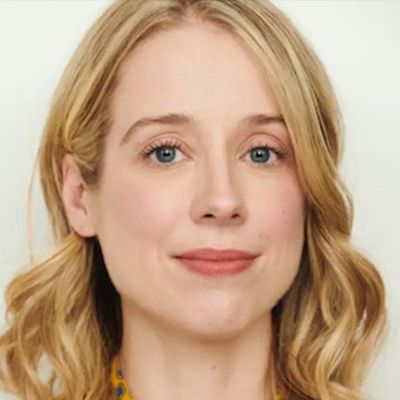
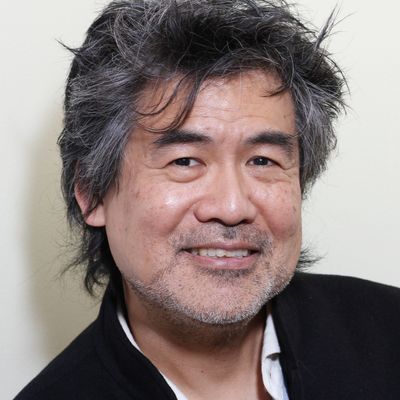
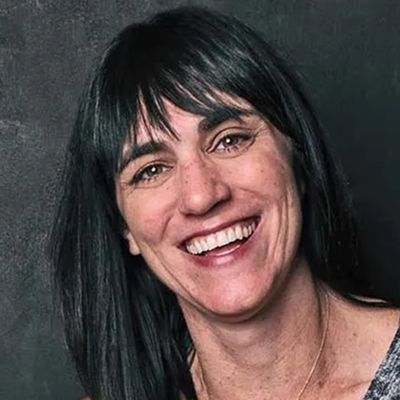
On this week’s show, Rob and Jamie spotlight “Soft Power”, the innovative new “musical-within-a-play” currently playing at the Public Theater. They are joined by playwright and lyricist David Henry Hwang, director Leigh Silverman, and two of the show’s stars: Francis Jue and Alyse Alan Louis. Together, they discuss the unique structure of the piece, its inception and content, changes made from California to New York, what it’s like playing living figures as characters on stage, and the current state of American democracy. Rob closes with some reflections on seeing his boss, Secretary Clinton, reflected back on stage.
This week’s music: selections from “Soft Power” and “The March of the Siamese Children” from “The King And I, 2015 Broadway Cast”.
Find us on Twitter & Instagram: @fabulousinvalid
Facebook: www.facebook.com/fabulousinvalid
Rob’s reviews: www.stageleft.nyc
Email us at: info@fabulousinvalid.com
Jamie Du Mont
Twitter: @jamiedumont
Instagram: @troutinnyc
Rob Russo
Twitter/Instagram: @StageLeft_NYC
Jennifer Simard
Twitter: @SimardJennifer
Instagram: @thejennifersimard
Transcript
This transcript was automatically generated and might contain errors.
[0:15] Jamie DuMont: Welcome to the Fabulous Invalid, a Broadway centric podcast where we take an in-depth look at the theater through interviews with actors, directors, writers, and everyone in between.
[0:28] Rob Russo: I'm Rob Russo, writer and theater critic with StageLeft.nyc.
[0:31] Jamie DuMont: Hi, Rob.
[0:32] Rob Russo: Hi, Jamie.
[0:33] Jamie DuMont: Well, I am very excited about the show.
[0:35] Rob Russo: I know.
[0:36] Jamie DuMont: This is an episode long, long in development for us.
[0:39] Rob Russo: We've been talking about doing this episode for over a year or two.
[0:43] Jamie DuMont: I mean, like since we met.
[0:44] Rob Russo: Yeah.
[0:45] Jamie DuMont: Basically.
[0:46] Rob Russo: Yeah, pretty much since like May of 2018.
[0:49] Jamie DuMont: Yeah.
[0:50] Rob Russo: Wow.
[0:50] Jamie DuMont: Yeah.
[0:50] Rob Russo: Well, it's here.
[0:52] Jamie DuMont: The day has arrived.
[0:52] Rob Russo: It's happening.
[0:53] Jamie DuMont: Should we tell people what we're doing?
[0:54] Rob Russo: Yeah, Rob, you do it.
[0:55] Rob Russo: Okay. Well, today we're gonna spotlight a show that we are both madly in love with. It's called Soft Power.
[1:01] Jamie DuMont: Self-described as a musical within a play, currently playing at the Public Theater downtown.
[1:08] Rob Russo: Book and lyrics by David Henry Hwang and music and additional lyrics by Janine Tesori.
[1:14] Jamie DuMont: It's a really interesting show to describe, and in fact, we asked David when he was on the show with us almost a year ago to describe it.
[1:21] Rob Russo: Beautiful job.
[1:22] Jamie DuMont: And he did a beautiful job. So I'm gonna read his description because it's gonna be way better than anything that either one of us would have come up with on our own.
[1:29] Jamie DuMont: Soft Power is a play that becomes a musical. The first 20 minutes is a comedy that takes place in 2016, and then the show jumps a hundred years into the future, and the incident we just saw has been mythologized and become the source material for a beloved East-West musical in China.
[1:45] Jamie DuMont: So theoretically, what you're watching for the rest of the show is a future Chinese musical that celebrates from a Chinese point of view how China stepped in to lead the world when America collapsed after the 2016 election.
[1:57] Jamie DuMont: So it's sort of a reverse King and I, if you will.
[2:02] Rob Russo: At least, you know, structurally or in the case.
[2:05] Jamie DuMont: And that's how they describe it.
[2:06] Rob Russo: Exactly, yeah. Returning to the show with us one year later is playwright David Henry Hwang.
[2:13] Jamie DuMont: If you don't know, he is a Tony Award-winning playwright, a two-time Pulitzer Prize finalist, and a three-time Obie Award winner.
[2:20] Jamie DuMont: His works include M. Butterfly, Yellow Face, and Chinglish, which was directed by another one of our guests today, Leigh Silverman.
[2:27] Jamie DuMont: Leigh is best known for her Tony Award-nominated direction of Violet on Broadway, as well as Lisa Kron's Well and Lifespan of a Fact.
[2:35] Jamie DuMont: And off-Broadway, Harry Clark, Go Back Where You Are, and In the Wake.
[2:40] Jamie DuMont: After we speak with David and Leigh, we will be joined by Soft Power cast members, Francis Jue and Alyse Alan Louis.
[2:47] Jamie DuMont: Francis has a long association with David, performing in his plays M. Butterfly, Yellow Face, and Kung Fu, and is actually playing the character of David Henry Hwang, or DHH, in Soft Power.
[2:59] Jamie DuMont: And Alyse, who was seen on Broadway in Amalie, Disaster, and Mamma Mia, is playing a character that I think Rob is very familiar with, and that would be his boss, Secretary Hillary Rodham Clinton.
[3:10] Rob Russo: Yes, I have to say, it was both times when I first saw the show and seeing it again at the Public. It's such a fascinating experience to watch someone who you know be represented on stage.
[3:23] Rob Russo: And I'll talk a little bit more about that at the end of the show.
[3:26] Jamie DuMont: Good. Well, let's get to our guests.
[3:28] Rob Russo: Let's do it. But first, we have one little nugget of news that we're not breaking, but we want to share with you.
[3:33] Jamie DuMont: Oh, that's right. And that is that our beloved co-host, Jennifer Simard, has been cast in the Broadway revival of Company.
[3:42] Rob Russo: We're very excited for Jennifer.
[3:43] Jamie DuMont: We are overwhelmed with glee.
[3:47] Rob Russo: I called her and left like a really long and emotional voicemail after I heard the news.
[3:55] Jamie DuMont: Because of all, I love this production I saw in London last year. We talked about it on the show.
[4:00] Jamie DuMont: Second of all, I'm just so excited to see her play Sarah, right?
[4:06] Rob Russo: Sarah.
[4:07] Jamie DuMont: Sarah, which was the part originally created by Barbara Barry, right?
[4:11] Rob Russo: It was in fact in the 1970, yeah.
[4:14] Jamie DuMont: I cannot think of a better actor to play that part.
[4:17] Rob Russo: Right?
[4:17] Jamie DuMont: Currently working in New York.
[4:19] Rob Russo: Oh my gosh.
[4:19] Jamie DuMont: So we love you, Jennifer. We're so, so excited, and we can't wait to see you on stage this spring.
[4:25] Rob Russo: Yeah.
[4:25] Jamie DuMont: Back on stage. I mean, we see her on stage at Mean Girls right now.
[4:28] Rob Russo: Yes, we've seen her several times in Mean Girls.
[4:29] Jamie DuMont: Several times at Mean Girls, but we'll see her in the spring.
[4:31] Rob Russo: Alrighty, so got that off my chest. Let's get to our interviews.
[4:36] Jamie DuMont: Let's do it.
[4:42] Jamie DuMont: David and Leigh, welcome to the Fabulous Invalid.
[4:45] David Henry Hwang: Thanks for coming down.
[4:46] Leigh Silverman: Thanks for having us.
[4:47] David Henry Hwang: Thanks for having me back.
[4:48] Jamie DuMont: Yes, David, this is your repeat.
[4:51] David Henry Hwang: Almost it was almost a year ago. We chatted.
[4:53] Jamie DuMont: Yeah.
[4:53] David Henry Hwang: So it's our anniversary.
[4:54] Jamie DuMont: Yeah.
[4:56] Jamie DuMont: Well, Soft Power, musical that we, you know, just adore, is a very unique show that requires its own very unique description.
[5:03] Jamie DuMont: And last year we put David to the test and we asked him to give us his elevator pitch for the show, and he knocked it out of the park, of course.
[5:11] Jamie DuMont: So, Leigh, we're gonna put you on the spot.
[5:13] Leigh Silverman: Oh no!
[5:13] Jamie DuMont: And see, I was like, that's giving it a say. So, Leigh, how do you describe the show to folks when they ask you, what is Soft Power?
[5:21] Leigh Silverman: So, Soft Power is a musical about our current political moment. It is a show that follows a guy named David Henry Hwang during a time that he met a Chinese theater producer who was in this country. He was working on a musical with him at the time of the 2016 election, and which didn't turn out so well. And then the subsequent hate crime that was inflicted on David. And basically what the show does is examine both this period of time in David's life and the period of time that we are now currently going through and how he was stabbed in the neck and this country was stabbed in the neck in musical form.
[6:10] Leigh Silverman: In 2018, Soft Power premiered at the Amundsen Theater in 1880.
[6:13] Jamie DuMont: 2018.
[6:14] Leigh Silverman: 2018, what did I say? 2008?
[6:15] Jamie DuMont: Pardon me.
[6:16] Leigh Silverman: I'm on very little.
[6:17] Jamie DuMont: That would be quite a long development.
[6:19] Leigh Silverman: Yeah, really. I mean not unheard of.
[6:21] Jamie DuMont: Not unheard of, exactly. Spring of last year, it's 2018.
[6:24] Leigh Silverman: Yes.
[6:24] Jamie DuMont: It premiered at the Amundsen Theater and then it moved up to the Curran in San Francisco, and now it's at the Public Theater.
[6:31] Jamie DuMont: What has changed with the show since California to now New York?
[6:38] Leigh Silverman: I think the change has fallen to a few different areas. One is that the woman sitting next to me, Lee Silverman, as well as composer Janine Tesori and our producer dramaturg Eustace really sort of dragged me kicking and screaming into looking at my character more seriously and what happened to me with more weight. And similarly, the musical itself, while I think still has it still has a lot of hilarious moments, I think we also took that more seriously, and we tried to pare down some of the things that were sort of sillier in the California version.
[7:23] Leigh Silverman: The play that leads into the musical has been radically rewritten to really hopefully focus the audience to understand what they're seeing when they come to the musical to understand that this is what happens when David is stabbed and he passes out and has this kind of fever dream.
[7:42] Rob Russo: Well, it's a tricky thing, I imagine, to write the musical sequence of the show because it is supposed to be sort of the greatest entertainment that the Chinese writers have written, right? So you're a hundred years roughly in the future seeing this polished, you know, gem of Chinese musical theater, if that's the phrase you know would want to use. But at the same time, so much of it is a satire of our own contemporary society. So how did you navigate having to sort of pull off both of those things?
[8:14] Leigh Silverman: Well, and to add to that, also really the whole thing is in David's mind.
[8:19] David Henry Hwang: Right.
[8:20] Leigh Silverman: So really the whole thing is, you know, it with kind of the Wizard of Oz is our North Star. It's like, you know, there is this play, this crime happens, he loses consciousness and then has this musical fever dream in which he imagines what it would be like if this polished gem of a musical was made from a Chinese point of view. And I think that as we've looked at the form and tried to figure out what's delicious about seeing some things twice played out exactly the same. What's interesting about seeing things played out in the opposite from how we saw it at the beginning, and what just feels a little bit like we've already seen it, who cares? And that has been a really big part of looking at how the form works and how to make it feel both delicious, exciting, unpredictable, and also clear in terms of our point of view and intention.
[9:16] David Henry Hwang: So much of the work that we did from LA and San Francisco to get to here, I think has to do with looking at how those events that we see in the play unspool in the musical. And I think we're also looking to replicate the sort of passion and craftsmanship and heart of the great musicals from the sort of first golden age of musicals in America. And if you look at the content of a lot of those musicals, you know, there's a lot of stuff in it that's really questionable or just wrong. And so the idea of creating a musical where the story we know is wrong, and yet being able to do it with that degree of heart and commitment. I don't we certainly wouldn't have been able to pull it off without Janine Tesori.
And I think one of the things that's so incredible about the score is you can know everything about the American musical theater canon and hear the way that she's quoting every single major musical inside of all of our songs, or you can know nothing about musical theater and just feel like these songs are fun, romantic, soaring, all of these incredible because her skill is so amazing.
[10:31] Leigh Silverman: And I think that is such an incredible thing to be able to have the score understood on multiple levels, and that you can come to it without knowing anything, or you can know. Oh, oh right, that's Music Man. Oh, that was Oklahoma. That was, you know, and you can feel the way that she's quoting and really turning music that we know and love so well into her own and kind of reappropriating it into this musical in a way that is so unbelievably good.
[11:01] David Henry Hwang: As Zoe says, it's the delivery system, right?
[11:04] Leigh Silverman: The delivery system, yeah.
[11:05] David Henry Hwang: If you've got all the right ingredients, you know, it still strikes you and it hits you at the heart.
[11:09] Leigh Silverman: Yeah.
[11:10] David Henry Hwang: Right, which is really a term that I appropriated from Janine Tesori.
[11:14] Leigh Silverman: Stuck into Zoe's man.
[11:16] David Henry Hwang: So maybe there's a little bit of Janine and Zoe that she's like, you're not the only analog of the show. This is a show, obviously, given the plot and the setting of it that tackles a host of contemporary social, political, cultural issues. So much so that you know every night almost the audience, the show can impact the audience in a different way based off of that day's news. How do you navigate that minefield, you know, from a writing perspective and from a directing perspective?
[11:51] Leigh Silverman: I mean, I think it was fairly obvious after the 2016 election that there were certain things that were going to play out over the next few years, including some sort of conflict with China. It was that a nationalistic government was going to feel threatened by the rise of a rival power and try to do something to stop that. So there's things like that that are in the show that yes have turned out to be true on some level, but I feel we're fairly easy to predict.
[12:26] David Henry Hwang: And then the other day I'm like, how did he know that was gonna happen? And then there's some things that we've just lucked out at, you know, like the fast food and the prevalence of fast food in the current White House.
[12:37] Leigh Silverman: Yeah. I mean, it's really speaks to how prescient David's been and how clear he was about what would happen.
[12:47] David Henry Hwang: And I would say that four years ago, before the 2016 election, when we started working on the show, it seemed like we were making a show that would be weird and crazy and sci-fi and fantastical, and in some ways the world that we're living in now is weirder and more fantastical than our show, um, in many ways, in fact. And the idea that um we would be questioning democracy, that we would be um practically in a war with China, that we would um think that our government was run by buffoons. I mean that the whole system that we were living inside of would be something that we would really think twice about on a regular basis about do we have the best system or not? I mean, that very question, the idea that we would be in a situation that we would be thinking about that all the time, every day, that that question would be rolling around in our brains: is democracy something that we want to hold on to.
It seemed impossible. It seemed like that that would never be and and have an urgency that it does right now. And here we are, more that that question is more urgent than ever, particularly as we face the 2020 election.
[13:55] David Henry Hwang: When do we vote? When do we vote? On the Tuesday after the first Monday in the month of November, the month of November, on the Tuesday after the first Monday in the month of November. We're voting in America. I got it. And so, in many ways, it seems like the idea of the show has only been it was easy to move the show in a direction of taking itself more seriously because we take it more seriously because the questions feel less crazy and more, in fact, part of our everyday fabric of our lives. And in the same way that, you know, one can say that America was stabbed in the neck in 2016. We can also say that we've all been living in a sort of a fever dream since 2016. That the things that we accept as normal now would have been kind of unimaginable five years ago. And so the fact that David falls into a fever dream in this show and dreams this musical sort of functions as a metaphor for where we all are as a country.
[15:08] David Henry Hwang: I mean, an original version of this show is trying to investigate China's desire to gain soft power. And I think what the 2016 election did was make this a show which maybe starts out with that question, but certainly ends with the question has America to what extent are we losing our soft power, and um is there the possibility of regaining it? So I do feel that you know we're we're living through this mo this big historical moment. And it's hard to write about the time you're living in. Um, so the device here to sort of pull back and try to perceive it, yes, it's in David's heads, but David is trying to look at it as if from a dis the the lens of history, uh, I think helps to kind of process a method for looking at the times that we are in right now.
[16:05] David Henry Hwang: And something that I thought of the first time I even read about the show is the fact that now that this musical, well this musical within a play, to use the proper you know uh line exists, it is now a part of history, and it will exist you know forever as long as you know we're recording things and passing them down and sharing them. Um you you talked about when we talked with you last year, the fact that there are very few musicals about Asian Americans or with Asian American characters. Um and this is now a new entry into a short list of musicals that call for a cast with Asian American actors. Um that's very exciting. And certainly by the end of the show, all that point is very clearly made and is very powerful. And that is that is something that has changed, right, since since the original production.
[17:02] David Henry Hwang: Um yeah, I mean, the we the ending is different here than it was in California. I think the California ending was more of a sort of full-throated one might say um simpler affirmation of democracy as opposed to this version, which we we really worked on to ask a question, which is, you know, are we going to survive as a democracy? Are you the sort of current crisis of democracy that's happening all over the world, really, not just here? Um and if so, uh how can we inject a sort of note of hope, however tentative? And I think that's that's how it ends now. Also affirming this notion of having an all-Asian or virtually all-Asian cast on stage, which is talking about America, which is commenting on this country, whereas so many times we are considered not part of this country, we're considered sort of perpetual foreigners.
[18:08] David Henry Hwang: Yeah, I mean, I think it's a revolution to have a show that has mostly all but one Asian American actors on stage who are being asked to do things that typically Asian American actors are not asked to do, be in leading roles, not just be sidekicks, not just be sexy girlfriends, but to in fact um inhabit and embody every single character with um a sense of humor and a sense of style and a sense of um seriousness and gravitas. And I think it's um I mean, I think a lot about because we're on on the Newman stage, which is where a chorus line was done, and I think about what it must have felt like at that time to see that show, and I look at our cast, and I think it's um it's a bold statement, and I think it's a really important one in this moment to say um this is a story that needs to be taken seriously, um, and not only because of the story itself, but because of the people who are telling it.
[19:12] David Henry Hwang: And um, it really asks the audience to um understand, I think uh, because of the King and I reference, because of the way the show is set up, that um this is a cast of people who haven't been looked at um enough and haven't been given the respect that they deserve and the parts that they should have. And it feels like a dare, and in a way, um uh I I mean it's one of the things that I love most about the end of the show to see to see them there saying um this is America. And and I think it's a very um it feels particularly um right now, it's um it feels like how can you turn away from that? And just to be specific about yours referencing earlier, sort of the the uh paucity of these sorts of shows, um it, you know, this is really the third show in all a Broadway history that has uh that features Asians as Americans in as opposed to Asians being foreigners.
[20:22] David Henry Hwang: Right. I mean, at a very early rehearsal, one of the um women in our company said that you know she had never really been in a show um where she hasn't had to bow to a man. Wow. Um and I was very moved by that. And certainly if that is not the experience of um white actresses, white musical theater actresses, you know, they can say, Oh, I have had you know crappy parts, but to be able to say that, and that this is the first show for her where that's true. I think it's um I mean, what's more important than to feel like you can be in a show and um have more experiences than just that? Let's hope it's the beginning of a huge shift.
[21:09] Rob Russo: Let's hope. Speaking of shifts, Lee, how has your relationship to the King and I changed drastically since you've started working on this show?
[21:18] Leigh Silverman: Well, you know, it's so funny. I uh you know, I've always you know, whatever about the King and I, you know, I I whatever. But you know, David and I saw the King and I together because one of our other collaborators, Hoon Lee, who we worked with on Yellow Face, was in the King and I Lincoln Center and we went to see it and um and you know it's it was it's funny to think about us sitting in that theater at that time being really excited and and proud of who that now we've now spent all these years working on this other show, which is really takes that show apart. But I do um, you know, I guess what I feel like is I and I think David, I think I s I I think you agree with this, but I I believe the King and I should be done. I don't think that we should stop doing musicals.
[21:59] Leigh Silverman: What I believe, and I I have directed other um revivals of problematic musicals, and you know, I think that that what they need is um a point of view and that they need an understanding of what the material is and it needs to be examined um so that they're not museum pieces, but that they're done, but they're done with um respect and they're done with um with uh uh a look at um what's problematic about them and a rigor. And so I think that do I speak for you when I say that? So so just to say I love I think the King and I is um incredible. We many of the pe as I was saying before, many of the people in our cast have been in the King and I multiples and multiples of times. And um, you know, it's a show that should be done.
[22:43] Leigh Silverman: I just think, you know, what I would love to see is like a double bill or like a two-parter where you see the king and I and then you see soft power because I actually think they would talk so beautifully to each other. And in fact, you know, what um what R and H did with that score, what Janina's done with our score, I mean, they they those pieces are um they're communicating across time. And so I I want I wanted it to be done, but I would also like it to be done with people having an understanding of what they're seeing. And I do feel like soft power brings some of that understanding to people who maybe haven't thought of it quite that way.
[24:07] Rob Russo: That should be like sign me up, call Lincoln Center Theater.
[24:11] Leigh Silverman: I know, right? Call whomever, just let's make that happen.
[24:13] Rob Russo: Dueling pulpits, you know.
[24:15] Leigh Silverman: Yeah, exactly. But it's true, it's through that lens, you know, if you look back and through the lens of of how something was made, but what's wrong with it and and how we can change is how change happens, right? That's that's an important part of why it shouldn't just be a museum piece. You have to take a fresh look at it and examine what's really in there.
[24:36] David Henry Hwang: Yeah, yeah. I think you have to hold um, you know, somewhat competing notions in your head, which is um King and I is a beautiful musical. It's almost arguably, you know, perfectly constructed. Um it was very progressive for its time. Um we can appreciate those things while also understanding the degree to which um there's things that just are probably wrong about it.
[25:02] Rob Russo: We have one, well, actually, we have two questions left that we wanted to ask each of you. Um the question that the show asks at the end, which is do you still believe in democracy?
[25:17] David Henry Hwang: Yeah, I mean, I feel like it's um flawed.
[25:25] David Henry Hwang: It's frequently, um, maddening. And I think the, um, just like works of art and people and all the things that matter, like the harder they are, usually the more worth it they are. And I think that we are in a place right now where, um, we're feeling how important it is because it's slipping away. And I feel that very consciously. I don't know. I think I would have taken it for granted, actually, if it wasn't for this moment. And if there's any silver lining to this, you know, total shit show that we're in right now, it would be that I think we've all come to appreciate, or at least I feel strongly that I've come to appreciate, um, what we have in a way that if we hadn't had to fight for it, I wouldn't have understood it.
And, um, it has made me want to understand, um, our constitution. It has made me want to understand, um, how art can function in this time. I think it has made many pieces of theater that feel urgent and necessary. I think it has made those pieces more widely accessible, and because more people want to come together and commune and figure it out. So I guess what I feel like is yes. And also we have to look at it. I think just we were saying about old musicals, we have to look at it and say, they made that document a long time ago. And like, you know, we like what can we bring to it with fresh eyes? And, um, and who does it leave out, and in what ways, and in what kind of, um, what kind of holes are there inside of that, um, idea of democracy that has allowed for this situation to happen.
Um, at the end of our show, uh, the DHH character is sort of given the opportunity to go to China if he wants to feel safer and chooses not to go. And I, uh, that's my position too. I mean, I don't want to live in China, I don't want to live, um, in, uh, an authoritarian system. Um, so I believe in democracy, and, um, majoritarian democracy, just of voting in and of itself is probably not sufficient. Um, we need democracy and we need education, um, and we need, uh, a means of dialogue, and we need to respect our social structures and strengthen them. So democracy exists within a whole context, um, which, uh, we also need to be attentive to and which has rapidly eroded over the past few decades.
Wow. Just letting that one sit down. For a second. Um, and it also sounds like the Constitution's in need of a rewrite. Potentially. Yeah. I mean, I think that's what Heidi Shrek's show, you know, we talk about Heidi's show all the time. And I mean, there's a couple of plays that we have used as, um, as real, um, beacons for us over these couple of years. Um, Ann Washburn's play, Mr. Burns is one, um, Heidi's play more recently. And I think that, um, that question that Heidi poses at the end of the play and the way that that play works has very much influenced. I think we were all really, um, taken with it. We've, we all saw it multiple times, and I think, um, it's, uh, it's just asking the question feels, you know, it felt so radical, and now it feels like how could we not?
Right, how could we not? Well, we had one last question that we wanted to ask Lee since we asked you, David, last time when you were on the show. This is our perennial question we ask everyone. We ask everyone. Oh good, oh good. You're in good company. Which is, um, what was the show or experience that happened earlier in your life that made you want to work in the theater?
[29:18] Leigh Silverman: Oh wow. Um, I mean there were so many. I mean, I grew up, uh, in Washington, DC, and so I was, I went to Arena Stage and Zelda Fitchhandler ran that theater, and I, I can honestly say because of her, um, and because I had the opportunity to see plays that she directed and she was running that theater, and I was just like, of course, you know, women, and it wasn't until much later that I was like, oh, oh wait, that's, that's weird. Oh, you know, because it felt so I'm really, I feel like that was a big, big part of it. Um, and then I think that I saw Lily Tomlin's solo show that she did when it was touring through the Kennedy Center, and I was 10, and I just felt like every hair on my body just stood up, and I thought that was the most incredible writing.
And I remember I, you know, I remember my parents sort of feeling like maybe that play was too weird for me or too sophisticated. And then I remember, you know, I begged them to buy it for me, and I just was pouring over it in my bedroom, and I thought, oh, words can do magic, and there is, um, a kind of unbelievable liminal space that happens between a word on a page and then the way that someone can perform it. And, um, and I was also an only child and extremely bossy, so I was like, I need to figure out how to get in there with somebody and make that happen. Because I was really excited about that play, and I think it inspired me to want, um, to do it and also to figure out how it worked so well.
Like, why did that play work like that? And partly it was the text and partly it was the performance, and partly it was the magic in between. Well, thank you for sharing your magic with us. Uh, we're all the lucky beneficiaries of Soft Power and your creative brilliance, both of you. Um, thanks for coming down and chatting with us.
[31:23] David Henry Hwang: Thank you.
[31:24] Leigh Silverman: Thank you guys. Great to be here.
[31:36] Rob Russo: Now we're joined by two of the show stars, Francis Jue and Alyse Alan Louis. Welcome to the Fabulous Invalid.
[31:42] Alyse Alan Louis: Thank you.
[31:43] Francis Jue: Thanks for having us.
[31:44] Alyse Alan Louis: Thanks for coming down.
[31:48] Rob Russo: Maybe at least we'll start with you. What was your relationship to The King and I before you started working on this show?
[31:49] Alyse Alan Louis: The King and I was actually one of my first shows as a child. I played the littlest child in a summer stage, Upper Darby Summer Stages production of The King and I in Upper Darby, Pennsylvania.
[32:04] Rob Russo: Excellent.
[32:05] Alyse Alan Louis: Yes.
[32:06] Rob Russo: Press.
[32:07] Alyse Alan Louis: I really wish I'd played the King in your production.
[32:10] Francis Jue: Because turning you around would have been just awesome.
[32:14] Alyse Alan Louis: I actually, the reason, the whole reason why I'm in this business is because I saw my third oldest brother, Jeff, play The Prince in a high school production of The King and I, which was brilliant. He was one of two Asian people in the company. But I was so entranced by this beautiful show, which the high school drama teacher had choreographed with all of the original Jerome Robbins choreography. And it was just beautiful. And I couldn't believe that Mrs. Anna was actually crying on stage. And I was so shy. I couldn't talk to people when I was 11, 12 years old. And I just knew that that's what I had to do. And that everyone in that show was Siamese. It was like having grown up Catholic, it was like the transfiguration.
It was, they were, it was a really spiritual moment. And then eventually I got to play the king in, uh, a few different productions. And I, I at first turned it down because I didn't want to embarrass myself. Because the only kings I had ever seen had pecs the size of my head. And I, I was like, I'm not gonna take my shirt off. If I'm doing it, I'm not gonna take my shirt off, and I'm going to study the real king and I'm gonna try to inject that into it. And Paul Blake at DeMuni said, well, all right, that's the kind of king I want. Okay. And, um, my god, you do a great Paul Blake.
[33:41] Francis Jue: Oh, I love Paul. And, um, he invited me over to his apartment to show me costume renderings of all the vests I would wear so I wouldn't have to take off my shirt. And then I got to the Muni, and it's 105 degrees in the shade. And I'm like, please can I take my gloves off? An all nude production of The King and I've been hacking. That's the concept. Yeah, it's all Calcutta, maybe. It was great. It was actually really great. Well, jumping forward to Soft Power. Um, you each are in the unique position of playing characters that are based off of real people, uh, and real people who are, you know, still alive and in the world very much. Alyse, you play, of course, uh, a fictionalized version of Hillary Rodham Clinton.
[34:22] Alyse Alan Louis: Yes.
[34:22] Rob Russo: And Francis, you play a fictionalized version of the playwright, David Henry Hwang, who's gonna be a good show, no pressure, right? So, what's it like for each of you stepping into the shoes of a real person?
[34:36] Alyse Alan Louis: I think I took that on so much out of town when we did the show. Uh, even though I'm playing a fictionalized version of Hillary, I definitely, um, took that pressure on of, uh, there being a real person who I admire in the world and me playing a character by that name. As I've lived in the piece and found my fictionalized version of this character, it's changed the way that I am in every room that I walk into in this business now, working on this show. It's been life-changing.
[35:13] Rob Russo: Wow. When do you say it's changed who you are, what can you unfold that a little bit for us?
[35:20] Alyse Alan Louis: Yeah, I think this character, Zoe, who I play in the play and Hillary, I believe that you're seeing the character of Hillary in public and in private in a way that I've never played a character like this on stage. And I think in building the character of Hillary, there's been many moments of having to demand attention and not ask for permission. And this is something that I have had trouble with as an actress in this business. Standing up, standing still, demanding attention without asking for permission. Physically standing in a room without apology, not apologizing for things I'm not sorry for, breaking down my own conditioning as a woman in the profession that we're in. And I'm, I'm sure it's also because with Lee and Janine at the helm, I have two women who have encouraged me to do so because I watched them do that in our room.
So that's what it's like. Yeah. Building this show, building this character. It's really been life-changing to step out of this room and go into others and say, okay, I'm gonna demand attention and not ask for permission in every room in hard. It's difficult. Still those moments where I'm like, am I a bitch? Am I asking too much? Do I deserve this? Um, but also you do, no, you're not. But also keep doing it. But also that's what this character, I feel like, is also going through. I know nothing about being in politics, but I know a lot about being in a business where you're performing. It's a big, big show. Yeah, you're performing a hundred percent of the time, you know. Who am I not performing for?
This is something I think about when I'm playing this character. Um, and so in building her and thinking about it in terms of my own life, this fictionalized Hillary, also this character of Zoe, it's really now a part of how I see myself going on from this room and taking it into others.
[37:22] Francis Jue: Wow.
[37:26] Francis Jue: Well, before I talk about me, I, I just I'm grateful for this opportunity to say something about Elise in public. And I just have to say that over the course of, you know, almost two years now, watching her build this character and helped to build this company and helped to build this show, which has, as you know and have seen, has evolved over time, both in its tone and in, um, how seriously it takes itself.
[38:00] Alyse Alan Louis: I have been amazed and awed by how courageous Elise is. It's broken my heart so many times before, but this one was the worst. Left me screaming on the floor. I was taught in the land of the free, in the land where they screamed at me life, liberty. How can I turn my back on democracy? It has made me braver to watch you, Elise. And as the creative team has tried, has really been tough on themselves, where the relationship between this Chinese producer and Hillary Clinton is concerned, and then as they got tough on themselves about answering the question, why is David in this play? Why did he put himself in the middle of this play that becomes a musical? And what does it mean that David in fact got stabbed in the middle of the street?
And you know, there are plenty of ways to make a joke out of it. I mean, he indeed did return the groceries home before he walked himself to the hospital. He did indeed say, I think I'm gonna faint now before he passed out, once reaching the ER. And, you know, as soon as he woke up in the hospital, he was already on Facebook making jokes about it. The man is incredibly brilliant and funny, and has a great way of turning things into hilarious stories, but I think over the course of working on this show in the last three years, he's really started to cope with what it means in the current context in this country as well, to have been a victim of a hate crime and almost dying, and being a rich, successful, renowned leader in his industry and in the community, and none of that protected him.
And what does it mean to assume that you're an American with certain rights, and suddenly none of that actually matters in a moment and for that not to be solved? And because he's had to face all of that, playing him in the show, I've had to face all of that. And we've actually particularly about the very end of the show in rehearsals, had discussions about being an other. And how you grow up censoring yourself, you grow up wondering if you're ever going to reveal the thing that gets you excluded, saying the wrong thing, wearing the wrong thing, behaving the wrong way, whether it's because I'm Asian or because I'm gay, or because I'm little, or because everyone assumes I'm a tenor and I'm not.
When I look at the rest of this company on stage at the very end of the show, and I know how talented they are, how devoted they are, how disciplined they are, and what great people they are too. And to know that the vast majority of them are only waiting for the next audition for Miss Saigon or The King and I, that breaks my heart every single performance. And then I get to look at the audience and ask them do you see them in other shows? Do you see them as human beings even that you can relate to? And I gotta say that it's because this show is so beautifully written and beautifully staged that it has never failed to move me when I look out at the house and see people really understanding and feeling the same sense of trauma and so sympathizing in a really emotional way.
I mean, and it's so generous, I think, of David, because he could have looked at the audience and said, "Fuck you. Yeah, you're part of the problem. Yeah, you stabbed me." But what he actually is saying is we've all been stabbed. We've, you know, we're all living with this trauma. No matter what side of the aisle you're on, everyone is feeling attacked. Yeah, everyone is feeling victimized by this time that we're living in. Some people started feeling that when they were little, other people started feeling that in 2016. So, you know, and he doesn't have an answer, he's just asking the question, you know, what are we gonna do?
[43:51] David Henry Hwang: What, 10, 11 years ago when he wrote Yellow Face, very late in the process, um, he added a line for his own character at the end, which is a show all about mistaken identity and, you know, a white person shouldn't play an Asian person on stage. And he mistakenly casts a white person as a yellow person in his play, and, you know, drama and hilarity ensues. And at the end of the play, his character who represents himself says, if my father imagines that he could be Jimmy Stewart, why can't a white person play an Asian person on stage? And for a while, when that line was introduced in the script, the company really flinched. Like, isn't that, isn't that not what we're saying in his play? Um, and yet that truly is what David is driving at.
We're not there yet, perhaps, where I would, where I or he would say, yeah, it's okay to for, you know, a white person to play the king or to play DH in Soft Power, but, uh, but isn't that the goal? You know, we do have ideals, and in this, in Soft Power, the ideals are what we learned in the Pledge of Allegiance and the preamble to the Constitution and the Declaration of Independence, and we're not living up to it. We never have completely. We're closer than we were, but we, we ain't there yet.
[45:29] Alyse Alan Louis: Well, Elise, I'm interested to hear from your perspective as the only white person in the cast, you know, you and your standby are the only white actors in this ensemble. What has that sort of taught you of?
[45:44] Francis Jue: I think it's more important that I'm surrounded by an entirely Asian American cast rather than me being the only white person. I think that being a part of this family, who really at this point we're all family. The way that my Asian American cast members have trusted me with their stories, trusted me with their feelings, felt like they could share that with me. They could share their experiences. And that's what this experience has been like for me being with them. They're my chosen family.
[46:38] Alyse Alan Louis: Yes, there you go. I do. I want to hear all about it. Those campaigns and the night, you know.
[46:45] Francis Jue: Right. I mean, I was there through it all, you know. But it was interesting is I twice, yeah, no, in a way it ends in 2016. Yeah, it's been quite a journey. But I talked to her about the show when I first saw it in LA, because I did catch the show at the Ahmanson. And you know, every time I see something where she's a character, which isn't that often, but you know, I have also an extra set of antenna up about like, okay, well, how am I gonna feel about this since I know this person, right? You know, and what I said to her afterwards was, you know, it's a very humane portrait of you, and you know, you're definitely a character, right? I mean, it's you know, because obviously it's an imagined story, right?
I mean, you didn't actually fall in love with a Chinese film executive. But what I said to her was there's one part in the beginning of act two where you know she's cramming pizza and ice cream down her throat, and I don't know, that just felt like maybe that wasn't you, and she laughed and said, "Well, actually, not too far off." I'm really proud of that moment. Yes, I'm very proud of that moment because as we staged that, as I was with David Lee Janine staging that moment, when I would get food, you know, on my face, on my hands, and I'd wipe it off and have these long conversations with them about the fact that, but you're in private, nobody's with you, and what do we do to cope? Right. What do we do to self-soothe?
And so this is sort of what I mean about it's in the last number democracy when I'm singing out there and I'm alone and I'm talking about my belief system, but there's also an unapologetic nature to expressing what you're going through in private, no matter what feelings come out, how hurt you are, how you feel in the moment, eating your feelings, making sure that I'm not taking anything away from my face, my hands, Janine and Lee would be like, do not wipe anything off. As you're eating, as you are to have been hard. I think it felt in many ways very freeing. It felt extremely freeing to feel like I don't, I am enough, just as I am here, with food on my face, in a tattered suit, expressing my anger, my sadness, laughing through it, crying through it.
These are things that I admire about the character I'm playing. And these are things that I would hope if the real Hillary saw our show that she would find relatable. Right. And at times, I mean, we say all the time, I say all the time like I don't care what people think, I don't care, right? But I do, I do. And I think in terms of my journey with this show out of town and here, I sometimes worry and or I sometimes have thought about like, well, do I get pressure put on me to be the real Hillary? Although sometimes I feel like if the real Hillary was playing this character, people would still think that she wasn't real enough. Yeah. Because that's what we put her through as a nation when she ran.
And so there are many times where I feel that I think that's actually given me even more strength in this run, feeling like, well, my version of this person is who you get. And if you think that another performer should be playing her, or you think that if the real person was playing her, that wouldn't be enough. I don't know who would be able to play her to, because that's also how this character is built. She's built to not be able to do enough.
[50:41] Alyse Alan Louis: And as women, I think we know that feeling all too well. So that's been really interesting for me.
[50:48] Francis Jue: Yeah, I was just about to say, I mean, that's that's the brilliance of David and selecting. I mean, you could have chosen any political figure, you could have set this in any time, he could have used any convention he wanted, and he chose Hillary Clinton for a reason, right? Because of what you've just said, right? I mean, the endless unpacking and and uh criticism, and you know, it it makes for to put that character on stage, her as a character on stage, you know, it it opens up so many possibilities and it to talk about a lot of you know the the way that our culture um looks at women.
[51:21] Alyse Alan Louis: Yes, women and politics, you know, as a separate uh, you know, category, um, and our politicians generally, right? I mean, the idea of putting on a show of you know policy plans not being good enough, that you still have to take those selfies and you still have to tap dance essentially.
[51:39] Francis Jue: And twerk and twerk, twerk for those votes.
[51:41] Alyse Alan Louis: Yes, twerk for those. That should go on a button. And and feel like as we were building that dance number as well, that to change the tone from in the moments where, well, I I don't want to give any much away about that number, because a lot happens, but there's a moment where if we're if I if she's dancing for her voters and there's a particular style of dance that's say a little more risque than another part of the dance, um, there were times where I would be like sticking out my tongue as I was doing those moves. And so my the our choreographer Sam Pinkleton, our associate Sonny Hit, um Lee, Janine, David, we'd have these long conversations about the fact that uh to be that cheeky about the style of dance or to not really take it seriously that you're getting people on your side.
[52:26] Francis Jue: Um, that's when the tone changes from satiric to serious to true. How can I perform this dance and really feel like I am pulling out all the stops for the people that I love because I don't know Hillary personally, but what I think I know about this person or the essence of her is how much she loves the people. And so then it's those moments of being like it's easier to be funny because it's harder to stay true. And so I think that's also been something that has shifted with all of us. As if we worked on this piece again, that's been something that the team has really talked with us about. Like it is much easier to be funny, to laugh something off, to be cheeky, you know, and I think it's harder to actually commit to the truth.
[53:20] Alyse Alan Louis: Yeah, my my experience of people after the show uh coming up to me and commenting on the fact that Hillary is in the show. Um, if if they loved Hillary already, it was just such wish fulfillment. Like we wish that she could eat pizza and ice cream and fall in love and be loved back, you know. Um, and for those people, even you know, progressive liberal people who did not like Hillary, they to a person have said to me that they came to an understanding and a sympathy for Hillary that they hadn't realized that they could possibly feel for her.
[54:01] Francis Jue: Um I I will say one at one particular talkback after a show, a woman raised her hand and she really wanted to know her burning question was in real life did Hillary kiss the Chinese man? And that's how good this this delivery system is like musicals, right? She thought that we were depicting something that really happened, might have really happened. And I I asked her, well, what what are you hope happened? And she says, Well, if she wasn't married, I hope she went for it. And, you know, I just think that's one of the best things I've ever heard about the show.
[54:42] Alyse Alan Louis: Well, there is uh a question that the show asks that is, you know, uh pretty obvious anybody's seen it. But um in the end, you know, essentially Hillary's point, which is inspired by Zoe's point very early in the play. Um it's so tautly written, um, is you know, do you still believe in democracy? And it's a question that we were just talking to Lee and David that, you know, many of us have never asked or had to think about until the past couple of years. Um so I'll throw the question to you, as Francis and Elise, not Hillary and DHH, uh, do you still believe in democracy?
[55:28] Francis Jue: I believe in theater, which is largely a totalitarian regime. But I I believe in its aspirational aspects, like going back to when I was a kid and watching a high school production of The King and I. And it allows us to imagine a better world, sometimes in a hilarious and ridiculous ways, sometimes in really dramatic ways, but it gets us outside of ourselves. We get to identify with someone else. It's an act of compassion. And I think that that's what democracy is. Is um it has the all of that potential and it has all of that um hope that we are caring enough about other people to vote on certain things. But it's like any like any other system of government, it is imperfect. And maybe because uh people get to vote, you know, uh we're all so stupid about so many things. Why should I have a say in, you know, where the water pipes should be, you know, I I any anything. So uh yeah, I I believe in democracy, but um I don't I don't think we are living in one quite yet.
[56:57] Alyse Alan Louis: I feel a complicated relationship with democracy. I think it's complicated. I would say that's something that's probably felt for many of us living in this country right now. Um but it gives me a lot of hope to be in a show like this and to be asking these questions. And if democracy is all about the people, like I believe in people, I believe in the good of people. And so whether or not in that complication we can come to an understanding and create an even better belief system that's my hope.
[57:37] Francis Jue: And I'm guess what I really should know. I forget that it's such a big big show.
[58:15] Rob Russo: Rob here with you maybe wondering. Following our conversations with Lee Silverman, David Henry Hwang, Elise Allen Lewis, and Francis Zhu about the brilliant musical within a play that is Soft Power, I have to admit, my head is spinning a little. When I first heard about the show in 2018, I just so happened to be heading to Los Angeles, so I bought a ticket and I caught a performance at the Amundsen Theater, where it made its world premiere in a center theater group production. As you may know from our interview with Hillary Rodham Clinton last season, or as you might have picked up from our conversations on this episode, I've worked for Secretary Clinton for over a decade now. And she just so happens to be a character in Soft Power, so I really had to see this show as soon as I could.
[58:54] Rob Russo: You may be wondering though, what is it like for me to see my boss reflected on stage as a character in a musical? Well, as she said on the show back in June, it's kind of an odd experience for her to see herself rendered as a character in any form of media, which makes sense. I mean, imagine if someone made a movie or a musical where you were a character. Of course, they'd get a lot wrong because no one can truly know the truth of someone else's life. Then again, sometimes it does take a third party to point out elements of your own character that maybe you're just too close to see.
[59:24] Rob Russo: Getting back to Secretary Clinton. I got this question a lot when Lucas Nath's play, Hillary and Clinton, was on Broadway last spring. That play is set in an alternate universe where a woman named Hillary, who is married to a man named Bill, who used to be president, is now running for president herself. Sound familiar? The play dramatized a short period of time in the lead up to the New Hampshire primary in 2008, which then Senator Clinton famously won, re-energizing her campaign. That play, which took a serious look at past events that are now history, attempted to demonstrate a psychological portrait of Secretary Clinton and her marriage. While I'm certainly too close to be objective, I didn't care for it.
[1:00:01] Rob Russo: When it comes to Soft Power, though, the story is different. Instead of a thinly veiled examination of recent history, the musical within Soft Power is a fantasy, an imagined story involving Hillary Clinton that has become mythologized some 100 years into the future, and that exists entirely in the dream state of the character DH, after he's near fatally stabbed on a Brooklyn street. Since the character of Hillary is exactly that, a character existing in a fiction, seen through the eyes of Chinese musical theater writers in the future, there's a freedom of dramatic license that allows someone like me, who knows the real Hillary Clinton and audiences writ large, to observe larger truths about the former First Lady Senator, Secretary of State, and presidential candidate's status as a symbol, but also her legacy as a leader, divorced from the day-to-day back and forth of temporal politics.
[1:00:47] Rob Russo: In this way, oddly enough, the Hillary Clinton of Soft Power comes across as more truthful than the Hillary Clinton of Hillary and Clinton, precisely because she's not meant to be the real thing. Obviously, they are two very different works, attempting to make different points and examine different aspects of Secretary Clinton's identity, symbolism, and place in history. But it just so happens that they both played New York in the span of six months. So, what is it like for me to see someone I know as a character in Soft Power? The truth is, whoever you are, you have a relationship with Hillary Clinton that will color how you see and perceive her betrayal on stage, which ultimately speaks to David Henry Hwang's intelligence as a writer and dramatist in choosing her as the American leader he had mythologized in his reversed East West musical within a play.
[1:01:29] Rob Russo: The title, Soft Power, is a term coined by political scientist Joseph Nye that refers to the way in which the culture, political values, and foreign policies of a country can exert their influence around the world non-coercively. In the show, there's a big debate about American democracy, as we talked about on this episode, and the power of our example around the world. In choosing Hillary Clinton, David was also choosing someone who, as a symbol, but also as a real person, a leader, has played a major role in flexing America's soft power, particularly in the way she comported herself following the 2016 election. Musicals are also a source of soft power. And this show in particular gives me hope for the future of the form and its influence both in America and around the world.
[1:02:18] Rob Russo: Rob here, that's our show. Thanks for listening. You can hear us anytime on iTunes. The Fabulous Invalid is a production of OM Etc. and the Fabulous Invalid LLC, and a proud member of the Broadway Podcast Network. Our theme music is by Lucky Chops. Today's episode was edited and engineered by Charles Van Kirk. You can find us online at the FabulousInvalid.com and on social media at Fabulous Invalid, and on iTunes, Spotify, and wherever you find your podcasts. And if you like what you hear, please rate and review us on iTunes. And be sure to tune in next Wednesday.
© Broadway Podcast Network, All Rights Reserved