

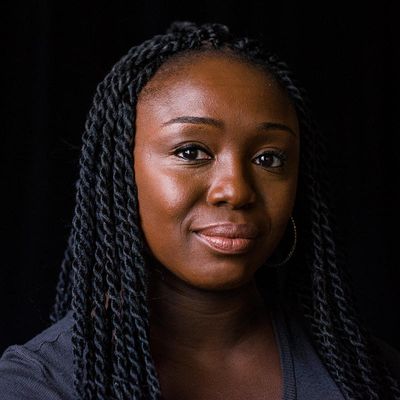
On this episode, we chat with actress and playwright Jocelyn Bioh, whose play, “School Girls, Or the African Mean Girls Play”, is currently running off-Broadway. We discuss her brilliant play, colorism, taking chances, working the “Shrek” lottery, and reality television... Read More
From the show: The Fabulous Invalid
Guests
About
On this episode, we chat with actress and playwright Jocelyn Bioh, whose play, “School Girls, Or the African Mean Girls Play”, is currently running off-Broadway. We discuss her brilliant play, colorism, taking chances, working the “Shrek” lottery, and reality television. Rob, Jamie and Jennifer discuss hugs (not Jamie’s favorite thing), making art, revivals and death (a podcast favorite). Rob gives us a look inside New York’s incredible MCC Theater, where “School Girls” is currently playing.
Transcript
This transcript was automatically generated and might contain errors.
[0:00] Jamie DuMont: I'm Jamie DuMont.
[0:01] Jennifer Samard: I'm Jennifer Samard.
[0:02] Rob Russo: And I'm Rob Russo.
[0:04] Jamie DuMont: And this is The Fabulous Invalid.
[0:19] Rob Russo: So yeah, you know, one of the things I noticed I do. Because you know this is all like self-discovery for me.
[0:24] Jamie DuMont: Frogs.
[0:25] Rob Russo: Well, say something for Jennifer.
[0:26] Jennifer Samard: Yeah, yeah, yeah, yeah.
[0:27] Rob Russo: Yeah, yeah, yeah.
[0:28] Jennifer Samard: I'm not used to hearing my voice.
[0:29] Rob Russo: No, I'm doing what I do.
[0:30] Jennifer Samard: Yeah, yeah, yeah, yeah, yeah, yeah.
[0:32] Rob Russo: I say that all.
[0:33] Jennifer Samard: I just laugh at everything. That's apparently my.
[0:36] Rob Russo: I giggle the whole time.
[0:38] Jamie DuMont: It's actually very charming.
[0:39] Rob Russo: I'm trying.
[0:39] Jamie DuMont: I'm trying to.
[0:40] Rob Russo: And you're common focused, Jen.
[0:42] Jennifer Samard: Am I really?
[0:43] Rob Russo: Yeah, you really are. You really are such a I have to say Jennifer Samard. Of the many things I love about you, you really are a very focused, very calming, very full of love human being.
[0:54] Rob Russo: Like it Rob and I were talking about this earlier. My friend Charles Tolbert says that giving Jamie DuMont a hug is like getting a body check.
[1:02] Jamie DuMont: Because I'm not a I'm not a huggy person.
[1:04] Rob Russo: Okay.
[1:05] Jamie DuMont: But you make me want a hug.
[1:06] Rob Russo: Rob, Jennifer, what's going on?
[1:09] Jennifer Samard: Okay, I know one thing. I read a little bit of sad news. Uh this last week.
[1:14] Rob Russo: Carol Hall died at 82.
[1:16] Jennifer Samard: Carol Hall was the writer of the 70s musical, The Best Little Whorehouse in Texas.
[1:22] Rob Russo: Which I don't was a big musical for me when I was younger.
[1:26] Jamie DuMont: Was that a Tommy Toon show?
[1:27] Rob Russo: It was.
[1:27] Jamie DuMont: It was Tommy Toon and it was Carlin Glenn, and then Alexis Smith did the tour.
[1:33] Rob Russo: It was a movie with Burt Reynolds and Dolly Parton.
[1:36] Jamie DuMont: God, I almost forgot her name. Can you imagine for Dolly Parton? Sacrilege.
[1:40] Rob Russo: Wow, I'm no longer a gay man.
[1:42] Jennifer Samard: Um that's sad.
[1:43] Rob Russo: Yeah.
[1:44] Jennifer Samard: I remember I grew up um in an area where we had a very conservative local newspaper. The you probably know it, Rob, the Manchester Union Leader.
[1:51] Rob Russo: Oh, sure.
[1:52] Jennifer Samard: And uh I remember when they were advertising the best little whorehouse in Texas, there would always be X's in place of the word whore.
[2:00] Rob Russo: Oh, yeah, absolutely.
[2:01] Jennifer Samard: I wanted to take Kristen Anderson on a date, freshman year of high school, to see the best little whorehouse and the movie in the movie theater, and her mother wouldn't let her go because of the content.
[2:20] Rob Russo: And I won't tolerate no tying up my telephone with other people's business. Are you with me, honey?
[2:27] Rob Russo: And please don't show me no tattoos, no hearts and flowers on your thigh. It's downright tacky.
[2:35] Rob Russo: Brands belong on cattle, and that ain't what we're selling at Miss Mona's. You catch my grips.
[2:41] Rob Russo: I'll pay the food and the rent in the youth. And we can get along.
[2:55] Rob Russo: And as for pimps, pimps are something you don't need to get your daily business done. You listening good.
[3:02] Rob Russo: So keep those leeches and blood suckers off the back road. I know how to use a gun.
[3:07] Rob Russo: No one messes with my girls. And any questions you might have about the way I run this place, don't grab wine behind my back.
[3:15] Rob Russo: Just tell me face to face, I'm open minded. Say it all, then go upstairs and pack.
[3:20] Jamie DuMont: I don't really know the show. I know the the uh Aggie's song, which is what I think they did on the Tonies, right?
[3:25] Rob Russo: Yeah, where they're all in the towels.
[3:26] Jamie DuMont: Yeah.
[3:26] Rob Russo: Yeah.
[3:27] Jamie DuMont: And I they may show bare butt in the stage version. I don't remember.
[3:30] Rob Russo: What I do know is that there was a sequel to it. The best little whorehouse in Texas.
[3:38] Jamie DuMont: Amazingly talented. And I have the window card for that production in my collection.
[3:42] Rob Russo: I think it's the same artist. I don't know if it's Eula.
[3:43] Jamie DuMont: I don't know.
[3:44] Rob Russo: Yeah. It's a beautiful art.
[3:45] Jamie DuMont: Yeah, beautiful art.
[3:46] Rob Russo: So and speaking of revivals, I read that the Meignet Chocolate Factory in London is doing a revival of Fiddler on the Roof.
[3:54] Jamie DuMont: So they're they're coming up everywhere.
[3:56] Rob Russo: A podcast favorite.
[3:57] Jamie DuMont: Yeah, yeah, yeah, yeah.
[3:58] Rob Russo: Exactly.
[3:59] Jamie DuMont: Yeah, and uh it was announced today that Judy Kuhn is gonna be starring in that.
[4:02] Rob Russo: As Golda.
[4:03] Jamie DuMont: Goldie.
[4:03] Rob Russo: Gold.
[4:04] Jamie DuMont: Sorry. Is it Gold or Goldie?
[4:05] Rob Russo: It's Golda, right?
[4:06] Jamie DuMont: No, I think it's Goldie.
[4:07] Rob Russo: Goldie.
[4:08] Jamie DuMont: Oh.
[4:08] Rob Russo: Okay. Someone will gray.
[4:10] Jamie DuMont: Someone will come with us on that.
[4:12] Rob Russo: Um I don't know if anybody's ever been to the Meignet, but it they do some great stuff.
[4:16] Jamie DuMont: I have, it's so cool.
[4:17] Rob Russo: Yeah, it's just it's a tiny space, right?
[4:19] Jamie DuMont: It is a tiny space, and what they do with it. It's it's not unlike signature theater and other great theaters around the world.
[4:26] Rob Russo: They really utilize the space beautifully. And every I feel like at Meignet, it's the same thing. Every show is a different seating configuration.
[4:33] Jamie DuMont: Yeah.
[4:34] Rob Russo: And uh You were here to make art. That's what it always feels like. Like strap in, let's make some art.
[4:39] Jamie DuMont: Well, that is what you do. You make art. I love that.
[4:41] Rob Russo: Oh, that's um beautiful. And my friend, um, I just noticed online because you've learned things on social media that Danny Berstein um went to go see Joel Gray's fiddler and said such lovely things about it.
[4:52] Jamie DuMont: Um with Jess Hecht. They both went together. And I think that's so wonderful that that they did their roles on Broadway to such a claim.
[4:59] Rob Russo: You know, I mean Danny was Danny was unbelievable, right? And um and and to such truly such love and acclaim, and that they can go and support this production.
[5:10] Jamie DuMont: Um it's such a testament too, too. I mean, he probably wouldn't even think twice about it, but I I think twice about it, that it's a real show of his character.
[5:19] Rob Russo: He's like, Yep, and now I'm gonna go support my buddies in this version, which which I did, which I just did five minutes ago. Do you know what I mean?
[5:25] Jamie DuMont: I think that's awesome. There's room for all of us.
[5:27] Rob Russo: I love it. It's a big community, it's a warm community.
[5:30] Jamie DuMont: That's right. That's great.
[5:31] Rob Russo: Um, and then the last thing I read online, uh, but I think it was courtesy at Broadway briefing, which is my my other latest obsession.
[5:40] Jamie DuMont: Um, is that there's a new Michael Friedman musical out there that is coming to The Vineyard.
[5:40] Rob Russo: The Vineyard.
[5:47] Jamie DuMont: Well, I don't know if they've officially announced yet, but was it just a bit of a Laura?
[5:50] Rob Russo: Yeah, well, Laura Haywood, who's uh Broadway uh social media gal, um, she reported out from an event she was at that that the vineyard was hosting, where they I guess sort of teased it.
[6:00] Jamie DuMont: Oh yeah, so it's and then it was reported uh through Broadway briefing, yeah.
[6:04] Rob Russo: Um but we don't have a lot of details.
[6:06] Jamie DuMont: We don't have a lot of details.
[6:07] Rob Russo: All that we know is that it's a it's an unproduced work of Michael Friedman's. And for those of you who don't know, Michael Friedman was um an incredible composer, lyricist, writer, who unfortunately we lost uh a year ago this month, um or last month, um to complications from HIV AIDS at the age of 40 or 41.
[6:24] Jamie DuMont: Uh really, really such a huge blow to the community, because he was such a brilliant writer.
[6:30] Rob Russo: Well, he wrote Bloody Bloody Andrew Jackson, which was fantastic and made it onto Broadway.
[6:35] Jamie DuMont: And then he wrote m one of my favorite musicals of recent years, which was uh Love's Labor's Lost, which played at the Delacourt right a few summers ago.
[6:45] Rob Russo: And for anyone that saw it, or You Can Get the Album, which is a very good representation.
[6:55] Jamie DuMont: Love's a gun. The safety's off. And in the chamber, there's a bullet, but only one. Spin it round. Test your luck. Pull the trigger, and you'll know what you have won.
[7:17] Rob Russo: It's either bang, a bright red flash of light, then sweet oblivion. Or a click that means another round of tense anticipation. Is the pain worse than the waiting? Only you can make the poem. Just one click, and you'll see what you have done.
[7:40] Jamie DuMont: Love's a gun. Brilliant. It's so clever.
[7:43] Rob Russo: I'd seen uh The Fortress of Solitude at the Hublick was another show he wrote. He had a long-standing relationship with the public and also City Center, where he was the artistic director of um uh their off-center program.
[7:54] Jamie DuMont: I got to work with him in 2010 on a project, I think it was called Unknown Soldier. I want to fact check my own. I think that is that is correct.
[8:03] Rob Russo: And um, and that was wonderful. And I I think they did a uh a subsequent incarnation of it. So I wonder if it could be that.
[8:11] Jamie DuMont: Yeah.
[8:12] Rob Russo: He was so prolific.
[8:13] Jamie DuMont: Yeah, it was beautiful. The list of works that that he did in his short time on this earth was just incredible.
[8:18] Rob Russo: His death was a real loss.
[8:19] Jamie DuMont: Oh, there are all losses, but this was that's a it was a blow because Lord only knows what he would have done next.
[8:25] Rob Russo: You know, we talk about death on this show every episode.
[8:27] Jamie DuMont: Oh no.
[8:28] Rob Russo: You know what? I'm glad because I'm not interested in I don't know about you guys, swimming on the surface of the pool. Boring. Let's go down in there. Because that's life. You know, let's talk about it. The important part anyway.
[8:39] Jamie DuMont: Well, let's eat some cheese and let's talk to our guest.
[8:43] Rob Russo: That's the deep stuff right there.
[8:44] Jamie DuMont: It's always about cheese for me.
[8:47] Rob Russo: Let's get to the cheese.
[8:49] Jamie DuMont: All right. The death cheese.
[8:54] Rob Russo: Please help me welcome actress, playwright, and native New Yorker Jocelyn Bioh. Jocelyn's latest play, School Girls or the African Mean Girls Play, which was such a hit at MCC last year, they've brought it back. It's a Lortel winner for Best Play and Special Drama Desk Award for Best Ensemble. It's currently in previews and opens on October 22nd.
[9:15] Jamie DuMont: Hello, Jocelyn.
[9:17] Jocelyn Bioh: Hi.
[9:17] Jamie DuMont: Hi.
[9:18] Rob Russo: Hi, Jocelyn. Welcome.
[9:19] Jocelyn Bioh: That was all correct.
[9:22] Jamie DuMont: Good, good. I was a little worried.
[9:24] Jocelyn Bioh: Facts are hard for me.
[9:26] Rob Russo: Oh no.
[9:27] Jocelyn Bioh: All good.
[9:27] Jamie DuMont: Yeah. Well, no. I mean, okay. Um, so before we get into sort of the thick of it, I always like to ask a few sort of silly questions, although they're not silly.
[9:36] Jocelyn Bioh: What relaxes you?
[9:39] Jocelyn Bioh: What relaxes me? Wow. Um, a manicure pedicure.
[9:45] Jocelyn Bioh: Um, watching trash reality television.
[9:48] Jamie DuMont: Oh, I love you.
[9:49] Jocelyn Bioh: Um eating.
[9:52] Jocelyn Bioh: Eating is good. I know eating. I mean, that's kind of that's kind of all I got.
[9:57] Jamie DuMont: Those are all good relaxes. There's no wrong answer. And I do all of those things myself.
[10:02] Jocelyn Bioh: Good. Glad.
[10:03] Jamie DuMont: Um what um what was your worst non-theater related job?
[10:08] Jocelyn Bioh: Wow. That's um, I have several. Um, I think the one that came immediately to mind was I ran the lottery for, I mean, it was kind of theater related, but I ran the lottery for Shrek, the musical.
[10:23] Jocelyn Bioh: Um, but it would happen at 10 o'clock in the morning on the third floor of the MM store. And I had to wear um Shrek ears.
[10:33] Jocelyn Bioh: And when we were handing out flyers in uh Times Square, I also had to wear the green shirt over my coat to make sure that people knew we were flyering for Shrek the Musical.
[10:45] Jocelyn Bioh: It was the ears weren't enough.
[10:47] Rob Russo: The ears were not enough.
[10:49] Jocelyn Bioh: It was terrifying.
[10:50] Rob Russo: I was in Shrek the Music.
[10:52] Jocelyn Bioh: Okay.
[10:53] Rob Russo: And on behalf of everyone, I'd like to apologize.
[10:57] Jocelyn Bioh: I had no idea.
[10:58] Rob Russo: It was, it was such a terrible job. It was just because it was so embarrassing.
[11:03] Jocelyn Bioh: Like we were so dressed so crazily. I just my heart goes out to those flyer folks in Times Square.
[11:09] Rob Russo: The waitress gals have a little pie hat that they wear. And we used to have like competitions with the like Chicago girls because they'd want to like high kids all over the other.
[11:19] Jamie DuMont: And then just like block wars of like who's gonna get the good spot.
[11:22] Rob Russo: Territory, yeah.
[11:23] Jamie DuMont: Oh man, it was like such a thing. That and I was also a mater D at Carmines in Times Square.
[11:29] Jocelyn Bioh: Oh, restaurant work is so hard.
[11:31] Rob Russo: Um let me tell you, at a family style restaurant in Times Square.
[11:35] Jocelyn Bioh: What year were you there?
[11:36] Rob Russo: I was there uh 20 like 10.
[11:39] Jocelyn Bioh: Okay.
[11:39] Rob Russo: I lasted a year. That was it.
[11:41] Jocelyn Bioh: My brother worked there doing reservations, but a couple years before.
[11:45] Rob Russo: Okay.
[11:45] Jocelyn Bioh: It was a tough job.
[11:46] Rob Russo: Very good. I have always said that everyone should at least work one restaurant shift.
[11:52] Jocelyn Bioh: Oh, yeah.
[11:52] Rob Russo: Or serve uh a catering shift, something everyone, because it really opens your eyes to how not to behave around other people.
[12:02] Jamie DuMont: Very true.
[12:03] Rob Russo: It's very true.
[12:05] Jamie DuMont: All right, well, thank you for indulging me. We do really want to talk about your latest. Well, it's not your latest endeavor because you wrote it um, you wrote you wrote "School Girls," how long ago?
[12:17] Jocelyn Bioh: I the first draft of it I wrote two and a half years ago. Um, and MCC came to uh, or a representative of MCC, Jessica Chase, she's the artistic producer, came to the reading of it, this like second reading that I had of it, and it was so different than um it's been 27 drafts uh since then and now. So yeah, it was like this like crazy, crazy, crazy journey.
[12:44] Jamie DuMont: What's the biggest difference between draft one and what is about to go on stage at the Lord Tell?
[12:51] Jocelyn Bioh: Um, well, it's only one act now that we used to, the girls used to be double cast as like page the play is kind of circles around a pageant, a beauty pageant that's happening, and the girls used to be double cast as pageant contestants and the Miss Ghana pageant, and I mean it was wild. We went all over the place, and now it's like takes place in one room over the course of two days, um, and everyone's playing who you know, the one character. Um, but I mean, just that's the journey though. You know, you never know what it needs to be until you like go there, realize it's like the wrong thing, and then have to come back to one. Um, and that's I I mean, that was definitely the case with "School Girls." I mean, I couldn't believe I rewrote it that many times.
[13:32] Jamie DuMont: And the subtitle of your play is "The African Mean Girls Play." So I have to ask, did the film "Mean Girls" inspire your play and it's like a cast member right now for that?
[13:41] Jocelyn Bioh: Yeah. Um well, yes and no. I mean, I the play was always just "School Girls," and I was having such a hard time getting people to read my work um because I write African comedy, you know, usually based um either on the continent or about African people, but I have a comedic voice. And so there was another play of mine that I had written called "Nollywood Dreams," um, that was I was just having a really hard time getting produced. And so when I wrote "School Girls," I just thought, let me double down on this thing, like and really show them that the same way they like watch "Mean Girls" and felt safe and like fun and and and comfortable with the with the storyline and relatable, let me just add the subtitle.
So it was totally like last minute. And I never intended for it to stick. And then and then it did. And then it became a marketing, you know, uh ploy in a weird way. And then "Mean Girls" started happening at the same time that "School Girls" was getting produced, so it became this like very odd, you know, thing where it was mean girls, you know, of Africa and America were just two wild parties at the end of the day.
[14:44] Jamie DuMont: Yeah, yeah, exactly.
[14:52] ♪ Musical number ♪
[15:22] Jocelyn Bioh: The play is not "Mean Girls," you know, and and that was the thing. It was like you we recognize the tropes in terms of like the you know, the popular girl, the Queen Bee, the her minions and whatnot. Um, and that's not an American trope. That's really, you know, across globally, you know, in any high school all over the world. Um, but I knew that there would that when you contextualize it in some sort of way, then people kind of automatically understand what they're about to come see. They, you know, that title and subtitle alone lets them know that they're coming into a fun space, they're gonna come into a comedy, something that will probably be uh universal. And those are like really hard things to do with marketing. So we were like, let's just keep the subtitle and like see how we can you know swing it. And it worked, thankfully.
[16:09] Rob Russo: It's a very funny play.
[16:11] Jennifer Samard: Oh my gosh. I laughed from start to finish. Oh, I absolutely adored it. And I'm so thrilled that it's back in this encore uh production starting um the Justice Week at MCC at the Lord Town Theater. Um and I I really do uh I'm interested to hear from you. Um what inspired you to write the play in the first place? What made you put pen to paper or fingers to keep at it?
[16:35] Jocelyn Bioh: Yeah, yeah. You know, to start on this piece. Well, a myriad of things I would say. I mean, I went to boarding school. Um I went to uh Milton Hershey boarding school, which is a uh scholarship-based boarding school for children from low-income families in Hershey, Pennsylvania, which is just as pleasantville as it comes. You know, the whole town smells like chocolate and cows, and like the street lights are shaped like Hershey Kisses. It's like this like very odd, crazy.
[17:03] Jamie DuMont: It's like going to school at Disneyland.
[17:05] Jocelyn Bioh: Exactly, it really is. Um, but most of us were from the inner cities of New York City, Philly, and the DC, Maryland, Virginia area. So you just had all of these like, you know, diverse children like going to school in the in the middle of uh Hershey, Pennsylvania. So I knew what boarding school life was like, and um specifically what it looks like when everyone or most of the people who go to school with you look like you. Um, so that was one. And then my mother went to the boarding school that the play is set in, because both my parents are from Ghana in West Africa, and I had come across, and lastly, I'd come across a story about um the 2011 Miss Ghana pageant, where they had brought in an American-born biracial girl, claimed that her father was from Ghana and had her compete in the Miss Ghana pageant.
And it was like a scandal in Ghana and entertainment news because it just seemed very clear that they thought they would have a more competitive candidate and someone who was lighter skinned. And she did want win. And she beat out two of like the kind of top models in Ghana at the time, who obviously are darker skinned. And she went on to compete in the Miss Universe pageant and she didn't even place. And it was just like this like terrible thing. I couldn't believe that like colorism had somehow infiltrated into like African society in like such an overt way. And I just thought I have to write about this because I, you know, have had my own journey to like owning my own beauty. And so I just conflated all of that into this play.
[18:39] Jamie DuMont: So I'm so glad you did.
[18:41] Rob Russo: Yeah.
[18:41] Jamie DuMont: Because that to me was one of the striking things about the play, you know, as a white man. Um being introduced to this idea of colorism is not something that I necessarily could articulate before seeing your play. And you know, if it does that alone, to me, it's you know, really serving a really important uh function. I went to see it with a friend of mine who's African American, and to her, that was like she was blown away that she could see because she is darker skinned, and to see that story told on stage and that concept discussed, um, especially in a comedic way, right? Through, you know, not that that exact point is comedic, but the play itself is a comedy. So, you know, it really the the delivery system for that a very important message.
[19:22] Jocelyn Bioh: I think so. I mean, you know, spoonful of sugar, right? You know, and and I think that uh there's there's so many ways to receive a story. I mean, and that's what I think is like also the beauty of a lot of the kind of comedic writer actors that I you know look up to, like Tina Faye, you know, like um Issa Rae, um that was not supposed to rhyme, but they do anyway. Um but like that's it, that's the thing, is like you really connect to the stories that they're telling um in through a comedic lens, and like you uh you really see the universality of like what all of our experiences are, you know, in that way, and I just find that to be such a beautiful tool. I'm so glad that it's the only kind of weapon I have.
I really I wish I could write a drama, I promise you. Every time I've tried, it's just like dark comedy, you know. Um it like never works, but um if for the like 10 kind of serious minutes that you know show up in "School Girls," I think it really um uh uh lays it all out. And I think that that's probably why you and your friend and whomever, you know, come to see the show, and even if they didn't experience colorism themselves, um, can see facets of themselves in the story.
[20:34] Jamie DuMont: But don't you feel that the comedy really helps bring home the truth and the and the serious moment for sure moments that happen in the show?
[20:45] Jocelyn Bioh: For sure. I mean, and that's like uh I mean, well, for the most part, that's kind of like the motto for all of us is kind of laugh to keep from crying.
[20:53] Jamie DuMont: Now more than ever.
[20:56] Jocelyn Bioh: Truly, and so to be able to have um the the you know, feel invite the audience in, feel comfortable, you know, perhaps like um um start to reminisce about their own high school experiences and where they fell on the totem pole of popularity, uh, and then kind of punch them in the gut with like the story you know it's like what i what we all hope you know um our uh people like will take when they come to you know to see a play and a lot of the the shows that i've been in as an actor that's kind of like the same you know way the story is told too you know brandon jacobs jenkins is a playwright friend of mine who I've been in three of his plays and he I would say that he's a comedic writer too but I mean he's dealing with so many polarizing and provocative topics you know like race like slavery you know minstrelcy and you're you know you really are enjoying yourself and then all of a sudden the message hits and you're like wow you know I'm so um ingrained to think that this is like funny or you know light or fodder and uh then understand like you know the severity of it all so I hope that that's what it is but I do want people to like come and have a good time and not feel like it's gonna be a cry session but no I think they do why did you set it in the mid-80s?
[22:09] Jocelyn Bioh: Okay well I first of all I'm very obsessed with 80s culture all things fashion all things music everything I just think it's like such a it what a unique time to um for fashion music uh it was a good decade yeah even politically what was going on um so I just thought it would be you know cool to kind of like you know jump back in time a bit and to also like really sh show that the play is like timeless in terms of like the subject matter that we're dealing with I mean if we said it in present day there's like an easier way to like get information you know like when when the new girl shows up at school and there's a lot of mystery around her, like background and things like that. You know, in this day and age, you could just do a simple Google search, Facebook, whatever, you know, and you find out exactly what you need to know.
But back then you really needed to like talk to people and like know what their background was. And the gossip, yeah, you know, and the the telephone game information getting, you know, changed as it gets passed on and on. Um that's actually very interesting. Thank you. I thanks, Brand, for clearing that up for me. Um I had another question about the Miss Universe Ghana pageant. Because I fell down a little bit of a rabbit hole over the weekend in YouTube. Um but I was really struck with how poised all the women were. I think my point is that the contestants at the Miss Ghana were very different from what I think of a typical American beauty contestant. Like they were really intelligent, fascinating women with a lot to contribute. And they they totally broke that stereotype of the dim-witted beauty contestant.
[23:50] Jocelyn Bioh: Yeah, I mean, education is such a huge, you know, um, and emphasized thing in Ghanaian culture, especially now, like the modern, you know, the people in my generation growing up, like they they it was totally like ingrained in them that they should go to school, encourage, that they should go to college, um, and like make something of themselves or whatever.
[24:10] Jocelyn Bioh: If you happen to be beautiful and like, you know, want to do a beauty pageant, great, but like you're also gonna be a doctor, you know. Um you will be. And like that's something that I think, you know, you know, like my grandmother, you know, only had like a middle school education or whatever. My mother only went uh finished high school, she and then emigrated here to America, and you know, I had a family and like you know, had to work and put food on the table. So um education was something that like my my parents like totally like me, all of us have a higher um a master's or higher. My brother's a doctor, my sister's an administrative social work. Uh I'm the black sheep of the family doing theater.
Um, but it that's with a master's degree in playwrighting. Yes, yes, Columbia University. Well, not too bad, right? Um, so yeah, that's something that it's like super emphasized, and yeah, it's like so different from the culture here where I think it's just like if you're cute, you know, great, you know, let's put you in a cute dress. I'm like, let's just do this thing. Um, but I think internationally it's people really see this as like a way out and a way to really um if you're representing um a country that everyone thinks of as third world or you know, just kind of impoverished, it's important that the representative is someone who's like intelligent and smart and um someone they would feel proud to represent their country all over the world.
So you feel it it inspires a healthy competition. I mean, I think beauty pageants are a little odd personally, but I do think that for a country like Ghana or for many of the con you know the countries on the continent, um this is this does feel like a night, a good way, you know, out to like show you know the world and be representative, you know, out in the world. But like personally, I don't I don't care about beauty pageants. They're like the oddest thing ever. I mean, I have the Miss Universe Pageant happened to be on uh what was that last year when the show was running, and I just happened to catch it, and then Miss Ghana made it to the top 15 and I was like, oh my god, it's my play, it's my play.
What's happening. Yeah. And I was like fully invested, you know. It felt like a you know, like a a football game, you know, all of a sudden it's like Ghana, you know, you're screaming, and you know, my one of my girl girlfriends was with me, and she's from Jamaica, so she's ruined on Jamaica. It was like this like weird, you know, um thing anyway. But the winner that year was Miss South Africa, and she was white. Oh my god. I was like, wow, this is like I mean, and my play is set in 1986, you know. So anyway.
[26:43] Jennifer Samard: I think I finished my review of your play by saying how much it's really changed, posing that question, you know, because that's what I came away with.
[26:50] Jocelyn Bioh: Yeah.
[26:54] Jennifer Samard: Did you have something you wanted to?
[26:56] Jocelyn Bioh: I I had a question about the timeline in the last decade, because you said earlier you were, you know, doing lottery tickets for Shrek the Musical, and here you are with this award-winning play and Cass and look what everything that's about to happen is thrilling. And I'm wondering for our listeners who might be at home wondering, is that something I can do with my life? I'd like you to address the inevitable doubts that must have happened in the last 10 years of your life.
[27:23] Jocelyn Bioh: Yeah. To the point that you're can you just address a little bit of that very human feeling and what what kept you going and believing in yourself?
[27:31] Jocelyn Bioh: Thank you for thank you for asking that because that is really the thing. I mean, I think people sometimes kind of just think you you know, slipped and tripped and stumbled into some sort of like, you know, success or whatever. And I mean, yeah, I've been out of school for 10 years, and I'm just now experiencing any version of career success. And and on the in-between, it has been, I mean, very, very deep peaks and valleys. Um, and I was working three jobs at one point every single day. I was uh, I mean, truly looking at my account like, well, I have three dollars in my account today. So, like, how are we gonna like manage that? How am I gonna go to my auditions? How am I going to eat? How am I going?
I mean, it I was truly, I was walking to work for a summer because I didn't have enough money for my bills and my Metro Card. Um so I'd walk from my apartment in Washington Heights to Columbus Circle every day back and forth. Um about six miles. I mean, I was very thin. You know, it was lovely. I mean, I fit ancillary benefits. I know, I fit all of my um six to eight miles and wear in Washington Heights. And so those, and though, and in those moments or whatever, you really feel like I am never going to make it. I am never going to get out of it. I felt so um oppressed by and burdened by um debt and not having enough money to even eat and and figuring all of that out. But I always try, I mean, even in those moments where I'm like, I give up, I can't do this anymore.
I really, I just realized that like this is what I know I've been put on this earth to do. Um it's the only thing that never feels like work. And I I have to figure out a way to like, you know, keep my eye on the prize and like what and so you know, when I did have like some money I could scrape together, I would go see a show and like try to reinvigorate myself. Or, you know, in the moments where auditions were really slow, there was a three and a half period I didn't work at all. Um, as no, I didn't have readings of my plays, or um, you know, have get cast in a show. And those were the moments where I really had to like dig in and like read books and watch documentaries or like sit down and like do an outline of a new play that I wanted that I was thinking about writing, um, and try to get lost in the world I was creating to um escape from the one I was living.
And though and those moments are really, really hard. And I don't think people really understand the the the real like depression that can um come out of that, and in a lot of ways I feel like a lot of anxiety now that I have some version of success and that it's gonna be fleeting, that it's like everything is actually gonna go away in a year because that's even the moments when I was on Broadway, you know, I was in Curious Incident um for a year and I left because I said, you know what, I've been on Broadway for a year, I'm gonna leave. I'm gonna bet on myself, and then I didn't work for another 10 months. Um, and all of the savings had become, you know, had depleted because I was you know using that to survive.
So um I I have a lot of anxiety too now about where this is all going. But um, one, I save my money, and then two and two, I really just try to like stay focused and keep my my eye on the prize and really be worried about my own journey and not compare myself to anyone else's because nothing about um my story is like anyone else's that I've ever known, and um surely you know, who are for the listeners out there, like your story is no one isn't unlike anyone else's either. So um really stay focused on what you want to do, even in the moments it feels like so worthless.
[31:16] Jennifer Samard: Amen.
[31:16] Jocelyn Bioh: No, and people I think people often say money can't buy happiness, but money can buy you a lot of things, including some peace of mind, and that it's extremely hard, as you say, people don't understand. It's extremely hard sometimes to be an artist without a um a benefactor.
[31:33] Jocelyn Bioh: Yeah. Um, and so I'm so glad that you persevered because now we have this to look forward to.
[31:40] Jennifer Samard: Thank you. Thank you. What is next? What are you working on?
[31:44] Jocelyn Bioh: Well, so many things. Um I have several commissions uh for new plays, because that's what happens, you know, when you write a play that does well, then people are like, Can you write us one? We want a piece of that. Yeah. So I have a lot of writing that I'll be doing in the next couple of months for um some um some theaters. Um I just got done being a staff writer on Spike Lee, the second season of Spike Lee's show, She's Gotta Have It.
[32:11] Jennifer Samard: Oh wow.
[32:11] Jocelyn Bioh: I don't know when the second season is airing, but it'll be on Netflix soon. And I wrote the third episode. Thank goodness for Netflix.
[32:19] Jennifer Samard: I know.
[32:20] Jocelyn Bioh: Um and I have another show also that I was a staff writer on, um, called Russian Doll. Uh that was actually show run show ran and written by uh Leslie Headland, um, you know, playwright as well, um, starring Natasha Leone. And I wrote the fifth episode of that. So right now it's just a little bit of TV. I'm waiting for the TV things to, you know.
[32:41] Jennifer Samard: Yeah, well, the TV thing is a good thing.
[32:43] Jocelyn Bioh: Yeah, we were just talking about that.
[32:44] Jennifer Samard: Yeah, we were how so many playwrights are writing for TV.
[32:47] Jocelyn Bioh: Oh yeah, they're snatching us up. They're snatching us up. They're smart too. Which is making television better, and and I don't know if it's making theater suffer yet. I think that is yet to be seen, but it certainly is helping TV along.
[32:58] Jocelyn Bioh: It it I think so. I mean, there's just an understanding about like real, you know, character development and like people actually talking like how real people talk.
[33:07] Jennifer Samard: Yeah.
[33:09] Jocelyn Bioh: And stories about all people.
[33:11] Jennifer Samard: Not just one group of people.
[33:13] Jocelyn Bioh: Exactly.
[33:14] Jennifer Samard: Yeah. What's it like working in a staff room? What do you do? What's the difference between writing your own on your own and working with a group?
[33:21] Jocelyn Bioh: I I mean, I because I work so collaboratively, I mean, like even with school girls, I worked very closely with Rebecca Tayshman. I mean, the play would not be what it is without her. We were just so in sync in that way. Um, and then similarly, like I'm I'm working on uh a new uh musical that I'm the book writer for, and uh all of it is all super collaborative. And so I I found that the writing writer's room experience felt that way too. Um and because you're like kind of beating out the stories to death sometimes. Um by the time you sit down to write the actual episode, like you've already you're so in the world, like that it the kind of it just kind of flows out pretty quickly, at least for me. Um, but I find it to be not that different from like uh working on a new play or working on a musical, or even as an actor, I've only ever been in new plays, so that's a whole nother collaborative experience of getting new pages, rewriting writing, you know.
[34:20] Jennifer Samard: Um that sounds unusual.
[34:22] Jocelyn Bioh: Yeah.
[34:22] Jennifer Samard: Always doing a new play as an actor.
[34:24] Jocelyn Bioh: It's very exciting. I mean, I'm very lucky.
[34:27] Jocelyn Bioh: Yeah, because I'm like, I don't know a lot of people who, you know, uh, especially not black actresses who have had that um experience. I feel really lucky that that's um you know been my journey. The first play that I ever did that was um already like written was uh last year. I was in Susan Lloyd Park's play in the blood at signature. Um and so it was like odd. I was like, oh, I could be off book by day one? Okay, cool, you know.
[34:51] Jennifer Samard: Um, but yeah, I mean it's like such a great collaborative experience.
[34:54] Jennifer Samard: Correct me if I'm wrong. Um, was your role in an Octoroon written for you specifically?
[34:59] Jocelyn Bioh: It was yeah, it was. I mean, I would been I'd work with Brandon um before that on uh this play called Neighbors at the Public, and he had started writing an Octoroon at that time, and uh he said, I really, you know, I really think that I'm writing this with you in mind and your voice and whatever. And I was like, okay, well, we'll see how it goes. And then it it went. Yeah, it went. Now he's a genius. You know.
[35:22] Jennifer Samard: So and the MacArthur, you know, says it's official.
[35:27] Jocelyn Bioh: Yeah, that is proper certification.
[35:30] Jennifer Samard: Are you done with acting? Is there more in your future?
[35:33] Jocelyn Bioh: Oh, no, I'm not done at all. I've just been doing TV for the last like you know, year. I've popped in a couple um uh guest stars and what have you, and I'm gonna be in a film that's coming out um in a couple of months.
[35:47] Jocelyn Bioh: I just haven't read any plays yet that I feel like I really love, and I'm in this wonderful, very peculiar moment where I can be choosy. Um, that was not the case for a long time. I'm like, give me everything. Um, but now I have this, you know, kind of moment to like, you know, be a little choosy about what I like, but I certainly am not, you know, done at all, and my agents don't think so. I have an audition in two days that I'm not prepared for. So as soon as I'm out of here, I'm gonna be working on my lines.
[36:16] Jamie DuMont: Well, I hope you can always be choosy.
[36:18] Jocelyn Bioh: I hope so. That's a good luxury.
[36:20] Rob Russo: I hope so too. That's fantastic. Okay, I think I have two more questions unless anybody has anything else. Um, I just need to know what reality are you binging on.
[36:30] Jocelyn Bioh: Oh my god. Since you brought it up. Okay, well, I do sadly still watch the Kardashians when I clean, specifically when I clean.
[36:37] Jamie DuMont: Yeah, it's good cleaning.
[36:38] Jocelyn Bioh: Just like the white noise I need in the back while I swiffer.
[36:41] Rob Russo: Who's your favorite?
[36:42] Jocelyn Bioh: Um, Chloe.
[36:43] Jennifer Samard: Me too.
[36:44] Jocelyn Bioh: I just think she's like she's the realest woman. You know, um, she just hits you with the facts. Um, I also love pretty much all of the housewives.
[36:55] Jennifer Samard: Me too.
[36:56] Jocelyn Bioh: I say I'm I always stay very caught up on Atlanta and Potomac. And then I binge usually like Beverly Hills or something like that. I was just in LA because Schoolgirls was just in LA last month, and I went to Pump.
[37:11] Rob Russo: Oh, did you? You didn't eat, did you?
[37:13] Jocelyn Bioh: I did not eat. No, I just had a pump teeny.
[37:16] Jamie DuMont: Oh what is Pump?
[37:17] Jocelyn Bioh: It was delicious. Um, many establishments. And sir, but I believe Vanderpump Rules is set at Sur, right?
[37:25] Rob Russo: I think so, yeah.
[37:26] Jocelyn Bioh: Anyway, but she's a reality star. But she's but before that, she's a she's an actual restaurateur. That is what, and a club owner, and she's quite a large character.
[37:35] Jamie DuMont: Yeah.
[37:36] Jocelyn Bioh: Well, the pump teeny was great. And um I am just about to, I probably am gonna take a deep dive into Love Island.
[37:44] Rob Russo: I just think before you do that, 90 Day Fiance.
[37:47] Jocelyn Bioh: Oh, wait. Oh my god, how can I how could I forgot 90 Day Fiance? 90 Day Fiance before the 90 days.
[37:51] Rob Russo: Before the 90 days is the greatest thing ever to happen in the past.
[37:57] Jocelyn Bioh: I haven't watched a new tell all episode that just happened the other night, but I mean, I'm ready.
[38:01] Jamie DuMont: Okay. Well, we should take this offline because I can feel Rob and Jennifer turning over.
[38:06] Rob Russo: I'm not turning. I'm laughing.
[38:07] Jocelyn Bioh: I'm like, I'm like, you guys are about to go hold hands and talk through the park and talk.
[38:11] Jennifer Samard: I can't really forgot.
[38:13] Jocelyn Bioh: I can't see the grins, but there are grins happening right now.
[38:16] Rob Russo: It's the great level.
[38:18] Jocelyn Bioh: Love you too. Um, I'm not ashamed to admit it. I you know what? For every important thing you do in your life, it's good to do something silly and frivolous. And I really believe that. I've and I do that with reading. I will read a classic and I will read something trashy. You know, you gotta have balance. My boyfriend always says that no one would know I went to Columbia based on my DVR. And I'm like, whatever, you know?
[38:44] Jamie DuMont: That's amazing. Um, and then lastly, I have to know what was the show that did it for you. Was there a first show that you saw that just cinched it?
[38:57] Jocelyn Bioh: There were, um, it was not the first show, but there are three. And they all I saw them all within like a year and a half, and they completely changed my life. Um, In the Heights, um, because I grew up in Washington Heights. I still live in Washington Heights. So seeing my neighborhood on a Broadway stage was I mean a mind-blowing, mind-blowing. Um, Passing Strange. Um, I just thought was I just never thought I could see people who looked like me on stage singing the music in the key in the style that I sing in, and doing it on a Broadway stage. I just didn't think I would ever see that.
[39:41] Jocelyn Bioh: Um, oh really, there's four. Okay. Um, title of show. Um, I really was so blown by uh the simplicity of the show and um how much I can, especially at that time, I really felt so down in the dumps about where my career was or lack of. Um, and that show really gave me like, you know, hope. Um, and then lastly, um, Fela, um, because I am, you know, a West African child. We grew up with Fela's music in our home. Uh, that was the first concert that my parents ever saw in America, was his last concert in um Madison Square Garden. Wow. So to have his story and that music and West African culture on stage in a similar way that In the Heights, you know, I just couldn't believe any of that happened. And in a time that I could like go and experience it. All the money I ever had went to seeing those shows multiple times. Money well spent.
[40:36] Jamie DuMont: Yeah. Those are really life-changing shows.
[40:39] Jocelyn Bioh: I just thought of Passing Strange this morning. That is so funny that you brought it up. Incredible show.
[40:45] Jennifer Samard: Couldn't agree more.
[40:46] Jocelyn Bioh: Honestly, it was ahead of its time. It should come back.
[40:48] Rob Russo: Oh it really should. If there's a producer listening, you should bring that show back.
[40:52] Jocelyn Bioh: And I just give me a straight offer.
[41:01] ♪ Musical number: "Chasing After You" — performed by Jocelyn Bioh ♪
[42:24] Thank you for coming down, and I would encourage anybody listening to run to the Loretel Theater and check out uh Schoolgirls, which is in previews right now.
[42:34] Jocelyn Bioh: Yes, yes. And runs through October 7th.
[42:37] Rob Russo: It runs through November.
[42:39] Jocelyn Bioh: November 7th. Yeah, I was like, October's on a bad. I told you I'm terrible with that.
[42:47] Jocelyn Bioh: It runs through November 25th. Knock on wood, we can go longer than that, but as of now, those are the tickets that we're selling. So go see it now. Maybe you'll move up to open night is opening. It's October 22nd.
[42:59] Jamie DuMont: Okay. Cool. What a thrill. You're a joy.
[43:01] Jocelyn Bioh: Oh, thank you.
[43:03] Rob Russo: Thank you, everyone.
[43:04] Jocelyn Bioh: Thank you. Appreciate it.
[43:19] Rob Russo: Jocelyn's play, School Girls, is produced by MCC Theater at the Lucia Lortel Theater down in the West Village of Manhattan. You may be wondering, what is MCC Theater? Founded as Manhattan Class Company, MCC is one shining star in the broad constellation of off-Broadway nonprofit theaters, producing bold new works from emerging writers and performers. Actor Robert LaPone, brother of Patty and the original Zach in A Chorus Line, casting director Bernard Telsey, and artistic director William Cantler, joined with six graduates of the NYU Drama Department in 1986 to found this company. Their impulse was to create a collaborative environment where a collective of young actors, writers, and directors at the time, who were eager to take on a more of a leadership role in their own artistic development, would have an outlet for their creation.
[44:04] Rob Russo: That began in the 1980s in the form of peer-based classes that led to showcases and later to full-scale productions like the ones they produce now. Some notable shows along the way have included Wit, which won the Pulitzer Prize in 1999, Frozen, not that Frozen, a play that moved to Broadway in 2004, and the irreverent Hand to God, which moved to Broadway in 2015. For the past 12 years, simply rebranded as MCC Theater, the company has produced a four-show season at the Lucia Lortel Theater, a landmark off-Broadway playhouse that was famously home to the 1954 revival of Kurt Weill's The Threepenny Opera that popularized the show in America over its record-breaking run.
[44:41] Rob Russo: From my vantage point as a critic, MCC presents some of the most exciting work I see every season, with their annual American and New York premieres of plays and musicals that, as they describe, quote, bring together exceptional artists to explore emotional and moral issues of contemporary life and inspire audiences to discussion, debate, and reflection long after the curtain falls. Schoolgirls is one prime example. Their last play, Jen Silverman's Collective Rage, a play in Five Betty's, was equally as gripping, resonant, and relevant to our time, serving up a giant entree of pure feminist, queer, intersectional theater that addressed urgent questions of gender and sexuality. And that's what I love about MCC Theater. Behind the scenes, they are constantly at work developing new works by emerging and established playwrights, most notably through their play labs reading series that brings audiences into the development process.
[45:32] Rob Russo: To date, MCC has helped develop over 500 plays that have gone on to production. That's a stunning feat. The company also runs a free after-school program with playwright and acting labs for over 1,200 students and partners with several area high schools to help students find their own voices through the theater. This current Encore presentation of School Girls will be MCC's last production at the Lucia Lortel. But don't be sad about that. The company is moving to the new Robert W. Wilson MCC Theater space on 52nd Street and 10th Avenue in Midtown Manhattan next month. That caps a $45 million campaign to create a new permanent home that will allow MCC to host even more programming and do even more outreach.
This new 25,000 square foot facility will house two stages: the Susan and Ronald Frankel Theater with 100 seats, and the Newman Mills Theater with 245 seats. And the season that they have planned once again promises to be full of exciting new works. If you can, pay a visit to the Lortel for a performance of Schoolgirls over the next six weeks. Then check out MCC's new home this spring.
[46:58] Rob Russo: Find us online at the FabulousInvalid.com and on social media at Fabulous Invalid and listen to us on Stitcher, SoundCloud, Podbean, and our website. And be sure to tune in next Wednesday.
© Broadway Podcast Network, All Rights Reserved