

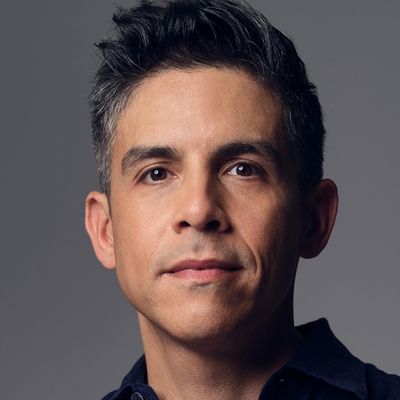
On this week’s show, Jamie and Rob share their interview with Matthew Lopez, playwright of “The Inheritance”, which played on Broadway this season... Read More
From the show: The Fabulous Invalid
Guests
About
On this week’s show, Jamie and Rob share their interview with Matthew Lopez, playwright of “The Inheritance”, which played on Broadway this season. Together, they talk about Matthew’s inspiration for writing the play, the importance of sharing history and experiences across generations—particularly within the queer community—Matthew’s reaction to the critical response to the play, and his collaboration with director Stephen Daldry in staging this epic, two part, six act piece. Why were the actors barefoot? Tune in to find out!
This week’s music: “The Inheritance”, “The House”, “Henry Sells the House” and “Young Men” all from “The Inheritance” and “Never Never Land” from “Peter Pan"
Find us on Twitter & Instagram: @fabulousinvalid
Facebook: www.facebook.com/fabulousinvalid
Rob’s reviews: www.stageleft.nyc
Email us at: info@fabulousinvalid.com
Jamie Du Mont
Twitter: @jamiedumont
Instagram: @troutinnyc
Rob Russo
Twitter/Instagram: @StageLeft_NYC
Jennifer Simard
Twitter: @SimardJennifer
Instagram: @thejennifersimard
Transcript
This transcript was automatically generated and might contain errors.
[0:00] Matthew Lopez: I'm Matthew Lopez, and this is The Fabulous Invalid.
[0:15] Jamie DuMont: Welcome to the Fabulous Invalid, Broadway's podcast where we present essential conversations with a curated roster of the best, most important, and innovative theater makers working today, from actors to writers, directors, designers, and everyone in between.
[0:28] Jamie DuMont: We took our name from the title of a 1938 play by Kaufman and Hart that has since become a loving nickname for Broadway itself, always deemed on the verge of decline, yet always bouncing back, the fabulous invalid.
[0:39] Rob Russo: I'm Theodore Savant, Jamie DuMont.
[0:42] Rob Russo: And I'm Rob Russo, writer and theater critic with Staged Left.nyc and Stage Left The Podcast, which is currently on hiatus, but we do have five wonderful episodes you can check out on the Broadway Podcast Network website.
[0:55] Jamie DuMont: That's true.
[0:55] Rob Russo: Well, hi Rob, how are you?
[0:57] Rob Russo: I'm good.
[0:58] Jamie DuMont: How are you?
[0:58] Jamie DuMont: I'm very well, very, very well.
[1:00] Rob Russo: Yeah, yeah.
[1:01] Jamie DuMont: Well, I'm so excited because this week we're finally sharing an interview that we did back in March before the pandemic, before the world sort of turned upside down.
[1:10] Jamie DuMont: Um, and we had been saving it because we wanted to share it uh sort of during the Tony season.
[1:15] Jamie DuMont: But unfortunately, very sadly, tragically, there will be no Tony season this year, or at least not in May and June when it typically is.
[1:23] Rob Russo: But we're gonna celebrate The Inheritance anyway.
[1:26] Jamie DuMont: Yes, yes.
[1:27] Jamie DuMont: So we sat down with playwright Matthew Lopez back in March before the show uh was slated to close.
[1:33] Jamie DuMont: And if you don't know, uh Matthew's work includes the plays The Whipping Man, Somewhere, Reverberation, The Legend of Georgia McBride, which I loved, and of course, this season's The Inheritance, which had premiered at the Young Vic in London back in 2018, transferred to the West End, and then came to Broadway, where uh it ran from November to March.
[1:54] Rob Russo: Ugh, I'm so excited for this interview.
[1:56] Jamie DuMont: I know, I know.
[1:57] Jamie DuMont: Well, for those who missed it, uh, since it is now closed, The Inheritance is a loosely adapted modern telling of E.M. Forster's novel Howard's End, set among a group of gay men living in New York, uh, contending with the legacy of the AIDS crisis and confronting questions of identity, community, history, and responsibility to each other.
[2:15] Jamie DuMont: To put our cards out on the table, I think I can speak for you, Jamie.
[2:18] Rob Russo: We both loved this play.
[2:20] Jamie DuMont: Um, it was on my top 10 of the year, but it was also on my top 10 of the decade when we did that episode um back at the beginning of the year.
[2:28] Rob Russo: I think it was on mine too, wasn't it?
[2:30] Jamie DuMont: Yeah, yeah.
[2:30] Rob Russo: I think we we we both had in both our lists.
[2:33] Jamie DuMont: Exactly, yes.
[2:34] Jamie DuMont: And it's funny, you know, I I think I've shared this before, but when I saw it first in London, um, I walked out of the theater and I immediately wanted to read it.
[2:42] Jamie DuMont: And that's very rare for me.
[2:44] Jamie DuMont: I am one of those people who's, you know, sort of doesn't like to read plays.
[2:48] Jamie DuMont: I'd rather see a play because they're meant to be uh seen and performed.
[2:51] Jamie DuMont: Um, but I had this this like sort of immediate need to want to read it.
[2:55] Rob Russo: And I think I texted you, Jamie.
[2:58] Jamie DuMont: You texted me, I think a few times during during the play, and then you texted me afterwards that you had bought the book and you were gonna read it that night.
[3:06] Jamie DuMont: And then the following morning, I believe you spent most of the night up reading the play.
[3:12] Rob Russo: I did, I did.
[3:13] Jamie DuMont: Well, I don't think we've mentioned it yet, but it is it's a two-part play.
[3:16] Jamie DuMont: So it is almost you know more than six and a half hours worth of play to consume.
[3:21] Jamie DuMont: So uh, you know, there was it was a lot of reading that night.
[3:24] Rob Russo: It's a big watch and a big read.
[3:26] Jamie DuMont: Exactly.
[3:27] Jamie DuMont: But you know what? I saw it several times, but you know, from London to Broadway.
[3:31] Jamie DuMont: And um, I I would see it again in a heartbeat because the characters that Matthew created were so so incredible.
[3:37] Jamie DuMont: I just wanted to spend time with them.
[3:38] Jamie DuMont: Uh it was a really gorgeous work.
[3:40] Rob Russo: I agree with that, and I would also say, as somebody who read the play myself for prepping to interview Matthew, it's a great read.
[3:48] Rob Russo: It's a fantastic, fantastic play to read.
[3:52] Jamie DuMont: So that's another way you can you can enjoy it if for some reason you didn't get to see it or there isn't a production in your neighborhood sometime soon.
[3:59] Rob Russo: Yeah, yeah.
[4:00] Jamie DuMont: Well, unfortunately, as I mentioned, the play, you know, the play was always sort of slated to close in March, but it had to close a couple days early because Broadway was shut down on March 11th.
[4:08] Jamie DuMont: So that ended up being their last performance.
[4:11] Jamie DuMont: And uh, you know, they didn't know it at the time, which has gotta be rough.
[4:14] Rob Russo: But uh Matthew actually, in the in the month sense, he just recently shared a piece in Vogue reflecting on that experience and the fact that the show had closed right up, you know, about the time of this pandemic.
[4:25] Rob Russo: And of course, it is a play that that deals with another um, you know, sort of global health crisis that um you know affected the city and the theater community and um you know still reverberates today.
[4:37] Rob Russo: But there's something really poignant that he shared that I thought I would I would read here, and then we can get on to the interview.
[4:41] Rob Russo: Um at the end of his piece, sort of reflecting on you know what will theater look like when we come back from this crisis, he wrote, people will gather once again to tell and be told stories.
[4:53] Rob Russo: It is a fundamental part of human nature.
[4:55] Rob Russo: We tell one another stories so that we will not feel alone in the world.
[4:59] Rob Russo: We tell one another stories to validate our own experiences, to hear the sounds of recognition in the audience.
[5:04] Rob Russo: We tell one another stories because it is through telling stories that we were able to say, I lived through this.
[5:10] Rob Russo: This is what happened to me.
[5:12] Rob Russo: I think it's a perfect example of why theater will come back because what is theater?
[5:17] Jamie DuMont: It's the fabulous invalid.
[5:18] Rob Russo: Yep, absolutely.
[5:20] Jamie DuMont: All righty, so let's get to our interview.
[5:22] Rob Russo: Let's go.
[5:39] Rob Russo: Matthew, thank you so much for joining us today.
[5:41] Matthew Lopez: Thanks for having me.
[5:42] Matthew Lopez: It's my pleasure.
[5:43] Rob Russo: Oh, we're delighted.
[5:44] Rob Russo: This season, your play, The Inheritance, uh, came to Broadway following a smash success across the pond.
[5:50] Rob Russo: Uh it closed in March, but it is the longest running new play of the season.
[5:53] Matthew Lopez: Yes.
[5:53] Rob Russo: 138 performances.
[5:55] Matthew Lopez: We like that number.
[5:56] Rob Russo: That's excellent.
[5:57] Rob Russo: Well, right off the bat, I think Jamie and I want to say that we both loved it.
[6:01] Matthew Lopez: Thank you.
[6:01] Matthew Lopez: We both love, love, loved it.
[6:03] Matthew Lopez: I think when I when I saw you, I told you I'd seen it four times.
[6:06] Matthew Lopez: Um we were both struck, though.
[6:09] Rob Russo: You've seen it more than my mother.
[6:10] Matthew Lopez: And she loves it.
[6:11] Rob Russo: There you go.
[6:13] Rob Russo: Uh well, we were both struck in particular by the way that the play dramatizes intergenerational relationships among gay men, which is something that we don't really see a lot in media.
[6:24] Rob Russo: Um so to kick us off, we were wondering what inspired you to craft a story that in part um touches on this dynamic of gay men from different generations being friends and uh romantically linked as well.
[6:37] Matthew Lopez: Well, it really started with the novel that I adapted, Howard's End uh for this play.
[6:42] Matthew Lopez: Um I was so in love with that novel and and the film as a teenager, and it has stayed with me all my life.
[6:48] Matthew Lopez: And I was in Central Park rereading it for the hundredth time, and there was just this bolt of inspiration, and I I knew in that instant that I could take these families from the novel from three social classes and retell it uh using uh gay men from three different generations.
[7:08] Matthew Lopez: It was sort of, I mean, funny, for uh for as long as I've worked on the play, and for as much sort of blood, sweat and tears has gone into its creation, the inception was incredibly fast and almost instantaneous in terms of the big picture idea.
[7:25] Matthew Lopez: And so I think I had the idea before I understood what the idea meant.
[7:30] Matthew Lopez: And it must have been looking back at it, it must have been something that I was really thinking about uh and without realizing that that was just uh weighing as heavily on my mind as it must have been in order to sort of have that quick lightning flash uh moment.
[7:47] Matthew Lopez: And uh I think that you know, I've always felt that as a as a as a gay man who was born in 1977, uh alive during the epidemic, but not old enough to be directly in imperiled by it.
[8:02] Matthew Lopez: Um I feel like uh my life and my generation's life feels like we've sort of straddled uh two very, very um important parts of gay men, gay male culture, which is of course um post-Stonewall years leading into the epidemic, uh, and then this this period that we are now in.
[8:28] Matthew Lopez: And uh I've always felt that my generation is a kind of a witness generation.
[8:32] Matthew Lopez: You know, we did not we witnessed the the events uh in the 80s and the early 90s.
[8:37] Matthew Lopez: We we did not directly uh participate in them, we're impacted by them.
[8:42] Matthew Lopez: And then we became adults and our lives became settled in as adults, and we we entered our 30s, and for some of us entering our 40s, and now there's a new world that I'm watching this next generation of of the queer community um uh sort of run with and and and this explosion of openness of of redefining uh who we are and who we are in the world.
[9:13] Matthew Lopez: And again, in some ways, as someone in his early 40s, I'm I'm witnessing that as well.
[9:18] Matthew Lopez: And so I think that for me and my generation, our lot in life as a generation perhaps is to have watched these two things.
[9:29] Matthew Lopez: Um I think that for me as a representative of my generation made its way into the play.
[9:38] Rob Russo: I was talking with um some folks from my other podcast, Stitch Left, where we do reviews, and um I made the point to them that you know it almost feels like um, you know, me, I'm in my early 30s, um, so I'm sort of a decade removed from you know the the timeline that you're describing.
[9:55] Rob Russo: Um and I I have to imagine that someone who's just now turning 18 or 20 would see this play in an entirely different way than I do as someone who's 30, as you do as the author, someone who's you know 40.
[10:10] Rob Russo: Um and and how it's amazing how that that small difference in time can mean so much for the progress of gay men, but also the timeline of this this epidemic.
[10:21] Matthew Lopez: I think that I mean, I as as we've been learning ever since the election of Donald Trump that a lot can happen in this in a small period of time, and the world can change overnight.
[10:31] Matthew Lopez: And um, that is anybody who it has even a cursory understanding of history knows that that's true.
[10:37] Matthew Lopez: Um I think that there's a general human tendency towards amnesia.
[10:47] Matthew Lopez: Every generation believes they invented sex, every generation believes they invented rebellion.
[10:52] Matthew Lopez: The idea of revolution seems to be have invented by whatever generation has come up with the latest one.
[11:01] Matthew Lopez: And what even a cursory understanding of history can suggest is there's nothing that we haven't seen before.
[11:09] Matthew Lopez: Everything can be understood within a prism, within the perspective of history, within the continuum of history.
[11:38] Matthew Lopez: I mean, you can you can slice the pie in so many different ways.
[11:46] Matthew Lopez: I mean, it's trite, but those who ignore history are doomed to repeat it.
[11:50] Matthew Lopez: And as I was writing the play, I saw the election of Donald Trump.
[11:54] Matthew Lopez: I saw a lot of things that to me uh in in obvious and in sort of subtle ways began to feel analogous to the epidemic years.
[12:06] Matthew Lopez: It felt analogous to a lot of calamities in world history.
[12:10] Matthew Lopez: And I think that, you know, I can't imagine, I can't imagine.
[12:15] Matthew Lopez: I know it's my job as a writer to imagine, but it is very difficult for me to imagine what the world looks like to an 18-year-old right now.
[12:24] Matthew Lopez: And people have asked me, they said, why are there why are there only two characters from the younger generation in the play?
[12:33] Matthew Lopez: And, you know, I think there are there are several answers to that.
[12:37] Matthew Lopez: One is this it's an a as a question of adaptation, which is the Schliegel sisters became Toby and Eric, and they're the central characters in the novel, therefore those became the central characters in my play.
[12:47] Matthew Lopez: They are the age that I roughly was when I started working on the play.
[12:52] Matthew Lopez: But I can write rather, I hate the word authoritatively, but it's the only word that's coming to mind about my generation.
[13:04] Matthew Lopez: I would never speak for everyone, but I can speak to my experience as that member of that generation.
[13:09] Matthew Lopez: And I have copious amounts of research in books and films and plays to help understand the generation that that came before me.
[13:17] Matthew Lopez: But the generation that has come after me is coming after me, their story is only starting to be written.
[13:23] Matthew Lopez: And they are the ones who are going to write it. And I realized quickly as I was starting to work on the play that any attempt on my part to do with their generation what I allowed myself to do with mine, uh, would be false, would be dishonest, would just simply be not my place to do. It's not my story to tell. Um I could take Adam and Leo from the novel, I could use them as a generational representation, but I I I could never ever uh speak for them. And I think that if I had, I think the harm I might have done for having done so would be far greater than perhaps uh the supposed neglect, let's say, that some people think that I have paid their generation. It's not my place to speak for them. What I have said in the past, it's my it is my responsibility to speak to them. And that what I can share is my perspective as someone my age and my experience who has lived a lifetime up to this point.
[14:37] Jamie DuMont: Well, the play is so poignantly titled alone, uh, The Inheritance, right? And the play itself is an inheritance, I think. You know, I mean, it it's it's documenting, as you describe, a certain generational experience that has value in the future, looking ahead. You know, now that uh, you know, it's had its run in New York, um, there will be other productions. It will live on as text that people study and perform. Um, and it does capture, you know, it's not set anytime, it's set specifically in, you know, 2015, 2016. Um, there's a specific context to the story. Um, and one thing that I've always been struck by, I I don't know if I thought this or someone said it to me, but I'll take credit for it. Um, and that is uh the fact of being gay um often means, most often means that you're a minority in your own family, which is distinct from being a racial minority uh in most cases, or an ethnic minority in most cases.
[15:39] Matthew Lopez: Um and so when you grow up in a black family, you know, you have um elders to look to who share your your history, who can who can speak to you directly through their own lived experience about what it means to be a young black child in America, right? When you are a young gay child, you don't have that same experience. You're adrift. And not only are you adrift, uh, for so many, uh, especially in my generation and the generations before me, you have a secret that um you distances you from your loved ones. Uh Edmund White came to visit with us when we were in rehearsals, and the way he put it was uh we are the only minority group whose family does not belong to the same minority that we do. And there are, of course, exceptions to that, but by and large, that that remains true.
And I'm grateful that that is not as true as it once was. But we shouldn't kid ourselves, for so many people in the world, it is still true. And and the world isn't just the United States, the world isn't just the Western world. Um, and there are still many places in the world where it is not just dangerous, it is illegal to be who you are.
[17:00] Matthew Lopez: And I think that one of the things that for me growing up I took great solace in was representation, was um access to my kind. Uh I couldn't get it at home. I couldn't, I mean, I didn't grow up in a home that was in any way hostile to queer people. My parents were were good and diligent democrats. They they um they you know, they I grew up receiving a message of of acceptance and love uh from my parents from from the beginning. Uh so it was, but it still that wasn't enough because I grew up in a culture that did not do that. It didn't matter what I got at home. Uh the home, of course, became a very safe place, but only to a point because the world was still very dangerous for me. And I could not be honest with my family, because that would mean being honest with myself, and I couldn't take my family everywhere with me. I couldn't bring that safety out into the world. And so I had to live in denial of my of who I was.
[18:05] Matthew Lopez: You know, I I have young trans friends who are in their late teens, early 20s, as a result of this play in some cases. And I'm amazed at the I probably from my generation, I would look at it and call it bravery. I I well, I suspect they might not. You know, I think that is even in and of itself the use of the word bravery is perhaps the difference between my generation's experience and the and the and this next generation's experience. I don't know if they would call it bravery. I think they would just simply call it honesty. Uh again, I don't want to put words in another generation's mouth, but I watched that and and I see that as a a far a far more impactful uh redefinition of who you are than even what I went through as a gay man. I just had to come out and say, I like boys. And for so many of my friends, they they have to look at their family and they say, I am a boy. Yeah.
[19:06] Matthew Lopez: Um and I think that that is to me that to do that at 16, 17, 18 years old is evidence of the fact that the world is changing and the world has changed. And my fear right now is that uh that that we live that we're in danger of losing uh that not by our own actions, but rather by forces beyond our nature. And I think that for me, bringing it back to the themes of the play, is how I found some solace in revisiting from myself what the activism was like around the epidemic. It is if you want to know how to combat the Trump administration, if you want to know how to combat right-wing governments that are popping up all over this world right now, you have the example of those people on the front lines uh fighting for their lives. And I think that it is very true that we are still fighting for our lives. And it isn't just the queer community anymore. It's a lot of people fighting for their lives.
[20:20] Matthew Lopez: I came out of the closet at the height of the AIDS epidemic. So I came out of the closet in the mid-80s. And I want to say thank you for the play, and thank you specifically for that moment when Henry Wilcox says there are no gay men my age. Um that was hugely powerful to me because you know there's a whole generation missing. A generation slightly older than mine, but also part of my generation. But I came out at the beginning of the AIDS epidemic. And the thing I remember about that time specifically is how it felt like it felt very special to be in the a part of the gay community at that time. It felt like we knew something about who we were that no one else knew, and it bonded us together. It made us stronger. And I feel that a lot of that is in this play, and it resonates quite clearly. So it's it's important to look back, as you said, and and it I think it informs our future.
[21:18] Matthew Lopez: You know, I think one of my favorite historians, um Shelby Foote, and he wrote exclusively, almost exclusively, about the Civil War. And he always contended that American history really began with the Civil War. Everything that uh that happened before the Civil War led up to the Civil War, and everything that happened after the Civil War was a result of the Civil War. And I think an argument could be made that um that the gay community was forged really in those years, is what made us a community. It's what forced us to have to out ourselves in many ways, and and and and and speak uh loudly uh because it was a question of our our lives being on the line. Um again, I was I was too young to be directly affected by it and and therefore directly involved in it. I look at those years as a student of history, and as someone who knows people who were alive then and and um who have told me their stories.
[22:25] Matthew Lopez: And of course, the question that I always ask myself is what would you have done? What would your reaction have been? Would you have been like like Henry and Hidd? I hope not. I'd like to think not. Would you have been on the front? Would you have been storming the FDA? Uh would would you be dead? Um there are what ifs that no one can ever really answer. Um, but it is the act of investigation into that question that leads to understanding and compassion. You have to, for history to be any uh use to us, it cannot just be facts and figures and numbers. It can't be cold, it has to be hot, and the way to make it hot is to make it personal and applicable to our lives today.
[23:11] Matthew Lopez: And there's a scene in the end of act one, in part one, act one. We call them acts one through six. It's hard, it's easier to do that. So for me, my act one is the proper act one. Um, and uh it's just inheritance nertery right there. Um, you know, when Eric asks Walter, well, he says to Walter, I I can't imagine what those years were like. I can read about them, but I can't understand how they feel. I mean, that is exactly the words that I were saying, I was saying to myself as I was attempting to work on this play. And uh the thought exercise that Walter asks Eric to engage in is to name one of your friends and imagine them dead, and now name another, imagine them dead. And this litany that we end the first act with of names of the dead, names of the infected, names of the disappeared, um, was a thought experiment that I had to do with myself as I was beginning to write this play.
[24:12] Matthew Lopez: I literally took out my phone and opened my phone book, and I started scrolling through, and I would stop on every out gay man I knew. And I would imagine their funeral, I would imagine them in hospital. I had to do that to myself. I had to force myself to imagine. And I tell people when they, especially younger people when they come to see the play, do that. Go go open your phone and do that little thought experiment.
[24:52] Matthew Lopez: The act of compassion, the compassion is not the act of I think understanding someone's feelings as much as it is attempting to imagine yourself in their experience. And that is what I force myself to do with this play. It's the way I I wrote the play. Um and it's what I hope people take away from the play. And the thing is that, you know, in the experience of working on the play over the last two years, I look out of the audience and it is not a homogenous group, and that's so wonderful. Yes, you get a lot of gay men at this play, um, as the bathroom lines attest. Yes. Um, but you get a lot of everyone at this play, and we always have. And there is a communal, no one is immune from history. I think if there's any lesson that can be applicable to this play outside of the gay community, uh, it is that no one is immune from history.
[25:58] Matthew Lopez: And we own our own history, whether we like it or not. And we own each other's history because in a country as diverse and as uh disparate as ours, if we don't own each other's history, uh we we can't build a future together. And it's how we grow and how we learn. If you try to understand the past and you try to and you try to experience it through whatever lens you can, you're you're gonna learn a great deal about your future. I think so. And it's also very in some bizarre way for me, very comforting to understand history, that you can contextualize the now.
[26:42] Matthew Lopez: You know, it is possible to really take comfort from even the worst history in that the worst of today has been seen before, and oftentimes far worse than we are experiencing it right now, if we are fortunate enough to say that there is some comfort to be taken in knowing that this has been experienced before by others, and others have survived it, and these things, you know. When I was once told a story about a friend of mine who was visiting his family, his brother, and they had a two-year-old, and the two-year-old hurt themselves somehow, and they were in pain. What, why the histrionics, why the drama, you know? Chill out, kid, right? And his brother said, because he's never experienced that kind of pain before, and he has no idea if it will ever stop.
He has no idea if he will never not be in pain again, because he has no experience of that. He will, in two minutes, not be in pain anymore, and he will learn that. And I think that is applicable to the way we encounter history as well. A lot of people in this world are in pain right now. And there can be some solace in looking at the pain of others and the trauma of others and seeing that somehow, some way it was ended by history, it was ended by movements, it was ended, God forbid, in some cases, by war, but for the most part, pain and suffering and individual trauma ends. Which is just luminous.
[29:11] Rob Russo: And a huge part of it, as you and I have talked about before, was Stephen Daldry, the director, right? And the collaboration that you had in sort of conceiving how this play could even happen on stage, right? I was wondering if you could explain to us sort of the process of how that development came and how you discovered the play on stage.
[29:31] Matthew Lopez: It was really exciting. It never happened with one of my plays in this way, to the degree that it did with Stephen, which was from the very first workshop. He had from the get-go an idea of how the play might be staged. And, you know, I believe, and I will say to early career playwrights, I do believe you have a responsibility to answer the question: how do you stage this? Early career playwrights and your earliest plays, I think it behooves you to have an answer to that question. You need to help them help you get this thing produced. And the easiest way, not the easiest way, but the most effective way to make sure a play can be produced is to make sure that it is producible. And so you do need to sort of have an eye on practicalities.
[30:22] Rob Russo: Right. Are you talking about as you're writing it and as you're developing it?
[30:26] Matthew Lopez: Yeah, as the author, you need to think about it. There's a cast of 50, and it takes place on the moon. Like plays on the moon and in my head, and like in another world. Yeah, yeah, yeah. But also how it, but also, but also how it's um not only not only the cast, but the physical production as well. Like that, these are the things that I'm gonna do. I think you need to be able to answer that question early on in your career. I had to. I, you know, whipping man, I knew one set, three people, at least the sound of rain, if not the presence of rain, depending on the budget. Um, you know, an amputation, figure out how to do that. Like there is a, there's the I wrote um with the intention of not making it difficult.
I did not want to be the reason it could get produced. It couldn't get produced. Couldn't get produced. Uh there's a million other reasons that are out of my control. That which is within my control, I need early on in my career, I wanted to make sure that I didn't screw that up.
[31:22] Rob Russo: Uh but when it came to the—can I just interrupt you, how did you have that presence of mind to think that way?
[31:28] Matthew Lopez: What did I don't know? I guess I have a strategic brain. I think um I don't think a lot of people would think that way. You just think about what it is that the story you want to tell. I'm not a playwright, so I don't know.
[31:41] Matthew Lopez: You know, I think that um, you know, I think that theater is largely about limitations. Theater is always about overcoming limitations. You have limitations of time, you have limitations of budget, most especially, you have limitations of literal space. Um theater, what makes theater so theater writing so exciting and so challenging is that you have to uh create within certain limitations that you don't have, like let's say a novelist doesn't possess. A novelist, you know, can go anywhere they want to. They can they can go to the moon, they can go to the inner reaches of the mind, they can go everywhere, and it doesn't matter as long as there's paper to print it on, and now you know you don't even need that.
Novelists can do whatever they want. Um, and within to a certain degree within film as a screenwriter, you get to it's one of the great things I love about screenwriting is you get to actually kind of you get to go outside, you get to go like up here, you get to go there. Oh, let's get on a plane, okay, let's do that. And then they come back and say, no, we're not gonna pay for a plane. Oh, well, we'll scale that back. So there are some limitations on film. But in theater, it is it is all about limitation. The whole thing about theater is how to create within uh a very strict set of limitations. And with Inheritance, it was the first time I wrote a play that I just didn't give a shit about the limitations.
I couldn't. Now, look, there are tons of younger writers than me, earlier career writers than me, who start out at the beginning of their career not giving a shit. And God love them, more power to them. That's not how I, that's not what I did. Yeah. But with Inheritance, I just couldn't be bothered with practicalities because I just wanted to tell this story. And it was the first time I ever gave myself permission to just go nuts and just write, right, right, right, right, right, right, right, right, and create and go here, go there, go everywhere.
[33:32] Matthew Lopez: And you know, there are perhaps most directors in the world might be daunted by that as a first production. And I was very fortunate that I got Stephen Daldry, and who's unafraid of anything and loves a good challenge. As a matter of fact, he's bored by well-made plays and one set things. He's just like, Well, you don't need me for that. And so bringing the play to Stephen and having him become involved, allowed me to not worry about practicalities because I've got Stephen Daldry now, and um I was very lucky in that. And in our first workshop, so I wrote the play, knowing that I wanted a collection of young men telling the story, figuring out how to tell a story and how to tell their story, and using the device of the presence of Ian Forster to sort of guide them as storytellers.
That was about as vivid as it got in terms of structure in terms of outline, and then of course I had like the story of Howard's End that I adopted with Toby and Eric and Adam and Leo and Henry and Walter and Margaret.
[34:44] Matthew Lopez: What Stephen did in the very first workshop is so I had a lot of disparate lines. It's like I don't know who says this, I don't know who says that. Sometimes they were unassigned, and what Stephen did on the first workshop, he got eight tables and put them in a big triangle. Uh no, this is why I'm a playwright, not a mathematician. He let me do that one more time. He got eight tables and put them in a rectangle. I barely passed kindergarten. Yeah, barely past kindergarten. And um, he put us the creators on one side of the rectangle and he put the cast around it in chairs. And he said, Look, if you're just sort of out of the scene, then you just stay in your chair on the outside. If you're in the scene, then you go into that space that the tables have now created and you play the scene in there.
And if you're not really in the scene, but you have a line, you can stay where you are, and you can raise your hand, you can stand up, you can sit on the table, you can do whatever. And you know, what I'm describing to you is essentially how the play is staged. Um, it is a big rectangle, and the actors are on three sides of it, and us, the audience, making up the fourth side of the rectangle. And what's amazing to me now, having known this production as well as I do know it, is from the very first workshop, Stephen effectively knew what he wanted to do with it. And so throughout the workshops, um, what we did was started to play with the text in terms of how it became a shared storytelling document.
Um, there used to be a lot of speeches in the play, a lot more speeches in the play that now are choral pieces. The best example I can give you is the scene in Act Five, which is part two, act two, where Leo is um living on the streets, he's sort of in dire straits, he's addicted to meth. He's selling his body for drugs, and he steals a jar of peanut butter. Um and that originally was a speech for Leo, like three page speech for Leo. And Stephen looked at that in in whatever workshop we were doing it, and he said, I don't believe that he's capable of giving a speech that erudite at this place in his where his mental state is. And I was like, quite right, fair point. What should we do? And he goes, Let me see that.
And he took the paper and he took the pen and he just started like crossing like delineating lines, and he just like did he went through the whole thing. The actors just like took a break, and like for 10 minutes, Stephen went through the entire speech. And we got we reconvened the actors, and the guy there placed the table, and he goes, All right, so young man two, take this line, young man seven, take this line. And he just went through the entire speech. Leo, take this section, da-da-da-da-da-da-da-da. And suddenly he had taken the speech and turned it into a choral piece. And it was them talking to him and making the action happen. And so then what I would be able to do as a result of these workshops is once I knew the rules of the game as that as were starting to be established by Stephen, I could then write the rules of the game based on what I know he wants.
[37:38] Matthew Lopez: So I couldn't write. What I couldn't do is what you see in the play is write that in a first draft. Right. All that choral stuff, all that interaction, the pinging and ponging across the tabletop. Couldn't do that on my own. Once I knew the rules that Stephen established, I could then go off and okay, I know what I can do. Give this person to that line, this person to this line. And then the other trick that we learned is in um in production, I think. Yeah, it was in production, is once we knew where everyone was seated, uh if you paid close attention to the play, you will notice that no one ever had a line after someone they were sitting next to. It always leaped, it always leapt across the table.
And so what Stephen, Stephen also did was kept the energy going, stage left to stage right to the center to the back center to this corner, like it was like a pool game. Like, you know, the balls are going everywhere. And what would happen was if there were rewrites, that all got screwed up. And then we had to reassign the lines. Yeah. And then they might get screwed up again by a certain rewrite. Because then suddenly you're sitting next to me, and I got a line, you go line. Well, you can't, we can't do that, so you gotta give your line to him. Oh no, that screws that up. And so we were in the first production, especially, but all the way up through the Broadway production, we were constantly reassigning these lines of dialogue, these lines of narration to the lads.
And what they quickly had to discover was they just had to learn the whole play. They had to learn every bit of choral work. And they do, they all know it. If you sat one of the guys who's who is in the and I bet, you know, um, long after the show is closed, you could probably get them to sit down and like do it all because they have to. And those rare, and what's the great part about it is in those rare instances, and if that happens every now again, because they're human beings, somebody drops a line, someone will be able to pick it up. And do they know to pick it up from from the state? They will often do that, yes. They have seen it happen across that tables. They will actually ping pong and they will catch it.
It's an astonishing. The thing, and and that is all that's Stephen's staging. The idea, and I have to say that it is the greatest compliment a director could ever pay a writer is the way this play is staged. Because there is there was no set, there was no scenery, there was a set, but no scenery. There are just bodies on a stage barefoot in front of a black void, and so all you have, all the audience can do is listen. And one of the things that I always always found amazing about that production is that it is the closest approximation to the act of reading that you have I've ever seen as an audience member, because there's nothing to look at, because all you can engage in with the way you primarily engage with the play is with your ears rather than your eyes, you create the scenery yourself, exactly as you do when you read a novel.
[40:23] Matthew Lopez: You are the scenic designer for your own production of the play. And you know, when it came to the house that we use at certain points of the play, when I wrote the play, if you read the Favor edition, those original stage structures that I have, I describe the house, I describe like I needed to create some magic on the page so when people read it, they understand that a magical thing has happened. I always sort of intended, okay, minimalistic production. Suddenly, boom, there's a house. And Stephen and Bob Crowley sat me down one day, I think at the last workshop, and they said, so here's the deal, babe, there's not gonna be a house. And I was like, what do you mean there's not gonna be a house?
Like the limitations, right? And Stephen's like, look, we can build a house if you want, we can do the whole thing. A full three-story house with like, you know, details, and you know what's gonna happen? The thing's gonna open, it's gonna creak and groan and make noise because it's been fireproofed within an inch of its life, and it's gonna groan its way downstage. It's gonna be the ugliest sounding thing you've ever seen in your life. And the other thing is gonna happen is that because we have spent the entire first play describing the play, everyone in the audience has their own idea of what the house looks like. And if you show them a very literal house, you've got a thousand people disappointed.
And the only thing he said to me, he goes, the only person who will not be disappointed is Matthew Lopez. And of course, they were right. And in that first work, that first preview in London, which was one of the most terrifying and magical nights of my life, you open that doll's house, that slider opens up, and the doll's house is revealed. And the magic is the magic of realism. The magic is the magic of a conjuring of a spirit of a house rather than an actual house. And it remains in the spirit world where that house belongs.
[42:36] Rob Russo: Well, it's amazing. I mean, that impulse, that insight to have the experience of seeing the play mimic the experience of reading a book, I think is so brilliant and underappreciated in terms of because it just happens, right? You take it for granted after seeing the play that you've been in this world where you're imagining everything. I mean, I can summon in my mind Eric's apartment. I know exactly what it looks like, I know the color on the wall, I know the furniture, I can see it.
[43:02] Matthew Lopez: Yeah, and it looks exactly the opposite of what the person sitting next to you looks like, yeah, right?
[43:07] Rob Russo: Exactly. And you know, and Stephen and Bob even said to that in explaining to me the minimalist approach to the production, which I was totally cool with, you know, as long as at that point I was like, as long as you give me my house, we can do it in the lobby of the theater, as far as I'm concerned. But it's also like he, Stephen was like, you just get these realistic sets, trucking on and trucking off, you're dead. And so yeah, and it's better for you to imagine Eric's apartment, it's better for you to imagine what Henry's townhouse in the West Village looks like. It engages the audience's imagination.
[43:46] Matthew Lopez: Well, I would say all that weight lifted off of it. You know, if you take the weight of a heavy set and you take the weight of all that sort of literal stuff, it allows the audience to listen to the words and to experience and that energy to fill the set in a way that they wouldn't. And I have never in my entire career have an audience listen as carefully to a play as I have with this one, which is of course, of all my plays, is the one that you want that to happen. And it is because there's no, there's nothing to look at. I, one thing that boggled my mind is a tiny thing, but it always strikes me. There's an offstage character named Tom Durell, who's the director of Toby's play, Tom. And he's mentioned occasionally, but not like overly mentioned, not the way that Henry is before he makes his first entrance, for example.
And when we get to that scene in Act Three when Adam tells Toby he's dating Tom, and I swear to you, in any other play that I would have written with a realistic set, you would have gone in the audience, who's Tom? Remind me who's Tom again. I don't remember who's Tom. Do we meet Tom? Is he the guy who's, I don't know. And from the very beginning of this production, the very first preview of the Young Vic to the very last performance on Broadway, we get to that moment, Tom and I are kind of dating, the entire audience goes, oh. And that always astounds me. Because audiences, now, this is a truth that most playwrights will learn in their career. Audiences need to be reminded of who someone is over and over and over again.
If you look at any well-written, any smartly crafted play, it's hey Steve, hey Angela, so Angela, how you well, Steve, I like, and it's just like that's not how people actually talk. But if you really, if you want your audience to remember the character's names, you're gonna have to do that. But Tom Durrell is not a character we spend a lot of time on, and yet nightly we get to that moment of play, they know exactly who he is, and they know exactly why this is a bad thing that's about to happen. And it is astonishing to me when that happens.
[45:41] Rob Russo: Wow. People can be taught.
[45:44] Matthew Lopez: They can.
[45:45] Rob Russo: Yes, they can. Wonder of wonders.
[45:47] Matthew Lopez: Yeah. All it takes is no set and no shoes.
[45:50] Rob Russo: Well, that's a question I have for you.
[45:52] Matthew Lopez: Oh, right. Well, I mean, you did bring it up, but talk to me about the no shoes.
[45:56] Matthew Lopez: Okay. Well, now that the show has closed, I think we can go ahead and dive also secret, which of course is it. I um I've been told I don't actively engage in like reading like posts and things like that. It's just it's a very small hole. I don't want to go back. Twitter is a horrible place. I don't want to go down. And you know, actually, philosophically, I mean, I know I have friends who go instantly to Twitter as soon as the first preview comes down and the chat boards I'm like, no, not for me. Because for me, I think that the experiment is in the audience every night. That's my laboratory. And in order for the experiment to really be valuable, I need to not be privy to individual opinions.
You know, before the advent of Twitter, you come to see my play, and you would then leave and you go have a drink with your friend, or you're on the subway and you're talking with your friend or your spouse, over breakfast the next morning, you're talking about the play, and you have the exact same opinions at drinks, at dinner, at breakfast the next day, as you might post on Twitter. The only difference is I'm not privy to those opinions at the breakfast table. I'm not privy to those opinions over drinks, and that's as it should be. Because the opinion that matters to me is the collective opinion in the auditorium on any given night. Because one of the things that John Tollins, the writer of Buyer and Seller, great guy, said to me, he goes, individual audience members are often wrong, but an audience is always right.
And so I don't engage in that because it'll fuck up the experiment. It'll add a kind of contagion to the laboratory. When the show is over, the experiment is done for the night. We recalibrate and we go in the next night into another clean laboratory and we start again.
[47:49] Matthew Lopez: So with the shoes, I was told that there's a lot of talk about what does it signify? And I've heard some really great things. I've heard it's about innocence, I've heard it's about connection to the earth. I've heard all manner of really exciting, fun, and imaginative theories. But I will tell you now, officially, what the no shoes signifies. It signifies fast costume changes. If you have to take off shoes and socks limitations, exactly. If you have to take off shoes and socks, you cannot do as many costume changes as we do in the show. Yeah. I am so sorry to break everyone's heart that it isn't anything more poetic and philosophical than that, or fetishist or fetishistic than that. Now, what the thing is is that Steve, they were looking at the costume design, and Bob Crowley, who designed also the costumes, is like then Steven's like, well, just we're gonna be barefoot play because the only way we're gonna do all these costume changes.
It makes the costume changes a lookety split. And so then what Steven did was that he went and says, okay, so then let's put a little bit of meaning onto this. And so what he started to play with is like, okay, then who does wear shoes? And that's suddenly that becomes very meaningful. Then it becomes very meaningful, and I think that again is just like the great example of what a fucking genius that man is, because he just took a very practical decision, which is to say, if nobody's wearing any shoes and socks, the costume changes could go a lot faster. And he turned that into an artistic decision eventually. Once he realized that he, so okay, so if no in a world in which there are no shoes and socks, the person who enters in shoes and socks is somebody worth paying attention to.
So Morgan is in shoes and socks, Henry's in shoes and socks. When Eric marries Henry, he puts on shoes and socks. What does it mean? Costume changes. But the experience of watching it in the theater, it adds to the sort of the mystery of the play, to the magic of the play in some ways. But it's about how to deal with limitations. Some of the most striking and I think important questions that the play asks appear early on in that scene when they're having brunch, and Eric says to his group of friends, you know, who are we and who will we become? And he asks, you know, very pointedly, what does it mean now to be a gay man? And I love that the character of Tristan almost immediately says, well, there's as many answers to that question as there are gay men to ask it.
And it makes me think about some of the response that I've seen to the play from folks who perhaps didn't see themselves in the play. And I'm wondering, you know, for me as a 30-something white gay man, the play very much resonated with me. I had no, you know, no distance from it. I could easily imagine myself and my friends having these conversations. And frankly, I had a friendship with an older gay man, Dick Lyche, who was a pioneer and led the sippin' at Julius before Stonewall. And you know, that brief, because he passed away, but that brief interaction that I had with him over the final years of his life really, you know, sort of shaped my perspective of intergenerational relationships and the history of it all. But I'm wondering back to my point just a minute ago. What would you say to someone who had that reaction who said, you know, this play, you know, I didn't see myself in it?
[51:22] Matthew Lopez: Gay culture is not a monolith. We are comprised of individual citizens, individual people. I could never attempt to speak for everyone, if you speak to every experience. That is just simply not possible in any work of art. You'd need a thousand hours, and even then it would be insufficient. One work of art can ever do that, which is why we need a thousand hours of individual pieces of art, 20,000 hours, a hundred thousand hours, endless hours. I'll be honest with you, I think one of the disservices that was done to the play inadvertently early on in the way people wrote about it, was to actually say that it was some sort of a definitive document. It's never my intention to write a definitive document.
I wanted to write a play. I think if I set out to say I was writing some grand statement that would speak for and speak to and reflect every experience of the queer community, I would have failed and I would have wasted everyone's time. Also probably wouldn't be very interesting. It probably wouldn't be very interesting. I mean, and so I don't know what to say to that, other than I wrote the truth as I have lived it, and the truth is I have experienced it. I have spent a life as a gay Puerto Rican man accessing works that I could not perhaps directly see myself in. I mean I'm not in Angels in America, and yet I watch that play, I read that play, and I find great communion with it. I'm not really in most of the works of Terrence McNally, and yet that his work has spoken to me.
[53:25] Matthew Lopez: I'm not in Fun Home, and yet watching that musical, I felt like I was home. Uh and so I don't think that it is possible, and therefore I do think it is unfair to ask any artist to speak for everyone. I think it is fair to ask an artist to speak honestly from their own experience. And then I do think it is the responsibility of the audience, as I have myself done as an audience member throughout my life to find communion and commonality with the world that I'm being shown. I it's the same response that I have to the work of August Wilson. I go to the work of August Wilson and I'm I'm not there, and yet I am. I think, look, if I'm gonna be perfectly frank, I understand the desire for that in this play in particular.
I think it's a little unfair to me to say, oh, well, I don't see myself in August Wilson, because you know, the fact is that I bet there are a lot of African Americans who also don't see themselves in August Wilson. And I can't speak to that because that's not my experience. What I will say is that I can't write any more honestly than I did in The Inheritance. And I hope, if there's any hope that I have from this experience, is that people read and access the play, and it inspires them to write their own story. And that is how we find ourselves reflected directly in art by making more art, not insisting that any one piece of art does everything for us. I mean, I'm looking forward to seeing all the works that are written by people who hate The Inheritance, who is a result of watching The Inheritance.
That is a valid expression of your own perspectives, and I can't wait to see those plays too. I think if there's anything that I wish weren't being said about The Inheritance, is that it was speaking grandly and generationally in a void and filling some sort of a void that was left untended. Because that's just simply not true. There have been works of great works of queer dramatic literature being written annually. Mine has gotten a lot of attention, and I'm grateful for that. But it neglects so much that has come in the 25 years since Angels in America, which is of course the play, it always gets compared to it ignores it ignores so much.
[56:17] Rob Russo: Well, thank you for sharing that. I know it's you know somewhat of a difficult question because as a playwright, you're very vulnerable, and I understand that you know it can be hard to you know sort of process all that. But I I'm grateful to you for saying what you said and and saying it as uh as well as you did because um because it's something that I in my own reaction, you know, to others' criticism of the play have really taken umbrage with and and and been a little disappointed in the sort of myopic way that some people have have responded to.
[56:49] Matthew Lopez: My attitude is that everyone's entitled to their opinion. Oh, sure. And um, you know, again, it's it's it's it's unfair to expect that a play um is liked by everybody. It's unfair to expect, I mean, there's no such thing as as there's truly no such thing as universal praise. You can find you can find something that is um objectionable to somebody. And it quite honestly, the the the um the world we live in is different than than the world that a lot of those other works were debuted in. And I think that if if if those works um, you know, I was talking to Lena Waithe a few weeks ago, and she's been doing a lot of research into Lorraine Hansberry and and and the you know the response to Raisin in the Sun, which also premiered at the Barrymore Theater, wasn't universal uh in the black community. And um, you know, if Twitter had been around then, I think that that she might have gotten an earful.
[57:42] Rob Russo: Yeah.
[57:43] Matthew Lopez: Um it's it's how I think that on the one hand, it's very healthy for people to begin to engage with a piece of art in all in all ways and in all in all manners. And I I I everybody wants universal praise, but I would I'd be very suspect of it. I think that there is something valuable in some ways to questioning things and to um what I what I hope people would have the ability to do and the willingness to do is to engage with the play that I wrote on the terms that I wrote it. And sometimes I think that's missing from the conversation about art in the present. We we've we sometimes seem to ignore what the artist is trying to say and instead uh wish and sometimes insist that the artists say what we would like to them to have said. Um and the only answer to that is more art.
[58:41] Matthew Lopez: I did have the very unique experience of sitting behind Hillary Clinton while watching.
[58:46] Rob Russo: Yes, you did.
[58:46] Matthew Lopez: And you were sitting across from her.
[58:48] Rob Russo: Yes, I did. Um and I'm wondering if you could could share, I'm putting you on the spot here, um, you know, what it was like to write a play that incorporates, you know, real events, right? And and historical now, you know, the the history of that election, which figures into the play and couldn't have been there in the first draft because you were writing it as it was happening. Um and then to experience the play with one of the people mentioned in the play in the audience. What was that like for you?
[59:15] Matthew Lopez: Well, when I found out that she was coming, I reached out to our company manager and I said, I'm buying a house seat, and you will put me in the in on the aisle right across from her because I have to watch her watch the play. I mean, it's it's just an exciting thing in in general. I mean, if she had come to see Whipping Man, it would have been an exciting thing. But this play, of course, in particular, which deals with the election of 2016, and in particular, the impact of her loss in the race. Um and when I, yes, you're right. I wrote the first draft before I wrote the first draft in the spring of 2015. Um, and then after the election in 2016, uh, early in December, I had a phone call with Steven, and he said to me something that I had just sort of been thinking about, but sort of like praying, I didn't really believe it.
Uh, and then he went and said it, which is he goes, Love, I gotta tell you, I can't do an English accent to save my life. That was my English accent. I love, I gotta tell you, you're gonna have to go back and rewrite the motherfucker. And I was like, I know, I know. He goes, and he was right, and I knew I knew he was right, and I knew he was right before we even had the conversation that a play about history couldn't be a historical to the time in which it was actually presented. And so, yeah, I went back and I rewrote the motherfucker. And it was um, I mean, it was the worst thing to have happened to America. Uh, but it the the lemonade was that it it was it was helpful for for the play. Uh it was the right decision to do because it it put it put everything in a in a very clear perspective of history and history happening right now.
So watching her watch the play was fascinating, it was exciting, it was um, it was deliriously fun. Um, I loved what watching what she found funny in the play. And then when we got closer and closer to those scenes. What was meaningful to me actually was the night that she was there, the audience was aware of her presence by the second act, which is when we really get into the election. And there was a line that one of the actors says, you know, these are the things that we have, you know, the chance to make meaningful progress on once Clinton is elected. And for the first time ever, that line got a big round of applause in the audience. She stopped the show cold. And it was very funny because she was sort of like, you know, taking it with very good cheer, and she kind of she even looked over at me and she's like, Really?
And I was like, Yeah, yeah, well. Didn't expect you to come. And um, then the line right after it was Walter's, and he says, Are you certain she's gonna win? And then suddenly, because of that round of applause, the theater got deadly silent. And then he said, What happens if you're wrong? And I looked over at her, and she I watched her just shaking her head, like, yep. Like, she didn't take pleasure in the round of applause at that, but if she seemed to appreciate Walter's question. Um, and that was actually very meaningful to me. Um, yeah, I mean, it's a it's it's one of the great privileges and pleasures of of my life that I got to watch her watch the play. Um, you know, it it's um it's been it's been exciting.
I will say too that um the great privilege and privilege pleasure of this has been sharing it with everyone. Um Hillary Clinton is is one of the most exciting people to share it with. Sure, but thousands of people. Thousands of people who, you know, I wrote this play believing that I was alone and singular in in my experience in my pain. I think I wrote this in part to expel the pain. Well, I always say to people that I being a gay man was both the most joyful and the most traumatic experience of my life, and I needed to write about the trauma in order to live in joy. And I did it thinking that I was alone in the world, and the experience of sharing this play with people has proven how wrong I am.
And again, you know, going back to an earlier question of you, I wrote my experience as I lived it, and I experienced it, and as my friends lived it and experienced it. And what sharing it with the world has shown me is that these are experiences that have been shared by many. And I've I have unexpectedly given voice to people who have not had their experience shared. And that for me has been such a tremendous gift to be shown that I'm not alone in the world to be shown, that I'm not even alone in my pain. Um it has healed me. Working on this play has healed me, and it has made me feel much more connected to the community to which I belong.
[1:04:02] Rob Russo: Wow. Well, thank you so much for for writing it and for being so generous with your time. There's one final question we ask everyone who comes on the show.
[1:04:08] Jamie DuMont: Yes.
[1:04:09] Rob Russo: Jamie's gonna ask it.
[1:04:11] Jamie DuMont: I think you should ask it, Rob.
[1:04:13] Rob Russo: I really do.
[1:04:13] Matthew Lopez: Well, we always ask, what was that show or experience earlier in your life that made you want to work in the theater?
[1:04:20] Matthew Lopez: It was the very first show I ever saw. I was five years old. Uh, my parents took me to see Sandy Duncan and Peter Pan on Broadway, and I was transfixed and mesmerized by it. To me, it it was everything that I believe theater is. It's magic, it's um it's transporting, it's fun, it's dangerous, um, it's hopeful. Uh, and then three days later, they took me to see my Aunt Priscilla play Harpo Marx in A Day in Hollywood and I think the Ukraine. And what that taught me was that theater was something that I could do. Because it was something that someone in my family did. And so those two things at the age of five set the course for the rest of my life.
[1:04:57] Rob Russo: Wow. Well, we're very glad that your parents took you to those.
[1:05:01] Matthew Lopez: I am very grateful too. I mean, they could have taken me to see like Raging Bull, because it was out of the time, too. I'm glad they didn't do that.
[1:05:05] Rob Russo: And then you would have written very different plays.
[1:05:08] Matthew Lopez: Or I've been a boxer or something. I don't know.
[1:05:09] Rob Russo: Exactly.
[1:05:11] Matthew Lopez: Amazing. Well, thank you so much.
[1:05:12] Rob Russo: Thank you.
[1:05:12] Jamie DuMont: Thank you.
[1:05:13] Matthew Lopez: And that's my homework dreams are born.
[1:05:19] ♪ Musical number: "Never Never Land" — performed by Matthew Lopez ♪
[1:05:59] Jamie DuMont: Jamie here, that's our show. Thanks for listening. At this difficult time, please consider making a donation to the Actors Fund at ActorsFund.org. The Fabulous Invalid is a production of OM etcetera and the Fabulous Invalid LLC, and a proud member of the Broadway Podcast Network. Our theme music is by Lucky Chops. Today's episode was edited and engineered by Charles Van Kirk. Find us online anytime at the Fabulous Invalid.com and on social media at Fabulous Invalid and on iTunes, Spotify, and wherever you find your podcast. Be sure to tune in next week. Stay well and be safe.
© Broadway Podcast Network, All Rights Reserved