

For a special, two-part show, Jamie and Rob take an in-depth look at the life, work, and legacy of Broadway composer and lyricist Jerry Herman—“the poet of the showtune”... Read More
From the show: The Fabulous Invalid
Guests
Featured Shows
About
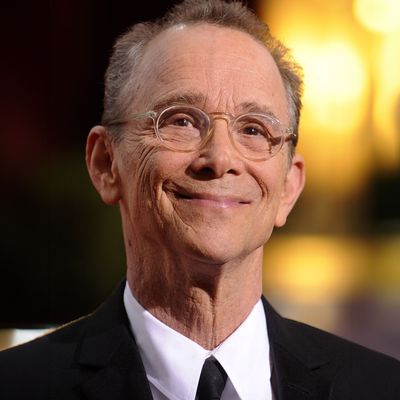
For a special, two-part show, Jamie and Rob take an in-depth look at the life, work, and legacy of Broadway composer and lyricist Jerry Herman—“the poet of the showtune”. They chat with performers Joel Grey, Florence Lacey, Lee Roy Reams, and Alix Korey, music director Andy Einhorn, producer Barry Brown, and actress and cabaret star Molly Pope. Part one focuses on “Hello, Dolly!” and “Mame”, two of Jerry’s biggest hits, and “The Grand Tour”, one of his biggest flops. Tune in to discover why there really is no tune like a showtune!
This week’s music: “Overture”, “Mame, Original Cast Recording”. “I Wanna Make the World Laugh”, “Mack & Mabel, Original Cast Recording”, “Dancing”, and “Put on Your Sunday Clothes”, from “Hello, Dolly! New Broadway Cast (2017)”, “Mame”, “Mame, Original Cast Recording”. “It’s Today” from “An Evening with Jerry Herman”, and “It’s Today”, from “Mame, Original Cast Recording”. “Showtune”, from “Parade”. “We Need A Little Christmas”, from “Mame, Original Cast Recording”. “Just Leave Everything to Me” and “Before the Parade Passes By”, from “Hello, Dolly! Original Motion Picture Soundtrack”. “If He Walked Into My Life” from “The Best of Eydie Gormé”. “Hello, Dolly! from “Hello, Dolly! New Broadway Cast (2017)”. “I’ll Be Here Tomorrow”, “Mrs. S L Jacobowsky”, “I Belong Here”, and “Marianne”, all from “The Grand Tour Original Broadway Cast”.
Find us on Twitter & Instagram: @fabulousinvalid
Facebook: www.facebook.com/fabulousinvalid
Rob’s reviews: www.stageleft.nyc
Email us at: office@fabulousinvalid.com
Jamie DuMont
Twitter: @jamiedumont
Instagram: @troutinnyc
Rob Russo
Transcript
This transcript was automatically generated and might contain errors.
[0:19] Jamie DuMont: Welcome to the Fabulous Invalid, Broadway's podcast where we present essential conversations with a curated roster of the best, most important, and innovative theater makers working today, from actors to writers, directors, designers, and everyone in between.
[0:33] Rob Russo: We took our name from the title of a 1938 play by Kaufman and Hart that has since become a loving nickname for Broadway itself.
[0:39] Jamie DuMont: Always deemed on the verge of decline, yet always bouncing back, the fabulous invalid.
[0:44] Rob Russo: I'm Rob Russo, writer and theater critic with Stageleft.
[0:46] Jamie DuMont: And I'm Jamie DuMont.
[0:52] Rob Russo: We have a special treat for everyone: a two-part look at the life and work of Broadway composer and lyricist Jerry Herman.
[1:03] Jamie DuMont: Well, if you don't know, Jerry passed away in December 2019 at the tender age of 88.
[1:10] Rob Russo: Um, and I think the universe is speaking to us because there are 88 keys on a piano.
[1:15] Jamie DuMont: This is our 88th episode, so it's only fitting that we would take this time to pay tribute to the poet of the show tune.
[1:23] Rob Russo: Everything is aligned, it was meant to be.
[1:25] Jamie DuMont: And I know you love how like when numbers line up and things make sense.
[1:29] Rob Russo: And I'm a little more chaotic, but I can appreciate the 88 thing.
[1:34] Jamie DuMont: So over the course of the next two episodes, you'll hear from Joel Grey, Florence Lacey, Alix Korey, and Lee Roy Reams, all of whom performed.
[1:46] Jamie DuMont: I mean, you know, Joel is a show favorite.
[1:48] Rob Russo: Anyway, they all have performed in Jerry's shows.
[1:52] Jamie DuMont: You'll also hear from Barry Brown, who was the executive producer of La Cage aux Folles, and actress and cabaret star, Molly Pope.
[2:01] Rob Russo: Yes.
[2:02] Jamie DuMont: But first, to kick us off, you're gonna hear from Andy Einhorn, who served as the music director for the 2017 Broadway revival of Hello, Dolly!, and just conceived and music directed a virtual musical revue entitled You I Like, a musical celebration of Jerry Herman for the Pasadena Playhouse.
[2:19] Rob Russo: So I've got to stop for one second.
[2:22] Jamie DuMont: Two things that are very dear to my heart and to yours.
[2:25] Rob Russo: The Pasadena Playhouse, as people may or may not know, um, is in my hometown of Pasadena, somewhere that I worked.
[2:33] Jamie DuMont: Actually, you know, really the first theatrical job I ever had was at the Pasadena Playhouse.
[2:37] Rob Russo: Um, and Jerry Herman, and now Andy Einhorn, because doing the show, we have met Andy Einhorn, who is a genius and a legend in his own right.
[2:45] Jamie DuMont: But that streaming event, that concert, You I Like, is so spectacular, so fabulous, so simple, so easy, so fun to watch.
[2:57] Rob Russo: They let Jerry Herman speak for himself with these fabulous singers, the simple piano, these great arrangements.
[3:04] Jamie DuMont: It is divine. I cannot say enough about it.
[3:06] Rob Russo: You can actually watch it online through February 7th.
[3:10] Jamie DuMont: So that's soon.
[3:12] Rob Russo: You need to like you need to listen to us, and then you need to watch that, and then you need to come back and listen to our part two.
[3:19] Jamie DuMont: That's what I recommend.
[3:20] Rob Russo: So you can do that by going to playhouselive.org.
[3:25] Jamie DuMont: That's playhouselive.org.
[3:27] Rob Russo: Yes, and you really should. I mean, I think it's a really perfect complement to this two-episode series that we're gonna do.
[3:32] Jamie DuMont: So you can see all of Jerry's songs come to life in a new way.
[3:36] Rob Russo: But for now, here's Andy, Andy Einhorn reflecting on Jerry's incredible legacy.
[3:43] Andy Einhorn: The day he passed in 2019, you know, I somebody texted me and said Jerry passed, and of course, I was incredibly saddened by that, and then I'm sitting in bed and I'm doing the epic scroll through the CNN newsfeed.
[3:58] Andy Einhorn: I think I got to like the second to last story, and it's a Jerry Herman composer dead at you know, at age 88.
[4:06] Andy Einhorn: And I thought to myself, really? This is all we're giving this man, and then less than two hours later, it was gone.
[4:15] Andy Einhorn: It wasn't there anymore. And I thought, this is so sad to me.
[4:19] Andy Einhorn: You know, there's sort of a I'm gonna go on a rant. There's a bit of a bevy of these writers that I feel like Jerry, Cy Coleman, Charles Strouse, you know, Sheldon Harnick, Jerry Bock.
[4:31] Andy Einhorn: These people are like, unfortunately, in my again, humble but accurate opinion, unappreciated.
[4:39] Andy Einhorn: You know, like when you think of Jerry Herman, and just shut me up if you want, but like he wrote Hello, Dolly!, he wrote Mame, he wrote La Cage aux Folles.
[4:47] Andy Einhorn: These are amazing pieces of theater, but at a certain point, I do believe the shows became larger than the creators themselves.
[4:55] Andy Einhorn: Um, but I also believe that's partially because Jerry was this altruistic guy who never believed he should be larger than his show.
[5:03] Andy Einhorn: But at the end of the day, come on, the guy wrote this material. Like it's so darn good. Why wouldn't you celebrate that?
[5:36] Andy Einhorn: In February 1969, Jerry Herman was the undisputed king of Broadway. His first mega hit, Hello, Dolly!, had opened five years earlier and was on its way to becoming the longest running musical in Broadway history.
[5:49] Andy Einhorn: His follow-up sensation, Mame, was still packing them in. And his latest show, Dear World, had just come to New York, starring the one and only Angela Lansbury.
[5:58] Andy Einhorn: At the age of 37, Jerry had achieved that rare distinction of having three musicals running simultaneously on Broadway, not to mention two Tony Award nominations with one win under his belt.
[6:11] Andy Einhorn: Production had just wrapped on the film version of Hello, Dolly!. Rock and roll had only just arrived on Broadway, and Stephen Sondheim and Hal Prince's Company wouldn't premiere for another year.
[6:22] Andy Einhorn: There was no doubt that Jerry Herman was the single most promising and celebrated young musical theater songwriter on the scene.
[6:29] Andy Einhorn: For five glorious months, as he wrote about in his memoir, Jerry devised what became a regular routine, running from show to show.
[6:37] Andy Einhorn: He would start the night at Dear World, so he could see his dear Angela Lansbury sing that musical showstopper, I Don't Want to Know.
[6:44] Andy Einhorn: After going backstage to kiss everybody, he would dash from the Mark Hellinger over to the Winter Garden.
[6:44] Andy Einhorn: At the Winter Garden Theater, he'd either catch Jane Morgan or Ann Miller be serenaded by the incomparable title song at the end of Act One of Mame.
[6:59] Andy Einhorn: He'd then linger during intermission, gossip in the dressing rooms before strolling down Broadway to 44th Street, where he would stop in at the St. James Theater to watch Pearl Bailey stop the show every night with a title song, Hello, Dolly!.
[7:15] Andy Einhorn: Of course, there'd be more kissing and hugging, and maybe just a little more gossip backstage at the St. James before Jerry would hit the town with one or more of his ladies in tow.
[7:25] Andy Einhorn: While Dear World ended up being a bust, Jerry would, of course, go on to write La Cage aux Folles and become the first American composer for the theater to have three musicals each run more than 1,500 performances on Broadway: Hello, Dolly!, Mame, and La Cage.
[7:42] Andy Einhorn: There's no doubt that Jerry was on top of the world.
[7:45] Barry Brown: As producer Barry Brown remembers, one night I remember we were in San Francisco at a Chinese restaurant because it had that lazy Susan thing in the middle.
[7:56] Barry Brown: And it was me and Fritz and Arthur and Fioni and Shirley Hurz, our press woman who was just the best.
[8:04] Barry Brown: Anyway, came around and he said, you know, there's not a day that goes by in this whole calendar year where Mame or Hello, Dolly! isn't playing someplace.
[8:15] Barry Brown: And we both Fritz and I really did sort of the same thing. We spun the suit lazy Susan around where the check was and said, and that's why you're picking up the check tonight.
[8:28] Barry Brown: You know, Jerry was one of the warmest people you could ever meet. Um, and very kidlike in a lot of ways.
[8:40] Barry Brown: He had almost a childlike appreciation of the rehearsal process and when somebody did something that surprised him, or when it happened that just I mean, he'd cry.
[8:57] Barry Brown: He'd, you know, grab his chest, and he'd cry. Everybody knew Jerry personally. You know, he was around and he was top drawer.
[9:10] Barry Brown: And he was, you know, he was the Hello, Dolly!. You know, that was a big deal.
[9:17] Barry Brown: The thing I have to say about Jerry is I've worked with a lot of composers, and they can be very critical of each other.
[9:33] Barry Brown: But Jerry was not like that. Jerry loved music, loved theater, and loved music.
[9:39] Barry Brown: He was really, really funny. I mean, uh, I can't even tell you some of the terrible things he would do to me to get a laugh.
[9:46] Barry Brown: Oh my god. We just, he was a very, very funny guy and liked practical jokes.
[9:55] Barry Brown: He was just, he was really funny and fun and crazy and dirty, just a little bit dirty.
[10:22] Barry Brown: We were on tour with Jerry Herman's Broadway years. It was with Lorna Luft and Leslie Uggams. We were the three stars, and we rode a bus with musicians, and we toured six weeks and did 36 cities.
[10:38] Barry Brown: And if you're friends after that, you're friends for life. And we played various venues, and we came to this one theater in Pasadena, and it was owned by a religious group who had say-so over what was presented.
[10:57] Barry Brown: And Herb Fox, who was our producer from Columbia Artists, came to join us and said there was a little bit of a problem with this venue because the theater is owned by a religious group, and they don't want any content that has to do with homosexuality or unwed mothers.
[11:16] Barry Brown: So you can't do that song from Mame, and you can't do anything from La Cage aux Folles. And Jerry said, Well, let me tell you what you can tell those people.
[11:28] Barry Brown: That in this group there are three well-known homosexuals. We have a black woman who is married to a white man, and we have an ex-drug addict. So I think we need to find another theater.
[11:41] Jamie DuMont: Any conversation about Jerry Herman's work has to begin with Hello, Dolly!.
[11:46] Rob Russo: It's his biggest hit and Broadway's greatest musical, if I can dare say so.
[11:50] Jamie DuMont: Oh, you can say it, and the poster said it for that 2017 revival.
[11:55] Rob Russo: Well, there it is. Speaking of, you know, for the Fabulous Invalid, we've already spoken to Donna Murphy and Betty Buckley and Carolee Carmelo about their star turns in that production.
[12:04] Jamie DuMont: So for this episode, we were really excited to talk to Florence Lacey, Lee Roy Reams, and Alix Korey about their experiences working on the landmark 1978 revival of Hello, Dolly! with Carol Channing.
[12:16] Rob Russo: You know, everybody thinks that '78 was the first revival of Hello, Dolly!, but that's not entirely accurate.
[12:24] Jamie DuMont: Yeah, yeah. So it turns out that Pearl Bailey, of course, who made a splash in 1968 with the all-black Broadway replacement cast of Hello, Dolly!, David Merrick was evil in a lot of ways, but that was a genius move.
[12:39] Rob Russo: It was such a success that she went on to tour it across the country in 1971, sorry, 1970 and in 1971.
[12:45] Jamie DuMont: And then there was another tour in 1975 that had a Broadway engagement. The show went all across the country, and then it went from LA to Boston and then to New York for six weeks at the Minskoff Theater, if you can believe it, before continuing its tour and going to DC and closing in early 1976.
[13:03] Rob Russo: So it's not exactly accurate to say that the 1978 revival was the first revival of Hello, Dolly!, because there was that brief six-week stop in 1975.
[13:15] Jamie DuMont: And I wonder if that '75 tour stop, I suppose we'll say, is the thing that sparked the idea of doing the revival in '78.
[13:28] Rob Russo: I can't help but think that that maybe had something to do with it.
[13:31] Jamie DuMont: You know, it's funny when we talked to Betty Buckley, she said that she saw that during those six weeks, she saw Pearl Bailey do it in Broadway in 1975.
[13:39] Rob Russo: And I remember kind of scratching my head being like, Oh, I maybe Betty got the year wrong, but no.
[13:42] Jamie DuMont: And why would I ever doubt Betty Buckley, of course.
[13:45] Rob Russo: Well, mistake number one always believe Betty Buckley, yes.
[13:51] Jamie DuMont: Well, so this really was the first proper Broadway revival, though, right? With new costumes, new sets, you know, a whole new thing.
[13:59] Rob Russo: Before we move on from Pearl Bailey for a brief second, um, that recording is spectacular. It's the one I go to probably most often.
[14:07] Jamie DuMont: I know it's your go-to. We all know Mary Martin is my go-to, which is shocking on so many levels to me and maybe you, I don't know.
[14:15] Rob Russo: But yeah, so getting back to the '78 revival, Jerry handpicked Florence Lacey to play Irene Malloy.
[14:21] Jamie DuMont: Carol Channing picked Lee Roy Reams to play Cornelius Hackl, and then of course, the Divine Alix Korey was cast as Minnie Faye.
[14:21] Rob Russo: So as Lee Roy recalls, the first time that I met Jerry, I was cast in Hello, Dolly!.
[14:38] Lee Roy Reams: But before that, I got a call from Carol Channing, who I had performed in with Lorna Luft. And she said, Hi Lee Roy, it's Carol.
[14:47] Lee Roy Reams: Carol Channing? As if I didn't know. And she said, I'm gonna do a revival of Hello, Dolly!, darling. And I want you to play Cornelius Hackl, but Jerry Herman doesn't know you, darling.
[14:59] Florence Lacey: And Lucia Victor, the director, doesn't know you, but don't worry, darling, you've got the job. And so I did. And so when I first met Jerry, and you know, and I auditioned, you know, and of course I did get the job. I went on tour with a piece called John Brown's Body, starring Rock Hudson, Claire Trevor, and Life Erickson. And during that, the run of that show, I became very good friends with Rock Hudson. And when the tour was over and we were back in LA, one evening he invited me to his house for dinner. The great big dinner with lots and lots of people, and it was really fun. And as the evening moved into the living room, there was this guy playing the piano, and Rock asked me if I would sing.
So I went up to the piano player and I said, Do you know, can't help loving that man from Showboat? And he said, Sure, what key do you do it in? I said, I don't know, just play it, I'll sing it. So I sang the song, and then Rock said to me, Hey, Flo, do you know any Jerry Herman songs? And I said, I know Ribbon Sowell My Back from Hello Dolly. I looked at the guy and I said, Do you know that one? He said, Yeah. What key do you do it in? I said, I don't know, just play it, I'll sing it. So he played it, he sang it. And the crowd went crazy. And I thought, what's happening here? Why are the people on their feet? And Rock walked up to me and said, Flo, I want you to meet your piano player. This is Jerry Herman.
And Jerry said to me, If I had a show on Broadway right now, you'd be in it tomorrow night. I'm going to remember you. And I thought, oh, sure. But sure enough, six months later, he called me and he asked me to come to New York and make my Broadway debut as Irene Malloy in Hello Dolly. Our first day of rehearsal, we were going to meet the cast. And Florence Lacey was cast as Mrs. Malloy. And all I knew about her, because I didn't know her, was that I was told, well, she's a very good friend of Jerry Herman's. So now imagine what I thought when she was going to arrive, what I was going to see. Um, I thought I would be probably see a slightly overweight soprano or a mezzo soprano. And uh I you can't imagine what I thought, or it would have been one of Jerry's friends, you know.
So of course, Florence Lacey walked in the room, and number one, she was gorgeous, and has a voice that is just absolutely thrilling. So after we had, you know, uh got together, and I said, You know, Florence, I have to tell you something fun. You can't imagine what I thought upon before I met you when I was told that you were Jerry Herman's best friend. And she said, Well, before you speak, imagine what I thought when I was told that you were Carol Channing's best friend. I have always been a woman who arranges things for the pleasure and the profit it drives. I have always been a woman who arranges things like furniture and daffodils and lies. And uh I loved the score. Uh I didn't have the script.
And when I saw Hello Dolly during one of my uh, you know, breaks in the summer from college, I had a balcony seat on the side, and uh it I loved the show, but it would come because all I heard from Carol was it was so hard hearing, and David Burns was rather muffled, and uh so you know it I didn't get to hear it as well as I did when I did it. We asked Alix Korey about the experience of putting together this new production of Hello Dolly in 1978. This was one of those situations where you don't change anything really, you go in. Plus, um Carol was not comfortable with change. Um if there were any, you know, moments it was Carol saying, that's not the way we do it. Um but uh it was a it was a very uh it Eddie Bracken was uh Horace and he was the most mellow guy in the whole world.
So and and of course Leroy is nothing but fun. So it was whole, you know, uh I don't remember there being any difficulty. I remember being shocked that I was cast. That's that's what I remember. Um because I was not primarily a dancer, and I I did all of that stuff, but I have I have tremendous neurosis about dancing.
[20:42] Joel Grey: Hello, Dolly. I mean, which is so popular and so full of the right stuff that people should be thinking about, you know, from that original piece. It's rich. And it's legit. Somebody else would musicalize it, like Sondheim very differently. That same story, which is very powerful. But you know, we take it another direction. When they went to Detroit, the show was not a hit. And it was then called what uh that damned exasperating woman or Dolly, that damned exactly, whatever the title was. Uh, and the show was in trouble. And uh Dave Emerick was going to close the show, and they brought in uh Charles Strauss to write songs. They brought in Bob Merrill, and of course, Charles Strauss came up with the idea of doing When the Parade Passes By.
Horace Vandergeller used to close the first act with Penny in My Pocket, and uh it wasn't working. And so they had said, you know, Carol was now playing Dolly and had more prominence, and she needed to close the act. And Charles Strauss came up with the idea of the parade, the before the parade of that idea, and then Jerry took it, and Jerry actually wrote the song, but Charles Strauss got a percentage for coming up with the idea. So Charles Strauss loves any place that Hello Dolly is done. But that's what the you know the composer lyricists did. They helped each other out without taking credit, and Bob Merrill did Motherhood and uh elegance, those are his songs that Jerry gets the credit for it, and also Bob Merrill likes Hello Dolly very much because he gets you know a residual from it.
So anyway, that's the story of Hello Dolly. But the thing was they worked on the show, they fixed the show, it came back to New York, and it was a big hit. But Jerry went through, you know, Sterman Drawn out of town because here were people watching the show, and they were not very nice to him. And uh the people were putting in songs, and he and he, you know, he wrote parade, you know, like overnight. Uh, and so it was a very tough time for him. But the show was such a hit. And I when Jerry with it in his book, I said, Jerry, why didn't you tell the real story? Because it it's full of drama, and then to you know, be treated that way, and and the David Merrick doing the underhanded business with you, and and but then the show was a hit and it made you a millionaire and all of that.
So, you know, it came out well in the end with a happy and he said, Well, you know, it just sounded like sour grapes, and I because we did have a success, and the show was so important. I decided I didn't want to air dirty laundry. I've often talked with people about even Hello Dolly having a bit of a dark side because there in the character of Dolly, there is a bit of desperation. She needs money, she needs to survive, and she finds a way to do it. And you know, the character is always played, you know, completely lighthearted and totally in charge. But I just think there is a there is an underlying element to it that is dark. The secret is it's the book, and you have to go back to uh, you know, Thornton Wilder, who wrote The Matchmaker, the story works, and that character is very appealing and positive.
There's a lot of depth there that you and also uh the story of Cornelius uh uh Hackle wanting to get out and have an adventure, that he's downtrodden, working in a job where he's not making very much money and has never been in love, and he just wants that urge and that longing about having an adventure and having the guts to do it. It speaks volumes and that speech which he has, which is you know so much of Thornton Wilder. And Mike Stewart was brilliant translating it and working it into the musical. It's a really strong book. But when he says, even if I have to, because it gets fired, he says, even if I have to dig ditches for the rest of my life, I'll be a ditch digger who once had a wonderful day.
And that's what life is all about. So that's a very positive statement. If you're not happy, have an adventure, get out and seek it. And then, of course, with Dolly about rejoining the human race. You know, when she says, an oak leaf fell out of my Bible. I placed it the other day you asked me to marry you if I'm a perfectly good old belief, but without color and without life. And I was like that leaf. And that's why she wants to rejoin the human race and love again and feel again, even though it's not going to be what it was. It's at least something to still be a human being and being contributing. So it's a very powerful play there with those words. So I think that's why it continues to be done. And then also those incredible songs. I mean, oh my God. Every song is a winner.
[26:01] Andy Einhorn: I remember distinctly hearing put on your Sunday clothes in a musical theater class that I was taking at age eight in Houston, Texas, where I grew up. And I found that melody. I just remember it was like a light bulb moment inside of me, and this sort of awakening of thinking, who could write a melody like that that is not only captures joy and life, but then you listen to those lyrics. And of course, I was eight years old, so I didn't really put it all together of like the brilliance of a phrase for there's no blue Monday in your Sunday clothes. Because like now, when I hear that, I'm sort of gobsmacked by the wit of that line. What happened uh the first day that we did a run through, and Jerry came because he didn't he didn't come to rehearsals, and we did a run through for Jerry.
And when I opened up with Out There, there's a world outside. Jerry screamed and he said, Ah! That's the voice I hear in my head. That's the first time that I hear that voice that that's the way the song has to be sung with that big Broadway sound. Out there. Full of shine and full of sparkle. Close your eyes and see it blitz in bottom of me. And then we got to the uh scene in the courtroom where we sing it only takes a moment. And Jerry stopped rehearsal. And he said, I have to tell everyone in this room, these two voices are the voices I hear in my head when I compose my music. And I now have the reality of hearing those voices. I mean, it brought me to tears. I was just overwhelmed by the compliment.
And I'm bragging, but that was Jerry. I think Sunday Clothes is a three-act play because it tells you everything you need to know about the character, about the location, but it also has a lyric that speaks to us. And I think in a 32-bar tune, I've never heard a better melody. It's and it's it's crazy. I mean, you saw the show. You can you knew I could feel that energy every night on the back of my shoulders because that's when the show came alive. And it it, yes, of course, it was the visuals of seeing amazing the costume parade. And yes, of course, you had a train come on at the end of the show, uh, end of the song. But that was all sort of secondary to it, because it was the minute he slammed that trapdoor down and said, Out there, there's a world outside of Yonkers.
Everybody, I think everybody can relate to that. I mean, look at us right now, stuck inside of our apartments, you know, out there. There's a world outside of Manhattan, you know, but it's uh I do think it's perfect. I really do. I think he got it so right with that song. It's just one of those marvelous magical musical theater moments that I think I think the celebration for me of what that song was, and you know, I was so lucky to have the ensemble of voices that I did when we did it in 2017, because you know, we I was meticulous about saying I need singers, I need singers.
[30:02] Andy Einhorn: Um, and I had Don Pippin, who is Jerry's long-term music director, with me doing the vocal arrangements, and I'll never forget that first we were like three days into rehearsal, and I emailed Scott Rudin and I said, "You have to come hear it." I said, "You need to come down to 890," and he just stood in the back of the room after we finished Sunday clothes, and you know, we were three days into rehearsal, and everybody in the room just had tears streaming down their faces because to me it was a return to why we go to the theater to feel good, and you just got to the end, you know. No, we won't come home until we fall in love, you know, and you just felt everybody in the room, their collective energy, everybody had sat up, and then at the end, no nobody wanted to move because it was just this moment captured in time, and I actually listened to our recording the other day, which I so rarely ever go back to something because it's just that terror of hearing it again. And I got to the end and I thought, yeah, that's damn good. I'll be okay with that 20 years from now.
[32:34] Andy Einhorn: We got to the end, and Don Pippin turned to me, he was like, "One person. That's it. Only one person on the high C." You know, because I think those of us who music direct think, oh, well, you know, we need help up there. It's a high note, which we do, and he was like, the trick is one. Always one. And if you go back and actually listen to like Mame and all that, and you hear those high notes, it's always just one person. And it's interesting how then that cuts through a choir of voices. It's full out. I mean, it is we don't hear vocal arrangements like that on Broadway today. I mean, partially because the scores we're writing were call for a very different style of vocal arrangement. But celebrating what that sound is, it's so spread out.
That's actually the magic of it. Like when you study it on paper, it's the voicing of it that makes it. And the other trick of what Don did is he always knew when to do a vocal arrangement. Like when it was okay to let people just sing in unison. I think we all have a tendency to just want to overwrite. It's like, oh, you have 30 people singing, you have to use them. But the power of that unison, it works. You know, that's why that whole first chorus of Sunday clothes when they come out, totally unison. It's amazing. And then all of a sudden it breaks out into the harmony, so that when it hear when you hear that, it blooms. It's like a flower and it grows at that moment.
[35:04] Barry Brown: And he said, it's not that I'm apologizing for my score, but I had to be talked into doing it. But the shows that were presented to me that I just jumped into, he said, those were the successful ones. And uh that includes, of course, Hello Dolly and Mame, Jerry's because he had Jerry had a hard time out of town with Hello Dolly. Whereas Mame, Jerry said that when Lawrence and Lee offered the show to him, he just said, yes. And he said the songs poured out of him. And he said, and when we got out of town, I never had to do any work. He said, I they just flew out, and the only thing that happened, I had to cut one song, Love is Only Love. He said, That's all I did out of town with Mame. And the same thing with La Cage aux Folles. He said, When you know it was offered to me, he said, I just jumped into it, and they just everything came out just instantaneously. Where the other shows he had to work a little harder.
[36:00] Lee Roy Reams: Leeroy is so right that the shows that Jerry was so excited about tended to be the hits, and the shows that he kind of had to be talked into doing, like Mack and Mabel and The Grand Tour were not as successful, with I will say one major exception, which is Dear World, uh, which was the first musical that Jerry did that was 100% his own idea. But we're gonna get into that a little later. But with Mame, it was love at first sight. And quite frankly, for everyone who ever encounters Mame Dennis, I think you you instantly fall in love with that character, whether it's the film, whether it's the score, whether it's yeah, well, you know, that's what's so amazing is you know, when you look back at Auntie Mame, the play, you know, it it was on Broadway in 1958, right?
So it was still very fresh in people's minds. Uh, you know, this play. So, of course, when Lawrence and Lee came to to Jerry, he was like, Oh, absolutely. Because he knew it, right? He knew the he knew the play and he knew the film. The amazing thing about, of course, Angela Lansbury's star turn in Mame. And we talked about this a little bit when we did our flops episode, is you know, Angela Lansbury had done uh anyone can whistle, right? Stephen Sondheim's famous flop in 1964, which of course only ran nine performances. And that was her first musical on Broadway, and maybe even her first musical ever, or at least professionally in New York. And then Jerry, you know, had the idea, of course, to cast Angela. And I know that uh this is really Jamie's territory. So I I will let Jamie tell the story of how Angela Lansbury came to be the star of Mame.
[37:38] Jamie DuMont: I think it's also one of those things that the minute this was announced, every musical comedy star, every actress of a certain age wanted to play this part. And a lot of women came through to read for for everyone. But there was obviously one person, Jerry wanted Angela Lansbury from the start. Um, he's told the story before, but I love, love, love this story because I would imagine this is something maybe it's never happened again. And that was that Jerry worked with Angela on two of the songs. She was the only actress to audition with two songs from Mame, and Jerry snuck into the theater before her audition, snuck into the pit, and accompanied her on the piano when she knocked their socks off.
And apparently she killed the audition that she walked out with the job, which I love. That's such a classic Broadway story, you know. Imagine anyone else in that part originally. You can't do it because it's so identified with Angela Lansbury. But I also think that's and Jerry knew in his heart that she was the right choice. And I think that's because there's something about Angela that he knew was right for the part, but also something about Angela that reminded him of his mother. And I think there's an argument to be made that there's a little bit of Jerry's mother, Ruth Herman, in every leading lady that he ever.
[39:01] Rob Russo: I think that's so true. You know, Jerry was an only child. Um, and he's very uh was very vocal about the fact that he was a proud mama's boy. Um but he he he did he he he grew up in a very loving household that was very musical. Um his mother, Ruth, had her own radio show called Ruth Herman Sings, which I love on the you know on the local radio in Jersey City, where she would sing, you know, songs that were the tunes of the era. But you know, sort of one of the early tragedies in Jerry's life, which he would never know because he was such a joyful and lighthearted person. But his mother, Ruth, passed away from cancer of the jaw in 1954. So Jerry was only 21, and she was only 44, which is, I mean, so devastating, uh, especially as an only child and you know, an only child who was, you know, in love with his mother.
But the most devastating thing about it, of course, is that Ruth, who was the one who encouraged him to, you know, pursue songwriting, never got to see a single one of his shows. I do think, though, Ruth is Dolly Levi, she's Countess Aurelia, she's Mabel Norman, she's Alban, or should we say Zaza, but above all, she is the Mad Cap named Dennis. And um, as Jerry himself recalled in An Evening with Jerry Herman, his cabaret show, um, his mother Ruth inspired the song, It's Today. When I needed an idea for the opening number, which had to take place at a huge party, I went back to my growing up because I came from a house where they threw a party every 15 minutes. I remember coming home from school one afternoon and finding my mother surrounded by hors d'oeuvre. It was a Tuesday or a Thursday in the middle of the winter. And I said, Mom, what's the occasion? She flashed me a smile and said, It's today.
[40:14] ♪ Musical number: "It's Today" — performed by Jerry Herman ♪
[40:14] Florence Lacey: I love the song It's Today. It's my favorite Broadway show tune into four. And I just love that song, and it's just worked so well. And it's a great experience to sing. And I wish I could have done it at the memorial, but you know, we had uh uh Marilyn May and honey. I ain't gonna compete with that.
[42:07] Rob Russo: We were fortunate to be at the memorial service, and Leeroy's.
[42:11] Jamie DuMont: Oh, absolutely. I just love that the little joke he made is a reference to the fact that the melody for It's Today uh was actually borrowed from the opening number of Jerry's uh hit West Village Review Parade, uh, which he wrote in 1960.
[42:26] ♪ Musical number: "Showtune" — performed by Jerry Herman ♪
[43:20] Andy Einhorn: Even when he writes songs in minor keys, somehow you still hear a smile in there. It's it's so strange, but it's the way that he curves a melody. I'm gonna use the word curve because the lines, the phrases end up being incredibly meticulously matched to the words that he's writing. And so you end up with the perfect earworm, as it were. Like, okay, this is such a simple example, but think about the song We Need a Little Christmas. It's basically calling you to attention, and it's instructing you to go have a really damn good time. So by the time you get to the release, for we that's a sequence melodically, but he somehow has literally paved the road for you to exclaim when you get to that moment.
I do that song every year in like Christmas Pops concerts. People go mad for that song. Like there's a reason that it has broken into the zeitgeist of popular Christmas songs. Like you have White Christmas, you have We Need a Little Christmas, and then you have Mariah Carey.
[45:13] ♪ Musical number: "We Need A Little Christmas" — performed by Florence Lacey ♪
[45:21] Rob Russo: So as brilliant as the lyrics are, I do actually believe that the smile and the hook, as it were, comes from how strong the melody writing is. "We Need a Little Christmas" really has become a perennial Christmas song. I mean, it's pretty amazing. You know, it's probably Jerry's most popular song, along with "Hello, Dolly!" sung by Louis Armstrong, and to a lesser extent, "I Am What I Am." You know, all of which sort of leapt into the mainstream and became popular pop songs, if you could put it that way, in their own right.
[45:58] Jamie DuMont: But getting back to "Mame," you know, after Angela Lansbury, which you know we talked about before, there was, of course, a very notable string of replacements on Broadway. And again, this is Jamie's territory. So, Jamie, who were the other Mame Dennises on Broadway?
[46:13] Jamie DuMont: Well, Rob, I'm so happy you asked. Celeste Holm did Angela's two-week vacation and then led the first national tour. Janis Paige replaced Angela Lansbury in 1968. Janis Paige was famous for starring in "Pajama Game." She was followed by Jane Morgan, and then Ann Miller, who got a 10-minute tap break in the middle of "That's How Young I Feel."
[46:35] Rob Russo: I love that.
[46:36] Jamie DuMont: Well, you have to. You can't have Ann Miller in a show and not have her tap.
[46:41] Rob Russo: You absolutely have to.
[46:43] Jamie DuMont: And in fact, when my parents saw "Mame," they saw Ann Miller. And to this day, if you mention "Mame," my mother will say Ann Miller got a 10-minute tap break. I think my mother extends it to 20 minutes, but I believe it was actually 10 or 12 minutes. Other notable Mames include Ginger Rogers, who did it on the West End, screen star Susan Hayward, who did it in Las Vegas, and then it's worth noting that in stock, everyone from Jane Russell, Elaine Stritch, Kitty Carlisle Hart, Juliet Prowse, and then, of course, show favorite Carol Lawrence, all played the role.
[47:18] Rob Russo: Ah, interesting.
[47:19] Jamie DuMont: More recently, the Christines, Ebersole and Baranski, both played it, but for my money, there's no infamous Mame than Lucille Ball.
[47:30] Rob Russo: Yeah.
[47:32] Jamie DuMont: Well, I as a kid, you know, I got the cast album to "Mame," you know, the Broadway cast album, and I listened to it and I loved it. And then I rented the movie from Blockbuster when you could still do that, because that was a thing that you did in the 90s. And they had it, you know, they had Lucy Mame. And I loved "The Lucy Show." So I thought, oh, this is gonna be terrific. I remember watching that movie, even as a kid and being like, um, well, something's not right about this.
[48:00] Rob Russo: Well, she can't sing. That would be the thing that wasn't right about it.
[48:05] Jamie DuMont: So here we are now going to talk about the film version of "Hello, Dolly!"
[48:11] Rob Russo: Yes.
[48:11] Jamie DuMont: And the film version of "Mame."
[48:13] Rob Russo: Okay, yeah, yeah. Buckle your seat belts, everybody.
[48:17] Jamie DuMont: Yeah, I mean, I you know, look, we don't have to spend a lot of time on here because I think everybody knows Barbara was miscast. Now, I will say Barbara Streisand, for those who don't know that she was Dolly.
[48:29] Rob Russo: Oh, does she have the last name? Oh, that's news to me.
[48:31] Jamie DuMont: I wasn't, I wasn't that's funny. Okay. But you know, she was miscast, she was too young. But I think that time has been very kind to that film. I feel like Barbara's performance holds up a little bit, but you know how sometimes performances over time they're not so great. I think hers actually gets better with time. I actually love the film of "Hello, Dolly!" I just have to leave that there. I think it's a great film.
[48:55] Rob Russo: Yeah, I mean, look, she was a 27-year-old playing a widow, right? Who's supposed to be middle-aged, right? Or at least in her 40s or 50s, right? So, right there, you know, you just sort of have this visual that just doesn't quite make sense. You know, I love Barbara Streisand, and I love the way she sings that score, and you know, it's a pretty incredible vocal performance, as always with Barbara Streisand. And you're right, the film sort of endears yourself to it, and I return to it all the time. Actually, it's a guilty pleasure of mine. I love watching it. You know, nothing will ever beat the musical, the stage musical, the experience of seeing the stage musical. But you know, there is something really charming about that film.
[49:38] Jamie DuMont: What's great is also, you know, Jerry Herman never really loved "I Put My Hand In." I think that's a song that he wasn't too totally crazy about. And with the film version, he got to write a new song, "Just Leave Everything to Me," which opens the film. And I love this story because Jerry had intended it to come a little later in the film, and Gene Kelly was insistent that it open up the film. And it's kind of if you watch it, it's kind of out of place. Like it's not the perfect place for it. And Jerry was very, very unhappy with that. And he was very, you know, vocal. He spoke to Gene Kelly about it, and Gene was like, you know what, this is Hollywood, we do it differently. You're not gonna get your way on this.
And Jerry was saying, but no, there's gonna be like 30 minutes of film with no song, you can't do that. And again, Gene Kelly was like, no, you're not gonna win this one. Well, they get to the premiere, and Gene Kelly is sitting next to Jerry at the opening, and the movie starts, "Just Leave Everything to Me" happens, whatever. They get through the end of the film, and Gene Kelly turns to Jerry Herman and says, Well, you were right.
[49:46] ♪ Musical number: "Just Leave Everything to Me" — performed by Barbra Streisand ♪
[52:05] Rob Russo: Even with those lyrics, you know, they grow more organically out of the text. And that makes sense because "I Put My Hand In" was one of the four songs that Jerry wrote to audition to be the composer for the show. And I bet, you know, he was so young, he was 30 years old at the time. I bet David Merrick just said, Great, perfect, we're using them. And you know, Jerry was always a little, you know, unhappy with that being the song, you know, that opened the show. So I guess even though it wasn't in the right place in the film, according to Jerry, at least you got to share that song with the world.
[52:33] Jamie DuMont: You know, yeah, and I think it does a good job of really setting up who Dolly is. Much better, better than "I Put My Hand In," which is, you know, which is a fun song with a weird title. It's an odd image to conjure, but I think "Just Leave Everything to Me," which is a line from the play, right? Like it just it really speaks more to Dolly's character than any other song could. And I think that you know, I would not be opposed to seeing that put into a revival at some point, like they put in.
[53:03] Rob Russo: Speaking of telling you everything you need to know, Barbara Streisand's rendition of "Before the Parade Passes By" is glorious. And Jerry absolutely loved the way she sang it. Loved, loved, loved. Even when he acknowledges that she may not have been totally right for the film, he loves the way she sings this and how she holds that final note for 16 bars.
[54:09] Jamie DuMont: Well, then there's another movie that time is maybe not been so kind to.
[54:13] Rob Russo: Was time ever kind to this movie?
[54:15] Jamie DuMont: I don't think so. I talked about it earlier, but Jamie, this is your opportunity to defend Lucy MAME as it's known.
[54:22] Jamie DuMont: All right, all right. Well, and Twitter, come after me because I'm gonna say it. I actually think the film version of "Mame" is a great film. I think it's perfect. I think it's lacking one thing. It's one fatal flaw, and that is, of course, Lucille Ball. But if you take that out, and if God willing, we could have had Angela Lansbury, or even if Judy Garland had been alive and able to do it, which you know, whatever. Jerry would have wanted. He loved Judy Garland. Of course, any other, but really Angela Lansbury, competent woman that could, you know, that had all the right things to play Mame. That film is really quite good. You have Robert Preston as Bo, who is perfection. You have Jane Connell reprising her role as Gooch, and it works.
You have the divine Bruce Davison as older Patrick, and then Bea Arthur legendarily recreating her role. She's perfection. The costumes are great. The orchestrations by Rob's absolute favorite, Ralph Burns, are magnificent. I mean, the film looks good. You know, I think it works as a film, and I know that people are gonna, I'm gonna get a lot of hate mail for this, but I said it.
[55:36] Rob Russo: Yeah, you said it. Well, so in summation, if you take Mame out of Mame, it's a great movie. Is that what I'm hearing?
[55:42] Jamie DuMont: Done.
[56:11] Rob Russo: I think Lucille Ball is a perfect example of what I think about the sort of problem with the casting of Mame, and one of the reasons that there hasn't been a major, major revival on Broadway in, you know, many, many years. And the only revival actually had Angela Lansbury in 1983. But that's because I think most of the women who want to play the role or that people want to see in the role are really Veras.
[56:11] Jamie DuMont: Yeah.
[56:11] Rob Russo: Right. And I think Lucille Ball is a perfect example. Lucille's really a Vera more than she is a Mame, right? She doesn't have that warmth and that sort of sophistication that you want to have in a Mame. She really has that sort of edgy bit of that, you know.
[56:26] Jamie DuMont: Right.
[56:26] Rob Russo: Or that comedy, like her comedy is more in the lines of what I think of as Vera. So I guess it's my long-winded way of saying that most of the women that get that you think of as wanting to be Mame really are Veras. I dare say that's true of Christine Baranski. I would also say that's true of Christine Ebersole who I saw do it. She was a lovely Mame. But there was something missing it wasn't a lot of things.
[56:52] Jamie DuMont: Yeah so wearing your casting director hat what what would be your dream cast for a revival of Mame? Because I know a lot of names get thrown around I will tell you because it's simple there is only one Mame and one Vera for my money and that is Vanessa Williams's Mame and Bebe Neuwirth is Vera. Boom do it.
[57:11] Rob Russo: Let's make this happen now.
[57:12] Jamie DuMont: Yeah I'd love to see that. You know because you're right there hasn't been a revival since 1983 when Angela Lansbury did it and that was not a success. You know it was very poorly received and I know you had mentioned to me once that you know that it sort of ended up you know kind of putting the kibosh on a film version or a TV version that they'd planned to do correct there they had there there was there was a lot of talk about doing because the the 74 film was a disaster there was talk about doing a film TV version with Angela Lansbury. And unfortunately, the timing was such that it was going to happen around or shortly thereafter the the revival, which kind of came out of nowhere, right? I think the revival came really quickly during the process of planning the television event.
And Angela Lansbury didn't have a great experience with a revival. And that sort of soured her on wanting to do the TV version of Mame. And then of course, you know, at that same time she got a sort of, you know, she got another TV gig.
[58:17] Rob Russo: Yeah, right.
[58:17] Jamie DuMont: We all know what that was. So we're all sort of living in the hope of getting another Mame revival someday. But for the time being, we have, of course, that glorious cast album and that score, which is so celebrated. It's like quintessential Jerry Herman. It's quintessential Broadway. And it too, you know, beyond "We Need a Little Christmas," you know, there was another song, right? That that became very popular from the show.
[58:43] Rob Russo: Well in that song, of course, is the Glorious Torch song, "If He Walked Into My Life." And here you kind of can't say this without saying Eydie Gormé because her version was I think one of the best outside of Angela, there is really no other version of that song.
[58:43] ♪ Musical number: "If He Walked Into My Life" — performed by Eydie Gormé ♪
[59:49] Rob Russo: Would I make the same mistakes if he walked into my life to the Jerry was a populist? That's ultimately. That's the best word I can come up with to describe why that music works. It's it's populist music. And I think the the negative connotation is not right there. It's actually all positive. It's actually all you think, oh my god, Hello Dolly was like used in 1964, I guess, for the Lyndon B. Johnson campaign. Hello, Dolly. Oh, the oh my gosh, the great irony is like um the best of times was used in the 1984 Republican National Convention. It's populist music. It's it's it's for everybody.
[1:01:12] Andy Einhorn: Never forget in early rehearsals for Dolly, who doing the title song, and one day Bette just stopped. She goes, How many times do we go through this tune? You know, and I just remember thinking to myself, and I explained to her, I was like, that's part of the build of the number, you know, you keep hearing it. So this way you get to that final chorus, and there's that explosion. I'll never forget after we started previews. She said something to me, the effect of, okay, I finally get it now. I I see why we do it. You know, it's like, do you? Because they're standing up, they're shrieking for you at the end of that number. Wow.
[1:02:05] Andy Einhorn: One of the things I remember discovering about the song Hello Dolly in particular is it's a more emotional song than people give it credit for. If you actually think of the play itself, it's all building to the moment of her arriving at the top of the staircase. Like, let's let's, you know, call a spade a spade. It's literally like the show starts, everybody's waiting for the middle of act two when she gets to the Harmonia Gardens. Because that's how it's it's sort of pitched to get to that point. But then when you actually realize what happens to her when she comes down those stairs, it's an emotional catharsis for her. This is a woman recognizing that her she's come home again, and she's reuniting with her past, but making but choosing acceptance of where she is at that moment and reconciling those two beats, and knowing that at the end of that, she's made peace with her late husband, so that she can now go forth and actually make this next connection for herself come true.
And when you think about it, it's a really beautiful moment in the show, and it makes it deeply personal. And that's that's to me where the euphoria comes for the audience because they're experiencing that at the same time. And when it's played that way with a real honesty towards those guys, that final chorus is actually just an emotional release for everybody in the room, and that's what makes it so special, and that's Jerry.
[1:03:44] Andy Einhorn: I think the same thing happens in MAME. I mean, let's not go too deep into it because right now nobody's figured out how to um settle the score with the issues within that lyric right now. But again, let's take that out of the picture for a second and just look at the song as a total celebration again, because that's ultimately he did it in every show. Even in a show like the Grand Tour where they were literally fleeing the Nazis, he still found a way to find optimism and hope inside there.
[1:04:46] Florence Lacey: We went on tour for nine months before we came to Broadway. And Jerry came to a number of the places. About five months into the run, we were in LA around Christmas time, and he had us to his home, the whole company, with a big dinner. He sat down at the piano, and he played "I'll Be Here Tomorrow" from "The Grand Tour," which he was just writing. And we were all incredibly overwhelmed. And I actually think that it's probably a very good metaphor for Jerry, for theater, for everything. It's a wonderful song, and it was terribly moving at the time.
[1:06:25] Florence Lacey: I mean, you know, Grand Tour, I loved that show. I went to see it and I just loved it. And of course, it died. Hello Dolly is Jerry's biggest hit. And while technically his biggest flop was Mac and Mabel, the one that is least remembered and was the most difficult for Jerry was the Grand Tour. After the failure of Mac and Mabel, Jerry left New York and put himself in professional exile on the West Coast, where he ended up devoting his time to buying houses, decorating them, and selling them. Meanwhile, uh back on the East Coast, Broadway was changing. In New York, shows like The Whiz, Chicago, A Chorus Line, Dancin, Evita, and Sweeney Todd, just to name a few, were changing what the American musical looked and more importantly sounded like.
Jerry wondered if he'd ever write another show again, when his buddy, Mike Stewart, who had written the books to Hello Dolly and Mac and Maple, called him on the phone and asked him to work on his next project, a musical version of the 1944 SN Berman play, Yakubowski and the Colonel, about a Jewish refugee who teams up with an anti-Semitic, autocratic Polish colonel to flee Nazi occupied Europe, with a brief detour to Rennes to pick up the Colonel's girlfriend, Mary Ann. The play had been a big hit on Broadway, and now Stewart, along with co-writer Mark Bramble, were adapting it into a musical. The Grand Tour remains the least known of Jerry's scores, and candidly, the show that he liked the least.
In his memoir, Jerry shares that while there was great humor and heart in the story, he never had passion for the piece, and he thinks it shows. Sadly, critics agreed. The show got a critical drubbing and closed after only 61 performances in the spring of 1979 following a tryout in San Francisco. Jerry says that he wrote the show for all the wrong reasons. Not because he felt drawn to the material, but because he loved the people he'd be working with. His quote unquote brother, Michael Stewart, Florence Lacey, whom he just adored, and of course, Joel Gray, who was the hottest star on Broadway. Mike Stewart also lured Jerry in by saying that they'd have the Palace Theater and that all the money was lined up. So naturally, Jerry said yes. We talked to Joel Gray and Florence Lacey about the creation of the show.
[1:08:35] Joel Grey: He was a very good friend of Mike Stewart. Michael Stewart, who was a good friend of mine from television and around the theater, and he was just a kind of a very smart guy. And um I think Michael brought it to me and said, there's this project that I think Jerry wants to write, and I think he should do it. This is powerful. To even talk about anti-Semitism was difficult, let alone to make a musical. And I think there was a lot of resistance to even embracing it. Because it was uncomfortable. It was sad. And um you didn't think he was gonna make it. You know, that's not a good ending. He says he's going on. On, on. And we know he's will be caught at the next train stop. But his spirit and his belief in humanity.
Um we're always a sucker for somebody that believes and struggles with that, because we'd like to. But I think it was a tough, tough sell, and um it wanted to have it both ways. You want it to be a happy, you know, his sensibility was quite different from Hal Prince's. I think that's a perfect example of people and material. Hal went into the depths of that, and but which was his style and his um premature. But Jerry Herman was a people pleaser, very much so. In the in the best sense. I mean, he had his heart in the right place. I was looking at some pictures of the other day from that show, and it was intense. Intense. We were talking about the Holocaust. And trying to be funny. It was a challenge.
Well, it was terrifying. It was it was maddening, it was exciting, it was adventurous, it was all the things you would expect. Giving birth to a new Broadway musical would be. But we also had a lot of laughs. It was a lot of fun. I remember when Jerry was writing the song that eventually became Mrs. S. L. Yaakobowski. We were out of town. We were in San Francisco trying the show out. And Jerry and I happened to be in the same hotel, and he kept calling me because he was trying to come up with Catholic terms for things. Because the whole point of the song was a Jewish man falling in love with this Catholic woman. And of course, I'm Catholic. Jerry was Jewish. So we had this wonderful banter back and forth. It was so fun, and one of the happiest memories I have of that whole experience was contributing to the lyrics of Mrs. S.L. Jakobovsky.
[1:12:44] ♪ Musical number: "Miracle of Miracles" — performed by Joel Grey ♪
[1:13:37] Florence Lacey: He never wrote a song just to be a song. That's why he's so actable. Jerry's songs are so connected to a human life, to a want, to a need, to a place and time. I adore Mrs. S. L. Yachabowski from Grand Tour. Do you know that one? So remembers what my name is. My one last claim to fame is Mrs. Yakopovsky.
[1:14:42] Florence Lacey: So do you recall hearing that score for the first time, or would Jerry present songs to you, or how did that all come about?
[1:14:49] Lee Roy Reams: It was sort of a song at a time kind of thing. I think probably the first song he actually played for me was "I Belong Here" because that was going to be my big song in the first act. And I was just bowled over.
[1:15:47] Lee Roy Reams: And then probably the next song he played for me was "Mary Ann." And "Mary Ann" had originally been written for "Hello, Dolly!" It was called "My Irene." And so he was reusing this melody with new lyrics. Oh, I just thought it was one of the most beautiful songs I ever heard.
[1:17:18] Florence Lacey: I'm sure that every composer wants to touch people in a deep way. And I think Jerry just succeeded at that, and he did it with such pretty melodies that stuck in your head. And I'm sure everyone says the same thing. Jerry Herman's melodies just stay there. They just stay.
[1:17:39] Florence Lacey: And you know, people will maybe accuse him of not being as sophisticated as maybe Stephen Sondheim or something, but I have to argue with that because I just think his music was so relatable. I think our definition of sophistication has changed greatly. Not always for the better, I do believe, because years ago, my friend Ted Chapin, who runs the Rodgers and Hammerstein organization, gave me an original copy of Oscar Hammerstein's lyrics.
[1:18:28] Florence Lacey: Like the lyrics just fall right down the middle, and it's poetry, and you read them and you think, oh my gosh, it's so simple. It's not simplistic, it's simple, but it's all there. Tin Pan Alley writers into, you know, Rodgers and Hart into Rodgers and Hammerstein, and then where did that dump off? Actually, it's Jerry Herman.
[1:18:58] Florence Lacey: Because he took that thing that Oscar Hammerstein did, which was again writing for character with psychology behind it, but it was universal psychology. And it wasn't sort of going left of center or right of center, it was actually staying right down the middle, I think.
[1:19:17] Lee Roy Reams: And the brilliance of Sondheim is that he, you know, fell into the 60s, 70s when, you know, this sort of psychological revolution, as I would call it, really exploded, and then it just started taking every exit off the highway. I sort of imagine like Sondheim lyrics to be like neurons that are just firing everywhere.
[1:19:41] Lee Roy Reams: And somewhere along the way, the Jerry Herman aesthetic, that sort of I'm not gonna say ho hum because it's not, but it's a little more basic and a little simpler aesthetic was lost in the shuffle, I think, because it wasn't quote esoteric enough, or it wasn't knowledgeable or studied as it were.
[1:20:09] Florence Lacey: But in essence, why do we still go back to "The Sound of Music" every year? Like, there's a reason that these things are still in our DNA, and when you think of the fact that "Hello, Dolly!" the song knocked the Beatles off the chart, like really, when was the last show tune that just sat up on the chart for that long? Certainly, no song from "The Grand Tour" ever made it into the pop charts.
[1:20:36] Lee Roy Reams: Um, but at least one and maybe two or more deserve to.
[1:20:41] Florence Lacey: Oh, yeah, I would agree with that. Joel and Florence each reflected on why the show wasn't successful.
[1:20:48] Lee Roy Reams: I kind of think it was a miscalculation in a way. In that it was a great Holocaust story that got dressed up as a beautiful musical.
[1:21:11] Florence Lacey: And well written and well acted, and it was all fine. But that subject matter. Tough. Hard. Hard to make that happy.
[1:21:29] Lee Roy Reams: It was based on such a dark and serious play. I mean, the play had an uplift to it, but yeah, I kind of agree with Joel. I think that that was probably part of what was wrong, that it didn't make it, because certainly it had nothing to do with Jerry's score.
[1:21:48] Florence Lacey: His score was so gorgeous, lush, fun. Um, it just had everything that you expect from a Jerry Herman musical. So it had to be that the book was somehow troubled.
[1:22:02] Lee Roy Reams: And I, you know, I'm not very good at figuring out such things, but I probably would agree with Joel about it. I mean, it's just the score is wonderful. I don't know what to say.
[1:22:12] Florence Lacey: And I've tried to talk to regional theater people about please try to find a way to revive this because I truly think it has a wonderful uplifting message. It's a yes, it's a serious subject matter, but we're used to that now. You know, we don't expect musical comedy to just be funny.
[1:22:30] Lee Roy Reams: We also expect it to have some depth.
[1:22:33] Florence Lacey: And I think this musical does, you know. Oh my god, what a subject. And yet, we all fell in love with it and wanted to tell the story and have people say, wait a minute, that was a terrible thing that happened.
[1:22:55] Lee Roy Reams: And they're not so bad. Them Jews. Very mixed up with anti-Semitism, which is mixed up to begin with.
[1:23:05] Florence Lacey: "The Grand Tour" still hasn't been revived in a major way. It was done at the Colony Theater in Los Angeles in 2005, and again as a Musicals in Mufti concert at the York Theater in 2009, both times with Jason Graae starring as Yakubowski. And that's about it.
[1:23:21] Lee Roy Reams: Well, you know, you and I have had this conversation, and I think it's sort of interesting because I, you know, as someone who wasn't, I have to admit it. This is "The Grand Tour" sort of a blind spot in my knowledge of it.
[1:23:34] Florence Lacey: Yeah.
[1:23:34] Lee Roy Reams: Well, yeah, I mean, but I, you know, we're, I think we're not your average Jerry Herman fans. We're in it pretty deep.
[1:23:39] Florence Lacey: And like I knew that, you know, I knew the two songs you mentioned, of course, and I knew it was Florence Lacey and, you know, obviously Joel. But I have to say that I think one of the big problems was in the producing of the musical itself.
[1:23:54] Lee Roy Reams: Yeah.
[1:23:55] Florence Lacey: Yeah. Well, you know, I mean, problem number one, you know, which would be a problem with "Dear World," is they put this, you know, intimate story, which had been, you know, a very successful play, um, into a huge theater, right? The Palace Theater. You can't imagine a bigger theater, right?
[1:24:09] Lee Roy Reams: On Broadway.
[1:24:09] Florence Lacey: Um, so that was, you know, problem number one. And, you know, there's it's that impulse from a producer standpoint of okay, we have Jerry Herman. We need to write a big, flashy Jerry Herman musical.
[1:24:20] Lee Roy Reams: It's gotta be "Hello, Dolly!" It's gotta be "Mame," it's gotta have big production numbers.
[1:24:23] Florence Lacey: When that's not, you know, in its DNA what this story is, right? It's not what it called for.
[1:24:29] Lee Roy Reams: So it seems like there was just such a tension between the source material and then, you know, kind of the misguided vision of the producers and, you know, maybe the director and, and you know, sort of the creative team.
[1:24:42] Florence Lacey: And I will also say marketing. Even though, even though marketing really the Broadway marketing wouldn't hit its stride for a few more years, that artwork is terribly misleading.
[1:24:56] Lee Roy Reams: It does not really prepare you for what you're gonna see.
[1:24:59] Florence Lacey: And even then, that was a big deal. You needed your artwork to be reflective of your show.
[1:25:04] Lee Roy Reams: Yeah, yeah. I mean, I have the window card, and you know, if you're listening, Google it, you know, the image. Um, it's you know, it's also the CD cover.
[1:25:10] Florence Lacey: And it's this like almost cartoonish drawing of the car that they use to, you know, to flee Paris. Um, and it looks like it's just some like jaunty, lighthearted little show when in reality it looks like a road, one of those road movies, right?
[1:25:17] Lee Roy Reams: It looks like it's, you know, that's what I thought it was. I thought it was I thought it was about a bunch of actors on the road with a show. I did not, I did not know at all they were fleeing Nazis.
[1:25:36] Florence Lacey: Sadly, in the end, Jerry called it a mistake, but we love it. And we wanted to shine a light on it because, you know, with this episode and the show being so little known, we have the opportunity to do that.
[1:25:49] Lee Roy Reams: Yeah, and you know, the biggest takeaway from it, of course, is the song "I'll Be Here Tomorrow," which, you know, Jerry took as a personal anthem. He wrote it in 1978, um, before knowing just how personally meaningful it would become for him, you know, after he was diagnosed as HIV positive in 1985.
[1:26:05] Florence Lacey: And of course, you know, just amazing. You know, he was diagnosed in 1985. He would go on to live until age 88, right? Always optimistic.
[1:26:12] Lee Roy Reams: Um, and that song really came to represent his worldview. You know, he'd perform it often.
[1:26:19] Florence Lacey: Yes, that song kept him alive. I know it. I feel it in my bones. But before we wrap up, let's give Joel the last word.
[1:26:26] Joel Grey: "I'll Be Here Tomorrow" stands out as something that should be considered a milestone in a way for a broader musical.
[1:26:43] Joel Grey: And I felt honored to be able to present that and be that man.
[1:26:53] Joel Grey: "I'll Be Here Tomorrow."
[1:26:59] Joel Grey: Alive and well and thriving.
[1:27:03] Joel Grey: "I'll Be Here Tomorrow."
[1:27:08] Joel Grey: My talent is surviving.
[1:27:12] Joel Grey: If before the dawn, this fragile world might crack.
[1:27:19] Joel Grey: Someone's got to try to put the pieces back.
[1:27:25] Joel Grey: So from the need to rubble, you'll hear a little voice.
[1:27:31] Joel Grey: A life is worth the trouble.
[1:27:35] Joel Grey: Have you a better choice?
[1:27:37] Joel Grey: So let the skeptic say tonight with dead and God.
[1:27:43] Joel Grey: "I'll Be Here Tomorrow."
[1:27:46] Joel Grey: Simply call.
[1:28:05] Rob Russo: That's it for this episode. Tune in to part two where we'll dive into Jerry's other lesser-known shows like "Milk and Honey" and "Dear World."
[1:28:13] Jamie DuMont: And of course, we have to talk about his ultimate comeback, "La Cage aux Folles."
[1:28:18] Rob Russo: And be sure to check out Andy Einhorn's sensational review, "You I Like," a musical celebration of Jerry Herman for the Passing of Playhouse at www.playhouselive.org.
[1:28:31] Jamie DuMont: The Fabulous Invalid is a production of OM etcetera and the Fabulous Invalid LLC, and a proud member of the Broadway Podcast Network.
[1:28:39] Rob Russo: Our theme music is by Lucky Chops.
[1:28:41] Jamie DuMont: Today's episode was edited and engineered by Aaron Kaufman.
[1:28:45] Rob Russo: You can find us online at thefabulousinvalid.com and on social media at FabulousInvalid and on iTunes, Spotify, and wherever you find your podcasts.
[1:28:55] Jamie DuMont: And do check out our archive of episodes and tune in to part two of this Jerry Herman series.
[1:29:01] Rob Russo: We'll be here tomorrow.
[1:29:04] Jamie DuMont: Alive and well arrived.
[1:29:08] Rob Russo: We'll be here tomorrow.
[1:29:12] Jamie DuMont: Our talent is surviving.
[1:29:18] Rob Russo: We need this song right now.
[1:29:23] Jamie DuMont: Now more than ever.
[1:29:26] Rob Russo: See you guys.
© Broadway Podcast Network, All Rights Reserved