

On this week’s show, Jamie and Rob talk through Jamie’s personal top ten list of showstopping production numbers, celebrating some of the greatest moments in Broadway musical theatre history... Read More
From the show: The Fabulous Invalid
Guests

Featured Shows
About
On this week’s show, Jamie and Rob talk through Jamie’s personal top ten list of showstopping production numbers, celebrating some of the greatest moments in Broadway musical theatre history. They take a look at the extraordinary work of choreographers like Bob Fosse, Michael Bennett, Tommy Tune, Onna White, Jerome Robbins, Gower Champion, and Agnes DeMille, and dig into some of the more unheralded contributions from composer/lyricists, orchestrators, dance arrangers, and designers that combined with top-notch performers to make the best showstoppers. What’s number one? Tune in to find out.
This week’s music: “Glory” from “Pippin”, “Overture”, and “Mame” from “Mame”. “42nd Street” from “42nd Street (Original Recording)”, “Wedding Dance” from “Fiddler on the Roof (New Broadway Cast Recording)”. “Steam Heat” from “The Pajama Game”, “Dance at the Gym: Bass, and Jump” from “Bernstein: West Side Story”, “Ballet” from “Oklahoma! (1998 Royal National Theatre Cast Recording)”, “Turkey Lurkey Time” from “Promise, Promises”. “The Rich Man’s Frug” from “Sweet Charity (Original Cast Recording)”, “H-A-P-P-Y / We’ll Take A Glass” from “Grand Hotel” and “The Music and the Mirror” from “A Chorus Line”.
Find us on Twitter & Instagram: @fabulousinvalid
Facebook: www.facebook.com/fabulousinvalid
Rob’s reviews: www.stageleft.nyc
Email us at: office@fabulousinvalid.com
Jamie DuMont
Twitter: @jamiedumont
Instagram: @troutinnyc
Rob Russo
Transcript
This transcript was automatically generated and might contain errors.
[0:17] Jamie DuMont: Welcome to the Fabulous Invalid, Broadway's podcast where we present essential conversations with a curated roster of the best, most important, and innovative theater makers working today.
[0:27] Rob Russo: From actors to writers, directors, designers, and everyone in between.
[0:31] Jamie DuMont: We took our name from the title of a 1938 play by Kaufman and Hart that has since become a loving nickname for Broadway itself.
[0:38] Rob Russo: Always deemed on the verge of decline, yet always bouncing back, the fabulous invalid.
[0:43] Jamie DuMont: I'm Jamie DuMont.
[0:46] Rob Russo: And I'm Rob Russo, writer and theater critic with Stageleft.nyc and Stage Left the Podcast.
[0:51] Jamie DuMont: Hi, Rob.
[0:52] Rob Russo: Hi, Jamie.
[0:54] Jamie DuMont: Well, we are back with our season-long theme of our favorite things, but this time it's a little Jamie centric.
[1:02] Rob Russo: That's right.
[1:04] Jamie DuMont: Well, that's because, you know, if you know Jamie, you know that he loves a list.
[1:07] Rob Russo: And this week is no exception.
[1:09] Jamie DuMont: As I think I've mentioned before on this, or maybe you mentioned it, Jamie. Like right when we first met, Jamie commanded me to make a list of my top favorite overtures of all time.
[1:21] Jamie DuMont: Well, I love a list and I love a test.
[1:23] Rob Russo: I'm sort of the opposite.
[1:24] Jamie DuMont: I have such a hard time ranking things.
[1:27] Rob Russo: So I put it together though, and I think for the most part, you liked it.
[1:32] Jamie DuMont: I did, I loved it.
[1:33] Rob Russo: It endeared me to you.
[1:35] Jamie DuMont: And the fact that you like dropped everything and did it right away, it came back pretty quickly. I was impressed by.
[1:40] Rob Russo: I will say, with the exception of one overture, it's a pretty great list.
[1:43] Jamie DuMont: But I don't want to start a fight with you now.
[1:45] Rob Russo: Yeah, let's not start off on the wrong foot.
[1:48] Jamie DuMont: But in keeping with Jamie's love of lists, this week we decided to dive into one that Jamie posted on Twitter that got us talking, and I'm sure it got some folks on Twitter talking as well. Jamie, what is that list?
[2:02] Jamie DuMont: I'm so glad you asked. What I posted on Twitter, I'll start this way, was my top 10 Broadway dance numbers of all time, right? Which was a response to an exchange that I had read debating whether or not Rich Man's Frug was in the top 10 of all-time great dance numbers.
[2:22] Jamie DuMont: And maybe moving forward we should call them production numbers. Maybe that's a better kind of way to put it.
[2:29] Rob Russo: So naturally, I responded to that exchange that I can't commit to any top 10 list, but Frug would be on it.
[2:35] Jamie DuMont: And then, like less than an hour later, I had actually committed and posted my own list.
[2:41] Rob Russo: Yeah, well, of course.
[2:43] Jamie DuMont: No, we're calling this episode showstoppers. And that term, I guess, you know, might be a little misleading, or folks might have different ideas of what a showstopper is. So, Jamie, why don't you share what your definition of a showstopper is?
[2:58] Jamie DuMont: What I'm talking about here is what I said a moment ago, which is production number. I'm not referring to showstoppers in the sense of like Rose's Turn or And I'm Telling You I'm Not Going. That's a completely different list and arguably a harder list to create. This is a list celebrating some of the best choreography on Broadway.
[3:17] Jamie DuMont: And so by that I mean we're gonna be looking at the work of the choreographer, and in some cases, in one specific case, the choreographer and performer, and then of course, also the director.
[3:28] Rob Russo: Yeah, I think what we're gonna discover is, you know, analyzing showstoppers really drives home the point that like musical theater is a collaborative art form. Like the top word is collaboration, collaboration, collaboration, collaboration. And there's so many hidden sort of heroes of a lot of these songs and moments that we love, which I'm really excited to dive into.
[3:50] Jamie DuMont: So should we get into our top 10?
[3:53] Rob Russo: Absolutely.
[3:54] Jamie DuMont: But before we get into the top 10, I would like to discuss my 11, because I think my 11 is important. And you know, I'm always trying to get in a few more.
[4:07] Rob Russo: I know.
[4:07] Jamie DuMont: I'm surprised I'm not starting with your number 12.
[4:10] Rob Russo: Right.
[4:10] Jamie DuMont: Well, though I would start with 15 if you'd let me.
[4:13] Rob Russo: Right.
[4:14] Jamie DuMont: But the reason I'm starting with 11 is because when I posted this list on Twitter last week, there was a bit of controversy, which we'll address throughout the rest of the show. But right off the bat, there was controversy with my number 10. A lot of people reacted to it.
[4:30] Rob Russo: So I thought I should I will defend that in a moment, but I thought I should tell you what my 11 is, which it's a tie, of course.
[4:38] Jamie DuMont: And it's like your 12.
[4:41] Rob Russo: Yes.
[4:42] Jamie DuMont: So sneaky.
[4:43] Rob Russo: I know.
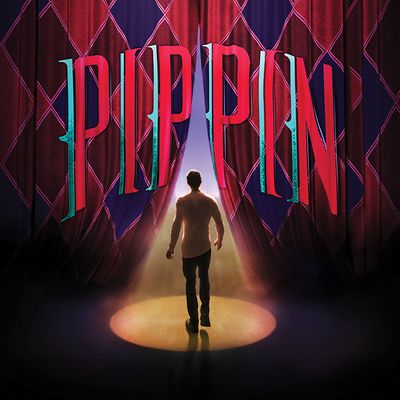
[4:44] Jamie DuMont: I know. I'm such a jerk. Who's That Woman from Follies and Glory from Pippin, but specifically the Manson Trio, which is the three-person one-minute moment.
[4:58] Rob Russo: Yeah.
[4:58] Jamie DuMont: Sort of in kind of at the end of Glory, which was famously used as the television commercial, which sort of changed not only the whole look of the changed the fate of Pippin, but it also changed the way we market Broadway shows. But if you want to hear more about that, I would suggest that you listen to our Fosse/Verdon episode, our two-parter, because we dig into that pretty deeply there.
[5:37] Rob Russo: Okay, so you've gotten that off your chest.
[5:39] Jamie DuMont: Yes, yes, yes, yes, yes.
[5:41] Rob Russo: Because a lot of people came at me because everybody, I guess, knows that I'm a fan of Follies and people were surprised.
[5:48] Jamie DuMont: And Pippin and Pippin, you're like the biggest Pippin fan, you know.
[5:51] Jamie DuMont: I am.
[5:52] Rob Russo: I am.
[5:53] Jamie DuMont: And then I will also say that my husband who came after me before anybody else did, because I shared this true love.
[6:00] Rob Russo: That's true.
[6:00] Jamie DuMont: Love it's true something. He couldn't believe that I didn't have, and this I'm gonna, I'm gonna put this flaw up there right at the top that Susan Stroman isn't on this list.
[6:13] Rob Russo: And so I guess I guess technically, now I wrote 12, but since you pointed out that I can't have a tie, my 13, my lucky 13 would be Susan Stroman, and it would probably for me, it would be Slap That Bass from Crazy for You. But I there's an argument to be made that I've Got Rhythm where they build the houses. But yeah, I digress.
[6:35] Jamie DuMont: And the other thing I want to say about this list, and this was really the reason why I didn't put Who's That Woman in my top 10. All of these are production numbers that I've seen the original choreography live on stage, either in the original production or recreated in a revival or some other place. And I've never seen Michael Bennett's actual choreography for Who's That Woman. It's never done in any of the revivals. They do moments of it, but I've never, and the, you know, the YouTube video, that particular moment is very hard to see. So I feel like I've never really seen Michael Bennett's Who's That Woman. It's something that lives in myth.
[7:13] Rob Russo: Right, are you ready, Robert?
[7:16] Jamie DuMont: Let's do it.
[7:16] Rob Russo: Let's dig in.
[7:17] Jamie DuMont: All right.
[7:18] Rob Russo: How much time have we wasted just on the thing?
[7:20] Jamie DuMont: There was a lot of preparatory, you know, just on the 13, 12, and 11.
[7:25] Rob Russo: Okay.
[7:26] Jamie DuMont: All right. The controversial number 10 that I alluded to a moment ago is the title number MAME from MAME.
[7:35] Rob Russo: How is that controversial?
[7:36] Jamie DuMont: Well, I, you know, okay, so some people were like, why isn't it Hello Dolly? As we learned on our Jerry Herman deep dive recently from Andy Einhorn, the reason that Hello Dolly works so much as a number is less about the choreography and more about the actual song.
[7:56] Jamie DuMont: It's more about the repetition of the chorus and the build of that song. And of course, the lady always helps and the coming down the staircase and all of that works that number up, but really it's the repetition of that chorus over and over again that is the big release of that moment. Whereas with MAME, the absolute opposite is true.
[8:19] Rob Russo: With MAME, the song itself has lots of choruses and lots of different lyrics, and it's in some of them are controversial, right? But that dance is really extraordinary.
[8:34] Jamie DuMont: And similarly, the way Hello Dolly is a slow build and repetition, the choreography is similar in the sense that it starts off with just lots of swaying back and forth, and then the swaying leads to some kicks, and then the kicks get higher and higher, and as the number goes on, it goes from being sort of a slow controlled movements to lots of galloping, lots of circular motion, and it's really like by the time they come to the end, you are sold.
[9:08] Rob Russo: I mean, I agree a hundred percent, but you know, specifically about the way that Onna White, you know, builds that number. I mean, it's genius, right? It's like it's classic choreography, it's how you do a showstopper.
[9:19] Jamie DuMont: But to Andy Einhorn's point about Hello Dolly, which we talked about in our Jerry Herman show, you know, I think the other thing about that song, and that makes it so powerful and such a showstopper in its own right in that show is that the whole show is sort of building towards that moment.
[9:32] Rob Russo: Correct.
[9:33] Jamie DuMont: Whereas MAME, the whole show isn't building towards this number, it's just a really great number, right? And I actually do believe, you know, I think that that as a song, MAME is a better song. And you know, the choreography is obviously essential, right? And you know, I I'm hoping someday we get a revival so we can see it live on stage again, but you wouldn't have such a great production number without a great song underneath it.
[9:59] Rob Russo: And it's amazing thinking about the fact that Jerry did not want to write this song, right? After the success of Hello Dolly, he was like, I can't write another title song, and that it was the last song he wrote for the show, which is hard to believe because it's so iconic and it's the first song you hear in the overture.
[10:17] Jamie DuMont: But producer Bobby Fryer went to his apartment and was like, Okay, Jerry, we're not telling you you have to do this, but on behalf of the producers, we really, really want you to do this. And he left. Jerry sat back at his piano and was like, I have no idea. What am I gonna do? And then he thought, okay, why don't I do sort of a spoof of the South? And then he heard in his head banjos, and from there, it was three o'clock, Bobby Fryer left his house at three o'clock at 4:15. He called him up and said, I've written the song.
[10:57] Rob Russo: You coaxed the blues right on the wall. You charm the stride off of the core man. You've got an angel strong enough in order to beat the body.
[11:30] Jamie DuMont: But I think what's really important, you know, just to defend the song, is I know that people wring their hands about the lyrics, and you know, is it glorifying the South? It's absolutely not doing that. And it's an exuberant dance number, of course, and it's a celebration of this woman, but it's also a spoof. And Jerry wrote it as a spoof. It's supposed to be over the top. He's conjuring all these images, you know, like the bougain villa turning purple at the mention of your name, and you know, all that stuff. And it's over the top, and it's supposed to be over the top, and that's what makes it so great.
[12:05] Rob Russo: I mean, Jerry Herman was a gay Jew from New York, right? He was not some right-wing shill. So obviously, he's not meaning to literally celebrate the Confederacy with this song. You know, it's supposed to be silly, and it is silly, but it's also so captivating.
[12:23] Jamie DuMont: I think it's also aided by 22 people on stage. I think you have 12 people sing, you have more singers singing that song than actually dancing.
[12:35] Rob Russo: I looked, there's a great video. There's two great, there's two great videos of this production number. You can watch Angela Lansbury in the '83 revival, but even better is Ginger Rogers, who played MAME on the West E. There's a great recording of her doing that number. And I sat there and kept hitting pause, counting everyone. And there are there are 12, because you know, you can't do that choreography and really sing to the level that Jerry Herman's song requires. So there's 12 people who do slight dancing, but mostly are off singing, and then 10 dancers dancing.
[13:12] Jamie DuMont: I will say one other thing about this video, The Ginger Rogers, that's great. At one point she has a cane, right? MAME's in a top hat and a cane. She sticks her cane into the floor of the stage and it stands upright so that she can go and do her high kicks, which is fabulous.
[13:27] Rob Russo: And then, as we discussed on our Jerry Herman episode, A la Donald Pippin, Andy Einhorn told us that the key to these songs really working is that you have one soprano voice, right? That's the voice. And in this production, that voice was Julia McKinsey, who would go on to become a great stage star in her own right. And you can see her on the video. She's very clearly there, swaying with her parasol and singing.
[13:52] Jamie DuMont: So it's a fabulous number. I agree with everything you said about the song itself. Without a question, it's the best title number, I think ever written or choreographed.
[14:06] Rob Russo: Yeah, I think I'd have to agree.
[14:08] Jamie DuMont: And, you know, shout out, I think as we go along, we're gonna discover that, you know, Jerry Herman wrote the melody, which was, you know, is of course iconic and fabulous. But of course, you know, the dance break is the work of a dance arranger and an orchestrator. And here, you know, that was Philip Lang, the orchestrator, and Roger Adams who did the dance arrangements. Um, and then of course, aided by Donald Pippin's incredible vocal arrangements. It all comes together to make just an amazing number. The one thing I want to say, you know, the last thing I want to say about this number is in the costuming of it, which I think is so brilliant, it's sort of the inverse of Hello Dolly, the title number, right?
In that number, she's in the red dress and all the waiters are in black, as it was originally done. And in this number, she's in black, Mame is in black, and all of the men are in red. Uh, and I thought that was just such an interesting, whether it was intentional or not, such a really clever way of saying, okay, this is not Hello Dolly. We're gonna do something different. So we'll just flip the costume colors, you know. And the women are in peach with parasols.
[15:07] Rob Russo: Yes.
[15:08] Jamie DuMont: So Georgia Peach. There you go. Come on, you've got to do it. So, in summary, MAME, it's about a great song, swaying, circular motion, a little galloping, high kicks, and most importantly, get your leading lady dancing, right? Because that's the thrill. And it's great because she can dance that number because she doesn't have to sing it.
[15:27] Rob Russo: Correct.
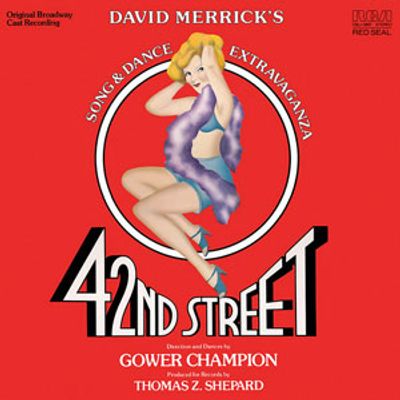
[15:27] Jamie DuMont: So she gets to really go all out. And it's the end of Act One. So, you know, after that, you get to, you know, hang out in your dressing room and you know, relax. Moving on to number nine, we have 42nd Street from 42nd Street. That is the late great Gower Champion, director and choreographer, uh, which we'll see a lot of as we as we go through this. We'll we'll see a lot of one person doing both tasks. I think it'll come as no surprise to anybody who listened to our flops and hits that 42nd Street, particularly the well, the show, but also this title number is um, I think Gower Champion's masterpiece, hands down. I think it's literally its own, and I'm using literally correctly, its own three-act play in a show within a show, which makes it within a show.
Um we've spent a fair amount of time on this number uh in our hits episode, as I mentioned. Uh I I de we deconstructed it a little bit, so I don't want to dwell uh on it for too long, but I do want to say that what I think I love about this number the most, and why I think it's Gower's masterpiece, and why I think it works so beautifully, and people don't understand all the time why it works so beautifully, is all the stories that it's telling simultaneously, right?
[16:45] Rob Russo: Right.
[16:45] Jamie DuMont: So it parallels the story you've been watching all night, which is that of a young hoofer trying to make it on Broadway. Then it tells the classic boy meets girl story with our hoofer who meets a serviceman and they fall in love through dance. And then that serviceman dies, right? He gets shot mistakenly because in the original in Gower's version, which it's not usually done this way any longer, which is a shame, there's a cat burglar or a burglar that's dancing throughout the scene and he's taking people's purses and necklaces and whatnot. And the serviceman gets shot where the police are trying to catch the burglar, and he dies. And what I love about that is that it also plays to the seamy underside of New York City, right?
So it and let's not forget that 42nd Street takes place during the Depression, which was a pretty terrible time, right? And we forget these things sort of because it's such a beautiful, glossy, feel-good show. But it really does reflect this sort of corrupt, dark, dirty underbelly of New York, which has been absent all evening because everything's been, you know, puffy and wonderful. So I think that is really at the core of this number, what makes it so brilliant.
[18:01] Rob Russo: I mean, I think you're absolutely right.
[18:02] Jamie DuMont: There's just so much going on, you know, without you even realizing it, right? It's operating somewhat subliminally. And that's what the greatest production numbers do. And I agree. I mean, it's absolutely stunning. You know, it's a full ballet and story within the show. It sort of harkens back to the tradition of On Your Toes, you know, the slaughter on 10th Avenue in 1936, George Balanchine's ballet, which was a landmark moment in musical theater to um tell a story with dance within a musical that hadn't really been done before. And this is doing exactly that, right? And it's even, you know, kind of in the same place dramaturgically, uh towards the end of Act Two, right? If it ain't broke, don't fix it, right?
But a couple things strike me with this number upon watching it again. First of all, is just how absolutely glorious it is to witness tap dancing. It's so essential. It's it's like in the DNA of the American musical comedy. I always want every season, I want new tap on Broadway. I'm sad when there is no tap on Broadway, like Justice for Tap. Um, I'm so watching it, just seeing this extraordinary, you know, ensemble of dancers tap dancing to Gower Champion's incredible choreography, it's just thrilling. There's not there's nothing like tap, and that show is full of tap dance, obviously. It's a tap forward show.
[19:31] Rob Russo: So that's stunning.
[19:33] Jamie DuMont: And then just watching the original production, you know, is the same creative team of designers who uh did A Chorus Line. Uh and Theoni Aldridge's costumes are so stunning because they're not these like wimpy pastels. They're these really rich colors, which feel more true to the period, even if they aren't. I mean, I'm not an expert on costuming. Um, but in subsequent productions, um, I feel like the colors have become so much more muted and the shows become glossier. Um, but to see that original, um, I'm just struck by the depth of the hues on stage, which just I don't know, they add a certain drama to it.
[20:17] Rob Russo: I you're absolutely right.
[20:20] Jamie DuMont: And and you you tapped in on something that I think is really important to know.
[20:24] Rob Russo: I tapped in, huh?
[20:26] Jamie DuMont: Oh, there you go, there you go. Which is it with Theoni's original costumes, particularly in the 42nd Street, there's every color in the rainbow, right? Yeah but in but the way they do it now, everybody's sort of in the same cue as you mentioned. And and I think that's that's part of what makes this number so spectacular is all of the individual stories that are being told, both through dance and through costuming, right? It's so magnificent. It all it all comes, it all blends together to make such a successful showstopper. Although, so I I am gonna introduce a note of drama to uh category number nine. Okay, and that is, in my mind, I mean, 42nd Street, the ballet, you know, however, however you want to call it, is a phenomenal number.
But for my money, I kind of think that Lullaby of Broadway is more of a showstopper in terms of like just the wow factor of it. And it's interesting in watching them again, the same move that is done at the end of Lullaby of Broadway with the arms up and the toe touching, is at the end of 42nd Street.
[21:31] Rob Russo: Yep.
[21:32] Jamie DuMont: Uh so it's, you know, it's obviously intentional. I thought that was an interesting through line uh in terms of the dance and the movement. I tend to perhaps fall more on the side of Lullaby of Broadway, which is what they performed at the Tony Awards.
[21:44] Rob Russo: Right.
[21:44] Jamie DuMont: Well, I don't disagree with that. I mean, I think again, this is these are these are this is just my my little humble list, and uh, there's no right or wrong answer. I will say, as you just referenced, you can see Lullaby of Broadway on YouTube from the Tony performance, and you can also catch the original Gower Champion choreography of 42nd Street. There's a wonderful video of the London cast at the Theater Drury Lane, might be for the Olivier's. I'm not exactly sure what the recording is, but it's a very good copy. And fun little fact, you can see one of the hoofers, Catherine Zeta-Jones, um, who's funnily enough wearing a wig that looks a lot like her uh Velma Kelly wig from Chicago a few years later.
And she would go on to be a Peggy Sawyer, I think on the West End and in Australia, but I could be wrong about that. But you can check it out because as I mentioned at the beginning of this, the version that's normally done is the wonderful version from the 2001 revival with the big staircase. And that's what I think people think of when they think of the Randy Skinner.
[22:47] Rob Russo: The Randy Skinner.
[22:48] Jamie DuMont: And that's not the number that I'm talking about. That's its own thing and it's wonderful in its own right, but it's not, it's not, it's not my number nine. All right, so how about your number eight?
[23:01] Rob Russo: Well, you can't sit Jamie DuMont and Rob Russo down. I'm bringing you into my list now, whether you like it or not, to do a list show and not have something from Fiddler on the Roof on that list.
[23:15] Jamie DuMont: Right. It's just, it's never gonna happen. Um so we are now at the Fiddler on the Roof portion of our show. And that, of course, is my number eight, which is the wedding dance. Um specifically the bottle dance, but that whole wedding sequence is magnificent. And I I'm also gonna throw in Sunrise, Sunset because that's how the whole thing starts. But the bottle dance is just so crazy. And who didn't the first time they saw it, think to themselves, how do those bottles stay up there? Are they like Velcroed in? They're not. They're not. That is just precision dancing. And I would imagine the bottles are weighted on the bottom. I would imagine there's something in there that keeps them weighted.
[23:56] Rob Russo: Yeah.
[23:56] Jamie DuMont: So this is, of course, um, an iconic dance by Jerome Robbins, who, you know, absolute genius to the American theater. And it's it's amazing to dig into the history of Fiddler because the show meant so much to its creators in that it was, you know, dramatizing a milieu that uh meant a lot to them personally, and that is, you know, a Jewish community in a Russian um, you know, shtetl at the turn of the century. And uh Robbins's own father was born in a shtetl in Russia, you know, in the in the late 19th century. So this was very personal for him. And he said he was very open about it as they were creating the show, that he wanted to restore what in his mind was a lost culture and to put it on stage and to give it life, quote, for at least 25 years.
And I think he's certainly uh, you know, done more uh than that uh in terms of the longevity and the cultural impact of the show. But the bottle dance itself was inspired by an actual dance that Robbins saw. So he and his assistant, uh, while they were researching the show, you know, went around the the Hasidic community of New York uh city uh to observe different um, you know, uh rituals and and events. And at a wedding they were at, they saw a Jewish comedian do a dance where he balanced a wine bottle on his head. And Richard Altman, who is Robbins' assistant at the time, said that he watched it with hypnotic absorption. And of course, you know, would go on to create uh it wasn't just one uh one guy with a bottle on his head, it was a whole ensemble of his whole chorus line of men with bottles on their heads with that dance. And it was the last thing that was choreographed for the show. It was sort of the last touch that uh that they put into it, and of course, is just a showstopper.
[25:44] Rob Russo: It is.
[25:44] Jamie DuMont: It's it's a thrilling number in in a show that has so many thrilling numbers. And again, someone might come after me and say it should be uh Tradition or it should be If I Were a Rich Man. Well, actually, If I Were a Rich Man is more along the lines of Rose's Turn or one of those. But to your point, it's really funny when you put in bottle dance from Fiddler on the Roof into the Google machine. The first thing that comes up is, is it real?
[26:12] Rob Russo: Yeah, well, it's so genius.
[26:14] Jamie DuMont: I mean, because that tension that it creates as you're watching it pulls the entire audience in. And what you probably don't realize as you're watching this number is that your eyes are glued on those bottles, but so are, you know, 2,000 other eyes at the same time. And a thousand hearts are beating just as fast as yours. Are those bottles gonna fall?
[26:37] Rob Russo: Right.
[26:37] Jamie DuMont: Right. So it's this moment of collective energy that you can't find anywhere other than in the musical theater. And it's also sort of the shift in the evening, right? Because right after those bottles come off those gentlemen's heads and that number finishes, the whole show turns, right? Everything changes. It's a very dramatic end of the first act that comes after, right after that. So it really is, it's interesting. I hadn't thought about it until you just said it with the tension building of that moment.
[27:47] Rob Russo: Right.
[27:47] Jamie DuMont: That tension you then carry through the rest of the show with you. And it's the genius of Jerome Robbins as a someone who had a keen eye for drama, which is the pogrom that you witness at the end of Act One is as effective because it comes after the sort of ecstatic high of that dance number.
[28:20] Jamie DuMont: And you don't get the punch of the low without the joy of the high to the same degree. I mean, obviously you would have it because the events speak for themselves. But the way it's structured dramatically, and then it aided through the choreography as a storytelling element, as a dramaturgical element, is just brilliant. I'm surprised we haven't done an entire show on *Fiddler on the Roof* yet.
[28:43] Rob Russo: I know, right?
[28:43] Jamie DuMont: Um, in a way we have though, you know, we have throughout three seasons of, you know, 90 episodes, right? There's a little fiddler in everything.
[28:51] Rob Russo: There really is.
[28:52] Jamie DuMont: We can't go too far without talking about what I think is probably the greatest musical ever and will never be repeated again. But that's a different list for a different show. Now I think we should get to my number seven. We have finally reached Mr. Fosse, *Steam Heat* from *Pajama Game*, Bob Fosse's 1954 masterpiece. We could spend a whole hour just on this number alone. I will say, according to Martin Gottfried and his wonderful book on Bob Fosse, George Abbott had asked Fosse to stage *Steam Heat* and wanted it sort of in the manner that would be appropriate to the amateur night that's happening in the pajama factory at that moment in the show. And so he said, you know, do something small, which is a quote.
And so Bob did everything small, everything minimal. I mean, it is you can argue that this is the beginning of everything Fosse would do from that moment on. Interestingly, in New Haven, Abbott cut the number from the show, at which I can't, I mean, can you imagine if this number had not did not exist? But of course, it was Jerome Robbins who lobbied to have it put back into the show. There are two wonderful ways you can watch it. The film captures Carol Haney. It was originally done on Broadway. It was Carol Haney, Peter Gennaro, who would obviously go on to quite a successful career, and then Buzz Miller, who was a terrific dancer at the time. Carol Haney recreates it in the film. I don't know if Peter Gennaro and Buzz Miller in the film.
I don't think that they are. Then of course, it was done in *Fosse* many years later, and that's available as well on DVD and on YouTube, and both really good versions. It's hard to argue that this is not a showstopper. I mean, it's like the definition of a showstopper. And the brilliance of it, of course, is that it arrives at the top of Act Two. Um, it sort of does the same thing that *Too Darn Hot* does in *Kiss Me Kate*, or even the clambake in *Carousel*. You know, it's sort of like welcoming the audience back into the show through just a great number, right? That really has nothing to do with the show at all. And that's what says well, that's why Abbott wanted it cut in New Haven, right?
Because he felt like this has nothing to do with the characters, it doesn't advance the plot, it doesn't aid the story. It's just a specialty number, you know. And that's probably why it did end up marking the formal emergence of Fosse as a choreographer. I mean, this was his first Broadway gig. You know, Jerome Robbins was co-directing with George Abbott, and you know, Jerome Robbins ended up actually doing a lot of the choreography for the *Pajama Game*. He would restage things that Fosse had done, and they had a, you know, a bit of a, um, you know, I think they had a collegial relationship, but you know, it was a little tense, right? Fosse had something to prove with the *Pajama Game*, and this is what he ended up producing, right?
This number, which if you isolate any one of the elements of it, whether it's, you know, the costuming, right? The whole Charlie Chaplin look with the bowler hats and the black pants and the white socks, all that, you know, the clear influence of Jack Cole, who was sort of his mentor, and his own sort of hat work and knee work. I mean, that's all quintessential Bob Fosse. Everything you need to know about Bob Fosse as an auteur as a creator is in that number. And Kevin Winkler, who wrote a great book called *Big Deal*, makes the argument that in one form or another, *Steam Heat* would reappear in every single Fosse show, right? It's *Who's Got the Pain?* It's *I Gotcha*, it's the *Manson Trio*, it's the *Hot Honey Rag*, it's *From the Edge* from *Dancin'*, right?
That sort of tight duo or trio precision dancing that builds to an ecstatic explosion that starts off very small. There's it's all characterized by restraint. All of the movements are so specific, so small. And before you know it, you're like, holy shit, what is happening in front of me? This is unbelievable. How did I get from here to there? And that is the genius of Fosse.
[33:01] ♪ Musical number: "Steam Heat" — performed by Carol Haney ♪
[33:26] Jamie DuMont: We spoke to Jane Lanier, who danced it in *Fosse* on Broadway, about trying to catch the hat, right? There's a very famous thing where they flip the hat at, so you can listen to Jane talk about that. But I always love that because, you know, it looks so easy flipping a hat, but there's no way I would be able to do it, that's for sure.
[33:45] Rob Russo: Well, what I think what Jane said to us was, it looks so easy until you try to do it.
[33:50] Jamie DuMont: It's so true. And then you realize it's really hard. You know, and I actually there's a portion of the song where they sort of shuffle across the stage.
[33:57] Rob Russo: Yeah.
[33:58] Jamie DuMont: And you have to watch their feet because the articulation of their feet as they move is exactly what Jane was talking to us about, which is that Fosse would isolate multiple body parts at the same time. So if you watch those, your feet are going in two different directions, your legs are doing something, your arms are doing something, your shoulders are doing something, and your head is doing something all at the same time. And it's like, ah, how do you do that? And that's what makes it so effective.
[34:30] Rob Russo: Yeah.
[34:34] Jamie DuMont: *Steam Heat*, of course, would go on to make a star out of Shirley MacLaine, who was Carol Haney's understudy. There was a producer from Hollywood in to see Carol Haney, actually. She was out that night. McLaine knocked his socks off. She got a movie deal out of it. Her first film was Alfred Hitchcock's comedy, *The Trouble with Harry*. But that incident, that like star overnight thing, is something that would be referenced over and over again in film and television and in theater, some 20 years later, in *Applause*, which was a musical version of *All About Eve*, they would reference this in the second act showstopper, *She's No Longer a Gypsy*. So it, you know, I just love that little thing about it. And then I just also have to say, not really related to *Steam Heat*, but Carol Haney would go on to choreograph my beloved *Flower Drum Song*.
[35:27] Rob Russo: Number six.
[35:28] Jamie DuMont: Yes. Technically, it's a tie. And I will say, but we're not gonna talk about it really. In my list on Twitter, the one sort of mistake that I made was my number six was the prologue from *West Side Story*. And as soon as I hit send and put it into the world, I was like, wait, I meant to write *Dance at the Gym*. Why did I write prologue? Now I think the prologue is brilliant, and I think it's a showstopper. And I think it, you know, it's, it, that opening of that show and so much about that show changed the face of theater. But if you're talking about just wow factors and my favorite moment in that show, the *Dance at the Gym*, hands down, is a thrilling. I mean, I'm getting goosebumps just thinking about it right now.
[36:27] Rob Russo: It's incredible.
[36:28] Jamie DuMont: And what's amazing to think is that, you know, it in a way it almost didn't happen because Jerome Robbins felt like he was juggling too much with this project, you know, the creation of *West Side Story*. That when Hal Prince came on to produce it, he was not the original producer. Jerome Robbins said to him, "Okay, I'm just gonna direct, and I want my friend Herbert Ross to choreograph it." And you know, Herbert Ross was a fellow performer. They had done shows in the Poconos together. He would go on to choreograph some stuff, but he was not Jerome Robbins. And Hal Prince, just you know, the genius Hal Prince sat back and said, "Okay, well, if you're not gonna choreograph the show, I'm not gonna produce it."
And so Robbins agreed that okay, they because they were desperate for money, you know, the financial backing of the show had fallen through. And his demand was that he got eight weeks of rehearsal so that he would have enough time to do it. Typically, you had four. And Prince acquiesced. He, you know, he knew what his artists needed and what Jerome Robbins needed was time. So he gave him that time, and thank God he did, because it's hard to imagine a more iconic suite of dances than what you get with *West Side Story*. I would actually argue for a four-way tie, I would throw in *America* and *Cool*, because why not if we're doing ties, you know, all of those moments to me are showstoppers.
[37:52] Rob Russo: I don't disagree with that.
[37:53] Jamie DuMont: I knew you were gonna throw *Cool* in there, and I think *America* as well. I think it's interesting though, when you referred to *Dance at the Gym* as a suite of dances, right? Which I think is important to just call out because I think most people remember *Mambo* because that's the big thing, but there's a whole dance before that, right? The, you know, Maria twirls, the lights do their thing, streamers come down, and then the kids come from both sides, both wings, right? Across the stage in this sort of slopey, a wonderful movement. You can see it, it's on YouTube, it's in the film. The whole thing is so incredible, but I think people forget how it actually begins. And so *Suite of Dances* is a perfect, I think, way to describe it.
[38:40] Rob Russo: Yeah, and thinking about, you know, sort of why that whole sequence and why the whole show, frankly, is so successful and why it really lands. Harkens back to a point I made at the top of the show, which is that, you know, it's not just the choreography, it's not just the music, it's the two together. And it's the synthesis of all of the elements that come to the fore in a musical. And what's unique about this show among all of the showstoppers that we're going to talk about is that, you know, Leonard Bernstein wrote all the music, right? So often the moments that we love, these showstopping moments, are sequences that were written by a dance arranger or an orchestrator. But every single second of this score, right, is pure Bernstein.
And he even orchestrated the show, right? Which is unique. It's rare. You know, you don't see a composer doing orchestrations all that often. So it's so much of his DNA. And I agree, my favorite part of the *Dance at the Gym* is actually the top of the dance, which is that whole transition from the prior scene into them coming out of the wings. And that I don't even know what it's called, but before you actually get to the formal part, which is on the cast album, you know, they didn't record that first dance sequence in the original cast album at the top, you know, that the first portion of it. It is so fast and athletic and like sexy, right? I mean, you sense it's palpable that these kids are not only like downtrodden and like angry and have a lot of issues, they're also horny, right?
And you like it is it is sexy. But even in the 2020 revival, where you had Anna Teresa de Kiersmacher re-choreographing, right? Daring to re-choreograph the number, it still for me was the greatest showstopper in the show. I think because at its base, you have that music to work with. And I feel like any choreographer who is, you know, a really good choreographer could do something great to that music. Also, you know, just the where it lands and what it means, you know, to the drama, the piece. All that said, the original is just, you know, it's perfect.
[41:05] Rob Russo: I knew you were gonna work in the 2020 revival.
[41:07] Jamie DuMont: I was just obsessed.
[41:09] Rob Russo: I was just you have to, but yes, no, I agree.
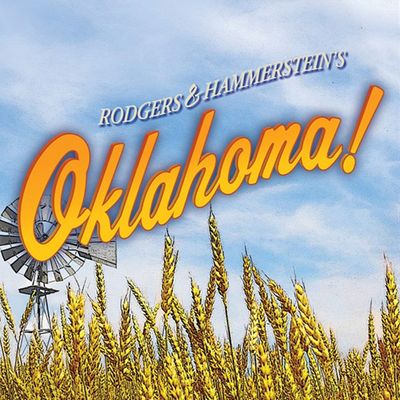
[41:13] Jamie DuMont: But we did a whole show on it. I, uh, yeah, yeah, we didn't know. Well, we did a show on we did a whole show on *West Side Story*, because again, *West Side Story* is an incredible piece of theater, and you know, horny teenagers, who wasn't a horny teenager? Um, speaking of horny, we are on that note, we are at number five, which is the dream ballet from *Oklahoma*, or as it's properly called, *Lori Makes Up Her Mind*. Choreographed by the legendary Agnes DeMille, the director of the show was Ruben Mamoulian. I don't know how many people know that. Obviously, *Oklahoma* was a landmark show. It's oftentimes called the first musical of the modern age. I don't think that's accurate. I think people are forgetting about *Porgy and Bess* and *Show Boat*, but that's a different conversation.
The ballet from *Oklahoma* is, I think, one of the most extraordinary things ever. And I feel like it gets a bum rap because so many high schools try to do it, it's done so badly in so many different ways. But if you watch, and it's also unfortunate because the film version, which is a great version of the ballet, is also a bit expanded.
[42:25] Jamie DuMont: Even though it was, even though Agnes DeMille came and did her choreography for the film, it's made bigger, right? Because of Hollywood, and there's more dancers and there's scenery and things that aren't in the original production. So I would say if you're at all interested in checking out the Dream Ballet in its original form, on YouTube, there is a terrific restoration project of Oklahoma. And it's a really interesting, it's a college, I can't remember the name of it. Um University of North Carolina School of the Arts in Weston Salem. Thank you, Rob. I knew you would have that at the ready. Um, and what they did was they did a production of Oklahoma that recreated the letter for letter, costume for costume, note for note, step for step, all of it, the original production.
And it's really interesting. It's really fascinating from a scholarly standpoint, just how bright that show was, how vivid the colors were, how different shows were then as what we're used to now, just in terms of literally everything. But the ballet is there in its entirety, and all whatever 14 minutes, seven or sixteen, seventeen minutes of it, whatever it is. And it's magnificent. It combines everything that you need to know about the characters. It talks about their struggles, it talks about their fears, it talks about their dreams, it advances the story. It tells you more information about Lori and Curly and Judd, who are obviously the central figures of the show. Um, it's got horny women in it.
It's got ladies of the night. Who doesn't like that? It's got horny cowboys. It's really a magnificent piece of theater. And it marked the emergence of Agnes DeMille as a force in the American theater. It's pretty incredible. You know, the producers of the show saw her do her piece Rodeo for the Ballet Russe de Monte Carlo in 1942, which was a suite of Aaron Copland music that she had done with a Western theme and thought, oh, she should do Oklahoma. And RH, you know, Rogers and Hammerstein, they were not sold on the idea. And initially, you know, it took a while for her to sort of get integrated into the team. But the word I just used, integrated, is the key thing because, you know, Hammerstein would later opine that with Oklahoma, you know, the choreographer for the first time became a true collaborator with the author and the composer, which was groundbreaking, right? She didn't just add a little flourish here or there or enhance one or two scenes. She helped build, to quote Oscar, the very bone and muscle of the story.
[45:35] Rob Russo: Oscar had an idea for it. He wanted like more of a circus theme. It was going to be a light-hearted ballet, right? And in the original notes for the show, he literally writes that little description that it's gonna be lighthearted, and then he hand wrote, "Take it, Agnes," and she took it and she made it, you know, she added all of the dark sexuality and the danger, you know, as Lori is torn between Curly and Judd, and she turned the dream into a nightmare. And that was her, you know, her great epiphany, right? Of using this device to explore the inner psychology of a character that had never been done before, right? So 1936 on your toes, I mentioned earlier, Slaughter and Tenth Avenue. That was the first ballet.
But that had nothing to do with character development. It was just, you know, it was a story within the story, but it had nothing to do with actually developing the characters. Here, her innovation was to use the ballet as a device to explore the psychology of a character. And that, you know, again, had never been done before. And what I find just absolutely amazing is that Richard Rogers was not involved in the writing of the Dream Ballet, right? He literally left it to DeMille and the orchestrator, Robert Russell Bennett, to create the ballet. He had written all the melodies and he said, fine, take my melodies and use them. So she and Robert Russell Bennett went through the score and pulled out the melodic moments that they liked or that had to do with the characters.
And he constructed the ballet. Richard Rogers did nothing. Not to crap on Richard Rogers. He wrote the melodies. He gave the source material for the ballet, much like Michael Bennett would construct the opening of Follies, the prologue of Follies through, you know, pieces of Sondheim's music. And Sondheim wasn't really involved in that. Uh, the same thing happened in 1943 with the creation of this ballet. And it's really incredible. I have to agree with you. It is a showstopper. It's underappreciated as a showstopper, probably because it is done wrong or poorly so often. But that 2011 video from the University of North Carolina School of the Arts, I really encourage you to watch it because it's absolutely stunning.
It uses the device of having the dancing Lori and the dancing Curly, which isn't always done, which is what Agnes de Mille had opted to do to have a real, you know, strong set of dancers that play the characters for this portion. And the part that just struck me and like floored me was at the end, frankly, there's a final silhouette of Judd holding up Lori, and it's a red background, and you see the shadow. And then she wakes up from the dream and Judd is standing there and he says, "Wake up, Lori, time to start for the party." And it, I mean, I don't know a more dramatically effective moment in all of musical theater.
[48:57] Jamie DuMont: You know, in addition to Carousel, um, you know, she directed Allegro and also did the choreography, Brigadoon in 1947. She won the first Tony Award for choreography for Brigadoon. Um, Jonathan Prefer Blondes, Paint Your Wagon, A Hundred Time the Shade, Goldilocks. I mean, she had an incredible career in the American theater and is someone that I think we don't think we don't talk enough about today. So just want to give a shout out to Agnes DeMille. Now that brings us to our number four, which I know you agree with me on. And I think everybody agrees with me. When I say that number four is Turkey Lurkey Time from 1968's Promises Promises. There's nothing like it. There’s absolutely nothing like it.
There is nothing like it. It is, I think it's well, I can't say it's Michael Bennett at his best because we're not done with the list yet. But um it is pure Bennett. It is also, we have to give a shout out to Bob Avian, who is the assistant choreographer on that show. I think it's also the three ladies, right? I think it's Donna McKechney, it's Bayark Lee, it's Margot Sappington, and also the device of these business people dressed up, dancing these very modern dances. It's on YouTube. You can see it. I'm sure anybody listening has seen it before. It's really a revelation. It's, I don't think anybody had seen, not unlike the Dream Ballet in Oklahoma, a lot, not unlike a lot of what we're talking about. Turkey Lurkey Time was a game changer. Nobody had ever seen anything quite like it before.
[50:36] Rob Russo: It's Arky Larkey Time. Tom Turkey ran away, buddy. Just came home. It's Urky Lurky in time. He's really home to stay. Never want to wrong. Well, I think Promises Promises in a lot of ways is sort of an unheralded game changer for theater. Um, you know, I think of Turkey Lurkey Time as Michael Bennett's Steam Heat.
[50:58] Jamie DuMont: Correct. Right. This was the song, this was the dance that established him as a force in the American musical theater. He was 25 years old. He had been in four Broadway shows already, and this was actually his third show as a choreographer. But the first two you wouldn't know. Henry Sweet Henry and A Joyful Noise. Two big flops in the prior two seasons. And uh they tell the story. Uh Neil Simon tells the story of this show being out of town in Boston, and the end of Act One was not working. It was, you know, it was them at this party at this Christmas party. And Michael Bennett had, you know, some secretaries on a desk, you know, doing a dance, and it was not landing. And uh the way Neil Simon tells it is, you know, they were in a room in Boston, and Michael was like a football player, you know, pleading, "Give me a chance, coach, give me a chance, let me play, let me play."
And so uh the director, Robert Moore, you know, said, okay, I will give you one more chance to fix the end of Act One. And so he, uh Michael Bennett and Bob went back to their hotel room and over the course of a night, using only the mirror on the back of the door to the bathroom in their hotel suite, choreographed this entire number and then presented it the next day. They learned it, they put it in the show, and it stopped the show. And it proceeded to stop the show every single time it was ever done.
[52:47] Rob Russo: It's pure Bennett, right? It marks the arrival of this choreographer on Broadway. And there's nothing more thrilling than much like with Steam Heat, seeing someone finally put their stamp on the dance world and emerge as a creative force. And that's what this number does. And I love that you mentioned, you know, how the movement is very modern. And so was the score, right? So it's Burt Bacharach and Hal David, you know, were coming to Broadway to write the show. It was the only show they would ever they ended up writing. But at the time it was seen as sort of like a, oh, okay, we're bringing pop music to Broadway. That hadn't really been done before. This is the same season as Hair, right? So Hair, you know, did it in a different way with rock.
But to have those two shows, you know, emerge on Broadway in the same season marked a real turning point for musical theater. We did chat briefly with Donna McKechney about it, specifically what kind of PT she needed, um which she said was extensive. Um and if you don't know what I'm talking about, then you don't know. And uh, also say there's a terrific movie called Camp, which I'm assuming many people have seen, where they recreate that number quite faithfully. I mean, really, it's quite good. If I could just, you know, throw some love at Donna McKechney for a minute here, you know, this was also a big deal for her in her career. And you know, she obviously was amused of Michael's and her performance in particular.
I know it's the three of them, but her in particular, and she's obviously spotlighted, it's unlike anything you'll ever see, and and you have ever seen since. Um particularly, there's a moment at the end towards the end of the piece where you know there's that kicking crossweave that they do. Right. Um, where they come from two different sides and they're kicking and they're moving and they cross each other. It's unbelievable. It's mind-blowing. And you think, okay, that's it. Right. This number has peaked. Well, the audience is applauding already. Right. You know, and then from there, the number proceeds to outdo itself again. And the moment that gets me every single time is, you know, when they say, uh, a snowy blowy Christmas, uh, a mistletoe Christmas, uh, you know, whatever.
You, right? And the number starts getting faster and louder and higher, and she swings her arm. They do this arm swing move that shows up in the music in the mirror, um, and was sort of a signature Donna McKechnie move, as you know, choreographed by Michael Bennett. And to see not just her do it, but everyone do it on stage at the same time. It's one of those moments where the music, the movement, and the emotion behind it all just becomes one.
[55:57] Jamie DuMont: Moving on to number three. Yes. We are visited again by Bob Fosse with The Rich Man's Frug from Sweet Charity. Now, this was another one that got a little bit of controversy. Everybody's got a favorite number from Charity. I'm always shocked when it isn't Rich Man's Frug. I heard a lot of people, a lot of love for There's Got to Be Something Better Than This. A lot of love for I'm a Brass Band, which is a number that Gwen Verdon didn't even like to perform. And then of course Big Spender, which is, you know, I which if I were to tie this number, I would tie it with Big Spender.
[56:34] Jamie DuMont: But I didn't. I let it stand on its own, and for a very good reason. I think it's one of the great, great, great numbers of all time. And by that I mean production number, of course, just as a reminder. Um it's split into three. So the first part is the aloof. The second part is the heavyweight, which ends with them all on the floor. That's ballsy to put every single dancer on the floor and then make them get up for part three, the big finish. I do also have to say that um there are three very notable people in that original company dancing, the rich man's frug. Catherine Doby, who would go on to be Bob's assistant for a number of years. Gene Foote, uh, who went on to work with Bob uh again and again, and then of course, show favorite Leroy Reims.
No, it's incredible. I mean, there are so many people over the years who've been connected with Sweet Charity. It's sort of like the glue. Yes. Um that holds together the American musical theater. Um, no, but I agree with you. I think the Rich Man's Frug is absolutely my favorite piece from Sweet Charity, and it's the showstopper. It's one of, you know, it's sort of peak Bob Fosse, right? You know, it's a six-minute, three-movement ballet that in a way is somewhat similar to Who's Got the Pain or Steam Heat in that it's sort of unattached to the plot. You know, it's sort of its own thing that lives, you know, it works completely untethered from Sweet Charity, but it also works, you know, in the middle of Act One of Sweet Charity.
And what's so genius about it, and it's a thing that I think Bob Fosse doesn't get enough credit for. I mean, maybe he does, but in my view, I think you can never praise the man enough. The whole piece is a satire. It's a social satire, it's commentary. And it's rooted in truth. And I think as the years have gone by, the number has only become more effective. And, you know, the origin of it is quite literally a club called Arthur, which was in, you know, in Manhattan. And it was founded by uh Sybil Burton, I believe shortly after her divorce from Richard. Um what she wanted to do was transfer Maud from London to New York. And it became one of the, you know, first big uh celebrity clubs of the 60s, you know, with a modern musical influence, and a place where you'd go to see like Jackie O or Andy Warhol, you know, all these uh celebrities or icons trying to like sort of get hip with the coolest thing, right?
And that's what the Rich Man's Frug is all about, right? It's about this group of elites trying to sort of do the latest fad, right? Uh, which is the dance, the Rich Man's Frug. Um I love that it was originally called the working title of it was The High Society Slop. Which is I think they landed on a better title in the end. But the whole thing works so effectively and stands the test of time because it is a commentary. Um and it's you see the development of Bob Fosse. The same notion is behind the rich kids rag in Little Me, 1962. And he took that same idea and he refined it, and he created the Rich Man's Frug, which again, you have to shout out Ralph Burns, the orchestrator, right? Um, and the dance arranger, Fred Werner, who had been the dance arranger for Little Me.
Um, so he was working with his people, and Cy Coleman, who wrote the piece. It's one of the coolest pieces of music ever written, ever. Like, I regardless of musical theater, regardless of genre. It's just so cool. And it's Bob Fosse peak cool.
[1:01:04] Rob Russo: You know, it's interesting that you note the music because something that I hadn't really clocked in a long time. Now the entire thing is on film. It was shot exactly as it was done in the theater for the motion picture. It was also captured in uh Fosse. I would recommend that you watch it, the film version. I think that's truly the because it's also directed by Bob. But what I'm trying to say is that I listened to that music far more than I actually watched the dance. And I had forgotten because I hadn't actually seen the full three parts in such a long time that I had forgotten, because I'm so used to listening just to the music, because I think it's such brilliant music, that I had actually forgotten about the two together, right?
Like I think of the dance and the music almost separately because of how I witness the experience. So it's also incomplete on the original cast album. You didn't record the full sequence, which is a real loss. It is a tragedy. I actually have a version, I have a studio recording of it from uh I think from London from the 90s. Um I might not be anyway, and that's what I that's the that's what I listened to. Um because it's a well speaking of that music, I mean that the middle movement, the heavyweight for me is just sort of the essence of Bob Fosse because you know that he invented those rhythms, right? That the movement and the music were created in tandem. And of course Ralph Burns, you know, was sort of a musical muse of Bob's. Um so they, you know, they sort of had a mind meld there.
But if you listen to the percussion to the rhythm of that section, it is exactly the same style that you witness in later pieces. Um, most notably from The Edge from Dancing. Right. It's that same thing, but it's also in Steam Heat. The part where they stop and they clap and they walk across that stage. There's no accompaniment. It's the rhythm. And you know, Bob was basically a percussionist who danced. Right. And that heavyweight section is such an expression of that. And it's uh you know, it's hard to top. It's a showstopper.
[1:03:53] Jamie DuMont: Well, now we're at number two. We're almost to the top of my list. Number two, which in a way could be my number one, but I'll explain that when we get to my number one. Is We'll Take a Glass from Grand Hotel. Two glasses of champagne. I'd like your most highly regarded kind. It's the Mooy something. I want to drink a toast with my friend here. A wonderful loving friend who's helped me so much. You will take a glass with me, won't you, Baron? Of course. Tommy Tune, director and choreographer, yet again. It's really, I think, one of the best showstoppers of all showstoppers. Performed by originally David Carroll. What most people are familiar with is Brett Barrett and Michael Jeter and the full company doing it on the Tony Awards.
It's a really spectacular capture. So uh if you haven't seen it, please do watch it. Um, because that number is really like I don't even think I appreciated it fully when I saw it originally. I saw Grand Hotel until I was a little bit older because it's so simple. Again, it's this thing of this build, this slow build, this repetition. And, you know, Tommy Tune had trouble building this number. In fact, originally it was meant to be a big tap number, and it wasn't working and it didn't feel right. And Tommy Tune went to visit his ailing mother, and he was talking about the show and what was working and what wasn't working. And they started talking about this number. And she said, Well, it should be a Charleston.
And it was like a light went off. And then that's the number that we now know. We'll take a glass together. In celebration of our meeting. In celebration. Being face to face. Friendly, civilized, members of the race I'll bring to you. I love that. You know, it's always interesting to me how numbers are formed and where people get inspiration from and all of that. But this number, what I was trying to say is again, it's this slow build. And by the time they take away the pole, right? And the whole company comes together. And if you don't know what I'm talking about, watch the video. It's breathtaking. And it's all so simple. And it's just these repetitive steps over and over again. And then Michael Jeter being a genius.
Oh, yeah. I mean, there's nothing to top that Tony Award performance. Um, you know, you'll never forget the first time you saw it because you immediately you watched it again, and then you watched it again, and then you watched it again. What's so fascinating to me about this number in particular, and is such a common theme across all of these, which is, you know, that it was really hard to get to the end result, right? Uh so many of these songs were you know created out of town or as a last-minute thing or a replacement, or you know, it just goes to show, and maybe it's just you know, the truth is that musical theater is hard, it's really hard to get it done right. So behind every right story is a really, you know, as a background of how people struggle to get there.
But this show in particular, Grand Hotel, you know, is a real classic story, one of the last great classic stories of the out-of-town save, right? So the show was up in Boston, and you know, the songs were by Robert Wright and George Forrest, who had written Song of Norway and Kismet, you know, they were in their 80s at this point. Um, you know, the first draft of the show was written in the 50s, 1958. Um, the idea was resurrected, and it's Tommy Tune, the genius, the genius Tommy Tune, who picking up on sort of what had been done with rock musicals, uh, sort of Evita and Jesus Christ Superstar, you know, and picking up on the notion of continual music, continual movement, continual action. He wanted to create that, but in an old-fashioned musical theater form, right?
Um, but there's nothing about Grand Hotel that's old-fashioned, of course. It's you know, the most modern thing on the planet, but it uses the conventions and the style of classic musical theater. But what he had done is he had created the show so that it never stopped, it never, you know, there was no breath in the show. There were no moments for applause. It was just one seamless thing from start to finish. And he had gone a little too far in that. And he called uh Maury Yeston up to Boston to help fix the show, along with Peter Stone, the book writer. And Maury's first diagnosis was: Well, you need to let the audience applaud at some point because you're not allowing the piece to breathe.
But what he also picked up on were moments in the show where the continual action wasn't allowing for a showstopping moment. And We'll Take a Glass is a classic example of that. So the song originally faded out into the next song. There was no big finish to it. And what Maury did is he took an existing song by Robert Wright and George Forrest, and he just rewrote it to make the two countermelodies at the end and to give it that final big oomph, which of course is the moment where the pole comes away and Michael Jeter does the high kicks with Brent Barrett and the Tonys and David Carroll originally. And the composer, right? Or the I guess a ranger you could say in this instance, Maury Yeston is the one who created the show-stopping moment that then Tommy Tune could choreograph.
And then, of course, these incredible performers could perform. So again, it's that collaboration, it's that synthesis of all these different elements of musical theater coming together that make this the number two showstopper, and for a lot of people, probably the number one.
[1:09:29] Jamie DuMont: Yes. Well, I did allude to the fact that it could be my number one. Um, before we get to number one, I the one thing I love about is since you gave such a beautiful history of Grand Hotel and and how the show was formed. One thing that I love about that process is that they did a reading at the Hotel Diplomat, which was a very dilapidated hotel in on 43rd Street, I think, in Times Square. And you know, they had all these fancy investors and everybody come and they worked for, you know, a period of time. I don't know if it was a week or or what it was, in the ballroom at the Diplomat, which was really seedy. New York in the 80s was, you know, not much better than New York in the 70s. And what I love about this is that the ballroom had four columns in it, and they were obviously structural and nothing could be done about it.
And at first everyone was sort of like, what are you how are we going to do this? This is crazy. And Tommy ended up working not only working around it, but incorporating those four columns into the show, and that would later become part of Tony Walton's set, which again is going to what you're, you know, just like I love, I love that that like here was this problem, and they ended up putting not only putting it into the show, but you know, making it work.
[1:10:42] Jamie DuMont: And I love that. But the one last thing I will say about "We'll Take a Glass" is of course the song is taking place at a bar, and they're literally taking a glass together, they're sharing a drink. And I'll never forget realizing the first time I saw it that it was all pantomime. Right. It is so well executed, it is so geniusly performed and directed and staged that you see the glass in their hands. Right. And it's not right there. Yeah. And that is that's a showstopper in and of itself.
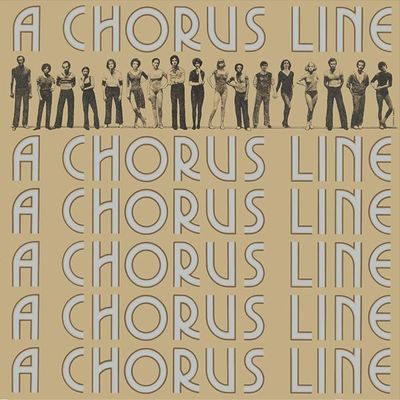
[1:11:33] Jamie DuMont: We celebrate, we'll take up celebrate with take classes. If you've been listening this far, you've probably figured it out. At number one, "The Music and the Mirror" from "A Chorus Line," Michael Bennett, a choreographer. I, you know, the reason I said that it really isn't number one was really just me being funny, because it's its own thing. It defies categorization. It defies, it is, I think, the single greatest moment in musical theater. Wow. Both. Yeah. Well, I'm gonna go there. It's such a perfect number, the way it starts with her telling her story, with her, you know, you finally learn what happened between Cassie and Zach, which you've been, it's which has been hinted at, you know, throughout the evening.
You finally get the story, you have that moment of like, ah, and then you hear in a spotlight one person talk about how hard their life has been, and how you know, all of the disappointments, that classic thing of everybody saying you're wonderful and you're great, and you don't think you live up, or your career hasn't lived up, or whatever it is, themes that every single human being, whether you're a dancer or a theater person or not, every person can relate to that. And suddenly in that moment in "A Chorus Line," that's I think why "A Chorus Line" is so universally beloved, because everybody understands what Cassie's going through on some level. And then there's this explosive dance that was tailor-made, you know, for the former Mrs. Michael Bennett, Donna McKechney.
And you alluded to this earlier when we spoke with Donna McKechney specifically about the creation of "A Chorus Line" and this number, she said how hard it was, right? And I think that's never been truer than this particular moment. And it's stunning. It's singular, it's riveting from start to finish.
[1:13:13] Jamie DuMont: Speaking of how hard it was to create, which again, you know, is a real theme of all these, it's amazing. There's a lot of video online. You can watch a really grainy video from 1975. Black and white, I think, right? Yeah, where you can kind of make out the figure. I mean, you can see it, but you kind of have to use your imagination a little. But to watch the evolution of her as a performer doing the same steps from 1975 to 1983 in the Big Gala to 1986 when she returns to "A Chorus Line." And when we talked to her, she said that getting to do it again, she was better because she was older and she was more relaxed. And it totally shows in the performance. I mean, it was always incredible, of course.
She won the Tony Award. She stopped the show every night at the Schubert Theater. But it's amazing to see the evolution of a performer. We're able to do that because of these videos that you can find online. But to the creation of the song itself and the dance, you know, of course, you know, tailor-made for Michael Bennett's muse in Donna McKechney. It's kind of fascinating. A lot of the other Cassies in oral history have talked about how the show, how the song was really choreographed for Donna, but it was really choreographed for Michael. Right. And that there no one was ever better at doing it than Michael Bennett. And the reason that it worked so well on Donna McKechney's body is because they danced the same way and they physically had the same build, right?
I mean, and Anne Ranking talked about how hard it was to step into it. I mean, you know, how hard, but you know, the challenge of stepping into that dance was that, you know, Michael choreographed very low to the ground. It's very masculine, and a lot of the work comes in the torso and the arms. And Ranking, of course, is just all legs. So she had to tweak the dance, and Michael worked with her on it. You know, she said, she quoted him as saying, you know, this is the foundation, you must stay within the sphere. But within the sphere, you have to be yourself and you have to find your own way. So, and he worked with subsequent Cassies to tweak the dance to fit their personality, but more importantly, to fit their bodies because it was so tailor-made for Donna and by extension, Michael.
[1:16:25] Jamie DuMont: I'm just thinking of all of the Cassies. I'm thinking of Wanda Reichert and Vicky Frederick. And then I was thinking that, you know, I think of Vicky Frederick as a Fosse dancer, right? And obviously, Anne Ranking is, you know, is the Fosse dancer second to Gwen, right? Like, so it's interesting to hear you say this, you know, about how there was a sphere and how it was tailor-made, but within this sphere, you have to make it your own, because I think that might be part of what people get right about "The Music and the Mirror" and what they get wrong about "The Music and the Mirror," right? You have to make it your own. You have to, within that sphere. And I just I hadn't really thought about it that way before. So thank you for bringing that to me.
[1:17:15] Rob Russo: Well, he was such a genius. And again, the unheralded hero of the piece, I think is actually, I mean, I'm taking for granted that the choreography is, you know, and the performance is stellar, right? We're setting that aside if one can, is that that dance is set to a piece of music. Right. And the song, obviously by Marvin Hamlisch and Ed Kleban is the song. But the dance break is not their work. It's actually the work of Harold Wheeler, who had been the dance arranger for "Promises, Promises" and "Coco" with Michael Bennett. And in later years, they sort of had a bit of a falling out and that's to say the same season or the season prior Harold Wheeler had done "The Wiz." And they were not on speaking terms.
And Bobby Thomas, who was the music coordinator, knew they were struggling with this number. They couldn't get the dance break right. He knew that Harold Wheeler could solve it. So he tricked Michael Bennett and Harold Wheeler into meeting up, literally invited them to the same bar, one at two, one at 2:15, and Michael strolled in and Harold realized he'd been set up. And then they did an all-night session in Michael's apartment with Bobby Thomas, the music arranger, Bob Avian, Donna McKechney was there, Marvin Hamlisch was there, Harold Wheeler and Fran Liebowitz, the original pianist, and together this group sat and created the dance together, the dance music together with the dancer in the room and the choreographer in the room.
So it all came together at the same time. And Harold Wheeler's light bulb moment was in order for us to have the big finish, we have to step away from the song. And that created the slow portion of the dance, which is the middle piece. And if you listen to it, that middle section is a completely different song. And it's a song that Marvin Hamlisch didn't write that Harold Wheeler wrote. And in stepping away from the song, you create a new moment. It's its own fantasia. It's its own dream sequence to use that word, where she gets lost in what happens, those mirrors come down. And what's genius, of course, in the choreography is that she's playing to the mirrors. She's looking at herself in the mirror, and she's not playing to the audience.
And what happens at the end of the song is she realizes that she's been performing for Zach. And when Ann Ranking did it, she ended the final pose not looking up, but looking out at Zach, realizing she'd been caught in this moment of her own dance, which is something any dancer, any human can relate to is you get swept up in the movement in the moment, and then you get drawn back and you realize, oh no, someone's watching me.
[1:21:13] Jamie DuMont: I think there's an interesting theme that we've unraveled or discussed today, which is that it's not just the choreographer, it's not just the dancers, it's not just one person, it's everybody involved from the musical director on down. Aaron Muster's lighting and "The Music and the Mirror" is incredible. And in all of these numbers, I mean, you know, that's one of the reasons that we spoke to Natasha Katz very early on, is because lighting is, I think, something that nobody ever thinks about. And I encourage you, it's one of my favorite episodes that we've ever done, and I encourage you to listen to it. But yes, it's all of these things together make these great moments. And so much of the invisible stuff is overlooked.
The dance arrangements, the vocal arrangements, the orchestrations. Yeah, the lighting, even though you see the lighting, you don't often perceive that you're seeing the lighting, right? You take for granted that things are lit the way they are, or that you can see anything because it's just happening. But when you step back for a bit, it's all those elements.
[1:22:21] Jamie DuMont: You're absolutely right, combining to create a showstopper. And this has been my list of my top 10 showstoppers. Was really more like 15, but that's okay. That's what we do. I encourage anybody listening. If you have any arguments or you think we missed something, I'd love you to tweet at us. Send me a direct message. Please. Be very engaged. Well, yeah, I'd be very curious. Now that I've done, now that we've done this to hear what you think and what we got right and what maybe we didn't include. Not that that's right or wrong. These are all personal, this is just my list. I'm not saying it's just what I think. Anyway, that's our show, and thank you for listening. Um here, that's our show. Thanks for listening.
As we settle into the Biden Harris administration, now is a great time to visit Social Goods, an online store that offers a curated state of statement-making merchandise that gives back to nonprofits tackling today's most pressing issues. Listeners to "The Fabulous Invalid" can go to socialgoods.com and use the code FAB15 at checkout to receive 15% off your first purchase. That's Social Goods where every transaction comes with real action. "The Fabulous Invalid" is a production of OMM, etcetera and "The Fabulous Invalid" LLC, and a proud member of the Broadway Podcast Network. Our theme music is by Lucky Chops. Today's episode was edited and engineered by Aaron Kaufman. You can find us online at thefabulousinvalid.com and on social media at Fabulous Invalid, and on iTunes, Spotify, and wherever you find your podcasts. Check out our archive of episodes and be sure to tune in next time.
© Broadway Podcast Network, All Rights Reserved