

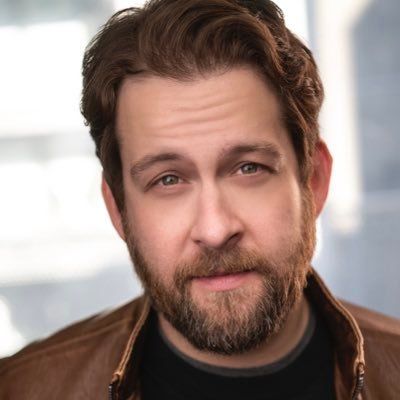
Andrew Kober is an American actor who has working in many musicals. In this episode Andrew and I finally catch up as it’s been a while since we’ve seen each other and we talk about spending time at home during the Coronavirus pandemic lockdown... Read More
From the show: The Hang with Ramin Karimloo
Guests
Featured Shows




About
Andrew Kober is an American actor who has working in many musicals. In this episode Andrew and I finally catch up as it’s been a while since we’ve seen each other and we talk about spending time at home during the Coronavirus pandemic lockdown. We discuss where Andrew’s love of musical theatre began and how he found that ‘theatre-geek’ in him. Andrew is a really interesting man and is one of the funniest guys I know. I was intrigued about Andrew’s thoughts on how he referred to himself as a craftsman rather than an artist.
Find more info about the podcast via BroadwayPodcastNetwork.com/.
Music by The Dives.
Produced by Dori Berinstein and Alan Seales.
Transcript
This transcript was automatically generated and might contain errors.
[0:04] Ramin Karimloo: Welcome to The Hang.
[0:05] Ramin Karimloo: Today we are talking to my buddy Andrew Kober.
[0:08] Ramin Karimloo: Andrew is an American stage actor who has been in Hair, Les Misérables. That's where we met. She Loves Me, the first Broadway show to be streamed live internationally online, Twelfth Night, Sunday in the Park with George with Jake Gyllenhaal, and School of Rock. We get into how we're spending time in this lockdown and what this time affords him with his young son. We discuss his passion for musical theater and how he approaches his work. I was really intrigued by his own admission of being more of a craftsman than an artist. And he has a beautiful heart.
[0:51] Ramin Karimloo: Okay.
[0:52] Ramin Karimloo: Oh brother. I hope I got enough battery in my phone. I'm nervous.
[0:55] Ramin Karimloo: Get a plug.
[0:58] Ramin Karimloo: Of course you're not prepared for this.
[1:00] Ramin Karimloo: Welcome to The Hang.
[1:01] Ramin Karimloo: It started?
[1:02] Ramin Karimloo: This is it.
[1:03] Ramin Karimloo: Oh, great. Can I ask a question right off the bat?
[1:06] Andrew Kober: Of course you can.
[1:08] Ramin Karimloo: What is this?
[1:10] Andrew Kober: Cheers.
[1:11] Ramin Karimloo: Cheers, buddy. What are you drinking?
[1:13] Andrew Kober: Uh, Jameson and whiskey?
[1:16] Andrew Kober: Just straight up. Um, I don't know what I'm doing. But you know when they say, you know when they say just do things that you're scared of doing, things you might be uncomfortable with. So I thought, I'll do it. And it gives me a chance to look, you and I get to spend 40 minutes talking.
[1:30] Andrew Kober: Sure.
[1:34] Ramin Karimloo: To be clear, that's not something you're uncomfortable with. That's something we've done a lot.
[1:39] Andrew Kober: Right. But not since I live across the ocean.
[1:41] Ramin Karimloo: Sure. So it gives us that opportunity. It gives me opportunity when I hang with friends to talk about things that normally you wouldn't talk about face to face.
[1:47] Andrew Kober: Right.
[1:48] Andrew Kober: Well, I'm gonna I'm happy to sort of let you take the lead. This is your show. I'm glad to be again. Were you gonna introduce me at all? Or is that will you'll record that later?
[1:56] Ramin Karimloo: Probably.
[1:57] Andrew Kober: Oh, we've started.
[1:59] Ramin Karimloo: So how are you, bro?
[2:00] Andrew Kober: Oh, I'm alright. How are you?
[2:01] Andrew Kober: It's a weird time, huh?
[2:03] Ramin Karimloo: I know. Here we are podcasting during a pandemic.
[2:05] Andrew Kober: Yeah, it's a strange time to be a person in the world, I think.
[2:08] Andrew Kober: Do you know I don't live in the city anymore? I left New York City. Did you know that?
[2:11] Ramin Karimloo: No.
[2:11] Andrew Kober: Well, wait, no, yes, you moved. We moved to the suburbs. We bought a house in New Jersey.
[2:15] Ramin Karimloo: That's right. Uh so I uh I don't know. I guess for New York, they're sort of anticipating the apex in the next week or two. Um, but it's it's just a very strange and scary time.
[2:27] Ramin Karimloo: And you guys have been healthy, you haven't the family's good.
[2:30] Andrew Kober: Yeah, so far so good. I mean, you know, a lot of uh a lot of friends that have tested positive for COVID or are suspecting that they would if they were able to find a test, which is its own load of load of Broadway actors.
[2:43] Ramin Karimloo: Yeah.
[2:44] Andrew Kober: I've been reading about how tons and tons of friends, and it's really no joke. I mean, you know, I think that the messaging we were getting a few weeks ago about how if you're young and healthy, you're gonna be just fine wasn't really the full story, or I don't know whether it was inaccurate, but it didn't paint a full picture of what it means by mild.
[3:04] Andrew Kober: Mild really just means you don't have to go to the ICU, you're still sick as can be for a while at your house. Uh and I've got a lot of friends that have sort of been in that boat and are still in the thick of it or recovering, and it seems pretty rough. But we've we're now uh like two and a half weeks into our own personal family quarantine.
[3:25] Ramin Karimloo: How are you finding that?
[3:31] Andrew Kober: It's alright. How are you? How are you finding it?
[3:34] Ramin Karimloo: I had a little blip of it uh yesterday. Only my anxiety comes from when not listen to too much news.
[3:43] Andrew Kober: Yeah.
[3:43] Andrew Kober: And the news can be so contradicting.
[3:47] Ramin Karimloo: Sure. One like you say, you hear people say it's most cases you're gonna be fine. Um and then when you hear things like, oh, we might actually have to go for six months. If it's six months, the financial uh ramifications are you know, I'm in a fortunate position. I'm very grateful for that. Yes. So I when I think of maybe up to three months or four months, I do see it as well. I'm with my family full-time.
[4:15] Andrew Kober: Yeah.
[4:16] Ramin Karimloo: And I'm enjoying that, I'm enjoying the structure. I I'm actually enjoying the homeschooling and doing things that when I'm so busy always, you think, if only I could do this.
[4:27] Andrew Kober: Sure.
[4:27] Ramin Karimloo: Now, this is not I I can't call this a blessing because it's not. People are dying, people are sick. It's an opportunity. At least I'm with my family.
[4:34] Andrew Kober: It's an opportunity.
[4:35] Ramin Karimloo: Yeah. At least I'm I don't want it, I don't want to leave this without thinking what lessons could I learn from this.
[4:41] Andrew Kober: Sure. I've also been trying to be very deliberate about, I mean, my son's four, and I'm trying to be very deliberate about the idea that when he looks back on this, if he remembers this, I want him to think of it as a joyous, family-filled time in his life.
[4:58] Andrew Kober: Yeah, you know, I mean, he he understands as well as a four-year-old could that a lot of people are sick, and that's why we're not going to school anymore, and that's why we can't have playdates. He gets that. Um but I would I as he thinks about this as he grows up, when when you know someday we'll be able to look back at this, I really am making it my sort of guiding principle that he looks back on this time as a happy and light-filled time in his life.
[5:28] Andrew Kober: Um, it's not gonna be for most of us. Um you know what's interesting. I I this was a tweet from John Ronson. You know, John Ronson, the writer, he's a terrific writer, and uh a couple weeks ago I saw him tweet that he's noticed a phenomenon that people that generally have anxiety are sort of taking this all very much in stride because as if they've been rehearsing for it for their entire lives. Whereas people who are not generally anxious, like me, and like I think you, this is really kicking our asses.
[5:59] Andrew Kober: Just because I I am not accustomed to feeling like the sky is falling. And so now that it actually sort of is, it really is a jarring uh experience for me.
[6:11] Ramin Karimloo: Well, I that's that this is where hearing too much news, or I I try and read both sides of any story, especially with politics. I'm when people are so like the opposite of what naturally I feel or think, I think, well, why do they think that?
[6:27] Andrew Kober: Right.
[6:27] Ramin Karimloo: And why don't I think that's which is something that you you and I have even done with each other.
[6:33] Andrew Kober: Yeah.
[6:33] Ramin Karimloo: Because it's good to I even if I don't agree with someone, I I want to hear them out. I don't believe in the cancel culture or things like that.
[6:41] Andrew Kober: I believe in I would have canceled you and I know, thank God.
[6:47] Ramin Karimloo: Uh well, listen, get in line. I'm sure many would.
[6:51] Andrew Kober: I don't wanna I don't believe in selective democracy. It's you know freedom of speech is freedom of speech, whether we agree with certain things or not. But more to the point of this. There's a lot of people who believe this is overreaction, we should um this is just a flu. But I don't ever remember hospitals being this over, you know.
[7:12] Ramin Karimloo: No.
[7:13] Andrew Kober: They're hurting people.
[7:14] Ramin Karimloo: Yeah. It's not just a flu. I mean, I've tried to really um the fact is that predictions are uh sort of fundamentally flawed. And the thing that ends up happening almost always exists somewhere in between the worst case scenario and the best case scenario. It's almost never either of them, and it's almost always somewhere in between.
[7:37] Andrew Kober: And so I I've been trying to also limit my news consumption, but even with the news that I am consuming, I'm trying to come at it very much with projections are just projections, and anything can happen at any time. And uh a lot of it, a lot of these projections are based on people not doing what you and I are doing right now. Uh and I think unfortunately slowly, but but people are coming around to the fact that this is everyone's responsibility to take care of each other and to take care of ourselves.
[8:13] Andrew Kober: And uh, and really it does feel uh like society is doing this in a selfless way, right? It's it's I don't hear anyone saying I'm quarantining to keep myself safe. It's mostly I'm quarantining to keep the people in my community, the people in my extended family, the people that I come in contact with safe, um, which I think is sort of beautiful.
[8:35] Ramin Karimloo: Um, but that you know, that being said, it it's it's it is bad, it will continue to be bad, it will likely continue to be worse, and that's something that is challenging every day. But I think you're right that uh a part of it is also an opportunity for everyone to uh have some space for reflection, uh, and some space for just things other than we usually fill our space with, right?
[9:05] Andrew Kober: Even if we get sick or we have family that's sick, it it's this next time is going to be different, fundamentally different for a while. And uh some of that, at least some of that gets to be in our control. And uh that's sort of the thing that I'm I'm doing my best to cling on to.
[9:24] Ramin Karimloo: So, how do you deal with anxiety? Like when you get those moments.
[9:26] Andrew Kober: You know, that's something I've been sort of actively working on. I again, anxiety is not a feeling I'm super accustomed to. You know, my whole kind of thing is like it's gonna be fine, uh, floating around. I'm like at a solid six and a half all the time. That's just where I live. Just like pretty good.
[9:45] Andrew Kober: Um I'm a pretty easygoing six and a half. Um so this is this is all pretty unusual for me. The big thing with this specifically is is evading the news, uh not evading the news, but like limiting my consumption and and being deliberate about how and when I consume it. Like I I took Twitter off my phone. It I'm still on Twitter, but the I want it to be a choice as opposed to the default thing for my eyes to do when they don't have something else to do.
[10:18] Andrew Kober: To me, it's made a big difference that like the difference between clicking on the little bluebird on my phone or going on to Twitter.com is enough to I I've probably cut my Twitter down by you know 70%.
[10:32] Ramin Karimloo: Yeah, I'm gonna do that.
[10:33] Andrew Kober: It's a it's a big change. And the fact that like if I see something that I want to amplify or if I want to check on a quick thing or whatever, I can still do that. It's an option to me, but it's not something that's just falling in front of my face.
[11:01] Ramin Karimloo: Well, you never were on the attacking foot. You always opened it for a dialogue. But you would get attacked. You get attacked pretty fast.
[11:08] Andrew Kober: Yeah, I get attacked pretty fast. But in the thing that I really have no understanding of my opinion is different than yours, and so you must be wrong. I can't understand that philosophy. Because to me, if I'm gonna say I think X, I'm really eager to hear why.
[11:26] Ramin Karimloo: Yeah.
[11:26] Andrew Kober: And even if I disagree with Y, if anything, it's gonna help me understand my position better, which is something I'm always eager to do. A couple months ago I said I feel this about this thing, and a lot of people came for me. And that was fine. You can come for me. I'm on Twitter. That's the whole point of Twitter is you putting yourself out there for being comfortable. Sit by the pool, you're gonna get wet.
[11:50] Ramin Karimloo: That's right.
[11:51] Andrew Kober: That's fine. But a lot of people seem to be eager to say, like, you're a piece of shit for feeling this way. Goodbye. And maybe I'm a piece of shit for feeling any particular way, but look, tell but let's talk about it a little bit. No, of course, it's not your responsibility to educate me, but I want to be able to have at least a light dialogue as far as why you think I'm a piece of shit so I can at least provide some context for why I'm a piece of shit. You know, I know there are takes that I have had over the years, hopefully not on Twitter, that have not held up. You know, all of our positions are evolving on everything all the time.
[12:32] Ramin Karimloo: Yeah.
[12:32] Andrew Kober: And I think that's part of our obligation as adults is to be sort of ever reevaluating our opinions on things. Twitter, I think can be really good for that. Usually, you know, if I have 50 people come and tell me I'm a piece of shit, I'll find three that are willing to have a really interesting conversation. And the difference between a conversation and like a debate is I'm not trying to prove anyone wrong, and but I'm also open to being proven wrong. You know, if you and I have different positions, I don't think my rightness implies your wrongness.
[13:09] Ramin Karimloo: Right.
[13:09] Andrew Kober: I think we can both be right in different contexts, and I think that's okay. Maybe I'm wrong about that too. I don't know.
[13:16] Ramin Karimloo: Well, I don't know. I think that's what gives balance, but I don't understand why people like you say are so quick to go, well, if you're not on our in our camp, then fuck you.
[13:27] Andrew Kober: Yeah, yeah. Also, like I just think like nothing is uniformly right or wrong. Everything has caveats. You know, I think everything does, everything's gray. I think that take my president right now. I disagree with just about everything he does. I don't think he does a good job at his job, and I think he's probably not a very good person with probably not great intentions. But there's a lot of people who will think otherwise. There's a lot of people who think otherwise, and I don't think their support of him makes them monsters necessarily.
[14:07] Ramin Karimloo: Right.
[14:07] Andrew Kober: I think some of them probably are, and I think some people that support my guy are probably monsters too. You know, that's fine. Everybody has the potential to be everything. I always think education and change comes from education, comes from patience, comes from grace.
[14:26] Ramin Karimloo: Yeah, compassion.
[14:27] Andrew Kober: We gotta be able to talk to each other. And it takes time. Like when I think of my kids, like I'm homeschooling now. We're working on ratios today. You don't just do one question and they get it.
[14:37] Ramin Karimloo: Yep.
[14:37] Andrew Kober: That's why there's 20 questions of the same thing. It's repetition. God ratios. Jesus. I'm enjoying it though.
[14:45] Ramin Karimloo: I bet you're learning a lot.
[14:47] Andrew Kober: So what else do people talk about on the hang?
[14:51] Ramin Karimloo: Well, I use it for them.
[14:54] Andrew Kober: It's a platform for you.
[14:55] Ramin Karimloo: For oh, oh, I don't have much to say. I don't, you know.
[14:59] Andrew Kober: Well, then it's been great, ladies and gentlemen. Andrew Cobra.
[15:05] Ramin Karimloo: No, that's not true. Well, where were you at? Where we uh uh what were you working on when this all kicked off?
[15:12] Andrew Kober: Well, I had a I had March off, so the timing of this all is strange. So I've done the last I just finished this Angeloid Weber show, this called called Unmasked at the paper mill playhouse here in New Jersey. It was the American premiere of this, really the world premiere of this version. They did a lot of updating to it. And um, so I was working with Andrew and his team and uh, you know, putting up this kind of uh this the music of Angeloid Weber, and so we did that for a month that just closed at the beginning of March, and then I was gonna start rehearsals for a play at the beginning of April. It was gonna be. I don't know if I should what I should say about it, because I don't know if it still might happen down the road, but it's a new dramatic play in which I was one of the leads and I was kind of like off Broadway like a play.
Words. I know. Words, no songs. I didn't have to dance or anything. And so I was really excited because it was like a lot of things that I really was eager to do. I've been looking to do a drama, I've been looking to originate a role, I've been looking to do a play.
[16:21] Ramin Karimloo: Good for you.
[16:23] Andrew Kober: Yeah, but now that's not. As far as their communication with you at this point, is it still a feeling of it being on pause or well?
[16:35] Ramin Karimloo: I think they're calling it indefinitely postponed, which you know it's hard. You don't really, or at least I don't really think as often as I maybe should have about how razor thin the margin is for theater, yeah, right. If you're making money, you're barely making money. And so unless you're Hamilton.
[17:01] Andrew Kober: Unless you're Hamilton or Wicked or one of those guys. So really turning off the spigot entirely is unimaginable because that there's just so many artists and craftsmen and technicians depend on this business, and without I mean ticket sales are are it. That's it. That's the only way we're making money. And even when we say, you know, quarantine is over or social distancing is over, or lift even when we lift all restrictions, I think it's potentially gonna be a minute before people are gonna be really eager to sit in a cramped room with a thousand strangers.
[17:39] Ramin Karimloo: How comfortable would you be to sit in a theater next week?
[17:42] Andrew Kober: I don't know. That answer changes every day. You know, I think I listened to this, I watched this kind of video that's been making the rounds lately of this hour long Zoom chat that this doctor from Wild Cornell in the city did where he it was like from three or four days ago, but it's already been emailed to me four different times from different people. He does this hour long chat with his family and friends where he's like, I've been doing nothing but treating COVID patients for the last two weeks. Here's what I know. And it's just really practical and really pragmatic and sort of reassuring in it. I I'm very reassured by logistics. Like if you tell me how something's gonna go, I just feel a lot better. Like traveling makes me nervous. Give me an itinerary and I'm delighted. I'll go wherever you want. I just want to know what's gonna happen.
[18:33] Ramin Karimloo: Yeah, I get you. I want to know, I want the facts. Give me the facts.
[18:36] Andrew Kober: Yeah, I'm like, and this is a guy who's been doing nothing but this for two weeks and just was able to tell you the facts. Did he have a positive outlook?
[18:47] Ramin Karimloo: Uh he well basically his message was that the virus is a scary thing and a lot of people are sick and will continue to get sick. But it is not actually super difficult to prevent yourself from getting sick. He said, almost everyone who's getting sick is getting sick from prolonged contact with someone else who is already sick. And he's he said, We're talking about 15 to 30 minutes of contact. So, you know, are you gonna get sick from picking up a package of green beans that someone touched before you if they had it? Probably not. Right. You know, have an abundance of caution. He said the thing you gotta do, the two biggest things that he talked about 40 times in an hour are wash your hands and stop touching your face.
That's it. Yeah. He said, if you can practice those things, you won't get sick. If you can really be diligent about about hand hygiene and about washing your face, you're gonna be okay. So anyway, I was gonna do this play and now I'm probably not. It's you know, luckily my wife is a civilian who works like a person and is able to fully do her job from home.
[19:51] Ramin Karimloo: Um that's good.
[19:53] Andrew Kober: And luckily we yeah, so like financially it's not as scary for us as it is for a lot of people. And I and I've been trying to use that sort of safety net to give where and when I can. The actors fund is is getting ready to do some really incredible work, and I would be remiss if I didn't plug them a little bit. They always do some great work, which they always do. Oh my god. They've saved friends' lives, really. I mean, it's incredible the work that they do. But mostly I'm kind of like settling in to do weeks or more likely months of homeschooling and stay-at-home parenting, which is not something I have ever done or or really had very much interest in doing. But it's it's week three now, and it is better and more fun and more satisfying and easier every day.
[20:47] Ramin Karimloo: Yeah.
[20:48] Andrew Kober: I'm getting to know my son better than I did before, which I guess was true at any point, but is it accelerated now in a really kind of fun way.
[21:01] Ramin Karimloo: That's beautiful.
[21:03] Andrew Kober: Yeah, and I'm not you know, the other day someone asked me to do like one of those Broadway like live Instagram whatever things, and I I said yes, because I'm no fool, but also I I feel so far away from that part of me. It's funny you mentioned that because I was gonna talk to you about that because once this happened, and I get asked daily, which I feel very honored that people still want me to do that, but there is not an ounce of me that wants to do any sort of live concert right now, that wants to I don't know how else to say it's reach out a part, like there's no artist in me right now. There's a father exactly once there's no creativity in me. I'm just a father trying to figure this out for his family and protect them, and that's it.
[21:53] Andrew Kober: Everyone's trying to find their own way through. I think a big difference for me, I don't think you're as much in this boat as I am, but I really think of myself as more of a craftsman than an artist, in that like I don't feel even when I'm working, when I'm in rehearsals, when I'm creating a role, whatever, I don't feel I feel like the reason I'm doing this is because it's the set of skills that I have, right? It's the set of tools that happen to be in my toolbox.
[22:21] Ramin Karimloo: Right.
[22:22] Andrew Kober: And I enjoy what I do and I care about doing it well. Um, but it is not a, uh, I think as fundamental a part of my being as it is for some others. Like I can imagine going months without performing, and that is not a painful idea to me. Um, whereas I know that a lot of friends and colleagues, their way through this is to create and to, uh, inspire and to make things, and that is not an impulse that I'm experiencing at all.
[22:57] Ramin Karimloo: Yeah.
[22:57] Andrew Kober: Um, get that. Because I think the reason I, oh, why would Siri have thought I was talking to her? Uh, I so the reason that I think I act or I sing is because those are the things that I happen to be good at. I think if I was good at other stuff, I'd probably do that and be about as happy. Um, I don't, but it's not something that I have ever relied on to like get me through a tough time or to, or, uh, or a service that I think, and I know this is naive because I know that the work that we do is useful to people.
[23:35] Ramin Karimloo: Yeah, and I think there's finding that balance.
[23:37] Andrew Kober: So I listen, I'm trying to figure this out too. But like you, there's nothing that I felt I wanted to do other than just be a father right now.
[23:45] Ramin Karimloo: Yeah, that's the thing I feel inspired to be doing is to be a family man and support my family in this way. And you know, my wife is the sole breadwinner right now, and I mean, even when I'm working on Broadway, she does much better than me. She's a real professional person. Uh, and that's not something that's ever bothered me, but like the way that I can be of service to my family, which I think is the most important thing I can do, is to give her the space in the room to do her job well and to give my son the best experience that he can have while I'm with him, and to try to keep myself from, uh, going stir crazy, which is a real threat. Like I, you know, yeah, and I can solitude is something that's always been really important to me, and that is in short supply these days. That's the thing that I'm fighting for more than anything, is some space to be alone.
[24:40] Andrew Kober: Yeah, no, that's interesting. When I go work out my garage, I guess I take a little longer than I need to get out. Me with my dog's getting longer walks than he's ever gotten ever. The distinction I've drawn for myself is that there are creative artists and there are interpretive artists. And that I think there's some overlap. But I think I am, I consider myself to be exclusively an interpretive artist in that I can take a script or a song or an idea and hopefully do something interesting with it. But I'm not a writer and I'm not a composer.
[25:15] Ramin Karimloo: And, uh, and I'm not a comedian.
[25:18] Andrew Kober: What about the comedy? You were part of a comedy thing, weren't you?
[25:21] Ramin Karimloo: Yeah, they wrote and I punched up.
[25:23] Andrew Kober: Oh, I see. I see. I can punch up, but I, I'm not a blank page is, is I know scary to the most creative of artists, but it's not scary to me. It just doesn't, it doesn't elicit anything in me. I don't, I don't feel a great inner desire to make a thing that wasn't there before. Um, whereas I do feel a great desire to take something and apply my point of view to it or put my spin on it, or, uh, you know, sort of just see what it would feel like in my body or in my voice, or you know, it's that thing of like, do you ever do this where you're if you're seeing a show or watching a, uh, some a singer, right? You're watching a singer and they hit a note that sounds amazing coming from their voice. Do you ever just quietly like just to feel how it feels in your voice?
[26:19] Ramin Karimloo: Definitely I used to do a lot more before.
[26:22] Andrew Kober: I've learned I've, I just want to know if it's like empirically hard, or if it's just if they make it sound hard. Because my favorite thing in a singer is when it sounds like it's the last day they're ever gonna sing in their life. Like my favorite quality in a voice is that like gristly grit of like, you know, I want to sound like it's you're dying today.
[26:41] Ramin Karimloo: Yeah, like if this is the last time you ever sang, you went down punching.
[26:46] Andrew Kober: Yeah, exactly. That's what I want to hear. Um, and so like a lot of times I'll hear a note be like, that sounds really hard. Would it be hard for me? I want to know. And so in the audience or in my house or whatever, I'll test it out. No, it's not that hard. So I got that one. That one's hard. Have you ever tried to sing along to Phil Collins?
[27:03] Ramin Karimloo: Oh, yeah.
[27:04] Andrew Kober: It's in the stratosphere, and it makes it sound so easy.
[27:06] Ramin Karimloo: I know. I tried once. I was like, what is happening to my throat right now?
[27:10] Andrew Kober: That's the other thing is sometimes that's the opposite, right? It sounds so easy and so breezy. Yeah, and he's singing the full life out of it. And you go, Oh, okay, I'll just take to, oh, really? What? What is happening right now? You're doing this Andrew Lloyd Webber thing, like songs like Gethsemane, which is the only song I've ever wanted to sing well in my life, and not for a day of my life could I sing that song well. Like, it's not even like there was a period where I would be able to sing it the way I would want to.
[27:37] Ramin Karimloo: Did you have to sing that in the show?
[27:39] Andrew Kober: No, no, no, no, no. Um, but still, if I'm being really honest with myself, every night when it got to that number in the show, I was jealous of the guy on stage singing it, knowing that he was singing it better than I could.
[27:53] Ramin Karimloo: Yeah, but it's not about the voice. Like, if you were to play Jesus, do you, you would put your opinion on it? You would put your sure exactly.
[28:01] Andrew Kober: Did you, there's an Australian cast recording of that show? John Farnum.
[28:04] Ramin Karimloo: Are you kidding me?
[28:07] Andrew Kober: That's how I'd do it. Because he doesn't sing in the stratosphere. Uh, he's not, he's not doing all that crazy stuff. He doesn't riffle.
[28:13] Ramin Karimloo: Well, come on.
[28:14] Andrew Kober: What's the buzz?
[28:16] Ramin Karimloo: Well, I know. But I mean, I'm saying it's not, it's not like high cues like Ted Neely sings. You know what I mean? It's not that stuff. Get Semini. He just takes it up the octave.
[28:26] Andrew Kober: Yeah, but like everything he sings, I could sing. I can't sing everything Teddy.
[28:30] Ramin Karimloo: Congratulations.
[28:31] Andrew Kober: For you.
[28:31] Ramin Karimloo: Thank you.
[28:31] Andrew Kober: I'm pretty good. I'm pretty good. What do you want me to say?
[28:34] Ramin Karimloo: Well, listen, I remember hearing you sing at 54 Below that night. And I was like, because you know how you say, what did I say?
[28:40] Andrew Kober: I don't know.
[28:40] Ramin Karimloo: But I don't remember that.
[28:41] Andrew Kober: You were, you just said you're always about six and a half. You know, you're always good.
[28:45] Ramin Karimloo: Well, I heard you on a good nine. And I said to you, where does that come from? Why don't you do that every night?
[28:54] Andrew Kober: But that's, I, that's what I'm talking about. Like the, you know, all of us who do this do it because it's the things that we, it's just the stuff we have. You know, you can't, you can't fake a high B. You can either sing it or you can't. And these are the tools that I have, but it's not, uh, in a moment like this, especially, but really in any moment, I'm not like I have to give this or I feel incomplete. That's not, that's not it in me. It's just doing the things that I know how to do well.
[29:24] Andrew Kober: Yeah, I guess I can relate to that. Like when I sing and I start posting on Instagram now, I'm basically only posting songs. I got nothing else to say. And sometimes I just want to sing.
[29:34] Ramin Karimloo: Yeah.
[29:35] Andrew Kober: And lately I've just been doing songs. But I remember now, like nowadays, when I just want to be a dad, and every now and then I'll sing more as an exercise, rather, not to like practice, but it's a release for me.
[29:47] Ramin Karimloo: Yeah, of course.
[29:48] Andrew Kober: Not for anyone else. Yeah, but I just happen to post it. But then when people are, I get a lot of requests, can you do a live concert? I'm like, well, I just done like 20 songs on Instagram. Watch them back and one after another. What do you want? There it is. You've got it. Because to do a live concert takes prep, takes time. I gotta make some space here.
[30:06] Ramin Karimloo: Sometimes I'll sing a little first of all. My son does not care for my singing. He doesn't like it. He is very, very comfortable telling me how much he doesn't care for it. He doesn't like my singing. Um, but like sometimes, you know, I try to have music playing almost all the time. Like, you know, we've got one of those little Alexas in every room, and so I figured out how to have her just playing in synchronicity all over the house. And so I'll have her just going all the time, just playing whatever. And that is really good for me these days, especially, just to have some music on.
[30:42] Ramin Karimloo: Yeah.
[30:43] Andrew Kober: Um, and every so often if a song comes on that I just love or I just want to try on, I'll try it on for a couple of bars, and I just if for no other reason than to remember that that's something I do. Um, that is always the hardest thing about not working to me, is forgetting that there are, there's the whole, that whole branch of things that I'm good at. Uh, and I also like admit to having a little bit of like, uh, caveman provide for the family, uh, like impulse that like if I, if I'm not in some way out hunting and gathering, then I'm failing my people, which it again, even under the best circumstances, my wife is hunting and gathering. And that's, and that's fine, but I still want to feel like I'm bringing home at least a pigeon if she's bringing home a boy.
[31:39] Ramin Karimloo: Thanks for hanging with me, folks. I really enjoyed hanging with Andrew and his candid conversation. He really is a great guy. Join us next time for part two of my conversation and hang with Andrew Kober.
[31:52] Ramin Karimloo: The Hang is produced by Dori Berinstein and Alan Seales from the Broadway Podcast Network. You can find me online at dpn.fm forward slash the hang. Don't forget you can connect with me on Instagram and Twitter at Ramin Karimloo, on YouTube, a roaming Iranian, or my Facebook page, Official Ramin Karimloo. Music for my podcast is by my friends and one of my favorite bands, The Dives. Please check them out at their website, thedivesmusic.com. That's thedivesmusic.com, where you can get to know them, hear their incredible music, get links to all their socials, and most importantly, their tour dates, where you can find out where you can see and hear them live. They are truly a great band, and they are phenomenal live. Check them out.
© Broadway Podcast Network, All Rights Reserved