

This episode contains language and topics that may not be suitable for younger listeners. Listener discretion is advised. An Iranian/American actor, writer and activist, Pooya was born and raised in Tehran, Iran, based in New York City... Read More
From the show: The Hang with Ramin Karimloo
Guests
About
This episode contains language and topics that may not be suitable for younger listeners. Listener discretion is advised.
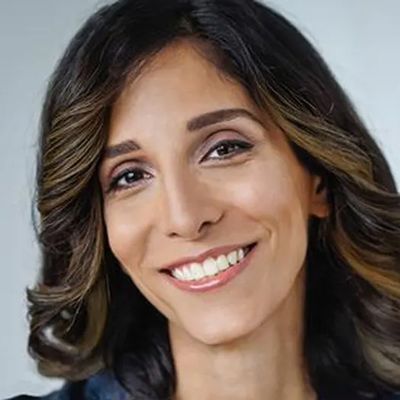
An Iranian/American actor, writer and activist, Pooya was born and raised in Tehran, Iran, based in New York City. She moved to New York in her teens, where she studied design at Fashion Institute of Technology, and after joining the FIT theatre ensemble, she discovered her love of acting and story telling. She is a graduate from the esteemed Maggie Flanigan Studio.
She seeks stories that speak to her, with rich, three dimensional characters, good and bad, while exploring their humanity and fragility.
She's fluent in Persian(Farsi), a Transgender advocate, as well as a voice for immigrants’ and women’s issues in addition to writing and co-writing original LGBT stories to shed light on an otherwise under represented community.
Be sure to follow Pooya on IG via @pooyaland, on the web via https://pooyaland.com/ and find more info about The Hang via bpn.fm/TheHang.
Produced by Alan Seales.
Transcript
This transcript was automatically generated and might contain errors.
[0:02] Ramin Karimloo: This week I had the privilege to hang with my good friend, actress, artist, all-around warrior, an activist, and fellow Iranian Pooya Mohseni. She is as funny as she is moving, as she is insightful, as she is kind, as she is just an all-around badass woman, as well as refreshingly and brutally honest.
[0:29] Ramin Karimloo: You're listening to the Broadway Podcast Network. I'm so excited to welcome to The Hang Pooya Mohseni, my friend who I've known for a couple of years now by uh of an independent film she did called The Bound. And uh we off-camera, we just discuss, we see each other. It seems to be once a year at this moment.
[0:48] Ramin Karimloo: Once a year. And hopefully we can rectify that in 2023. But hello, Pooya, how are you?
[0:56] Pooya Mohseni: Thank you. People should also know we were born in the same town within about six months of each other, but then it took us 40 something years all the way across the world to actually meet.
[1:07] Ramin Karimloo: That's right. Born in Tehran as well. Welcome.
[1:11] Pooya Mohseni: Thank you. There's so much that I will I've always wanted to talk to you about. I've always said to you, you're so I could talk to you for endless hours. You got so much to say, you got so much insight. I follow your Instagram because as much as I'm a fan of you, um, you know, I'm learning a lot from you as well, being an activist, uh, especially with what's going on in Iran right now, and I don't know how far we can dive into this, how much you want to dive into it.
[1:38] Pooya Mohseni: Well, it's your hour, so you ask questions, and I'll try to be as polite as I can and as clear as I can.
[1:44] Ramin Karimloo: Well, it's more what this is for you, but uh one thing I wanted to I did want to talk about today is especially because this rings true and you see it every day, and I have a complicated relationship with social media these days, because you want to. I don't know. I at times I'm like, why am I even on it? I want to come off it. But then sometimes it's entertaining and sometimes it's educational. And a lot of times it's just frustrating because it's not real.
[2:10] Pooya Mohseni: I think we should all look at social media. It's a thing like any other thing. You know, apples are good if you have one a day. If you have ten a day, it's not gonna be so good.
[2:20] Ramin Karimloo: Right.
[2:21] Pooya Mohseni: Social media is no different. It can connect you to people, but it can also overburden your consciousness because you find yourself you're just perusing, you're just flipping through post through post through post. You're not really looking at anything. It's just this endless array of clips and voices and faces, and it's just going on. It's like watching a vaudeville act in one minute because you're just perusing, and sometimes something catches your interest and you actually watch it.
[2:54] Pooya Mohseni: Um I think it's been this great amazing experiment that we're still now experimenting with because it's new. It's what, 10 years old, maybe 15 years at best. And uh it's like when Facebook first started, and everybody's like, Oh my god, it's the most amazing thing. And then 10 years later, most people have Facebook exhaustion because you can't be that connected to people all the time. You just you just can't.
[3:17] Ramin Karimloo: Right.
[3:18] Pooya Mohseni: It's exhausting, it takes time, it takes mental capacity. So with social media, I always say if I wasn't an actor or an activist, I wouldn't be on it because I honestly, can I curse?
[3:31] Ramin Karimloo: You can say what you want, Pooya.
[3:36] Pooya Mohseni: Yeah, but you know, it's like I'm like, I I don't know the kind of content you necessarily put out there. I not all the details. I just want you to be your authentic self. Um it's like at some point you get just fucking tired of all the nonsense that a lot of people put out there. Is like, you know, I had coffee, I ate, I woke up. It's like I'm like, yeah, I'm pretty sure that's happened. It happens to, you know, billions of people on a daily basis.
[3:59] Pooya Mohseni: Um, but I think if you use it as a library, as something that you can access things you want when you want to. So if you gain control over it, as opposed to it having control over you, right? I think it can be a useful thing.
[4:15] Ramin Karimloo: So how do you take control of it for yourself?
[4:18] Pooya Mohseni: Do you on a good day?
[4:21] Pooya Mohseni: On a good day, you know, I I follow uh very specific people, uh, whether it happens to be a trans activist that I uh love and admire and look up to, or if it happens to be an Iranian activist or a particular news outlet, because also, you know, now with the age of social media, you just have news outlets. Now which one is telling you the truth and which one is not, is like ev every day. You know, we live in the George Santos world. Anyone can say anything.
[4:53] Pooya Mohseni: Um, so I try to follow the people that I already know have something that I would learn from. Right. That's on a good day. And then sometimes on a not so good day, when I'm trying to basically bury my thoughts, I end up doing the perusing that everybody does because it is like mindless entertainment.
[5:15] Ramin Karimloo: Right.
[5:16] Pooya Mohseni: I try not to do it because even when I'm doing it, I have that voice in my head that says, Why are you doing this? Because it doesn't make me happy. It doesn't give me anything. It just makes me not be present anywhere. And I feel like a lot of people use it that way because they're just looking at something nondescript, non-committal, and it just makes them not think about things that they don't want to think about at that time.
[5:44] Ramin Karimloo: Yeah, and I guess maybe for a short period that could be a band-aid, but it's ultimately, as you say, if we keep doing that. And I know for me, it was not put me in a good place, or you just even using my time well. So now I've, you know, if I post something, I take comments off because I'm like, I I don't want to share. I'm not sharing for praise or for hate. It's just if it's a song, here it is. If you like it, great. If not, scroll something else.
[6:11] Pooya Mohseni: And now when I post, then I delete the app off my phone.
[6:15] Ramin Karimloo: So I reload it every time I got something post, then I delete.
[6:18] Pooya Mohseni: That's dedication.
[6:19] Ramin Karimloo: Yeah. Because then you're also doing a show that takes a lot of time. The thing that felt very exhausting when I was in London and I was doing the show at the Menier, was it was also very early on in the Iran protest. So I would go to rehearsal. I would um I would check some of the stories, you know, on Instagram or online before rehearsal and then after rehearsal. And after the first month, I felt like I was going insane because here I was working on a material that was let's say it had problems, um with a group of people that were mostly lovely. Mostly.
[7:03] Pooya Mohseni: I saw you put that in your post. I'm like, yes, you're so honest and now still fair, but I'm like, oh, that's got a story there.
[7:10] Pooya Mohseni: I, you know, I I believe in truth. I don't believe in venom. And I think a lot of people mistake the two, especially in the world we live in now, that we think being honest means that you're rude. Or saying your grievances about someone's means that it gives you the permission to act in a way that we don't consider civilized, or even just at the very least, a courteous uh, you know, State of the Union a couple of nights ago. Is um being polite or being kind is looked at as weakness.
[7:47] Ramin Karimloo: And that was something I had to grapple with in London.
[7:51] Pooya Mohseni: Um, but I still believe in it. I still believe in kindness because at the end of the day I am very selfish, I am very self-absorbed, and I have to be able to live with who I am, and I don't really give a fuck what other people think about who I am because I've had to live my life that way. But I also tell my kids, and you know me well enough to know uh what I mean when I say my kids, you know, it's like being um a queer community mom, and I say, like, you know, whoever's younger, whoever in any way, shape, or form looks at me as uh a role model or for guidance, or just you know, somebody that's older than them. I always tell them is like you should be your most ardent supporter, but you should also be your most critical critic.
[8:40] Pooya Mohseni: Because that is where you will find your truth. That is where you will find you and who you are and what makes you tick. And I think that's what life is that we're always just trying to become more in tune to who we are and who we want to be. So what I put out there, I say what I want, but I never see any need to necessarily be vulgar or rude.
[9:04] Pooya Mohseni: Okay, so I may have called Marjorie Taylor Greene trash. But you know, as somebody had said about an old interview with Cher where she kind of calls Madonna a cunt, and somebody said, Well, isn't that rude? I said, Well, calling a cunt a cunt is like calling a banana a banana, it's just fact.
[9:22] Ramin Karimloo: Based on her experience, I guess.
[9:24] Pooya Mohseni: You know, based on like what she had known at that time. She goes in detail as to why she said she's like, you know, she has talent, she has no need to be rude and mean to people, and she said there's no need to be a cunt. And so it's like it was very Cher fashion of saying what she thinks. And you know, sometimes calling something what it is just stating that the sky is blue.
[9:49] Ramin Karimloo: Yeah, I guess so.
[9:50] Pooya Mohseni: And I like that about being our most critical critique, and that's something I I feel I'm going through now. I don't know, maybe it's a product of the pandemic, and it's a product. I don't know. This whole what's you you bring up the Iran protests, and as an Iranian, I'm finding myself because you know we lived there. And sadly it's still ongoing and even more now than never, but it's amazing seeing enough is enough. How this is women-led initiated and uh inspired to see that happen over there is so powerful, and it's you know, it's something I don't know how to speak about, if I'm perfectly honest, as an Iranian, and I I find myself closed up about it, or I look to you on your Instagram, I looked at Ahmadili, uh Aryan.
Because I feel they say it so eloquently, you guys say it so eloquently, and it's something I'm learning from, and then I can have the conversations with my family about it, you know, my Iranian family, and try and ask those questions and and learn from it.
[11:01] Pooya Mohseni: But also because we lived it, I know what it did to my family back in the day. I don't want to talk about it publicly right now, or at least give a personal twist.
[11:13] Ramin Karimloo: That's also totally fine.
[11:14] Pooya Mohseni: See, this is one of the things, especially in Iranian culture, and it's like in this case I can say, well, maybe it's the same way if you come from Chinese culture, but obviously I don't have personal uh background on what that's like, so I'm not gonna talk about that. But you can even see in the opposition, the Iranian opposition against the Islamic Republic. We we have not been trained to accept people who say things that are different from us, unless they're our enemies.
[11:48] Pooya Mohseni: So either you completely agree with me or we have nothing in common. Whereas as a trans activist, I've I've had to deal with this, but also as an Iranian person, you know, people like, well, um, okay, if you're pro-monarchy, then you're this, or if you're anti-monarchy, it's that. I'm like, we we should have conversations about this. Why are you pro-monarchy? What is it about it? Or if you're not, what is it that makes you not? What what do you want? Uh why why do you take the stand as opposed to no, you take that stand, so that means that you're an idiot.
[12:22] Ramin Karimloo: You know, very much kind of like the political arena in America over the last 10, 20 years.
[12:28] Pooya Mohseni: But you know, in Iranians, we we are very good at this. Um if I want to criticize you, if you are a woman, especially if you're a woman and you do something I don't agree with. And this came to the surface a few weeks ago when Shannas Terrani, this, you know, beloved um movie star from before the revolution said something that she basically showed her support of um Prince Reza Pahlavi.
[12:56] Pooya Mohseni: So it's like, you know, that's her point of view. I don't have to agree with it. But then somebody had come out and said, well, you know, it's like you're a whore, and you know, it's like in this very misogynistic way that I don't agree with what you say, so I'm gonna call you a whore. Whereas I'm like, I can just say I don't agree with what you have to say.
[13:16] Pooya Mohseni: Um, but I have no other information about what you do in your other parts of life.
[13:21] Ramin Karimloo: Right.
[13:22] Pooya Mohseni: That's how I like to, if I'm gonna fight, that's how I like to fight.
[13:30] Ramin Karimloo: In our business, you can't realistically like everybody you work with.
[13:35] Pooya Mohseni: No, and you don't have to like everybody you work with, but you rely on professionalism. That, you know, you do your rehearsal, you show up prepared, you do your work, you do your work on stage, you know, you're there to give a show.
[13:52] Ramin Karimloo: But when you're not professional, then it's not a matter of liking someone or not. It's a matter of not being able to trust someone as a colleague.
[14:00] Pooya Mohseni: And that's different. It's the same about an opposition, it's the same way about a revolution. It's the uh when people talk about their experiences of Iran. I'm I'm one of those families, uh who suffered a lot because of the revolution.
[14:18] Pooya Mohseni: But I know a lot of people who suffered more, you know, there were people who lost their whole family members during the war. I cannot undermine their loss or their sacrifices. But my family fell apart because my brother was 17 in 1987, and my dad smuggled him out of Iran, and I was nine. One day my brother was there, and then the following day my brother wasn't there. No one explained to me.
[14:46] Pooya Mohseni: Um we sold our home because of that. It was like many families uh fell apart like that. My uncle who left Iran in 78 who couldn't come back. So my grandparents, you know, suddenly had a child that they couldn't see unless they went to America because he couldn't come back. And there are tens of thousands of stories, if not more, very similar to this. People who were somebody in Iran, you know, they were engineers, they were doctors, but they escaped with their family and they ended up becoming um gas station attendants. We knew stories like that.
[15:32] Pooya Mohseni: But life happens, it doesn't really ask you if you're ready for it or how you feel about it. You just try to stay afloat as best as you can. And I guess that's been my life.
[15:46] Ramin Karimloo: When did you leave Iran?
[15:48] Pooya Mohseni: I left Iran in December of ninety-six. I was 18.
[15:53] Ramin Karimloo: Oh, 96.
[15:55] Pooya Mohseni: Yeah, because we left in 78.
[15:57] Ramin Karimloo: Well, you bougie people.
[16:00] Pooya Mohseni: We had to. A lot of a lot of people stayed just because they thought that things weren't gonna get really bad, or they didn't have particular affiliations. You know, we weren't a religious minority, we weren't a political family. My grandfather was a retired army general.
[16:20] Pooya Mohseni: And even though he was retired by the time of the revolution, he his presence was requested at uh the revolutionary court until the year he died in 95 to give account of his holdings and his real estate. And you know, it's like um like what do your children have and what does your wife have? Because they thought that he must be hiding this money, but my grandfather was just a soldier, you know. He was somebody who dedicated his entire life to the army.
[16:50] Pooya Mohseni: Both my parents were fired from their jobs two years after the revolution when the cultural revolution happened two years after the 79 revolution. My dad was blacklisted and he couldn't leave the country for seven years. So different people suffered in different ways, but we didn't have to leave. Also, we didn't really have anywhere to go. So some people had connections or already had family, maybe had more money. We didn't, so we stayed.
[17:21] Pooya Mohseni: The reason my mom and I left, my dad never left, but the reason my mom and I left was more about me being trans in Iran, having been arrested, having been assaulted, having tried to commit suicide like 10 plus times. And it was that last year that my parents just came to this realization that if we stay, if I stay, I'm not gonna live a very long life in Tehran. So they started planning, you know, in early 96, and by late 96, I finally left and I went to England, which is where my brother lived, but there were no accommodations for um getting asylum or anything like that for a queer person at that time.
[18:07] Pooya Mohseni: And you know, last resort, my mom came to the States, my uncle was here, she started working so I could get a visa and I came here. And that was the funny thing about being in London. I'm like, yeah, 26 years ago, I came here and London didn't want me.
[18:20] Ramin Karimloo: So big mistake.
[18:23] Pooya Mohseni: A big mistake indeed. If you don't mind me asking, how was that in I guess early 90s to mid-90s? Your parents, you know, in our culture, having someone who's queer, a child who's queer, trans. How was that even the fact that were they so obviously mom seems supporting? How was your father with it?
[18:49] Pooya Mohseni: It took a while. I think they would have been more supportive if they realized I was part alien. Um and it's not, and this is one of the pillars of my activism. I believe that parents, unless they're psychotic, parents want the best for their children. Now, they may not always have the best tool or the best knowledge or the best support system to do that, but I think that is their intention.
[19:15] Ramin Karimloo: Yeah.
[19:16] Pooya Mohseni: So the first time my mom ever heard the word trans, I was sixteen. She'd never heard the term. It wasn't something that she could talk about with her family, with her co-workers, with anybody, really. I'm on the advisory board of the Gender and Family Project, which is part of the Ackerman Institute uh for uh family counseling. And what they really do is try to give support to the families so they can give support to their children. That means education, that means group therapy, that means being able to um give them the tools they need so they can have open conversations with the school that their children are going to.
[20:04] Pooya Mohseni: Well, in nineteen nineties, nineteen eighties, Iran, I mean, I don't have to say that this didn't exist. That's just that would just be fact. Especially there, but probably anywhere at that time.
[20:16] Ramin Karimloo: Yeah.
[20:17] Pooya Mohseni: Uh so I would give much credit to my mom because the first time she'd taken me to a therapist, I was three. Then another time when I was eleven, and then when I was sixteen.
[20:29] Ramin Karimloo: Yeah.
[20:30] Pooya Mohseni: You know, some people it takes a while for them to know who they are, and then some people they're just bored knowing who they are. Um I'd read But how's that three year old? How is a three-year-old Puya have that conversation? What are you talking?
[20:41] Ramin Karimloo: Well, see, but that's the thing. We think that because children cannot have a conversation, they do not know things.
[20:47] Pooya Mohseni: I agree with that. Knowing something and being able to communicate that thing to others are two different things. So, like what is it that makes my mom take me to a therapist? That's three, that that's your question. It's not uh I wrote an article, I said I was born a girl in a boy's body, and in it I wrote that we think that queer people, or specifically trans and non-binary people, are confused. They're not confused. The confusion is really the outside world because the child has an idea of in this large picture of society, you know, think of it as like a vignette, they have an idea of where they want to fit in that tableau, what role they want to have.
[21:31] Pooya Mohseni: I wanted to be a mom. I had no idea at three that that wasn't what society had intended for me. But when it came to toys, you know, you put a truck on one side and you put a doll on the other side, and you put, you know, little like, you know, uh, I don't even know what you call it, like um playing playing house toys. And it's like you put a child, and the child knows which one they want to play with. I knew which one I wanted to play with.
[22:01] Pooya Mohseni: And so therapist at that time had told my mom, don't make a big deal of it. It's just, you know, kids experiment with toys. And, you know, your child will just grow out of it in time. Well, you know, the thing of like it's a phase. I mean, life, we're always evolving, yes. Our identities evolve as we know ourselves more and the world around us, and we have experiences. I completely understand that. But people also know who they are, they know what they like, they know how they see themselves, they know how they like to be seen.
[22:37] Pooya Mohseni: So at three, I knew I wanted to play mom. Um, and at 11, I still wanted to play mom. Admittedly, not the most um progressive idea of womanhood. However, just bear with me. I was 11 and it was the 80s, and I was being raised in a Muslim country. So it wasn't until 16 that we finally went to a therapist who had expertise in human sexuality and gender and all of those things.
[23:10] Ramin Karimloo: And this is in Iran.
[23:11] Pooya Mohseni: Yeah.
[23:11] Ramin Karimloo: And there was one.
[23:12] Pooya Mohseni: I was gonna say there was one therapist who like had this expertise.
[23:17] Ramin Karimloo: One. See, Mike, my thought right now, sorry to interrupt, is how are they even allowed to practice that?
[23:23] Pooya Mohseni: Well that time in Iran.
[23:25] Ramin Karimloo: Well, I mean, um, because you know they probably wouldn't be able to do that now.
[23:28] Pooya Mohseni: Well, they would because, see, it's still therapy. Um, they're talking to people about, let's say, their you know, sexual inadequacies, you know, helping couples and stuff like that. So the fact that in a country of at that time 70 million, there's one doctor in the middle of Tehran. That the way that we came across this person is that his wife happens to be my mom's co-worker. That's like you might as well be looking for a needle in a haystack. Because how would you even ask who to go and see?
[24:04] Pooya Mohseni: So at that time, this person um, you know, talked to me, and I was like, my first thing was like, I think I'm crazy. Like, this is what I'm thinking, this is what I'm feeling, this is how I see my life, but I must be crazy because you know, that can't be, because the world has told me that no, it can't be. And then he told me you're not crazy, the first person to tell me you're not crazy. But then explaining that to my parents, they couldn't accept it. So then they try to cure me because that's what the world around them told them that that's what they should do.
[24:40] Pooya Mohseni: That this is a disease and it should be cured. And it's not that different from what the right wing um uh political arena of this country is trying to say. You know, then they're like, oh, they're grooming our children because they're telling them about these different identities. I'm like, yeah, because that really worked for straight people trying to groom their gay kids, right? Because yeah, I mean, okay.
[25:04] Pooya Mohseni: Um, but my parents tried, tried their best as parents to cure me. Therapy. Uh, I got tested for so many things. There were, you know, it's like all of the different hormone levels in my body. By the way, fun fact to know about me. Ever since I was 15, I had enough prolactin in my body to apparently nurse a child. But one of those weird things, I'm like, okay. So I have this very high level of hormone that usually nursing mothers have. Or I went to the medical.
[25:40] Pooya Mohseni: But it's just a case. Yeah. Or I went to medical examiner's office because that was part of like getting the permit to then get an exemption from doing compulsory service to then be able to, you know, either leave the country or have the surgery and all of that. The examination process that I had to go through, I was physically examined at the medical examiner's office. I was interviewed, more like interrogated by a panel of judges now, who in those 15 people were doctors. I don't know if any of them were, and asking these very graphic questions. I have a 17. And the one thing that would tell you who I am, their last thing they said is said, Well, what if we don't give you this permit? What are you gonna do? In very classic puya fashion, I took a breath and I said, I guess I'll keep coming back until you do.
[26:37] Pooya Mohseni: And um, that's why I do what I do. That's why I'm out. That's why I am on that social media. Because even if once a year or once every six months, there's some young queer kid from Iran that finds me on Instagram and messages me because they're trying to find their way in life, or get just a little bit of kindness and affirmation. And if I can do that in any shape or form, if it's an hour phone call, if it's them just knowing that I exist, then that is much that is as much meaning as I could have asked for from my life.
[27:26] Pooya Mohseni: I think we can all use uh a lesson there is just like just what your heart is uh giving out to the world. Kindness doesn't cost anything, no, but it's worth a lot.
[27:45] Ramin Karimloo: Look at you being deep in thought. Well, there's something about you, Puya. Since I met you on that film set, when I saw you in English and you did that speech, I couldn't breathe. It broke me. And there's something, I don't know. There's something about obviously Iranian connection. I don't know, but um, yeah.
[28:07] Pooya Mohseni: It's beautiful people connection, Rami.
[28:09] Ramin Karimloo: Well, you have that in sp in the world. Oh, shoot, okay, you know. Come on, you're your Broadway hearthrop. Okay, let's let's not be in life. Oh no, you know you okay. I've you know, I'm 44. I feel like I'm 14 again, trying to figure out what am I meant to be doing. I actually I love my age, and I think through my life I've been married, I've been divorced. Um I look at my life. Life, you know, people are always trying to find like what is the purpose of life and why are we here? I think that is life. Life is trying to figure out what is it you're meant to do. And every day you just, you know, one more piece of that puzzle. And sometimes you find the peace, and sometimes you look for the peace.
But I think that's what life is. Life isn't this other thing. It's not that you know, you find all the pieces and then you go and do this other thing. Right. It's like you find all the pieces and then you go to Boko Ratan. That that's not life. You know, Boko Rotan is also part of life, uh, or somebody's life. But the older I get, I've now found who I am, and every day I find a little more of that, and liking myself, liking the things I stand for, liking the things I believe in, liking uh the energy I put out there, but that doesn't mean I don't question it every day. You know, that person treated me that way. What should I have done? Did I do the right thing? Um, even you know, that particular word that I used in the beginning, I said it's not a word I use very often, but sometimes it's very accurate.
But even in a situation like that, I was tempted. I was tempted to show what makes me a New York bitch. And I decided that that was beneath me. Not because I'm some, you know, bougie ass woman who cannot get down and dirty. I can get very down and dirty if I need to. But it comes down to how am I going to live with that person that I would become if I do that.
[30:21] Pooya Mohseni: Right. As opposed to, I'm a huge believer in what uh Michelle Obama said. When they go low, you go hoa, you go high. And it doesn't mean it's easy. It's not. I don't think doing good things are easy. But that's what gives it its value. Because if you do something and piss me off, yeah, I mean, my most guttural instinctive response to be will like, oh, you know, you whatever. But sometimes taking a step back, I think it's like working a muscle. Working your kindness muscle. And that's what I like. I mean, I'm not saying what other people should do. I always say if I can manage to pull up my own pants on a day, that's a good day. So I'm not responsible for pulling up other people's pants. Um, and if somebody wants to know why I do something or how I do it, I'm more than happy to share because I've seen a lot, I've seen a lot of unkindness, I've seen a lot of kindness, and I'm like at a half point way through my life at 45, I'm just six months older than you, uh, about um, and I look at it with the fact that I like to absorb all the things I like about the people I like and just become a fuller, more expansive person. That's what I want.
[31:55] Ramin Karimloo: And with social media and whatnot, do you find it because I I get hate, so I'm assuming you do as well when you put yourself out there.
[32:06] Pooya Mohseni: I don't as much anymore. But there was this woman a few years ago. I assumed that she was a Trump supporter, and she started trolling me, and then you know, she literally had done a deep dive into everything I had ever posted. And she was commenting all of these things about, you know, I'll never be a woman, and my hand looks like this, and my arm looks like that, and you know, God loves you, you know. And again, I cannot not be me. So one thing they said, you know, it's like Jesus or God is waiting there for you, you know, it's like for you to get on your knees and beg for forgiveness, and in a very sassy way. I say I've got on my knees many times before, one more time isn't gonna kill me. Um but like my last remark to her was I'm like, you're talking about my body, like, you know, my hand is this way and my foot is that way, and my face is this way, and I'll never know.
Like, I'm not blind. I've seen all of these things much longer than you've known I exist, and I've had pains about it, I've had dysphoria about it, I've had insecurities about it, I still do, and I come to terms with it. What I don't understand is why you who claim that you have this great president and you have your God and you have your religion, you have all of these amazing things, and yet you come and bark up my tree. Why do you waste your time on someone like me if you claim all that you say? So before someone drops a house on you, I suggest you go away. Shoo. That's how I deal with it because at some point.
[33:51] Ramin Karimloo: And there's no you didn't know her from anyone.
[33:54] Pooya Mohseni: Oh no. Just out of the blue, you just get in the stroll.
[33:57] Ramin Karimloo: Yeah.
[33:58] Pooya Mohseni: And uh, you know, and then other people started commenting on it. And this is what I also tell my kids. On social media, you can block someone. In real life, I have the experience that you can't block people. And I've had to learn the hard way of how to deal with people who hate me or who want to do me harm. That's been my life. It doesn't scare me. Maybe that's also why I talk about things that I do. I'm like, I have been proven to be a survivor and a warrior. And even the people who did me harm, for the most part, I don't hold much grievance. I always remember this young boy. Um, I couldn't have been more than 17, maybe 18, and he was probably like 20-ish something. And um, you know, he made advances towards me, and I declined, and he made advances again and I declined, and then I got out of his car.
Um, and then he, I guess his ego was bruised, and then he tried to run me over with his car. But he didn't. I mean, he wasn't able to. And some people are like, well, I mean, that's a horrible man. I'm like, I don't think that's a horrible man. I think he's a man who's lived in a society who has not allowed him and taught him how to express himself and his desires in a healthy way, or how to deal with uh rejection in a healthy way. And you know, his keyrat, his his ego, his honor is bruised, and now he has to do something about it. Um I hope that he never did something like that again, but I'm not gonna go through my life holding anger towards him.
[36:07] Ramin Karimloo: Well, I think uh warrior is a great word to describe you, and where you where you where you get that sort of amount of grace and compassion and forgiveness and love. Where does that come from? Do you have faith? Because usually when I hear people talk like that, they they connect it to something, or you know, whether it's religion, whether it's faith, spirituality.
[36:29] Pooya Mohseni: I always say I'm a bean counter. My dad was an accountant, my mom was a teacher. I always look at things in a very logical, you know, one plus one is two kind of way. I will ask you, what would be the alternative? Holding anger. Would that make my life better? No. It wouldn't. Because I would have to carry that anger. I don't want to carry that anger. I will not give somebody else the privilege of carrying their shit on my shoulder. No. I told you I'm selfish. And releasing anger and kindness is not about other people. It's about me. I am all I have in this world. And I would like to take as best of a care as I can of myself for as long as I can. That'll be my legacy. Everything I do in life, this may sound funny to you. I always do it with the point of view of how will I look at this when I'm in my 90s and I'm in my deathbed and I look back on my life. And how will I judge this moment? Everything I do is with that point of view.
[38:01] Pooya Mohseni: Faith. Maybe.
[38:17] Pooya Mohseni: I prefer they, plural. You know, I think a board would be much more trustworthy than one singular entity, you know, in case one of the gods is having a bad day. But it's it's for me. It's something to give me solace. It's something to give me a feeling of safety when it doesn't exist elsewhere. That is why one of my huge problems with religious salots is I think they are the true blasphemers. Because I think religion, supposedly, if you believe in any religion, it's supposed to be about the relationship between each individual and their creator. And I think religion completely bastardized that by this idea that oh you cannot commune with your creator. You need this other thing to tell you how to commune with your creator.
And I need to be the person in charge of your commune. Right. And I think that's the true blasphemy. I think that is the true blasphemy. For me, my God is kindness. Respect. I'm a weird person when I uh slam the door too hard. I apologize to the door. And I think sometimes people mistake that for the fact that I cannot have a very um colorful vocabulary if I need to.
[39:54] Pooya Mohseni: I always say, do not let the cheekbones and the graceful smile fool you. I don't like that person. It's exhausting. It's just not me. It's not who I want to be. You are a warrior. Oh well, it wasn't a choice, I assure you. Yeah, I bet. But that's also life though, Ramin. You know, this idea, I think um, I do not have that privilege to say that, oh, we choose to be warriors. Nobody chooses to be a warrior. Life comes at you and you either sink or swim. And in most cases, you want to swim. So when people say, Don't you want to push yourself? That is one of the most annoying phrases I have ever heard. Because that is dripping with privilege. Most of the people in the world where we come from, Iran or Afghanistan or Lebanon or Africa or many, many, many parts of the world, that phrase would have absolutely no meaning.
Because they're trying to create safety for themselves and for their family. Life has already pushed them as much as they can possibly be pushed. So when somebody says, Don't you want to push yourself? I'm like, Life has been too good to you, hasn't it? That's how I look at it. Now, if you don't mind me asking, if we go back to the situation in Iran and things we can be doing about it here, and obviously I will repost things that speak to me that you post, or Sean Taube, Oman Jalili or Ariane, and then anyone they repost, I'm like, oh, I understand that. I know what that means. I it resonates with me. What more can we do over here? Because do you find, and this is something I'm finding, the lack of people talking about it in our community when it comes to this specific when it comes to Iran and how what's happening, I'm like, you guys scream about everything else. Why is no one really talking about this apart from Iranians or those connected to Iranians?
[42:19] Ramin Karimloo: I think there are different reasons, and part of it is, you know, Iran is different from Ukraine. The same way we realized last year uh Ukraine was different from Afghanistan. And part of it is vicinity, you know, shared heritage, if you may. If you want to think, you know, white people versus non-white people, Europe versus non-Europe. I mean, these things are there, and to just pretend that they're not there. We look at our neighbors before we look at somebody who's like, you know, 3,000 miles away. That's just human nature. That's one part of it. The other part about Iran, the relationship between Iran and America specifically is a very tumultuous relationship that goes back to late 40s, 1940s, uh, and the 1953, you know, CIA backed coup to overthrow Masad.
Uh it it all exists there. Even 1979 revolution, like how much did the Western powers have to do with the revolution? If you ask 10 people, you'll probably get 10 slightly different varying ideas as to why people aren't talking more about Iran. I mean, I think at this point, probably most people are, but it comes down to how juicy of a storyline is it? It's an ongoing unrest. It's people protesting on the street. What do you say about it? One person said, Well, I'm afraid if I comment about you know the women of Iran, then I'm gonna be accused of Islamophobia. I'm like, what is happening in Iran is not Islamophobia. It's about freedom, it's about autonomy, it's about this militant Islam. It's not about Islam as a religion, it's about political Islam.
But it's also just easier to pretend that it's not happening. On the other hand, I can also say that I don't know what more people can do. Because when people ask me the law, what can we do? I'm like, the third Reich, the Nazis, had it not been for World War II and you know, being under full-on attack, the Nazi regime would not have given up power. Right. That's uh true about any dictatorship. It's not like they're afraid of being shamed. God knows. I mean, this is a regime that started its executions from day one. There are mass graves of political um activists from the 80s, mass graves. People who went and were never heard from again, people who were assassinated in Europe. I was arrested four times for really nothing.
Like I was wearing a short sleeve, or I was wearing white denim pants, or my hair was considered too long. Or I was standing next to a cool restaurant, which is, you know, it's like where the cool kids hung out. I was never cool, so please don't mistake that. I was just where other cool people were. And I was arrested, and one time, you know, oh, in during one of the arrests, I had uh I had a panic attack, anxiety attack, and I passed out, and my dad came and uh took me out. It's like that's the regime. This regime is not going to change. It has no intention of changing. If it wants to change, it will no longer be what it is. Now, how will you end this regime? Now that's the million dollar question, because some people say that, you know, it's like if you attack Iran, but on the other side, if you attack Iran, you know who are gonna be the first people who are gonna get killed?
Iranians. You put more sanctions. Who are the first people who are gonna suffer? Iranians. Whatever you do externally to Iran, the people are going to suffer. And this is what people said years ago. I'm like, why do you think the sanctions are important? They're like, well, you will bring the Iranian people to their knees, and that will put pressure on the regime. I'm like, do you know how cruel that sounds? That is absolutely atrocious. But in the large world of politics, my grandfather was a retired army general, and he said one thing, and I will always remember. He said, What I learned in my 30 years of being in the military, I learned that the least valuable thing in the world is a human life.
Because we do anything and everything under so many banners religion, uh, patriotism, whatever, you name it. There's no shortage of the list. And we sacrifice people for it. And so long as so far back as you go, it's been done in the name of Christianity, in the name of Islam, in the name of Germany, in the name of China, in the name of America. I mean, there's no shortage of killing. Human life, that is the core thing we have to discuss. Human life in the large scheme of things has no value.
[47:55] Pooya Mohseni: I didn't think we would uh like I said to you before asking you to come on here. I think I could do a whole season talking with you. I want people to know about you and your artistry as well. Um let's just put a bowl enough for now. It's as you say, that's ongoing. Um let's talk about good things for five minutes that we have. Which will be about you and you as an artist. Um I try to share my gift, which I um would blame my parents for. My love of movies of storytelling. I'll can even go back to my grandmother. Uh, storytelling, I see the value in it. I believe that society needs it. It's like a mirror that you hold up to society of what it is or what it can be, what should be, maybe. Uh I um, along with a very close friend of mine, Shaheen uh Shayan Ebrahim, um, we made a short film uh to use as a pitch for a future film.
It's called Always As Izam, and it's the story of an Iranian trans woman um being with her fiance and a very Iranian idea of what would happen if this bride to be, or if this girlfriend of the boy meeting the family of the boy, and how would we navigate that within an Iranian American culture or within an Iranian culture? And I thought that's something that I would like to do that I am proud to be part of. We shot it about a year ago, it's being uh, you know, edited and color corrected and all of that stuff, and I can't wait for it to meet the world and hopefully we will get enough backing to make a feature. So, in a good way, when you talked about you know, kindness on what do we do? We try to put what we believe has value out in the world, and then the people who find value in it, they will find it, they will follow it.
So to think that I can make a movie where it has an Iranian protagonist who is trans, who will not be killed, who will not be assaulted, who will not have a miserable, treacherous end in that story, that is what I would like to put in the world, because I also feel that when people see things, it puts ideas in their head. And if I can put an idea that can save a life or that can make a generation just feel differently about who they are and their place in society, then that's what I would be very proud to have done.
[50:33] Ramin Karimloo: When can we uh expect to see this or how can we help support it?
[50:37] Pooya Mohseni: If you follow social media, um no, it's like it has not come out yet, but sometime this year we are getting it ready to be submitted to things, and as soon as it does, I am gonna, I'm gonna put out the you know, the bat signal out there and I'm gonna ask all my Iranians, all of my, you know, queer allies, anybody and everybody who sees value in what I do and what I'm trying to do, and I will put because it's a story that's never been done, which is sad, but I would like to be part of it, I would like to make it happen, and more importantly, so that the generation of artists that come after us, they're like, oh well, if she did it, I can definitely do it.
[51:16] Ramin Karimloo: 100%. And this is where I think representation really matters and really makes a splash and inspires, and you know, those those ripples go further and further every time. Proud of you.
[51:31] Pooya Mohseni: And I have to say thank you. I mean, like, I'm talking to Ramin Karimloo. Oh my god, me lucky girl. Are you kidding me? You've brought class, you've brought insight, you brought education, you've brought artistry to this hang. The two Yahoos I had before this, it's like night and day with what we've what what I'm gaining from this, just as a human, as an artist and as a friend. I wouldn't mind the career of the two Yahoos you were talking to. And by the way, I do not think you were Yahoos Ramin called you Yahoos. But I want to say you are a warrior and you are very cool.
[52:03] Ramin Karimloo: Thank you. I love you. Would you come back?
[52:05] Pooya Mohseni: Sure, if you ask me. Anytime. And we'll make sure all the links of things you're um connected with, organizations that help that people want to seek out. And if people do want to get in touch with you who wanna feel like there's something in here that they've resonated with, I am on social media.
[52:20] Pooya Mohseni: Okay. Um Pooya Land, you know, like Disney, but not. Um P-O-Y-A-L-A-N-D. I'm I'm uh I'm very me, and I've always believed that I have a world, and anybody that wants to be a part of it is more than welcome. And I think anyone in any walk of life could gain by following you just because of your heart and grace.
[52:41] Pooya Mohseni: I wouldn't go that far, but I'll take it today. It's Thursday. I'll take it too. Love you, darling.
[52:45] Ramin Karimloo: Love you back.
© Broadway Podcast Network, All Rights Reserved