

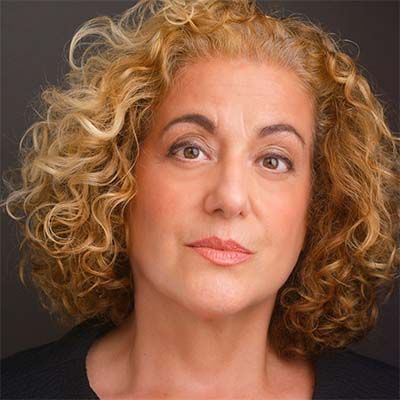
Join host Tony-winner Donna McKechnie at Sardis for Episode #3 of “The Ladies Who Lunch”. Donna’s guests are three-time-Tony Award nominee Mary Testa, currently starring on Broadway as Aunt Eller in “Rodger & Hammerstein’s Oklahoma!”, legendary publicist and author Susan L... Read More
From the show: The Ladies Who Lunch with Donna McKechnie
Guests


Videos
About
Join host Tony-winner Donna McKechnie at Sardis for Episode #3 of “The Ladies Who Lunch”. Donna’s guests are three-time-Tony Award nominee Mary Testa, currently starring on Broadway as Aunt Eller in “Rodger & Hammerstein’s Oklahoma!”, legendary publicist and author Susan L. Schulman….and Mercedes Ellington, dancer, choreographer, director and producer. Bon Appetite!
Produced by Dori Berinstein and Alan Seales, music composed by Matthew Sklar.
Part of the Broadway Podcast Network.
Every episode is recorded live at the legendary Sardi's restaurant, 234 W 44th St, New York, NY 10036. Thank you so very much to Max Klimavicius, Sean Ricketts, Beth Shafeman and the entire Sardi’s family for your tremendous kindness and delicious cuisine!
Transcript
This transcript was automatically generated and might contain errors.
[0:27] Donna McKechnie: Welcome to The Ladies Who Lunch, and here we are, and now you know this place, Sardi's.
[0:32] Mary Testa: Yes.
[0:33] Donna McKechnie: How many wonderful celebrations have we had here over the years?
[0:37] Mary Testa: So many.
[0:38] Donna McKechnie: Now, have you guys met each other before today? Did you know each other?
[0:41] Mary Testa: I just met both of these ladies.
[0:43] Donna McKechnie: Isn't that amazing? We all had concentric circles. Let me share my connections with everyone as a way to introduce everybody. Okay, Mary Testa, you and I, the last time, well, the only time, really, was at the Oslo Theater. Uh, Nora Ephron's Love Loss and What I Wore.
[1:02] Mary Testa: That's right, that's right.
[1:01] Donna McKechnie: And you, by the way, that experience was one of my inspirations to focus on doing something like this, a podcast show like this, because we all want our own dressing rooms, right?
[1:13] Mary Testa: We heard that.
[1:15] Donna McKechnie: You stay in the business long enough to get your own dressing room, maybe your name on it. Uh, but this was one of those situations where all the ladies dressed together, and all the show, I mean, I did the one in at West Side too, and they, you know, we dressed in that little hallway. And it was so wonderful to chat, to realize how many connections we had with other people, other shows, and just girlfriend talk. And it's a way of, I felt it was great for me because it was a way of supporting me and my ideas and entertaining me.
[1:52] Mary Testa: Absolutely.
[1:53] Donna McKechnie: You know, sharing the stories, the fantastic stories. It's so important for women to lift each other up. I just think it's really right. And as you and then do you know years since that experience, I'm going, you know, nobody gave us a playbook for being women in show business for beyond 50 years old.
[2:11] Mary Testa: Nope.
[2:12] Donna McKechnie: You know, you have to kind of keep reinventing it. So anyway, um, by the way, congratulations on the Tony nomination.
[2:18] Mary Testa: Thank you very much now, right?
[2:21] Donna McKechnie: Yes, still doing it.
[2:22] Mary Testa: Great.
[2:23] Donna McKechnie: And you know, I didn't go back to see Mary because, uh, as a voter, you know, I'm trying to abide by the rules and everything. And of course in that theater, if you've seen it, the audience is there. And, uh, you know, when I messaged you, you know, your speech at the end brought tears to my eyes and that production was a couple things eluded me, but I love the fact that you can take material like that and, uh, interpret it in a way and bring, yeah, other values that speech is gorgeous.
[2:58] Mary Testa: Yeah, oh my god, that the way you do it, Mary, and you're wonderful.
[2:58] Donna McKechnie: Thank you, ladies. Thank you, I appreciate it. And all the other shows that we'll cover. And Susan Schulman, you know, you're just reminding me, uh, because I thought we went back to Meryl DeBusky.
[2:58] Susan L. Schulman: That's right.
[2:58] Donna McKechnie: I was not on How to Succeed, no that was a little late, but Chorus Line, I was one of those people sitting on the steps at the Newman Theater with Merle watching Chorus Line.
[3:27] Mary Testa: Wow.
[3:28] Donna McKechnie: So right, what you were in his office then was so stupid, and you just reminded me, uh, well, of course, we got to know each other better at State Fair, you know, because you toured, uh, we were on the pre-Broadway tour, the Broadway, and then the post-Broadway tour, which you were not part of, but so it was like a year's worth of that was another year.
[3:49] Susan L. Schulman: No, no, between the pre-Broadway and the Broadway.
[3:52] Donna McKechnie: She wrote this book.
[3:54] Susan L. Schulman: Yes, right.
[3:55] Donna McKechnie: Wow. Yes. You know, there's a whole chapter about State Fair.
[3:58] Susan L. Schulman: And David Merrick, yes.
[4:00] Donna McKechnie: Which I want to, I want to just wheedle out some of those things because we all have a different perspective when we're in the same situation. You know, Russia. And that was just a really interesting, um, and company with Mary Bryant, who I adored. And I didn't meet you then, but now I was a peon.
[4:18] Mary Testa: Oh god.
[4:19] Donna McKechnie: But I was, I got to work on Company and Follies, so that was pretty special. This is what's so interesting about bringing again, uh, you know, um, the show business element, you know, because you, uh, are part of the family and putting it all together, and as an actor, you know, being in the show, it's not that you don't want to be, you know, with you and talk and share, but it's like you're, you know, you got your blinders on, you're doing the work.
[4:47] Mary Testa: Right.
[4:48] Donna McKechnie: And nobody, I mean, reading this, and I thought I knew a lot. Reading this, uh, shows me how much you as a woman, you know, do all these years, you have to stand on your head in somersault and everything to get things done.
[5:03] Mercedes Ellington: Yes, you do sometimes.
[5:04] Donna McKechnie: I'm gonna talk about that competitive thing too. Because it's difficult being in show business for more than five years, I think.
[5:12] Mercedes Ellington: Oh my god.
[5:15] Donna McKechnie: Well, uh, we go back. You might have to remind.
[5:18] Mercedes Ellington: No, no, no, no, no. I, let me just say one thing that you uplifted the dancer community up because before you and before Chorus Line, um, it was the dancers were relegated to being background, you know, to being, uh, scenery to being, you know, but that the importance of the dancers and all the years of training that we go through and everything when you came, that was, well, that's Michael Bennett's Valentine to dancers, you know, and we, but even today people refer to you as the...
[5:19] Donna McKechnie: I will take it. People need to remember.
[5:56] Mercedes Ellington: Yeah, absolutely. And you said you were a June Taylor dancer, yes?
[5:58] Donna McKechnie: Okay, so let me just delineate all of her occupations.
[6:01] Mercedes Ellington: Yes, please do.
[6:03] Donna McKechnie: Because there was a time we probably took a lot of the same classes. Because there was a time in New York when I, you know, when I was a teenager and, uh, a little ballet girl from Michigan who ran away from home, but that's another story.
[6:17] Mercedes Ellington: Another line.
[6:17] Donna McKechnie: We read that in your book.
[6:18] Mercedes Ellington: Uh, yeah, so that's another thing. But anyway, I was here, I was in New York, you know, and going to all those classes. And there was one point in time when I did my first Broadway show, How to Succeed, uh, Meryl DeBusky, and Turkey Lurky, where I felt so proud of the fact that I could walk down the street and I knew every single dancer in New York.
[6:39] Mary Testa: Oh wow.
[6:39] Donna McKechnie: You know that feeling?
[6:40] Mary Testa: Yes.
[6:41] Donna McKechnie: Because you're in the mix, you're going to class on your show. But every single dancer, so you star as a dancer. And I just sort of Googled, because I had no idea the, I know Sophisticated Ladies, uh, 42nd Street, Not for the No Nanette, which I saw, and I saw all the work you did on the Broadway stage, and then there's a fantastic memory I have of you with the Nicholas Brothers, who I was a big movie fan.
[7:12] Mercedes Ellington: And I'm just starting with what she does. I mean, that was, it was in, but it's a beautiful jewel-like memory of us being in London at the Palladium, and I don't know what the gala was for. It was a benefit, yeah, for the English, you know, Actors Green Room or something. And the Nicholas Brothers were there, and I remember being in a rehearsal room in Covent Garden. I remember going up there and Fayard, yes, I don't think he was able to dance or was he? Maybe he was the first time because we did...
[7:12] Donna McKechnie: Who's Fayard?
[7:12] Mercedes Ellington: Fayard is one of them in the conspiracy and the hero of Fayard. That's his first day of the thing. You did this great number. I remember the three of you, you were in this, what was that number? Did you choreograph that?
[7:12] Donna McKechnie: But it was, she took care of them too.
[7:12] Mercedes Ellington: Yeah, he was getting a little bit more disabled and we had to specify movement.
[7:12] Donna McKechnie: That's right. And I remember being in the room when Fayard would be sitting and Harold would be up there, you know, doing it, and Fayard would be just watching so that when he got up to do the performance at the Palladium, that gala, that he would know. Anyway, you, I just loved that image of you taking care of them, you know, you were just like so, because you're an educator.
[8:34] Mercedes Ellington: Because it's like we went to the Copacetics and Honey Cole's and all you, all the historian. I mean, I'm just getting in now. You are also a writer, a director, a choreographer, um, cursed, cursed you, and well, you created the Duke Ellington Center for the Arts.
[8:52] Donna McKechnie: Yeah, 501c3.
[8:54] Mercedes Ellington: And, uh, some film on that, you know, enlighten me. Because I was with André De Shields yesterday.
[9:01] Donna McKechnie: And André De Shields talks about you in such a loving way.
[9:08] Mercedes Ellington: And that's when I went, I just, my jaw dropped because that's when he said something about the June Taylor dancers.
[9:14] Donna McKechnie: And I used to go because I was a Peter Genaro dancer on Ed Sullivan.
[9:18] Mercedes Ellington: And I went, oh my god, yes.
[9:21] Donna McKechnie: So, but you were in Miami.
[9:23] Mercedes Ellington: Right.
[9:24] Donna McKechnie: Well, the first year.
[9:25] Mercedes Ellington: But you were up there with the Jackie Gleason show right now.
[9:30] Donna McKechnie: My first year as a June Taylor dancer was the year that Kennedy was assassinated here in New York. Then Gleason decided that because of his love of golf, he built a golf course, the rehearsal studios, and we all moved down to Miami Beach on the Great Gleason Express from that left from the beautiful, now destroyed Penn Station that they used to have. And we drove down, and I was very trepidatious about going because we have to go through the South.
[9:59] Mercedes Ellington: And so, and this was, this was after civil rights.
[10:03] Donna McKechnie: This was, yeah, this was the year after. But it wasn't quite in their mind.
[10:08] Mercedes Ellington: He just decided he wanted to move down to Miami Beach.
[10:11] Donna McKechnie: And so we got on this train, the Great Gleason Express. I remember that. I remember seeing newspaper articles about all the girls getting on the train.
[10:19] Mercedes Ellington: And Jilly's catered the food and Steve Lawrence was on with the Dixieland Band.
[10:26] Donna McKechnie: And so it was, we're in a high time. And I'm going down. So they stopped in the South. I won't say where, but they stopped in the South for PR, and they said, we want everybody to go out on the platform, you know, and, uh, for pictures and, uh, wave to the people and everything. And I didn't want to get out. I said, I'm having pictures of Billie Holiday's strange fruit hanging from the trees, you know.
[10:50] Mercedes Ellington: And you didn't want to negotiate through that kind of stuff before in New York.
[10:55] Donna McKechnie: Not really.
[10:56] Mercedes Ellington: Yeah, okay.
[10:57] Donna McKechnie: New York was probably a little bit different.
[11:00] Mercedes Ellington: But not as much as you.
[11:00] Donna McKechnie: So I'm standing there, and somebody from the back of the crowd yells out, "What's that colored girl doing up there?" So there we went, and I'm saying, I'm in for sure, I'm getting in back in the train. And before I could get in, Gleason reached his arm out and drew me under his armpit, and he said, "You stay right here."
[11:20] Mercedes Ellington: Oh no.
[11:21] Donna McKechnie: Yeah.
[11:22] Mercedes Ellington: Were you the only black woman in the judicial?
[11:23] Donna McKechnie: Yeah.
[11:24] Mercedes Ellington: You were, and I love the way André put it. You were an activist before you knew it.
[11:27] Donna McKechnie: I, yeah, it was because you were just there dancing. Because we used to go to these auditions just to learn the combination, and the combination would be a free jazz class. You know, so we'd go, and most of the time, all the people of color, we knew we might not get the job, even for Broadway shows. So we go with like a club and then we'd have coffee afterwards, but we had a free jazz class, you know. And it was a thing because, um, we had to keep our spirits up and so yeah, that's a point in time that really interests me. Because when I came to New York, because I was there when Sammy Davis integrated the, um, with Golden Boy.
[12:08] Mercedes Ellington: Yes, there were no African American musicians.
[12:12] Donna McKechnie: And surely not, they didn't know. In the pit.
[12:14] Mercedes Ellington: They didn't mix us, you know.
[12:15] Donna McKechnie: It was like a black show, a white show. There was no mixture of it. So, uh, that's what's interesting to me because I felt as a young girl, a frightened young girl acting like she wasn't scared. I was dealing with a lot of stuff. Uh, and one of the things I liked about New York and theater, once I was able to get into it, it felt like it created the aura of, uh, acceptance and tolerance.
[12:41] Mercedes Ellington: It's an aura.
[12:41] Donna McKechnie: Do you know what I mean? It's not maybe, you know, 100% right layer their layers. But they're trying, you know. How did you, did was it something that you and your friends understood when you went to the world?
[12:54] Mercedes Ellington: But there wasn't a product out there that you could...
[12:56] Donna McKechnie: Well, I remember, uh, we all decided because, uh, Richard Kiley and Diahann Carroll were doing a pla, uh, a show called, uh, No Strings. And, um, we said, well, Diahann Carroll, maybe we have a shot, you know, let's go and audition. Joe Leighton was the choreographer, so we went and we auditioned, and, uh, we were all prepared to get our coffee and go away, you know. But we just went to audition.
[13:21] Mary Testa: And um Joe Leighton took us aside and he said, we don't know if Diane will agree to having uh peep other people of color because it might be a distraction from her stardom or whatever.
[13:33] Mary Testa: And so really went to get coffee.
[13:36] Mary Testa: So that was the key word, you know, we went to get coffee.
[13:39] Mary Testa: So we went to get coffee, and then we came back and he told us he said no, she doesn't think that it would be a good idea.
[13:46] Mary Testa: So I'm sorry, but you are not gonna be doing the show.
[13:49] Donna McKechnie: And he was the director?
[13:50] Mary Testa: The choreographer.
[13:51] Donna McKechnie: He was the director too.
[13:52] Mary Testa: Yeah, yeah.
[13:52] Mary Testa: Yeah, Joe, who's great.
[13:54] Mary Testa: But so yeah.
[13:55] Mary Testa: That's well, that was the the the the temperature.
[13:57] Mary Testa: I mean, it was it was but it was not only that, because in another show, I wasn't hired, and I think Bayork did this show, and I I won't mention his name.
[14:05] Mary Testa: He didn't hire me because he said my last name, I didn't need to work.
[14:09] Mary Testa: I didn't need the money.
[14:11] Donna McKechnie: What?
[14:11] Mary Testa: Yeah.
[14:12] Donna McKechnie: Oh my god.
[14:13] Mary Testa: That's another insult.
[14:14] Mary Testa: The stupid is has been running through for a long time.
[14:18] Donna McKechnie: Yeah.
[14:18] Mary Testa: Oh my gosh.
[14:19] Mary Testa: So the so that I mean it's just so uh, you know, because my first job, I I mentioned another show was uh when I got to New York, after I ran away from home.
[14:30] Donna McKechnie: Yes.
[14:30] Mary Testa: Uh was to play before civil rights.
[14:33] Donna McKechnie: Yeah.
[14:34] Mary Testa: And I went, and it was like an eye-opening experience because I remember traveling to my first, what they called then the Negro Colleges.
[14:41] Donna McKechnie: Yes.
[14:42] Mary Testa: And it was a David T. Marr put this little dance troupe together, about seven people and one male singer.
[14:49] Mary Testa: And so we did Martha Graham, we did ballet, we did Broadway, and we would play the South, like one night stands in these colleges.
[14:58] Mary Testa: We checked in the hotel, and I remember my on my going to my first job, I couldn't get a taxi because I didn't understand what that meant for colored only, for white only.
[15:09] Mary Testa: So I finally jumped in in front of a taxi because I had my costume and the plastic and everything, and uh I was desperate to get there, and he stopped and I said, I have to go to this college, and he uh was a black driver, and he kind of put two and two together.
[15:26] Mary Testa: He said, get in, but you have to lie down.
[15:28] Donna McKechnie: Oh wow.
[15:30] Mary Testa: And I was on the floor, whatever it takes, and I'm holding my costume up like this so it doesn't wrinkle.
[15:35] Mary Testa: He got me there, and of course, when I told George Wolf this story, because I was gonna put it in a show, he said, I said, you know, he was protecting me.
[15:44] Donna McKechnie: And I said he said, No, he was he didn't want to get shot.
[15:47] Donna McKechnie: Yes.
[15:48] Mary Testa: He wanted me to get there, but yeah, so I went, Oh, uh uh, I had no idea.
[15:53] Donna McKechnie: Yeah, that's but it was a it was a stout.
[15:55] Mary Testa: It was uh really, really.
[15:58] Mary Testa: There's some humor as well, because like my grandfather was also touring the south, and it was still segregated where you had to get in the back of the bus.
[16:06] Mary Testa: And so a group of the musicians before their performance, they decided they wanted to take a tour of the city.
[16:12] Mary Testa: And so they got on board, and amongst them was Barney Bigard, who Barney Bagard is a reed player.
[16:18] Mary Testa: He's light, light skinned, he had light skin, straight black hair.
[16:22] Mary Testa: And um very, you know, uh very confrontational.
[16:27] Mary Testa: But that's kind of goes with the personality of that in instrument, but that's another thing.
[16:32] Mary Testa: Um so they get on the bus to see the sights before their concert that night.
[16:36] Mary Testa: And uh Barney's decided he wanted to sit in the front of the bus opposite the driver.
[16:41] Mary Testa: And uh the guy said, Look, Barney, we gotta go do the show tonight.
[16:44] Mary Testa: Let's go, we have to go to the back of the bus because this that's the rules down here.
[16:48] Mary Testa: And Barney said, No, I'm gonna be sitting, I'm sitting right here.
[16:51] Mary Testa: And um he just refused to move, and the guy said, Well, we want to do the show tonight, so we're not gonna be in jail, so we're getting to the back of the bus.
[16:58] Mary Testa: So Barney sits down, and um he was from New Orleans, and um the driver noticed him sitting in there, and the driver gets up and goes over to him and says, You have to sit in the back of the bus.
[17:10] Mary Testa: And Barney said, No, I'm sitting right here.
[17:13] Mary Testa: And the bus driver said, Again, you have to go with your friends and sit in the back of the bus.
[17:19] Mary Testa: So Barney said, No, I don't.
[17:21] Mary Testa: I am Creole.
[17:23] Mary Testa: And the driver says, I don't care how old you are.
[17:31] Donna McKechnie: Oh my goodness.
[17:33] Mary Testa: So stupid.
[17:35] Mary Testa: So ducreal.
[17:37] Mary Testa: Ridiculous.
[17:38] Donna McKechnie: Oh my god.
[17:40] Mary Testa: So um believable.
[17:42] Donna McKechnie: One of the things, one of the things that, I mean, I'll also, uh, sitting here, you were born and raised in New York.
[17:49] Mary Testa: And you were born and raised in New York.
[17:50] Donna McKechnie: How did that, and you're a Philly.
[17:52] Mary Testa: I got it.
[17:53] Mary Testa: I was born in Philadelphia, but I was raised in Rhode Island.
[17:55] Donna McKechnie: Okay.
[17:56] Mary Testa: So what was that like?
[17:58] Mary Testa: Uh, you know, I'm always interested in.
[18:02] Mary Testa: Well, the the question I I tend to seem to be asking everybody is uh, you know, why do people do the things they do?
[18:09] Mary Testa: How what as a child, where did you get the inspiration or the made the decision to go in this direction to make this commitment?
[18:18] Mary Testa: What, you know, like Priscilla Lopez said, you know, watching television, and I watched the movies every Saturday with my mother, and you know, I did that too, yeah.
[18:27] Donna McKechnie: All the oldies.
[18:28] Mary Testa: And you're championed that way.
[18:29] Mary Testa: So how was it for growing up in New York?
[18:32] Mary Testa: You lived at home and were in the world.
[18:33] Donna McKechnie: I lived at home, but I also, my parents loved the theater.
[18:36] Mary Testa: They didn't have any money, but they used to go sit up in the cheap seats, which in those days you could get the it was the precursor of the ticks booth.
[18:44] Mary Testa: There was some drugstore and you could get tickets for 50 cents and sit in the last row of the balcony.
[18:49] Mary Testa: Because tickets were only $2.
[18:50] Donna McKechnie: But still, they couldn't afford two.
[18:52] Mary Testa: Oh still, yes, that was a lot.
[18:53] Mary Testa: 50 cents was a big deal.
[18:54] Mary Testa: And so they would um always go to the theater.
[18:57] Mary Testa: And so when my brother and I were little kids, I think I saw my first show when I was five.
[19:01] Mary Testa: And it was Flahooly, which was a big flop, but it starred, um, I know, but it was it had Bill Baird marionettes, you know, those life-size Bill Baird marionettes, and you were allowed to go backstage afterwards and meet the puppets.
[19:15] Mary Testa: And I just remember, oh, Barbara Cook.
[19:18] Mary Testa: It was Barbara Cook's first show.
[19:19] Donna McKechnie: Oh yes, that's right.
[19:20] Mary Testa: That's right, by the way.
[19:21] Mary Testa: And Uma This is before Disneyland.
[19:23] Mary Testa: Uma Zumak, or whatever her name was.
[19:24] Mary Testa: Amy Famous.
[19:25] Donna McKechnie: Right.
[19:26] Mary Testa: But Barbara Cook's Broadway debut and the puppets.
[19:29] Mary Testa: And I remember the puppets, of course.
[19:30] Mary Testa: But I I just remember thinking it was like magic.
[19:33] Mary Testa: How could you go backstage and see what actually had been on the stage if you I just thought it was wonderful?
[19:38] Mary Testa: And the next year I saw Peter Pan and I was a goner.
[19:40] Donna McKechnie: Oh yeah.
[19:40] Mary Testa: And so I with Mary Martin, who was my life with idol, and I sort of got to work with her later in life, but I adored her.
[19:50] Mary Testa: But so I grew up with going to the theater, and I always loved it, and I never could imagine that there was a way for me to be part of it.
[19:59] Mary Testa: I knew I wasn't talking about it.
[20:00] Donna McKechnie: You had dream did you have dreams of being on stage?
[20:02] Mary Testa: Oh, I had done a lot of shows in high school and college, like everybody, but I mean I I knew I wasn't good enough.
[20:07] Mary Testa: I knew I was like okay, you know, I was okay.
[20:10] Mary Testa: But I couldn't, so I couldn't see a route to do it.
[20:13] Mary Testa: And so eventually I did figure out that being a press agent used the skills that I did have, which were writing, and I knew about the theater, and I knew I knew about it, you know, I'd been around it and I loved it.
[20:27] Mary Testa: But I discovered that I there was a place for somebody like me in the theater, which I had met was inconceivable to me.
[20:33] Mary Testa: And in fact, you mentioned Merle Debusky, who was a very distinguished press agent that I worked for early in my career.
[20:39] Mary Testa: And on matinee days, we would cover the shows.
[20:42] Mary Testa: We would go in and out of all the shows and sort of check in and take everybody's temperature a little bit and set up things and do whatever we did.
[20:49] Mary Testa: And one day Merle and I were going in and out of, and Merle had all these big shows, including a chorus line, and we would be going in and out of the stage doors, you know, right here where Sardis is.
[21:00] Mary Testa: And I remember he looked at me and he said, You're teasing me, and he said, You just love it, don't you?
[21:06] Mary Testa: And I said, I do.
[21:08] Mary Testa: And don't you ever make fun of me about it?
[21:11] Mary Testa: Because growing up, it was inconceivable to me that I could walk into the stage door of a Broadway theater and have somebody say, Hi, Susan.
[21:20] Donna McKechnie: How was how could that be possible?
[21:22] Mary Testa: That's great.
[21:23] Mary Testa: And so it it was kind of a miracle to me that somehow that I did find a place in the theater.
[21:29] Mary Testa: And because it was not something hello.
[21:32] Donna McKechnie: Hi.
[21:32] Mary Testa: Hello.
[21:33] Mary Testa: It wasn't possible.
[21:34] Mary Testa: I didn't know how you could do that.
[21:36] Donna McKechnie: And not be on the stage.
[21:37] Mary Testa: That's amazing.
[21:38] Donna McKechnie: Yeah.
[21:38] Donna McKechnie: And the the so the first break was really you just went up to his office and said I was.
[21:43] Mary Testa: Well, I no, I had actually worked before that.
[21:46] Mary Testa: I I had a wonderful um experience.
[21:49] Mary Testa: My really first big Broadway show was Applause.
[21:53] Donna McKechnie: And directed by Ron Field.
[21:56] Mary Testa: Oh my goodness.
[21:57] Mary Testa: I know.
[21:58] Mary Testa: A little bit of fraud.
[21:58] Donna McKechnie: Thank you.
[21:59] Mary Testa: Thank you very much.
[22:00] Mary Testa: Never after six.
[22:01] Donna McKechnie: Right.
[22:01] Mary Testa: Nothing after six.
[22:03] Donna McKechnie: But now you can have a few.
[22:04] Mary Testa: Now go on, yes.
[22:05] Mary Testa: But I I worked.
[22:08] Mary Testa: I worked on this big Broadway show that was coming to New York.
[22:12] Mary Testa: Applause.
[22:13] Mary Testa: Called Applause, which was written by Condon and Green, directed by thank you.
[22:17] Mary Testa: Thanks.
[22:19] Mary Testa: Leroy Reims.
[22:20] Mary Testa: Reroy Reims was in it, Bonnie Franklin, Penny Fuller, uh was directed by Ron directed and choreographed by Ron Field.
[22:26] Mary Testa: And I was the lackey in the office.
[22:28] Mary Testa: I was a little kid.
[22:29] Mary Testa: And I was one of a bunch of press agents.
[22:32] Donna McKechnie: Did you just go up to the office?
[22:34] Mary Testa: Well, I I got a job with this press office called B Bill Dahl was a very famous old person.
[22:38] Mary Testa: Because you knew at this point you had put together a negative eye.
[22:41] Mary Testa: But I but I was a la I was a lackey.
[22:43] Mary Testa: I mean I was answering the phones and typing and doing lackey work.
[22:47] Mary Testa: But I had the gene.
[22:48] Mary Testa: I knew I had the gene.
[22:49] Mary Testa: And so I was working along with everybody else in the press office on um the the production of applause, which was Lauren McCall.
[22:56] Mary Testa: And it was the last time I'm gonna interrupt you.
[23:00] Donna McKechnie: No, that's all right, it's not that fascinating.
[23:02] Mary Testa: It was written this was a show created for Lauren Bacall, and it was kind of mirrored her life in some ways, and it was very much created around her abilities and her star power and everything.
[23:13] Mary Testa: And I was, I say, I was this little kid, I was about 22 or 23, and um everybody was scared of Betty Bacall.
[23:22] Mary Testa: Everybody she was tough, and and people were afraid of her.
[23:24] Mary Testa: And so she got these terrible nicknames like The Beast or Broadway.
[23:28] Mary Testa: Not so much then, but later.
[23:30] Donna McKechnie: Okay.
[23:30] Mary Testa: But she was tough, and she'd been through a lot.
[23:33] Mary Testa: Her she'd lost Bogart, she she was in the process at that time of divorcing Jason Robots, her mother had died, she'd had a tough life.
[23:41] Mary Testa: Um and she was great.
[23:42] Mary Testa: I mean, I loved her.
[23:44] Mary Testa: And I was one of many people working on the show, but because everybody was afraid of her, she would ask if something was done, and because they didn't want to incur her wrath, they would say yes, and then she'd find out there you go, and then she'd find out it wasn't done, and she'd kill them.
[24:00] Mary Testa: But I, with the innocence of youth and you know, naivete, she would ask me if something was done, and I'd say, 'I don't know, I'll find out, and if it's not done, I'll do it, I'll take care of it.'
[24:00] Mary Testa: And I wasn't being manipulative or anything, I just that's who I was.
[24:16] Mary Testa: I mean, I was just an honest little kid.
[24:16] Mary Testa: And the next thing I knew, I was called into the producer's authors, Larry Casher, um and Joe Kipnis, and they informed this little pitcher, this 22 year old kid, that Miss Bacall had announced to the producers that the only person she would deal with with that which she would speak to in the Bill Doll press office was me.
[24:39] Mary Testa: Wow.
[24:40] Mary Testa: And so at the ripe old age of 22, I wound up handling what became the biggest hit show on Broadway.
[24:46] Donna McKechnie: Wow.
[24:46] Mary Testa: And it was crazy because it shouldn't have happened.
[24:48] Mary Testa: You know, I mean, I that was nuts.
[24:51] Mary Testa: But I rose to it and But there are no rules, right?
[24:55] Mary Testa: There were no rules.
[24:56] Mary Testa: And she trusted me.
[24:56] Mary Testa: And because she trusted me, and she was right.
[24:58] Mary Testa: I mean that's I was I was completely on her side.
[25:05] Donna McKechnie: You've been doing your job.
[25:06] Mary Testa: Just honestly, that's when you start the network.
[25:13] Mary Testa: Years later, somebody who worked in that office who was much older than I was said to me, How did you how did you manipulate that?
[25:18] Donna McKechnie: And I thought you say that.
[25:20] Mary Testa: Wasn't a man that asked that?
[25:21] Donna McKechnie: No, it was a woman actually.
[25:23] Mary Testa: Interesting.
[25:24] Mary Testa: But the funny thing was my response was manipulate that.
[25:26] Mary Testa: I could barely get my clothes on right side out at that time.
[25:29] Mary Testa: You know, I mean I was a kid.
[25:31] Donna McKechnie: Yeah.
[25:31] Donna McKechnie: But because of because of Betty, and because I was an honest person and I was doing doing my best.
[25:38] Mary Testa: I suddenly was in this ridiculously responsible position of handling what became, you know, won all the Tonies and she won the Tony in the show, and it was a big deal.
[25:47] Mary Testa: And this was 1970.
[25:49] Mary Testa: And you were at that time also before all of the the influx of the social media you know, you were where the press agent before merchandise uh marketing and you had to do everything.
[26:02] Mary Testa: So it was really that re those relationships you build, and you know, so you you uh are the same way as I am in terms of my whole career, it's like um well, the ups and downs, you know what I mean?
[26:15] Mary Testa: And I try not to get too down.
[26:16] Mary Testa: Um but I it's I I respect the work so much and being in the room as you do.
[26:21] Mary Testa: It's like the awards are wonderful, you know, but it's like when you can go from from job to job enough, and you're able to work with people who bring you back, like Michael John with you, who I adore, who I love so much.
[26:37] Mary Testa: Uh and and it's really about the work.
[26:39] Mary Testa: Any successful person I've worked with, like Sonnheim and Halprints, I could drop a lot of names.
[26:45] Mary Testa: Uh, it really comes down, they all say the same thing. It's about the work. You know, I just, and Job Doyle, who's one of my favorite directors, you know, he had this thing where in the room, that's where all that wonderful collaborative, that's what I was gonna say. Yeah, that's all the theater is a collaboration.
[27:04] Donna McKechnie: That's right.
[27:04] Mary Testa: And if you don't get that, then if you don't understand that, then I don't think you're gonna have longevity.
[27:10] Donna McKechnie: Yeah, really.
[27:11] Mary Testa: So the collaboration and the relationships, great joy.
[27:15] Donna McKechnie: Exactly.
[27:16] Mary Testa: And so when people know you want to be in the room and you want to strip away, there's no ego, it's just all about creating something and creating the most beautiful thing you can. And everybody has their job to do.
[27:27] Donna McKechnie: Exactly.
[27:29] Mary Testa: When people know that that's what you do when you're a team player and that's what you do, they want to work with you. They want that in the room.
[27:34] Donna McKechnie: Yep, yep, yep, yep.
[27:37] Mary Testa: I had an acting, well, this is a little different, but I had an acting teacher who said Eli Wallach was hired all the time because people, the directors just liked having him on the set because he was such a busy fun.
[27:48] Donna McKechnie: Because it was funny, and he was probably smart.
[27:50] Mary Testa: Yeah, he was good. I knew him a little bit, but I didn't, I had never worked with him, so I didn't know. But you know, that's true of every single job in the theater.
[28:00] Donna McKechnie: Well, probably in life, too.
[28:01] Mary Testa: But I mean, you know, if you have a choice of three costume directors, uh, costume designers, and one of them is just fun to be around, and they're all equally talented. Of course, you want the one that's fun to be around, you know, someone like Pat Ziprot or somebody.
[28:13] Donna McKechnie: Yeah, you know, of course.
[28:16] Mary Testa: That's right. You want somebody that you feel a connection with and that you feel comfortable with and you feel a rapport with.
[28:23] Donna McKechnie: And that's true of every job, I think.
[28:25] Mary Testa: Right. So when you, you know, when I did the Wild Party, Michael John, that was the first time I met him, and he's, I don't know if I'm speaking out of school, but he has a special talent. I think he's brilliant. But I mean, but uh, that's, but also the aura that he sees. He hasn't, which kind of falls into his talent, his artistry.
[28:47] Donna McKechnie: Um, his writing to me is just, you know, when I was over there, I mean, he loves you so much.
[28:54] Mary Testa: I do have his job. This day and age for a composer to create roles for an actor, yeah, isn't unheard of anymore. You know, the thing about him is that he writes women's roles like nobody.
[29:09] Donna McKechnie: He really does.
[29:10] Mary Testa: He wrote me a show called Queen of the Mist, and they just did it in London and in Chicago. And I had a moment of, you know, it was mine, it was written for me. It's mine. And but then I thought this is such a wonderful role for a woman over 40 that I have to go share it. She, everybody has to be able to play it.
[29:33] Donna McKechnie: But you will have always created it.
[29:33] Mary Testa: I wish. Just as Donna has always, you know, been in the person and you have, you know, that's yours. So that's his one of his many, his incredible talents is writing beautiful women's roles.
[29:46] Donna McKechnie: Yeah, really.
[29:47] Mary Testa: I remember when he was in London when we were just opening, I said, you have to write, because his politics, I don't want to get into politics.
[29:55] Donna McKechnie: Yeah.
[29:56] Mary Testa: And ruin the lunch. But I said you have to do the Trump opera.
[30:00] Donna McKechnie: Excuse me. I choke it.
[30:01] Mary Testa: I don't choke.
[30:02] Donna McKechnie: Yes, but please.
[30:03] Mary Testa: That deserves a choke.
[30:04] Donna McKechnie: Yeah, exactly. If anybody could do it, he could.
[30:08] Mary Testa: No. So, Mary, when you were, so you were born in the past.
[30:13] Donna McKechnie: I have to stop eating now to answer the question. Otherwise, I'll just sit here and tell.
[30:18] Mary Testa: So, uh, I was born in Philadelphia, but we moved back to my, did you start studying something like in the arts? When did you start going to the arts?
[30:25] Donna McKechnie: It's funny. My mother was a singer, and we used to sing together in the house, and that's that my high school didn't have a drama club. I was a teenager when I sort of went, you know, I think I want to be an actor or a lawyer.
[30:39] Mary Testa: Where did you get those ideas?
[30:40] Donna McKechnie: No. Because I wasn't surrounded by it at all.
[30:44] Mary Testa: The lawyers are very good actors.
[30:45] Donna McKechnie: Yes, exactly.
[30:46] Mary Testa: And then I have more skills. No, if I am a lawyer, I have to go to school for a really long time. So I think I'm just gonna be an actor. And I just made a decision when I was like 16.
[30:56] Donna McKechnie: So you don't know where there wasn't any one specific.
[30:59] Mary Testa: No, my mother, who was a singer.
[31:02] Donna McKechnie: Yeah, yeah.
[31:02] Mary Testa: Um, not professional, but wanted to be.
[31:05] Donna McKechnie: And you like the feeling of singing?
[31:07] Mary Testa: I guess I had a natural voice. I can tell you a story. We lived right across the street from a golf course. We lived right across, well, my, the house is still there, and it was right across from second tee off, second hole tee off. And one day my mother went to the store, I think it was about nine, and she said, I'll be right back. And so I was singing some big number. Um, and just a big finish, and I heard applause.
[31:34] Donna McKechnie: And I, there were like 10 men at the second tee office today because I loud, and that's they heard it and they applauded. And I was so like, oh my God. And I sat like under the window until my mother got home. And that was my first, like, hey, you know what? I think I could maybe do this.
[31:55] Donna McKechnie: That's a great, great thing. And then coming to New York, how did you come with the purpose of auditioning? Or do you had an apartment?
[32:05] Mary Testa: I just, I had never been, I lived off, I went to school. I went to the University of Rhode Island. I had lived off campus, but I had never been out of Rhode Island. And I just decided, I majored in theater, and I finished my first semester junior year and had taken all my theater credits, and I worked three jobs for a summer and saved up, I think I saved up like a thousand dollars. And I said, I'm gonna just move to New York. And I moved to New York in 1976, and the apartment building that I moved into, I'm still in today. And I just went, I'm just gonna do it. And I did, and I was fortunate in that I worked um in college with a writer who suggested me. Well, I met Bill Finn when I was in college.
[32:52] Donna McKechnie: Oh, that's good.
[32:53] Mary Testa: Yeah, and so when I moved here, we started really basically singing with Bill, me, Allison Frazier, and Kay Pesek, and In Trousers came about, which was the first Bill Finn show.
[33:03] Donna McKechnie: Wow.
[33:04] Mary Testa: But I got my equity card because this writer that I had worked with in college recommended me to a director named Steve Robbman. Do you remember him?
[33:13] Donna McKechnie: The Fender Modern.
[33:14] Mary Testa: Yes. And he was directing a production of The Rose Tattoo at the Longmorph Theater. And he recommended me, I went in and auditioned, and I got like the one of the neighborhood women. And so I got my equity card. So things would just probably a hundred and fifty dollars in. I don't even remember. Maybe even remember. But that was around like 79, 80. And that's wow, never stopped.
[33:37] Donna McKechnie: Yeah.
[33:37] Mary Testa: You work as much or more than any woman I know.
[33:40] Donna McKechnie: Oh, well, that's nice.
[33:41] Mary Testa: Well, you, you know. Whenever people say that to me, I go, I have to have to pay my bills.
[33:45] Donna McKechnie: Well, yeah, I mean, and uh, you know, that's, that's, that's it's fantastic, but it's a testament to the way you work and what and that you're up there always being truthful, you know.
[33:58] Mary Testa: And uh, isn't that the point?
[33:59] Donna McKechnie: Yeah, you think so?
[34:00] Mary Testa: Yeah.
[34:01] Donna McKechnie: Thank you.
[34:02] Mary Testa: So sure. I appreciate that. Um, so oh there was something I wanted, you know, um in this, uh, I'm gonna bring up, well, I'm gonna bring this up because it's like we're talking about, you know, the, the when I was raised, you know, in the, in the Midwest in the 50s, you know, there was an article I read a couple two weeks ago in the New York Times about women who are now very uh successful professional women, not in show business, they're having like a delayed reaction to the Me Too culture. Did you read that article?
[34:39] Mary Testa: And I totally identified with it. You know, and it's, and it kind of like I when I use the word negotiate through things, whether you're, you're discriminated against or as a, as a woman of color or, or a woman, it's like there's certain things that when I came to New York scared kid, but I kind of because I was raised a certain way with the movies, with television, that I kind of accepted the status quo. You know, it's kind of I kind of, and you learn on nobody taught me or told me, I just had to learn by watching, observing, that my place has to, I have to be very quiet and private and secret and just find my way to what I need to do to do what I want.
[35:21] Donna McKechnie: Yep.
[35:22] Mary Testa: Uh, coming to New York, it was, I mean, I remember, I want to pass this over to you guys if you have any, because it, it's kind of funny, and I don't want to say the name. I'd love to say the name.
[35:32] Donna McKechnie: Oh, I wish you would.
[35:33] Mary Testa: Remember Louis Shore, the big agent?
[35:35] Donna McKechnie: No, I don't know how I didn't know the name.
[35:38] Mary Testa: Well, it's funny. It was a, there was a, I got out of there, but I mean, I, it was like a B movie. I remember going for this interview. And I, and it was one of those big desks, and I literally was talking to him as he was approaching me, and I circled that desk in his office twice before I went out the door. It's like one of those, it's like a car scene, but it wasn't at the time, I'm sure. And I just, and then it was terrifying, and I'm like, oh, maybe another time, and I don't know. And I'm out of there, and then you just kind of breathe in, breathe out, and you just go, well, that's what I'm up against, and you did and you don't report anything, you don't complain, you don't, you know, because no one's who would you have expected complained to?
[36:19] Donna McKechnie: So I'm, I'm just asked putting that out a little bit when because I just started thinking about all, you know, growing up in New York, the, the near misses. Did you have any uh trouble with that kind of the sexist?
[36:32] Susan L. Schulman: I certainly have. In fact, I wrote about it in the book, and I didn't, I didn't plan to. It's funny, but I, I had a photograph. I handled a show called The Merchant, which was the show that Zero Mostel died during. Okay, so you know it wasn't. And you were doing that.
[36:48] Mary Testa: And I was the press agent. So you know it wasn't a happy experience on any level. But the fact that he died during it was kind of the cherry on the cake in terms of it being a terrible experience. But during the course of the sh of this production, which was 1979, I think, um, Zero Mostel was fabulous on stage and not so fabulous off stage. Was known to be someone who did somewhat inappropriate things on stage and embarrassed people. And you know, anyway, I had set up a photo shoot for Zero Mostel for Q Magazine, which was the precursor to New York magazine. And at the end of the photo shoot, the photographer said, Oh, let's take a picture of all the people that made it happen. And so it was his dresser and somebody else and me, and we, I sort of knelt down next to him. And just before the shutter clicked, apropos of absolutely nothing, he leaned over and grabbed my breast.
[37:46] Mary Testa: Oh God.
[37:47] Susan L. Schulman: And it happens that I have a photograph which is as it happened, I'm sort of shoving his hand away. Apropos of nothing. I mean, just because he could.
[37:57] Mary Testa: Right.
[37:58] Susan L. Schulman: And I always had this picture, and people would say, What's that? And I would tell them the story because it was just something that had happened to me. Did it ruin my life? Did I, was I scarred for life? Of course not. You just get up and you go back to happen. But looking back, you think, you know, people that are coming out now with stories about inappropriate behavior that happened along, people are saying, Well, why didn't you say something? And I get furious because who would have cared?
[38:19] Mary Testa: Yeah.
[38:23] Susan L. Schulman: Who would I have told? The man I worked for. He couldn't have cared less. Right. The producer of the show, I would have been fired. I mean, there was nothing, there was big Broadway star, little piss ant press agent. There was nothing equal about these, the power that we had.
[38:44] Mary Testa: Right.
[38:45] Susan L. Schulman: So it was this was, did you know, did it ruin my life? No. But did it happen? But how do you, but then that, that yes?
[39:48] Mary Testa: Oh God, no.
[39:49] Susan L. Schulman: And this is in 2013.
[39:50] Mary Testa: Yeah, yeah, yeah.
[39:51] Mary Testa: Well, this is the thing with it. So I, I didn't deal with it. And I didn't, I mean, I just went on because there was nothing. I mean, as I say, it didn't ruin my life, but it was so inappropriate. He was just being a pig. There was no reason for this. And I was a kid, you know, like it was just so you chalk it off of you. That's the, but the interesting thing was years and years later, when I wrote this book, I sent that chapter, which was about The Merchant and about Mostel and this kind of awful experience of this entire production, which was disaster ridden. And I sent this chapter to this person that I had been working for at the time, and this was in 2013. And he read the, and I said, I tell me if there's anything I've forgotten, or did I miss anything?
I want it to be accurate, and, and because it's a long time ago. And he called me up and he said, and it didn't refer to anything else in the chapter. This is just a very small incident in an overall chapter, quite long. And he said, Oh, don't you think he was just funning?
[39:51] Susan L. Schulman: This is the person I would have gone to and said, um, excuse me, this pig just did something in it. How about we grab you in the balls and use it?
[39:59] Mary Testa: Exactly.
[39:59] Susan L. Schulman: Oh, I was just funny.
[40:01] Mary Testa: And so if that was the reaction now.
[40:03] Mercedes Ellington: Sorry, am I not supposed to say that?
[40:06] Mary Testa: Too late.
[40:06] Mercedes Ellington: But true.
[40:07] Mary Testa: But so you so people that say, well, why didn't they come forward? Who would have cared? Nobody would have cared.
[40:11] Mercedes Ellington: No.
[40:12] Mary Testa: And nobody would have done anything. It's almost, and it's almost the same way today. Well, it's not so much better now, but I mean, then there was nothing.
[40:20] Mercedes Ellington: But the women of that era or just as well. We had to like really just be aware, and uh and we we couldn't realize and the funny thing is everybody that reads my book comments on that particular story. It's a very small story in a very long, you know, it but it but it's it hits and it hits a chord with people because so many people have experienced things that were just inappropriate about power, about you know whatever, that were just wrong and that we had to deal with.
[40:48] Mary Testa: It falls into the the fact that you have to choreograph yourself.
[40:51] Mercedes Ellington: That's right. Yeah, see the situation, where's the door, where's the bathroom, and see that you can have an escape if it's necessary, and who's in the room? It's you just choreograph yourself like that.
[41:04] Mary Testa: And it's ridiculous, you know, because why should you have to be aware of that? You're concentrating. It's a terrible way to be actually professional.
[41:12] Mercedes Ellington: You know, and then that's another thing that they can hold against you and then say that you're not professional. And that's why that article in the Times, when I read it, I thought I'd kind of resolved those conflicting feelings like why didn't you take care of yourself or why didn't you protect yourself? But you know, and uh and and I just went, Oh, I haven't really come I I'm I'm mad about these women that's really about these women, these women.
[41:38] Mary Testa: Yeah, but it was these were very um established prominent women in their fields. They were lawyers and I mean they were they were very established, you know, uh credentialed people. And every one of them said, you know, I've never gotten over the fact that that this happened to me and I didn't do anything about it, or I couldn't do anything about it.
[41:58] Mercedes Ellington: And and exactly that you you do think about those things and you think, Well, why didn't I just knock his teeth out? You know, why didn't I just haul off and but you couldn't. The value now, the value now is to since I read it, it's like well, bringing it just sharing a little bit here, but but also myself to just adjust my perspective a little bit, you know, and and to have a little compassion for myself.
[42:24] Mary Testa: Because no, because that what that's what happens. We were having a conversation in the dressing room over. Because I was I was that way growing up in the 50s and 60s, and I just women speak so badly to themselves, and it's inherent. And the sooner we stop doing that, the more empowered I think we become.
[42:42] Mercedes Ellington: Yeah, because we're always taking the blame for everything. We're always like, well, that must have been my fault, or well, I'm you know, I'm this, so uh that's why this and and we need to really stop that's in it. The nurturing part of like the mothering part of women too goes to solve the problem, or you know what I mean?
[43:01] Mary Testa: That's right, yeah, take care of somebody else.
[43:03] Mercedes Ellington: Well, and also we were raised in a certain way with a certain set of mores and rules, and and they did have to do with you know being raised to be a wife and a mother and to you know fill certain requirements within a family unit and stuff, and then somewhere along the line, the rules changed. I mean, Wendy Wasserstein had a wonderful line that she wrote about that she was raised to um um marry a doctor, and when she was somewhere in college, she's suddenly she was supposed to be the doctor, you know, she was supposed to become the doctor, like that the rules changed, and and you know, we were all kind of in that generation where suddenly everything shifted a little bit, and and we didn't have to kind of do that, but we sort of did, and you could stop apologizing.
[43:46] Mary Testa: And you would maybe stop and you could be a little b bolder and braver and more forceful, but there was also a part of you that said, Well, don't rock the boat and don't, you know, don't be too pushy and don't be too this, you know, and so there's always that yeah, that mixed signal that came. And and but I love that Wendy Wasserstein line because it's true. Suddenly the rules, the ground shifted a little bit in those years.
[44:09] Mercedes Ellington: Well, there's there's racism, there's feminism, and now there's ageism.
[44:15] Mary Testa: Yeah.
[44:15] Mercedes Ellington: Oh yes, thank you. So we're going through the shifts. And this is like, again, you know, uh, I I just don't I I I keep wondering myself. I go, well, nobody uh I never went to university, but I don't think they'd have a course for what do you do at a certain age. I'm in into my well, into my 70s, you know, and uh a dancer's life is short, but I want to keep moving with dance illusion as much as I can.
[44:42] Mary Testa: I love that.
[44:44] Mercedes Ellington: No, but my everybody used to ask my grandfather when he was going to retire, and he said, retire to what?
[44:49] Mary Testa: Yeah.
[44:49] Mercedes Ellington: Yeah. You don't retire. So I just gave a uh a speech the other day to the uh Zena Romette floor bar people there having a conference, and I said, No, don't ever take that word out of your vocabulary. I I talk to everybody in my building. Um I don't the the retirement doesn't exist. Say segue. Segway from one thing to another.
[45:09] Mary Testa: Mercedes, you are uh are like in my mind the shining example. Do I have something here? I know me, me. I'm a I'm spitting on myself. This whole women do it. She's like, You are the shiny example of of someone who uh lives the way she speaks, and and you never stop, you keep going. You go, you go strong. It's like we're out we're bumping into each other, not a lot, but it's steps, and she's always like starting ballroom and you're teaching. And she's like you know, and I'm gonna follow your lead because I'm not, you know, I don't do like like go, I don't do windows or jumps anymore.
[45:46] Mercedes Ellington: No, I just nor should you. I can do a turn. Can you do some or can you just point at a leader? But I can still move my hips and I can do I love Latin rhythm, so I'm gonna you know.
[45:56] Mary Testa: And you and that's how I got to go to Cuba in March. We went to Cuba for a a uh a bowl and dance competition. My my partner's my teacher.
[46:04] Mercedes Ellington: Oh, and we came back with uh two silver, two gold and a trophy.
[46:09] Mary Testa: Wow, brava. Good for you. I wanted to go to Cuba because that's the one place in the whole world that my grandfather never got to because of the Cuban Missile Crisis, where they were on their southern tour and they were just about to go there and everyone was called back to the United States.
[46:25] Mercedes Ellington: Because he wanted to go there. He wanted to go there, but now Winton, Marsalis, is going there and he's got some members of his he has a whole did they have an exchange? Yes, yeah. And I said, So I I want to go back and take a band and create a band.
[46:40] Mary Testa: Oh my gosh. You'll do it because you have you have a book.
[46:45] Mercedes Ellington: Yes. And you have another one coming to be done. Yeah, Rizzoli keeps asking me to do an autobiography, and I'm like You have to, don't you think? But it's like I'm stuttering and say, well, blah, blah, blah, blah. Where do I begin? You know, and it's uh it's so much to to to cover without r the the emotions rushing up in you. I I admire the people who write books and don't get overwhelmed by the information.
[47:12] Mary Testa: I uh I couldn't, I had to have someone help me with that. I mean, just to organize. I mean, I did mo like you know, eighty percent of the writing of it, but but I needed the help of a of a uh a professional writer to just get the chapter the co kind of organized and yeah and you can type talk into Yeah you talk into a recorder and just tell stories or be with someone I try to do that with Bill Shelby I Bill Shelby uh was a press agent you know Bill dear friend remember Bill and I would sit with him once a week I was trying to record him with my little cassette yeah his stories uh they're fantastic the oral history but anyway that yeah because I've got three three pieces of titanium in me and I'm still like shoving myself around like when I put my bowl and dance shoes on like that one of the pieces like my toe replacement is out of place so I have to go my God and it's it's ridiculous you know so that's why I feel very akin to when I see movies like Wall E. I'm very you know I feel like I'm part of Walling's family.
[48:13] Mercedes Ellington: You've got all that you've got a toe toe replacement and two knees yeah wow and you're dancing yeah I refuse to get for technology I think it's great now can I bring up one thing about you know your um I I was listening to Andrea de Shields you know in that little film that the Columbia University honored you with a lifetime achievement award but you're still going um and your trip to Russia that was so fascinating to me because what year was that do you remember 71 when the Duke Ellington and his the the band we followed Alvin Alvin Ailey went first to see the first American company of dancers to go there and then we were selected to do you know another five week State Department tour.
[49:00] Mary Testa: I was doing no known a net at the time, and I begged and pleaded because at that time actors equity only allowed you one week a year as a vacation.
[49:09] Mercedes Ellington: Yeah, wow, and now it's still very different. So I begged them for two weeks, two years. And so I had two weeks to go on a five-week. And so we went to Moscow, we went to Minsk, we went to Rastavan Don, Kiev, and um what was then Leningrad. And um it was there's several stories about this because it was so weird. The musicians, you know, they're a special breed. You have to talk to them on another level because they're not human beings actually.
[49:40] Mary Testa: But um they they we went on the on a on a plane. I was so restless, I couldn't even sleep on the plane. I was walking around and so excited because I insisted on going because in my early years I had wanted to be a ballerina.
[49:55] Mercedes Ellington: Right. You were a ballet girl in Juilliard, right?
[49:58] Mary Testa: I went to I just graduated graduated from Juilliard, but at the in my time there were no ballerinas of color, so I had to segue. Before Arthur Mitchell and the So we're on a plane and everybody's having a great time, and the musicians are cutting up and carrying on, and we land, and as we land, the the people who were waiting for us, we didn't know that many people, they broke the police barrier, they ran out to do it. The Russian people are running, and they were running alongside the plane that's taxiing in, and we're saying, they're gonna get run over, you know, they have to move.
[50:34] Mercedes Ellington: And from that point on, it was uh I they they took us to our hotel, they threw our bags in the lobby, took us off to see four acts of Swan Lake. After that, long ass, excuse me. I said balls.
[50:47] Mary Testa: I said balls, yeah.
[50:48] Mercedes Ellington: So you're on the four acts of Swan Lake of Swan Lake, and you were like this, you know, trying to keep your with the bowls. It's competition already. Now, Duke Ellington used to uh play on at the piano, and he'd have a glass of Coca-Cola on the piano, and he put sugar in it. This is his by B12. I guess I don't know. And so one of the promoters, Phoebe Jacobs, she wanted to make sure that we had Coca-Cola with us when he went, so she called up Coca-Cola. Coca-Cola did not repl return her call.
[51:22] Mary Testa: So she said, Well, Joan Crawford was a very big fan of Duke Ellington's, and she was married to Co a Pepsi Cola.
[51:29] Mercedes Ellington: Right. So that's right. Get the Pepsi Cola and send the Pepsi Cola. Do not show him the can, and maybe that will be, you know, uh a substantial. We'll drink it with all that sugar. He'll just think it's the water, you know, whatever. And so from that transaction, Pepsi Cola got the contract to bring Stolichnaya, the first Russian vodka, back to the States.
[51:52] Mary Testa: Oh, isn't that neat?
[51:53] Mercedes Ellington: And Stolichnaya, uh the uh Pepsi Cola became the first American soft drink in Russia.
[51:59] Mary Testa: Wow, wow. It was uh all because of that stupid trip. It wasn't a stupid trip, but it was yeah, it was breathtaking. I mean, the pizza.
[52:07] Mercedes Ellington: Did you love it though? Did you? Did they they must have loved uh the orchestra and they were standing at the edge of the stage?
[52:17] Mary Testa: They yeah, and they had each of these people, they had musicians, they had groups of people who were musicians who had heard the individual instrumentalists on the Radio Free America, and they were emulating. So we had people who played their saxophone like Paul Gonzalez or Johnny Hodges or Trumpets, the Cat Anderson, or they're different, so each of them like selected a musician that they wanted to emulate, and they were there and they came with their instruments and they had backstage jam sessions and thrilling.
[52:51] Mercedes Ellington: It was unbelievable. But what the music will do, you know, how the music will keep the people coming together. I I feel I I say a grateful prayer every day that I can work with music every day. It's in a world that's kind of topsy turvy.
[53:07] Mary Testa: So let me just add a point. Are you um is this a new thing? Ellington at Birdland. Is that something you're initiating?
[53:16] Mercedes Ellington: The Ellington name was always associated with Birdland, and they were looking for new programs. That's a new program that you're doing. So we've done the two concerts so far, and a couple of coming up.
[53:25] Mercedes Ellington: We do one on a monthly basis. So the first one was Tap Ellington, the second one was Ellington on Broadway, which we did excerpts from Sophisticated Ladies and Play On! Fantastic. And then we're coming up on Sacred Sunday, which is the sacred concert music. And so there's all these different suites that he had. He had the Shakespearean suite, he had Afro-Eurasian Eclipse, the Queen's Suite. He wrote a song for every country. You know, and so it's a lot of music.
[53:52] Mary Testa: That's fabulous. I want to be there.
[53:54] Mercedes Ellington: Okay. I'm not sure. You get different who's in the group. Depends like I'm hoping to get Stokes to do the Shakespearean thing and create something that he can, you know, he can do anything he wants.
[54:10] Mary Testa: Yeah, yeah.
[54:11] Mercedes Ellington: So there's a lot of different situations, like we're gonna be doing the Nutcracker around Christmas because it was the Billy Strayhorn Nutcracker, Ellington Nutcracker, and the take on it is very jazzy, so we'll use it.
[54:27] Susan L. Schulman: Is that Strayhorn's arrangement?
[54:29] Mercedes Ellington: It's both of them, both of them. And we have tap dancers and ballroom dancers involved and I'm trying to get the bold. I'm trying to rearrange the place because Birdland is not that big, you know?
[54:29] Mary Testa: When you mentioned in the theater or upstairs?
[54:29] Mercedes Ellington: Oh, the new one? No, the downstairs. Upstairs is the old one. They have a new downstairs space.
[54:29] Mary Testa: Yeah, then I don't even know.
[54:29] Mercedes Ellington: Yeah, no, the new, it's a smaller space. The downstairs space, no, the upstairs, no, the downstairs space is actually smaller than the upstairs.
[54:29] Mary Testa: I thought it was gonna be bigger.
[54:29] Mercedes Ellington: Oh, but wow, it's not. So now we're trying to figure out how to get the gospel choir in the space for the Sacred Sunday, you know?
[54:29] Susan L. Schulman: I'll find a way.
[54:29] Mercedes Ellington: I know you will. Oh, that's great. Congratulations.
[54:29] Mary Testa: Wow, and what's up for everybody coming up?
[54:29] Susan L. Schulman: I was just gonna say before we get to that, when you talk about concentric circles, how you know our lives, we may not have worked together, but we kind of were around each other. And when you mentioned Dance Theater of Harlem, I was the press agent for the first five years of Dance Theater of Harlem and Arthur Mitchell sort of plucked me out and said, "I want you to be my press agent." And you know, here I'm this little white Jewish girl from New York and you know, Arthur Mitchell, who was the most charismatic human being alive and you know, whatever he said you would do because it was Arthur Mitchell.
[55:50] Mary Testa: He was so certain.
[55:51] Susan L. Schulman: Oh my god, he was wonderful. He was just the most amazing man. I knew he took speech lessons together, Marion Richard. He was one of the first people.
[55:50] Mercedes Ellington: I don't know. He created the Dance Theater of Harlem and he was one of the first people of color in New York City Ballet, Balanchine's company.
[56:11] Susan L. Schulman: And he was a City Ballet star, and then he came to the city. But I remember he was just at the beginning when it was still an idea that he was gathering his friends on the Upper East Side to be on the board of directors.
[56:27] Mary Testa: And he choreographed a thing for a few dancers in Lincoln Center, and I was, you know, fortunate to be one of them, and I just fell in love with him because he was hilarious. He and Melissa Hayden were great friends, and he was just so down to earth and funny. And then I went, "Wow, that's a very serious endeavor, you know, to create a ballet company."
[56:52] Susan L. Schulman: But what he did was so brilliant, and it's still going.
[56:56] Mary Testa: Yes, yes, in fact, he created the school, which is what you have to do to establish that, to bring the urban, you know, the kids in because at that time there were so many things that were happening.
[57:06] Susan L. Schulman: I remember the Urban League sent me to Radio City Music Hall to audition for the then Corps de Ballet, which they used to have in the case.
[57:12] Mary Testa: Did you do it?
[57:14] Susan L. Schulman: That was one of my first things. They didn't, uh, because of color, but they didn't say that, but yeah, that was sent as a test. They wanted to test them to see if they would.
[57:25] Mary Testa: What about Juilliard? When you were doing classes, what about the kids in your class?
[57:33] Susan L. Schulman: Well, we were brought up in like a cocoon. You know, we did not have any awareness of the outside world. We had fabulous teachers, Anthony Tudor, Martha Graham herself.
[57:42] Mary Testa: But you had kids of color in your class?
[57:44] Susan L. Schulman: Yes, yeah, yeah. Everybody's got a lot of people. But they were totally accepted. They were accepted in the school areas, but once you graduate and you go out to the real world, forget about it.
[57:55] Mary Testa: Right.
[57:56] Susan L. Schulman: You know.
[57:56] Mary Testa: Well, our author used to talk about that, how when he was training at, he wasn't SAB, he was at the High School of Performing Arts.
[58:05] Susan L. Schulman: Yes, PA.
[58:06] Mary Testa: And how really there was no place for him to go, you know, and that you know, when Balanchine said, "Come study with me," it was such a fluke because nobody else had ever had that opportunity before him.
[58:18] Susan L. Schulman: Well, I always have to attribute something to my mentor, Donald Sadler, because Donald Sadler.
[58:25] Mary Testa: Yes, did No, No, Nanette, and he saw me in Florida with the Jean Taylor dancers, and he asked if I would be interested in...
[58:32] Susan L. Schulman: I said, "Are you kidding?" I mean, you know, in those days you used to try to get as much work as you could to collect unemployment. I mean, this is the high aspirations you had, just to get enough work to collect unemployment.
[58:48] Mary Testa: And so I said, "Well, I'm gonna see how many weeks that would be," you know, and I'm figuring out. And so after Gleason stopped doing the Jackie Gleason show, I came up and auditioned for No, No, Nanette and I got it.
[59:01] Susan L. Schulman: So and then you were his assistant.
[59:04] Mary Testa: Yes, I was his associate in a lot of different projects.
[59:07] Susan L. Schulman: And boy, didn't you love him?
[59:09] Mary Testa: What a gentleman!
[59:11] Susan L. Schulman: Do you know?
[59:11] Mary Testa: No, I didn't know him.
[59:16] Susan L. Schulman: I knew his name, but I had never met him. You know, we did Follies together.
[59:21] Mary Testa: Oh, and then he choreographed and directed a musical idea that we had at the, gosh, Louise Lucille Lortel thing.
[59:30] Susan L. Schulman: Yes, yes, yes.
[59:31] Mary Testa: Uh, Shiva. And when we did Follies, he would bring in, and he loved to share the pictures of the early days of ABT.
[59:41] Susan L. Schulman: Yeah.
[1:00:16] Mary Testa: With Jerome Robbins and Harold Lang, and now I've got all that in my storage room.
[1:00:16] Susan L. Schulman: Oh my goodness.
[1:00:16] Mary Testa: I have two huge storage rooms that is a part of it.
[1:00:16] Susan L. Schulman: You have to, and it's collecting and collecting, and then another one.
[1:00:16] Mary Testa: Well, I know you'll do the right thing with it because everybody gives me their stuff. I got stuff from Bobby Short, I got stuff from June Taylor, I got stuff from, I got two of Peggy Lee's gowns.
[1:00:16] Susan L. Schulman: Oh my god.
[1:00:16] Mary Testa: Gotta call Katie Huffman.
[1:00:16] Susan L. Schulman: Exactly. Katie's doing the Peggy Lee show.
[1:00:14] Mary Testa: Oh God.
[1:00:16] Susan L. Schulman: Wow, that's, I mean, it's a, I just loved him, and he was...
[1:00:16] Mary Testa: That's fantastic because I love those pictures of seeing Robbins and Harold Lang.
[1:00:16] Susan L. Schulman: He used to put them all up against all on the top of the mirrors when we were rehearsing.
[1:00:30] Mary Testa: And he, of course, Marge Champion. Speaking of dealing with aging, he was one of my inspirations too because now I'm doing Pilates because Donald did it, and I'm getting, you know, off an injury and getting strong again.
[1:00:45] Susan L. Schulman: But the Pilates thing, and I remember him doing it, and he and Marge Champion would go rent the studio and they did a little film about it, and they would do their routines, and you know, just an elegant, just have to keep moving.
[1:00:58] Mary Testa: They can't hit a moving target, that's right.
[1:01:02] Susan L. Schulman: I also like to say you can't, you have to confound people because my favorite thing to hear from people is, "I didn't know you could do that."
[1:01:10] Mary Testa: And all of us have such capabilities, like a broad range of capabilities, like making biscuits in alcohol.
[1:01:17] Susan L. Schulman: Exactly.
[1:01:18] Mary Testa: So I don't do that.
[1:01:19] Susan L. Schulman: Okay, but I mean I shouldn't have to do it.
[1:01:21] Mary Testa: Yeah, exactly.
[1:01:22] Susan L. Schulman: Yes.
[1:01:22] Mary Testa: But we have so much. We can't be pigeonholed.
[1:01:25] Susan L. Schulman: And we're always being pigeonholed.
[1:01:27] Mary Testa: Oh, that's what you do. Okay, that's what you're always gonna do.
[1:01:29] Susan L. Schulman: It's a safety factor, right?
[1:01:31] Mary Testa: Yes, so you have to confound them. Ellington used to say beyond category. That's the title that he gave for, um, Elephant's Cheryl. She's beyond categories. She could sing anything.
[1:01:41] Susan L. Schulman: That's exactly right.
[1:01:42] Mary Testa: That's exactly. I like to think of myself that way.
[1:01:46] Susan L. Schulman: Yes.
[1:01:47] Mary Testa: Because I can do lots of things that I haven't been asked to do yet.
[1:01:50] Susan L. Schulman: The elephants Broadway.
[1:01:52] Mary Testa: Why think you're done when you've got this ocean of stuff?
[1:01:56] Susan L. Schulman: You have a book or two.
[1:01:57] Mary Testa: Well, I don't know that I'll ever write a book, but you have to stop yourself.
[1:02:01] Susan L. Schulman: Why stop yourself?
[1:02:03] Mary Testa: You know what I mean? It's because I mean when I think of you, I think funny and big voice and all those things. And here you are in Oklahoma playing a completely different character than I've ever seen you do.
[1:02:13] Susan L. Schulman: Right.
[1:02:13] Mary Testa: And there's a real heart and a warmth and a soul, and you're seeing a whole different shade in that show.
[1:02:19] Susan L. Schulman: I can think that I've done that in a lot of time.
[1:02:21] Mary Testa: I'm sure you have, but I mean, you know, it's sort of the big picture kind of thing.
[1:02:24] Susan L. Schulman: Well, that's what everybody thinks of me. I'm funny and I have a big voice, right?
[1:02:27] Mary Testa: But what I love about you, one of the things I love about you, Mary, is that you're the way you were so generous in talking to someone. I read this somewhere about the way you work, and about especially this role, because I love it's like that was very helpful because I like to do that too.
[1:02:46] Susan L. Schulman: She, uh, tell me if I'm wrong.
[1:02:48] Mary Testa: Or you tell me.
[1:02:48] Susan L. Schulman: Yeah, no, you take a character. Um, someone was interviewing her, and you talked about you take a character and you see, you decide what the similarities are.
[1:03:01] Mary Testa: So, okay, yes.
[1:03:02] Susan L. Schulman: Yourself. You start with yourself and the elements in the character, the parts of the character, the character's character that you can relate to, fit in, right?
[1:03:12] Mary Testa: And then the imagination takes play in the world.
[1:03:15] Susan L. Schulman: And you find the differences. And that's where, but you're grounded, but um, it's just a beautiful way of creating a whole total person.
[1:03:25] Mary Testa: I think you have to start with yourself as an actor in order to see what, you know, how it resonates with you. You can't like just fake.
[1:03:32] Susan L. Schulman: Then you can have those leaps of faith.
[1:03:34] Mary Testa: Yes, exactly.
[1:03:35] Susan L. Schulman: Oh, that's nice. Thank you.
[1:03:36] Mary Testa: Yeah, yeah. I do, I see. It's a beautiful, but not even when people talk about how they work. Sometimes it gets tedious and boring, but I thought that was very, which is you're very clear, and it's a very good thing to, you know, to adhere to, I think.
[1:03:51] Susan L. Schulman: You're very good about sharing your gifts too. I remember during State Fair, you, I mean, you were this major Broadway star and you were, you know, playing...
[1:04:02] Mary Testa: Well, no, no, no, no. I mean, you know, with this sort of legendary career and everything. And I remember you gave dance classes to the kids in the chorus.
[1:04:09] Susan L. Schulman: Oh, the yoga, yeah.
[1:04:12] Mary Testa: Yeah, and I just remember thinking they were thrilled. You know, it was just a generous nice thing to do.
[1:04:18] Susan L. Schulman: Well, look, she invited us here too.
[1:04:20] Mary Testa: That's right.
[1:04:22] Susan L. Schulman: And we're getting food.
[1:04:23] Mary Testa: That was, you know, that was an example of we could go on because I have a David Merritt question, but I know we have to end at some point. But that was a show that, like a lot of shows that don't make it, the cast, it was a kind of a loving, a very loving family.
[1:04:40] Susan L. Schulman: I think all Broadway shows, you create a family.
[1:04:42] Mary Testa: Yeah, I think all the shows, you know, sometimes they're better than others, sometimes they're more loving. And that was a particularly serious lovely. I couldn't take it all the way with it. But I'm still friends with a lot of people in that show.
[1:04:55] Susan L. Schulman: I have a show with Andrea McCartell.
[1:04:58] Mary Testa: That's right, that's right. Keep it going.
[1:05:00] Susan L. Schulman: Yeah.
[1:05:01] Donna McKechnie: Well, as we're winding down, are you guys, uh, anything you want to do?
[1:05:06] Mary Testa: Well, I thank you for asking. I'm very honored to be part of...
[1:05:14] Mercedes Ellington: What's her name?
[1:05:16] Susan L. Schulman: No, you can't do that anymore.
[1:05:18] Mary Testa: No, no, no, no, no. That's what I'm talking about.
[1:05:20] Susan L. Schulman: No, you're right. You're right. You're right. I'm sorry.
[1:05:24] Mercedes Ellington: You opened my eyes because I thought, have I not paid attention or something to the press agent over there? Because I thought they work. I mean, the stuff they do for the show, we all have a part of it.
[1:05:33] Susan L. Schulman: We all have a role.
[1:05:39] Mary Testa: Absolutely.
[1:05:39] Susan L. Schulman: So you don't need to, everyone.
[1:05:43] Mary Testa: That's partly why there is a book. I was telling you that if I ever get into trouble, I'm not going to a lawyer, I'm going to the press.
[1:05:52] Susan L. Schulman: Well, on that note, cheers, ladies.
[1:05:54] All: Cheers, cheers, cheers.
[1:05:55] Donna McKechnie: Thank you for inviting us.
[1:05:58] Mary Testa: I can't quite do it. Here we go.
[1:06:00] Donna McKechnie: Okay. Thank you. Lovely to chat with all of you.
[1:06:02] Mary Testa: How's that?
[1:06:03] Donna McKechnie: It's been wonderful. Onward and upward, I say.
[1:06:06] Mary Testa: Yep.
[1:06:07] Donna McKechnie: We ain't dead yet.
[1:06:10] Mary Testa: Can I finish eating?
[1:06:11] Donna McKechnie: Yeah.
© Broadway Podcast Network, All Rights Reserved