

The magic of Broadway isn't just about dazzling sets and captivating performances. It's the songs that truly elevate a show, leaving audiences humming melodies long after the curtain falls... Read More
From the show: The Magical Making of Disney's Aladdin on Broadway
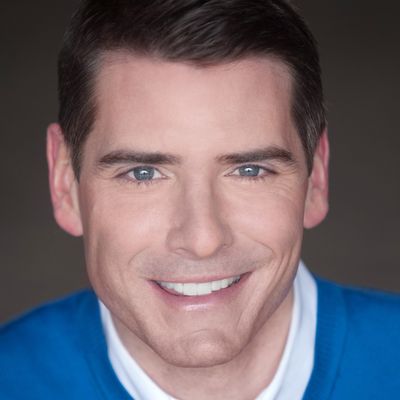
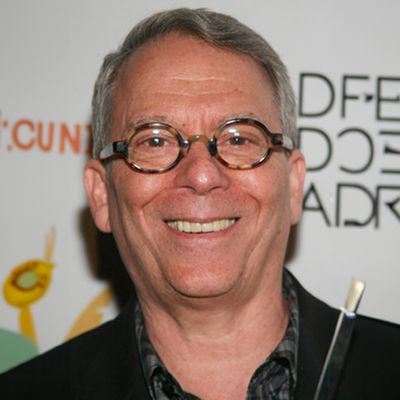
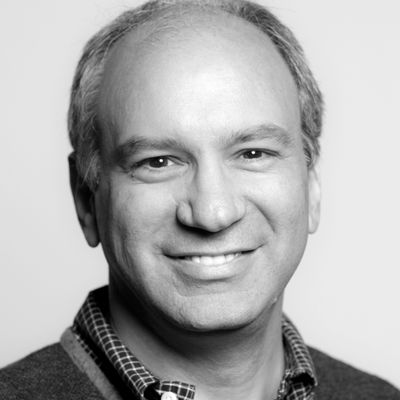
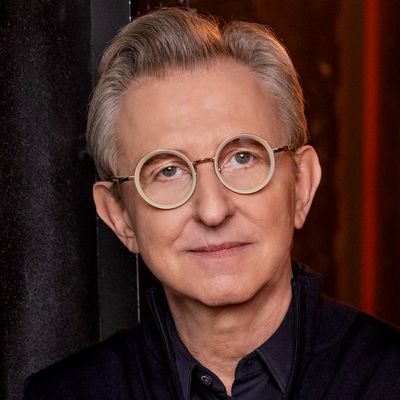
Guests

Featured Shows

About
The magic of Broadway isn't just about dazzling sets and captivating performances. It's the songs that truly elevate a show, leaving audiences humming melodies long after the curtain falls. This episode takes us through the enchanting music and the lyrics of Disney's ALADDIN, exploring what makes its score unforgettable.
We'll explore the unique collaboration between Alan Menken (Composer), Chad Beguelin (Lyricist/Bookwriter), Thomas Schumacher (Producer), Danny Troob (Orchestrator), and Michael Kosarin (Music Supervisor). Their mission: to revisit songs cut from the animated ALADDIN and create brand-new material for the stage production, making ALADDIN’s Broadway score soar.
Transcript
This transcript was automatically generated and might contain errors.
[0:00] Frank DiLella: Welcome back to The Magical Making of Aladdin. This is episode 4, The Music of Aladdin, and I'm your host, Frank DiLella.
[0:35] Frank DiLella: When it comes to making a Broadway musical, one of the key things that has to be good is the music. And in a Broadway show, songs often express characters' feelings and thoughts more powerfully than spoken dialogue, all while serving the purpose of enhancing character development and advancing the story. Sounds easy, right? But before the songs can ever get into the hands of the orchestra, the songwriting process has to begin somewhere. In the case of Aladdin, it was a very conscious choice by lyricist and book writer Chad Begulin, composer Alan Menken, and chief creative officer at Disney theatrical group Tom Schumacher to start at the beginning by re-examining the songs cut from the animated feature, which were originally written by Alan Menken and the late Howard Ashman. Here's Chad Begulin, Alan Menken, and Tom Schumacher.
[1:24] Frank DiLella: Chad, take me back to the very beginning of the songwriting process when first adapting Aladdin for the stage.
[1:33] Chad Begulin: We had done an in-house reading. There was no talk of Broadway or anything. So I did a draft, met with Alan Menken, which was thrilling and nerve-wracking.
[1:42] Frank DiLella: First time meeting?
[1:44] Chad Begulin: First time. He said, you know, I have an ulterior motive. I want to get as much of the cut Howard Ashman lyrics into the stage version. So that was what the main task was, to sort of get these songs in and make it seem as if they were always, you know, it was always meant to be this way. So it meant adding characters and getting rid of characters.
[2:03] Frank DiLella: And Alan, what about from your perspective?
[2:05] Alan Menken: It's the very first thing I do is to go, how are we going to fit in as many as possible of the original songs we wrote? Everyone was on board with that. And Chad Begulin was fantastic at working with that.
[2:28] Alan Menken: Music has such a magic power to change people's moods and influence how they perceive what's happening right in front of them. Of course, while pushing the story forward at the same time.
[2:40] Frank DiLella: Alan, in the case of Aladdin, how did you lay out the songs not only to tell the story, but also to impact how we're feeling in those moments when the songs are playing?
[2:50] Alan Menken: Here's the journey, here's the character, here's the world. Okay, first, what world are we in? Opening number, Arabian Nights, setting up where we are, the tone of Arabian Nights, we're setting up the tone of the storytelling and the irreverence of all of this. And we're setting up that we're going over the top stylistically. You get to one jump ahead in the Broadway show, also beyond that, Babkak, Omar, Aladdin, Kassim. We're setting up these characters who are charming street performers who have nothing. And among them, this vulnerable boy, Aladdin, who meets this girl who's impossible to be with. So you're setting up where Aladdin wants, I know I'm more than this. Then, Proud of Your Boy, and there you're just saying, I'm going to make something of myself somehow.
You get to, obviously, Jafar and his evil intentions, and those songs are just really to move story along. But you're also just establishing the fun of the interplay between Jafar and Iago, which is the best comic element, really.
[4:40] Alan Menken: And then you get to, oh, I'm in deep trouble. I'm in this cave. What's going to happen? And then boom, and the Genie arrives. Once we get to the cave, it's time for Friend Like Me, arguably my favorite number in the show. Of course, it's always a showstopper, too. A new journey begins from that point in terms of their friendship that attaches itself to Aladdin's overarching, I'm going to make something of myself. Tell the truth. Lose the princess. Keep the princess. Live a lie. I know that I was a louse. Hole in the World. Well, there you have the situation where you know this is what the audience has been waiting for. So I hate to say it, but we do have an unfair advantage over a lot of other musicals, and it's like, bring us this song.
And that's a lot of, frankly, the adaptations of the animated movies have been, we know they're waiting for these moments. But how do you do a Hole in the World in a way that will thrill an audience? Because that's an almost impossible task. First of all, you've got to get to the moment where it all falls apart horribly for Aladdin. And then with the help of everyone, he brings it together. And also, what is his most vulnerable aspect is what actually wins the day for him. So there's a lot of nuts and bolts that go into creating an experience of a musical. Besides simply dramaturgy, it's also serving all these various needs for the audience.
[6:30] Alan Menken: Let me share this whole new world with you.
[6:37] ♪ Musical number: "A Whole New World" — performed by Alan Menken ♪
[7:01] Frank DiLella: So I want to dive into Aladdin's three sidekicks for a minute. Babkak, Omar, and Kasim. Since one of the biggest changes from the Seattle production to Broadway, what we now know, was deciding to have the genie tell the story to the audience instead of them. Chad reminded us what the three characters did in the original version in Seattle.
[7:19] Chad Begulin: We had all these reprises of Arabian Nights that sort of told the story. So we used Babkak, Omar, and Kasim to open the show. They sang Arabian Nights and then every so often they would come in and sing into the reprise because it was Howard's work and we wanted to get Howard's work in. It was sort of really, you know, we were testing everything. I remember Tom Schumacher saying, I want these costumes to be falling apart on the last performance. We're here to see if the story works.
[8:19] Frank DiLella: Tom Schumacher, going to you for a second. Didn't you say this in a conversation you had with costume designer Greg Barnes?
[8:19] Chad Begulin: Chad, get me to Toronto because Toronto was the next production after Seattle and the pre-Broadway production for what we now see.
[8:23] Tom Schumacher: Greg Barnes, who I've now done three shows with and I adore. You know, he was going to stores in Long Island and buying stuff and I said, Greg, I don't care if these costumes fall off people by the end of the run. They don't need to last. But the idea that we didn't build anything to be permanent. We were there just to see the show, just to learn the music and the text and make sure the narrative worked.
[8:27] Chad Begulin: Yeah. I mean, there was a huge shift in, well, budget. So all of a sudden, you know, we had this spectacular flying carpet that we had to all, you know, swear to secrecy. I mean, it's real magic.
[8:40] Chad Begulin: It's magic. It's pixie dust. There were some new designers brought in and we'd done work on the show. We still were trying to keep most of the Howard work. And after we opened, we finally realized, you know, we can't keep these reprises in and we can't keep telling the story this way because the reprises would tell the story and then we would act out the scene. There was a lyric about the evil vizier and he lives right here. And then we would, you know, we're, the audience was 10 times ahead of us, you know, just where it was, you know, they saw it coming. So we decided we're gonna cut that device. You know, Alan was reluctant, but he knew it was necessary.
[9:16] Frank DiLella: Alan, as happened in Aladdin and usually what happens during the development of a musical movie or show of any kind, songs obviously have to be cut, but don't often get the chance to be brought back for a new adaptation. Does it hurt at all when you have to cut songs? Is that why one of your goals was to bring back as many of the cut movie songs as you could?
[9:37] Alan Menken: Well, first of all, wait a sec. It's not like you're throwing it in a cup, you know, and burning it. It still exists. You just got to try something else. I mean, I learned, I learned a lot. I mean, going back to when we cut We'll Have Tomorrow from Little Shop of Horrors. I love that song. That was a heartbreaking song, but it just simply, we needed to lose it so that suddenly Seymour could really land. Like, oh no, Cutting Things is our friend. I mean, you could go, oh, what a shame. All right, but no, let's just try writing something else. One thing I tell any young artist, I mean, the biggest thing you can learn is don't ever fall in love with your own work. Don't ever. You can let others fall in love with it, but the musical is bigger than you.
The team is bigger than you. The idea is bigger than you. The most selfish thing you can do for yourself is to recognize that you are not the most important thing in this process and use the team as a protection. Throwing something out or putting something aside is no problem for me.
[10:41] Alan Menken: Where any of the songs or rather were any of the characters easier to write for than others and is there one character in particular in Aladdin where the music just came right out of you?
[10:58] Alan Menken: Well, the genie is, forget about it. I mean, the new song we wrote for the genie in the Broadway show with Casey and Chad and it was like we were playing basketball with ideas. It was so much fun. You know, that character just is so celebratory and that character loves to sing. So it's whenever it comes out of that character's mouth, it's just like it's something to write a heartbreaking song for the genie to say how disappointed he is about something. That might be a little hard, but the genie is just so irrepressibly happy and it is a solid moment. If you have a sense of who the character is, it's no problem writing a song. Then it's simply a matter of figuring out the moment. And there are characters that have been very difficult.
You know, in the animated movie of Beauty, I wanted a song for the beast. There's no way to get a song for that beast, the animated beast. But maybe the biggest song in the Broadway show is the beast song at the end of act one. So it's also a matter of the medium and the easiest moments of genie. I'm in the mood to help you do. You ain't never had a friend like me.
[12:16] Chad Beguelin: Going back to you for a second. We know from the previous episodes that the character of Jasmine really went through a large series of changes, both while making the film and the stage production. Can you just talk a little bit about that? Originally in the animated feature in early, early development, Jasmine was not the love interest. She was just sort of a whiny character that was not at all romantically linked to Aladdin at all. And that obviously changed completely. So I tried to make it work by having her see that these suitors are going to, she's going to be forced to pick one of these suitors to marry. So she pretends to be this horrible, obnoxious person. Obviously that's not what we see now. So what happened? You could just feel the audience not liking her. You could just tell. And so that was another conversation we had with Alan and he said, well, let's write a new song. So that was when we came up with These Palace Walls. Which is her I Want song.
[13:18] Chad Beguelin: It's her I Want song. And Alan does what Alan does. We were, we all went up to his hotel room and it took him about five minutes to write a beautiful melody and everybody's crying and going, this is amazing.
[13:34] Alan Menken: Really, how long did it take you?
[13:36] Alan Menken: The hotel was right next to the Mervis Theater in Toronto. Literally walk out the door of the theater, walk 10 feet or something, or 20 feet into our hotel. Up to my room, I had a keyboard there. Okay, what are we going to do? And we knew we wanted to get it, I mean, lightning fast. Okay, she has all these things she has to do. And I just sat and noodled at the piano quickly. And I am fast that way. I feel like things come through me once I know the mold. And musically, it kind of happened within minutes. Not minutes, maybe, yeah, minutes. And then I took it back to my hotel room. He records it on my phone. And I was thinking, what would Howard Ashman do? And I thought, well, it's somewhere that's green.
It's somebody that's stuck somewhere and wants to be somewhere else. We had the song done within hours, because Chad's very fast. So good. Chad Beguelin is so good. Got it to Danny Troob, the orchestrator, and to Michael Kosarin, and conducting it, and boom, in the show. And that's what we do. And we get used to that. Obviously, expanding the character of Jasmine considerably was important, giving her a musical heartbeat. And that came in that moment where we had to race out to the theater, writing new songs for Beyond These Palace Walls.
[15:15] Alan Menken: All right, time for a quick commercial break. We'll be right back.
[15:27] Alan Menken: I mentioned in the beginning of the episode that songs basically begin just as music and lyrics. But they're normally not complete without the full orchestral arrangements being added. Two people by the names of Michael Kosarin, or Kaz, as he's widely known. And Danny Troob added the final polish to the songs, making them fully complete. Kaz, you wear so many hats with Aladdin. So what exactly do you do?
[15:53] Michael Kosarin: So I am the music supervisor, one of my hats. But I also, I arrange the songs.
[16:06] Michael Kosarin: The vocal arranger.
[16:08] Michael Kosarin: I arrange the vocals. And I also write the underscore, the interstitial material.
[16:14] Alan Menken: Danny, and tell me your official title here at Aladdin.
[16:17] Danny Troob: Orchestrations by.
[16:19] Alan Menken: Got it. So you're the orchestrator of Aladdin. The two of you having worked with Alan Menken for what, over 30 years now? You must have some amazing stories. And, you know, just talk a little bit about, you know, being in the room and what that dynamic is like. I mean, thinking about Alan Menken, I grew up on The Little Mermaid and Beauty and the Beast and the Aladdin animated feature. I mean, this music changed my life. And then, of course, being introduced to Beauty and the Beast in 1994 on Broadway at the Palace Theatre. Again, an epic moment of my childhood. What was it like crafting and creating these scores and getting them up and running for the stage? Starting with, of course, Beauty and the Beast. What was that like for you, Kaz?
[17:02] Michael Kosarin: Well, first of all, I have to say, just listening to what you're saying, if I had a nickel every time I was sitting with Alan Menken at dinner somewhere and somebody walked up to him and said, you are the soundtrack of my childhood, I would have a lot of nickels. It would be hard to walk because it's just all the time. You know, Alan writing fast. I mean, look, there are lyricists Glenn Slater, with whom Alan has written a lot, says he once brought a lyric in to Alan at the piano and just went into the bathroom and came out a few minutes later and Alan literally had written it. Alan can be very, very, very fast. And he actually says, look, if you're going to labor over something, if you're going to labor over a melody, it's not going to be great.
[17:52] Michael Kosarin: Why do you think the songs Alan writes consistently work so well?
[17:57] Michael Kosarin: Yes, Alan had, when he was younger, a really drop-dead gorgeous singing voice and he made his living as a jingle singer. So he composes his melodies playing and singing. He doesn't write his melodies at the piano. The singing instinct is there and I think that's one reason why they sing so well. That's kind of the first thing that I do when I look at his music, at his demo, because he does write for his own voice. So the first thing I do is look at it and say, okay, we're going to lose that modulation here. Would you consider something a little different here where it jumps up the fifth? I know it's a great melody, but would you consider maybe finding some other way to convey the same kind of things?
[18:33] Michael Kosarin: From a technical standpoint, can you break down the process of working with Alan? Like, does he write a melody and then he hands it off to you? What is that process for a layman who is not immersed in this world? What was the process for Aladdin?
[18:47] Michael Kosarin: It's changed enormously over the years. I used to go to his house basically every time he had a new song. And he would sit and he would show me and he would play it for me and we would discuss it. Then it would be, you know, cassette and FedEx. And now really the way he presents music to us is through demos.
[19:10] Alan Menken: Kaz, what do you mean by demos? Doesn't Alan do this thing where he'll use existing songs in a particular style as examples of how you can evoke a specific type of emotion?
[19:20] Michael Kosarin: He always has sort of an analog of a group of songs from a genre and he'll say, it's meant to function like this song. Think of it sort of this way. It's, you know, whatever. And so we have a good idea of where he wants to head on it. But he's very, very open with, you know, once that is done and I've discussed with him, I then discuss with the director, you know, what direction are we taking this? How is it functioning? Because how it's functioning in the show is everything. What's it going to do? How does it fit into the show? What does it accomplish? And so, you know, I start to build the arrangement on that along with the dance music arranger very, very often together. You know, one of us might even take the lead on it. Then once that is done and once we have that in rehearsal and once we have keys chosen and once figured out, you know, the ins and outs, blah, blah. And then it goes to Danny and then he takes it from there.
[20:12] Danny Troob: And then what's the next step, Danny?
[20:14] Danny Troob: I review Alan's demo, Kaz's sketch, Glenn Kelly's sketch.
[20:20] Michael Kosarin: Glenn Kelly, who did the dance music arrangements, right.
[20:23] Danny Troob: I look at video of rehearsal. I think about what I think the song is trying to do. I create an amalgam of the versions plus my input. And as I start to do my orchestration, I have to think about what the song will do for the show, what the experience will be like for the players, what the experience will be like for Alan hearing it. Will he be satisfied and still think it's his? What the experience will be like for Disney? Will they think it's entertaining enough for the paying audience? And then there's me. If I don't think it's good enough to make me happy, it's not going to be good enough to make anyone happy. So there's a period where there's just a lot of thinking before notes are written, even if that's just one day. It's a hard day because there are a lot of people whose needs need to be considered. And, you know, sometimes they're all in a
[21:23] Alan Menken: Sometimes they're not. When that happens, at least until someone tells me to change it, I get to decide, you know, what is this thing going to be? Taking songs that were written for the film and inserting them into the stage production, that's what we call trunk songs. You know, was this an instant lift or did you have to rework them? What was that like? It's totally new. In many cases, the songs that were cut from the films are songs I had never heard. Often they were never got to you. They were cut in the storyboard stage. Got it. Maybe even before I was hired for the film.
[22:06] Alan Menken: So you never orchestrated "Proud of Your Boy"? Not until I orchestrated it for the stage. I remember not liking my own orchestration.
[22:11] Frank DiLella: So you went back to the drawing board?
[22:16] Alan Menken: It was a good lesson for the stage production. I was telegraphing too much of the emotion. You know, it should be beautiful, but it should be casual. The audience shouldn't know how much they're supposed to feel it until he gets to the crescendo. Try hard to make you proud of your. And then it opens like a rose. You can't give them anything before that.
[22:50] Chad Beguelin: Because we're actors, you know, we're actors. We're telling the story as much as an actor is. If an actor, I mean, that's like, you know, acting 101. If the actor cries, the audience won't cry. So I think what Danny's saying is very, very similar.
[23:04] Danny Troob: A hundred percent. I mean, you're playing with feelings. You're painting the feelings for us as the viewer, as the audience member. Let's say I've probably heard that song more than anybody alive. Yeah. And it's still my favorite.
[23:18] Alan Menken: Wow. It's a beautiful tune.
[23:22] Danny Troob: Yeah. It's just very, very satisfying. How about you, Danny?
[23:26] Chad Beguelin: It's my favorite song in the score. "Proud of Your Boy."
[23:31] Danny Troob: It's so emotional. It is. He's been such an action hero. He's leaping around. You see no vulnerability at all. And then you see this raw vulnerability in the music.
[23:39] Alan Menken: Barry Howard.
[23:44] Chad Beguelin: Yeah. Just make you see something you didn't think you were going to see.
[24:05] Alan Menken: When you guys are working on films, lots of musicians are there at your fingertips to create these beautiful scores and these lush sounds that we get with these epic moments in these Disney animated features. You know, seeing the obvious here on Broadway, these orchestras are a lot smaller. And yet just going back to Aladdin, I feel like this is one of the biggest pits on Broadway still. And the sound that you have coming from the pit is amazing.
[24:32] Frank DiLella: Again, from a technical standpoint, where I'm sitting with you two great music men, how does that translate from film to stage in capturing and yet preserving the sound of something like Aladdin?
[24:41] Danny Troob: It's really impossible. I don't know how I do it. I look at the assignment and I think about it and I knock on a door that I don't normally knock on and answers are provided by something that I don't know what it is. I listen and I go along with it and I write my orchestration. When I don't knock on the door, there's not even a door there. One thing that's important is to have chosen the right player, you know, the right instrumentation at the beginning. For Aladdin, I was adamant about no matter how small the orchestra, I want three trumpets out of 18. We reduced it later to 15 and I still insisted on the three trumpets. I felt that without that, I couldn't make it exciting enough. And then as it got more and more Gene Krupa jazzy, it turned out to be utterly essential just for the style.
[26:01] Alan Menken: And by the way, I should clarify when he says when it went to 15, he means for a tour or another country.
[26:04] Danny Troob: I gotcha. It's still 18 on Broadway.
[26:11] Frank DiLella: 18 plus conductor. I mean, that's one of the biggest orchestras. I mean, especially even with this season, you look at the shows that are opening much smaller. It's gotten trickier for people like Danny to make a sound with a smaller group.
[26:18] Danny Troob: But it sounds so full.
[26:25] Frank DiLella: It sounds so full and the sound is great. We'll be back with more secrets about Aladdin's music right after the break.
[26:39] Alan Menken: What's the secret behind the long-lasting music of Aladdin? Because the music hasn't gone anywhere. Some of it was introduced in 1992. More was introduced with the stage musical and it has not gone away. There are a bunch of shows with good scores through history that have not worked. And they have great songs and have great scores. And I think the most important thing is that through history that have not worked and they have great songs and have great scores. And I think the most important thing is telling a great story through the music and great emotion. And I think one of the things that we can say about Aladdin is that it does both of those things incredibly well. And I think that's what brings people back to see it.
[27:25] Chad Beguelin: I think it's an old formula that is not much honored these days, but was honored by Alan and Howard, where the show delivers great entertainment in some songs and great emotion in others. You know, you laugh, you cry, you go home happy. It's a journey musically. And a lot of contemporary writing is one note. And often the more experimental and daring a show is, the more all the songs resemble one another. You know, they understood the variety show part of entertainment in a way that is certainly not fashionable, but that is extremely effective in that people love, particularly people who haven't been told that they're not supposed to love it.
[28:28] Frank DiLella: Thinking about the history of Disney on Broadway and all the young folks who have experienced the Disney shows over the years and have been introduced to the theater. Do you ever think about that? That like you are providing this entryway into the world of musical theater, and these kids are growing up and loving it. And we see it. We see it on social media. We see it on TV. Musical theater has become such a thing. And I think so much of it can be attributed to Disney on Broadway.
[29:00] Chad Beguelin: We have an Aladdin who was born either 2001 or 2002, right in there, which is, you know, Beauty and the Beast will have been in its seventh or eighth year when he was born. To me, it's hard for my brain to kind of hold on to something like that. They come in and they talk to you and they talk about how they grew up. I mean, you know, you talk to adults who talk about being, you know, little kids when they encountered the work that you have done early on, and it becomes almost profound in a way. You know, it's something you don't, and it sneaks up on you. Believe me, it sneaks up on you. So it's pretty wild. And I hear people talking to Alan, the adulation, and rightly so, but they grew up with this and that it really formed. I worked with music directors who I've hired, and they say the same thing, you know, that they grew up with this music, and it's, you know, some of them say it's the reason they got into it. And that's, it's very moving, really.
[30:01] Alan Menken: So, think about that first time you heard "Proud of Your Boy" played by a full orchestra. Cosby's hands up, and the first strains of "Proud of Your Boy" start to play. It just killed me. It killed me. I'm just weeping. These little seeds that we plant, you know, with a little piano demo or something, and then dreams come true. No wonder I work for Disney. Dreams come true. But it's amazing, those moments, you know, when something comes to life like that.
[30:34] Frank DiLella: And with that, we conclude this episode of the magical making of Aladdin. Be sure to get tickets to see Aladdin the musical on Broadway or any of the international productions by visiting aladdinthemusical.com. Special thanks to our guests for this episode, Chad Beguelin, Alan Menken, Danny Troob, Michael Kosarin, and Tom Schumacher. Stay tuned for the next episode, which brings you exclusive behind-the-scenes access to everything that went on backstage, on the red carpet, and beyond from the 10th anniversary performance that happened on March 28th, 2024. This episode is produced by Dory Bernstein, Alan Seales, and Kim Garris on behalf of the Broadway Podcast Network in partnership with Disney Theatrical Group.
Audio engineered by Alan Seales and Sarah Goodman. Edited and sound designed by Alan Seales. Additional production design and content edits by Disney Theatrical Group. And Natalie Ott and Molly Barson from Situation Interactive. And I'm your host, Frank DiLella.
[31:40] Frank DiLella: I will try to, try hard to make you proud of your boy.
© Broadway Podcast Network, All Rights Reserved