

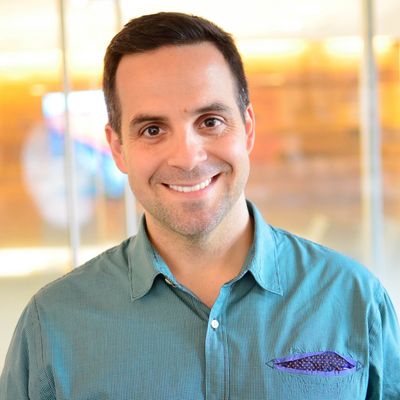
Damian Bazadona is the founder of Situation Interactive, a digital marketing agency spotlighting see-it-to-believe-it experiences for the top brands in theater, arts, travel, tourism, film, television and sports... Read More
From the show: The Producer's Perspective Podcast with Ken Davenport
Guests
Featured Shows
About
Damian Bazadona is the founder of Situation Interactive, a digital marketing agency spotlighting see-it-to-believe-it experiences for the top brands in theater, arts, travel, tourism, film, television and sports. Over the years, Damian has worked with many notable brands including Stoli Vodka, The Metropolitan Opera, HBO, Major League Soccer, Wicked, and the Ad Council. His agency has also been honored with numerous workplace awards from Crain’s, Best Companies Group, Cynopsis, Digiday, and Fortune. Cynopsis also honored Damian with the Social Good Leader of the Year and HR Visionary of the Year awards.
It wasn’t too long ago that the most buzzed phrase around the biz was “The future of advertising is online.” Broadway (and the rest of the world) got swept up in the digital marketing revolution so fast that our head is still spinning.
You should listen to this podcast if you want a lesson in how “tech” can help theater expand its audience (and how it can help your show), but what I love about Damian is that he’s the industry’s top digital mind . . . yet his ideas, his initiatives, his campaigns are so rooted in classic, ol’ school marketing.
Listen in to hear . . .
- What Damian has in common with Al Gore.
- How he got more Twitter followers for a Broadway musical than a major brand and major celebrities.
- Where he was and what he did to boost If/Then sales when John Travolta butchered Idina’s name on the Oscars.
- Why Broadway should give away 15% of its inventory every year to kids who can’t afford it, and why it wouldn’t cost us a penny.
Keep up with me: @KenDavenportBway
Transcript
This transcript was automatically generated and might contain errors.
[0:09] Ken Davenport: Welcome back to the Producer's Perspective podcast. If you ask people in the industry what is one of the biggest changes we've all experienced over the last couple of decades, everyone will answer one thing: the internet. They'll answer that frankly, even if they don't know what the internet is. But that's the one big change, the one thing that's changed the most or the industry the most over the last couple decades. And when you think about it, we're all living at a very unique moment in history since we all witnessed the birth of the internet, how it's changed the world and of course the business of Broadway. Well, today on the podcast, I'm lucky enough to be talking to the guy that taught Broadway how to use the internet. Uh and that guy is Damian Bazadona, the president of Situation Interactive, the industry's leading digital marketing company. Welcome, Damian.
[0:55] Damian Bazadona: How are you, Ken?
[0:56] Ken Davenport: Some of Situation's clients, well, how about that little teeny tiny show called Wicked? Never heard of it, right? Or that little company named Disney, or maybe that thing on the Upper West Side called the Metropolitan Opera. So those few clients will give you an example of the type of company that Situation is. They are leading, leading the charge in bringing Broadway into the 21st century. Uh what's really cool about Situation and what demonstrates how much of a pioneer they are in the space is they are one of the few theatrical vendors out there that has broken through and into other areas. Situation has worked on projects for USA Television, Museum of the City of New York, and even last year's Super Bowl. I mean, how cool is that? Yet despite all those high-profile gigs, they still keep their feet firmly planted on Broadway, and that's because of the passion of their founder, Damian, who is here to talk to us today. So Damian, first question. You ready?
[1:49] Damian Bazadona: Let's do it.
[1:49] Ken Davenport: Some people say Al Gore invented the internet. On Broadway, I actually like to think of you being the inventor of the internet. So you are the Al Gore of Broadway, I've decided.
[2:01] Damian Bazadona: Thank you.
[2:02] Ken Davenport: So we're gonna get started with a very, very difficult question. Is how did you get started in the Broadway space and especially with technology in Broadway?
[2:13] Damian Bazadona: I have uh Ben Mordecai, who's uh for those of you who don't know, is a producer from many years ago, connect with me uh probably around my first show I worked on, I got connected to uh was really uh King Headley was the first show that I really got connected to. I have don't have a background in theater. Uh in fact I'd probably seen two Broadway shows my entire life prior to working on King Headley. I I've seen I waited for about I got tickets to Lion King, which I had to wait a year to actually see. I got the for I don't know for Christmas, and then I didn't have couldn't go until the next January. That's how hot the ticket was. And I saw I'd seen Rent and Phantom around that time, maybe two or three shows at most that I'd seen.
Um I have a my background is I've uh sort of been live, I'm a live entertainment junkie in my DNA. Um and I was a DJ and promoted nightclubs when I was like 15 all the way to my early 20s. So I it's in my DNA live entertainment as a whole. So I tripped into my connection into it was I tripped into I'd done I was connected, I did some small projects in theater, but really King Headley was the first thing that really drove me into the industry to learn about Broadway as a whole. Um, and that really was my connector in. And I so I worked on that, and I remember again, like so first I was the guy that wore the tuxedo to opening night, and there was essentially three people that wore a tuxedo was like August Wilson, me, and Ben Mordecai, because I thought you wore a tuxedo to opening nights.
So I'd learn quickly. I was the guy that would get there. I got there a half hour early, because I thought you were supposed to. So I came in like true fish out of water, uh, and but have fell in love. It's my favorite it's it's what one of the best gifts that have happened in my life to have sort of been introduced to theater.
[3:52] Ken Davenport: And do you think your perspective about not being a theater guy has given you greater insight on how to better it in terms of its marketing?
[4:01] Damian Bazadona: I think so. I mean I think that the I I think um yeah, I do. Because I feel like I'm not as connected now, I'm connected to the industry, but I'm connected to the people. I've all I get a drive off of looking at um the pulse of the audience. So a lot of times where I sit in the theater, I want to be able to see the audience, feel the audience. I that was what really drives me personally. I love the rush to the live experience. Um so I yeah, I think just and I I I think there's a a certain piece, because I think most people aren't, right? Most people aren't as connected, but like we're all on the inside. Uh, and I think most people aren't. And I think when you could talk to people, going to Broadway is a big deal for people in their lives.
Like, so if you think about the average person that I know in the industry, they haven't bought a ticket on a ticketing system maybe ever. They just haven't gone through the process. They probably see 10, 20, 30 shows some a month, never mind a year. So I think the the idea of respecting the tradition, uh, and understanding the mindset of what it means to go be lucky enough to go to Broadway Experience, understanding that and valuing that, it's kind of hardwired into my brain because m in my whole life, most people outside of my theater life are not they're they're once a year bugger. It's a big event for that. So I think understanding that mindset, it makes personally allows me to respect it more, and then I'm lucky to get to work in this industry because it's it's awesome.
[5:18] Ken Davenport: So King Headley was what year?
[5:20] Damian Bazadona: Well, when did you start with your I want to say around 2000 and 2001? Somewhere in that period of time.
[5:25] Ken Davenport: So what were you doing then? Were you doing was it s the online revolution beginning? Is that where you started? So what was your what was your day-to-day task in 2001 for online marketing or digital marketing?
[5:37] Damian Bazadona: Well, first so King Headley was the first show that I worked on, and I'm I was part of another company at the time. I had I had a business partner in another company at the time. And I remember I went to one of the ad meetings. It was at Sereno Coin. There was probably 25 or 30 people sitting around the table. And my business partner looked at me, and I think this was like months before the production started. And it was by a three-hour meeting, two or three hour meeting. And my business partner looked at me and said, No way, I ain't doing this. I'm not because we didn't even know what our payment structure was, we knew nothing. So I'm not doing this. So shortly after that, not because of the show, I ended up splitting up with that business partner.
And part of my agreement when leaving was saying there was a couple clients that came with me. One of them was King Headley. And so that was really when situ was called Situation Marketing at the time, and I split off. King Headley Broadway was one of my first clients when I had started Situational Marketing. So I I think that so back then I was a one-man band. Like I would literally make the website, I would do all the promotional outreach. Like I would go. It's really in theory, it's not as much it's not as different strategically then as it is now. Strategically, it's all based on marketing principles. Who are we trying to find and how do we go to try and find them? The significant difference today, obviously, is the toolkit I have has just changed dramatically.
But back then I was I was a one-man band. For the first three years, it was a one-man band. I would build the website, I would do all the marketing and media, I would like use my credit cards to buy media, I would do everything, essentially by myself for the first and and that's where I learned how to program. And I kind of I just learned I'm self-taught up by a lot of those pieces of the market and I have a marketing out of bachelor's and marketing degrees in my background. So I know the marketing technology, and just was fortunate enough to kind of pull those two together to do problems. So I did it for about three years.
[7:14] Ken Davenport: What did you what were shows even do I don't even remember, of course I was involved with them. What were we doing from an interactive?
[7:20] Damian Bazadona: So we would buy like so think of it. We would buy Google search, like we would do Google was a big driver then, but there were other search, like Yahoo, Google, a lot of the similar players were around. We did a lot of promotional ones and things were starting up. You'd be able to do a lot more like on trade, and it was just a lot the online in 2000, 2001 had not really established currency. Like the the advertising platforms, there was no like set reads. It's kind of a wild west. So we could do anything. I would go like it was it was essentially just banner advertising, it was search marketing, it was like grassroots. I did a lot of like grassroots type promotion stuff. Things that I couldn't do anymore now because they charge for them.
Right. So we'd be able to go and do a deal, give you a pair of tickets to see August Wilson's King Headley. In return, you give me all this other stuff. That stuff used to go a long way. Now they've monetize it all, so you can't really do the stuff you used to do. Um I have a we did for King Headley, I built a mobile site for the Palm Pilot. Like I still have a picture of it, which I think is kind of funny. Uh but it I I in theory it's not like that type of thing. There's no social platforms, there was no real mobile, you know, mobile didn't come around until over the past five ten years. Um yeah.
[8:20] Ken Davenport: Did King Headley have a MySpace page?
[8:22] Damian Bazadona: Very curious.
[8:23] Damian Bazadona: King Headley did not have a MySpace page. I don't even know if MySpace was around then.
[8:27] Ken Davenport: I don't think so. I think that was actually for the time.
[8:30] Damian Bazadona: Didn't last long.
[8:32] Ken Davenport: Uh so but now you have this, so you have a big agency now, but you're not I I consider you different from the other big three, if you will, in terms of the agency. How how does your agency and your business differ from the traditional Serena Coins or uh the traditional ad agencies of any business, huh?
[8:48] Damian Bazadona: Well, I always say, like, so you have to remember the way we operate the company, we are not just a theater shop, and then in a really good way. So although my love personally is like theater is actually my favorite group of clients. And I and um, but we you know, the agency operates under this principle that we believe the world is a better place when people when uh people are doing things rather than having things, right? Like we believe just holistically, the people we hire and we personally that an experiential things that are experiential are just literally good for society, right? So, with that being said, it kind of informs all the different types of things that we work on. And so everything from so yes, we do a lot of work in arts, culture, theater, um, from like Broadway shows to the opera, the ballet, the dance, but also think of the other experiential brands attractions, the Super Bowl, travel, tourism, um, like certain retail type experiences.
That whole universe, the idea, the art of that. I think so. One of the big differentiators is like we really look at experiences as a whole, not specifically just theater. Which I think really is I've always liked to think of as one of our differentiators. Because our focus isn't our our knowledge set isn't just how do I find a theater person to go see a show. I mean, our focus is always like what are the motivators to get something off the couch or to a location. And for Broadway, our growth path is going to require audience development. Like, we you know, we need mindsets that are sort of looking to find new audiences, and it's like that's really I would like to think of that as really one of our differentiators to the other agencies that are out there.
Um and the other other huge, I would say probably differentiator is we just do digital. If if it doesn't come off of a web server, I can't track it. I'd like I'm reluctant to want to do it. And I feel like everything over time is beginning to move to a web server component for somehow. Um but the other three uh we value as our friends, and I think they do amazing work, you know, and we we work in partnership with them.
[10:40] Ken Davenport: And when you were coming up and saying, hey King Headley, you need a mobile site for the Palm pilot, how much in in this business, which is I always say 10 years behind every other industry, other, how much resistance did you get from we should do this, we should do this, we should do this?
[10:55] Damian Bazadona: I think the thing is it's taken a lot of resistance, but not in a bad way. I think people took people took us in and me in very well. I think the part of it was to be honest, I started when I was like, I was in the room of 25, 26. I was relatively young, and sell trying to sort of create like here's why you need to be doing digital stuff. With a knowledge curve which a lot of people just didn't were digitally native. So you're trying to say oh digital's important digital is important. And I feel like over time, so I think part of this is a trust issue, like okay I need to see and practice. So I play the long game and I try to and I one of the strategies I employ to this day, which actually has just come with maturity over time is that it's we I try not yes we do digital stuff, but I think people hire us for a strategic thinking.
So I feel like over time the way you s the way you get people to feel comfortable with digital is talk to them at a strategic level. And then the tactical things can be explained later digitally. I feel like people get over that. When you begin to talk about people with just and this is the problem with digital like this jargony bullshit right of like blah blah but you start to talk through people I think it just throws up all sorts of red flags which it just is innately happens to anybody. You know what I mean? Like you go to a doctor's office or go buy a car and someone starts talking and literally talking above you or or just with language you don't understand it puts up all types of red flags and so I we purposely try to uh don't like talk about what we do, even back then I still do it now.
Try to talk about that as though like in human language, and not talk down to people. I can literally talk like a human being. Because I understand CPNs and KPIs. Not normal people are gonna talk like that. So we try to, I think so. Part of it is just making it relevant to the people in talking to. I think that is but that probably is the single biggest way that we saw growth happening. Plus the other thing too is if you just look at online purchasing. The the most fascinating thing to me in the theater is the growth of online ticket sales was really a consumer-driven demand. It's not like a bunch of people in the theater business said, let's sit around and find a better way to sell tickets online.
It was consumers forced it. And which just happens in a lot of industries, and it just sort of has improved over time. There's been massive technology improvements. Like I think the ticket assistance will come a really long way, and I'm sure it's very difficult because there are a lot of people to please along the way.
[13:07] Damian Bazadona: Uh so come a long way, but I just think it's fascinating like how fast that happened. That happened really fast. Well my god, I feel like when I was in the business, it was like five percent of sales, which is crazy. Just like bam, bam, bam, you stepped over. So that's that to me is is sort of exciting. So part of the trend just sort of forced us front and center. Um and and I the other the other thing to what I would say is just for the it's it is this business is all about relationships, and it's the long game. And I think it's how you treat every single person you cross paths with. Uh is that's why I've still I still kind of can't believe sometimes that we're still even here. Like I'm happy to be, it's like the industry has allowed me to come in and hang out.
No one's thrown me out yet. And I hope that but I feel more confident in my own skin now, just having to do it long enough. You feel like I've crossed paths with so many people, and I can I go to sleep with a very clean conscience that every single person I hope. Treat with respect and and most people reciprocate the same. I feel like that alone, that's why we were asked. Are you scared about competition? There's all of this stuff. This industry is about relationships, so it starts there, and and I have to do great work. What about the relationships, which should take years to want to run. Let's talk about some of that great work of of the past decade or so. What have been some of your most favorite initiatives that you've you've pulled off here?
Whether, you know, whether the one I remember, of course, the Next to Normal tweeting the entire show out when Twitter was still kind of blowing up. But that's just one example. What are your favorite initiatives that you can do?
[14:35] Damian Bazadona: Well, I think but the I think the Next Normal one was great for just for two reasons. One of the basic ideas for is is just how do we take the script that we took the story of Next to Normal and literally delivered it to Twitter. Which I thought was a a way of when you're trying to bring new audiences to the table. I think the idea of bringing the actual show itself in a new form onto a new platform at a given moment in time is exciting. And the results showed it, like the amount of activity that got around that. I think that concept to me was very exciting. And then watching like to hit a million, yeah, I mean we had more followers than Starbucks. It was it was crazy, like how fast that picked up.
And it's like, you know, like you got lucky, right? Some of these came together. It was that part was exciting. And also the with, you know, David Stone looked when we had the conversation about it, it was it was no it was just great that we agreed up front that it wasn't about hard selling tickets, it was about storytelling and the tickets would follow. Just everyone's on the same page. So that was that to me I had such a great memory of because it was an innovative thing. Producers supported it and really helped drive it, and the whole team got behind it. Like that did work. Um I thought we put the camera in hair, we put a camera in hair. At the end of the show, everyone goes up and they dance, and I thought we had this idea of how do we put the camera in where you can then every night record people dancing on a stage, which is like a an amazing experience to say you dance on a Broadway stage.
People pitch themselves couldn't do that. You know, so the idea of the half this video they had to be able to record it every night and capture that and then allow people to share themselves dancing on stage at hair through social channels and just watch that response. Like you saw traffic double, you saw a whole bunch of things happen. That was exciting to watch that play out. And also behind the scenes, Joey Palms, a whole bunch of people pushed so hard to make that a reality. That took a lot of like, hey guys, we're gonna throw a camera into here. How do you feel about that? Like a lot of people put a lot of effort to that. That to me is exciting. We have like all these people come together and do something big.
Because it opened the door to all other types of opportunities. Um I'd say those are the two of my favorite. I think the my personal one of my one of my other favorites is we worked on um reasons to be pretty and reasons to be pretty about sort of the whole, I think what is he calls, he says his girlfriend looks normal, you know, normal or regular, whatever it was in conversation, but the whole the idea of the show is about you know vanity and a bunch of other things. But but during the show, we we launched a social experiment, which I love this campaign for range of reasons. Before the show started, we said the show's gonna start the voice of God comes on and says, uh normally it says shut your cell phones off.
Aura said, uh, before the show starts, uh, we'd like to do a social experiment with you. Um take your cell phones and text the word pretty for to 42903 to get started, and and people text in. And then it hits you back with a question that says, on a scale of one to ten, how good looking do you find yourself? Uh one being Kara Top, ten being Angelina Jolie. So let's just say you reply back with seven. And then it hits you back with another text message and says, now look around the theater and pick another random person. Uh and how good looking can you find that person? So you say seven or eight, whatever you say. And then it says, Great, now shut your phone off and we'll tell you and enjoy the show.
And then as you walk out of the show, everyone gets a text message that says, just so you know, the average person found themselves better looking than the person sitting next to them. And what I what I love about that campaign, it got like that on some nights we get 25% of the house playing. That is an enormous direct response number, like off the charts. But the thing that I just I've always felt this way about theater. I just feel like what I feel like, which is my hope is where I think things are going, that there's no relation. I wish the communal component, the communal conversation that's happening on pieces of road, I wish there were more platforms to share that community piece and real time talking.
Like when I saw doubt, I was looking around the theater and go, what did everyone else think? You know, like so imagine you can visualize that and show that in an interesting way that night of how the people, or you go to a show and you kind of go, who else is around? Right? Like imagine if you could tell tonight there was 34% of the theater was, you know, whatever, from your hometown. Like, you know, whoa, tell me about the history of my seat. Tell me, you know, there's something about that communal element that the curation of the audience is as important as the curation of the stage.
[18:40] Damian Bazadona: And I think that so, yeah, those are those are like anything that you remember that you loved and thought was really gonna work and then just didn't. Anything that you were disappointed in and that, you know, I often talk about look, you never know, you come up with great ideas you come that don't work or really the ideas that you think are never gonna work, and all of a sudden it explodes. Well, we did it, we did a test for Spider Man, which um where credit card free reservations, where the idea was they had an enormous theater and a fair amount of inventory that was locked in. So the idea was well, what about if we allowed people to use or sell cell phone to uh text in, but and essentially have we did on the website too, where you can reserve a ticket without putting down a credit card.
And because because it didn't really matter to me. If you were on the fence and you said, Oh, I'll reserve a ticket, the ticket was gonna go dead anyway, right? So you're gonna reserve a ticket. We thought this idea was kind of interesting because the average site only converts like three, four percent of the site. So you're kind of going, you have 95% of people sitting on the fence. So give them like like a restaurant, gotta get a ticket. Well, you know, why not? And we did an initial test. The response, once if you entered in that reservation, the response, the percentage of you showing up was through the roof, but sometimes it was 50, 60%. You put your cell number in, you literally showed up at the theater like you said you were going to.
And we were like, wow, this could be enormous. And we really pumped it, and it never hit the volume of people doing it that I thought would have. I still think we're testing it now in different markets. I think there's something there. I admit sometimes I can fix it on an idea, and I can't get off of it, so I just kind of keep pushing, pushing, pushing, and I feel like I want to figure this out. Um, but I think that's it. But I I mo most I I'd say 99% of ideas don't fulfill my vision of where it could be. And but I'm good at sort of uh two things I think we're good at. One is we are very clear with clients on person trying to hedge the risk that we're doing. So we'll we'll create an idea, but we'll find efficiencies to say, even if this is a bust, there's still so many people here are the opportunities that we're gonna make sure we that happen, right?
And our clients know that in advance. So part of it is like we try there's really there's a lot of interesting ways, and I think you're amazing at this, actually, too, too, this idea of like how you can minimize risk on things. I think that's important because that's part one. And then the second thing is I have a very short memory purposely. I don't really give a shit about what didn't work. Like I care because I'm gonna learn from the sake. I know in the back of my mind instinctually what will work and whatnot, but I try, I feel like if you I I'm on to like the like I take it as a win that we lost. Because you kind of have to, because the money's gone, the thing is spent, and as long as we were clear, I always have the same thing you're clear on a huge idea, just be clear of the risks unfortunately.
Because if I can talk to a client and go, hear the risks, we all know it, we're all in it, and if it's huge, great. And if not, so be it. As long as I have that conversation, they sign off, then I can doesn't matter. Because we're both in it together. And if there's no get these are that's what I love about producers, they know there's no off. There's no how can I guarantee that? Someone was asking me the other day, Dan, you sure it's gonna work? No. No. If I was sure, I'd have you know, I'd create 20 line case, you know.
[21:43] Damian Bazadona: So yeah. And something I talk about being different today other than 10 years ago is the speed requirement to reacting to the market, though. Consumers move faster than they ever have before. And one of the best examples of that was uh the if then phenomenon at the Oscars. Can you describe a little bit about what happened and how your team responded to that? Because what from what I know and hear, you were really helpful in using what happened at the Oscars to your advantage.
[22:14] Damian Bazadona: Well, first off, that is a great example because that's all just about communication and planning. I think that's the biggest thing, and that's what um is just good on that show in particular. Um, the team is just well or it's a well-organized machine. So we knew, okay, so Adina's gonna be on the award, so that's great. So then all that happens is it triggers a whole set of things, and then you're prepared. So that room, you know, our main conference room turned into a war room that we were prepared. We had like five different people set up, and we had to sort of prepare for you just don't know what's gonna happen. And I wasn't even there. I was at home. I was watching it at home, and when, you know, when Travolta, it's just you're sitting there, and you're like, I looked at my wife, like, well, I don't even know what what who was he talking about.
I just couldn't even really believe it how fast. But instantly our team was like off to the races, and we had photocar created, we had a designer in there. Like, you literally had a staff of people that can do all the functions that are needed, like a good photo card, a copywriter, the social expert, we had all these different components. And then within seconds, it was fired off. Like we had all these different things in action. So I always think about it, it's like the speed in which that happened to me is the is the more impressive thing. So it's difficult to run an agency like that, with a it with that in mind. So your point is like spot on the speed in which these things happen. I I I one of my favorite examples, I work on uh Rock of Ages.
They were performed in the Super Bowl during a couple performances on the site at MetLife Stadium. And uh between sets, I'm walking with uh one of the cast members who's in costume, and I'm walking with myself, my head of client services, and one of the cast members, and we're walking back to their changing, which happened to be right next to the red carpet, and as we were walking straight towards the red carpet, Mitt Ron was walking right towards us. No security, no nothing. My head of client services says, this all happens within five seconds. Mitt, knit, knit, hey, hey, do you mind taking a picture? And sure enough, Nitt puts his arm around the actor and look it's and they kind of give a big sort of smile and say, say cheese, click.
Got this great picture, and it's it's Mitt, his wife and the actor. And uh within seconds, we had a post to Facebook was like the left and the right coming together, uh, and posted with it. I mean, that whole thing. So think about that. That was not like that was my head of client services. It wasn't like a creative strategist or something, who took the picture, who had the insight, Jeremy, said, I'm gonna take this picture, the actor knew exactly what to do. We sat there, we wrote the course, and the producers gave us the freedom to post. Like, so think about that structure. That's like incredible, right? So part of it is just, I think part of it is we try to create a system here that just builds trust and understanding the brand. That's why it's important to really understand your clients and have trust of your clients. But like that speed, imagine like an important structure.
[24:50] Damian Bazadona: Yeah. So where do you think uh the theater is going in terms of its use of technology over the next 10 years? What's the the next big thing, the next current thing? The next big thing is because theaters are now connected like they've never been before. So, in a whole in a whole range of ways. The fact that look at variable pricing and how the speed in which that begins to happen, right? So even the the there's no like house boards that have like the price, you know, the the price there's just literally you got uh Wi Fi in the venue, like all these different touch points have just literally changed the entire thing. So the fact that we'll we're more connected, I think what's exciting is the best is yet to come.
So, like, so part of me feels like the in-venue experience, for example, is gonna become just there's a lot of opportunity. Right? So, theaters now, by the end of this year, I would say about 75% of Broadway will be connected, like literally Wi Fi connected. So think about what that means. That means you can go into a venue, you could now obviously get Wi-Fi like almost like tilt, like a bathroom or anything else, like all these theaters are gonna have that. But now all of a sudden, when you walk in, I can dictate if you've been here before. Let's just say you're a subscriber. We could say, oh, subscribers get exclusive content, they're gonna have quarter drinks. You can do all these different things. You could do because you're also the way we're setting it up, there's like the actual internet speed, like on closed area network. I can have camera, I you can do the canvas is unlimited.
[26:13] Damian Bazadona: So what we're trying to do is how can we make technology enhance the experience? It's not really, I don't want technology to get in the way of the experience. And that's where a lot of the conversation goes to. People go, ugh, Wi-Fi and the venue now, everyone's gonna be on their phones. It's actually, in many respects, the complete opposite. Because a lot of the clients that we've worked with, Wi-Fi goes on during certain periods of time, we shut the Wi-Fi off once the show starts. So it actually blocks. It literally serves as a vehicle to tell people stop. And think about all the different things you could do. It's just, it's really exciting. So we had a range of conversations of what that could mean.
We've had a range of conversations of what virtual reality could mean, certain tests and trying. But I think we're going to this like canvas of like really cool testing, which is just about to start happening, which we weren't able to do in the past. This idea of like the ability to have how we have it's really like the access to the data, which is kind of exciting. That we just never had before. Ticking systems now have what are called these APIs that allow these things to sort of center out. So I think the canvas, the speed of innovation, is gonna start to really go quickly. Um that's the exciting part. And the venue owners are onboard. You could get a sense that there's like this feeling of like, okay, we don't want to be punk-wrong.
And then and irrelevant could be that doesn't mean that's why I always get nerfed not nervous because this conversation always goes to a place of, oh man, technology's gonna kill this the you know, the live experience. I fundamentally disagree. It it will kill it if we allow it to it. If you use technology as a vehicle to improve it, it could be it could and should be an amazing experience.
[27:44] Ken Davenport: So you obviously work with a lot of producers, and what I love about you, and then you've described how theaters about relationships and you have fantastic relationships with everyone in this business. You've managed to push the business into a new era, but at the same time, not piss anyone off in the process, which I think is amazing because you you've helped the industry as a result of that. So you've worked with all these people. I'm sure you have your favorites and your least favorites. I won't ask you to name names, but not on the record anyway. But tell me about what the characteristics that you think a good producer needs to function today, not ten years ago. What today or even tomorrow's producers need in order to be great ones.
[28:24] Damian Bazadona: Well, okay, so I A, confidence. This is probably by far in the way, if you ask me all the attributes, is confidence. Because confidence wins in it comes into everything. It makes all so the average producer, think of how many people you're overseeing in one way, shape, or form. You are the leader, right? So you've got all the cast and creative team. You sit in these rooms and you kind of go, holy cow, we have these like big meeting groups. There's like a hundred plus people walking around. And that producer is a leader. And that confidence is everything. Come hell or high water. So confidence is probably the first thing. The second thing is having a really strong, smart team around them. That's generally how I judge people.
I can just tell by the people that kind of hang around and people that are around them. Really great producers generally have a I'd say a very solid the solid team around them, because they have to know they can't know the answers to everything. They need to like kind of just really delegate. Because that's that's the thing that just kills. The thing that I think kills kills the productions is too many decision makers. It just crushes the process. Because what it does is it roadblocks speed. Think of how much we talked about with speed, and you have to just be nimble. Because this is what no plan survives first attack in entertainment. That's like goal number one. And then all of a sudden you have these opportunities and these threats that just land on your plate.
And the ability you need to you need to have an infrastructure and team that sort of can go quickly and do what they have to do. But I think it's like clear lines of command. So even if there's multiple producers at the let's say there's multiple producers, there's one decision maker, and they're empowered to be the decision maker. I think I I would say like those are I'd say confidence, leadership structure, the right team around them. Um I think those are the the big ones. And and personally, for for me, I think uh uh a sense of not just kindness, but kindness and respect and give the team members respect. I've always felt like most of the people that I've seen over the years, people I have the most respect for is they talk to the most junior person in the room the same way they talk to the most senior person.
And they have an art to do that because the reality is the senior people sit at the table and they gibber jabber what's gonna happen, but the junior people behind them are the ones doing the work. And when you have, like I've got people that work, I mean, I I was exchanging emails at 3 4 in the morning last night. So we're going all day, all night. I can't make somebody work till three, four, you know what I mean? They have to want to do it. And you'd be surprised at how people that that really is amazing. When I have a good producer that kind of rallies the team, you'll get a lot out of your team. And how you do anything is how you do everything. So it's like if that producer does that really well, it's gonna be the same on the creative team, they're gonna write down the line.
And not to a point of like being a doormat, like not it's just like just kind or respect, it's really more respect than kindness. I don't think you're gonna be nice. I just need to be respectful. And I think that respect was a long way. And I've seen producers not do that, and all that happens is they get up, they walk out of the room, and then they're gonna move to something else. So it does not really. And it's easy to figure away in this business in some respects, because it's infrastructure. You know, they would say, Oh, yeah, of course we're doing that. I can give you a she, I can give you 20 things that I'm doing to fill out a report and make you feel like it's good. But you want people who are like really giving a shit.
[31:35] Ken Davenport: If you were producing a really small show, or someone came to you and said, Damian, I've got a really small show, I'm trying to get it on the market, I've only got a few bucks, what would you tell a young producer or playwright that was self-producing their own work to do to get the word out there?
[31:50] Damian Bazadona: Well, I think I'm a stunt guy. Like, I mean, I th I know I think you fall in this can too. Like I I don't it's it's hard. Like if I were self-proning there's no one answer to that as much as to say I think I don't think it matters how much money you have. I think an idea I've never correlated big ideas with dollar signs. And we're sort of in the same team on that. I think it depend it's about being disruptive but true to who who andor what you're trying to say. And I love that. I mean like yeah I've got there's tons of examples I could think of but it's just like doesn't cost much to you know you could do this there's there's I I think those are the the the two the kind of core things about the science.
Like you can't um but and if I were I think it's first off the most important thing though, which I feel like sometimes this gets lost in the mix, create an amazing show. And just because a that is all that matters. I have so many so many people who I've met with that start with why the the size of the audience that's gonna like the show. And that is just I just think is it's it's red flag to me. Because if you it's very difficult you I tell a great story. You tell if you got a great story and you invest in it, people will come. You have to believe that. Because the reality is if you don't have a great story, you don't stand a chance. So I think that that's the biggest thing. I tell young producers if you got something great I would do that and and honestly every single person that walks in the theater I treat.
Because you can do that. I don't see that simply go and shake every person's hand in a small meeting. Thanks for coming. Go well. It's really cool you did that. You know, like that's a great answer, especially coming from someone who's built a business and a career on being so digital. You went to online, offline, offline communication, shaking hands, which is what I say all the time. Like, our job is to get people to have to go to a physical location and have an experience live. We still have to focus on this stuff regardless of how many ad words we buy and websites we have.
[33:45] Damian Bazadona: No, I totally agree. I totally.
[33:46] Ken Davenport: Okay, last question. I want you to imagine that the genie from Aladdin shows up on your doorstep and says, Damon, you've been a very, very good boy. I'm going to grant you one wish. You can change one thing about Broadway. Anything you want. Only one. The thing that keeps you up at night, drives you crazy, makes you mad, whatever it is you want, but you only get one thing to change with a snap of the finger. What would you change?
[34:20] Damian Bazadona: That there's never an empty seat. And I have qualifiers to that. But I would say that it that it's it's the thing that makes me the most frustrated, but most frustrated, is the fact that we have as many empty seats as we have when there are so many people who would give uh they would give so much to have satin medicine. And that's in that it just kills. And you walk around and you see it, and you're like, this is just horrible. And then I can go, we work with a fair number of schools, and I could tell you, I could the the teachers there, the faculty, the people in the kitchen, they would die to go see that show. And it just kills me that those seats just okay. It's a waste. So I'd say that would be the one I'll change.
[35:19] Ken Davenport: Any ideas on how to do that?
[35:21] Damian Bazadona: I do. I do. I think we need to start on recognizing the first place to start is recognizing that two million seats are gonna go dead every year. Period. Just is statistically the same every single year. It's flatline. Every year, 15%. Any 15, 14, 13, 18, 15% goes dead every zero. So if we accept that, then all of a sudden there's an argument to be made. You could start taking those 15% of tickets and take them off the rack and begin to think about these 15% tickets from a point of view of audience development. Because it changes the dynamic. Because right now you get zero for me. So then all of a sudden it becomes the the value, it's it's like the value of that ticket is based on the audience, not necessarily like on the ticket price, right?
So how do you value that audience now? So it's just kind of fascinating. Because if you accept that, because that's just math, right? So the median show, I don't know, the median show is gonna have that 50%. So imagine you're a show coming into the fall. Would you take 15% of your inventory? Taking it off sale, and you're gonna charge your marketing and advertising teams to say, who is it that we actually want in college? Because these again, the back of your mind, these tickets are dead anyway. We're not getting these, just needs to be gone. It's also interchangeable the dynamic. So that doesn't mean you need to give them away for free, but the conversation goes, oh, that's interesting. I want to get this type of person.
I want to get this type of person. And they're never, and right now the barrier to those people generally coming is we have a ticket price that they don't value. Yet we want them in the venue. So flip it around, you kind of go, how much am I willing to pay for that person? It doesn't have to be that. It's all incremental. It kills it. And that model is, I think it should be very interesting. So then you start to go into the different markets, and then that to me is the path for audience development. Because you start to look at that and you're gonna go, wow. All of a sudden, like I I literally have conversations with people. I'll say, I want to buy a ticket. I'm raising money to buy tickets for the show.
And they'll say, our student rate is $45 a ticket. And I'm like, I can drive a truck through your orchestra. And we're and I and I can't get you the like the 45, or I'll get you the 45 or whatever it is. But the reality is I know I'm not the only person. They're turning away people for no reason. And I understand why, because there's a feeling as though it's going to distress other portions of the ticketing ecosystem lost revenue. It's just you gotta stop that. And also, and the way we currently, I can go on this forever. The way we think about audience development is like it's last minute. So we're gonna have tickets next Thursday. How can we get seats in the venue? How do we get people in the venue?
And it's just crazy pants to me, because I could have told you that a year ago. And there is a chance, a chance, small chance, that you might be that hot show that defied that. So what was the risk lost? You had put in people that you know would be great ambassadors for that show, so that's the risk loss. If you're that hot, that five or ten percent would be picked. So it's irrelevant.
[38:21] Ken Davenport: So I think that's that's all too. And I think all of you out there listening right now can see why Damian brought us into this uh into this decade and why he's gonna certainly bring us into the next one. That's a fantastic answer about audience development. And again, it has nothing to do with digital, which is why Damian's such a big strategic thinker, and why, to your point, you think uh clients come here, and I agree. Uh, thank you so much for being with us. All of you out there, thanks for listening again. Don't forget, send any suggestions you have for future speakers, and go on to theproducersperspective.com, subscribe so you can make sure you don't miss out on the next podcast. Thanks so much. We'll see you then.
© Broadway Podcast Network, All Rights Reserved