

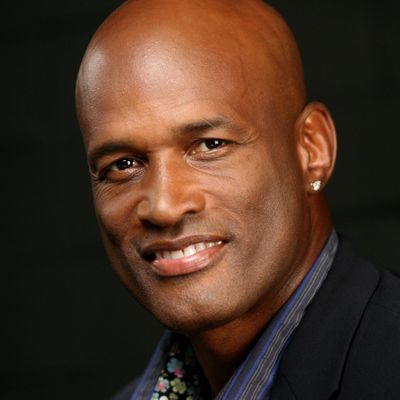
Kenny Leon is a director notable for his work on Broadway and in regional theater. He gained prominence in 1988, when he became one of the few African Americans to head a notable non-profit theater company as the artistic director of Atlanta's Alliance Theatre Company... Read More
From the show: The Producer's Perspective Podcast with Ken Davenport
Guests
Featured Shows

About
Kenny Leon is a director notable for his work on Broadway and in regional theater. He gained prominence in 1988, when he became one of the few African Americans to head a notable non-profit theater company as the artistic director of Atlanta's Alliance Theatre Company. In 2004, he directed a revival of Lorraine Hansberry's A Raisin in the Sun, starring Sean Combs, Phylicia Rashad and Audra McDonald. He also directed the Broadway premiere of August Wilson's Gem of the Ocean. He was nominated for a Tony Award in 2010 for Best Director for his work on August Wilson's Fences. He has also directed plays at the Cincinnati Playhouse in the Park, the Huntington Theatre Company in Boston, the New York Shakespeare Festival, and the Goodman Theatre in Chicago among many others. In 2014, he directed the Broadway revival of A Raisin in the Sun for which he won the Tony Award for Best Director of a Play. In 2015, he directed the live musical The Wiz for NBC. He once again partnered with NBC for Hairspray: Live!.
Listen in to hear Kenny talk about all the things a Director needs to be in the 21st-century, as well as . . .
- What he did when a teacher told him he shouldn’t be a Director.
- How he taught homeless people how to act.
- Why all Directors should try their hand at acting.
- Telecasts . . . the beginning of a revolution and why.
- How we’re doing on diversity, and what he would tell future Directors of color.
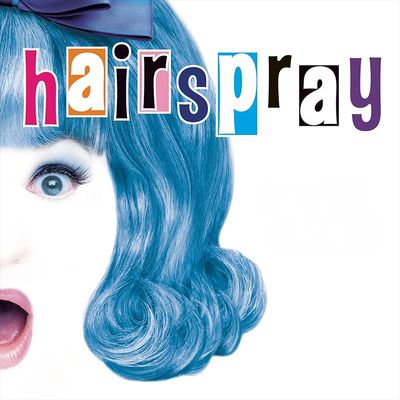
Oh, and don’t forget to tune into Hairspray Live! this Wednesday, December 7th at 8 PM ET n NBC!
Keep up with me: @KenDavenportBway
Transcript
This transcript was automatically generated and might contain errors.
[0:00] Ken Davenport: Hey everybody, if you haven't found the perfect holiday gift for the Broadway lover in your life, don't forget to check out Be a Broadway Star on Amazon.com. Read those reviews. You'll pick up one for your friend and probably for yourself as well. Be a Broadway star.com. Now on with the podcast.
[0:15] Ken Davenport: I wanna be a producer with a hit show on Broadway. I wanna be a producer. Hello everybody, Ken Davenport here. This is the Producers Perspective Podcast, the National Touring Edition, because once again we've taken this podcast on the road. I'm speaking to you from the back lot of Universal Studios in Los Angeles, where I'm not allowed to take any photos because we're on the set of Hairspray Live. And I'm in the office of today's guest. Please welcome to the podcast, the Tony Award-winning director, Mr. Kenny Leon. Welcome, Kenny.
[0:46] Kenny Leon: Hey, it's good to be here.
[0:48] Ken Davenport: So Kenny won his Tony for the revival of Raisin in the Sun, which also won the Tony that year for Best Revival, starring Denzel Washington on Broadway. He also directed Stickfly, The Mountain Top, The Tupac Musical, Holler If You Hear Me, Fences, Radio Golf, and many, many others. He directed The Wiz Live on NBC. And like I just said, he's in the middle of rehearsals for Hairspray Live coming up and was the artistic director of Atlanta's Alliance Theater. Kenny, where did you get bit by the theater bug?
[1:14] Kenny Leon: Well, first of all, I was just saying that now I'm an artistic director of True Colors Theater Company, which is a theater of diversity, and I'm very proud of the work we do there as a small theater in Atlanta. But I think that I got bit probably in church. You know, listening to stories in church. And I remember when I was really young, we were in a program called Upward Bound in St. Petersburg, Florida. Me and Angela Bassett. And it was a program for low-income families who had college potential. So from ninth grade on, I was taking classes in theater and math, science. Every weekend and every summer I had to spend on a college campus from ninth grade on. And so I remember Angela Bassett and I ended up doing praise.
We did a play called Sun Gone Home and she played my mother, even though I was older. So you know I've always had it in church, had it in the Upward Bound program. When I got to college I met people like Senator O'Jackson and his wife with Tanya and Spike Lee and I were in the same class. So during that time it was sort of like a mini Renaissance in Atlanta, you know, University Center, where the college performances were the professional black theater in Atlanta. So you know it was an opportunity to learn theater to get involved in it, but at that time I was a political science major. So I was a political science major with a theater minor. I actually went through a little bit of law school for like half a year.
But you know I looked a certain way at certain times where I was doing television commercials and started acting. I left law school and started on an acting journey and then one day I directed a play called The Wishing Press and I was like, "Whoa, that's what I want to do. I want to do that." You know, I was a pretty good actor and still try to act every two years or so I can, you know, be able to challenge people like Denzel or Sam Jackson or Audra McDonald in a room to say, "I know what you're feeling 'cause I've been through that process," but I just get so much more out of directing. You know, you have a chance to help people become bigger, to step into bigger shoes, and I love being a part of that process with the actors and with the designers.
[3:21] Ken Davenport: When you were in this Upward Bound program and with the people around you going like, "Oh, he's gonna be a doctor, he's gonna be a lawyer, he's gonna be a physicist." No, no, no, I'm going to the theater.
[3:31] Kenny Leon: No, I didn't know I was gonna go into the theater. When I'm in Upward Bound, I was like, "Oh, I'm gonna be a congressman." I actually was a we could use you about right now, by the way.
[3:41] Ken Davenport: Well, you can use me now, but the answer's gonna come from an artistic world. So, you know, Hairspray is the big beginning of my revolution. That's a demonstration of what the world should look like, what our country should feel like. So that's the beginning of the revolution.
[3:55] Ken Davenport: I love it. I love it. In a sentence, describe what a director's job is to you. What's your job? If you had to write a job description in the classifieds.
[4:03] Kenny Leon: Oh, that's crazy, man. And it's different for every project. But for me, a director is a therapist, a psychologist, a teacher, explorer, a doctor, and a father figure. So it's all of that into one. And for something as massive as Hairspray Live, you literally, you know, you have to get all those actors and there's over fifty actors, not counting the extras. And you're trying to get them all to go in one direction, trying to have them have the same tone. And for this, it's not a play, it's not a film, it's not television. It's a little bit of all of that. So you have to find the right speaking voice for this. So I get everybody on the same page. I have to make sure I get rid of all the warts early on.
That's the main job of a director, to disguise the warts, you know. So if you can't change them or get the actor to get rid of the warts, then you have to hide them by the way you move people, the way you change the rhythm of lines or something like that. Ultimately, I'm the chief collaborator.
[5:08] Ken Davenport: And you just jumped into directing when you directed that first play. Where did you learn to be all these things? Were you trained? Did you have a mentor?
[5:15] Kenny Leon: What it was that, you know, I mean when I was in, I was at the Academy of Music and Theater in Atlanta, remember this company and where some actors, most of us acted, but then some of us were given the opportunity to direct. And the artistic director, Frank Without at that time, he was a great friend, he passed away a couple of years ago. After my first foray into directing, he said, "Well, Ken, I just don't think you have the skills for directing. I think you should just we would love to have you back as an actor. We love what you do." And I said, "It's time to leave." And I didn't know what I was gonna do next, but it was time to leave because I felt I did have the skills to direct. And so I ended up being right on that one.
[5:58] Kenny Leon: Yeah, for sure. But then I was also thereafter I applied for a program because during the time at the Academy Theatre, I did things like I learned how to teach workshops in prison. So I went into the prison system and worked with the prisoners and taught them acting skills. I worked with the homeless population, did something called People of the Brick and taught homeless people how to act. And then I applied for this program, it's the fellowship for directors through the NEA and theater communications group and I got that. And what made me stand out was the fact that I had worked with these different groups as a director in addition to acting in Hamlet or directing Death of a Salesman or you know things like that.
So that's sort of, so when I spent that year as a director fellow, it was one of the best things to happen for me because it allowed me to observe Princess Stanford Navasky at center stage. That's the year I met August Wilson, that's the year I talked with Lloyd Richards and got really immersed in this whole idea of the regional theater movement. Then once I was offered the associate artistic director's job at the Alliance Theatre and then a year later being named artistic director as a part of that gig, it's important for me to at least spend one slot a year directing at some theater in the country in addition to running the Alliance Theater. So I would go to Milwaukee Repertory Theater, Arena Stage, San Jose Rep, Mark Taper Forum, Harper Stage.
So all those years in my earliest, I was still learning about directing and how to be an administrator as well. And then after about eleven years of running the theater, thirteen years total, I decided that I was spending too much time on the administration side and I was raising a lot of money, but was losing myself as an artist and then I decided to leave. And then that same year I was offered two Broadway shows, which I could never have done if I was still running the theater. So you know that's a short story of it.
[7:59] Kenny Leon: A lot of Broadway's best directors, a lot of you A-listers came from being the artistic director of major nonprofits. We had Jack O'Brien on a few weeks ago and Dev Mack. Why do you think being an artistic director trains you so well to be a successful Broadway director?
[8:15] Kenny Leon: I think the regional theater and serving as artistic director trains you for Broadway because you see the entire picture. You understand the mind of producers. You understand where the money goes, you understand how to balance the budget. You understand how important the art is, so you get to see everything and you get to work with every department. You get to work with, you know, you're responsible for the costume department and the production department and the technical director and you work with the development director and you work with a board of directors. So you sort of, it's like running a regional theater is like running a small Broadway show. So you know you can compare both. So it's like I understand Broadway better because of my time running a fifteen million dollar a year regional theater.
[9:03] Ken Davenport: You worked with a lot of incredible people on your way up. Any advice you got from people back then that you still think about today?
[9:09] Kenny Leon: Well absolutely, but you know the great thing also about regional theater is you get to because you were hiring a lot of directors. So you get to know the other directors in the field and you get to see a lot of sensibilities and the different ways to attack material because you know you don't have to just look at what you do, you look at a wide variety of what people do. So on the way up I met a lot of people. I met, you know, people like Irene Lewis who was at center stage working a lot when I was there and she was like, "Kenny Leon, you're gonna end up hiring all of us." And I was like, "What?" So it was great. And Lloyd Richards, who was always questioning, "Make sure you know why you're doing it.
You know why you're doing it." And I remember giving the advice to the board of directors who hired me. They said, "It's great because he's hot and he's young now, but are you gonna be there when the subscription goes down or when it's a challenging play that you don't want to produce?" And by him saying that to them at that point when my subscription base did go down, my board of directors was prepared because they had to talk to Lloyd. And then I remember like August Wilson said, "You know, just he said, 'Well, I see you're doing more television and more film and I know you'll never leave the theater because that's the meat. But he said just remember when you're in the television world, remember that, you know, we're the filler.'" And I was like, "What?
We're the filler?" We always thought of commercials as being the filler, but you have to be able to tell your story within their meat is the commercials. So you have to make sure the story works after the commercial. So always remember that. So it's like, okay, so even when as I'm doing Hairspray Live, we're like, "Okay, we want that first commercial, we got to have that as late as possible because we have to hook them, we have to engage them in the story so they want to come back and see what we want to give them."
[11:03] Ken Davenport: If you can only direct one type of show for the rest of your life, what would it be? New play, revival of a play, new musical, revival of a musical. You can only do one. Your agent says to you, "Kenny, this is it for the rest of your career." Which one would you want to do?
[11:15] Kenny Leon: A new musical.
[11:16] Ken Davenport: Why?
[11:22] Kenny Leon: Because I would have a chance of creating something that the world's not experiencing. That's always great going through that. And there is a wider audience for the musical than there are for the new play, even though I love new plays, but I had to pick one. It's like, okay. Give me the musical, the new cutting edge, different musical to Holler If You Hear Me of the world, you know, Hamilton's of the world, the you know, that only comes around once in a lifetime.
[11:52] Kenny Leon: But you know what I mean, uh so you can explore a story in a variety of ways, you know. Sometimes it's best told through dance, sometimes through songs, sometimes just through spoken words, and you get a chance to put all that together and decide how to give it out. There's not all dependent on the spoken word.
[12:12] Ken Davenport: On a new project, on a new play, a new musical, how early do you like to get involved? Do you like to get involved when there's not much of a script and really get in there, or do you like to wait until the thing is done and baked?
[12:23] Kenny Leon: I like to get in from the very beginning. So I can collaborate with the artist early on and massage it and put that foundation in before it gets too far down the road.
[12:33] Ken Davenport: And you're obviously doing Hairspray Live now. What do you think about this whole live movement? This is your second one, right? You did The Wiz, which was fantastic, and then everyone's looking forward to Hairspray. What do you think about this whole live Broadway getting on television like this?
[12:47] Kenny Leon: I think this live musical event thing is a great revolution to be a part of. I think Bob Greenblatt had a great idea when he started doing these and Craig Zadan and Neil Meron to shepherd, you know, Sound of Music, then Peter Pan, then me with The Wiz. And I like the idea that Fox got into the game with Grease and then now we're doing Hairspray. I think it's only gonna help. Number one, it's gonna give job opportunities to theater artists, television artists, and young people who haven't ever had a job. You know, we—Mattie Bailey, though, is our first big-time job. She needs—waiting for The Wiz is the first job and a first entrance into the profession that we, you know, that she wants to spend her life in, you know, and it also gives an opportunity for people who don't need to get a chance to work together to work together, you know.
So you have Ariana Grande working with Kristin Chenoweth, you know, and that's beautiful, you know. So then their audience sees that Ariana Grande is more than just a pop culture singing icon, you know, or people know that Harvey is not just the theater person, you know. So I love all these artists coming together, get an opportunity to grow their talent. I like the idea that the audience, they see this one-time event and they're like, wow, they want to go see a play in the community, and not just Broadway, and they want to tune in for the next one, you know. I like the fact that it's cross-generational, you know, because it's all about numbers, getting people to watch it. So in our production of Hairspray, we have someone for every decade, you know, we have a ten-year-old, a twenty-year-old, a thirty-year-old, a forty-year-old, a fifty-year-old, a sixty-year-old, a seventy-year-old, and they all have followers on social media, you know, but they're all talented, you know.
So all of them get a chance to merge their audiences and broaden the minds of their audiences, you know. It's like, oh, you thought you liked Ariana Grande, but she's working with Kenny Leon, so wow, what's that guy, Nick? You know, he's doing opera next, or maybe I'll go and see an opera. You know, so it's like, I think it's good for everyone.
[14:46] Ken Davenport: Was it scary the night of The Wiz? I mean, you're such a cool, easygoing guy, but was it scary?
[14:52] Kenny Leon: Yes, it was scary. Yeah. And, you know, like I tell the group now, it's like we can—we, you know, I've been through this, so I'm gonna tell you what you're getting ready to experience now, you know, like you know, it's no flaps now. It's like the days are not stopping. It's like Monday to Friday feels like Monday. It feels like one day. And that's just the way it goes. But I'm still nervous because there's so many things that could go wrong, especially with us doing forty percent more of this story outside. So we go out, we're going from location to location to location. We have to move the talent, either running or on golf carts, and then they have to change clothes, you know, or change makeup.
So, you know, to me, it reminds me it's a little bit of television, a little bit of film, a little bit of theater, a little bit of song, but it's also a little bit of the Super Bowl. So we have to keep everyone in shape, you know. We have to like, okay. So we've practiced, we run our plays, you know, we will have practiced as much as we could up until the event, but we have no control over the wind, better control over the rain. We have no control over how cold it's gonna be or how warm it's gonna be. We don't want to prepare for that. And that's the exciting part of it, and you hope—you still hope you win the game. You hope a lot of people come to the game. So it's exciting like that. It's a tremendous high.
And then on the day after, you say, wow, hopefully we would have reached, let's say, twenty-five million viewers, you know, and they got a chance to see how we want America to be inclusive for everyone, size, race, social identity, all of that. And if we win that, that's a pretty good contribution to the discussion in America right now.
[16:32] Ken Davenport: Yeah, let's talk a little bit about that and about True Colors. Diversity obviously is a big thing on Broadway, and if you read over the last season, everyone was championing how well we did in terms of diversity. How do you think we're doing in terms of diversity on Broadway right now?
[16:49] Kenny Leon: Well, I had a couple of interviews last year and they said, what do you think? And last year I said, well, we just have to wait a year to see if it's, you know, if it's true diversity or it's just happenstance. And I think it's happenstance, you know. It's like, you know, still what drives Broadway is you still have to get good product that people—that producers think people would want to go see. There is some interest in diversity, but that's not a top three driver of, you know, and you can probably see, you know, there are forty-one theaters. So it's like, okay, who's gonna fill those forty-one theaters? I still don't have a home for The Wiz, but we're trying to get a home for that. You know, so I would love the day when I feel that our Broadway community, all of us, where we felt that diversity was a number one or two driving force for the shows that we did.
And I think that if we did that and had a commitment to really diversify our audience, you would see the stories change, you'll see the audience build. And there's not just—it's more than one way to make money, you know.
[17:54] Ken Davenport: So what is something that the individuals out there listening right now, all the people that are all over the world listening to this, that they can do to help this? Is there anything that we can do just as individuals to help try to diversify the theater even more?
[18:09] Kenny Leon: But I think that we, you know, people can write to their local papers and write to The New York Times and write to wherever you can to say what you want to see on the stage, you know. I think that also going to support those things that are on Broadway that you think are interesting to you and exciting, not just because it's a fun musical, because that story might be interesting. I think it's good to take someone else to a Broadway show that normally wouldn't go see the show that we would go see, you know. So the few things that are of diverse interest, go see those, support those. Write a letter at the theater, leave the letter there with the theater. So I think those are some different things we could do.
[18:50] Ken Davenport: What does it take to get you to sign on to a project? Like what interests you? What makes you go, oh, this one I'm gonna do?
[18:56] Kenny Leon: I first get a play, I read it five times, and then if I want to pick it up the sixth time, then that's good.
[19:02] Ken Davenport: Really five times?
[19:03] Kenny Leon: Yeah, I read it five times without thinking about it. So I'm trying to not think about it. I'm trying to read it, read it, read it, read it, read it, read it, read it, read it, read it. Then I go back and look for the characters and, you know. But usually after that second or third time, you really know if you want to do it. So it's the content, the potential for changing lives, inspiring people, the timeliness of it. Even when I look at a revival, I'm saying, okay, what does that say to an audience today? It's like when I did A Raisin in the Sun the second time on Broadway, it was nothing at all like the first time, and I never thought about the first time when I was working on it the second time.
But I felt like the country needed that particular play, and I wanted it to—I wanted a big play to feel intimate. So I moved it closer to the audience and had them feel included in that. So I wanted to put black and white together. So in several ways, I did that. So I'm always thinking about, okay, what's a timely play? What do I feel like I have to do this? Do I feel urgently possessed to present this? And would it, you know, would it be exciting for me to be involved in it for the next six years, a year, two years of your life? And then something better comes along and you say, oh, I gotta leave that project to go to this project. You know, you don't want to do that. So when I say yes to something, it's really like I really want to do this.
I really want to do this because I love what it's saying, I love the potential that it could affect people's lives. I see a few great roles for some actors that may want to be involved with this, you know.
[20:46] Kenny Leon: So, you know, like, you know, I've been working on for a couple of years, I've been attached to Children of a Lesser God, and we're gonna have a workshop finally in December, right after this. And I still think that's a timely thing. The thing with that, you have to—there's a play about a hearing-impaired woman and her ASL teacher. And people always think it's a play about, you know, the hearing impaired, and it's not. It's a love story about two people who are trying to communicate. And that's a universal thing. And I grew in the knowledge of that play last year when I thought we were gonna be on board with this year with him. So I took some lessons, and I took lessons from this beautiful woman who was deaf from birth.
Her two kids are deaf, and her husband was deaf. She taught me every Tuesday in Brooklyn my sign language. And I was like everything I need to know about the play, being with her helped me because we took lessons—I took my lesson in public places. So I met her in a bar, then we went to a restaurant, then we went to sit on the side of a bridge, then we, you know, so we learned everything, you know, by needing to communicate with each other, and she wouldn't let me have any shortcuts. But the wonderful thing about her, she was one of the most beautiful women I've ever seen. So I was like, wow, that's the story. Because she has everything we always want to make people over, and there's no reason to make her over, hence the title Children of a Lesser God.
We want to make people over in our image, and I kept seeing this time and time again. We'll go to say a front desk of a museum, and they would look at her eyes. You know, a guy would look at her, and then when he finds out that she is deaf, then he would slowly turn to me. You know, I was like, oh, or it's like in the play, there's a scene in the play where he's trying to convince her—the hearing guy is trying to convince the hearing-impaired person to have sex the way he sees sex. Yeah, but make a sound. I mean, that's like—you may not need to make a sound. Maybe her way is better. Maybe her way is more intimate, you know, and so I learned a lot through that, so I'm very excited, and I've convinced the producer Hal Luftig, who did Kinky Boots, he—the woman who taught me the ASL, I got her doing the reading, doing the role in the reading.
So it's an African Americans woman, multi-racial. And then I got Joshua Jackson, who was just gonna come in and read. So I got a TV star that I worked with before. So they're gonna—we're gonna do a workshop. I don't know what happened after this, but, you know, that, you know, get a sexy white actor and a sexually hearing-impaired African Americans woman, you know, kinda opens it up in a different way. So, you know, it's a lot of stuff, you know, looking at that and the revival of Proof we're supposed to bring back, and then Zell and I was talking about, you know, we try to go back every three to four years, so it looks like we're gonna try to do something in eighteen or nineteen, probably nineteen.
But, you know, so you just try to keep eight balls in the air and hope you can grab two, and I'm gonna do a reboot of Carl Washington's musical. So they ordered a thirty-minute pilot for ABC, so we do that.
[23:48] Kenny Leon: I got another big TV project that we haven't announced yet. So you can just try to keep working as an artist, keep trying to grow. I wanna do like all of it because it makes me better. So I want to do opera, I wanna do musicals, I wanna do films, I want to do Broadway. And then in Atlanta at True Colors, we're gonna revisit Oliver Hearing, the two-part musical, and I'm gonna go do it with the colleges in Atlanta. So I'm gonna get a small group of students, so I'm doing a master class with all a year, and then I'm gonna put them in the play, and then we're gonna open up one of Tupac's numbers where he talked about the future of young people, and I'm gonna hear their voices, so I'm gonna let Black Lives Matter and those voices get built into the show in a way that matters to Buck's musical. So I think we open that next summer, which could be very, very exciting.
[24:40] Ken Davenport: You work with students and then you work with Denzel. So do you find you have to adjust your style when you work with big stars or unknown actors?
[24:43] Kenny Leon: Well, yeah, it's funny because even with the Hollywood, if you hear me, that'll be a professional play for my company. So I have most of the cast will be professional actors and then this little pocket of ten people will be students. So that's gonna be great. It's no different than working with—I mean, you're different. Sometimes there's more teaching involved than not. But like I said earlier, you know, you're a psychologist too, so the first seven days of anything I'm working on, I'm trying to figure out how the actors process information individually. So if there are fifty people involved in that first week, I'm trying to figure out, oh, that person I gotta scream at, oh, that person's gonna be troubled, that person I gotta take to dinner, that person I gotta teach, that person needs a line reading, oh, that person is an asshole.
Oh, okay, in three days of this person, that's right, I have to fire that person, replace that person with that person. You know what I mean? So it's always trying to figure out who you have on the team and how they process information. And sometimes there's more teaching involved, sometimes more—I think sometimes the best gift that I can give to actors is to get out of the way. I know when to get out of the way. So when working with someone like Denzel Washington or Viola Davis, you know when to get out of the way and you try to figure out if they get stuck, can you help get them unstuck. And the big job is to draw the big picture so everybody knows what parameter we're playing in. This is the ball we're playing in, that doesn't belong here. This is what—you know, so you gotta shake that and articulate that and then be a partner to them and guarantee them that you're not gonna let them be exposed.
[26:23] Ken Davenport: Do you read reviews?
[26:24] Kenny Leon: Once in a while, but I never read reviews until after, like long after the work is done. I used to read them at all, but now I'm able to read 'em because, you know, there are only like a few people that I kind of respect. So it's like, it's sort of no way to put it, you know what I mean? And who do you respect?
[26:41] Kenny Leon: Um, John Law, Frank Rich, you know. Because what I always say is, can a person, can they ascertain what you were trying to do as a director? And if you were successful in accomplishing it, that's all I want you to write about. But if you're writing about like, oh, I saw this in nineteen fifty-nine, and it's not like that, and that's not helping the theater feel. You know, it's supposed to utterly encourage people to go to the theater and make up your own mind. It's not supposed to be, oh, and there's a man standing in the chair clapping. So I got ten claps in the chair, so I'm good. Or I the man's sitting down sleeping, you know. I don't know. So, you know, so sometimes I look forward not to see how the play is doing, but I might read—I want to read what someone intellectually, academically feels about the work, you know what I mean?
But you know, it's like the cast for this. I've said, look, I really don't care too much what the press says on December eighth, but I want to be able to look at the other artists and say, do you have any regrets that we did decide to do? If you didn't give me a hundred percent, then you know, you got some regrets. So that's what I worry about. And I do, but I am sensitive to my greatest nightmare, especially for Broadway or doing a live production is if people leave the theater. I'm not one of those artists. I didn't like if, you know, droves of people left the theater at the intermission, I'm not that guy. I'm always doing it for like the audience. Like I want them to find their place in this story.
So I'm sensitive like that. Which is why the one thing I could never give up probably theater because I can stand in the back on opening or the day after opening. I don't—I’m gonna usually stay for opening. But on the day after opening or being in previews and just feel the collective audience and to see when they lean in and see when they're laughing or see when they're crying is—you can't get that anywhere else.
[28:34] Ken Davenport: Favorite production you've done?
[28:36] Kenny Leon: Hmm. Pretty good production. You know, like I always say, you know, the last one that you did is probably just the favorite one. But you know, for a lot of reasons, I like that production of Fences. And then when I saw the film last week, I was really proud of the work that, you know, that group of people did over—and that they're doing now, so I'm real proud of that. I'm real proud of both productions of A Raisin in the Sun for different reasons, you know, is to see Sean Combs, who had never acted and to be a part of that, and Audra McDonald and Phylicia Rashad to be in the Tony in that category, which had never been done, and then to work with Denzel on this Raisin and to see what that group of people are telling you just in all them did, I'm real proud of that.
Um, so it's like I think I take away something from almost everything, you know, Denise Graves and joining the opera Margaret Garner was—I left it because, you know, Tupac's mother was there and she says, you did my son right, and I'll never forget that. You know, she passed away this year. So, you know, you have a lot to be—I have a lot to be thankful for and grateful to, and I just, you know, wake up looking forward to the next show. Like this Hairspray is like—I do feel that people think it's just a field of music, but I feel like it's a moment in time. I feel it's important and I feel like God gave us the right group of people to work with at this specific time to deliver this. I mean, Jeremy Mitchell doing the choreography and he and I working together, that's unheard of to get, you know, those two people on a project, and Harvey Fierstein—we worked together on The Wiz, now you write this, now you star in this, and I couldn't think of anybody I would want to play Edna in this.
I just can't. You know, when they say Hairspray, I say I gotta have Harvey. You know, I mean, I was it. And then Christian Chenoweth, we know each other, never worked together, and she's like, I feel like I've known you for thirty years. And you know, so it's like it feels really special, and all the young people, they really want it. They're hungry for it, and they're listening to advice, and so I feel a different role. I feel more important. I gotta like be more of a teacher for this. And that's how you can sort of win a Tony Award because then you can say, okay, I won that, but this is what comes with it, so I can tell them what it means to me, how you go about the work, what to expect in the next ten years or whatever.
So it's a real special—it's a real special to Alice Rosinski, who's just a great big camera director. Just so we have every possible area covered at the highest level, and you don't get that already. So it's like, wow. Wow. The only thing that can mess this up is me.
[31:16] Ken Davenport: Advice to people out there that want to be directors?
[31:19] Kenny Leon: The most powerful thing in the pursuit of directing, I think, is observing. Some people don't see the power in that. They just want to direct so quick, and I think that get around someone who is directing, sit in their space and be quiet.
[31:35] Ken Davenport: Any different advice for people of color out there who want to be directors?
[31:39] Kenny Leon: That most of the time is gonna seem like it's impossible. So you really have to have a strong spiritual center. And if you wake up knowing that you gotta do it, then trust that.
[31:49] Ken Davenport: Yeah, I love that story of someone telling you you're not gonna be a director and you leaving. What a pivotal moment in your life.
[31:57] Kenny Leon: Okay, last question. My James Lipton question, okay? I want you to imagine that the genie from Aladdin comes to visit you and knocks on your door and says, Kenny, I want to thank you for all the amazing work you've done on Broadway to advance diversity, working with young people, everything. I want to thank you for all of it by granting you one wish. What's the one thing that drives you so crazy about Broadway that gets you steaming mad, swearing, throwing things that you would ask this genie to take away with that one wish?
[32:30] Kenny Leon: I'm gonna get that award that Jerry got a couple years ago, the Mr. Abbott Award, so I was like been thinking about that. But to answer for something more specific, it would be what pisses me off. I've been doing this TDF program where every year I take a group of inner-city kids, eight to ten inner-city kids in New York to Broadway shows. Then I take them to a restaurant—change restaurants because a lot of them didn't go to restaurants. Go to a restaurant, we talk about the themes of the play. And that's my group all year. And then, you know, I found out that many of them, you know, in the beginning of the year, I'm like, yeah, you gotta go to college, you gotta be in there, and I'm realizing that college is not even possible for most of these kids.
And it's not their fault. And I didn't—I didn't know that until recently. You know what I mean? I don't mean I didn't know it. So I'm like, yeah, if you just work for now—no, no, it's not just that. It's like the neighborhoods you're born in, the schools that are not there for you. And you can't even compete. So when I see these kids I've been working with and I see them the following year and say, what are you doing? Well, I'm working at the nail shop and working at this. I'm good, but you're so smart. Or I meet some of those same kids who are challenged and, you know, maybe some version of autism or different ways, and we haven't worked with them enough to give them an educational life that would be meaningful enough to them, you know, it's just—and then when you try to—even when you try to take these kids in that program to see Broadway shows, sometimes you can't get—I can't give them the experience of sitting in the orchestra.
It's like, oh, well, we got four seats left, and they're on the last row, and it's like that's not even the right experience. I mean, for us as producers and artists and directors, I want to be able to say, hey, I'm Kenny Leon, I just directed on Broadway, we're gonna sit these kids right here, and then that's our future audience, and they'll get it, and you know, but so if I could do that, that's what I would make. In a small way, you know, I know it's a money-making endeavor, but I would say for every show, these kids, and especially in New York and in your cities, that you could get every performance with this, you know, make it possible for them to sit center off, you know, those kids.
[34:52] Ken Davenport: Oh, when I'm producing my next show, you let me know, we'll put 'em down center for sure. Thank you so much for doing this and taking the time out of your busy schedule. Everyone out there, watch Hairspray Live December seventh. It's coming up, just a couple weeks away. Very exciting. Thanks again for listening, and we'll see you all next time. Don't forget the number one ranked Broadway gift on Amazon.com is Be a Broadway Star, the only Broadway board game out there. Go get one for the Broadway lover in your life today.
© Broadway Podcast Network, All Rights Reserved