

Heather Hitchens is a nationally recognized arts leader with nearly 30 years of performing arts administration, policy, and program development experience. She currently serves as President & CEO of the American Theatre Wing (ATW)... Read More
From the show: The Producer's Perspective Podcast with Ken Davenport
Guests
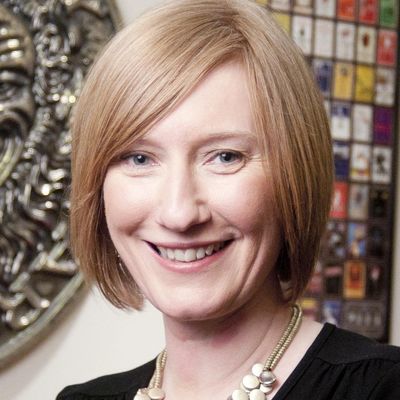
About
Heather Hitchens is a nationally recognized arts leader with nearly 30 years of performing arts administration, policy, and program development experience. She currently serves as President & CEO of the American Theatre Wing (ATW). As CEO, she is charged with maintaining its brand of excellence in the Tony Awards as well as overseeing and shaping the ATW’s other vital grant making, professional development, educational, and media programs. Since starting her work at ATW in 2011, she has tripled the Organization’s budget, and overseen an expansion of its programs that has resulted in a more than triple increase in the Organization’s investment in programs.
Tune into this week’s episode with this super-power of an Arts Administrator (wait until you hear all the companies she worked for prior to The Wing), and hear us chat about . . .
- How she transitioned from behind a drum set to behind the American Theatre Wing.
- What keeps her going to the office every day, regardless of how tough it gets.
- The brand new program at The Wing that she’s most excited about.
- The three things she looks for when deciding whether or not to give an organization money.
- Why commercial and non-profit theaters are more similar than you think.
Have you played the Be A Broadway Star board game? Be A Broadway Star the popular Broadway board game that puts YOU in the spotlight! Pick up yours at: www.beabroadwaystar.com.
Keep up with me: @KenDavenportBway
Transcript
This transcript was automatically generated and might contain errors.
[0:00] Ken Davenport: Okay, everybody, it's the 19th of December, only six more days till Christmas. Holiday season running out. If you still need a gift for the Broadway lover in your life, guess what I'm gonna say? Be a Broadway star.com, best selling Broadway themed gift on Amazon.com and the only Broadway board game there is. Go get it. Be a Broadway star.com. Now on with the podcast.
[0:18] Ken Davenport: I wanna be a producer with a hit show on Broadway. I wanna be a producer. Hello everybody, welcome back to the Producers Perspective Podcast. Very excited to have today's guest with us today. Please welcome the president and CEO of the American Theatre Wing, Heather Hitchens. Welcome, Heather.
[0:39] Heather Hitchens: Thank you.
[0:40] Ken Davenport: So prior to her position at the Wing, which by the way, for those of you who don't know, the Wing is one of the industry's most powerful and important organizations. Heather was the executive director of the New York State Council on Arts, overseeing the distribution of over a hundred and twenty-three million bucks in grants. She was also the president of the National Arts Service Organization to Meet the Composer and CEO of the Delaware Symphony Orchestra. Prior to this research, I didn't even know symphony orchestras had CEOs. So yes, she's a powerhouse of an arts administrator. And I hear that she's also a powerhouse of a drummer. Is that true? Are you a percussionist?
[1:13] Heather Hitchens: Well, I don't know about the powerhouse, but it's certainly how I came to yes.
[1:18] Ken Davenport: Tell me a little bit about that.
[1:20] Heather Hitchens: It's about your as a musician position today. Well, I was one of the lucky people that had music in the schools as well as art and school play. And when it came time to start music, they started usually everybody on violin, and having learned through the Suzuki method with my sister, I was actually a very shy person at that point in my life, six years old. I said, No, I want to play the drums. And they very we were very concerned. We called my parents and said, Are you sure you wanna do this? And they said, let her play the drums. And that's how that started, and then I ended up getting my degree in music at the Congress University and SMU.
[2:00] Ken Davenport: And when did you make the decision that you wanted to slide over from being a performer to the other side of the desk if you will, and working on the administrative side of the fields?
[2:10] Heather Hitchens: It was somewhat practical. I mean, it was influenced by you know my dad was in corporate America, my mom was a teacher who also did a lot of volunteer work. So there was something in me that liked the business side and that wanted to make a difference. And as a musician, when I looked at playing freelance, you know, at that point for profession, you know, orchestras were the best full-time gig you could get, right? And the music we weren't enjoying this time in composition, but it was more was being big profession. So I kind of thought, well, I can either move from big to dig to big or I can try and get new orchestra to count for a little bit. So I and I was kind of interested in the administrative side of things.
But I started after I graduated from college, I worked at a local radio station in Royalstown, Pennsylvania, and there was a woman there who did a culture show. I was doing the traffic, I was a traffic manager, so you know, making sure that you know, super rushing A and B weren't connected to each other on the wall. But she was chit chatting with me, you know, in between me doing the log and saying, you know, you really should go, you know, to the American Music Heather Festival in downtown Philadelphia. They have internships like they need more than you're making here. And I did. And that was my first job in the arts working for Marjorie Samlock at the American Music Theatre Festival, and they were doing all kinds of interesting cutting edge theater and it's just been a great experience.
[3:32] Ken Davenport: And what was it about the theater that got you even more excited about the career of arts? Do you remember the first shows you saw it on there when you were like, Oh, oh this is this is cool. I want to be part of this.
[3:42] Heather Hitchens: I remember, you know, playing in the pit as a musician and just liking being part of you know an art form that brings it all together, right? Brings the visual, it brings it the theater, it brings the you know music, everything comes together and so I like that. You said something about wanting to make a difference. What's the difference that you wanted to make back then or even that want to make now? What do you mean what keeps you coming to the office every morning?
[4:09] Heather Hitchens: Well I think initially it was just how important the arts were to my life from the beginning and seeing over time how that had become more and more of a fight. So wanting every kid to have that experience and then you know I really have the great privilege of working with artists directly over the years and being those, you know, creative artists, playwrights, composers, choreographers, especially including my owners I mean composer and I realized you know the risk that they're taking and you know how hard it is to do what they do and how rewarding it is for us to receive what they do and I wanted to be part of making that happen.
[4:49] Ken Davenport: So tell me about the Wing. What in a nutshell what I always say to people like imagine you're in a bar in Omaha, Nebraska you're sitting there and some guy cozies up next to you and says hey Heather what do you do? What do you say to that guy who may have never seen a Broadway show, never been to a play?
[5:07] Heather Hitchens: Well the Wing's work is really focused in two areas one is finding and rewarding excellence where it is where it lives. So it lives on Broadway and lives off Broadway and that lives in the region. So we reward excellence to the Tony Awards, the Obi Awards, and our National Theatre Company Press, which goes to emerging companies all over the country that are the cutting edge to the R and B of the theater. So that's one area. And the other big area that we work on is ensuring we have the next generation on stage behind the scenes and in the office. And that would be all about professional training programs from the John and Jonathan Larson grants to theater intern network to spring mode program which is about a launching factory net conference.
[5:53] Ken Davenport: Of all those programs, which one is it? Wow, that's hard that's not a hard one. I mean, I think my new favorite is the Ed Reload Weber initiative, which is really filling a gap of identifying talent because of the lack of arts in the schools and the lack of opportunities, really helping schools have resources, and then identifying young talent that couldn't afford to go to college or and couldn't afford to do summer stuff, and identifying that young talent and providing some of those resources. So that's that's the one I'm most excited about as an upcoming project because it's such a need, and we're really going to be able to make the difference in the lives of these young people, but it's also really important in terms of the pipeline, you know, for our industry.
[6:38] Ken Davenport: Yeah, I think that's you know, one of the challenges as a commercial theater producer I face is I you know I tend to think show by show by show. It's very hard for me to think 20 years in the future, even though I should right because I should be thinking about if I'm gonna have a show to produce in 20 years, I need to think about that author who's now eight years old.
[6:59] Heather Hitchens: Right.
[7:00] Ken Davenport: And that's primarily what a lot of these programs do.
[7:03] Heather Hitchens: Absolutely. And, you know, and I think when you think about the future and you even think about the present, you want to make sure that the theater reflects the world that we're living in. And that's one of the major sort of, you know, goals of the North Weber initiative and some of our other initiatives is really to make sure that we have that diversity on the stage behind the scenes and so if you could get all of us commercial theater producers in a room, which you actually could if you wanted to. And sometimes we do.
[7:39] Ken Davenport: So what would be one thing you would say to them that we could do as an industry to try to make sure that the arts were best served 20, 30 years from now? There was one thing I could do today. What would you do?
[7:55] Heather Hitchens: Well, I mean, you know, in talking to you, you do it. I mean, it's taking those risks, not only on material that seems challenging but important, you know, to to get out there because theater is such an important message right inside the algorithm. Take risks on talent and to be very cognizant of, you know, all the writers that are out there, whether, you know, to make sure that we, you know, do better in terms of diversity in terms of women writers to really, you know, make sure that we look at that so that when we look at 20 years, we're hearing from a lot of voices that represent who we are.
[8:30] Ken Davenport: You mentioned diversity, and um this is a subject nearly here to my heart, of course, and I've talked to a lot of people about it. You know, last year we had an incredible diverse season in on Broadway, but from your perspective, really how are we doing? Like are we doing you know, especially compared to the Oscars last year, everyone and all the press ending was saying, look at Broadway is so amazing compared to anywhere else. Do you think we're doing a plus, a minus, where do you think we are?
[8:56] Heather Hitchens: Well I don't want to rate it because you know, my A plus is somebody else's ask for it, you know, but I think look last year was tremendously exciting and it was also an amazing confidence. And we were somewhat lucky that it all happened at once. It doesn't happen that way every season. And what I would say is that's the result of a lot of hard work because we wouldn't have gotten there if people weren't conscious of it. So I think there is a greater level of consciousness of it of diversity and the importance of diversity and I don't want to say important is like spectral medicine. It's what made last season so strong. It's what made it so vital. It's what made it so exciting. And I think that you know it's like now we are it's the it's the moment to double down that to say, look what look what happened.
Look how exciting that was and it was not only exciting from all the you know ways it would have been, but it was also a financially successful in the year. It was the best ponies we've had, you know, from days in 15 years. So to say, okay, let's like let's look at our own houses, let's look, do we have diverse staff, do we have a diverse board? Are we producing diverse content? Are we making sure all voices are heard?
[10:07] Heather Hitchens: And I think right now in particular this is more important than we can give a lot of money away in grants here at the Wing and then we give a lot of money away for New York State. What does someone have to do out there in in the regions to try to get those grants from like what what is appealing to state organizations to the Wing? What kind of work? What can they do to be attractive?
[10:28] Heather Hitchens: Well, I think do good work, manage your finances well. Because it's hard to give it's it's hard to first of all the work has to be really good. And the finance you have to manage your finances well, otherwise we can't give you money, right? That doesn't mean you have to have a lot of money. You can manage a lot a little bit of money, but just you know, do that well. And you know, take risks, be innovative. And it with the it depends on what program you're looking at. I mean, at the state there's a whole different kind of thing, and you know, it was really looking at how these organizations serve the entire state. Of course, we have New York City, which is a cultural method, but it was amazing how in the state and seeing how these cultural organizations form the center, the town center, and we're an economic driver.
And so often we're fighting, oh, the artists get cut. But what's so interesting is anytime they want to bring revitalize a town, they bring the arts in because we know that cool world works. And now what we have to we have to take the next step is like and figure out once artists have revitalized a town, we have to make it readable for them to stay there. So that was a very different strategy. That was about strengthening the state through the arts. But a lot of a lot of the same things apply here. I mean, what we're trying to do, I mean, you know, what makes the American Theatre Wing unique is under one tent we have commercial theater, you know, from the commercial theater to the most autumn fine.
And we say this is one big the college, and guess what? It's inverts of the and when the small guys are strong, it helps the commercial guys, and when the commercial guys have the success, it helps the small guys. And you know, the Tony Awards in my mind are the biggest arts of advocacy tool we have left in America. It's like the place where you know, seven to ten million people, depending on the year, see you know, a live performing artist, have a live performing arts and experience, and because they don't experience in other places, say, oh, I might want to do that, or I would not might want to support that. But back to your question, we're looking, you know, at the Wing, or in terms of a theater company, we're looking for theater companies doing interesting work that are pushing the envelope in some way, and really contributing to the R&D of the overall theater.
If we're talking about Jonathan Larson grants, we're looking for that next writer, composer that is gonna change the way we think about musical theater. So it depends on the program. But I think you know those two work. So with the Andrew Lloyd Webber initiative, we're looking for these really talented kids that need a lay up in order to make it so they can make it all the way into our business or you know and we can really you know make a difference in terms of the state.
[13:10] Ken Davenport: I'm fascinated by your question about they have to have their finances in order, of course, right? Actually that that wasn't of course right to be I never even really thought you'd think about these nonprofits that are doing great work.
[13:22] Heather Hitchens: But of course if they don't have their for an organization like yourself and I'm sure that's where a lot of them screw up.
[13:28] Ken Davenport: Well some of them do.
[13:30] Heather Hitchens: I mean look it's you know for smaller organizations, you know, you are you know it is it's it's harder, you know, to do it but it was it's something that like I mean maybe it's because my dad was a business person so I I brought both I was a drummer with this business person father and it was like I I bring those two things together.
[13:48] Heather Hitchens: But at the state is where it really became very important because you're asking to invest the people's money.
[13:55] Heather Hitchens: And so the first thing we want to be able to say to them is we're making excellent investments here, you know, and we can talk about, you know, how the arts can put a hundred and thirty five billion in the economy.
[14:09] Heather Hitchens: And we want to be able to say that. We want to be able to say, yes, we make great art, and underneath great art is a great business infrastructure.
[14:16] Heather Hitchens: And even if it's small, it's you know, it can be small. You can do good business decisions as a small organization.
[14:22] Heather Hitchens: And in fact, smaller organizations are the most, you know, in some ways, courageous, nimble, and you see it all the time.
[14:29] Heather Hitchens: But yeah, it's really important, you know, as part of, you know, I that the art is good and that the business is solid. That's really important.
[14:37] Ken Davenport: But I love about what you just said is that's exactly what I think.
[14:40] Ken Davenport: Yeah.
[14:40] Ken Davenport: Like I'm a commercial theater producer. People think there's such a chasm between non-profits and commercial and that's what I do.
[14:48] Ken Davenport: Try to produce great art with a great business structure underneath.
[14:51] Heather Hitchens: Right.
[14:52] Heather Hitchens: And you know, and from where you sit to the smallest not for profit, we're just talking about scale.
[14:57] Heather Hitchens: It's the same thing. And this is actually one of my passions because I think we have too many silos for you know, in this business.
[15:04] Heather Hitchens: Commercial versus not for profit versus theater versus, you know, popular musical theater, and it's like it's all one big ecology.
[15:12] Heather Hitchens: And commercial theater has a really strong role to play, as does, you know, the most valuable art and the most not for profit.
[15:18] Heather Hitchens: And but the principles underlying it are the same.
[15:22] Heather Hitchens: And you know, commercial producers, they want to have a hit, but they want it to be good.
[15:26] Heather Hitchens: And what's been successful on Broadway is so exciting with the quality of work that is also becoming commercially valuable.
[15:36] Ken Davenport: That's great. What do you think about the silos between Broadway and not for profit? Do you think those should be blended together?
[15:41] Heather Hitchens: Well, I don't know what you mean blended together.
[15:45] Heather Hitchens: I think I mean I think I think they are blended together by the very nature of how the theater works.
[15:52] Heather Hitchens: But blended together as a recognized together in the Tony's map, you know, in terms of recognized as the each one of these sectors of silos or whatever you want to call them plays a critical role in the overall health of the theater ecology.
[16:08] Ken Davenport: Yeah.
[16:08] Heather Hitchens: But I think we have more common between these two areas than we than there are like many things in tech.
[16:18] Ken Davenport: For sure. Is there anything at the state that you ever wanted to do, or even here at the Wing and Dream project that you want to do that you haven't been able to do yet? You want to throw out into the universe, maybe it'll happen.
[16:31] Heather Hitchens: I also think about that. I've usually been able to figure out how to how to get things done.
[16:38] Heather Hitchens: I think as you get older you realize you have to have a long view and that, you know, in my younger years I wanted to happen everything yesterday, and I still have that impatience, but I think now you can see how you're putting building blocks in place and it takes time or things happen sequentially.
[16:54] Heather Hitchens: I mean, for example, from the day I got to the Wing, I really wanted to find a way to address this pipeline issue of you know, young talent getting the right up, and so we had been talking about it for a number of years, and it was just at the right moment that we was thinking about this.
[17:11] Heather Hitchens: So it's it's those kinds of things that create that beautiful moment where we can think in the time about this.
[17:17] Heather Hitchens: So I I'm feeling pretty satisfied with that at the moment.
[17:20] Ken Davenport: Yeah, it's a good one. I would say whatever I'm at an ad meeting for shows nowadays, one of the things some producer usually bangs are into the theater.
[17:27] Ken Davenport: But we gotta get more young people to the theater. We gotta get more young people in the audiences.
[17:33] Ken Davenport: Anything that you think we can do more of as an industry on a day to day basis to get more of young folks here?
[17:39] Heather Hitchens: Well, one of the great things I think an industry does is when they have ticket they have ticket tickets available, they make sure to get it to organizations like us, they get it to students and they can see it.
[17:50] Heather Hitchens: And I think that's really important.
[17:51] Heather Hitchens: But I think the main thing that the industry can do is to support arts education.
[17:56] Heather Hitchens: Because if they don't have it at school and you know, the amount of four percent of elementary schools that have to be able to reach 25% of secondary students.
[18:10] Heather Hitchens: And that's mostly in lack of your areas, there's a real quality issue.
[18:14] Heather Hitchens: So, you know, they're not getting exposed to it in schools.
[18:19] Heather Hitchens: Those kids whose parents were exposed to it and have resources are exposing them to it.
[18:24] Heather Hitchens: But we've got to find ways to get them because it's a habit.
[18:28] Heather Hitchens: And if you don't know that it's, you know, something great if it's never been introduced to you or it's intimidating.
[18:34] Heather Hitchens: So I think it's really supportive as arts education efforts to expose them to it.
[18:39] Heather Hitchens: And getting them in the theater for the first time.
[18:42] Heather Hitchens: I'm a huge believer because I know I've never met somebody so far that we haven't gotten in the theater that doesn't want to go back.
[18:50] Ken Davenport: You obviously work with a lot of great Broadway producers on a day-to-day basis.
[18:58] Ken Davenport: But in all seriousness, what as you look at all the asking who have these favorites and I can just end my career on that.
[19:06] Heather Hitchens: I will I will ask pause.
[19:08] Heather Hitchens: I have no I there are all my favorites.
[19:10] Heather Hitchens: Of course.
[19:11] Ken Davenport: So without native names, but what are the characteristics of the great producers that you see working today?
[19:17] Ken Davenport: What are the ones that you're like, yeah, that I I love that producer that in what what makes a great producer today?
[19:23] Heather Hitchens: Well, it's it's not much different than we were just talking about is we have to have the financial infrastructure under it.
[19:29] Heather Hitchens: And then you have to seek out something special and different and take a funny thing and take an artistic risk.
[19:35] Heather Hitchens: And so or do something different. You know what I mean?
[19:38] Heather Hitchens: And so I think those those are the most successful producers.
[19:42] Heather Hitchens: I mean first of all it has to be set up the risk is taken and the amount of work that's taken to put a show on Broadway is unbelievable and I bow down to the producers and you know just the all that you have to go through to make sure a show comes up.
[19:59] Heather Hitchens: And it might be a beautiful show and and it for whatever reason at that moment doesn't land with audiences or you know and and we've seen that in the recent in recent revivals where the first revival didn't work with the second revival really worked.
[20:15] Heather Hitchens: So it's you know it's a tenacity it's a deep belief in you know what they're producing in the content.
[20:22] Heather Hitchens: You know, it's like having heard their convictions about the content having a point of view.
[20:27] Heather Hitchens: You know really being passionate about what they're putting on the stage and then obviously having the financial within the structure of the obviously one of the the the wins biggest endeavors that we is the Tony Award of course.
[20:40] Heather Hitchens: And uh we talked a little bit on last year's it's been so very successful.
[20:44] Ken Davenport: What what do you think makes a great show for the people how so important obviously because it does advertise our the theater in general what do you think makes a great show at that what do you want to see like well I think it's a combination of you know showing the season and you know I think and it's it's really hard to do, right?
[21:04] Heather Hitchens: To find the right moment in a show.
[21:06] Heather Hitchens: And I think we really do that really well.
[21:09] Heather Hitchens: And then it's like a host that people want to see doing you know fantastic special material that really excites them and it's entertaining.
[21:17] Heather Hitchens: I mean you know it's interesting because and you know the Broadway we are great partners in this and Charlotte and I often often talk about the fact that our particular challenge is the Tony's are the beginning of a conversation with the national audience where the Grammys and the Oscars are the end of the conversation because the albums are out, the movies are out, everybody's familiar with our content.
[21:39] Heather Hitchens: So this is the time when we introduce ourselves to the national audience and say this is what's on Broadway and you know maybe you want to see a show so it's it's both a talent but it's also very exciting and unlike now the great advantage that we have or I think um the other shows is we have this amazing talent.
[21:57] Heather Hitchens: Nobody has talent like Broadway.
[22:00] Heather Hitchens: This is it. This is where everybody comes through.
[22:02] Heather Hitchens: And whether it's music talent, you know you've seen major music talent come through Broadway particularly recently we want to write shows that have never written shows before it's where you know the movie and film people they want to be on Broadway.
[22:16] Heather Hitchens: They do the movie and film stuff but they want to be on Broadway.
[22:19] Heather Hitchens: And we even have Mike Tyson on Broadway.
[22:21] Heather Hitchens: It is it is really where the stars align and that's what makes Broadway excited is that we're the one place that brings all of this together.
[22:30] Ken Davenport: Any advice for producers out there that be over and over agnostic about what number they should do on the Tony Word.
[22:37] Ken Davenport: This is like you know as a group we all this number this number what do you think comes off the best you could well it it just depends on the show.
[22:46] Heather Hitchens: You know, the sad part of of my job is that I sit in the shows and go, hmm, that's that's the number.
[22:52] Heather Hitchens: And that's the number.
[22:53] Heather Hitchens: But then, you know, I I think this is where Ricky and Glenn that like Sherry are so talented because they really help look at a show and I'm not going to say this showed, but when I referred back as the number, I thought to myself, oh okay.
[23:06] Heather Hitchens: And they were absolutely right that that was the number, you know, and it was incredibly successful.
[23:12] Heather Hitchens: And it's you know it's a stressful thing, but I think they're also looking at the number in the show and how it works against the other number.
[23:19] Ken Davenport: Really interesting I would stress out too I find myself as I say in the show going, you said this number maybe it's that number.
[23:27] Ken Davenport: And I'm kind of glad I don't have to make that decision.
[23:30] Heather Hitchens: But I certainly have opinions and as we often involved in global Broadway efforts and spreading the word about theater and Broadway all over the world.
[23:40] Heather Hitchens: Well you know through our working in the theater documentary series which is available online we have a decent sized international audience.
[23:47] Heather Hitchens: And I think frankly we live in a global world and theater is growing all over the world and you know we move you know between particularly between London and here but also China and other places.
[24:00] Heather Hitchens: And so I think just by the sheer nature that we're involved in the commercial theater business means that we're part of the global commercial theater business.
[24:09] Ken Davenport: What do you think Broadway looks like in 20 years?
[24:12] Heather Hitchens: Well you know I hope the best thing is that we tell these stories and we tell the diversity of stories that we tell and I hope it just looks like an evolution I hope it looks like an evolution that's what it happened.
[24:25] Ken Davenport: Okay my last question which is my genie question.
[24:28] Ken Davenport: I want you to imagine that the genie from Aladdin comes to pay a visit here the American Theatre Wing knocks on your door and one of them wants to thank you for all the grants you've given to organizations all over the country and all the work you've done throughout your career.
[24:42] Ken Davenport: I wants to thank you by granting one. What's the one thing that makes you the most angry about Broadway in China?
[24:49] Ken Davenport: What gets you frustrated? What makes you bang the desk, slam the phone down, slap the laptop closed, makes you want to give it all up? You would ask this genie to wish away.
[24:57] Heather Hitchens: Wow. I know there are lots of things, probably.
[25:02] Heather Hitchens: You know, what frustrates me, because I've been working many years in the arts and fighting for resources for the arts, whether that is a tax break like the Broadway we just achieved, or whether that is funding for the arts and arts education.
[25:15] Heather Hitchens: And very few artists who make it have ended up supporting the arts as their charity.
[25:22] Heather Hitchens: And that's what's so phenomenal about what Andrew would like.
[25:26] Heather Hitchens: And you know, Alec Baumboard has also been out there.
[25:29] Heather Hitchens: And there are people that have done that.
[25:30] Heather Hitchens: But that a big challenge of our business is the audience, is the next generation.
[25:35] Heather Hitchens: What does the stage look like?
[25:37] Heather Hitchens: You know, do we have an audience?
[25:39] Heather Hitchens: We want younger people.
[25:40] Heather Hitchens: And so I guess what I would it doesn't make me angry, but it makes me anxious that, you know, when as people make it in this field to remember to put the money back into arts education.
[25:52] Heather Hitchens: Because that's really it's a good thing to do.
[25:56] Heather Hitchens: It saves lives, but it's also you know for business for the industry.
[26:00] Heather Hitchens: Don't forget where you came from, everybody.
[26:03] Ken Davenport: Thank you so much for that answer for this podcast.
[26:05] Ken Davenport: Thanks to all of you for listening in.
[26:07] Ken Davenport: We'll see you next time.
[26:09] Ken Davenport: Last chance to get the Broadway board game, Be A Broadway Star in time for Christmas.
[26:13] Ken Davenport: Go to beabroadwaystar.com and pick yours up today.
© Broadway Podcast Network, All Rights Reserved