

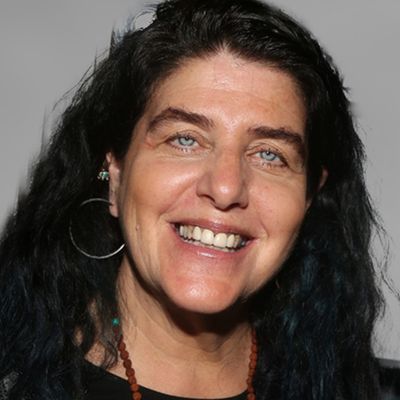
Sheryl Kaller is a theatrical director. She has Broadway credits that include Mothers and Sons and Next Fall by Geoffrey Nauffts, for which she was nominated for the Tony Award for Best Director... Read More
From the show: The Producer's Perspective Podcast with Ken Davenport
Guests
Featured Shows
About
Sheryl Kaller is a theatrical director. She has Broadway credits that include Mothers and Sons and Next Fall by Geoffrey Nauffts, for which she was nominated for the Tony Award for Best Director. She has directed at many theatres including Roundabout Theatre Company, Lincoln Center Theater, The New Group, Pasadena Playhouse, Primary Stages, Williamstown Theatre Festival, American Conservatory Theater, New York Stage and Film, Geffen Playhouse, Philadelphia Theatre Company, and Naked Angels.
She told me her story and gave me her perspective on all things including:
- What Bob Fosse “fought for” in his direction, and how that inspired her.
- How she never felt like a female Director while she was in school . . . but only when she got into the business, and how that has changed (or not) since then.
- The day she got scolded by an Actor for being too prepared. And how that has affected her style since.
- How she got back into the business after deciding to take time off to raise her family (and how that made her a better and more successful Director).
- The process of pitching herself for a job . . . what she says to playwrights and Producers in order to earn their trust.
Keep up with me: @KenDavenportBway
Transcript
This transcript was automatically generated and might contain errors.
[0:09] Ken Davenport: Hello everybody, my name is Ken Davenport. This is the Producer's Perspective Podcast. Thank you for streaming, downloading, or listening however you are listening to us today.
[0:19] Ken Davenport: Hey, before we begin, if you enjoy these podcasts and want more, then do me a favor, give us a big fat, juicy review, click that star icon on your iTunes page, however you want to do it, just let people know that you're enjoying them, and we'll keep doing them. And by the way, please do email me and tell me if you have ideas for guests or just want to tell me off, whatever you want. It's just Ken at the ProducersPerspective.com. I look forward to hearing what you have to say.
[0:41] Ken Davenport: And with that, I am pleased to announce my guest today is Tony-nominated director, Ms. Sheryl Kaller. Welcome, Sheryl.
[0:49] Sheryl Kaller: Thank you for having me.
[0:50] Ken Davenport: So Sheryl grabbed that Tony nomination for the beautiful production of the play Next Fall. She's also the director of Mothers and Sons, which I was a co-producer on. She's directed at all of the leading regional theaters around the country, including Roundabout, Lincoln Center, New Group, ACT, New York Stage and Film, and I could go on and on, but then I'd have no time for questions. Uh, and fresh off our town for the Deaf West Our Town out West, yeah. Okay, so first question. For so many people, the theater I find is like a love at first sight, right? What was your first sight of the theater?
[1:22] Sheryl Kaller: Ken, I love that question because my parents were involved in community theater, and my dad was this very macho guy, and he designed the costumes because it was at a time where people bought cars, and he covered he was in the auto-seat cover business. So he was the only guy in Temple Hillel that knew how to sew. So he would make all the costumes out of Naugahyde, like literally what they covered the car seats from. And my mother would sing and act and dance, and um it was the Corinthian players, and that's what I grew up on.
[1:22] Ken Davenport: Tell me he designed the costumes for La Cage or something.
[2:03] Sheryl Kaller: Right, no, no, no, no. He like would make these like pleather, now it's called pleather, bow ties and vests. They were so ugly, and I thought they were so beautiful. And I also I think at a very, very early age, understood that my father was Metro before Metro because he wasn't like embarrassed to like sew costumes or like measure women's busts. He was very like, but he was this very like kind of macho, um, you know, and now it's weird, but he was a Zionist and he was a Republican, and I I I hope he passed away a long time ago. I I imagine that he would have loved Obama because he sewed costumes. And then my mother one Wednesday a month, I grew up on Long Island. My mother one Wednesday a month would take me for a mental health day, and I saw almost every show on Broadway that way.
[2:47] Ken Davenport: Wow, what was the first show on Broadway? Do you remember?
[2:49] Sheryl Kaller: Pippin.
[2:50] Ken Davenport: Pippin, and I looked at uh Magic To Do and I said, That's what I want to do. I saw Fosse, and then I directed Sweet Charity in college and I invited him and he sent me a telegram opening night.
[3:00] Ken Davenport: What did that telegram say?
[3:02] Sheryl Kaller: Um it went, break a leg, stop. You know, this was and it was a yellow telegram. It was yellow and brown, and um it said all the best, Bob, and he didn't write Bob Fosse, and it took me a little bit, and I went, Oh my god, I just got a telegram from Bob Fosse, and he died when I was on my honeymoon. And so it's a big regret of mine that he wasn't alive now, or like when I started up, you know, when I started working in the business, I would have loved to talk to him.
[3:30] Ken Davenport: So fascinating for me because you've done a lot of these great plays all over the country, and one of your heroes was obviously this director choreographer of musicals. So, what about Fosse, like inspired you or attracted to you?
[3:43] Sheryl Kaller: I think he I think he always fought for the truth. So there was like Pippin and Steven Schwartz wrote this completely what he thought friendly, bright, you know, okay, so the guy might have to commit suicide at the end, but it was Schwartz's take on it, and Fosse always saw the other side of it. So I feel like Fosse fighting for I also saw like I went by myself. It used to be before computers that you could be friends with the Ushers. So I used to make friends with all the Broadway Ushers and see things for free. I saw the second and third act of Torch Song Trilogy 26 times because the Ushers would seat Mario Cantone and me for the second and third acts when there were empty seats. I saw out of town Dreamgirls 28 out of 28 times in Boston.
I feel like a great musical has to fight for the truth even more because music by nature, music is sentimental. So, uh, so a director like Fosse or you know, like I feel like what like not just because it's your show, but like what Michael Arden does with these revivals, he goes right into the truth of the matter, and then the presentation of it becomes ancillary to the truth. And then also in a negative way, I did only direct musicals, and then I did Next Fall, and I became known for that, so no one knew I knew how to do musicals because they tend to put girls in more of a pocket than they do boy directors. Not anymore. We're changing that. We'll get to that.
[5:06] Ken Davenport: So you see, when you said um I saw Pippin and I said that's what I want to do, was that directing, or was that just the theater? Like, what how did you get to the directing part of it?
[5:16] Sheryl Kaller: I got to the directing young. That's a great question. I realized when I was cast as Rosie in Bye Bye Birdie at Valley's Dream South High School, and everyone was excited about performing. I wanted to rehearse more. And I also thought the English teacher who directed it did an egregious Telephone Hour. So I asked if I could restage it, and she let me. And I did restage the Telephone Hour. And it was kind of then that I knew, and I also was a really bad actor. And I had always so I think that when I saw Pippin, I feel like I wanted to be John Rubenstein in that moment. But I was very aware of Fosse's hand. I think that's the other reason why I like Fosse so much, is because he was also a filmmaker, and so he brought you know my work, and I it's very heavily influenced by camera angles and by the shots, and I like doing a lot of rack focusing, like live rack focusing on stage.
And so for me, seeing Pippin and then seeing Lenny almost signed, because that was when he won the triple header, he did Liza with a Z, Pippin, and Lenny all in the same year, and he won the triple crown that year. I realized that's the kind of artist I want to be. So I don't know if it was necessarily do I want to act, do I want to direct? I was a terrible choreographer too, but I always knew that I wanted to have that kind of loft, like I wanted to be lofty in what I did.
[6:39] Ken Davenport: Such a you know, I've done so many of these podcasts now, and one theme I have with really successful people is that they know when they're not good at something, right? And I just find that it's you have to be so objective about where you belong. Hey, I'm only okay at this. I'm gonna find something that I love and that I'm really great at.
[6:58] Sheryl Kaller: Well, I think that like, and I'm sure so many other people have said this, um, is that so much of what we do is about perseverance. So much of what we do is about staying in the game, and so much of what we do is about growing this second skin so that we can really tell what is real criticism, what is uh false, you know, as Mr. Trump would say, false news and what's the real news. And particularly now that we get the privilege or I get the privilege of developing shows, like you know, the show that we did together, and you came that first night, and you were like, you had that yellow pad, and you were just down, and there were so many great notes in there because my feelings didn't get hurt because I knew right, you're right, I can be better there, this could be better, this.
Oh wow, Ken has this opinion on something. And that takes a lot of perseverance because you have to have the confidence to know that you're really good at something, but also be able to hear when you can be better and when to and when the best idea in the room wins.
[7:54] Ken Davenport: So, where did you get your training? And I maybe that's school, maybe that's not. All the things that you did coming up on your way to being a Broadway director, what do you feel was the most important part of your education?
[8:06] Sheryl Kaller: I went to Emerson College and I had two directing professors, Mr. Leonicole, who, when I was nominated for the Tony, I called four people, and he was one of the four that I called. And a German man by the name of Dr. Alfred Sensenbach, and um he snuck Jews out of Germany, but I didn't know that at the time. But this was a man filled with compassion, and he was a really lousy director and a wonderful directing teacher. And that's another thing I want to say is that the value of academia, I think is so strong. And I learned the basics of directing. I learned the foundation that I still use every single day that what those two men taught me. And the fact that I went to a school like Emerson, and I never felt like a girl director until I became a professional director.
There, I was this director that they believed in, and they just kept encouraging me. And then I also think my journey was my training because I was trying to make it as a director. Um, and at that time there were no assistant directors or no associate directors. So I did, I was the production stage manager of the bus and truck of Seven Brides for Seven Brothers. So I learned a lot there. And I came home, I got married, my mother died, I had a baby a year later, I had another baby two years after that. Then my dad died, and my husband made a living. And so I was able to say, I need to stay home because I was afraid I was gonna die. Really, I thought they both died young, so I want to be home with my kids.
So I had the privilege of my husband making money, and I lived a lot of life, and I bring that into the room with me every day. And so I think it was all three. And also we have a wonderful community here. I mean, when I go to watch when I was directing Next Fall, and then went in the alleyway and hung out with Michael Mayer, and he and I both talked about the struggles or the or an obstacle that we were having. I find that the directing community is a pretty fabulous community, and we help each other, and I think we can learn from each other's work.
[10:04] Ken Davenport: What do you look for when you read a script and that makes you go, oh yeah, this one. I'm doing this one.
[10:10] Sheryl Kaller: Arthur Miller once said that all great plays are about moral people struggling with their morality. So I go there first, and then I have a conversation with the playwright, and I see if the because I believe the theater is the last collaborative art we have. I think that, you know, Joni Mitchell, I'm quoting all these people, but all these people were such huge influences in my life.
[10:30] Sheryl Kaller: Joni Mitchell in her nineteen seventy-four concert said, you know, no one says to a painter, paint oh story story night, man. They're very, you know, it's a very uh painting and writing music and and um novels, it's i uh or even film. You you know, you fix it in post. In theater, it's really about what's happening in that room. Like I will absolutely say that Jeffrey Knopf's co-directed Next Fall, he had way more directing experience than I did at the time. And so we were in the room together, and also the last scene, it didn't feel right to me. Just there was like a mo there was a page in that last scene that just kept not feeling right and just kept not feeling right, and finally Jeff trusted me enough to say, write it.
And I did, and it was based on the experience of turning the machine off when my mom died. And so only I could write that. What wound up in the play was what Jeff wrote, but it was about Jeffrey being able to be collaborative enough and to trust me enough to say, okay, write that. And then he rewrote it and it was completely different. But I got really scared when we shut off the machine and my mom that her feet were cold. And so I wrote that scene. I'm also a terrible writer. I wrote that scene, and Jeff wrote the beautiful lines that Cotter Smith spoke, a blanket. He needs a blanket. And the whole audience, like, you could hear them start crying. And that was my mother's story, but I didn't know that at the time.
It was Jeffrey's generosity. So I also look for a generosity and spirit from a playwright. You know, it's it is true. It's such a collaborative art form, which makes it so much fun and enjoyable and also so challenging. I often say that it's to use your painting analogy, it's like trying to get 20 people to paint the Mona Lisa.
[12:07] Ken Davenport: So true.
[12:08] Sheryl Kaller: Everyone has a different idea. And a director, I feel, has to be the diplomat throughout all of that.
[12:14] Ken Davenport: How do you deal with designers and writers and actors all wanting different things?
[12:19] Sheryl Kaller: Well, I think you have to firstly create a room where everybody feels like they have skin in the game. I think that if you don't allow people to feel and know that they have skin in the game, you're not gonna get them at their best. And then I and and that that's the easy part to me. I you know, I have two kids, two as again again. I came to this after birthing two children and bearing two parents. So that kind of navigation was the easy part. That was the real life stuff because you want your kid to feel like they cleaned up their room, even though you help them clean up their room and things like that. I find the hardest thing about doing a musical and the hardest thing about doing commercial theater is that as a director, you can in being the diplomat, you could easily be tricked into going to the medium common denominator.
And you have to keep fighting for bringing the best people into the room, whether it be the best designers, whether it be the best actors, whether it be anything, because to get 20 people to agree on something, you're only gonna go to the middle. So your job is to keep getting it to the top and then being selective to know what you want to fight for and what is benign. That to that's been the part of it that I've learned through screwing it up.
[13:29] Ken Davenport: So you decide you're gonna do a play, first day of rehearsal, everyone gets in the room, what do you do?
[13:34] Sheryl Kaller: Read through.
[13:35] Ken Davenport: And second, tablework.
[13:37] Sheryl Kaller: And what is that room like? Is it a do you just listen? Do you get feedback from the actors? What's your describe your process?
[13:43] Sheryl Kaller: I always get feedback from the actors. I feel like I'm privileged enough to work with actors who I know I want feedback from. So I don't think we get that in every circumstance, and I don't think every director gets that in every circumstance. Although I do say any of the directors who are teaching in high schools and middle schools, like listen to the kids because that is also really fun. And I know that, and you guys are doing the hardest work, I think, is educating these young, malleable people. So I do listen to actors. Certain playwrights don't love listening to actors. Jeffrey came, Jeffrey Knopf came to this as an actor himself. So we did a week of table work on Next Fall before we even got up.
Terence McNally needs to hear something once, and then you'll get a rewrite of the whole play the next day. And there are certain moments where, but like who wouldn't listen to Tyne Daly and what she thought about her journey? I like also when designers, because it's a visual art, we forget that it's a visual art when we're in these play development things. And so when a designer says, I'm having trouble figuring out this scene or how to light this scene or how to execute this scene with projection. Now projection is so relevant in our business. I pay attention to that because if these wonderful artists can't figure out how to put that into their craft, then I go back to the page. And I always go because I mostly do new plays, if not only do new plays or musicals.
So I like sitting at the table. I like actors asking a lot of questions. And the biggest part of this is we have to honor what the playwright wants to write, not what we think the playwright wants to write. And that's the biggest difference in that a lot of actors or a lot of directors will come into a room and say, I think it should be this. It's that's not about this. It is about continually asking the rigor of asking the playwright, what are you saying? What are you saying here? What are you saying here? And then when you're working on a new play with a good enough playwright, a playwright will know when they're missing a beat, when they have to change a word, when they have to. Terence does this really cool thing where he reorders a lot of things and he writes it by hand on the script.
And I had never seen a playwright do that before. And I just I'm working on a new musical called The Walk on the Moon, which we're doing at ACT, and I'm working with a screenwriter who doesn't write plays very often, and we did that with the whole second act, and that's how she figured out how to rewrite the whole second act.
[16:02] Ken Davenport: What was it like giving Terrence McNally a snow scale?
[16:04] Sheryl Kaller: Scary.
[16:09] Ken Davenport: It was really scary, and he's not a scary person.
[16:12] Sheryl Kaller: He's he really is the first gentleman of theater. He um he he's a real true man of the theater, and he's the kindest, most wonderful man. I got off a subway stop early every single rehearsal. I don't know if Terrence even knows this. Um, we were rehearsing when we first did it at the Signature Theater, and I would get off at 34th Street and give myself affirmations about knowing that I was worthy. And even though he takes notes like almost as if he just every play that Terrence does is like his first play. I had to do the same thing with Chris Durang for me because one of my first high profile projects was a Chris Durang play, and Chris is a man of very few words. Like Terrence engages you a lot.
Chris is a man of few words, so like I would give Chris a note or a thought, and I didn't know what he thought about it. So I would say that the long answer is you have to have confidence in yourself in order to show up in the best way that you know how, regardless of who you're with.
[17:08] Ken Davenport: Do you stage your plays on paper in your head before you get in that room?
[17:12] Sheryl Kaller: No, not at all.
[17:13] Ken Davenport: So how what's the process when you okay we're done with tablework, let's get on our feet? What how does that work for you?
[17:19] Sheryl Kaller: It is with the map of brilliant set designers. The set goes through, I would say, probably 30 rewrites before we even get before we even tape it to a floor in the rehearsal room. And so the set feels like the playground, and I watch what actors do instinctually, and then I spruce that up, and then we do it again, and then I change it, and then I ask them why they're crossing there, and it becomes that process of the collaboration, and then I usually ask the playwright to leave in the second week while we're staging so that they can come in with baby eyes, and then the playwright comes in and gives me pages and pages and pages of notes, and so the blocking changes. Ah, as you know, my work is known for its naturalism, and my work is known that no one crosses unless there's a reason to cross.
And um, like for Mothers and Sons, it was 90 minutes real time during a sunset on Central Park West. So to me, the story we were telling was lights coming on and then lights shutting off. And when you asked Terrence, I asked Terrence, what is this play about to you? If you could put it in one sentence, what's this play about? He said, Well, it's about a woman who comes into an apartment, she takes off her coat and she puts her coat back on, and to me that was all I needed to know. And I said, Oh, okay. And so Tyne Daly stood up for 17 pages with her coat on and never sat down until she took it off, and then she sat down and then we put on the lights.
[18:45] Ken Davenport: That's a beautiful way, and like I'm remembering a report now, and I wouldn't have been able to take that. Oh, she just stood up for 70 pages, but I remember the tension I felt in that moment.
[18:56] Sheryl Kaller: Yeah, yeah. Comes from that beautiful premise of Terrence's.
[19:00] Ken Davenport: What's one thing that you do today in your directing style process that you didn't do when you started?
[19:07] Sheryl Kaller: I would block on paper when I started. It's so interesting that you asked that question. Um, I would block on paper when I started because I needed to be the smartest person in the room, so I needed to be ahead of everyone, which is not collaborative, is being ahead. I have to have a vision. I have to, I have to have a very, very clear vision. Oh, I mean, like I just put Frozen on a cruise ship for the Walt Disney Company. I have a really clear vision, but we workshopped the crap out of it as well. So I do not uh I uh Next Fall I went to go stage the second scene in the play right after we got up from the table. Um, Patrick Breen, I said, Okay, so you c and he and he looked at me and said, Are you kidding me?
I went what? He said, You're not staging us, are you? And this is Patrick Breen, drama department, Naked Angels, you know, the guy. And after I went into the bathroom and cried privately, truth be told, he I said, Okay, what do we do? And he said, Well, we're gonna feel it. And we're gonna do it that way, and that's the way we did it.
[20:03] Ken Davenport: It's amazing. I think so so many of us director you like control. We all like control, right? So we try to control everything.
[20:07] Sheryl Kaller: Of course, my one of my favorite quotes is it's okay to build the plane while you're flying it.
[20:13] Ken Davenport: It's oh who did who said that? I love that.
[20:15] Sheryl Kaller: That's uh it's been passed down, I think, from several people, but you really have to be fearless in order to do that. It's not like that's something you learn. Because your audience is also your whatever if you have th four people in the play, it's your fifth character. So you again to to work in the privilege of the way we get to work, which is for the most part three weeks of previews. We really can pay attention to that audience, or conversely, the play that we did together in Florida, we had two previews, so we had to rush that process a little bit, but they do become you have to be oh I again I go back to what I said about Jeff. Is is is he was he trusted himself enough to be collaborative. It's it's this tricky but very clear confidence that you have to have in order.
[21:06] Sheryl Kaller: I think that goes with everything we do in the theater. So, how much do you listen to that audience during previews? Uh, ridiculously so. I mean, almost uh because I mean like I had my kids I trained in New York. I I you know it I I've kind of had this backwards career of most people you know cut their teeth in the regions. I can't wait now. I'm in the regions three quarters of the year this year because my kids are cooked and I can go out and work in San Francisco. I'm doing a new play with a director who wrote his only play, Sean Daniels at Pittsburgh City Theater. I'm leaving next month I guess maybe February March. Like you have to check your calendar to know where you're going half the time.
So I absolutely you can watch an audience posture. You can see when they laugh you can you definitely can craft humor with an audience. I mean that feels like the most obvious one when they're leaning back, when they're leaning forward when they start moving around a lot. In the winter you can't trust coughing but in the summer you can trust when they start coughing. The winter everyone's sick so everyone coughs so you can't like the night Ben Brantley came to see next fall everyone was coughing in the second act and I was convinced we were going to get a horrible review. And of course you know I don't read reviews I don't read reviews. I I lean on my agents if more than it particularly in development if more than three reviewers say the same thing I have my agent tell me what they said. And then once it's on Broadway I don't care because I'm not changing it and I'm not doing it again. So I rely heavily you rely very heavily on audiences as well.
[22:35] Ken Davenport: Yeah and I use that same rule actually if I hear the same comment or read the same comment in surveys because I do a ton of them three times or more there's something there. Often they don't know, you know, what I don't rely on and people I think make this mistake with me all the time is that I don't rely on audience to tell me how to fix it.
[22:52] Sheryl Kaller: Correct. It can't be prescriptive. It can't, you know. I th I think that's one of the things that I loved working about you so much because you protected me. I think that's the the the sign of a really great creative producer is that protect me from the crap that's the comments that are gonna feel like I might get defense. You know, I know I said you have to grow a skin, but like you know, it's it, you know, we're putting our hearts up on that stage. But I never knew when you were giving me notes whether they were comments or whether they were your notes, in the same way that uh like Terrence and Jeff, most playwrights don't like giving notes directly to actors. And I play a game with the actors that like I'll give them money if they can figure out if it was my note or the playwrights note.
When you were coming up and and even now, I mean you work a lot, right? So do you find still you have to put on a marketing hat for yourself? Do you have to do lots of networking? Like when when you were coming up, what did you do to help build your career?
[23:46] Sheryl Kaller: What I did um differently when I was coming up was I had to sell myself a lot. And I had to, um, at the time, it was at a time when people weren't hiring women who had children, and I and so I ha m my way of interviewing was a reassurance that I can do the job. It was almost less selling and reassuring either the playwrights or the producing organizations that I could do this job. Um now I find myself in a position where I get offered a lot of things and I'm really lucky that way and blessed that way. With that said, my I have to network. I have to show up at openings, I have to make sure that my face is visible a lot. I hate doing the red carpet. And my agents are very much like you do that red carpet, you put on a little mascara and lipstick and you do the red carpet because it's good when people like open playbill.com or something like that and they see my picture there.
So I think that with that said, I get to choose what I do now. Um that's where I think I I don't think there's anything different than uh doing a Broadway show than doing an off-Broadway show than doing a show in Florida or frankly a show in like I'm Jeffrey Knoffs wrote a new musical uh with Jonathan Brooke, and we're going to Texas State next week to develop it with students because we feel that these kids will teach us a lot about our play because we need a lot of development work and they don't have the expertise that professionals do, so they'll show us all the holes in it. And we're excited, it just as excited about doing that as I am about doing my, you know, with all the great professionals for my walk on the moon lab that I'm doing four weeks from now.
So I think it's but you do constantly have to sell yourself and you have to be really clear on what you're selling. Like sometimes I feel like I'm on a treadmill. Sometimes I feel like what am I chasing? I think you have to be clear about what you want to do.
[25:36] Sheryl Kaller: I wanted to after Trump was elected, I wanted to do our town with deaf people. That's what I wanted to do. I saw your production of Spring Awakening. I saw a big river at the roundabout and at in LA, and I said, I want to build a community with deaf and hearing people who speak two languages because I feel that the Democrats and the Republicans are not listening to each other. And if everyone would just speak two languages, we might get something done because Trump was just president. And so when Danny Feldman called me from Pasadena Playhouse in his inaugural year and said, What do you want to do? I said I want to do. So I think you have to be clear about what you want and where you fit in society.
[26:13] Ken Davenport: I mean, I I don't think I've ever actually heard someone make a very such a clear statement about a mission, about what they want to do with a very specific piece, and it just goes to show you what you what you do need in order to to start rehearsals on a new project. I mean, what a clear vision.
[26:28] Sheryl Kaller: Well, don't you feel like you did like with as a producer, you know that like you liked your experience with Mia, Mothers and Sons, or like what Michael Arden did with that beautiful production of Spring Awakening that he did, and now you're doing Once on the Islander I saw in your poster, which I didn't know that you did. I think the play that goes wrong is the best medicine in the world. And I went to go see it with our mutual friend Barbara Manitarian, and then I sent my whole family after that. And it it just you just laugh and laugh and laugh, and you you don't even have to speak English to understand that play. And I and so I think you know, you believe in an artist or you believe in what you want to give an audience. Um for me, it's where I fit in in this world because I think as I'm a parent and I want to leave a better world for my kids.
[27:12] Sheryl Kaller: So let's talk about what we hinted at at the very beginning, but you you ended with a very positive, optimistic note in that you said women get put in a certain box, but it's getting better, it's getting better. Is it getting better?
[27:25] Sheryl Kaller: Yes. Um, I don't feel being a girl on a day-to-day basis. I feel being a girl when I look at what my male counterparts get offered versus what I got offered. I do feel that the Rebecca Teichman's and the Annie Kaufman's and the Lila Newabous three extremely gifted, gifted directors. And I can name a pile of other women as well as you know, Joe Montello in my same breath. I feel like women, the generation after me are getting seen and and offered the same thing that after Joe directed Love Valor Compassion so brilliantly that I thought I would lose my mind. It was so brilliant, and then he got offered Wicked. That wasn't happening to me when I was coming up. I got on I did Next Fall, and I got offered every gay play in the whole country, or every small play in the whole country, or every play that required an ensemble in the whole country.
You know, that's changed. That is most definitively changing. And I think that I'm excited about that because I think I I think I uh pave the way for that in a lot of ways. And I also think I have nothing to do with it in a lot of ways. I do still feel that men are given more opportunity in positions of power. I do. And but I do feel that's really changing too. And I think that is a tribute to the not-for-profits in this country. I think that Joanna Felser at New York Stage and Film, My Creative Home, has really led the brigade in instituting that change. She's been doing girl writers and writers of color and for a long time now. And um, but the public theater, look at look at Oscar Eustace, who I wouldn't even call him an acquaintance, but what he has done in that building is extraordinary, or the way that Todd Hames and Lynn Meadow has have taken these institutions and given them a commercial arm as well as a not-for-profit arm.
So I think everyone, I think all the work that all these creative leaders have done all these years, and I don't mean to leave anybody out if anyone's listening, because I really think that um these artistic leaders have fought really hard for everything that's happening now. I re I and I think it's been I think it's been a long thought journey that is coming to fruition now. And I'm God, these these director, these young directors that are coming out or directing the crap. I mean, look what Lila knew about her did with the wolves. God, it was that good.
[29:46] Ken Davenport: All right, my last question. I want you to imagine. Jeannie from Aladdin comes to visit and thanks you for leading the charge uh on that topic and for all your contributions to the theater. Like and is gonna grant you one wish. What's the one thing that drives you super crazy about Broadway or the theater in general? Gets you mad and angry and wants you to take this microphone and throw it against the wall and you'd ask this genie to wish away that instance.
[30:11] Sheryl Kaller: I want the government to give producers more tools to make theater more accessible to more people.
[30:20] Ken Davenport: I love it.
[30:21] Sheryl Kaller: Yeah, it's that London model, right?
[30:22] Ken Davenport: It is that's why they're developing so many great big plays. We wonder why, like uh Marianne did such a brilliant job with uh Curious Incident. She and you you have to know what to do with the resources. So this is not this is a the complete compliment to her. Because I used to say when I was coming up, well, if I had 12 million dollars, well, no, I didn't know what to do with 12 million dollars at that point either. But yes, the London model, the tools to give the producers who care, because they're really the unsung heroes ultimately, you know, to give them the tools to yeah, more people, more people, more people in those seats who can't afford it.
[30:59] Sheryl Kaller: Thank you for that clear answer.
[31:00] Ken Davenport: Thank you for doing this podcast today. Thanks to all of you for listening out there. Make sure you're tune in next week, same time, same podcast channel. See you then.
© Broadway Podcast Network, All Rights Reserved